

Can we agree that the work of our Advent season is first and foremost concerned with the search for meaning?
Did I get this right? Do I place too much pressure on what is after all a period that is already put to far too much work? Perhaps, because after all, most of us perceive the rush towards the high season as we might the landscape from a speeding car, blurred by speed and then behind us. These words are not intended to bring any more ‘should’ or ‘ought to’.
No, the search of meaning is not an obligation, it is not even a discipline (although this could help.) Rather I think of it as encounter.
Let me say more about this, using that most useful of spiritual language known otherwise as poetry;
Joy 2

Joy is not a bauble
Not a bubble, too soon burst
Never manufactured cost effectively
It is not bought or sold
It is not gold

Joy is not a jacket
You pick from a handy peg, it is
Never something worn externally
It is always a surprise
Like sunrise

Joy requires no skill
Its practice is not taught
It is not being ‘happy’ or content
It is just being open, to the
Beautiful and broken

Joy is an ambush
Hidden in plain sight
Wrapped up in the most unlikely things
It often comes with grief, not even
Promising relief

Joy is a squirrel
Transcending a tree
It is music played directly on the spine
You do not need to look, because
It stabs you the gut

It is just being open to the beautiful and broken. This line has tapped at me for years. It refers back to an old Henry Nowen quote in which he described these two things – the beautiful and the broken – as the primary means through which he encountered God.
Of course some of our experiences of beauty (and even a few of our experiences of brokeness) are much easier to characterise in this positive way. Sunsets, rainbows, smiling babies or crashing waves seem simpler spiritual avatars than slugs or shopping trips or our own human fragility.
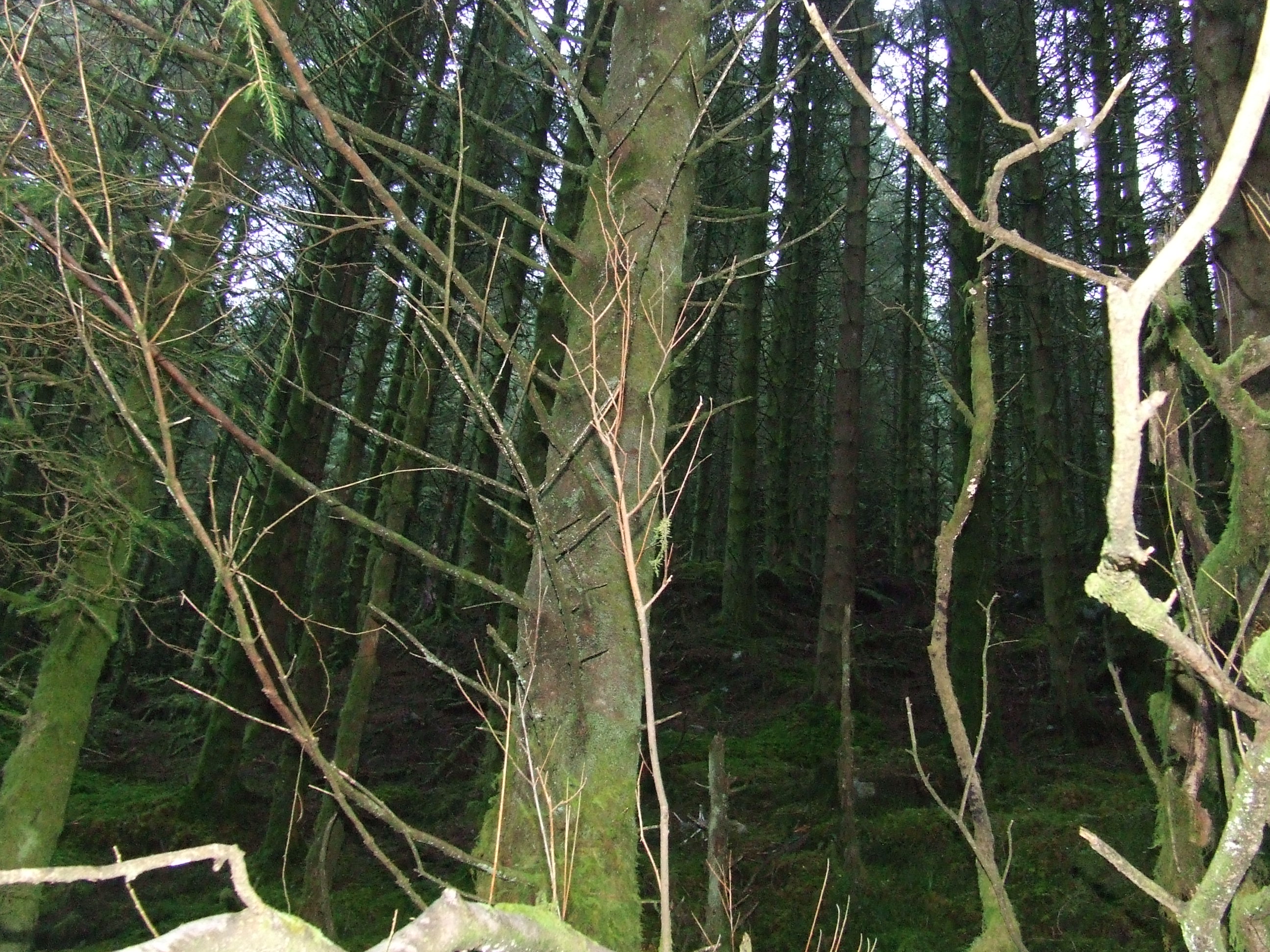
We are not always open to these things. Sometimes all we can do is to put our heads down and keep moving forward and there is no shame in this. Like a walk through the dense conifer plantations here about, it is almost possible to leave the tracks laid for us. If we try, the chances are that we will be forced back onto them, scratched and bleeding, within a few hundred yards. No, we must wait for the crossroads and take the opportunity when it is offered.
Today, for instance, we travelled through the ice and snow to Glasgow, where we were trying to sell some art. We always find ourselves in lovely deep conversations with people at these events and this time I treasure the lady who wept uncontrollably after standing reading poetry on some of our pieces. I eventually asked her to tell me what it was that she had found particularly meaningful but she could not point to individual words, rather she could only describe a feeling she had that washed over her in the form of tears.
Perhaps this seems like madness. A kind of sentimental unreality arising from fanciful imagination? I would caution against such judgement however, firstly because it would be to deny the validity of what to this woman was something very real but also, despite the highly subjective nature of these kind of transcendent experiences, they can be transformative.
I do not beleieve that this woman was responding solely to any particular qualities we managed to capture or convey within our art, although it is wonderful that these seemed to help. Rather I think she was encountering what I would categorise as ‘the divine’.
The God who is in all things.
The God who loves things by becoming them.
Or, as G M Hopkins put it; the Christ ‘who plays in ten thousand places, lovely in limbs and lovely in faces not his...’
Let us stay open.
 this fragile tent