

King Charles has cancer.
I wish him well, but in his age group (over 75s) cancer is a common experience. I was both glad, and at the same time disturbed, to hear an announcement from the palace that his cancer diagnosis would ‘shine a light on cancer, enabling better understanding of the condition’. Well, perhaps it will, but not necessarily in the way he would have meant, because it might show us that not all cancers are equal, and not all cancer sufferers benefit from the same treatment.
There was an article in the Mail online yesterday (I will not share the link because it is a rather despicable publication) with this headline;
How much would you pay for healthcare fit for a king? As Charles and Kate have medical treatment, all you need to know about private health insurance
It will come as little surprise to hear that the king was diagnosed, and will recieve treatment (within ten days of his diagnosis) at a private hospital. In other words, he will recieve healthcare fit for a king.
Meanwhile, reports up and down the country tell a rather different story for the healthcare being offered by our glorious National Health Service – that grand old flagship of the British Welfare State (more on this later) which promised care for us all from cradle to the grave.
Yesterday, it was announced that a woman had died huddled under her coat in a Nottingham Accident and Emergency department after waiting to be seen for seven hours. This appears to be far from an isolated incident, which should be no surprise, given this trend;
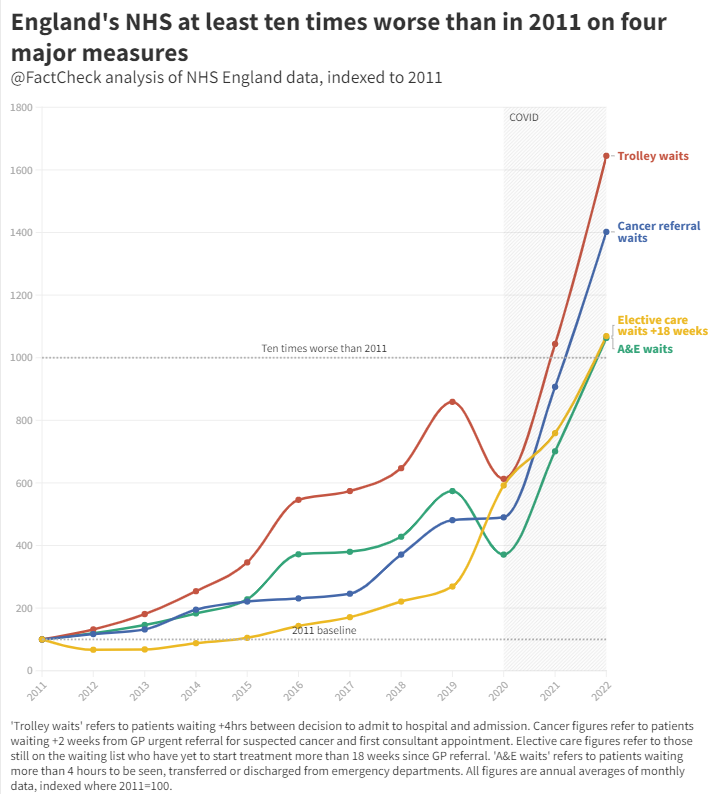
(table from here.)
There is a strange narrative in this country about the National Health Service. In the shadows, politicians describe it as the ‘national religion’, and like other religions, it contains an unhealthy amount of hypocrisy. After all, most of the elites in our country (including our politicians) use private health care.
There is also a common narrative which describes the worsening performance of the NHS as ‘not about money’. We spiral into anecdotes about ineficiency and waste, alongside carefully curated statistics and examples of beaurocratic idiocy. It is also true to say that even our slash-and-burn taxation and public spending current government, spending has increased, but the degree to which this increase is real is very complicated to pin down, with huge variations and almost deliberate confusion. This article spells out some of the problem.
Of course, part of the problem is that the NHS is a huge monolith that will always tend towards what Ivan Illich would describe as unconviviality, which is another way of saying that it is not on a human scale. The tool we have created then becomes more important than the people who are dependent on that tool. Our last bastion again this kind of unconviviality is always the staff who work in the NHS, and it is fairly safe to say that morale is not high.
Perhaps too, we often forget that the NHS is the end point of national health and welfare – the last resort – not the starting point. In other words, you can not improve the health and well-being of nation be only treating sickness. We know, through extensive research into the creation of wellbeing over decades and in all sorts of different societies, some of the things that help, and many of the things that hinder.
We know the relationship between inequality and mental wellbeing, spelled out well in this article.
We know the relationship between wellbeing and general health, including our immune systems, as this government document spells out.
We know to the immeasurable value of that complex web of small voluntary groups, societies, clubs, religious institutions, cultural events, arts and charities that bring us together and give life meaning. Many of these groups have lost previous sources of funding as local authority budgets have been cut and then cut again.
Those same cuts to the funding of local authorites has had a massive effect on social care provision. At a time when the national demographics have trended towards a big increase in very elderly people needing complex care, we have had over thirteen years of cuts to councils, who provide the bulk of the support to vulnerable people. Even where councils have performed fiscal alchemy to preserve funding for social care, it is not enough, because of the aforementioned demographics.
Perhaps we have deliberately forgotten that the number one way to improve health is through stable income. The infamous Black report in 1979, investigating inequalities in health outcomes, made this rather obvious point and as a result was buried.
Meanwhile the real terms value of benefits are at an all time low, and the punitive unemployment and sickness benefit processes has adopted an almost inhuman cruelty – which has in part achieved its purpose of forcing people into work. This work however, tends to have certain characteristics– low paid, insecure with little or no hope of progression. In other words, the very kind of work that makes profit for others at the cost of worker wellbeing.
So, what is happening here, and what can we do about it? Or rather, what COULD we do about it if we voted in a government that was prepared to bring about the radical changes that appear to be required?
I would suggest that in order to look forward, we also need to look backwards, in this case towards an old idea known as the ‘welfare economy’ (a society which benefits as a whole because its citizens are being taken care of), which here in Britain, was known as ‘The welfare state’.
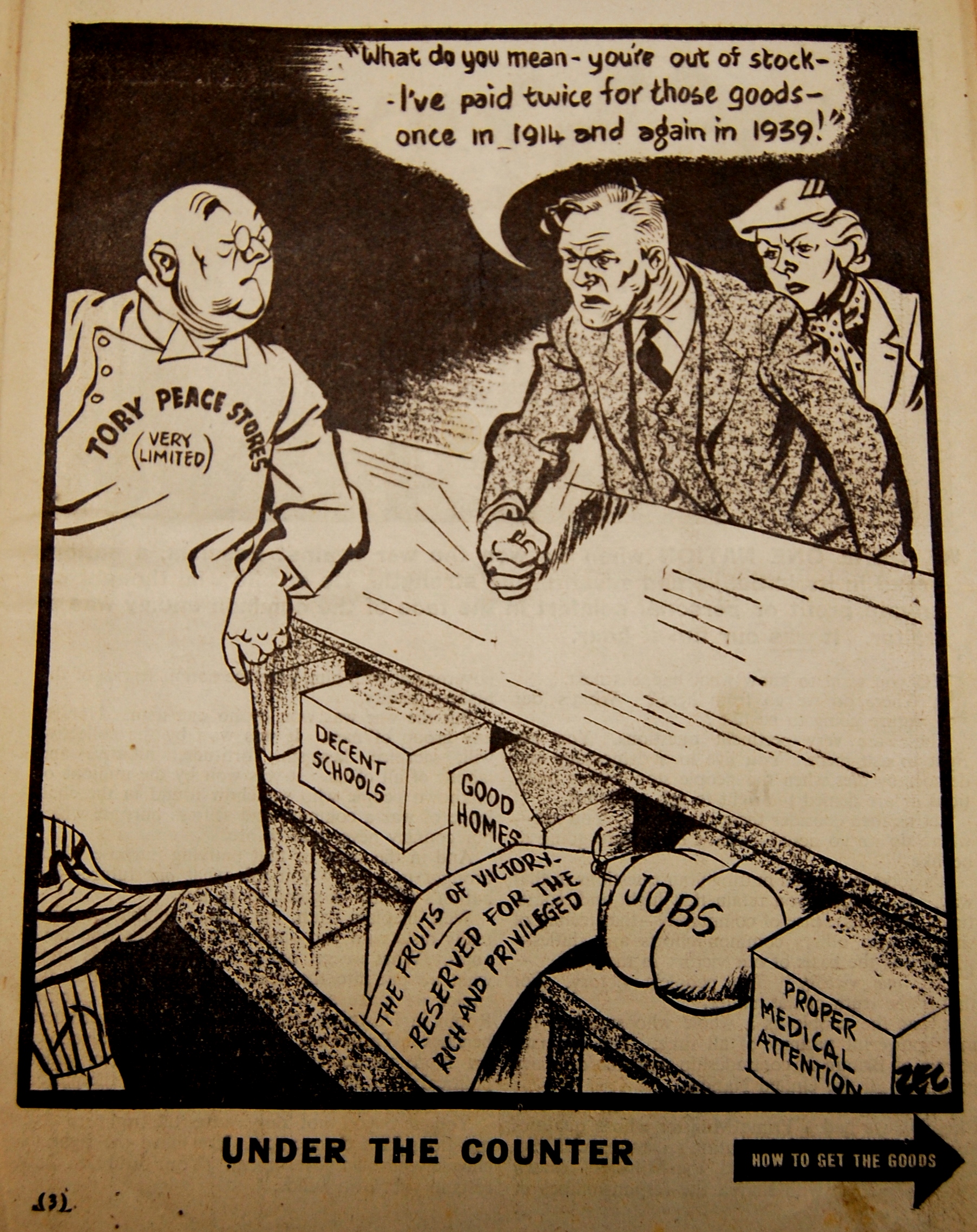
It was the coming of the welfare state in the wake of the second world war that promised a different kind of society. No more would the citizens of post war Britain be subject to the boom-and-bust uncertainties of capitalist industrial barons. Neither would the poor laws any more be an acceptable model of managing the welfare of the most vulnerable. In fact, means-testing itself was to be abandoned in favour of ‘national insurance’, paid by workers in good times to ensure their survival through the hard times.
Oh, and the welfare state also included a health system known as the National Health Service. Arguably it is only this part that has survived relatively unscathed. The rest has been systematically attacked and villified by news and media outlets (owned and funded by billionaires) to the point where the very word ‘welfare’ has become a synonym for ‘scrounger’ or ‘waster’.
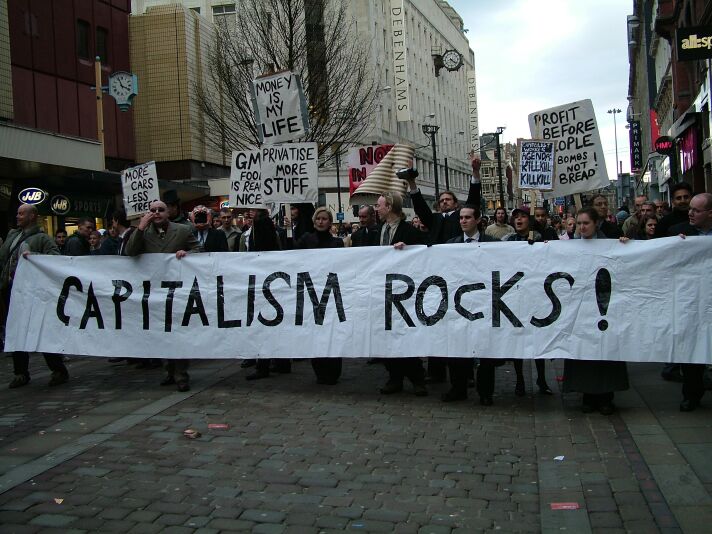
The inverted logic of neo-liberalism has held sway for decades now, telling us that a healthy society has to be moderated by the insatiable belch of the free market. It is only (we have been told) through shrinking down the previous excesses of the welfare state and allowing the self regulation of pure market forces that we can know prosperity.
To be fair, it has worked for some.
(But not for the many.)
Is there hope yet for a welfare society?
Can we wind back time to what we once aspired to? If not, what might such a society look like under the harsh pressing reality of climate injustice as well as economic injustice?
It is these questions I am intending to ponder in the next wee while.
(To be continued…)
 this fragile tent