
The point of this series of post is simple- renewal of a whole religious tradition to make it fit for purpose. For many, this is heresy of the kind that previously would have earned me a bloody end, but revolutionary reformulation is needed more urgently than ever.
After all, despite the grand proclaimations, what current use is western religion as a means of healing and restoration in our current broken world? I would argue that this is not just a minor issue requiring a slight shift of focus. Rather we need to remake our religion at source.
In this post, I attempt to reconsider our origin story, but first we have to consider the one that is still firmly in place.
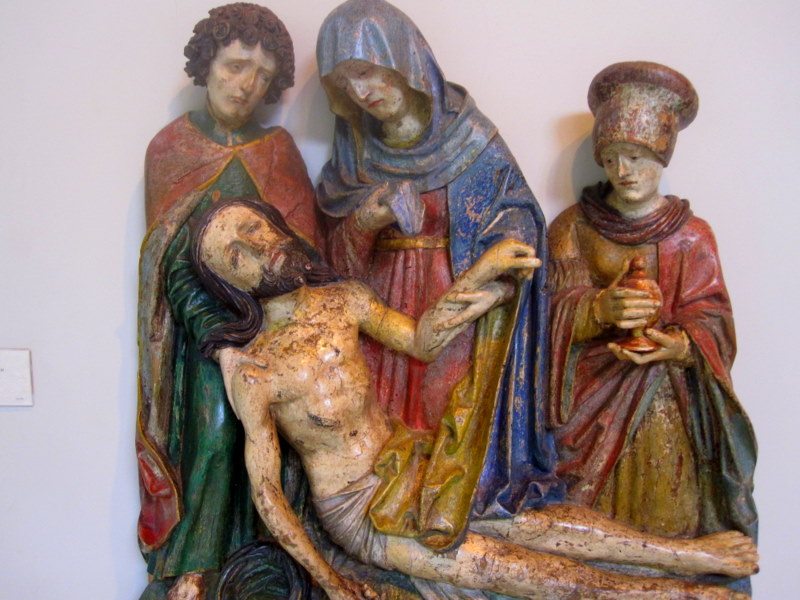
When considering the stories told about the life of Jesus – those that have come to us through the inspired/historically accurate/mythological/unreliable (delete words as appropriate) written record – this thought occured to me;
If, by some strange circumstance, we lost all the scriptural records apart from the death and resurection story, would modern Christianity be any different? If we knew nothing of the teachings of Jesus – which we have ignored in large part anyway – could modern Christianity still stand?
Then there is a subsiduary thought.
If we only had the records of his teaching, and how he lived his life, WITHOUT the death and resurection story how might Christianity have developed- if it had been allowed to develop at all?
I think this is a significant question because (arguably) the religion Paul made – and was later adopted as the official religion of Empire – concerned itself to a large degree with the next life, not this one.
The origin story of this religion went something like this.
God is a divine judge who can bear no sinfulness, but because of his great love, he sent his only son into the world to be tortured and killed, taking on the rightful punishment of the rest of us, so that those who practice correct belief might be saved from eternal hellfire.
The degree to which ALL followers of the Christian relgion understood the origin story to be like this is, of course, debateable, but perhaps we can agree that this became the dominant Christian ‘good news’ story (or Gospel) fairly early, particularly in Rome, centre of the new Holy Christian Empire.
Meanwhile, those inconvenient teachings of Jesus slipped quietly down the list of priorities. For example, just off the top of my head;
- The first shall be last and the last shall be first stuff
- You don’t need two shirts on you back
- Blessed are the poor (in spirit) and his recognition of the beauty and dignity of all people
- Harder for a rich man to entire the kingdom than a camel through the eye of a needle
- The band of malcontents, failure and low-lifes he spent his time with, who he saw as his disciples
- Non-violence, offering the other cheek
- The ‘new kingdom’ (perhaps better understood as ‘anti-Empire’)
- Breaking national /ethical morality codes by speaking to women and Samaritans, lepers and Roman soldiers
- The radical inclusion of outcasts and outsiders
- The call to love for all and everything, even enemies
That question again- to what extent are these sorts of teachings central to our practice of the Christian religion?
Is it possible that we have made them at best ‘optional’ matters, much less important than saving souls from hell? We might hear preaching about them, but I think we can see clearly how Empire is always more important than the Kingdom of God’s anti-Empire messge. The dominance of American Evangelicalism is only the latest version of the same.
The goggles we have been given to look back at Jesus through make it very difficult to look afresh at the religion we have inherited, but if we were to invite an uninformed alien to read the gospels then visit one of our cathedrals, or attend one of our evangelical worship services, surely they would be very confused?
How did we end up here?
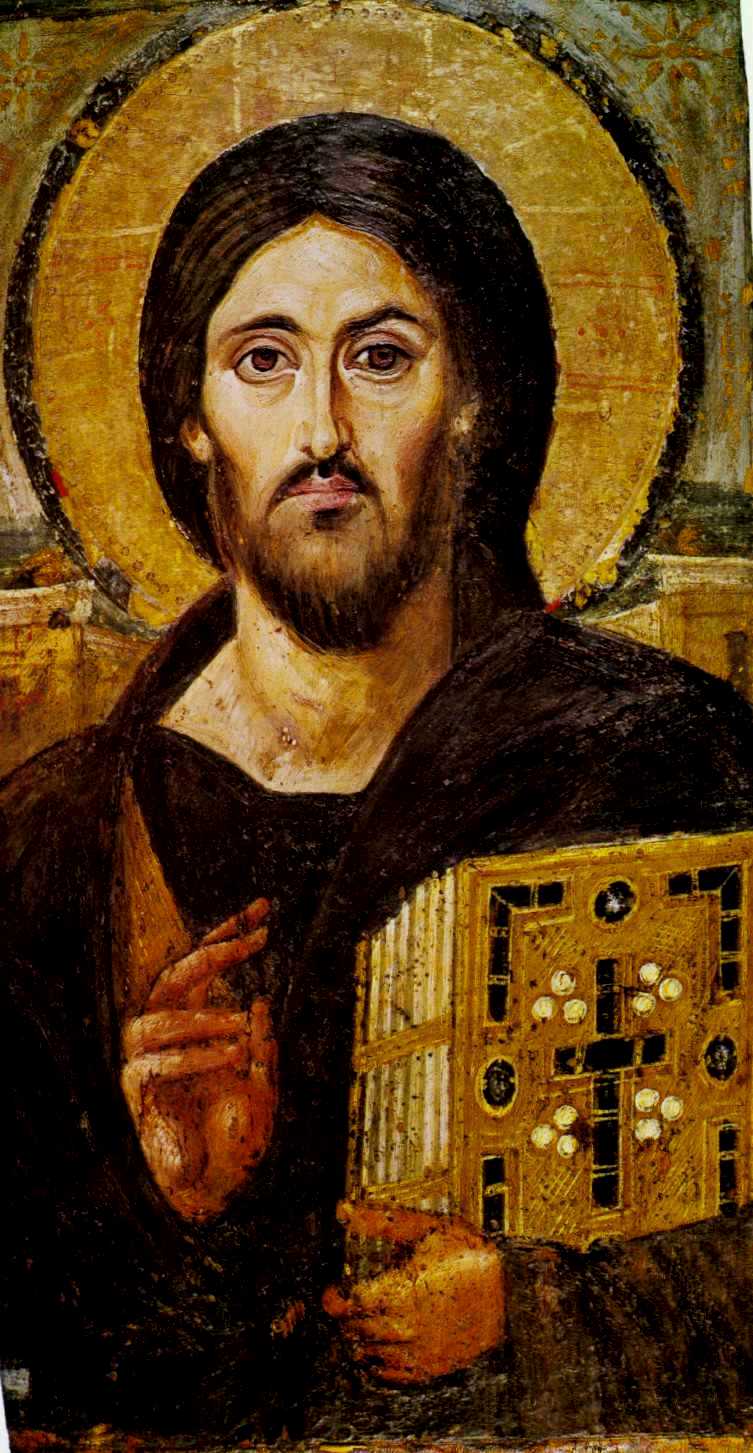
If the story of Jesus is the origin story not just of our religion but of our whole culture, it is hard to deny that this story does not seem to have been adopted whole. Rather it has all-too-often been interpreted in such a way as to protect the powerful and ignore the needs of the weak and oppressed. (One of the key ways that this replacement trick seems to have been wrought is by the deployment of a theological construct called ‘original sin’ but we will return to this later.)
Do we need a new origin story? Might we yet redeem our religion from the clutches of Empire? More than this, might there be somethng in this new origin story that might be useful to us as we grapple with the world that has been made in the shadow of the old one?
My answer to this is yes – and no.
Yes because the story as laid out above is not fit for purpose so we have to replace it. I say this because it fails to challenge the fundamental economically over-reaching, socially unjust and environmentally unsustainable problems created by the western culture it has sustained and developed within.
No because (many would argue) this was never the real story in the first place. The religion named after Jesus lost itself along the way. It became corrupted by those very things he spent so much time warning us against. Therefore, the task is not to make a new story, but to strive to find the one that was always there.
No also because rather than inventing anything new, perhaps the better strategy is to go back and examine what other followers of Jesus found most persuasive. We are not the first generation to grapple with these issues and perhaps others had a better story in the first place, engaging better with the problems described above?
This is difficult work, even for those of us who have been through painful deconstruction of the religion we previously knew. Where should we start? Who can we trust to guide and inspire us? After all, the Christian religion – particularly in Protestant form – sometimes seems like one long argument in which successions of men (it is always men) think they have a better grip on Truth than those before, and where did all of that get us?
One lesson we might take from the Protestant project is the failure of attempts to create correct belief based on ever more narrow readings of scripture, as if an ascendant Christian tradition would eventually reach a final ‘true’ position on all things – because the Bible says so. This approach has so many problems, but perhaps the more obvious one is that it is based on an unexamined and unacknowledged set of assumptions about the nature of scripture itself and the blind spots deployed to protect those asssumptions. I have written a lot about this – if you are interested, perhaps here is a good place to start.
If this approach was always flawed, and even worse has failed to deliver a religious framework that can engage with the crisis facing our society, perhaps we must instead find ways to prioritise practicalities and praxis – the efficacy and usefulness of religion. After all, what is belief for?
Or to put this another way – who cares what you believe if it does not change you/the world towards better? The saving souls business has too often been a distraction convenient to vested interests opposed to any real change.
It might be worth mentioning here my own process as I grapple with what might be described as ‘reconstruction’, along these lines;
- I acknowledge those whose teaching/writing/leadership has inspired me, consciously holding on to the things I inherited that are ‘good’. These act like signposts or filters or channels through which I measure and encounter the new
- I pay attention to what sings in my soul. I have decided to trust my own embodied reaction as a guide for accepting and adventuring. If I read something or encounter something and it lights me up emotionally/physically/spirituality (even intelluctually) then I follow this down and let it lead me to new places. are
- What is useful? By which I mean the degree to which ideas contribute towards my understanding of peace love and justice. If they do not seem immediately useful in this regard, I am not necessarily rejecting them as ‘wrong’, rather I am far less interested.

Enough with picking over the old story, what about a new/old one?
We will turn towards this in the next post.
 this fragile tent