
Behold, I am making all things new…
These are words attributed to a returning Jesus in the wild Book of Revelation, the last book in our Bible – and possibly the most controversial. (Incidentally, there is a really good podcast exploring some of the themes and excesses we have made from readings of Revelation here.)
You can find echoes of the same idea written many hundreds of years before by the prophet Isiaiah. Behold, I am doing a new thing; now it springs forth, do you not perceive it? I will make a way in the wilderness and rivers in the desert.
For some reason, this sentence always pokes me in the heart, right where I hope from. It has often come to me with tears. It was out of this place that I wrote this poem…
The great Becoming
.
How small we made you.
How constrained by our constraints;
We wore you like a lapel badge,
Pocketed you like a personal passport, then
Raised you at our borders like a flag.
We locked you in the pages of
Our Book, then threw away the key.
.
But how we worshipped you.
How we pointed at you with steeples.
You asked us to follow you, to
Give away our second shirts, but instead
We made a million icons, each one framed in gold.
We swayed and raised our egos, singing love songs-
Not to you, but to idealised versions of ourselves.
.
How is it that still, you love things by becoming them?
How was it that this brown-skinned man with the heart of a woman
Took upon herself another name for everything, so we could
Encounter her in all these beautiful things and bleed with her when she
Lies broken? And just when all seems lost, she whispers still;
See, I am making all things new.
Even you.
I think that when I first read these words, I saw them (or they were described to me as) the description of a one-off event – most likely a supernatural Jesus event – or prehaps an individualised thing done by our own personal Jesus. It may well refer to both of these things, or it might mean something… bigger.
What if this is a constant kind of ‘being made new’?
Rather than describing a divine rescue plan for a chosen few, what if it is the description of a great cosmic unfolding that began with an explosion of love so powerful that nothing can stop it from reaching outwards, and continues on and on not just through history, but through each and every one of us, every bade of grass, every living and love-made thing?
An unfolding that can be sensed in the kindness of strangers, the flow of water or the feeling we get in the pit of our stomachs when we stare up at stars…
What does this origin story look like, and how is it different from the one described yesterday?
How might it be more fitting for our times, as means of engagement and movement towards good in the areas we need it most?
How might it build on insights discovered by previous spiritual adventurers/theological wonderers?
Here is my suggested version (with room still for refinement and expansion.)
We celebrate the Cosmic Christ, the God who loves things by becoming them (with a nod to the writings of Richard Rohr and his grounding in the Fransican tradition.) Christ might also be a word which means ‘another name for everything’.
Christ the substance through which all things have their being. S/he might be understood as the shared am-ness of all things. Through Christ we are interwoven and connected to all created things both human and non-human. Through Christ we are drawn to be lovers of the earth not because we are ascendent, but because we are included and interdependent.
Learning from the Celtic tradition, this same Christ is the very ground of our being, the truest deepest part of our personhood and our shared humanity. Sin is that which prevents us from being our truest selves, and this can be seen both in our individual lives and our collective brokenness.
This might mean that we discover Christ in our own souls not by addition, but by subtraction (with a nod to the wisdom of Meister Eckhart) by finding our way through all the mess, trauma and bad choices through to what was there all along, waiting for rediscovery and re-connection.
Remarkably, the story of Jesus (the historical Christ rather than the Cosmic Christ) suggests that god has been revealed not only through nature (the first incarnation) but through taking on flesh (the second incarnation) The life and death of Jesus is a deep call towards sacrificial love towards our human and non-human neighbours.
Christ taught a gospel of grace, in which we remember that the god who is the light behind our light and the soul within our souls knows our woundedness, and waits for us to journey towards her. A Christ who no longer is the deserter of earth, but an example of its greatest lover. A Jesus who is no longer a supra-human ‘other’, but rather one of ‘us’.
After the Celtic tradition, we seek to take our place in world where nature is the gift of being, but grace is the gift of wellbeing.
In other words, we enter the Kingdom of God (which the historical Jesus called us to take our part within) is way to describe a non-dual, engaged way to collaborate in the service of healing, peace-making and acts of love towards the world, with a particular emphasis on those parts of the human and non-human world that are broken, enslaved, endangered or subject to injustice.

Is this it?
Is this enough?
So far, in terms of trying to uncover an origin story, perhaps it is. In future posts, I hope to turn again to examining the degree to which this story might influence our practices, our ways of worship and our organisational structures- following the narrative logic that it might suggest to us.
One more thing before we leave this story though. I made reference to how we might discover God in our souls through subtraction rather than addition. This takes us back to an old debate between Pelagius and Augustine of Hippo.
Pelagius, thought to have been a learned Celt, from somewhere in the British Isles or Ireland, travelled to Rome and started to write things that upset Augustine, who had proposed the idea of original sin as a theological technology for making sense of our relationship with god, and to give meaning to the death of Jesus on the Cross. Pelagius held with the Celtic tradition, which saw humans as containing the living god in the core of our being – clearly not compatable with original sin.
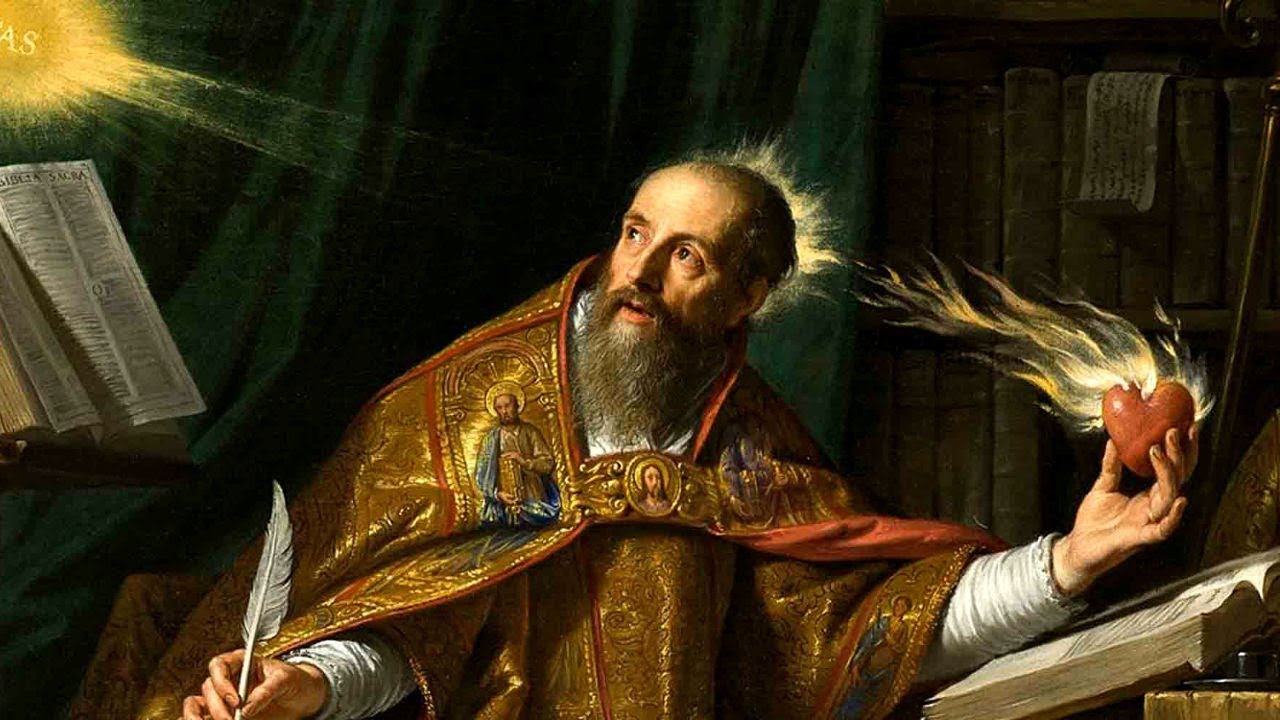
One side called us towards the inate dignity and sacredness of each and every soul. The other required salvation through a narrow gate, controlled by the power of the Church. You can guess who won the argument. Pelagius was written out of the Christian story.
In a previous post, I wrote this;
What would the world look like if Augustine had lost the argument with Pelagius? What if we had never been convinced of our ‘original sin’, but instead built our thinking around the idea of original sacredness at the core of everything that has breath?
Without the empire that would we have had the religion of Christianity at all? What else might have filled this space?
What if the old Chritstianity is at the end of one of its natural cycles of existence?
What if it needs to be born again, and if so, who will be the midwives?
 this fragile tent
Pingback: Remaking religion 3: organisation… | this fragile tent
Pingback: Indigenous spirituality 1 – can we learn from where we came from? | this fragile tent