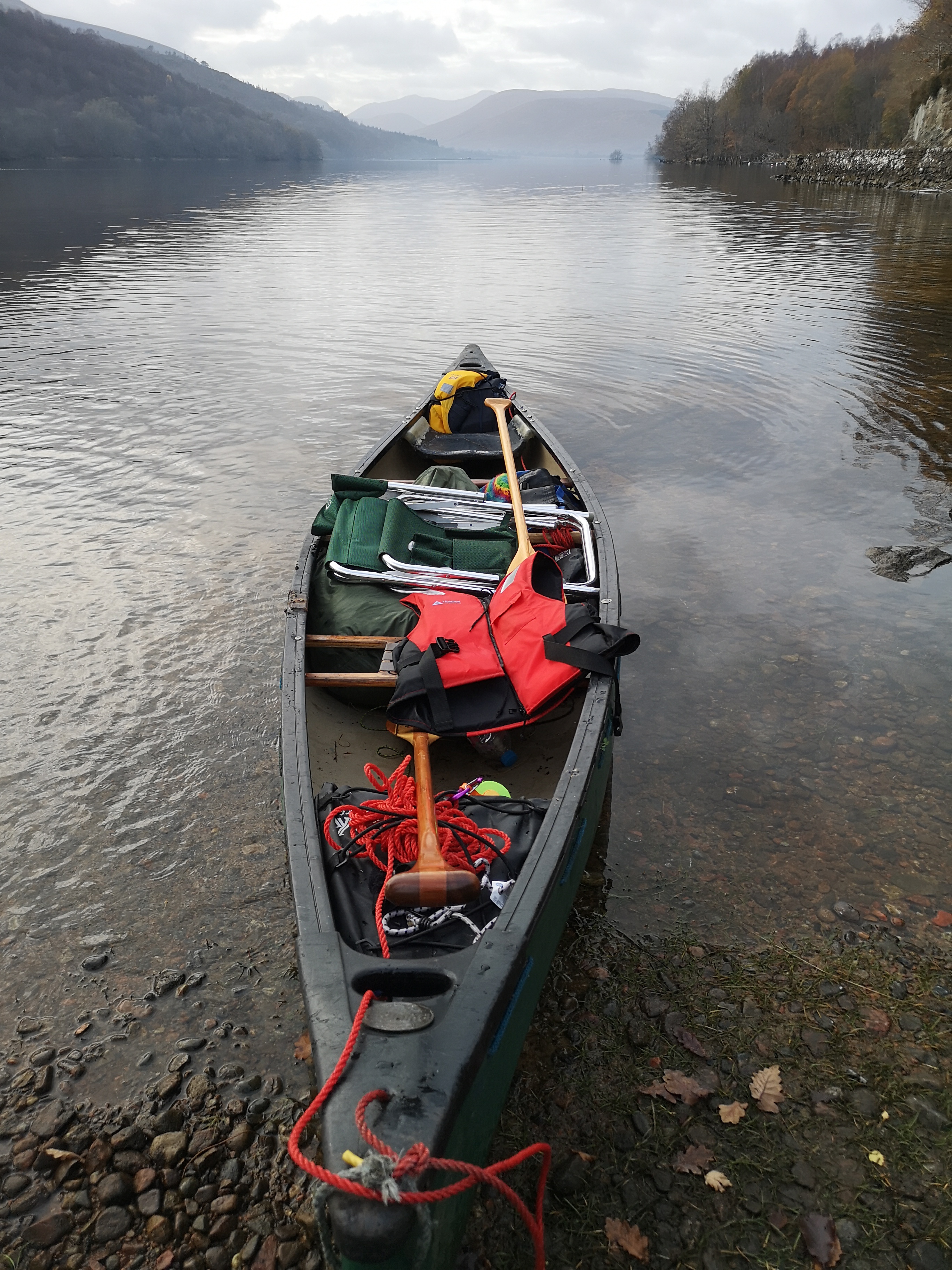
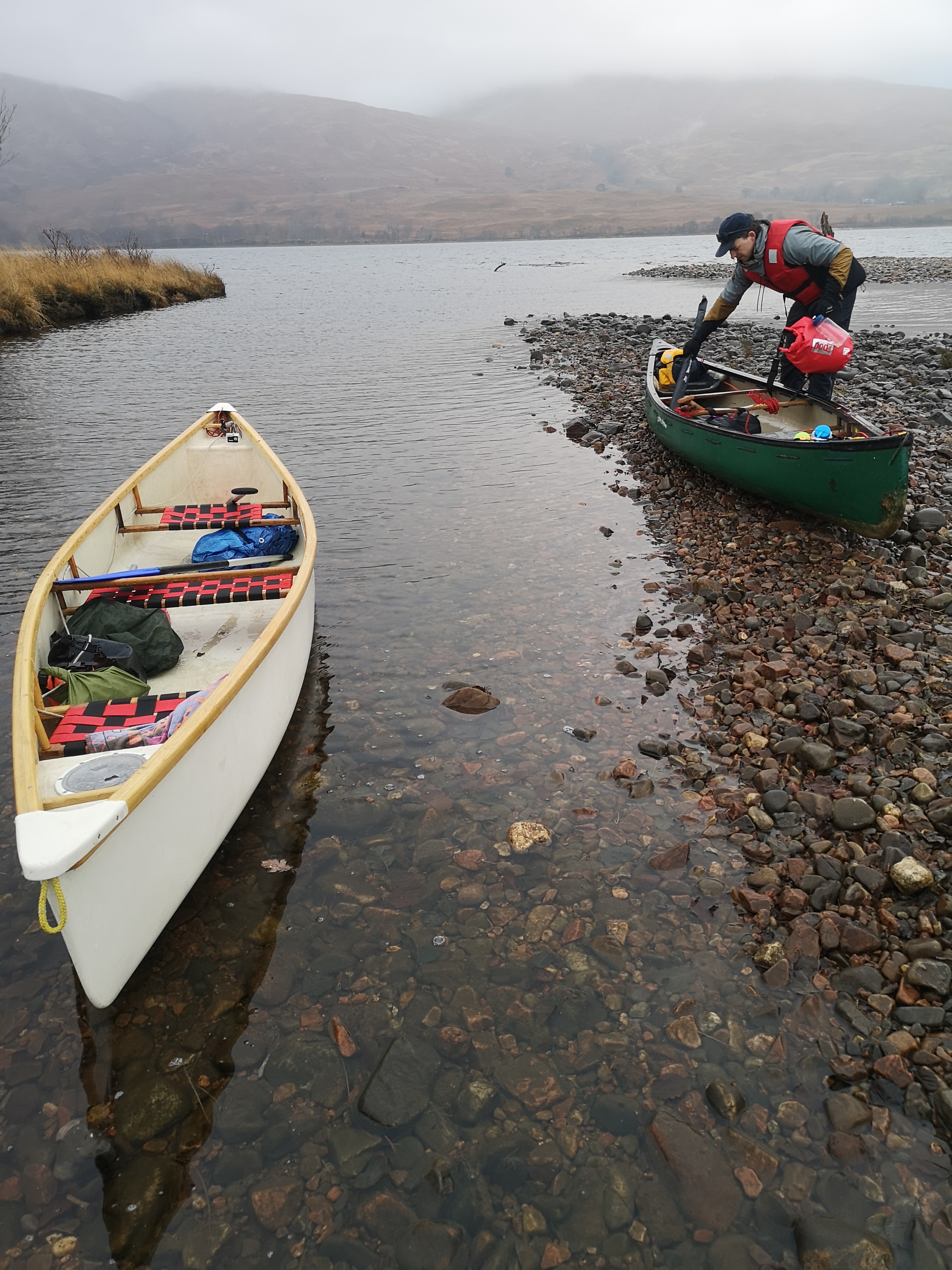
I am just back from a late Autumn canoe trip on Loch Arkaig, a place of sublime beauty, lined with ancient woodland and high mountains. We stayed in a bothy maintained by the Mountain Bothy Association, who make it freely available to the wide community of walkers, climbers and paddlers. There were four of us, and amidst the usual profanity and age-related moans and grouns we spent a lot of time talking about things that mattered. (I made a short video about the woods, here.)
In many ways, this landscape captures the best of what the Scottish landscape and history has to offer. The huge expanse of the mountains around a twelve mile long loch. Wild boar, deer, eagles, Ospreys (who had left for warmer places when we were there.) The Caledonian pine forest there feels holy, in the way it demonstrates connectedness, but also what being there does to me deep inside my chest.
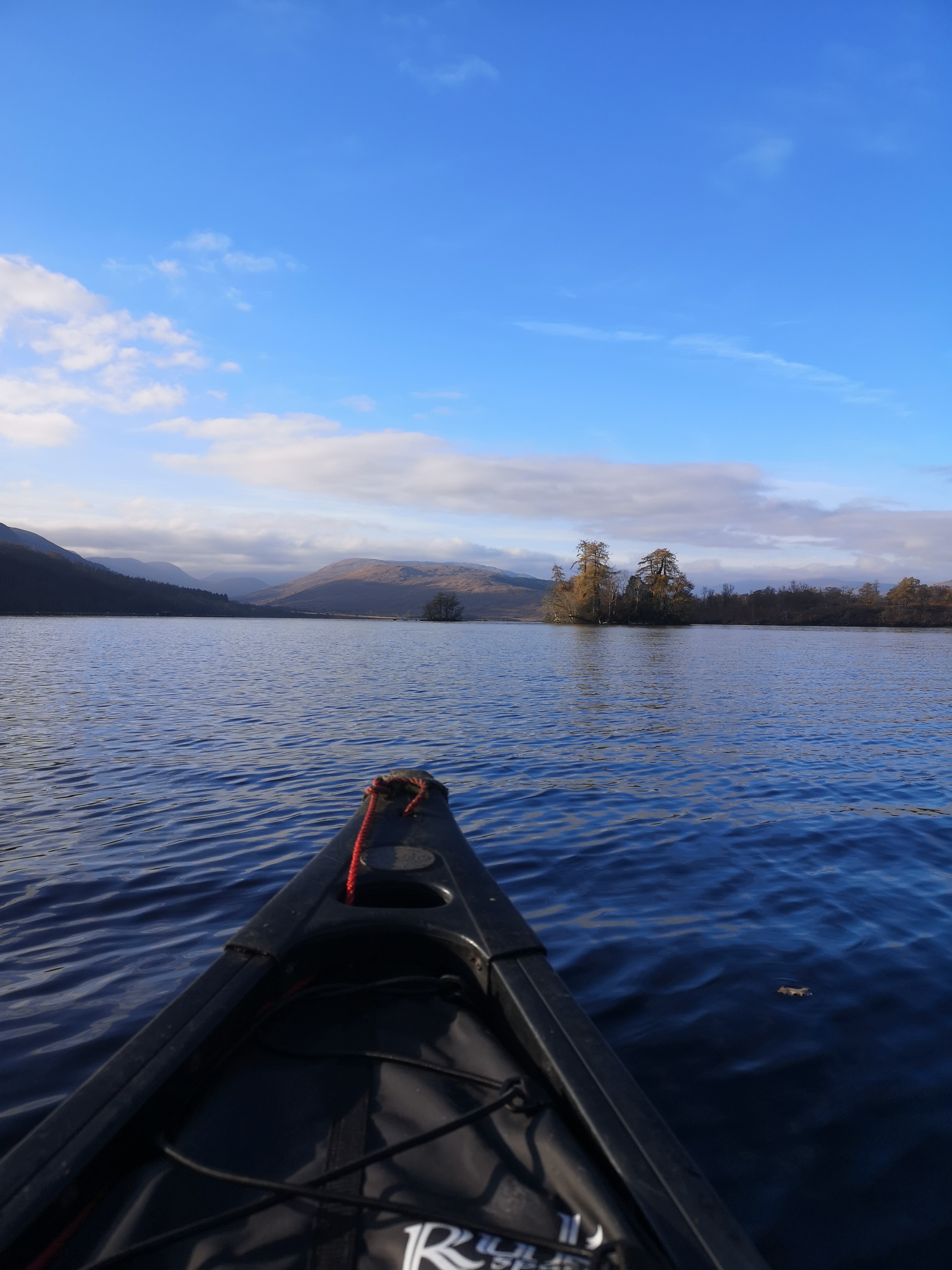
Out in the loch is a very small island with the remains of a chapel so old that no-one knows when it was built. It is known as St Columba’s chapel, and the island as St Columba’s island – who knows, it may well have a connection to one of the saint’s missionary journeys.
I always find myself wondering about what motivated Columba and his fellow Irish missionary monks. What problems were they trying to solve? Was it always about saving souls? Did they see themselves as right and the pagan world they set off towards as wrong? The assumption in the old stories always seems to be that these questions had obvious answers. Of course they were ‘right’, and of course those who had not encountered the Christian story needed to hear it. In a black and white world, colour is confusing. Better not to see it.
But perhaps I judge Columba (and his generation) too harshly, because their mission was not the same as those that came later – or at least I don’t think so. Theirs was a mission of peace to a world of tribal/clan conflict. What came later was much worse. Celtic Christianity developed and flowed amongst the culture and traditions of its time – perhaps even sitting alongside older spiritualities rather than replacing them. There is a much longer conversation to be had about this, but my point here is to wonder what might be the mission that religion would/could send us on now. What problems might/must we engage with? What cultural context might/must shape our mission?
It is worth saying right now that the religion we are largely leaving behind continues to make mission. I have been (rightly) critical of some – the legacy of which has left toxic stains across the world. Those kinds of missions had as much to do with cultural and economic conquest as they did with religion. They were a product of empire, a means of colonisation and subjugation. But despite this dark legacy, there have always been people motivated by their faith who have become activists of a different kind- peace makers, feeders of strangers, animal lovers, adventurers. Even now, if you look to the workforce of charities around the world – from our city streets to the furthest flung war zones – you will find that an outsized proportion who are there because of their religion. We should celebrate these people, and the way that faith has sent them on missions of healing and goodness.

My strong feeling is that people of faith have a duty – we might even say a religious obligation – to engage hopefully and critically with the context in which we are living. This means bringing as much passion, integrity and energy to bear as we can, illuminated by a set of principles not of this world (not of empire) but of another, sometimes known as ‘the Kingdom of God’.
This might mean opening our eyes to the spirit of our age, and exposing it to a different story- to the considerations of the Kingdom of God. At a time of widening inequlaity, of climate breakdown and mass extinction, of war-by-drone waged on defenseless children, we surely do not have to look very far…
This Kingdom of God always had a different set of priorities – above all, it was a call towards living in compassionate community with each other and with the beautiful world we are part of. In so many ways this simple, radical message was always at odds with the logic of empire, and as such, the counter-cultural part of the message was often reduced to a far less problematic priority of personal individual sins – particularly sexual sins.
Furthermore, the dualistic message that the old story was bound up in (saved/unsaved, evil/holy, sacred/profane) was never a good fit with the Jesus story, let alone the indigenous religion of the Jews. It was, however, a good fit with the logic of Roman exceptionalism (or all the other empire exceptionalisms that have followed since.) It has been so easy to forget this inside the small rooms we have made out of our personal religion – to imagine ourselves as special, and anyone outside our ‘chosen-ness’ as dwelling in darkness.
But this takes me back to the first post in this series, which is to wonder how a (religious) story might inspire action – or mission.
If we embraced that part of our tradition that calls us back towards connection to the earth – with our non human brothers and sisters – what missions might this inspire?
If we embraced that part of our tradition that calls us back towards radical inclusion of the outcast and outsiders, how might we use our homes and communal spaces?
If we embraced that part of our tradition that calls us back towards honouring the poor what will that mean for our comfort and our bank balances? When will we have enough? What will we share with those who have less and how will we share it?
If we embrace that part of our tradition that calls us to make peace with our enemies, then how will be relate to those around us? How will we hold the war-mongers to account?
And if these are the priorities of our religion as it seeks to make a mission in our broken and hurting world, then what collective rituals and practices might assist us, encourage us and inspire us? Where will we make our church, and what will it look like?
Mostly the mission this might send us on will be human-scale. Those who get to influence great events or act as major change agents have a rare and precious opportunity.
The rest of us use what power we can within our arms reach – and this is not a small thing. A mass movement of individuals can be more powerful than a King, but what might create this mass movement in an age of a million divisive voices screaming at us through all those little screens?
If not a religious story, committed to action that is as loving and truth-centred as we can make it.
There is nothing else worth living towards.
 this fragile tent