I wrote this article for the Iona Community magazine, Coracle. Not sure if it will make the cut, but here it is anyway.
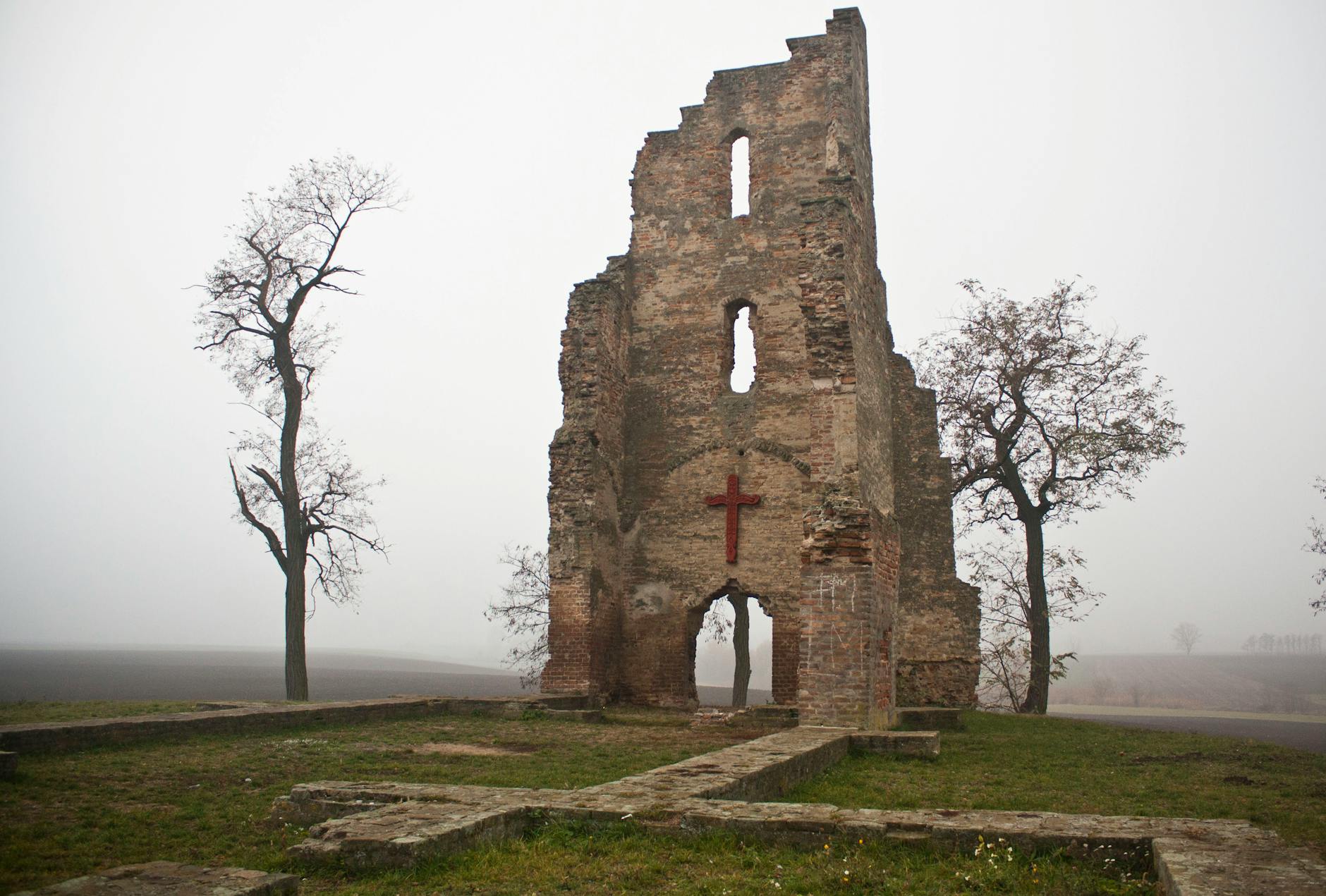
What will we be if the Church is no more?
Here is something that will upset many of you- by any measure Church is dying. I should know, because as well as all those statistics, it has died in me. I am part of the new member uptake from 2025, but I do not currently go to ‘Church’. I mean no disrespect to those who are still faithfully serving as Church leaders, priests, pastors or ministers, but my journey through different expressions of faith has brought me to a different place. Rest assured though- I am not done with community making or seeking to explore faith and meaning with others, it is just that – for now at least – I find myself outside the institution.
I am very far from alone – so I want to do my best to speak for those like me, longing for God (even as we struggle to name her.) Desperate for meaning and stories. Angry at how Church has so often been a tool of Empire and colonial subjugation. Suspicious of all attempts to bring us back inside because of our woundedness. Both drawn by – and repelled from – religion of all kinds. Refusing hard boundaries or finger pointing. Seeking deep connections between earth and soul for the sake of the planet. Desperate to see change towards grace and peace in a world that seems to be careering towards the opposite. Looking for authentic examples of how people have transcended these tramlines. Sensing the beautiful beyond in music, in poetry, in acts of protest, in old forest and longing to share this experience with others in ways that feel meaningful. You might well tell me that this is the Church you already attend, which demands the question of why those like me remain outside?
Any examination of UK statistical surveys will show us that fewer and fewer of us participate in organised religion. Recent suggestions of ‘Quiet Revival’ following research commissioned by the Bible Society (1) was seized upon by some, but the evidence continues to point in the opposite direction For example, the most recent British Attitudes Survey (2) shows that young people are not filling up our pews and decline in participation continues. The number of us here in the UK who attend Church even sporadically is now below 10% and is expected to fall further given the age profile of people within Churches. What has not changed however is 40% of Britons who self-identify as ‘Christian’. This has been pretty stable for decades. Three quarters of these people do not feel able or willing to attend Church and this has been a conundrum that we have tried to solve throughout most of my adult faith life.
In my experience, those who are active in religious circles tend to have a very low opinion of Christians like me. The assumptions made are that that we are ‘passive Christians’ or ‘luke-warm’, or ‘back sliders’. Perhaps we are, but what do I feel this calling towards something beyond Church so keenly? Why is it that something new is singing in my soul? Could it be that God is doing a new thing, and this this might not look like ‘Church’ as we have known it?
There has been helpful work done by researchers such as Steve Aisthorpe (Author of The Invisible Church (3)) and Katie Cross (from Aberdeen University) (4) pointing us to a much more nuanced – and even a hopeful – picture of what happens to those who leave Church. These people often retain very active faith, continue to make spiritual communities which explore what it means to be Christian. We might be forced to concede that the largest part of the ‘Body of Christ’ here in the UK is outside formal Church. There may well be a wide range of reasons for this but as Katie’s research has shown, there are commonalities. Many have been wounded in some way by the institution. The slowness of change and the continuance of so many conservative ideas on gender and the rights of women is also clearly a factor. Then there is the wide sense that somehow the Church is no longer relevant, not able to engage in a meaningful way with the omni-crisis of our modern times. There is perhaps too a sense that Church – despite the fine tradition of ‘troublesome priests’ Church has become like cold lava, unable to flow or change. It is like an oil tanker trying to turn in narrow water. It is like all human institutions. It is what Ivan Illich saw happening to all human tools- trending towards the unconvivial.
We do see a rise of some kinds of Churches. They were increasingly American influenced- that no-longer new empire of the self-made individual, whose personal Saviour guarantees life, wealth and happiness, and rejects anything that looks like ‘socialism’ such as collective action on climate change or poverty. If the problems of the old UK protestants often related to our Victorian origins, this new American perspective brought new corruption into the ways of Jesus. It took years to disentangle myself from it all, thanks in part to finding a movement of other people on a similar journey. Many of these too are now outside of Church – a whole generation of activists and leaders burned out on religion. The ‘Emerging Church’ language that was part of our recovery feels ancient now, but looking back, it was a movement away and against more than it ever articulated alternatives. It was about loosening the grip of old religious dogmas, deconstructing meanings and ultimately setting us free to re-imagine and re-engage with what it means to be Christian, but the energy it contained did not result in a new form of Protestantism – there were perhaps too many of these already.
In the decades since all those earnest discussions, blog posts and social media storms, a lot has changed in the world outside organised religion. Here in the rich north we are increasingly excarnate, finding life and meaning through online avatars shaped by algorithms and AI processes we barely understand. A pandemic came and went. The world seemed ever more cruel and heartless. Our politics and our economics offered no new solutions. The climate continued to break down. Inequality got worse. The loudest versions of Christianity became less Jesus-like and more wedded to fascistic politics that serve best the powerful.
Can the institution of Church respond to this new reality? How many reports and conferences have you been to that have explored this question in the last decades? How many books have your read or even written? How can those good people still active within Church ever find energy to do more work than they are already doing, looking after their aging flocks, running food banks and creches, visiting the sick and ministering to weddings and funerals? What do we do with all these empty buildings?
And what of the diaspora of Church leavers/survivors like me? Are we a lost and aging resource that need to come back into the fold? Or might we yet be part of a new movement? There are so many unanswered questions. Here are a few more.
If people do not attend Church, what does community-making look like? Might it be more ephemeral, more hybrid, more fluid? How do we do this in an excarnate world? What does authenticity look like? What stories bring us together? What stories keep us apart? Can community be made without membership or belonging? What about the children? How do we add power to each other through collective action if we stay apart?
Without the hierarchy of Church how do theological ideas and stories get made and shared? Who keeps all this safe? Who can we trust? Can we influence and inspire without the power or wealth of institution? Without paid clergy or regular meeting spaces?
What does a good life look like in our context? What do we celebrate? How do we live out the counter-cultural kingdom here and now? Where do we need to make peace and proclaim jubilee? Where does justice need to flow like rivers? Where is Jesus calling us to be salt or light?
Who are our prophets? Are these the musicians, the film makers, the poets? Who is seeking to give these people a platform and to celebrate with them? Whose work will light up our souls?
Who are our priests? Are these the networkers, the creators of temporary community spaces, those who carry mercy in their souls and offer radical hospitality?
Where are our cloisters? Where are those seeking to live out radical lives that explore alternative ways of being followers of Jesus? How do we network, support and include these people?
Who is looking after the activists? Who patches them together after imprisonment or tear gas exposure?
Who is offering people ways back into the Cathedral of the forest? How do we make our dogma and practices subservient to Celtic way of the community of all things? How do we provide ways for a mostly urban population to experience this once more, for the sakes of their mental health and the sake of the planet?
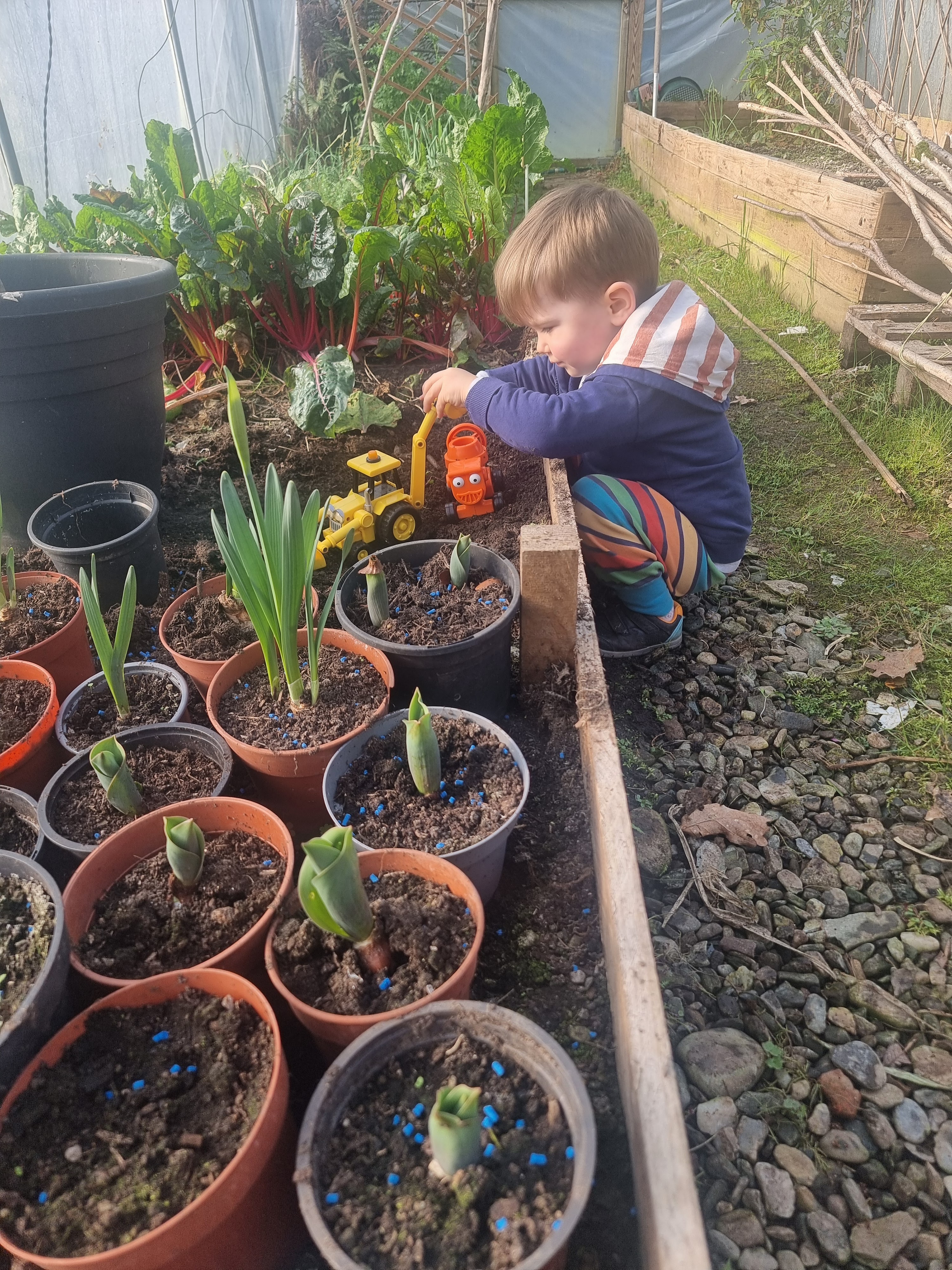
I don’t have clear answers to most of these questions but I no longer worry about Church- it belongs to God after all. I am done with trying to save it, or expecting it to be something it is not We still need the formal institution of Church and I always will, but we should also expect the Spirit of God to be at work in new ways. In other words, the title of this piece is redundant. We will never be without church. But we might be without Church- many of us already are.
All of which brought me to the Iona Community, currently exploring full membership. At my application interview, I was challenged about my non-attendance of Church, and I expect to be challenged again – in fact, I look forward to lots of late-night conversations with some of you.
But there is no doubt in my mind that dispersed community has a part to play in this new paradigm that we find ourselves emerging into. By accident we have a vehicle that engages and interacts directly with some of those questions above. I think that is exciting and I hope you do also.
Notes
- https://www.biblesociety.org.uk/research/quiet-revival
- https://humanists.uk/2026/01/28/gen-z-churchgoing-is-actually-still-declining-new-british-social-attitudes-survey-shows/
- https://standrewpress.hymnsam.co.uk/books/9780861539161/the-invisible-church
- https://thisfragiletent.com/2024/05/12/what-happens-to-those-who-leave-church-2024-update/
 this fragile tent