

Today I posted this message on Facebook;
I grew up in and around Churches. Most of my early adult life involved participating in, playing music for and serving the people of church. Then, after becoming increasingly unable to cope with narrow factional forms of faith, I left, albeit for at least a decade to become part of a small community of faith.
At present, I do not attend ‘church’. I can have a long conversation with you about why this is, but many of my friends are in just the same position.
For most of us this is not about the loss of faith – it might be that the way we think about this faith has changed and traditional forms of church no longer felt relevant. That is certainly not intended as a criticism of Church. We still need those who travel in the big old religious ships, even if many of us want to get into small boats.
Through the work of people like Steve Aisthorpe, we now know that we ‘church leavers’ form the majority of the people of faith in the UK. You might even say that these people ARE the church now. The old insitiutions have been and are continuing to be, hollowed out.
If this is true – if the church is now scattered, not gathered – what sort of support might people need? How do we collectivise? How do we teach? How do we debate? What the word ‘Christian’ still mean and do any of these things still matter in a world of global warming and mass extinction?
If this is of interest to you – and if you too are a church leaver, then you might like to add your voice to some research being undertaken by Katie Cross at Aberdeen University. You can join on on this link.
I wanted to reflect on this a little more. I have posted previously about Steve Aisthorpe’s research into this area, no least this book

Or you can listen to a very good podcast with Steve talking about his research here.
We very much need people like Steve and Katie to enquire and research in this area, but more than this, it seems to me that we have to start thinking about ‘church’ in a different way. After all, we have tried for years to revive the old forms of Church. There have always been isolated success stories, but we know that the general pattern has been towards a decline in Church attendence for generations now across the Western world. I think responses to this decline within the insitituion of Church have led to attempts at innovation for a long time. I have been involved in some of them myself even.
The marketing approach
There have been a succession of attempts to get church to be more ‘seeker-friendly’, as if all we needed to do was to sell religion better. We had to have snappy answers to all the questions, sing modern soft-rock worship songs, serve coffee and doughnuts after the services etc etc. Alongisde this, we had an interest in ‘friendship evangelism’ (which always seemed a bit bait-and-switch to me) and dozens of versions of The Alpha course. This might actually work in some individual places, for a while at least, but the overall decline continues.
The embittered remnant
There are many small religious Churches, particularly those on the evangelical/pentecostal wings of the church, who see the decline as evidence of a sinful, permissive society. The fact that so few remain strengthens an idea of an eclusive elite who are waiting for the second coming of Christ, or the Great Tribulation (depending on the paricular interpretation of the Book of Revelation.) These communities see little or no growth, and decline as old stalwarts move on to glory.
The innovators
I feel most connected to those (including many of my friends) who are still trying to put new wine into the old wineskins. They are running messy church, forest church, alternative worship services, meditation groups, book groups, podcasts, art events, poetry circles and on and on. Many of them are also concerned about social justice, so others are running food banks or meal clubs, or addiction cafes, or mother and toddler groups. These people are the heart of much goodness in the middle of our communities. These people may well not be concerned with growing the numbers of Sunday attendees, but without a willing workforce, how can all this fantastic community activism continue? Who will champion the causes of the underclass, if not the Church?
The community makers
I have also travelled these roads. In leaving big Church, we started to do small church. We met around the table, we set up community events in the woods, in village halls. We did music, art and became Greenbelt Festival contributors. Our community lasted ten years, before it was time to stop, and this is the problem. Most groups like ours are ephemeral. They start well, usually led by pioneer types who bore easily, but what starts fresh soon feels stale. Organisation, holding together difference, staying focussed on things that matter- these things are not easy. Most groups like this have a shelf life, and after being in one, it can be hard to commit to starting all over again.
The wandering pilgrim
Those of us who have trod some or all of the roads above, but have found ourselves no longer part of any organised group can often feel alone. We still have friendship networks, podcasts, books. We may even be occassional attenders of religious services, but experience has made us wary of joining, for all sort of good and perhaps some bad reasons. Our theology shifts and finds new shapes because doctrinal conformity seems frankly ridiculous when the boundaries of faith are no longer policed by spiritual power brokers. Perhaps the new light we find is delusional, or perhaps we are in error, but increasingly we start to form the idea that what matters is not what you beleive but rather how we live our lives; what meaning we are inspired by and how we might move towards better.
The problem is that we are still alone. We form no salvation armies, open no food banks, make no converts,
But we are not going back.
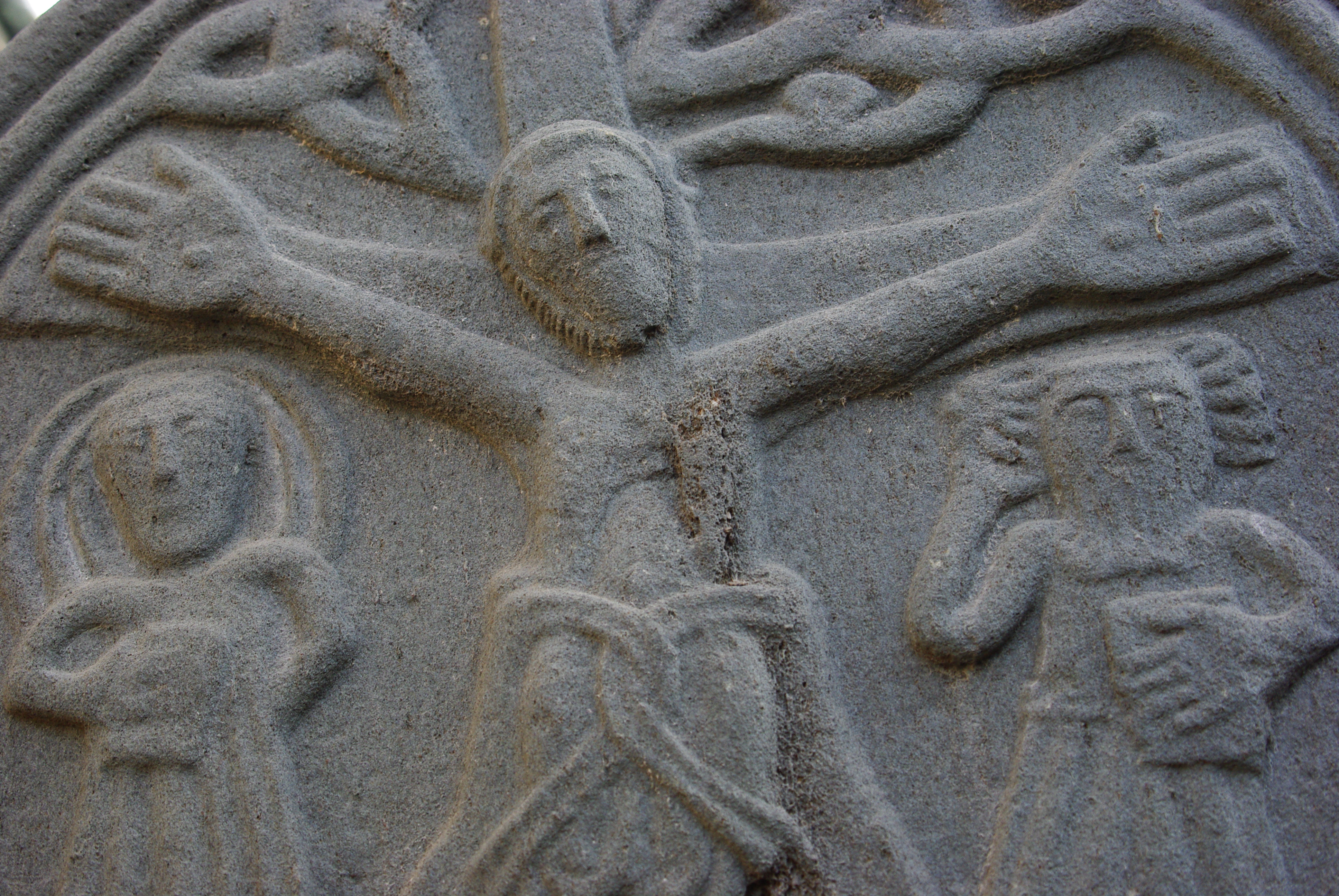
I am often uncomfortable with the label ‘Christian’; It chafes, like a set of someone else’s clothes. I rarely apply it to myself, and when others, perhaps in response to reading one of my poems ask me directly, I usually prevaricate, wanting to narrow the descriptive field. The interesting thing though is that I do not say no.
If I am one of those wandering pilgrims I described above, it is because I am still looking for meaning – not ‘answers’ but meaning. I sill hope that light will get in through the cracks and have noticed that, for this particular pilgrim at least, this light is a particular shade of brightness when Jesus is involved with all that is beautiful and all that is broken.
In the wider sense, I find myself giving voice to something that sounds like it might have been uttered by those embittered remnants. We are living in a society that has lost its moral compass. Perhaps it never had one, but without religion, how do we unleash ideas of goodness? How do we commission people towards acts of grace? How do we measure our sectarian politics and find it wanting, thereby imagining something better? I make no claims as to the exclusivity of religious ideas to achieve these things, but we have to acknowledge that it has done so in the past… (whilst also remembering all those not-so-good aspects of the institutional religion that got in bed with empire.)
So, this question remains;
If this is true – if the church is now scattered, not gathered – what sort of support might people need? How do we collectivise? How do we teach? How do we debate? What the word ‘Christian’ still mean and do any of these things still matter in a world of global warming and mass extinction?
 this fragile tent
Huge thanks for this Chris… your words certainly resonated for me – particularly ‘The Wandering Pilgrim’ – and conveyed my frustrations and uncertainties in a way I have previously struggled to put into words.
Hi Steve, thanks for your kind words. One of the differences for we pilgrims these days is the internet! We can wander together…
Thanks Chris, this is very much the wrestling we have with the Kairos Movement – do we need some sort of cohesion, if so how do we do that? Maybe we fall into the Community makers camp, but we’re trying to support one another as a dispersed community.
I look forward to finding some wisdom in other peoples comments and musings. Thanks for creating this space. It makes me wonder – Is the transient sense of connection enough? Or enough as part of a mix of other connections?
Hi Liane, thanks for the comment, and lovely to hear about Kairos. It seems like a lovely thing- a loose network seems almost as organised as most of the small missional groups I have been in and around could ever tolerate, although friends of mine were part of a community up in Aberdeen that effectively networked a group of house churches that met once a month as a whole. I think we DO need these connections. For me in the past, a lot of this happened in and around Greenbelt festival, but I have become more of the wandering pilgrim of late. A friend and I put some work into trying to bring together some kind of post-church gatherings, but both of us got a bit leadership shy so shelved the idea, at least for a while.
Transience seems to come with the times though, right? Perhaps this is partly because of the post (post!) modern thing, but also many of those who are involved in small missional groups are church survivors- or at least I think so- so are triggered by big organisation. The challenge will be longevity and what about those who have not had the previous experience of formal church?
My general feeling is that doctrine matter far far less than we used to think, but then I come up against people whose beliefs are very different to mine, and I wonder whether it matters after all! Open, accepting community where we value difference is hard hard work, and at some level we all need our tribe.
….random scattergun thoughts!
Yes! to this.
What leadership even looks like at the moment, the idea of creeds and doctrine are all ideas that go round and round my head – there are big shifts afoot & sometimes it feels like grabbing hold of handrails in a landslide, I have thoughts that feel firm for a while and then I realise there is nothing underfoot. At other times the freedom is exhilerating.
I think a random scattergun of thoughts is really useful. Thanks
Pingback: Dispersed networks and the post-churched… | this fragile tent
Thank you for this helpful exploration of where many folk are in their walk with Christ. I like the original name Followers of the Way which contains the idea of movement and purpose. Someone once wrote comparing solid to liquid church, which both have their disadvantages. I prefer the biblical image of the church as the body of Christ, which is porous and can breathe and be open to new adventures. What does the church have to offer in this day? An all-age community which is rare, where we learn from one another, belong and serve together, looking outward to the needs around us. A group which meets together to break bread, and which provides a place for folk to explore issues of faith, identity and purpose. Our alpha group has a single mum from the local council housing who attends with her child, a student, a lawyer, an older man wrestling with doubt. Where else would you find such a mixture of people from different backgrounds, learning together and supporting one another? The church always need to be renewed in the image of Christ. Philip Yancey wrote that this might happen through artists, pilgrims and activists. Everyone inside and outside the church has a role to play.
Hi Rupert thanks for your thoughts! I think the liquid church reference might be Pete Ward?
Pingback: What happens to those who leave church? (2024 update)… | this fragile tent
Pingback: Remaking religion 3: organisation… | this fragile tent