
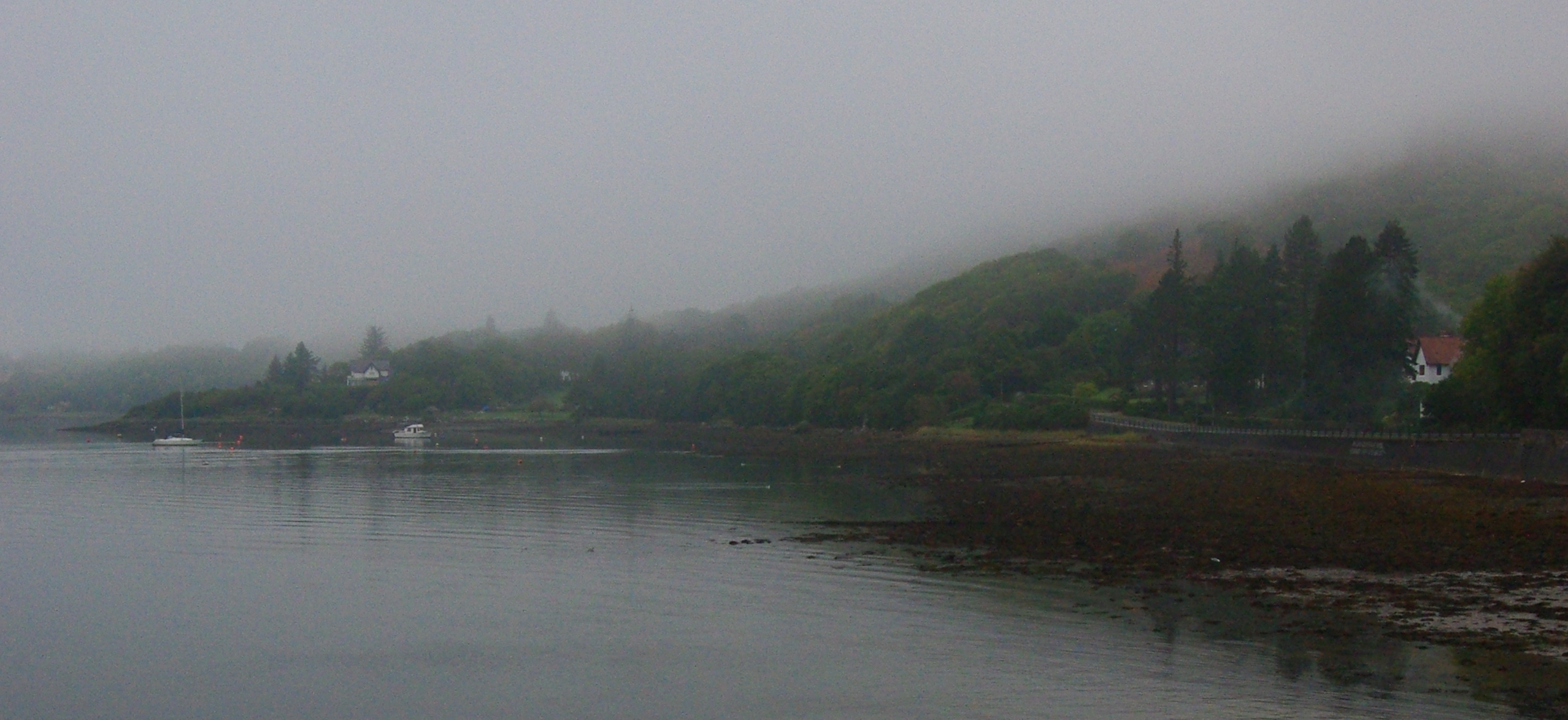
For a while now I have been exploring/circling around/discussing/reading about/reaching towards a new spirituality – at least to me. After all that deconstruction of the old religious paradigm so often explored on this blog, I am catching tantalising glimpses of shapes in the mist ahead… like one of those heavy days of fog when darker shadows suggest maybe an oak, or a looming rock formation. The only way to tell is go forward carefully listening intently for the odd returning echo.
There is a problem though in describing any spiritual journey, in that it can be like pinning a rare butterfly. I do so mostly through poetry these days, despite having so many books of theology on my shelves. My friend Polly (whose companionship has been so important already to this unfolding process) warns against any spiritual process than does not start in PRACTICE. She would have us all experiencing the wild, listening to the wild, allowing ourselves to be befriended by the wild, rather than the more common western religious traditions of first defining a thing in terms of head-first concepts, then only later seeking to apply these in some kind of (often disembodied) religious activity.
Why then might I persist in this process of trying to describe some of this journey?
Firstly, despite the warnings above, what brought me this far has been, in no small part, theology – very much with a small ‘t’. I love ideas – I get excited by them, and I have direct lived experience of how they can indeed be catalysts for change in my own life as well as in wider groups I am part of. It is not one or the other, rather how one relates to the other.
The way I am thinking about this just now is that we desperately need practices and principles – particularly those modeled by pioneers and edgewalkers who go ahead of us – that might allow us to find new meaning and hope in the midst of the omni-crisis we are living through. However we also need others that give us language and some kind of scaffolding for this unfolding, or it can never become a real movement for change.
We know the ‘problems’ that our faith techologies need to help us navigate in the present – climate breakdown, an age of ecological extinction and habitat destruction, accelerating wealth inequality, individualism and disconnection from each other, an age of addiction to the very things that are destroying us. Meanwhile our old political/economic/theological systems appear to offer no solutions, just answers to questions that no longer seem relevant or at least no longer precient. Alongside these failures others are deploying the old tools of hate and fear in order to distract and divide – it seems to be working too because what else is on offer?
Thomas Berry put it like this;
Even when we try to bring religious influence to bear on these issues we find thst our religious traditions have little relevance to what is happening. Our western religions exist in a different world, a world of covenant relations with the divine, a world little concerned with the natural environment or with the Earth community. Our sacred community is seen as primarily as one concerned with human-divine relations, with little attraction toward a shared community existence within the larger world of the living. Our iconoclasm is such that we hardly think of ourselves within a multispecies community or consider that this community of the natural world is the primary locus for the meeting of the divine and human.
Thomas Berry ‘Evening Thoughts’ pg 48
Does a different kind of religion exist? If not, we must invent it.
We Christians must worry a lot less about the Jesus who died for individual sin to save souls from hell and instead listen for the voice of the Christ who loves things by becoming them as that other great Catholic teacher Richard Rohr suggested. This Christ is not a ticket out of punishment for a chosen few, but rather the substance behind all substance, the great spirit who sings in the soul of everything. This Christ is not descoverable in abstract disconnection from the community of the natural world but rather by more complete connection to the mess that made us.
What might this kind of religion look like in practice? I do not mean in terms of doctine or theology, but rather the journey these things send us out on.

I believe that a different kind of religion is possible- in fact it already exists, both within the tradition and as current practice. It is not (and has perhaps never been) mainstream but I believe many are increasingly seeking this path, even if they have not yet been given a language or story that articuates the longing that they are feeling. We feel deeply the dissonance between our sacred humanity and the destruction of the community we come from and are held within.
As Berry puts it, we cannot have well people on a sick planet.
I might also say we will have no heavenly salvation without earthly communion.
Another voice saying much the same things is writer John Philip Newell;
Today we are in another era of change, perhaps the most important we have ever faced in the history of our religious inheritance. It can be called The Great Search. We are seeking healing as an earth community, and we are longing for a new sense of home spirituality.
John Philip Newell ‘The Great Search’ pg 11.

What then can be said (by me) about what this new/old religion might look like? If Newell is right, what are we all searching for? I am certainly not claiming that this search is over for me, but I am starting to see some important direction pointers. Some of these are from the ragged messy thing known as the ‘Celtic tradition’. Others are borrowed from teachers like Rohr and Berry. Others arise from the logic imposed by my own broken experiences.
From original sin to original goodness
Pelagius was silenced eventually by Augustine but not completely – in the Celtic world at least. If we stop seeing ourselves and our fellow humans as essentially evil, then how might this change our relationship with each other and with outr own souls? If we discover God in the human spirit not by addition but rather by subtraction – by peeling back our layers and going deep to that part of ourselves that is Christ – then how might we start to understand the human condition? What are the obligations of this understanding?
If we start to see others as carriers of the divine, rather than people excluded from the club of the privileged and redeemed then can we still bear to accept injustice, prejudice or the poverty and inequality imposed by empire?
From one singular ‘incarnation’ to two generalised incarnations
Christ came to us as the world, not just into it as Jesus. I am not really interested in defining this in terms of pantheism or panentheism, but these concepts and the different between them might be useful to you. In this way of thinking though, the first incarnation was creation- that great unfolding of god into all the shapes and colours that continue to explode outwards into the universe. The god who loves things by becoming them. Jesus was a further revealing of what we had failed to understand – the second incarnation. Whether this was different to the first, or merely a more specific part of the same I leave to you.
From propositional truth towards connection with the flow of the wild
If god is the substance of all that is, then how might we listen to her? How might we pray? How might we seek to understand and learn how to love? Might we learn as much from trees or the flight of birds as we can from ancient scriptures? Can we read landscape as we used to read scripture? Might we not better understand these scriptures in the light of their relationship with the wild? Of course, some teachers and prophets always knew this – Saint Francis for example. Indigenous peoples never quite forgot. The rest of us have much to re learn. It is in the seeking after community (communion) in its fullest and deepest sense that we discover who we really are. This is what love is after all.
In a world of climate breakdown – associated with economic injustice and unsustainable extraction in relentless pursuit of wealth – what is the path of love for those who are seeking full communion with the earth?
From narrow doctrinal correctness to generous praxis
The protestant project has been a tumbling succession of people proclaiming their truth to be the only truth. What if we just decided that what we believe is less important that what we do? What if being ‘right’ is not about how we shape our doctrine but how we live our lives? If this is true, then we also have to accept that god herself is open to varience and variety in both religious and spiriitual language. If we can accept this (and yes, this is in itself a doctrinal position) perhaps we might start to focus on the big things that matter not the small things that divide us. Doctine then might be more about keeping the peace, not policing our election.
From sacred buildings to the sacred wild
A logical progression from above is that the meaning of sacred space explored by our rituals and ceremonies must change. This does not mean taking the shape and sounds of our church services outside unchanged, rather it means creating and discovering new ways to engage with the great incarnation of the wild as both individial and collective practices. Buildings might still be useful in our climate, but we must start to migrate the centre of our practice towards the wild, in order to better understand ourselves as part of a human and non-human community or family.
From saving souls from hell to bringing heaven to earth
What is the mission of this new church we are making together? For those of us from the Christian tradition, what cross are we carrying? The mission many of us grew up with was about convincing people that their eternal souls would be punished unless they became Christian. Unpicking the whole theological machine that underpins that mission has been a long term project for many of us, but perhaps also left us with a void. What are we called to be, to do, to live our lives towards? What does redemption look like? What about salvation? What is the purpose and calling of the agents of the Kingdom (or community/insurgency/family etc) of god? This is the question we all must ask, but experience tells me that we will tend to answer this contextually, from inside the theological story that we have been given. If this story changes, then the mission must change too.
The story many of us are drawing close to is one that describes our deep sacred connection to the holy wild. We understand this connection to mean that all living things are our siblings and carry within them the same am-ness that is within us. Surrounded as we are with so many ways that humans have failed to live as siblings with both our human and non-human community then the path of love is towards redeeming through restoration, salvation through inclusion and reconnection.
I feel like I a scratching the surface here, but is this not what we have always done?
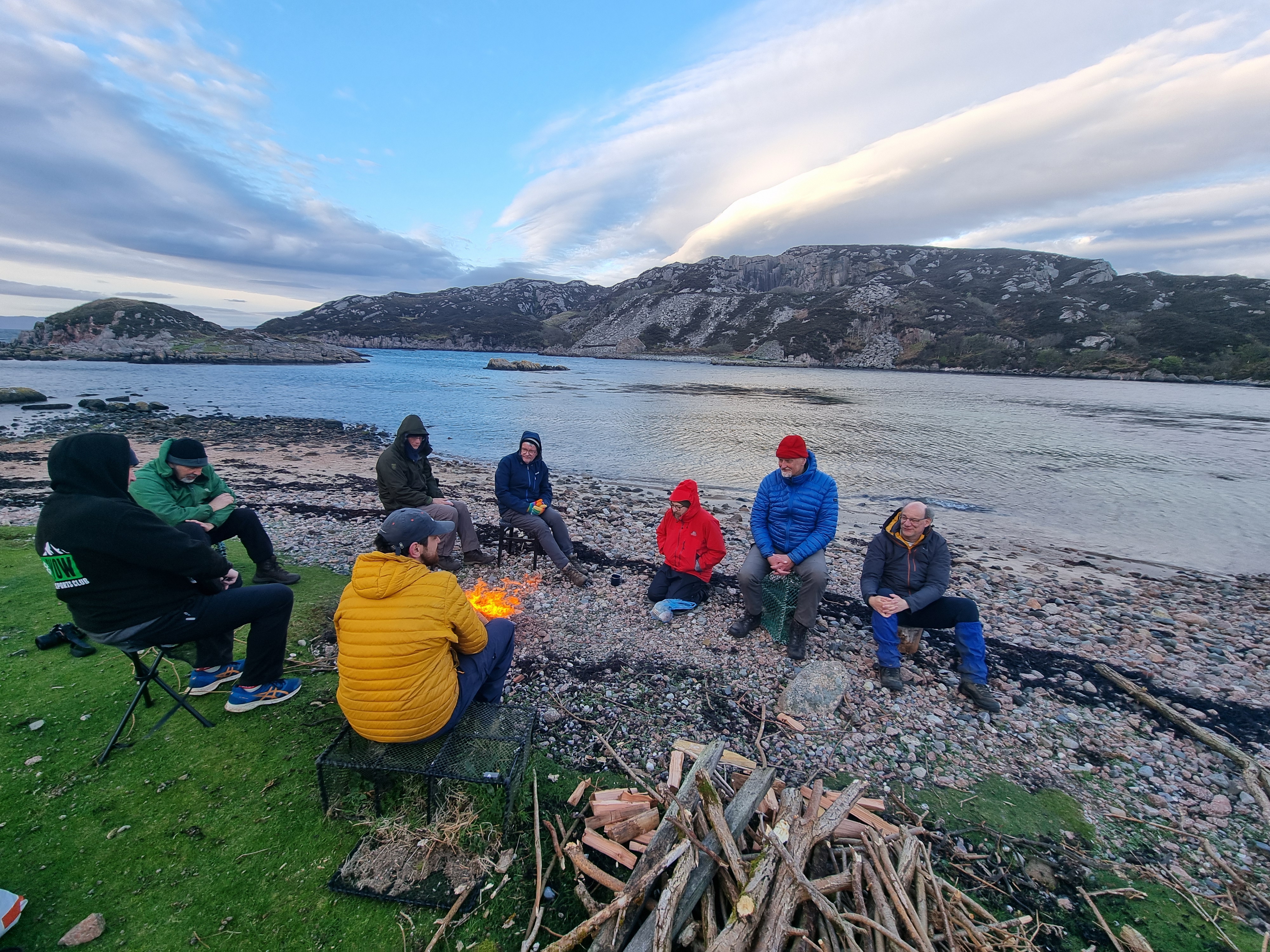
We seek goodness in small community. It is the best we can ever be.
Christus

Not Messiah, but memory –
You are what we once forgot.
Woodsmoke.
A curve of earth
Towards completeness.

Not God, but goodness -
You are what we left behind.
Compost.
A fecundity of light
Awakes this forest floor.

Not Risen, but wide open -
We are not just the sum of skin.
Mycelium.
An animal whom, despite of evolution
Finds value most in kindness.

Not Saviour but revelator -
We search those stars in vain.
Insemination.
A pulse pounds insistently when
There should by rights be silence

CG


Pingback: In which I come out as an overly romantic follower of Celtic spirituality | this fragile tent