4 thought TV…

Just discovered 4thought.tv “A series of highly personal short films, broadcast 365 days a year, reflecting on a broad range of religious and ethical issues, and aspects of our spiritual lives. These 90 second films challenge some traditional views, providing a platform for both scepticism and devout religious beliefs.”

Somehow passed me by, but there is some wonderful stuff-

Here is a little Foy Vance

Then there is the polar opposites of the homosexuality debate-

And lots more besides!

I think I might be visiting from time to time…

Richard Rohr on Dualism…

My friend Maggie sent me a link to a quote from Richard Rohr the other day. We are both looking forward to hearing him speak at Greenbelt Festival in a couple of weeks.

(Yikes- a couple of weeks! Aoradh are doing various things at GB, and we have a lot of work to do before we will be ready!)

Anyway, the quote tapped into the theme of dualism- which I mentioned before- here, and has also been a central idea in McLaren’s recent book

Dualism.

As applied to theological understanding, this debate goes something like this-

Western civilisation has been hugely influenced by Greek philosophy, and in particular the work of Plato.

This is not a new idea- I have been in a number of emerging church discussions that have highlighted the contrast between the philosophy of the ancient Hebrews with the potential skew in perspective that comes from wearing our Western Platonic goggles. But it is an idea that appears to have become increasingly important as we seek to re-engage with the ancient scriptures, and as some of the core tenets of our faith are being reshaped.

Plato (in contrast to the polar opposite- you could say ‘dual-‘ position of Aristotle) regarded all that was of the earth as temporary, worthless- a mere shadow of the ultimate reality. Ultimate reality is not material- it is the essence behind the fumbling form and shape we humans give to things.

The end result was a culture skewed towards division. Enlightened thinkers tended to view the world as made up of the profane, and the sacred. The sacred was unchanging ultimate reality, whilst the profane was changing, shifting, worthless.

The tendency to divide every subject into two seems to have been pervasive- left/right, good/bad. evangelical/liberal etc- the dualities multiply and abound.

As these ideas mingled with the founders of the early church- who after all were at the centre of the Greek/Roman world that embodied this dualism in terms of their philosophy and origins- then it potentially had some powerful effects on religious thinking-

  • The sense of the material world being of lesser importance than the ultimate reality of an orderly, dispassionate unchanging God.
  • The resultant need to focus on winning souls, as a priority over any other religious activity.
  • The in-out stuff- the us and them stuff. We are enlightened and saved- you are not.
  • Enlightenment means becoming aware of our imperfection, set alongside the perfectness of God.
  • In the creation of this ‘ideal state’- a Christian version of Pax Romana– it is only citizens who count- only people who have converted.
  • And in return, Christians can confidently expect prosperity and blessing commensurate with being a citizen of this ideal kingdom.

The interesting and difficult question that McLaren is suggesting that we need to ask in ‘A new kind of Christianity’ is about considering the faith of the Ancient Hebrews- their understanding of God. He (and others) propose that this Ancient Hebrew God was very different from ours.

For a start, many of the simple dualities that we take for granted are challenged by the stories of the Old Testament.

  • This God is not unchanging- but appears to be persuaded, and is willing to engage with the most gritty earth bound issues in way that can only suggest wild and uncontained passion.
  • Winning souls or converts is simply not an issue. The Jewish people appeared to have no idea of heaven or hell- but rather were to be a source of blessing to others in the here and now.
  • They were a people set apart- but not in the idealised sense. Rather they had a difficult and tortuous relationship with their identity and calling- constantly getting caught up in becoming too superior, too big for their boots, too independent and self sufficient.
  • There does not seem to have been the same ideal of ‘perfection’ either. God was unknowable, unfathomable, mysterious. His ways were not orderly and predictable- and so engagement with him was dangerous. Purity was about keeping laws, about living a communal routine governed by festivals and ritualised repentance/sacrifice. In this context, there was not a simple dual version of saved/unsaved- rather a process of engagement and belonging to community.
  • The Hebrews saw themselves as the ‘Children of God’, and as such were a Holy Nation, belonging to God. But they constantly incurred the wrath of God through their lack of respect of the ‘other’, the aliens in their midst. There was also a lot of war making and slaughter apparently commanded by God, which is frankly confusing and difficult to understand, and fit poorly with the words of Jesus.
  • Finally the Hebrews clearly looked to God to be the source of their prosperity and nationhood. But it did not end well did it? The succession of advancements and cataclysmic downturns that categorise the history of the nation of Israel might suggest that God is not interested solely in national or even local prosperity- that this can never be commanded, or guaranteed through orthopraxy.

Back to the Rohr Quote-

Jesus’ teaching on moral equivalency between himself and God and everybody else includes the neighbour, the outsider, the foreigner, the Gentile, the sinner, and finally, the enemy.  This is total non-dualistic thinking.  It was from this level of non-dual thinking that we find Jesus finally saying in John 17:21- 22:  “Father, may they be one.  May they be one in us as you are in me and I am in you.”Jesus lived his human life inside of a unitive consciousness, and yet he could make use of the dualistic mind to make clear distinctions, as well. (“You cannot serve both God and Mammon” [Matthew 6:24].)  And this, too, is the goal for all of us: unitive (non-dual) consciousness is the only way to deal with the big issues like God, love, suffering, death, and infinity.  But then we can revert to dualistic consciousness to make practical decisions about turning left or right, or whether to buy apples or oranges.

Adapted from Experiencing the Naked Now (webcast)

Another one of those discussions about church…

I shared lunch with some friends today- I meet with three other blokes to pray every couple of weeks. It is a really good mix of folks as each of us are very different, but share a desire for honesty, friendship and to create a safe space to share faith and life.

Today we spoke about church.

It is a familiar theme. I am the only one of the group who is no longer attending a regular Sunday morning service in a church building. All of my friends are still hanging on in there- just.

It is not that any of us do not appreciate the value of meeting and worshipping communally- it is just that the baggage that comes with this seems to have a high price- and also that the activities through which communal worship is celebrated can just be so suffocatingly irrelevant- for us, let alone for our kids or our friends and neighbours.

The question of what might be possible as an alternative has exercised much discussion, including on this blog.

In particular, today we asked a local version of this question…

A couple of days ago, in response to a comment on this piece by Aileen, I wrote this-

I wonder  if  we were ‘over sold’ some of the ideas about what it means to be a Christian. We have been told repeatedly that people are of two sorts-
Saved and unsaved
Good and ‘of the world’(or even ‘evil)
Transformed and untransformed
Enlightened and deceived by the devil
We have the Holy Spirit who will sort us out- they don’t.

This dualism allows us to then suggest that Christians are elevated above all other people- more holy, more loving, living better lives. And then when we discover (as we inevitably do) that Christians are often just as screwed up and damaged /damaging as the next person, we are exposed to a great disappointment- and what the Americans would call a ‘disconnect’ between our rhetoric and reality.

I have come to believe that the Kingdom of God at loose on the earth is NOT the same thing as ‘the church’. Rather “God plays in ten thousand places, from the father to the features of mens faces, lovely in limbs and hands not his”

The question is, if this is true, what the POINT of the church is? If Christians are untransformed by encountering Jesus- what is the point?

I think I would reply that we are not untransformed- the very fact that you and I are asking these questions is proof of that. Rather what we come to is an awareness that we can reach higher, and deeper- and expect an encounter with the divine as we do this that is so much more than a one directional intellectual exchange of religious ideas/doctrine. But also that we are called to walk humbly- and to hold ourselves in awareness of our sinful state- not other peoples sinful state, but our own.

Perhaps then the purpose of the church is to be a sprinkling of salt, bringing out flavours of the world, and a source of light that illuminates good and beautiful things. This kind of church I can belong to!

I have no desire to start a new church though- in the sense of a new institution, or a new exclusive gathering of people who try to sell their ‘product’ and their version of truth to everyone on the outside.

But what began to emerge today in our discussion was the possibility of a more regular celebration event, in partnership with others where possible.

In many ways this might compliment some of the more intimate small group church things that I love.

Who knows what might emerge, but I have a feeling that it might be time to make some noise again…

Recovery stories, and how we understand mental ill health…

I have been reading a few of the personal stories on the SRN website, and it set me thinking again about this thing called mental illness.

For those who are unaware of the powerful and life giving concept of ‘recovery’- in this use, is applies to a way of understanding mental illness that is radical and yet very simple. For too long, the dominant way of understanding mental illness has been through a medical paradigm-

Dysfuntion——————–Diagnosis———————Treatment

But for years, there have been voices saying that this way of seeing mental illness just does not work on any level.

Dysfunction?

What is ‘dysfunction’ when we apply it to mental health? We all have problems. We all have fluctuating mental health. One in four of us seek medical help because of this at some point of our lives. For the most part- we just get on with it, life goes on.

It is such a subjective experience. What you experience and cope with, I might experience and not cope with.

It might relate to a dreadful life event, like bereavement, or it might be because of vulnerabilities that we have carried since childhood. It also might have a biological/genetic element- although no-one has ever been able to agree how much of our vulnerability is nature, and how much is nurture. Because of this, the same ‘dysfunction’ may in fact relate to very different issues.

But there is no doubt that many of us do hit the rocks emotionally, psychologically and spiritually. Some of us will need help, so we go to the experts.

Diagnosis

Then we come to all the labels that psychiatry has come up with in an attempt to categorise dysfunction. Each one with its own set of sub categories- some examples below:

Schizophrenia (simple, paranoid, hebefrenic, etc)

Depression (reactive, chronic, manic, agitated etc)

Anxiety disorder (panic disorder, phobia, obsessive compulsive disorder etc)

Now all of these categories have a set of symptoms that we look for, and even (in today’s parlance) a ‘care pathway’ that people will then be expected to follow- with recognised assessment processes and evidence based interventions lined up and ready.

But make no mistake- researchers have looked in vain for a virus, or a brain-wiring fault, or any kind of identifiable physical, testable, observable location for these disorders. They are not like a broken leg, or a cancer, or other kinds of medical issue that are diagnosed according to observable scientific observation. Rather they are always nuanced, individualistic, mixed in with all sorts of personality/life experience/drug use stuff, and all that messy, unquantifiable humanity.

So what we have is a changing picture (we currently use international standard diagnostic classification version 10) of fairly loose observationally based, subjective categories, albeit applied as consistently as possible by highly trained and experienced doctors. The edges of the diagnostic categories are blurred, and their usefulness still much disputed.

Check out this decent summary of labelling theory.

Treatment

When we have our diagnosis, then we have associated treatments- usually drug based, intially from our GP. Sure there are lots of other ways of getting help- often called rather condescendingly ‘talking treatments’- counselling, psychological therapy etc, but these are not universally available, and the middle classes get far more than their fair share. Also because of the dominance of the medical model (which assumes some kind of biological basis for serious mental illnesses like schizophrenia) then most of this talking stuff is aimed at people who are regarded as ‘neurotic‘- as if these people are some how totally different in their needs to be listened to, understood and helped towards a greater self knowledge and self worth.

Most of the drug treatments are very ‘dirty’- in the sense that they are loaded with extremely debilitating side effects. The activity of the drug companies, and the power and position the system allows them to take within hospitals has to be seen to be believed. There is always a new wonder drug just round the corner- a new ‘lilly the pink’.

And yet, research would suggest that ‘getting better’ is not the goal of all this treatment for many of us. Rather it is aimed at alleviating some of our symptoms, and ‘maintaining’ us in some kind of stasis.

For some, this is OK- they are grateful and satisfied. For many more, the effect of the psycho-medical machine is to give a half life, or even a no-life. People lose just about everything- job, relationships, income, role, self worth, self determination, hope. Is there any wonder then that suicide rates are so high?

At the same time as experiencing all these losses people gain a few other things- a label, a new ‘sick’ role, benefits that have diminished in value in real terms. It is a poor exchange. Because in gaining this kind of identity- or rather being expected to live within the boundaries of this kind of identity- we are condemned to a dependent life. And transcending this can be extremely difficult.

Perhaps it might be far more difficult than the mental distress that started us down this road in the first place…

So, returning to the recovery stories.

These are records of people who have decided that it is possible to experience good mental wellbeing despite the presence (or the absence) of mental ill health.

They describe the landmarks on the journey towards a different kind of recovery- one that is less concerned with diagnosis or treatment, and much more motivated towards real life issues like

Hope

Self worth.

Real choice.

Friendship.

Meaningful activities.

Fun.

Please read some of them- because I suspect that there is more of the Kingdom of God in one of these stories than in a thousand sermons.

“In the name of Christ, I quit being a Christian…”

Not my words, but the words of novelist Anne Rice– see this recent article in the Guardian.

I confess not to have read anything that she has written- I am not into Vampire related literature, but others who are tell me that she is very good.

This is what she said on her facebook page

For those who care, and I understand if you don’t: Today I quit being a Christian. I’m out. I remain committed to Christ as always but not to being “Christian” or to being part of Christianity. It’s simply impossible for me to “belong” to this quarrelsome, hostile, disputatious, and deservedly infamous group. For tenyears, I’ve tried. I’ve failed. I’m an outsider. My conscience will allow nothing else.

And later-

As I said below, I quit being a Christian. I’m out. In the name of Christ, I refuse to be anti-gay. I refuse to be anti-feminist. I refuse to be anti-artificial birth control. I refuse to be anti-Democrat. I refuse to be anti-secular humanism. I refuse to be anti-science. I refuse to be anti-life. In the name of Christ, I quit Christianity and being Christian. Amen.

Check out her facebook page– it has literally thousands of responses- mostly supportive, but some predictably angry-

I read Rice’s comments, and find myself in full agreement. In the circles I move in, these are not controversial. There seems to be an increasing number of Christians who can no longer cope with Christianity- or rather what we have made of it.

The challenge for organised religious Christianity is to find a way to engage with us again. Some will return later- we will have our times of rebellion, but then come home. Others will never come back- it is too hard to return to an environment that may have been perceived as abusive and manipulative.

Many more are looking for a way to re-engage and network with a different kind of Christianity- even though we are not quite sure what this looks like. We know what it is NOT, but lack certainty as to what it could be.

But it is certainly about a return to Jesus- to a radical, counter cultural faith that turns over the tables in the temple- that takes another look at all this baggage we have accumulated.

And it will happen. It is happening.

Here is another status update from Anne Rice-

My faith in Christ is central to my life. My conversion from a pessimistic atheist lost in a world I didn’t understand, to an optimistic believer in a universe created and sustained by a loving God is crucial to me. But following Christ does not mean following His followers. Christ is infinitely more important than Christianity and always will be, no matter what Christianity is, has been, or might become.

Amen.

Jesus the magician…

Bad day today- so needed cheering up. Time for some t’internet comedy.

I came across this clip- and watched in trepidation, as I do not really like people laughing a Jesus. It is like someone mocking your wife or child- if only they could see what you see…

On second watching- there seemed to be a deeper meaning here.

Something to do with the Jesus we make use of.

The Jesus who shifts product.

The Jesus who gets us what we want.

The Jesus that we can wear like a lucky charm to ward of all unpleasantness…

The Jesus who is made after our image.

Hmmmmm….

Downshifting…

So friends- you may have noticed a wee sub plot on this blog over the past few years- all the veg growing and the chickens pecking and the desire to live more simply…

Downshifting.

There is a lot around on the old t’internet about downshifting. Everyone is doing it, it seems- or rather everyone is talking about doing it.

And to be fair- not everyone is able to downshift really- because even being able to consider the possibility of downshifting rather depends on a degree of consumption and employment that is already a position of privilege- another of those middle class fantasies ever since the glorious Felicity Kendal in The Good Life-

Downshifting is an idea that has perhaps never been so relevant in the shadow of the Credit Crunch, and in an increasing awareness that our way of life in the rich west is not sustainable, equitable or morally justifiable. It is dependent on greed for ever more pointless gadgets.

Talking of gadgets, William is sat next to me watching ‘The Gadget Show‘ and it is making me feel slightly ill. A review of the latest i-phone- which is a bit like gadget porn. A totally pointless test to see whether the i-phone could post something on twitter faster than some less sexy piece of plastic.

To be honest, even though we do not live a profligate lifestyle, I too like stuff. I notice that Oliver James is speaking at Greenbelt this year- author of the book Affluenza, defined like this-

affluenza, n. a painful, contagious, socially transmitted condition of overload, debtanxiety and waste resulting from the dogged pursuit of more. (de Graaf [1])
affluenza, n. 1. The bloated, sluggish and unfulfilled feeling that results from efforts to keep up with the Joneses. 2. An epidemic ofstressoverwork, waste and indebtedness caused by the pursuit of the American Dream. 3. An unsustainable addiction to economic growth. (PBS [1])

But for all my talk- I have been a wage slave for all my adult life. 20 years working for local governments as a social worker- climbing up the slimy pole into management- which comes with scant extra financial reward as the difference between a main grade social worker and my current post as area manager.

Making a decision to move away and do something different has been a subject of conversation in our house for years. But then there is a mortgage, growing children, security, role and purpose… all sorts of reasons for inertia.

However- it could well be that the decision will be made for me- or at very least an opportunity will be given to me for me to make some radical decisions… because of the regular scourge of all people who work for local authorities- euphemistically called ‘reorganisation’- or this time round, I heard a new phrase which still makes my eyebrows go sky wards- delayering.

(I kid you not- delayering. Who makes this stuff up?)

I had an exchange of e-mails with an old friend yesterday. He has made some brave decisions over recent years- moving from a high flying career in business through to working as a dog trainer, and now a bicycle engineer. He and his wife have now bought some land with a view to growing their own food and keeping- you’ve guessed it- chickens!

He sent me a great list of things that he thought were important for any of us aiming to live a simpler, more sustainable life-

“I think there are practical steps to take in ‘disconnecting from the matrix’.

First I would get rid of all debt if at all possible. Could you carry on work, reduce your spending and overpay your mortgage and clear it or reduce it drastically? This might take 5 years or so?

Second, make your house as energy efficient as possible. No draughts and insulate, insulate, insulate – heating bills WILL go up and STAY up!

Third, grow more of your own food. Food prices will go up as the cost of oil rises. The added benefit is you will eat healthier.

Fourth, only buy things you really need or will give you great LASTING pleasure. No point wasting money on things that won’t get used.

Fifth, be part of a vibrant LOCAL community that can care for each other, barter and trade goods and services with each other. I’ll give you 5 eggs for 2 lettuce for example.

Also, stay fit and healthy as the NHS won’t be around in its present form!

Here endeth the lesson for today!”

Not sure I fully agree with him in relation to the NHS, but the rest makes good sense.

Watch this space friends- I have decided to let go, and let things unfold- being prepared to make some risky leaps as and when it feels right.

It is time to follow the Spirit into some more adventures…

In which I take for myself a patron saint…

Mark Berry recently told me that his community (Safespace, Telford) had a patron saint- St Brendan.

It had never previously occurred to me that a patron saint would be useful,  sensible or even possible- but in the moment I idly confessed to slightly feeling the lack of a personal saint…

I am not quite sure what they are for however. Some people believe that saints intercede for them in heaven- a kind of word in God’s ear from someone on the inside. I do not mean to be dismissive of other people’s faith, but this makes little sense to me.

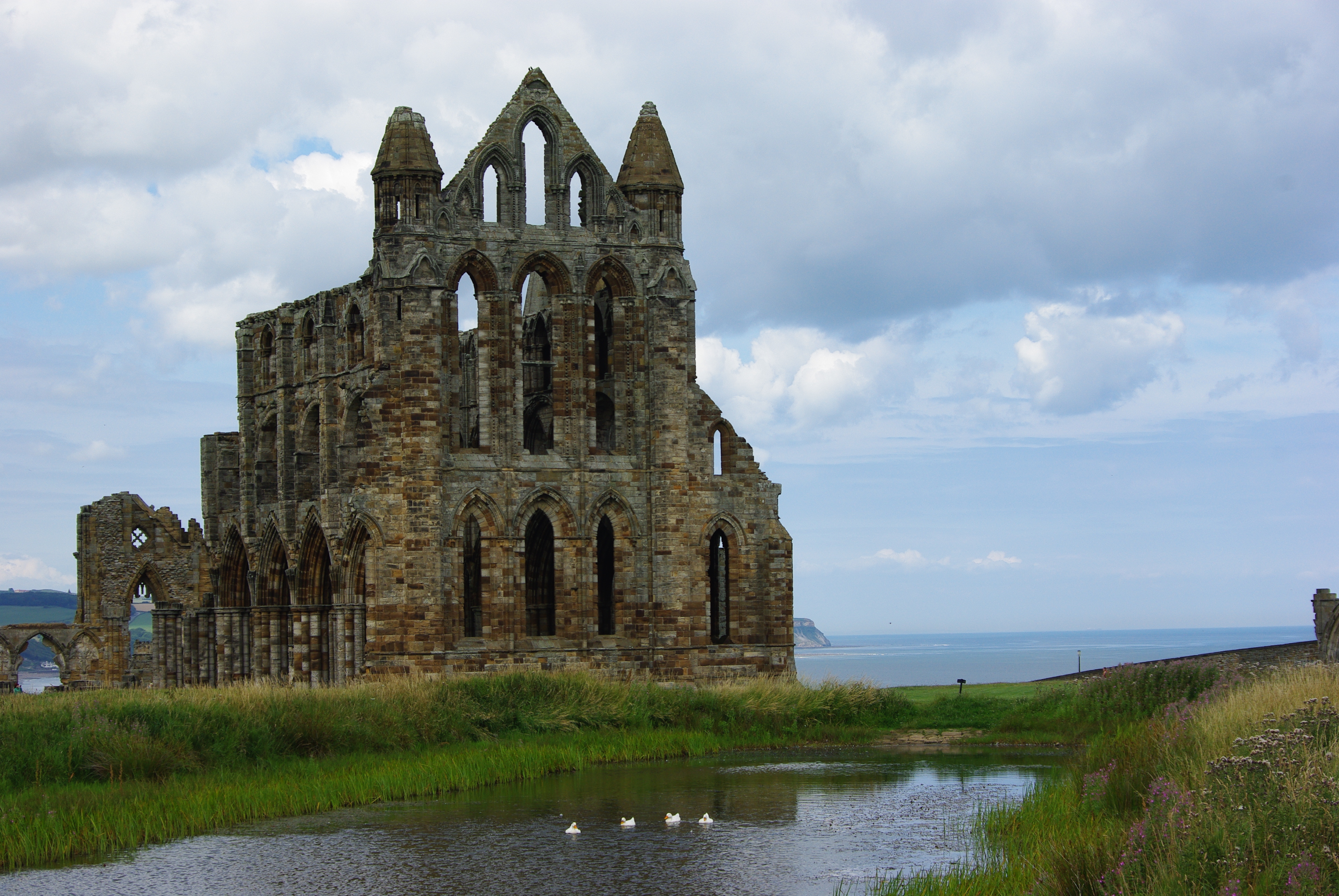
However, I began a little journey of discovery on my holiday recently, enquiring into some of those old Anglo Saxon saints. In a trip round Whitby Abbey, you trip over them after all.

Whitby Abbey was founded (or perhaps organised by) Hilda in 657. All I knew about her and her times, I learned fromthis book

It is a good book- history made real, with some good earthy bodice ripping (if the Anglo Saxon’s wore bodices.) Certainly worth a place in the suitcase if you are away on holiday. But it is Melvin Bragg’s take on the times- information is pretty sketchy after all.

Melvin Bragg did a programme on Hilda’s influence on his wonderful ‘In our time’ programme- well worth a listen here.

What is clear is that Hilda was a pagan who converted to Christianity aged 13 along with a whole Kingdom. There is a fantastic story about how this came about- her own father had been on the wrong side of some dynastic troubles and ended up poisoned, and so Hilda, a princess of royal blood sought refuge at the court of King Edwin in Northumbria. Edwin came under the influence of Christian missionaries, and asked his whole court to come to a consensus as to whether they should convert to Christianity. One of his courtiers is recorded as asking the court to imagine a sparrow flying into the great hall and finding itself surrounded by the glories of court. The suggestion was that we too are sparrows, living a short life amid much uncertainty- and here was a faith that promised an eternal relationship with the divine…

They converted, along with Hilda.

The venerable Bede, author of  The Ecclesiastical History of the English People around 731 is our main source of information about Hilda. Bede probably met people who knew her.

Bede describes Hilda as a woman of great energy, who was a skilled administrator and teacher. She gained such a reputation for wisdom that kings and princes sought her advice. Considering all the fuss at the moment in the Church of England over women Bishops (and the Pope preposterous pronunciations about women priests being a sin along side child abuse) it is interesting to note that Hilda presided over two houses- one male and one female. She was part of a tradition of royal princesses who became leaders of holy houses all along the north east coast of England- wherever a river met the sea.

Hilda’s kindness and leadership seemed to allow others to flourish in learning and leadership- 5 of her monks went on to be bishops in the Anglo Saxon church. She was also well enough thought of that her house became the site of the famous Synod of Whitby, where the date of Easter was debated, and many believe the power of Rome finally overcame the Celtic churches.

She also had a concern for ordinary folk such as Cædmon, however. He was a herder at the monastery, who was inspired in a dream to sing verses in praise of God. Hilda recognized his gift and encouraged him to develop it.

Although Hilda must have had a strong character she inspired affection. As Bede writes, “All who knew her called her mother because of her outstanding devotion and grace”.

The stories of lives of faith lived out in these ancient times are fascinating. The accounts are not history as we understand it- rather they are seeking to inspire and encourage devotion.

Hilda, because of her support of Caedmon , Hilda is regarded as the patron saint of Poets everywhere.

Everywhere- and here…