Another generation wraps up hope in polished paper
Laying it under Christmas trees, unlabelled
Because we all long for better.
Despite the darkness
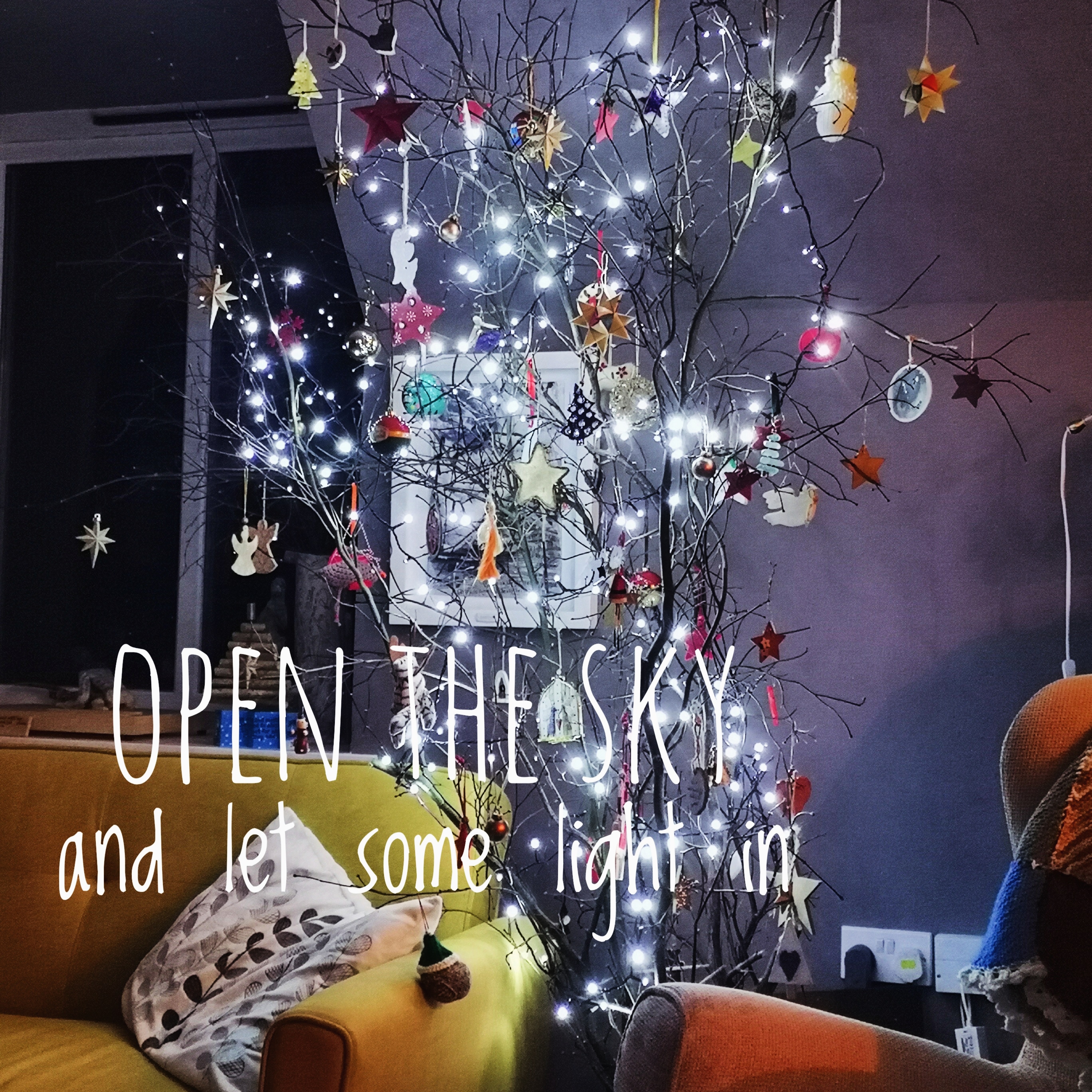
We still hang lights.
Because of the cold
We still make fire.
Another holy family sets out on dangerous roads
Carrying their own precious gift, wanting only kindness
Because we all need compassion sometimes.
Despite house prices
There are many warm rooms.
Because of hunger
We share food.
Another baby pokes the membrane between there and here
Slides out into another manger full of short straws,
Because we all need to be held sometimes.
Despite our common comings
Every child is special.
Because of them
Our world turns.
Another Eastern ship comes in, full of Chinese electrics
Promising a flash of plastic pleasure for an hour or so
Because we all need satisfaction.
Despite the loneliness of our condition
We are ankle-deep in love.
When we are at our emptiest
We are most easily filled.
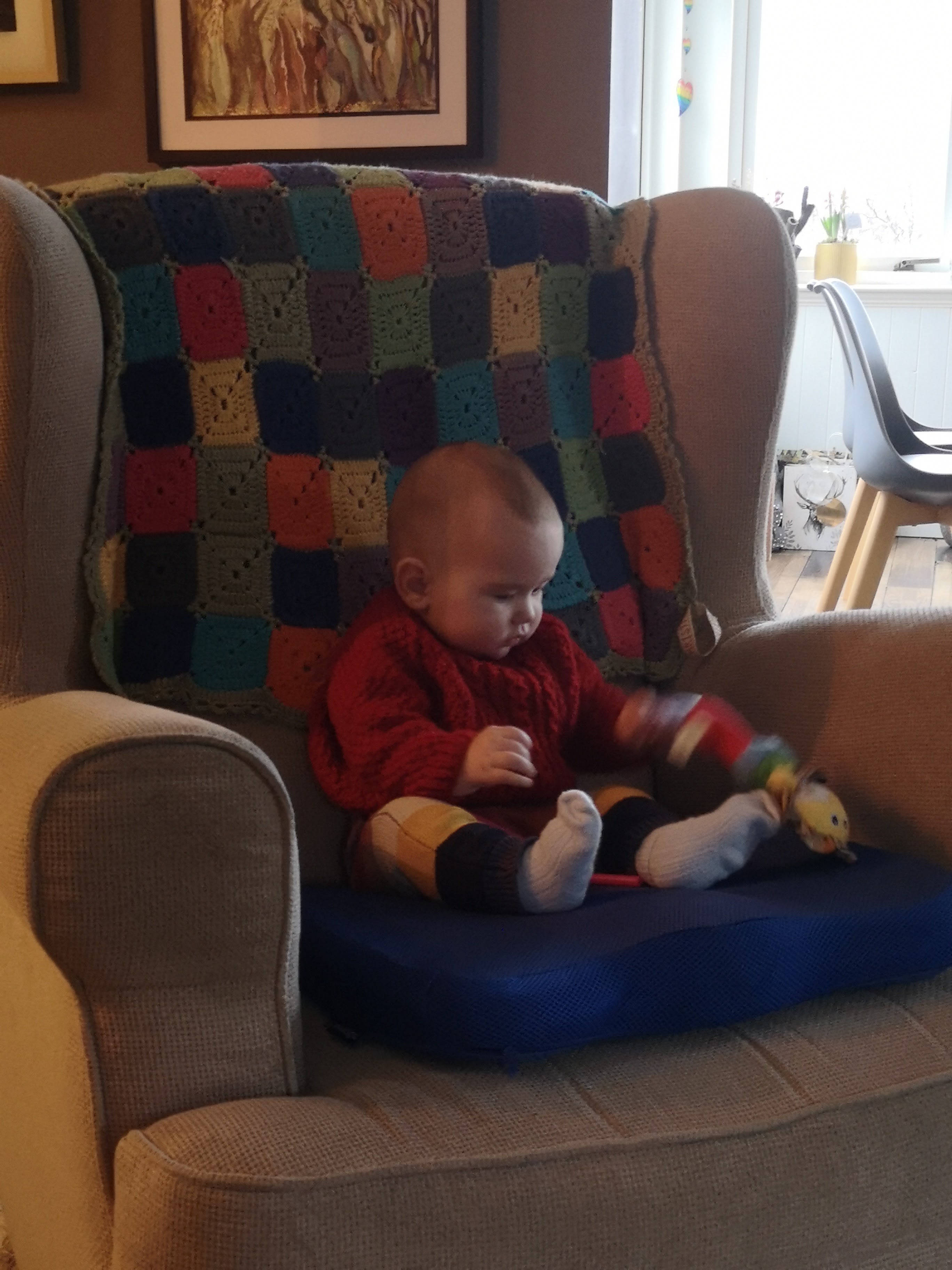
The picture postcard version of Christmas never happens – we don’t have snow or Victorian choirs. (We do have robins, and the recent arrival of a small baby though.)
Here we have been lashed and slashed by storm after storm and it is unnaturally warm. The darkness lasts even longer, before the hooded light bleeds in with a yellow hue, making the day seem reluctant, forboding.
The shadow behind this advent has been Gaza. I have mentioned it in passing during the course of these meditations but it has been there all along. How can we seek the truth of a story set in a place of such current brutality and violence? How can we seek justice through this story when the opposite of justice is so current? How can we seek peace in this story when children lie under the rubble of a building so recently collapsed? How can we talk of love when industrial slaughter is justified by hate and vengence right there in plain sight on our screens day-by-advent-day?
But then the answer comes. What else should we do, if not this?
What else is Christmas about?
I know, we can easily coorie in, behind our storm lashed window panes and make it all about us and those closest to us. We can hide in our own interior spaces and consume.
Like I am doing right now.
But Christmas eve is not for guilt, it is for wonder.
It is for being open to the possibility of goodness, in spite of all the evidence to the contrary.
It is about Emmanuel, God with us, promising peace on earth, if we will heed his call to make it, one house at a time.
It is about love, for family yes, but also spilling out wider to embrace as many as we can.
So, dear friends, may your home be warm this winter. May the lights be bright. May the table be loaded with goodness and may you be loved, not because you have earned it, but just because you are beautiful.
May whatever you have be enough.
If threre is an anthem to this Christmas eve, perhaps it is this one. Glen Hansard and Lisa O’Neil, performing Shane MaGowan’s old party song with such tenderness and joy at his funeral…
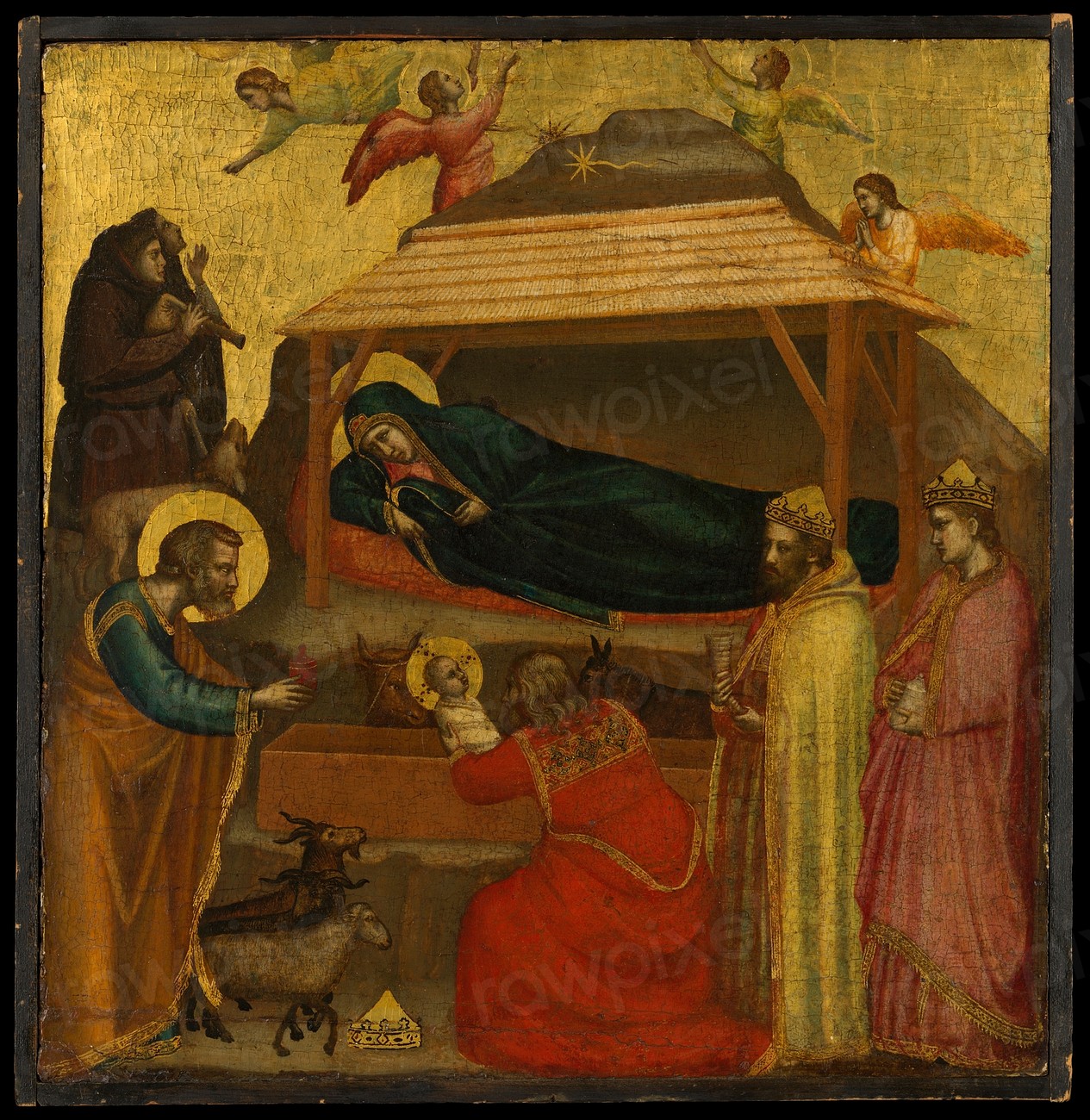
In the tradition (rather than the pedantic interpretation of scripture) these were men of learning coming from the east – but they are sometimes described as kings, but also this strange title ’Magi’, thought to be from the Greek magos which itself is derived from Old Persianmaguŝ from the Avestanmagâunô, i.e., the religious caste into which Zoroaster was born…
Think about that for a moment. These Magi not only held a different religion but came from a country/empire/culture that had oppressed and enslaved the people of Israel, as recorded throughout Hebrew scripture, yet here in the Gospel of Matthew they are given star status, centre stage, in stark contrast to the behaviour of Herod, King of the Jews.
They were wise enough (or crazy enough) to read the wisdom of stars thenset out on a journey inspired by what these stars told them. That does not seem like wisdom to me, it seems foolish.
Perhaps in a world of idiots, a fool is held to be wise. Wisdom has a context – and becomes prophetic when it sees what others cannot. Is this what the Magi were to their own context?
We can assume they were learned men, but knowledge and wisdom are not the same.
Perhaps they were just born that way, -gifted with stillness from birth. But then again, the personal security required for this kind of stillness seems to come from privilege – from bring raised by good loving parents in a safe and secure home.
Were they old or young? The wisdom of age after all can become conservative requiring a dose of wise recklessness from new generations. Was there this tension in their midst, an old mentor and his young followers, or a young whipper-snapper who was held back by the affectionate tolerance of his older teachers?
But how else might be become wise, if not through sustaining movement through adversity? We always seem to gain more from dark valleys than from mountaintops; from brokenness and depression rather than success and achievement. Perhaps the Magi were survivors.
Can wisdom arise from religion- from resting in scripture and following a narrow discipline and tradition? The evidence for this is at best mixed, but certainly I have met people like that. People whose faith has opened them up to deep learning rather than locking them down into doctrinal prisons. People of the open questions rather than the glib answer. The fact that these Magi made this journey at all suggests that they must have been people like this.
All I know is that we need wisdom now. We need people who read the stars, searching for new truth, new incarnations.
We need them to travel towards the light they have seen, and to navigate the messy politics they encounter along the way, taking no heed of the doubters, the scoffers, those who think their wisdom crazy.
We need them to cross the religious divide and break down barriers.
We need them to give gifts to hopeless causes, in order to bring hope.
The nativity story is full of ordinary people; shepherds, innkeepers for example, not to mention Mary, her cousin Elizabeth and Joseph the carpenter. I think it is important to look to the margins when we consider great events, even more so when we consider the coming of this king-like-no-other, who was rather adept a inverting power structures.
I am reminded of this quote;
If one really wishes to know how justice is administered in a country, one does not question the policemen, the lawyers, the judges, or the protected members of the middle class. One goes to the unprotected – those, precisely, who need the law’s protection most! – and listens to their testimony.”
James Baldwin, from No Name on the Street
Baldwin would know. He grew up in pre WW2 Harlem, and later added his incredible creative voice to the liberation struggle of black Americans during the protest movement of the 1960’s. He also said this;
You think your pain and your heartbreak are unprecedented in the history of the world, but then you read.”
We live in a world in which inequality is widening, but then this is an old problem, perhaps as old as humanity. Perhaps the goal was never full equalty anyway – after all, it has been said that communism is a Christian heresy – a slight distortion of the kingdom of God as teased out in odd parables by Jesus.
What seems to emerge from the gospels more clearly is that we do not start with economics, but rather with compassion. The big truth, as revealed in the gospels, turns out to be concerned with ordinary people turning away from anything that gets in the way of love.
A few years ago I participated in an advent project in which I contrbuted a lot of poetry, some of which has featured in this (and previous) years advent series on this blog. Here is another, featuring an ordinary hero from our nativity story…
Big man
He was as wide as the city gate
(Although half of him was heart)
Arms like beer barrels
Fists so big that even fighting men
Thought twice despite the libation
In the post-clatter calm that follows closing time
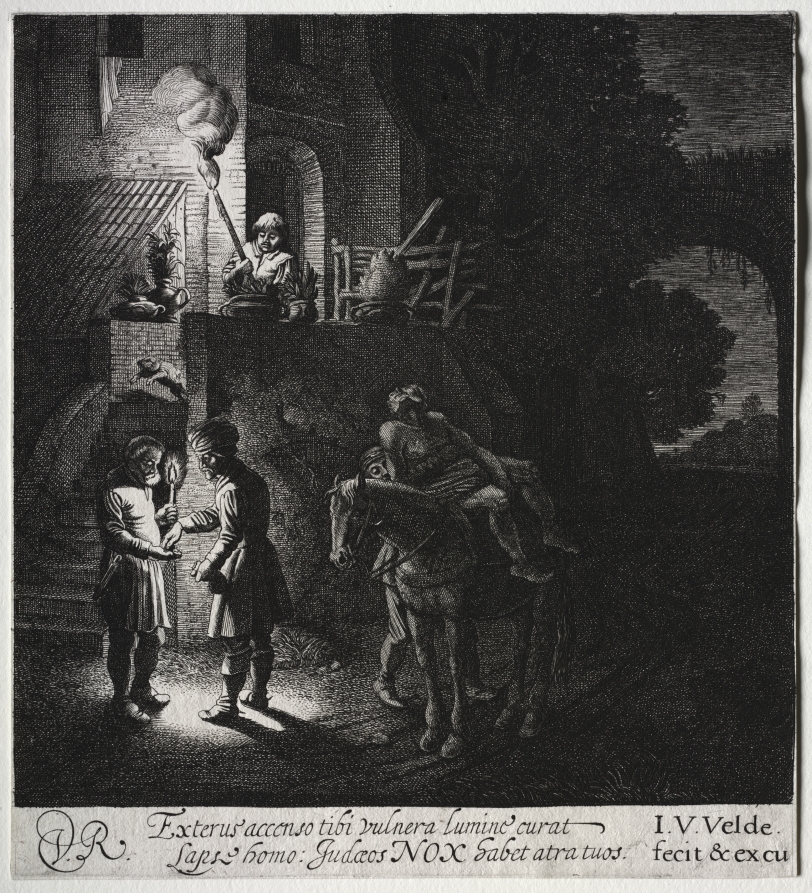
He lifts a broken man from the gutter
Props him on a wall while he
Wipes reek from wrinkled mouth
Lifts him like lost luggage, then
Carries him home
We draw closer. The season of waiting will soon be over. Presents, wrapped so enticingly, will soon be revealed. Feasts will groan in our bellies. Carols will have been sung.
But for now, let’s rest in the arms of anticipation. Lets be grateful for the good things in our lives.
For the people who hold us, nourish us, cherish us. (But let’s remember also those who spend too much time alone.)
For the security we feel – the roof that shelters us and the money that pays the bills. (But let’s remember also those who have no home and those caught up in the curse of scarcity.)
For the peace we dwell within – the safety of our streets. (But let’s remember that in other places not far away, children are sheltering from bombs.)
Before all the feasting let’s find some stillness and sit with gratefulness for a while.
Peace be with us


In the quiet space between snowflakes

We listen to sad songs, and

Feel the prickle of tears, pushed

By beautiful broken things

Less than half-perceived

But never forgotten


In the warm space you made for me

I hide, guilty for those we left outside

Wishing our table was bigger

That every mouth was filled

Every refugee was home

Like we are. Hoping that


In the dark space between all those twinkling lights

Peace is waiting

Like scented water

Fingered by frost and ready to fall -

Ready to anoint our dirty old ground

Like Emmanuel
We are not only this. There is not only this. There is not only me.
If our adventing is about anything, then surely these statements might make a good beginning? They are statements of hope and longing, but also ones which can be partially supported by experience- not in that old sense of trying to ‘prove’ the divine, but rather by our own sense of what I have come to call ‘the depth of things’. This concept is hard to describe, unless we use poetry. I was striving in that direction when I wrote this;
The life singing in you is not just journey,

Nor located at some distant destination.

It is here. It is now. It’s what happens

When wounds half-heal but bleed not

Blood, but good. It is not in the width of things

But their depth. It is the rediscovery of love.


from 'Brave', published in After the Apocalypse 2022.
What more can be said about this depth? Is it like old paint showing through, or the peeling back of onion layers, or the clearing of morning mists? No, all of these images have been overdone and also seem too concrete. The nature of what I am talking about always seems more ephemeral and more subjective than that.
I think we sense it first in its absence, as a deep longing for something better, more beautiful. At this level, we experience it as there must be more than this.
But there are always glimpses – fleeting though they always are – which give us hints. For me these come through things like this; poetry, through music, through wild places, and through acts of simple kindness. I sense them mostly deep in the dirty soft emotional part of me. As soon as I start to codify them in consciousness using my head, they dissolve.
Sometimes we can share these experiences with others. Perhaps religion can help us do this, but it can also hinder. There is another defining feature of these highly individual transcendent events however – they connect us. What they connect us to remains an open question, but the mystical traditions of all the major religions seem to agree on this. Some call it ‘oneness’ others ‘the ground of all being’ others simply describe it as ‘god’.
Again, in the absence of any other language, I turn to poetry;
Light of the world
The low winter sun takes power from
Puddles of last nights rain and I turn away
Resonating to signals sent from distant stars.
Something glints in the tops of bare branches -
A flash of wing or a white tooth or the
Coming together of choirs of angels.
And in a wet manger of clogged earth, summer
Sleeps, waiting for light to burst out
Brand-new hallelujahs.
For behold, the light is with us. The light is
In us. The light shines in the darkest places -
It even shines in me.
This advent, we remember again the fact that much of our spiritual life is lived in limbo because this season is about waiting.
We know this, but perhaps it might be usefuly once again to think about it again. Our waiting is perhaps too coloured by what we know to be coming- we think of advent as merely a countdown to Christmas, not as a season in itself.
We forget about the business of holy waiting.
What do I mean by this?
Well, we know about waiting. Here in Britain, we pride ourselves in being good waiters – we stand in orderly queues, patiently waiting for whatever we feel to be worth it and lots that is not.
.
Behind suburban fences
Middle England retires
Many minor offences
Fuel artificial fires
We grind teeth (and gears)
Wait for lights to go green
We wait out our years
Wondering what it all means
We seek petty distraction
Wait for ships to come in
He waits for her
And she waits for him
.
Meanwhile, in places not so far away, other kinds of waiting are taking place;
.
They wait at the border
Wait for the war
Wait for the sirens
For the shells to fall
In towns without rooftops
They wait behind walls
For men dressed in khaki
To kick down their doors
They raise up our faces
To the bright morning sky
Some slip cold embraces
Some people will die
.
I say this not so we count our good fortunes – I assmume that we do this already – but rather to help us remember that life is fleeting and fragile, and so our waiting should be used sparingly, lest our waiting is wasted.
This kind of holy waiting has no certainty, no guarantee, rather it serves as a spiritual practice, for the only waiting worth the time is that which has at the centre of it a hope of life, like pregnancy.
I was having one of those conversations the other day – you know the kind – in which one of those totemic divisive issues was being kicked around. In this case it was trans rights, and the person I spoke to had firm opinions, which I found myself opposing, albeit wearily and warily.
From the place where we are right, flowers will never grow in the spring
Of course, religion has a long tradition of being ‘right’. What we learn in our churches temples and mosques is first and foremost a code of belief, into which a whole set of sub-issues (and even non-issues!) are subsumed. As above, the penalty for disagreement can be appalling.
But being right is not just the premise of the hard line religious kinds. After all, nothing tingles the ego like meeting people who are wrong, so allowing us to be superior and correct. The internet has given this shadow side of our humanity far too much space, in that social media is full of it – quite a lot it from me.
Because we are such tribal creatures, we tend to approach our ‘rightness’ not from careful reasoned consideration of the issues. Rather our position on many issues is proscribed by our tribe. Our opinions then become badges of belonging, and perhaps clubs to beat each other with. Sometimes vulnerable people get caught in the crossfire.
But back to that discussion about trans rights. I am not going to rehearse the arguments here because I’m sure you have heard them all anyway.
As I get older, I am still sucked in to arguments, no doubt related to my own need to be ‘right’, but nevertheless, this is diminishing. Increasingly, I appreciate the need to leave a question open, particularly when it relates to something outside my direct experience.
Particularly when an opinion I might have has a direct impact on others.
Perhaps this seems like a cop-out. After all, some issues require the taking of a position in the name of justice. Some things are just wrong and need to be called out as such.
So I have added another condition to my open questioning – compassion.
If I am pulled towards an answer, then I must seek it from a position of compassion and love. This means applying it in places where it often does not feel deserved- to religious (or secular) bigots for example, or to our ‘enemies’.
As advent unfolds I have been allowing myself to look forward towards hope… to imagine the coming of a new kingdom/insurection/revolution in which goodness and compassion are central. In other words, I am trying to rest again in the spirit of the Magnificat as sung by Mary and recorded in just one of the Gospels…
46-55 And Mary said,
I’m bursting with God-news; I’m dancing the song of my Savior God. God took one good look at me, and look what happened— I’m the most fortunate woman on earth! What God has done for me will never be forgotten, the God whose very name is holy, set apart from all others. His mercy flows in wave after wave on those who are in awe before him. He bared his arm and showed his strength, scattered the bluffing braggarts. He knocked tyrants off their high horses, pulled victims out of the mud. The starving poor sat down to a banquet; the callous rich were left out in the cold. He embraced his chosen child, Israel; he remembered and piled on the mercies, piled them high. It’s exactly what he promised, beginning with Abraham and right up to now.
Luke 1 46-55 (the message translaiton)
I have been over in Northern Ireland for a few days to see my father, immersed in the usual chaos of old age – medication, money and care. I went with my brother, and we spent a little while exploring a place that he knew better than me, as he had spent a lot of his childhood over there. (Our family circumstances are complicated.) Here is the grave of my grandparents, both of whom died before I was born, having worked in the flax mill that took such toll on the health of local people.
My family were all born into a town called Strabane, right over on what now is the border with the Irish state in Tyrone. It is a bustling booming town now, because of cross-border trade, but until very recently was a place with one of the highest unemployment rates in all of Europe. Strabane was the most bombed town during the troubles, with the highest proportion of it’s citizens killed. It is overwhelmingly Catholic (91%) and as such was an epicentre of republicanism. There are many of these dotted about;
Until recently, many of the streets would have kerbs painted in sectarian colours across the province, but I was surprised to see that most of this has been removed. However, the tribalism remains firmly in place, seen in many subtle ways. One of the more obvious at present is that in republican areas you will see many flags and banners supporting the Palestinian cause in Gaza, whilst in unionist areas, lamposts are flying the Israeli flag. The currency and apparent group-think of this division are shocking to outsiders, but not to those who live with it day-by-day.
In Strabane town centre there is quite a lot of public art, most notably around the lovely Alley Theatre, but also this piece, which lists a number of famous people born in the town, including former president of the USA, Woodrow Wilson, Musician Paul Brady and writer Flann O’Brien. It does not mention other illuminaries such as William Burke, the 18th Century serial killer, but does give a shout out to a woman called Cecil Francis Alexander who wrote many favourite hymns from my childhood- ‘There is a green hill far away’, ‘Once in Royal David’s City’ and the ubiqiotous ‘All things bright and beautiful’…
… which takes us back to the root of all this.
The violence and trouble unleashed on Ireland has been blamed on many things; religion (of course), politics, the British, ignorance – all of these things may have played a part, but Cecil Fancis Alexander’s hymn gives us another clue, containing as it does (in original form at least) this verse;
The rich man in his castle, The poor man at his gate, God made them high or lowly, And ordered their estate.
For much of the last centuries, the Irish were considered as the lowest of all. Alexander, from a wealthy background, was part of a ruling class, married to an Archbishop. She spent her time on charitable pursuits amongst the deserving poor. She lived at the time when around one million people starved to death in what came to be known as the Irish Potato Famine but seemed unable to see the injustice right in front of her nose.
Perhaps you think me unfair to someone living in such a different time and place, but I will not sing this hymn, even with the verse above ommitted. Instead I will thrill once again to young Mary as she sings those words of the magnificat; The starving poor sat down to a banquet; the callous rich were left out in the cold.
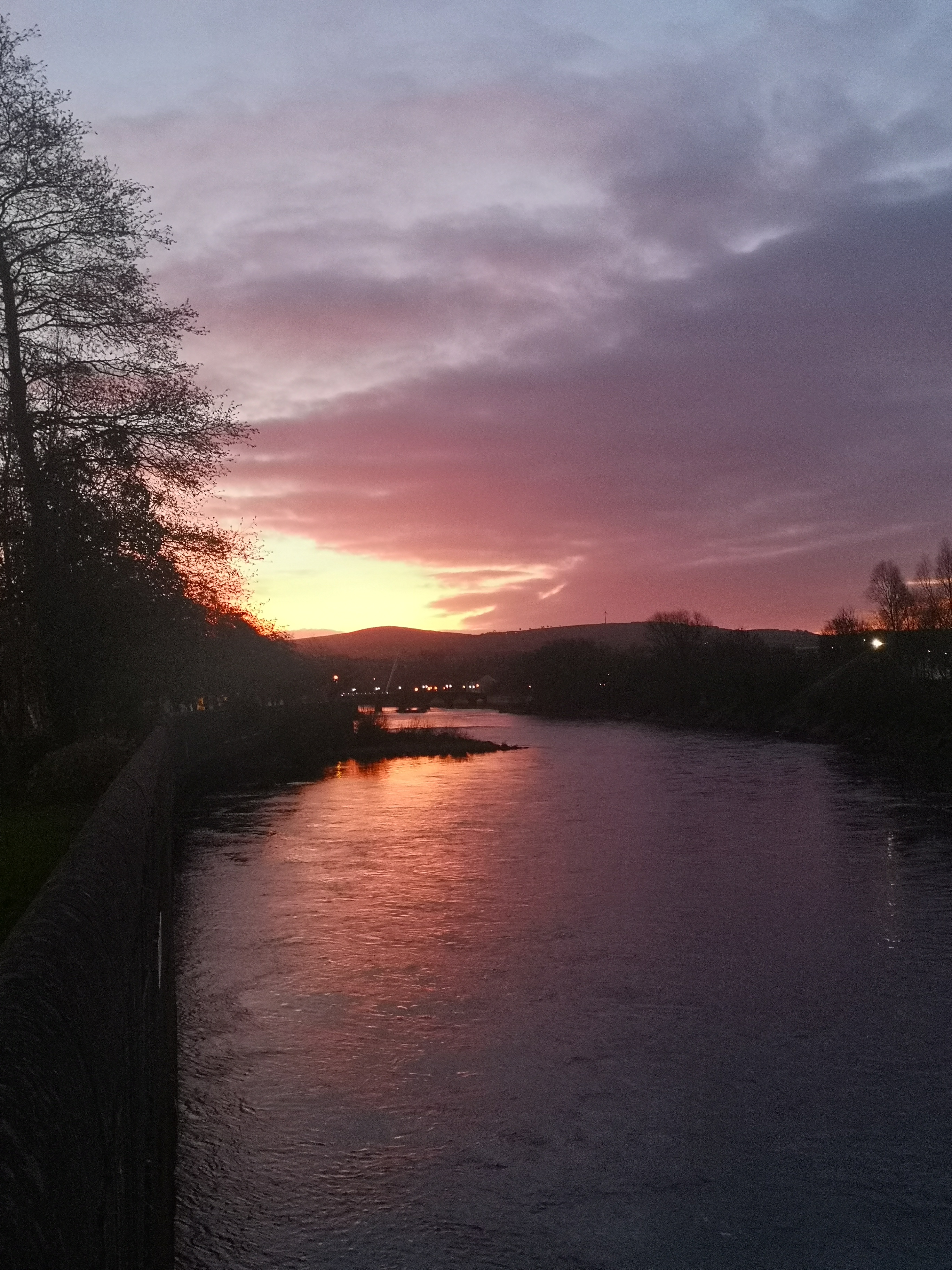
I took a morning walk alongside the border river Foyle, which runs through the middle of Strabane thinking about an old concept suggested by the author Phillip Yancey. In his book ‘What’s so amazing about Grace’, he painted a picture of what he called ‘ungrace’, or the opposite of grace. Families, communites and societies who are characterised ungrace seem to experience it in almost like toxic waste or poisoned water.
Ungrace leaves a legacy that can only be overcome by one thing.
Beauty and brokenness have been themes here for years. Inustice can interrupt and disrupt, creating open wounds (which we will discuss again tomorrow) but our pain and wounds can also be something else…
I read this recently , in one of the Centre for Action and Contemplation’s daily meditations.
The Living School [and the CAC as a whole] teaches that this begins with us individually. If it is true that hurting people hurt people, then it must also be true that healing people heal people. Origen (185–254 CE) claimed the skandala—the scars and scandals in our lives—dig out the deep meaning. Our hurts become “health-bestowing wounds,” the source of our individual spiritual genius, which shapes the unique work we are called to do in the world. It’s our wounds that lead to wisdom and teach us, ultimately, how to love and heal the world.
Like Kintsugi—the Japanese method of repairing pottery using gold, silver, or platinum to fill in the cracks—this doesn’t hide our brokenness but makes it beautiful. Thus, we all work to repair the world in a similar way. [1]
As someone who makes a living in part from pottery, you would expect me to agree to this.










 this fragile tent