Fairisle 1: arrival…

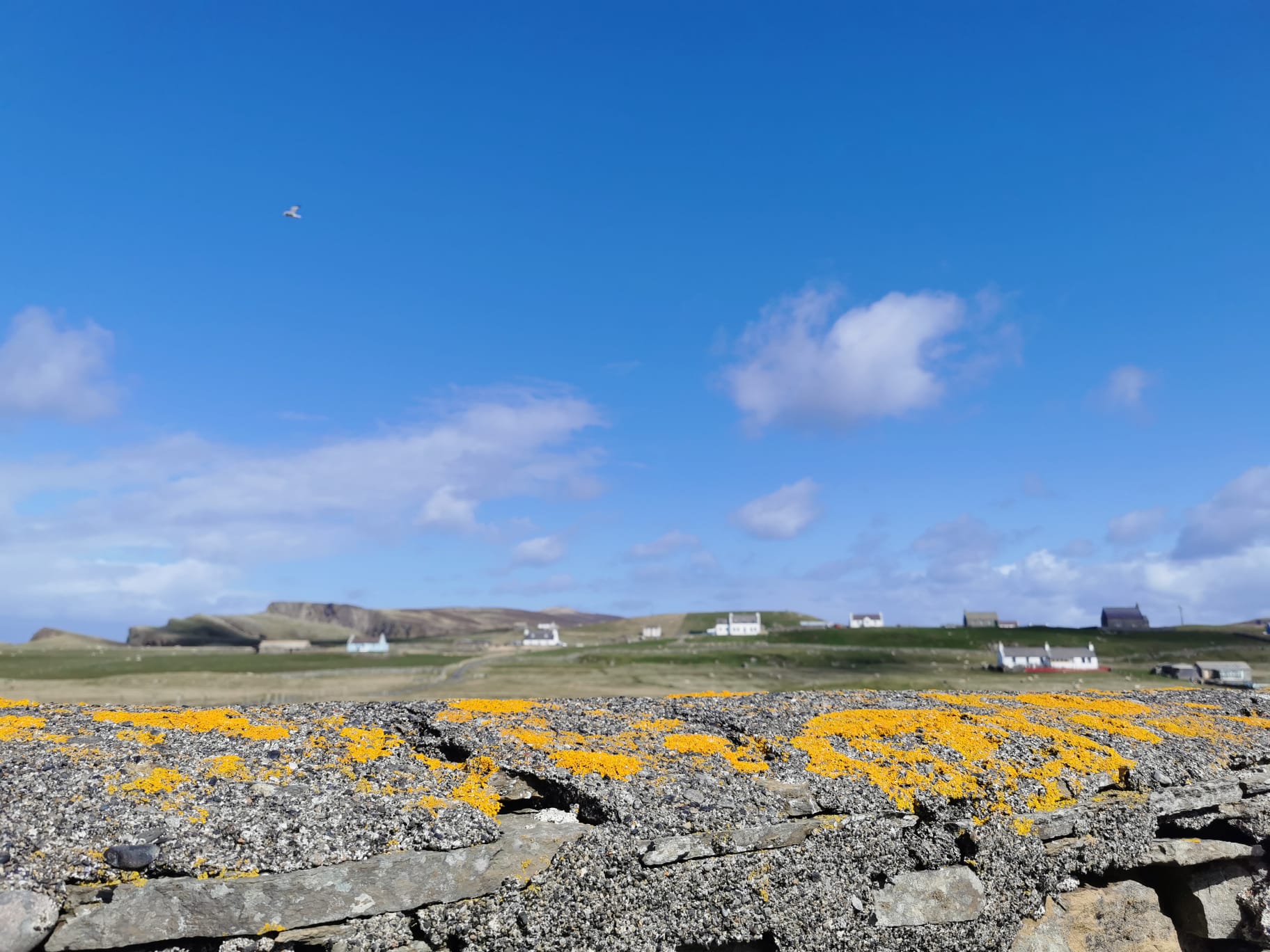
For a couple of weeks or so, this blog is going to be used for some reflections emerging from our artists retreat on Fairisle, the most remote community in the UK – a tiny little island between the relative hububs of Shetland and Orkney.

Today we arrived, after 4 and a half hours driving, 12 hours on a ferry (to Shetland,) taxi for 15 minuites from Lerwick to Tingwall, a 25 minute flight in a small plane, then a short hop in an island car (there are no ‘roads’ here, and no MOTs!) to the lovely Lower Leogh, with its hobit-sized doors, cosy warm fire and total peacefulness.

We have almost two weeks.

It feels miraculous, and impossibly greedy. After all, we live in such beauty already (it was actually quite anxiety inducing to leave my garden at this time of year) so why would we need an artists reteat like this? What use would we put such a thing to?

Well, the answer to the first question is easier, in that we both very much need some time out, to take stock and to consider again the roots of what we do. Creativity is often like a well that refills as you take from it, but you can take too much. Looking forward to this year, I am very conscious of how much I want to do, to say and to lean in to.

Time is short. Life is fleeting.

Life is also beautiful.

It is there in the lovely laugh of my little grandson, in the worries and triumphs of my kids, in the spring leaves and the space between stars.

We were talking on our long drive about the old Jesus statement about us having ‘life in all its fullness’. I understand this so differently now, not as a call towards correction of sinfulness, but rather as a call towards an on-going encounter with our true selves, made real only in deep connection.

How do we find this connection? For me, this is through meaning making through art and wild shorelines. It is also in veg beds and oak trees. It is most real and least abstract (even now) when I encounter something that points me towards ‘god’, although we might have to dig much deeper into what I mean by ‘god’…

In fact, this book has come with me;

…the rigid and self righteous certainty of some religious people – and some atheists for that matter – is something I find dissagreeable. The hubris of it. The sanctimoniousness. It leaves me cold. The more unshakeable someone’s beliefs are, the more diminished they seem to become, because they have stopped questioning, and the not-questoining can be accompanied by a moral superiority… a bit of humility wouldn’t go astray.

Nick cave in conversation with sean o’hagan

I find Cave’s music a bit hard to swallow mostly – with some notable exceptions – but this book is based around a conversation between friends, and it is perhaps this that allows it to speak to me more clearly. Connection comes to me strongly through friendship- the sort where even when we talk about surface things, we also meet at a deeper level.

Where profanity mixes with profundity. Where we find each other absurd as well as inspirational. Where we hit each other with cudgels made from kindness wrapped in a tissue paper of merciless abuse.

In a strange way, here on this island, I feel these friends to be close. Perhaps because lingering on islands with friends has been such an important part of my becoming.

Michaela had a greater challenge than me today, on our stunning (and rather scary) small plane flight. We were the only passengers in a six seater plane that was even smaller than I thought it might be. But what a view. What a gloroius view.

So, from our tucked-in place of rest and renewal, here is a video I made of this bit of our journey to get here…
Creating open spaces for encounter…

Photo by Zachary DeBottis on Pexels.com

I have this grandiose, unreasonable, impractical and unlikely-to-ever-happen-in-the-way-I-want-it-to idea.

(Full confession, I have a lot of these, but this one feels more urgent – it beats in my chest.)

I want to create events in which we use art (music, poetry, photography, dance, film, painting, etc etc) to make open, inclusive spaces for encounter…

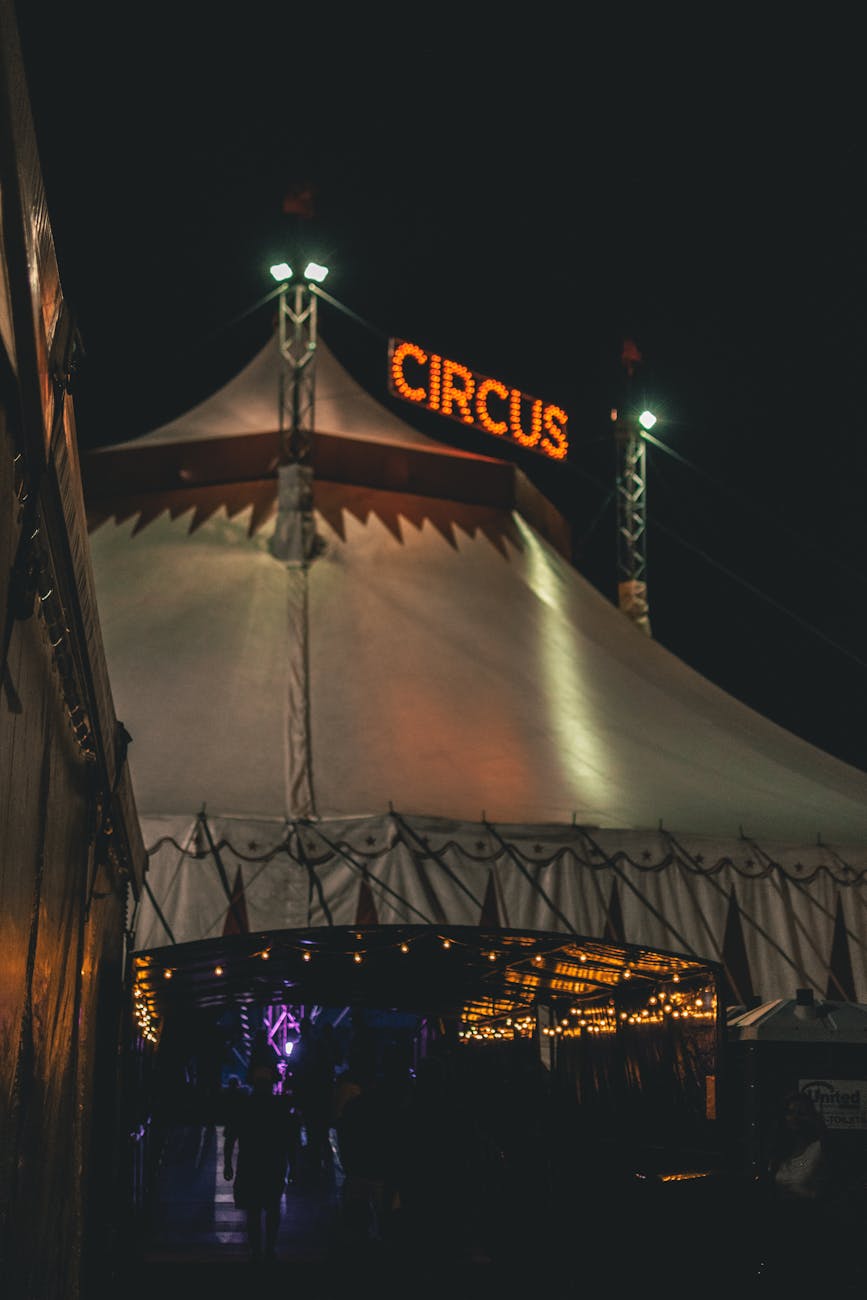
A kind of circus for the spirit.

What do I mean by ‘encounter’? I made this list for us to pick from. You can have all of them, just one, or any combination inbetween;

  • thinking deeper
  • connecting
  • laughing together
  • collectively hoping for better
  • Lamenting all that we have lost
  • making spiritual connection
  • protesting where it is overdue
  • lyrical, poetic, sensonry immersion
  • imagining a healing for our broken world
  • including those who have be excluded
  • chaotic collaborations between artists and disciplines
  • weeping together

I am sure this list will get longer, but questions may occur to those of you who are (justifiably) suspicious of my religious intent. Am I just trying to reclaim my long rejected evangelicalism? What am I selling? What version of god am I re-hashing? My only answers are that we all approach these things through our own experiences and limited perspectives, but what I am dreaming about is a space in which, broadly, we accept difference.

I could spout truisms about being ‘intolerent of intolerance’, but if I’m honest, some of my prejudices are precious to me, so I may have to work hard to stay open. (I suspect most of us are the same, to variable degrees.)

There is a tension here too in that art of the middle ground – inoffensive and safe – is very much not what is in my mind. Art has to challenge, divide and even outrage, not because that is an end in itself, but because it seems to be an emergent quality of good art, as well as an emergent quality of any attempt to engage with our culture in a prophetic (as in failthfully critical) way.

As for the god I reach towards, what I said above applies too. I long for a movement towards good, and feel sure that art and activism are vital components of the pre-political, spiritual journey that we make individualy and (perhaps more importantly) collectively.

Whether the idea of god (or God) is helpful to us as we make this movement is ambigious to me – I think this position is consistent with my (current) understanding of the teachings of Jesus, but I am interested too in how other faith traditions – or none – might illuminate our open spaces.

What might this circus look like? How might it happen? Where would it happen?

Don’t spoil my dream with practicalities! Dreams don’t have to be tested by reality. Except I really hope this one is, so here goes…

Think of a theme… something fairly broad and abstract but likely to provide a window into which we project and see. Perhaps it could be a subversion of an old religious idea like ‘redemption’, or a more opaque concept like ‘obscure’, or a politically charged idea like ‘equality’.

Invite artists and co-conspirators to consider the theme… this is where we need to be well networked, to invite a wide range of creatives into our ‘big top’. The community that develops must seek to include, to treasure, to encourage, to mutually inspire. They will bring their egos too, so each event will need a curator – someone who can see the whole picture and put together a story…

Find a space and time… we need venues prepared to host us and take risks. Perhaps these might be underused church spaces? I love the idea of doing things in forests too. Each artist ‘owns’ this space and time, so they use their own networks/social media to create anticipation.

Collaborate… on day one, the artists bring their work together. Poems and songs are woven with pictures and film clips. People dance and bang drums. There may even be juggling. An order is agreed. Technology is made ready.

Perform… on day two, the big top doors are thrown wide and members of the public are invited inside. The event unfolds. People laugh and cry. They catch glimpses beyond and long for better.

Photo by Timur Weber on Pexels.com

How do we pay for all of this? (There you go again, with your dream-bubble popping.)

Is art of this kind every capable of funding itself? I don’t know. It depends on what artists need to get out of it, I suppose. Ticket sales might cover some if not all costs, and artists may have their wares to sell… artists have to live after all, we can’t exist on ideas alone.

There are other values- the community, the friendship, the tribal nature of the happening. Then there is the wider exposure, the potential spin-off colaborations, the love of the art and the ‘experience’, but I am painfully aware that many artists get frustrated with these kind of discussions. Artists have to eat and pay the rent too, so my dream also contains the hope that we can pay a fair wage.

I suppose I would be upfront here and say that I don’t think the circus of the spirit will make any of us rich- otherwise it will cease to be of the spirit and be increasingly of the wallet.

I would love to know what my artist (and non-artist) friends think of my unreasonable idea…

Proost podcast with Jonny Baker…

The third Proost podcast is out, here.

This one features an interview with Jonny Baker, who probably needs no introduction to readers of this blog, but here goes anyway.

I first met Jonny back in the early 2000’s, during a very different time of my life, and perhaps a very different context for Christianity/faith/spiritual exploration in the UK. Back then, Jonny’s blog was one of the go-to places for connecting to all sorts of new things that were happening, under labels such as ‘alternative worship’, ’emerging church’, ‘small missional communities’ and eventually, the more anchored, institutional ‘contextual expressions’ of church that came under the title of ‘fresh expressions’.

He is a long time member of one of the first of these ‘small missional groups’ Grace, which is still going strong. I remember a rather sniffy review of one of their services in The Guardian in which Jonny was described as ‘an aging youth’, which I think is Guardianese for youthful looking and all round cool dude.

As an interesting aside, back then, blogs were a thing. Even this one! (As a rough measure, during the early days articles on this blog would recieve hundreds, sometimes thousands of hits, whereas now, dozens. But who is counting?) They were the primary way that we discovered new things, had debates and conversations, heard about new books etc. Jonny’s blog, along with a bunch of others were very important to us. The emergence of so many other communication platforms are one sign of just how much things have changed over the past decades. Our interior and external worlds now have to contend with a part of our persona’s that are neither one nor the other, but also both – fused and formed in the digital, online world. Hmmmmm.

Jonny was doing lots of other things too – he worked/s for the Church Mission Society, in the vanguard of considering how faith engages with culture. Later this morphed into a whole new way of seeing the ministry and the development of pioneer minister training within the CofE. All this makes him an excellent candidate for a podcast trying to reflect on how the context for faith may have shifted and changed, and what art and resources might be relevant to our shifting context…

He is also a father and grandfather these days – one of his sons is rather famous too, the wonderful Harry Baker, poet extrordinaire.

But there was another key reason to inerview Jonny, and that was because he was one of the people (Along with Jon and Ad) to found Proost.

So, if any of this interests you, the third Proost Podcast first takes us through some of the fascinating history, but then moves on to consider our new context…

We would love to know your thoughts. If this is of interest to you, please share the pod because we are trying hard to develop a communal conversation about what a new proost might look like.

We also have a closed facebook group here, which we would love to welcome people to- it is closed so we can keep our conversation generous and generative, not because we want to keep anyone out!

In the dark belly of the green desert…

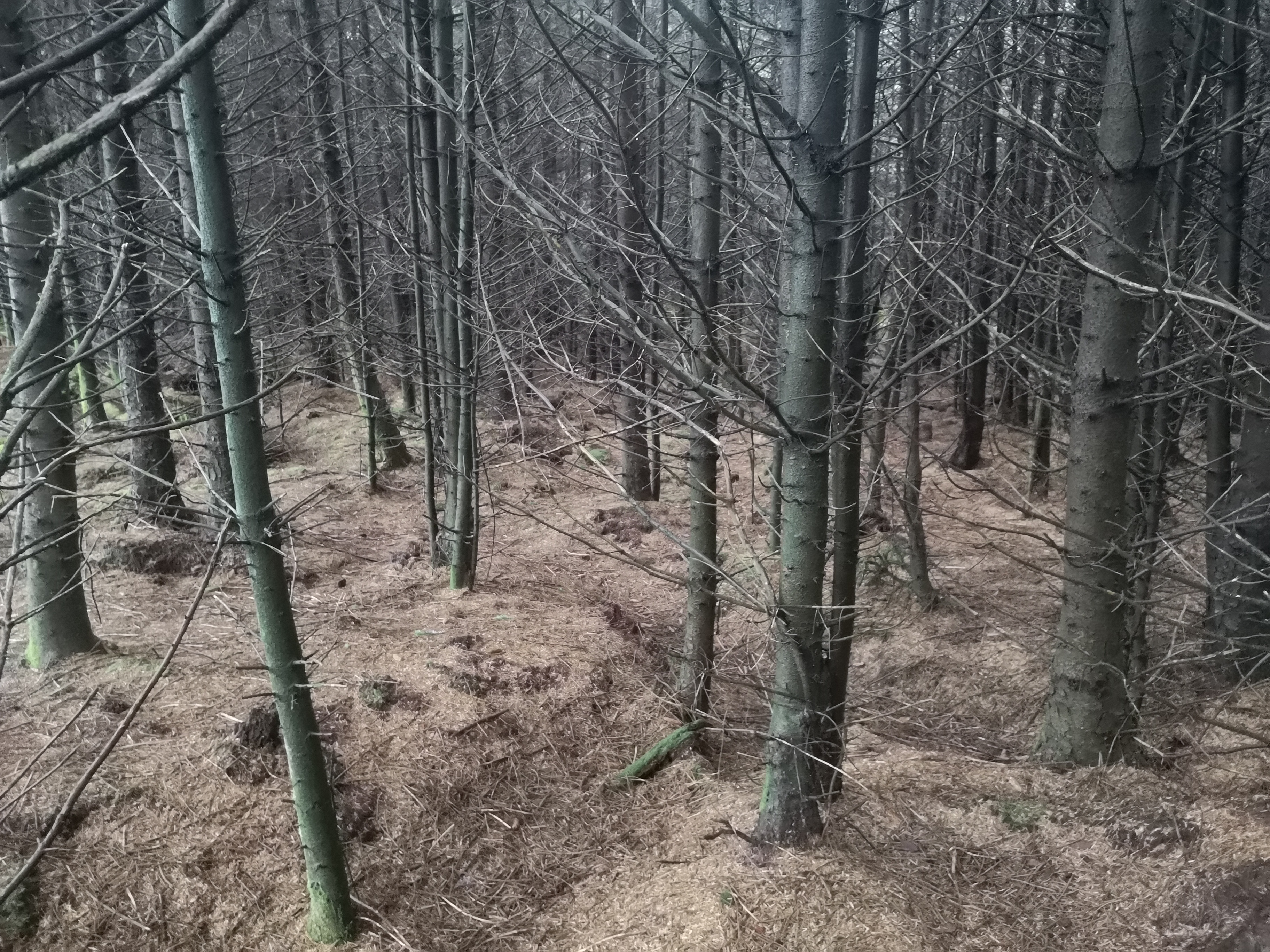
This is a photo of a spring ‘forest’ – one of the sitka plantations up above where we live.

If ever you have entered one of these plantations – and they are not hard to find – then you will know what strange places they are. Nothing grows at ground level, not even the ubiquitous invasive rhododendron, because all light is excluded. You have to crouch down low to make any kind of progress, as the only creatures that live in here are deer, who have nibbled to their head height. Ticks and midges proliferate, but very little else.

And they are almost silent, as if birds know better. As if (almost) everything that breathes… knows better.

I am thankful that there is a growing movement of people in Scotland who see these vast plantations as what they are – green deserts, made only for the profit. At such a cost to the natural ecosystems that they are destroying. At a time when we need our artists to raise their prophetic voices, we have this;

regular readers of this blog may remember me writing about these issues before, so here is what Alexander Chapman Campbell has to say about the inspiration for this haunting music (from here)

It seems to me that this way of producing timber, and of relating to trees, is simply a habit. We don’t need to improve the process, we need to chuck it out altogether. To reduce a forest to simply an economical process does trees a massive disservice. Through our mechanical inventions we’ve been able to reduce the old concept of a forest – with all its associated beauty, depth and mystery – to a crop, with tragic consequences both for humans and nature.

I wonder if any experiments have been done where a person’s brain is monitored while walking through the avenues of sitka spruce, and then compare this to the same person walking through a diverse area of woodland. But even without the science, I feel it’s obvious; humans are stripped of something vital in these plantations, as much as nature is.

Diverse, mixed-aged forest in Norway

Alternatives are possible. They’re demonstrated all over the world, and even in some places within the UK. You only have to walk through Norway to realise that things can be different; the persuasive rhetoric coming from those running our forestry operations suddenly loses its credibility. In the five weeks that I spent walking from Oslo to Trondheim I was able to experience a completely different kind of wood to most found in the UK. In places the forest was ancient, and protected, in others it was managed for timber, but in a way that didn’t strip it of its richness, its depth and its life.

According to the GWM1 (global wood markets info) in 2022 Norway became the largest exporter of softwood logs to the EU. The UK, in contrast, can only supply about 20% of its own timber and imports the rest. So, despite our intensive production approach we still find ourselves falling far short of being self-sustaining.

Norway is a much bigger country with a different rural history, which has left it with much larger tracts of forest. But the point is that alternatives are possible. In the glen where I live there is a forester who works for a company that largely practises an approach to forestry known as Continuous Cover Forestry, also known as Close-to-Nature Forest Management – a more sensitive and holistic approach to producing timber, and which is gathering traction. She was explaining to me that the economic benefits of large scale operations, with its associated clear-felling, is not as ‘clear-cut’ as we are sometimes led to believe.

We are creative, intelligent beings, able to find ways of supplying our needs without impoverishing the earth. It simply takes a strong will to make it happen, and in 2024 I believe the UK is still a long way from achieving the healthy relationship between humans and trees that we all desperately need.

If you’re interested in any further reading, here’s a very recent, and hopefully significant, report by the Royal Society Of Edinburgh. Published in 2024 it follows a two year enquiry, and is calling for a “radical rethink of tree planting in Scotland”: Read The Report

And if you’d like to read more about Continuous Cover Forestry, here’s an interesting page written for Silviculture Research International.