Land ownership and climate justice here in the UK…

If you are UK based, you can not have missed the dominance of one story in the news of late- the (re)imposition of inheritance tax on farming land by the new Labour government. This has led to a howl of protest from farmers who say that this will be the end of their family farms. There has been a lot of discussion about how this works- the way that farms below 250 acres are almost unviable economically, and how farmers are often ‘asset rich and cash poor’.

The story that comes through strongest in these discussions is how hard working farmers, who often trace their linage back many generations, are being forced off the land by city lefties, or venture capitalists who are driving up land prices, both of whom have no understanding of what the countryside is or needs. Farmers, in this story, are the heroes of nature. Their toil is what preserves the brightest and best of our heritage and out nationhood. Many do this with very little recompense other than a love of the soil and a deep abiding relationship with the land that they live upon. Whilst this story is one we should pay heed to – there are real people whose lives and ways of living are at stake here – this is another story that I have heard almost nothing about during this debate, and that is the issue of land ownership in this country.

1 percent of this country owns half of the land in England. Mostly this ownership has not changed for a thousand years. The same elites have continued their lines of ownership which has preserved their hold of wealth and power for generation after generation.

If you want to find out more, then I very much suggest watching this vid;

In Scotland, this is unequal division of land ownership is even more pronounced. 432 private land owners own 50% of the private land in rural Scotland. The latest estimate of Scotland’s population is 5,327,000 , so this means that half of a fundamental resource for the country is owned by just 0.008% of the population.

Given that the baseline for so much of our nations widening inequality is not about income so much as wealth – particularly property wealth – then land ownership matters.

Ownership of land is in itself a problem that sooner or later we will have to grapple with, given the fact that the current ownership patterns have continued to oversee a catastrophic decline in biodiversity.
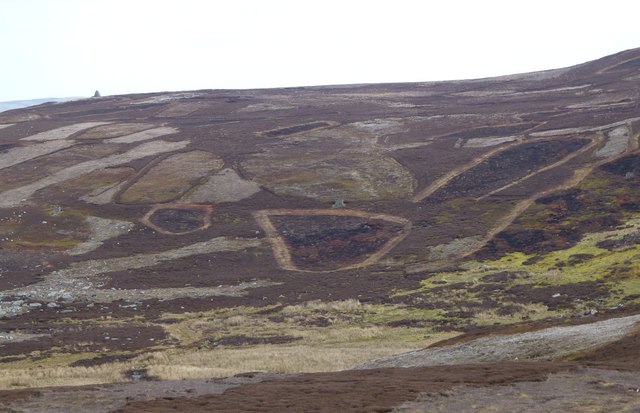
Grouse moor with butts by Russel Wills is licensed under CC-BY-SA 2.0

Grouse moors, as discussed in the video above, are an illustration of how bad things have become. Half a million acres in England, two and a half million acres in Scotland. Vast amounts of land, covering the most sensitive parts of our uplands, are kept in a state of dessecration simply for the entertainment of a wealthy elite. We have ceded ownership of a vital carbon store to people who have demonstrated very clearly that they are not safe or responsible stewards. Everything that affect the sport is killed- even at the potential threat of imprisonment- goshawks, mountain hares, weasels. Everything that should live in our uplands is gone. The once-vibrant ecosystem has been degraded to the point where it is invisible, and what is worse is that we have been so blinded by the power structures that keep these abominations in place that we think that these places are ‘wild’.

The weight of pheasants released into the wild – non native invasive species – as shotgun fodder (50 million birds) is greater than the mass of all native birdlife in the UK. Think about that!
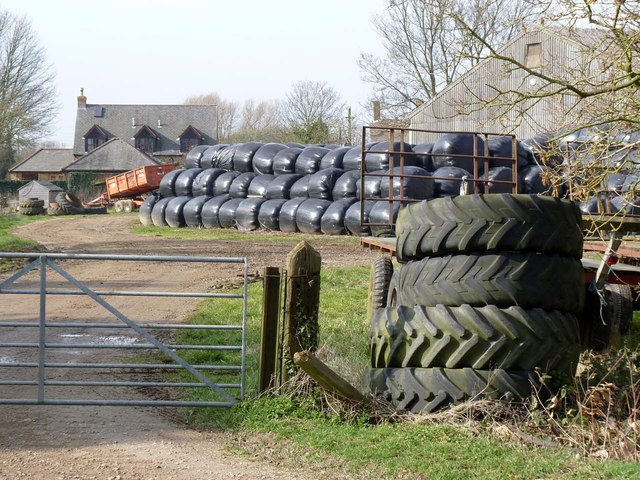
Modern farmyard by Alan Murray-Rust is licensed under CC-BY-SA 2.0

So let’s retuen to the family farm. People who work harder than most of us can imagine and deeply love what they do. If changes to inheritance tax are really going to impact them so severely, then surely this can’t be right?

The problem is that we are highlighting the wrong problem.

Farming in this country is in crisis. It is uneconomic because of a whole set of global and local fiscal rules.

It does not constitute a safe and secure food chain.

It is unsustainable.

Rather than safeguarding our land, it has destroyed almost everything that once lived on it.

If there was just one ‘brexit benefit’ that I have been able to identify it is the end of the common agricultural policy subsidies. For the first time, we have an opportunity to pay farmers (and land owners who have never farmed in thier lives) to change entirely the way they use the land. To grow food in sustainable ways. To increase wild land, to make room for biodiversity recovery which we need so desperately.

I think this should be done by government action. We should pay farmers from taxation where it is needed, because this is needed not just to save family farms, but to save our land itself – not least, from the farmers.

But what do I know- I’m just a lefty townie.
Advent with Proost – a call out to collaborators…

As part of the ongoing Proost revival project, we are about to start a daily advent posting from a variety of poets, artists and musicians. The idea is to use our network to post across as many platforms as we can… if you can help spread the posts via facebook and other social media outlets then this would be great. I will post them on this blog as one source outlet.

We are already gathering some lovely material, but there is room for more!

If you would like to take part, then ideally drop us a short video via our dropbox – drop me a line via a comment on this post and I will send you the details. We would love to showcase as many artforms as we can though, so if you have pictures we will do our best to include other formats.

The old Proost materials – much of which is currently unavailable, if still very much in circulation – included so many wonderful advent related resourced, not least by Si Smith…

Remaking religion pod 6: pod chat…

You may be aware that Rob and I have been podcasting as a means of making connections relevant to the revival of an old publishing platform called Proost. What this might look like is starting to take place- we are determined that whatever Proost is will depend on the community that comes together to make it happen. Our committment is to provide spaces for this community to happen. If you are interested in knowing more about this, feel free to drop me a message, or join our facebook group– it is a closed group, but this is simply to keep it a safe supportive place for those who need it.

This advent, we will be inviting artists to contribute to a collaborative daily offering

Some of these will be live poetry readings.

We would genuinely love to connect as many of you who want ot be part of this embryonic movement. There is a possibility here of the development of a very different kind of space for spirituality and creativity. It may be chaotic, but Rob and I are determined to make sure that it will be kind, supportive and fun.

Photo by Pixabay on Pexels.com

(We don’t have posh mikes on our pod by the way)

Rob is a lovely man. He is so encouraging and enthusiastic about other people’s work – mine included. He had been following the long form ponderings on this blog about the renewal of religion (spool back through the feed – we are up to 7 posts in the series now) so he asked if we could chat through some of this on the Proost podcast.

Iniitialy I was reluctant, for these reasons;

  1. I was not sure I could articulate my thinking in a chat. I tend to think by writing. In the end though, I decided I did not need to post it if it did not go well!
  2. Was the Proost format an appropriate place for this discussion? As I thought about this though, it seemed to me that the Proost project is driven by the same thoughts and feelings
  3. Finally, I am conscious that so many friends – including some who areninvolved in Proost – are still very much involved in organised religion. But then again, most of these have similar frustrations with elements of the old religion.

So we had the chat. In the end I enjoyed it – perhaps too much, as Rob had to slow me down! Being interviewed rather than being the interviewer is an interesting experience, and I was surprised how far the themes and issues unfolded. We will probably do one more as well. I will leave it to you to decide whether the podcast format helps to explore these complex issues more helpfully than written words…

Here it is.

Remaking religion 5: mission…

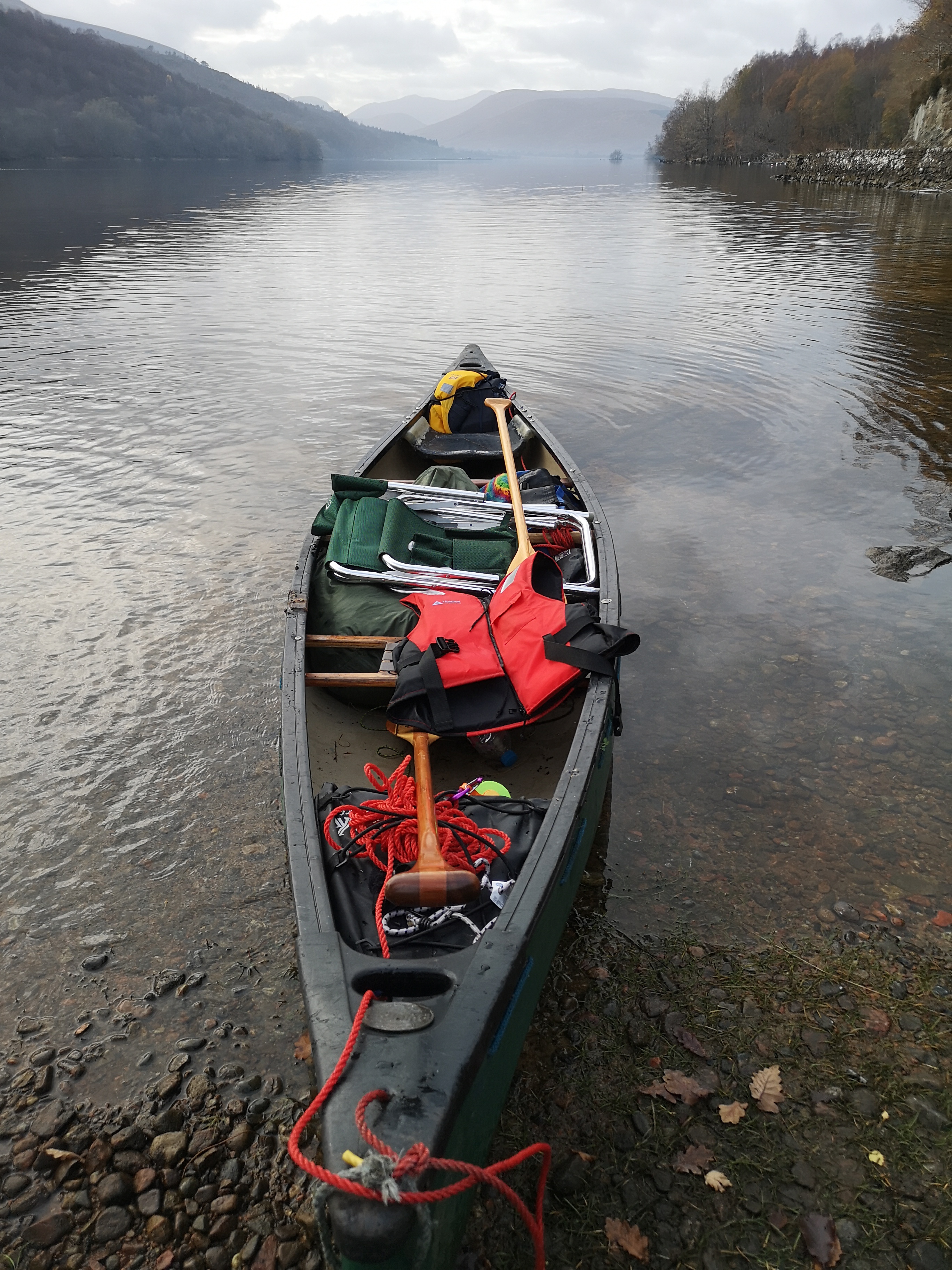
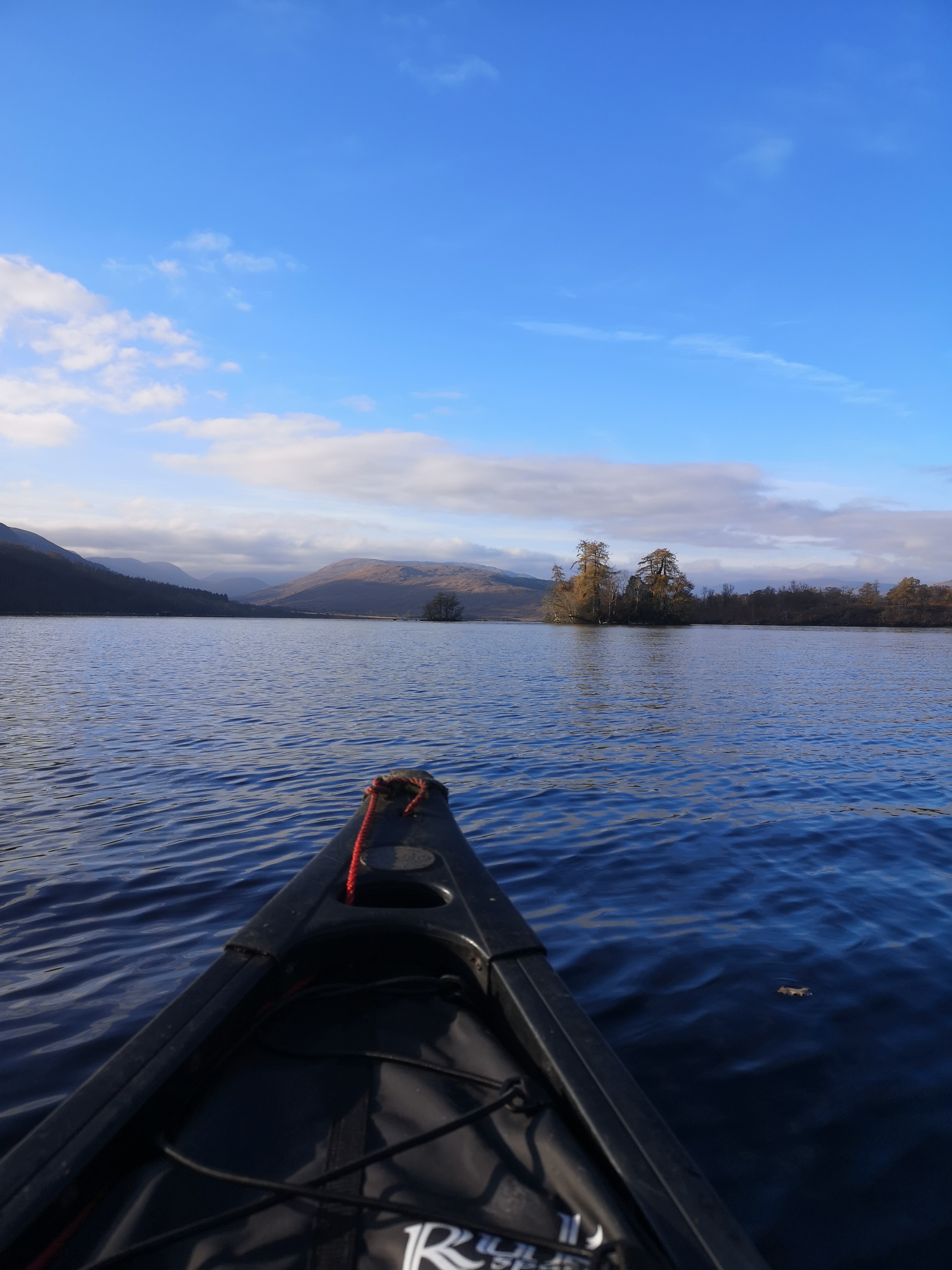
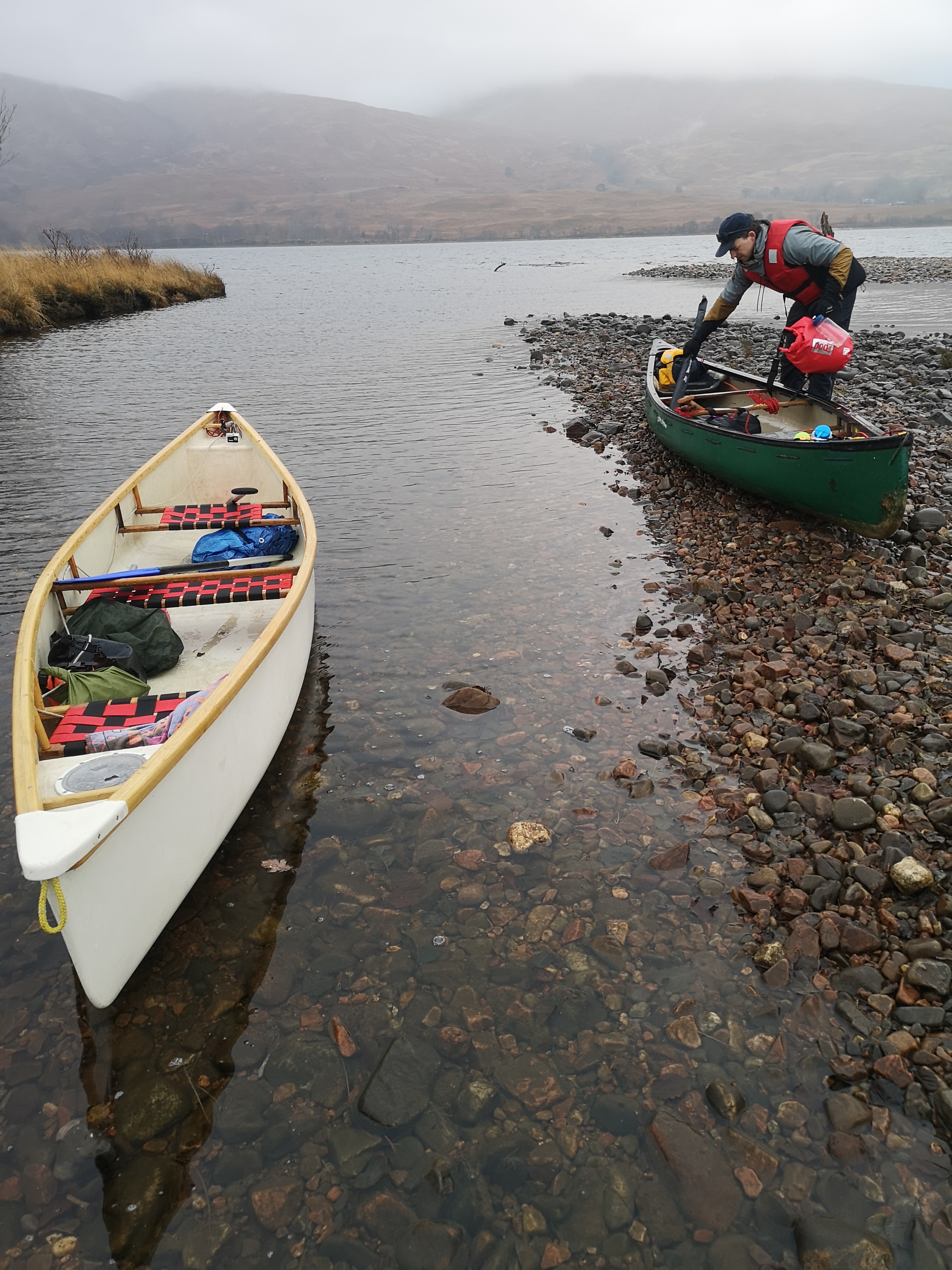
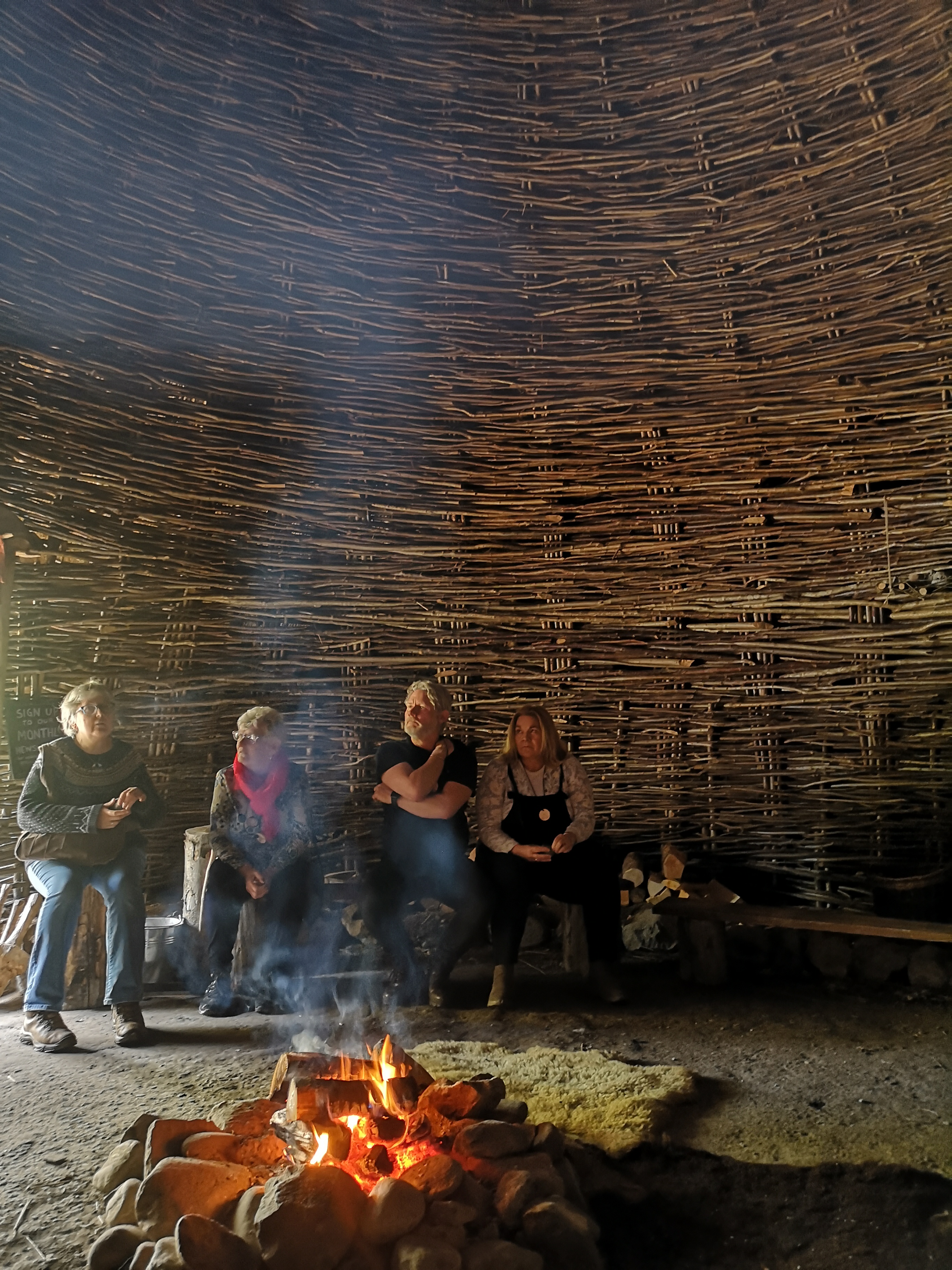
I am just back from a late Autumn canoe trip on Loch Arkaig, a place of sublime beauty, lined with ancient woodland and high mountains. We stayed in a bothy maintained by the Mountain Bothy Association, who make it freely available to the wide community of walkers, climbers and paddlers. There were four of us, and amidst the usual profanity and age-related moans and grouns we spent a lot of time talking about things that mattered. (I made a short video about the woods, here.)

In many ways, this landscape captures the best of what the Scottish landscape and history has to offer. The huge expanse of the mountains around a twelve mile long loch. Wild boar, deer, eagles, Ospreys (who had left for warmer places when we were there.) The Caledonian pine forest there feels holy, in the way it demonstrates connectedness, but also what being there does to me deep inside my chest.

Approaching St Columba’s isle – Island Columbkill or Chalum Cille Loch Arkaig

Out in the loch is a very small island with the remains of a chapel so old that no-one knows when it was built. It is known as St Columba’s chapel, and the island as St Columba’s island – who knows, it may well have a connection to one of the saint’s missionary journeys.

I always find myself wondering about what motivated Columba and his fellow Irish missionary monks. What problems were they trying to solve? Was it always about saving souls? Did they see themselves as right and the pagan world they set off towards as wrong? The assumption in the old stories always seems to be that these questions had obvious answers. Of course they were ‘right’, and of course those who had not encountered the Christian story needed to hear it. In a black and white world, colour is confusing. Better not to see it.

But perhaps I judge Columba (and his generation) too harshly, because their mission was not the same as those that came later – or at least I don’t think so. Theirs was a mission of peace to a world of tribal/clan conflict. What came later was much worse. Celtic Christianity developed and flowed amongst the culture and traditions of its time – perhaps even sitting alongside older spiritualities rather than replacing them. There is a much longer conversation to be had about this, but my point here is to wonder what might be the mission that religion would/could send us on now. What problems might/must we engage with? What cultural context might/must shape our mission?

It is worth saying right now that the religion we are largely leaving behind continues to make mission. I have been (rightly) critical of some – the legacy of which has left toxic stains across the world. Those kinds of missions had as much to do with cultural and economic conquest as they did with religion. They were a product of empire, a means of colonisation and subjugation. But despite this dark legacy, there have always been people motivated by their faith who have become activists of a different kind- peace makers, feeders of strangers, animal lovers, adventurers. Even now, if you look to the workforce of charities around the world – from our city streets to the furthest flung war zones – you will find that an outsized proportion who are there because of their religion. We should celebrate these people, and the way that faith has sent them on missions of healing and goodness.

My strong feeling is that people of faith have a duty – we might even say a religious obligation – to engage hopefully and critically with the context in which we are living. This means bringing as much passion, integrity and energy to bear as we can, illuminated by a set of principles not of this world (not of empire) but of another, sometimes known as ‘the Kingdom of God’.

This might mean opening our eyes to the spirit of our age, and exposing it to a different story- to the considerations of the Kingdom of God. At a time of widening inequlaity, of climate breakdown and mass extinction, of war-by-drone waged on defenseless children, we surely do not have to look very far…

This Kingdom of God always had a different set of priorities – above all, it was a call towards living in compassionate community with each other and with the beautiful world we are part of. In so many ways this simple, radical message was always at odds with the logic of empire, and as such, the counter-cultural part of the message was often reduced to a far less problematic priority of personal individual sins – particularly sexual sins.

Furthermore, the dualistic message that the old story was bound up in (saved/unsaved, evil/holy, sacred/profane) was never a good fit with the Jesus story, let alone the indigenous religion of the Jews. It was, however, a good fit with the logic of Roman exceptionalism (or all the other empire exceptionalisms that have followed since.) It has been so easy to forget this inside the small rooms we have made out of our personal religion – to imagine ourselves as special, and anyone outside our ‘chosen-ness’ as dwelling in darkness.

But this takes me back to the first post in this series, which is to wonder how a (religious) story might inspire action – or mission.

If we embraced that part of our tradition that calls us back towards connection to the earth – with our non human brothers and sisters – what missions might this inspire?

If we embraced that part of our tradition that calls us back towards radical inclusion of the outcast and outsiders, how might we use our homes and communal spaces?

If we embraced that part of our tradition that calls us back towards honouring the poor what will that mean for our comfort and our bank balances? When will we have enough? What will we share with those who have less and how will we share it?

If we embrace that part of our tradition that calls us to make peace with our enemies, then how will be relate to those around us? How will we hold the war-mongers to account?

And if these are the priorities of our religion as it seeks to make a mission in our broken and hurting world, then what collective rituals and practices might assist us, encourage us and inspire us? Where will we make our church, and what will it look like?

Mostly the mission this might send us on will be human-scale. Those who get to influence great events or act as major change agents have a rare and precious opportunity.

The rest of us use what power we can within our arms reach – and this is not a small thing. A mass movement of individuals can be more powerful than a King, but what might create this mass movement in an age of a million divisive voices screaming at us through all those little screens?

If not a religious story, committed to action that is as loving and truth-centred as we can make it.

There is nothing else worth living towards.

The ancient woodlands of Loch Arkaig…

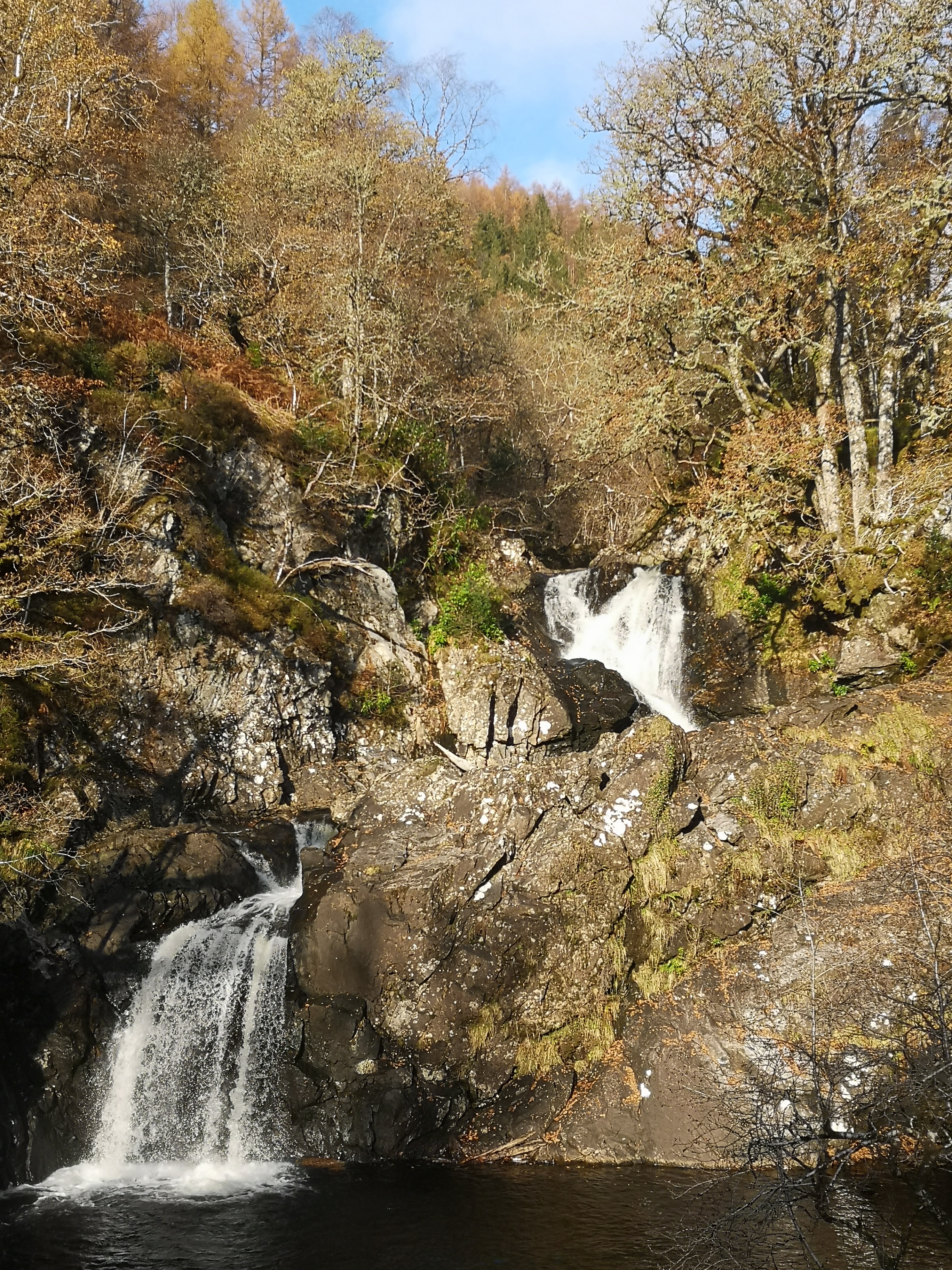
I am just back from a canoe trip with some friends. We stayed in Glenmallie bothy and explored the stunning woodlands that fringe Loch Arkaig, where work is underway to protect and perserve what remains of the pristine ancient pine forest.

I made this video, which captures something of what we found. I use the words ‘Caledonian pine’ throughout, but perhaps should have been using the more common ‘Scots pine’.

Oh America…

Photo by Pixabay on Pexels.com

Eight years ago, I wrote this, quoting Richard Rohr;

Our very suffering now, our crowded presence in this nest that we have largely fouled, will soon be the one thing that we finally share in common. It might be the one thing that will bring us together politically and religiously. The earth and its life systems, on which we all entirely depend, might soon become the very thing that will convert us to a simple lifestyle, to a necessary community, and to an inherent and natural sense of the Holy. We all breathe the same air and drink the same water. There are no Native, Hindu, Jewish, Christian, or Muslim versions of the universal elements. They are exactly the same for each of us.

It was an attempt to hold on to the idea that things would turn again towards good – in the wake of that first Trump victory in 2016. What I did not say in this post was that I wanted to be an active part of the resistance. I spent years writing and agitating, longing for better. Pleading for a world in which justice-making would push back the war mongers, the hate dealers and those who would exploit our human and non-human brothers and sisters for profit.

It almost seemed possible that the arc of history was turning. Trump lost. Bolsonaro lost. Johnson was toppled. But in a world of Starmer and Biden, any kind of radical shift was managed out of our expectations from the outset.

And now, the Mad King is back once more, vengeful in his dotage, full of fear and thunder, spewing lies and bombast, promising to prosecute an agenda that can only make things worse.

It feels like Nero, fiddling whilst Rome burns.

Perhaps this really is the fall towards the end of the civilisation we have known.

If so, this will not be the first time civilisations have fallen – in fact, they all must, eventually. You could even make a strong argument that would say ours is overdue. In his book Life After Doom: Wisdom and Courage for a World Falling Apart, writer Brian McLaren suggested that there were four possible future scenarios for our planet, based on current climate research- Collapse Avoidance, Collapse/Rebirth, Collapse/Survival, and Collapse/Extinction.

In Collapse/Avoidance, we heed the warning, take radical action, lower emissions, etc. The danger is, all we do is kick the can down the road for a further collapse in the future.

In Collapse/Rebirth we experience the pain of things falling apart – our lifestyles, our security, etc. and we finally wake up to the need to live differently on this planet. We consume less, throw less away, distribute more equally.

The other two outcomes I will leave to your own imagination.

Photo by Polina Zimmerman on Pexels.com

But I can not go back to that same place I found myself in 8 years ago.

I learned that if you spend too long in protest – eating only bitter seed out of a half empty bowl – then you will start to lose yourself. You are in danger of just picking at scabs till they leak.

This is not to say that we should not stand against injustice – of course not. But this is not enough. We must also live and love.

This poem has become increasingly important to me, so I offer it here in a format we have previously offered to our patreon feed. I hope our patreons will forgive me, but it feels very necessary just now….