According to our home secretary (herself the daughter of immigrants) this is the problem we are facing, and she has the solutions to the problem.
The solution, it seems is to bring in the most draconian policies against refugees ever attempted.
Why are we doing this?
Is this really a necessary corrective to an unfair, out-of-control, chaotic situation that is dividing our country? Is this about taking back control of our borders and keeping our streets safe from marauding gangs of rapists and pick-pockets?
Or is this just performative cruelty, intended to assuage the far right scapegoating of a tiny minorty? The desperate move of a deeply unpopular government lead by a prime minster seeminly devoid of an ideas that might bring hope of compassion to a country beaten down by cost of living rises, decades of austerity and rampany inequality.
It is almost as if the people who arrive here seeking asylum are not people at all… as if their pain is not our pain, as if it belongs elsewhere. We can justify this lack of compassion only by asserting our own victimhood, and it is this that Reform and Tommy two-names are exploiting as a political blunderbus, aimed downwards at those most vulnerable.
Labour appear to have decided that the answer is to get a blunderbus of their own.
What we are not seeing in this ‘debate’ is any real attempt to address the so-called refugee crisis on the basis of facts. The ecomonic/demographic analysis of the impact of refugees in this country is always secondary to political perspective and the fear and hatred whipped up by those able to use it as a political weapon. Lets push back on this if we can. What can we say about the numbers?
Is the UK facing a particular problem not seen elsewhere?
Well, in terms of numbers of assylum seekers per head of popuation, the UK is in 17th place in Europe so this is clearly a global problem, not a UK problem. If the ratio of brown faces to white faces is the concern here (and I think it might be that simplistic for many) then despite our colonial history which makes our connection to – and responsibiity for – many of the most troubled places in the world, still there are 17 nations within Europe that take more people than we do.
Are there too many people here already?
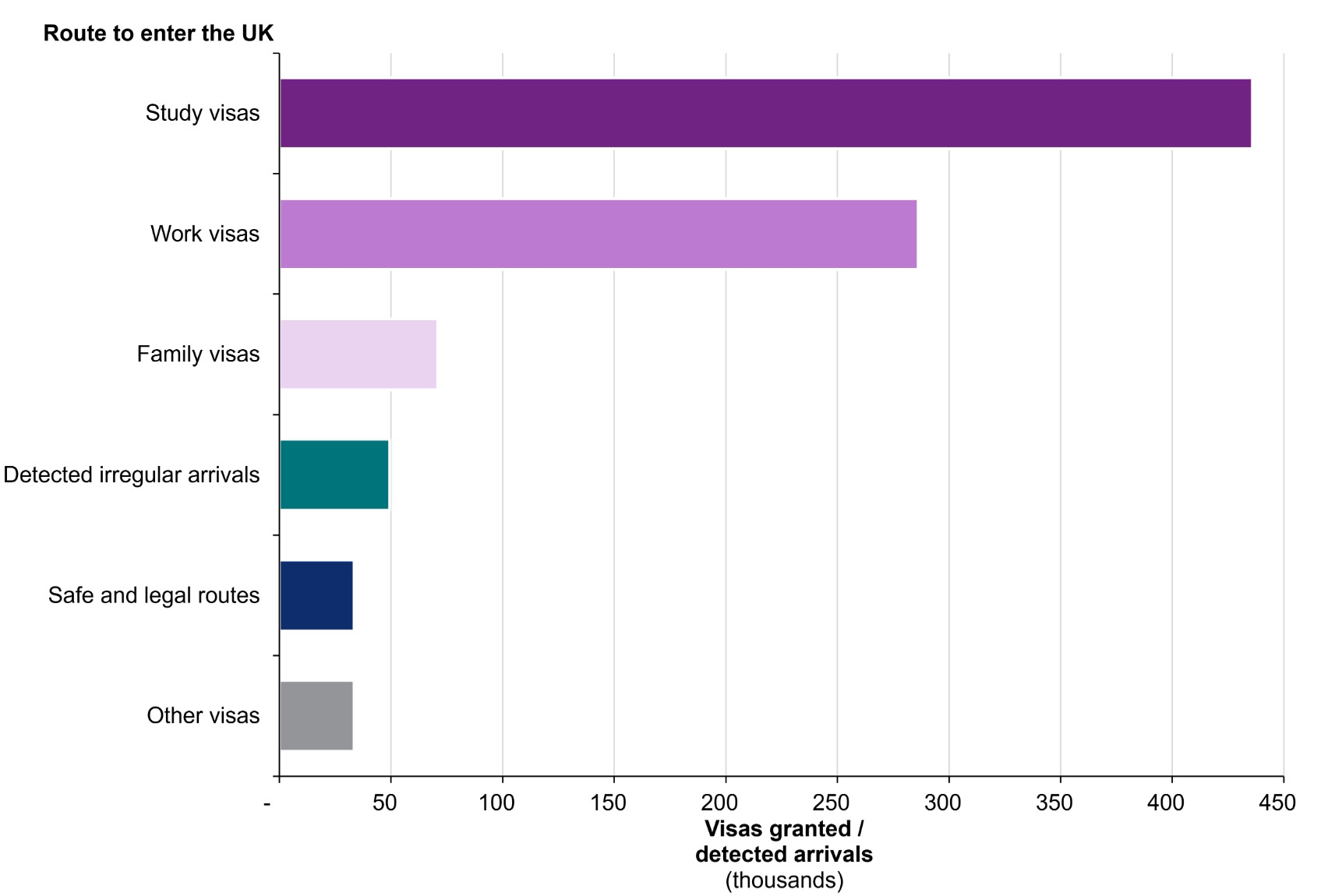
Is Britain full? Are we being overwhelmed? Numbers can be so difficult to get our heads round, but here are the stats for this year’s immigration to this country from the UK government’s own figures.
The vast majority of immigration into this country is people who come here to work or study.
Is the system broken and out of control?
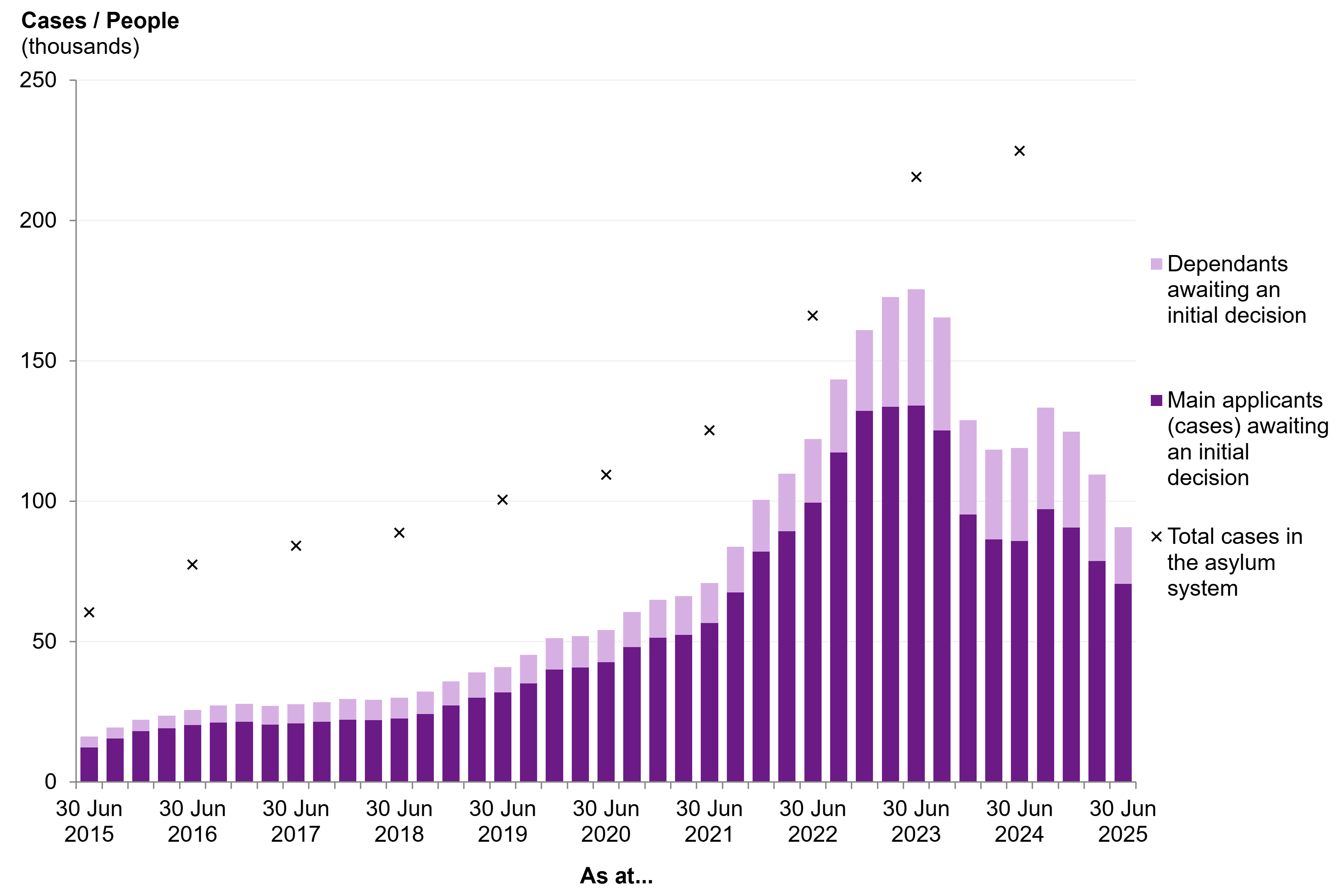
Here are the numbers of people who are currently in the asylum system, waiting to be processed. As in the Channel 4 documentary clip above points out, people in this system have years of waiting, followed often by seemlingly arbitary and draconian decisions which then go back to court, and meanwhile people live half-lives of waiting in poor accomodation, excluded from participation in economic or community life.
We perhaps have to conclude that this system is indeed broken, but that this has been the result of political choices driven by ideology of the sort that Labour are now embracing.
Are migrants a drain on our economy?
This is certainly the message we see pounded out repeatedly on our media outlets – the cost of hotels, the fact that the NHS cannot cope etc etc.
Leave aside the fact that asylum seekers are not allowed to work, or that the benefits they recieve are miniscule (£49.18 per person per week if they live in self-catered accommodation, or £9.95 per person per week if meals are provided. This money is loaded onto a pre-paid debit card and is intended to cover basic needs like food, clothing, and toiletries.)
Leave aside also how the NHS, and many of our other institutions are dependent on immigrant workers to sustain their activities, or the fact that our aging population desperately needs the creativity, vitality, youth and enterprise brought by incomers.
And consider this report which offers wholy different approach to that which our Labour government are pursuing;
Welcoming Growth – the case for a fair and humane asylum system is a new policy report, supported by PCS, which has launched today (17). The report reveals that every refugee accepted into the UK would contribute over £260,000 to the UK economy if the proposed changes within the report were adopted. This includes a net benefit to the public purse of £53,000 each.
The four key policy changes within the report include:
Asylum claims to be processed within six months
Legal assistance at all stages of the application process
English language support from day of arrival
Employment support from day of arrival.
Speaking ahead of the launch in parliament, PCS general secretary Fran Heathcote said: “Today we are witnessing the government neglect its own plans for growth by taking a harder line against some of the most vulnerable people who come to this country, fleeing war, persecution and violence. To threaten refugees with the removal of their only belongings to pay for their cases is frankly a line I would expect from Reform.
“Our report shows that through embracing a humane and fair approach to asylum we could assimilate refugees into our communities whilst ensuring they can contribute and support themselves. This report provides positive solutions, not divisive decisions which continue to fan the flames of hate.”
Other key findings within the report include:
Overall economy – The four changes to the asylum system would mean a contribution to the UK economy from every refugee of £265,788 over 12.5 years from arrival.
Accommodation – The changes to the system would result in a net saving in accommodation costs of £42,000 per asylum seeker over a 12.5-year period from arrival. This equates to a 34% saving in the total cost of accommodation for asylum seekers over the period (from £144,000 to £79,000). This is because by expediting the application process to six months, people can be self-sufficient sooner – meaning housing costs would be paid by the individual, rather than the state, a year earlier.
Public Purse – The four interventions in the model would benefit the UK exchequer by £53,000 per refugee over 12.5 years from arrival. This includes a net contribution of £7,000 for every refugee to the public purse just by expediting the asylum application system to six months and providing legal assistance throughout the process. This financial benefit takes into account all the associated costs of supporting asylum seekers from arrival, as well as the expense of creating and implementing the four proposed changes to the asylum system.
Employment – Every £1 invested in English classes and employment support from day one results in £9 in increased salary–over the 12.5 years from arrival. This equates to a 76% increase in total employment income, reflecting the cumulative effects of faster processing, language training, and employment support. This, in turn, means significant benefit to the economy and public purse.
The London School of Economics (LSE) report, commissioned by PCS and Together With Refugees
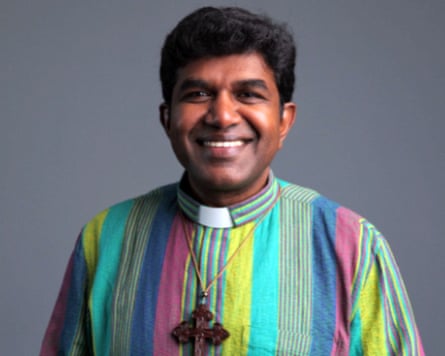
If then, these draconian, punishing proposals by appear NOT to be based on actual research, or on factual understandings of the challenges brought by the arrival of refugees on our shores, why are they being proposed at all? I was so heartened to read these words from Rt Rev Dr Anderson Jeremiah, the bishop of Edmonton.
“We are scapegoating asylum seekers for the failures and political divisions caused by successive governments in the last 15 years – the failures of successive governments to address wealth inequality, funding for education, the cost of living and primary healthcare and infrastructure.
“Every day I meet homeless people who have fallen through the cracks in our system. And yet in singling out asylum seekers we are laying the burden of society’s problems on less than 1% of the UK population – when the number of millionaires and billionaires is on the rise.
Rt Rev Dr Anderson Jeremiah: ‘We can’t isolate one section of people and label them as a problem that can be easily addressed.’ Photograph: supplied
“There are politicians who are trying to hold on to compassion in public life. But at the same time there is a pressure to have a singular problem on which all things can be blamed.
“But we are a connected society. Our environmental crisis is deeply connected to the conflicts which lead to people to our borders. We can’t isolate one section of people and label them as a problem that can be easily addressed. If one part of the body hurts, it hurts the entire body.”
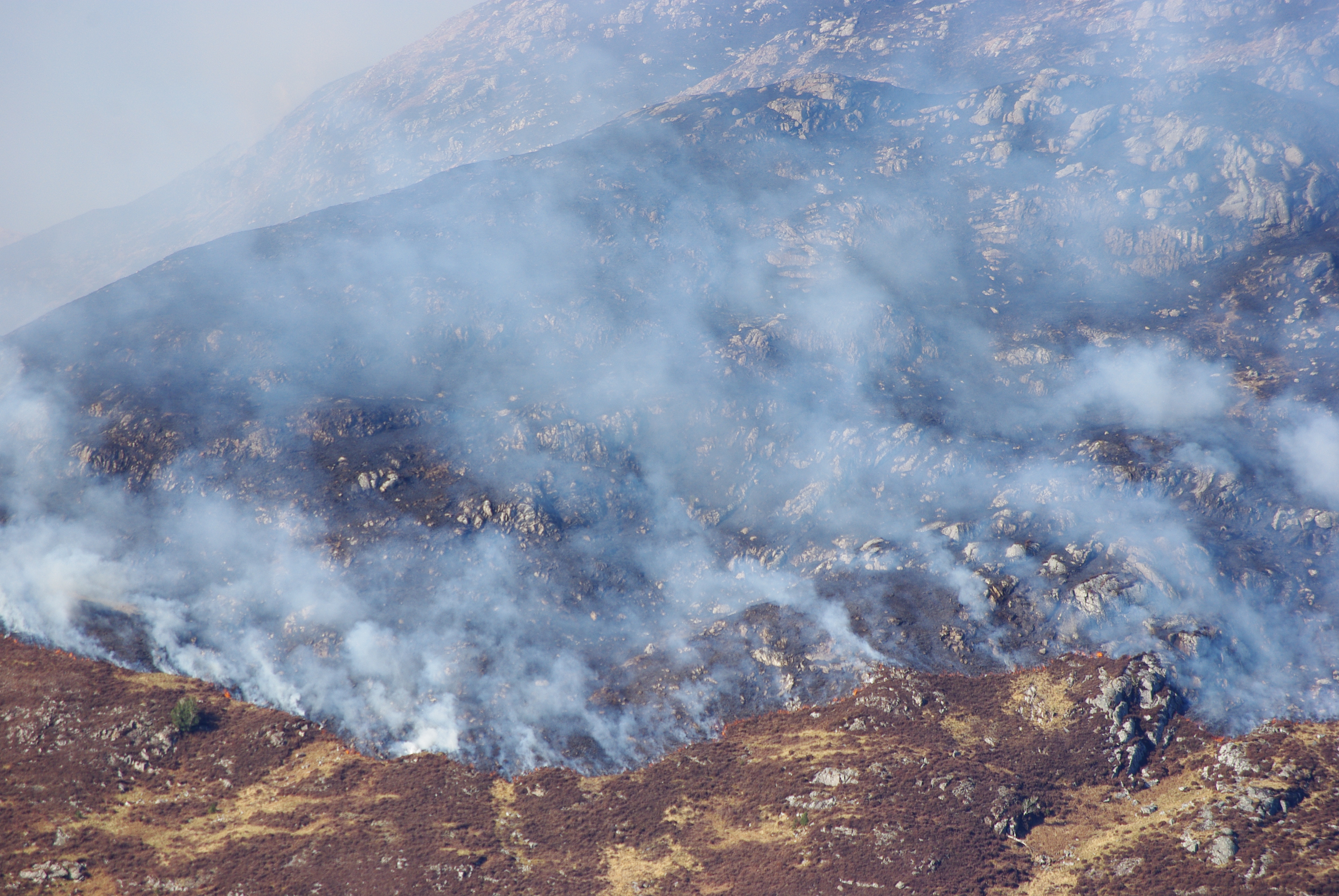
I live in a ‘wild’ place – mountains, broken tree-lined shores, deep lochs, forests. I am surrounded by iconic British animals- red squirrels, sea eagles, pine martens, deer. Tourists come here and wonder. Locals are proud. All of us are nature-blind, because this place is anything but wild.
There is this strange thing that happens when we look at the Scottish landscape (or perhaps at any landscape) in that we do not know what we are seeing. Partly this is because we have lost our folk memories of what we are NOT seeing.
Despite every metric pointing to a continual precipitous decline in our ecosystems- a loss of diversity measurable in almost every way, and in different biomes – most of us are not able to grasp just how bad things are here in Scotland. There has been an average 15% decline in abundance of 407 terrestrial and freshwater species since 1994. There has been a 49% decline in average abundance of Scottish seabirds. 11% of species found in Scotland are threatened with extinction from Great Britain. Meanwhile, we thrill to nature propoganda shots of the sea eagles of the noble stag as if all is well.
This film tells a story that we need to hear.
How has it come to this, and what can we do about it?
As mentioned in the video, wealth is at the heart of the problem. Land ownership in Scotland has a particular flavour and pattern that arises from a history that we can not be proud of. This from here.
No other European country has such a narrow base of proprietorship as Scotland. Half of all privately owned rural land is held by 421 people or entities. The roots of such disparities lie in the past. The 18th- and 19th-century Highland clearances emptied the glens and readied them for private takeover. On the continent, and eventually in England, the great estates were broken up by inheritance and land taxes. By comparison, Scotland is still feudal in scale.
There are already fears that Scotland’s new proposed Land Reform Bill has been gutted, ending up with something far less than that recommended by the Scottish Land Commission in their report from 2019. It is hard to escape the power of wealthy elites.
The video above mentions the possible use of a land tax, of the kind proposed by Common Weal.
Land prices in Scotland have risen at a rate outstripping many other ‘investment assets’ with stocked commercial forest land in Scotland, for instance, increasing in value from £8,500 per hectare in 2018 to £21,000 per hectare in 202210 (had such land increased in price only by general inflation, it would be worth just £9,500 per hectare in 2022). The selling price of such land has also consistently been over 120% of the asking price on the market which is indicative of demand for purchases being substantially higher than supply. Similar patterns have been observed in other types of land in Scotland in recent years so it is not a stretch to say that communities are simply being ‘priced out’ of land, even where legislation has made some steps towards making it theoretically easier for them to purchase such land assuming they somehow had the capital to do so. The high profile failure of a local community to be able to enact a community buyout of the Tayvallich Estate in Argyll – which had an asking price of £10.5 million, equivalent to around £7,800 per hectare – is indicative of Scotland’s broader failure to enact land reform and will only be one of many such failures until reform is embedded. A local land tax can, should, and must be a part of this reform, not just by raising revenue which would directly benefit communities who cannot otherwise access the land around them but also by acting as a break or even reversal on the price of land sales (which would have to factor in the tax burden of the asset) and, if done right, would bring prices back down into the range at which communities would have a better chance of owning the land around and under their own feet.
For most of us, far from the seats of power in Edinburgh or London, there remains the important, ordinary urgency of learning how to read a landscape.
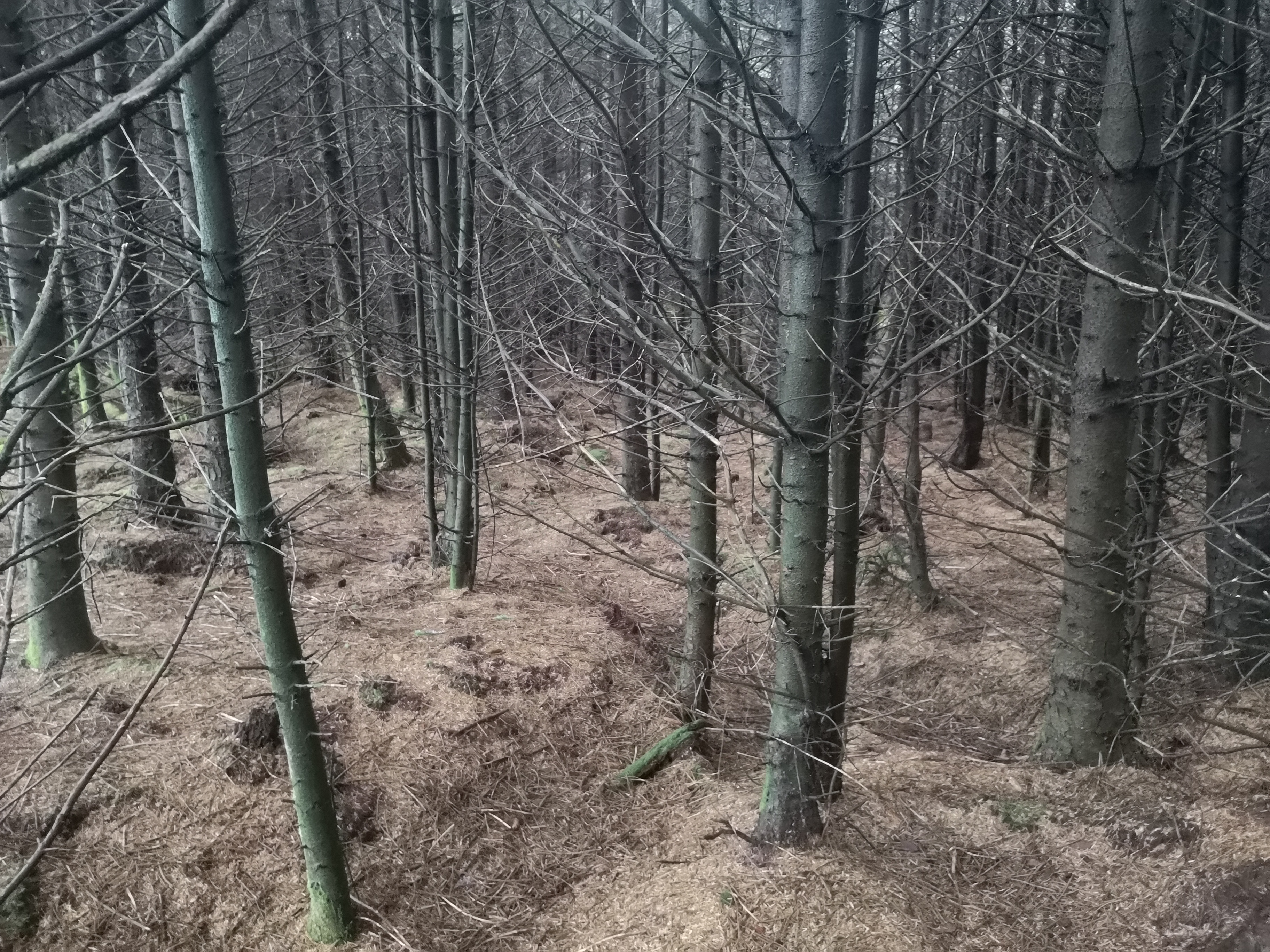
The photograph above is taken just above my house- one of the many many vast plantations of commercial forest in my home county of Argyll. They are better understand as green-brown deserts.
Here in Scotland, our challenge is mostly NOT preservation, it is the urgent need of restoration and recovery of our ecosystems. Think about that- in contrast to other European countries, we have ALREADY lost much of what should be here. In order to see any recovery, the task required is a mult-generational re-seeding and re-populating of our mountains and valleys.
We have to be able to SEE this and imagine an alternative.

 this fragile tent