Advent 9: tribe…

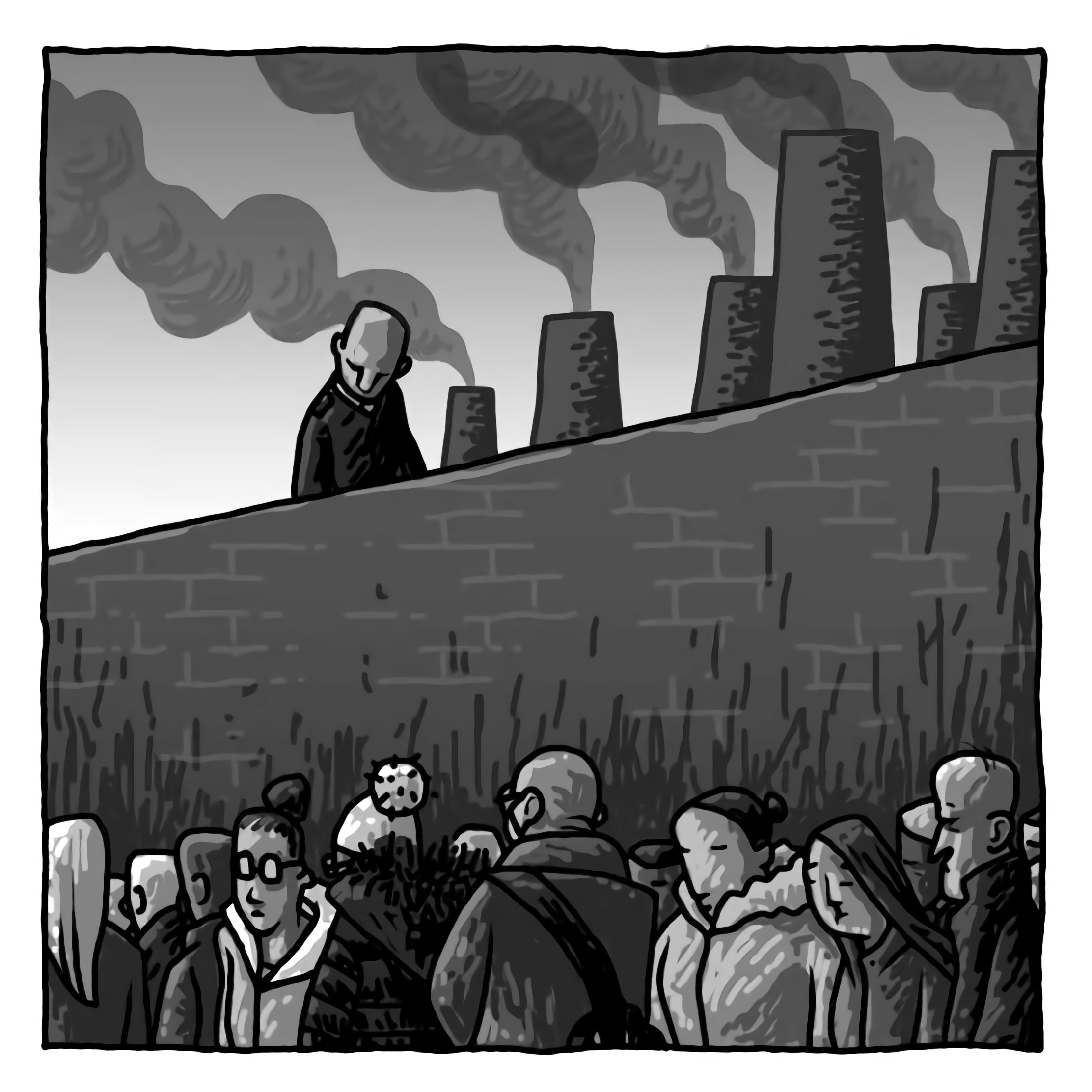
(Image by Si Smith, from the book ‘After the Apocalypse’.)

When looking at all the brokenness this world contains – war, greed, injustice and shallowness – we might be forgiven for despairing. For throwing up our hands and seeking seperation and distraction. This would be a sane response.

But what if this story is only a partial truth, or even worse, a distortion of a deeper one? What if despite all of this darkness, there is goodness flowing still at the very heart of our humanity?

If this were true – even if we merely choose to believe that it is true – what difference would it make? What might be the sanest response?

If we can believe that there is goodness at the heart of everything, a strange thing starts to happen. We see it everywhere. It does not blind us to the presence of darkness but we start to notice those ever-present pricks of light…

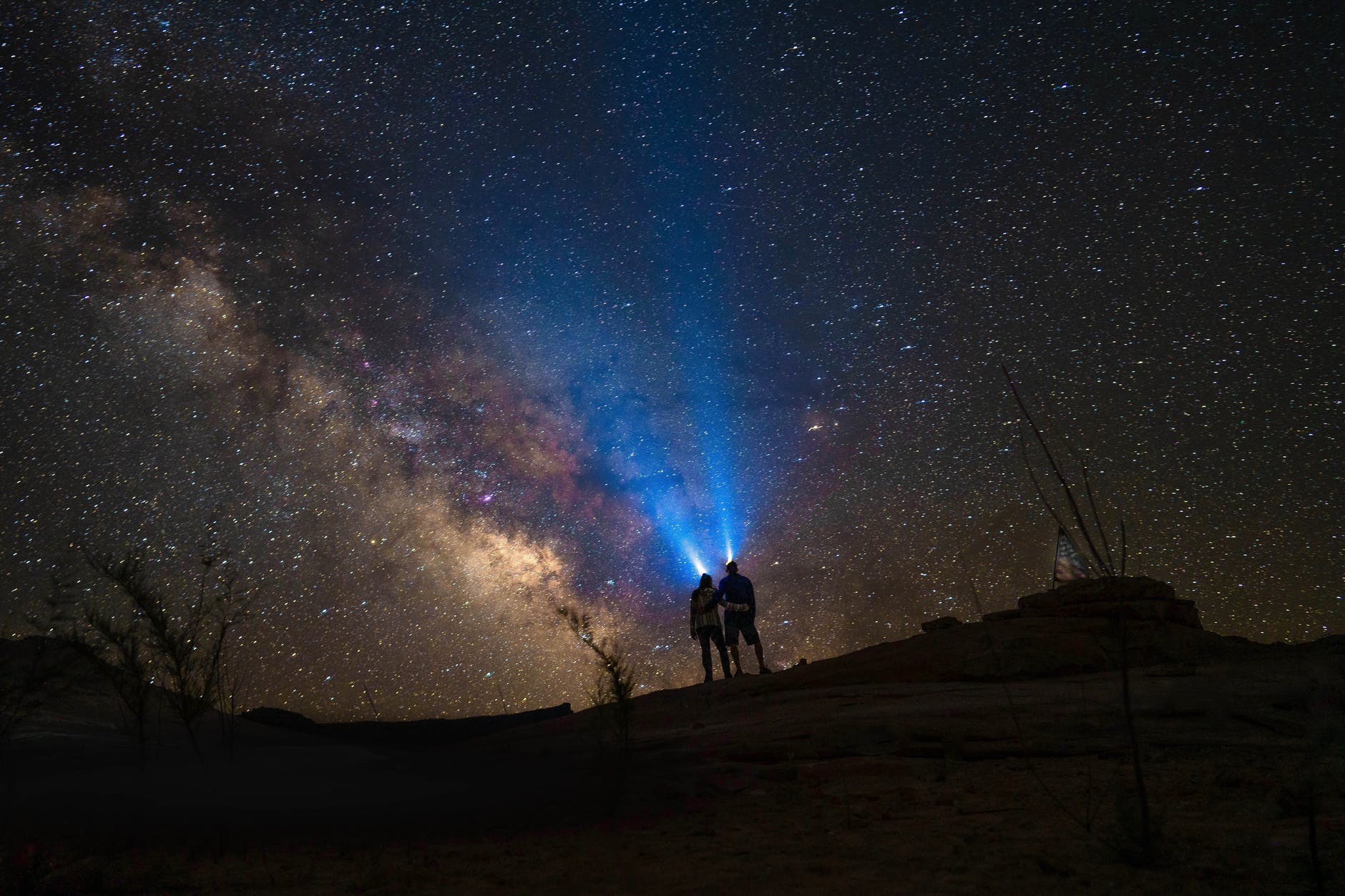
Photo by Paweu0142 L. on Pexels.com

Perhaps this is a useful way to characterise our whole Advent journey… so much of our lives have become detatched from each other. We live through performative pixels on screens but the good stuff – the best stuff – is made of warm flesh and friendship. How we need our tribes…

Tribalism can be bad of course, for all the obvious reasons, but how could humanity have survived without each other? It might have helped us hunt mammoths but it also gave us the grounds in which we could learn to love.

If we look for goodness, we will see it most commonly in the middle community.

May you find yours. May you give yourselves to each other and in return may you all be held.

And from this place of warmth, may you reach out to those who are still cold.

Stand


We are not helpless here
Thundering juggernauts will shudder to a halt
Inches from our upraised hands
When we make a stand

We are not victims here
Each injustice is remembered, not to avenge
But as the tender wound of our becoming
Back when we made a stand

We are not broken here
Our bodies embrace their beautiful imperfections
And here, in our many shapes and colours
We make our stand

We are not defeated here
There is much to do but we are many, and
Whole worlds are reshaped by loving
So, right here, we make our stand


From after the apocalypse

Advent 8: peace is flowing like a river..

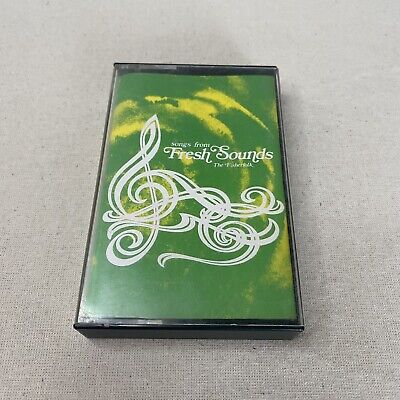
When I was a boy, I attended an Anglican church that was part of what was later described as the ‘charasmatic revival’. Lots of werd things happened, but lots of very lovely things too. If there was a soundtrack to this experience, it was the gentle folk songs of The Fisherfolk, an American Christian community who inconcruously lived on the Island of Cumbrae, which I can see from my Kitchen window. (The story of this community is rather interesting but that is for another time.) One of the Fisherfolk ongs we sang went something like this;

Peace is flowing like a river

Flowing out through you and me

Spreading out into the desert

Setting all the captives free.

Of course, I had no idea what this meant. If pushed I might have had a very dualistic idea of how Christianity was going to take over the sinful world and sanctify it one soul at a time, but this song sometimes randomly comes into my head even now. It connects me with something simple and good, but also something I still hope for decades after I fist heard the song – even if my concept of what peace looks like has shifted considerably.

For a long time, I have been interested in something called the ‘Shalom of God‘. In my way of thinking, this is a foundational part of the Gospel of Christ- which is after all NOT primarly concerned with saving souls from Hell (If you don’t beleive me, read Mathew Mark Luke and John again) but with strange ideas about the coming of a ‘Kingdom of God.’ This Kingdom is both here and now and future hope, where peace and justice reign. It has an upside-down, topsy-turvy politics in which the humble will be lifted up and broken people will be healed. In fact, it seems to have a set of rules and obligations that are entirely incompatable with any earthly empire that has ever been built.

And there is is the problem. To make peace, it seems that we have to turn things upside down. To make Shalom, we have to learn a new path- one that goes beyond mere peacemaking into the idea of restoration of deeper dependencies and connections.

The Bible Project puts it like this;

Again, it is impossible to think about these ideas during this Advent and not constantly be aware of what is happening in Gaza, where the very opposite of Shalom is being displayed in all its horror and gore. There has been no peace in this desert for generations.

Perhaps the Shalom of God is not a final destination, but a constant process of engagement with the brokenness in the world and in ourselves. A constant call to be a channel for the peace to flow out from.

All wars must end, but this is not the end of war. We will always need peacemakers who long for the Shalom of God.

The fruit of the spirit is peace…


After the rain squalling
And the bombs falling
After the back stabbing
And the tongue lashing
After love is betrayed
And dreams disarrayed
When the knife cuts and slashes
After sackcloth and ashes
Comes the peace

After the tumours
And cruel vicious rumours
After bodies broken
And evil words spoken
After guns cease their shooting
Troops no longer jack-booting
With the grave trodden down
And the trees turned brown
Comes peace

Even after the failure
Of life-long labour
And after deadlines missed
After the getting pissed
When the pressure’s done mounting
And it’s all over-even the shouting
When the race has been run
In the setting of sun
Comes the peace

When anger burns out
After faith turns to doubt
When we give up on walking
And wolf packs are stalking
When the money is spent
Safety curtains are rent
At the end of all coping
Even Polyanna’s done hoping

Even then
Will fall
My peace

From 'Listing'

Advent 7: comes the peace…

Photo by u015eeyma D. on Pexels.com

Until now on this Advent journey, we have been focussed mostly on private, interior spirituality. This is only ever part of the story, because personal enlightenment is meaningless if merely used to boost to our individual ego strength. I do not mean to point the finger because we all fall into this same ‘me first’ spiritual trap.

In other words, we can find our selves drawn into a spiritual journey that might be described as ‘moralistic, therapeutic, deism‘, in which our spirituality becomes a lifestyle contract offering us a divine therapist in return for following certain cultural moral behaviour codes. There are many problems with this kind of ‘heavenly insurance’ approach, not least the fact that it is often tested to destruction by what life throws at us, but also because it can co-exist comfortably with western society norms that allow for the continuation of extreme social and environment injustice.

A spirituality that promotes ‘me’ and ‘mine’ at the expense of the other is simply not very Jesus-like. It is no Advent at all. You know this already.

What are we waiting for? What notable future event are we scanning the night sky for distant signs of?

The story of the first Advent might be instructive here, taking place as it did in a time of despots and child killers. Meanwhile, in a broken, invaded and troubled country, people longed for Messiah, the coming of the Prince of Peace who would set captives free.

These were people who lived in the shadow of the words of the great prophet Isaiah, who began like this;

The multitude of your sacrifices—
    what are they to me?” says the Lord.
“I have more than enough of burnt offerings,
    of rams and the fat of fattened animals;
I have no pleasure
    in the blood of bulls and lambs and goats.
12 When you come to appear before me,
    who has asked this of you,
    this trampling of my courts?
13 Stop bringing meaningless offerings!
    Your incense is detestable to me.
New Moons, Sabbaths and convocations—
    I cannot bear your worthless assemblies.
14 Your New Moon feasts and your appointed festivals
    I hate with all my being.

Wash and make yourselves clean.
    Take your evil deeds out of my sight;
    stop doing wrong.
17 Learn to do right; seek justice.
    Defend the oppressed.[a]
Take up the cause of the fatherless;
    plead the case of the widow.

See how the faithful city
    has become a prostitute!
She once was full of justice;
    righteousness used to dwell in her—
    but now murderers!
22 Your silver has become dross,
    your choice wine is diluted with water.
23 Your rulers are rebels,
    partners with thieves;
they all love bribes
    and chase after gifts.
They do not defend the cause of the fatherless;
    the widow’s case does not come before them.

from Isaiah chapter one.

Like the words of all prophets, there is much here that disturbs and even offends us still. But the angry words that Isaiah places in the very mouth of God (or God placed in the mind of Isaiah) have visceral, furious power…

Later on, we come to the passage quoted each Christmas. It is often divorced from the anger of the words above, as if the two are unrelated;

The people walking in darkness
    have seen a great light;
on those living in the land of deep darkness
    a light has dawned.

For to us a child is born,
    to us a son is given,
    and the government will be on his shoulders.
And he will be called
    Wonderful Counselor, Mighty God,
    Everlasting Father, Prince of Peace.
Of the greatness of his government and peace
    there will be no end.
He will reign on David’s throne
    and over his kingdom,
establishing and upholding it
    with justice and righteousness
    from that time on and forever.
The zeal of the Lord Almighty
    will accomplish this.

From isaiah chapter 9

What is this Advent hope we are reaching for? If we take our cues from the first Advent story, we can not seperate the anger from our Advent.

The Shalom of God referred to here is not for personal private sanctified satisfaction, rather it is the call towards the restoration of justice in the fullest sense possible.

Palestinians cook among the houses destroyed in Israeli strikes during the conflict, amid the temporary truce between Israel and the Palestinian Islamist group Hamas, at Khan Younis refugee camp, in the southern Gaza Strip, November 29, 2023. REUTERS/Mohammed Salem

Advent 6: co-creation…

The photos with this post are of some of our recent pots, fresh from the raku kiln.

I read this today (via the daily meditations from the Centre for Action and Contemplation);

In The Silent Cry German theologian Dorothee Sölle [1929–2003] writes “I think that every discovery of the world plunges us into jubilation, a radical amazement that tears apart the veil of triviality.” [1] When the veil is torn apart and our vision is clear there emerges the recognition that all life is connected—a truth not only revealed by modern science but resonant with ancient mystics. We are all one, connected and contained in a Holy Mystery about which, in all its ineffability, we cannot be indifferent. Sölle maintains that radical amazement is the starting point for contemplation. Often we think of contemplation as a practice that belongs in the realm of the religious, some esoteric advanced stage of prayer that only the spiritually gifted possess. This is not the case…. The nature of contemplation as I describe it here is one that lies well within the capacity of each of us. To use a familiar phrase, contemplation amounts to “taking a long loving look at the real.”…

That ‘connection’ thing has increasingly been a central part of the meaning through which I try to live. It seems such a simple idea, almost to the point of cliche, until you feel it, somewhere deep inside and then the journey starts again.

I have come to think of the human experience as a process of birth/disconnection, followed by a slow process of realising that our cherished (you might even say fetishised) individuality is mostly illusion.

That is not to say that our unique agency is illusion, rather that our being exists in the fullest sense when we are part the ‘great connection’ that has many names- including ‘The Christ’, which (through the writings of Richard Rohr) I now think of as another name for everything.

No matter how real my experience of this connection has been, it has only ever been fleeting. It comes and goes as encounter, or with the unexpected tingle of trancendence. So it is that I have found that certain practices help me to make what is ephemeral more fully present. Above all, I find this in creativity- writing and shaping things, pursuing ideas in abstract even if they often remain out of reach. I have written before about the idea of theopoetics which describes this same spiritual process rather well.

The strange thing about the creative life is that as we create, many of us have described a feeling in which the ideas/tunes/pictures/shapes/words etc. that flow from us are not ‘ours’, rather they have been given to us in some way as if we are not the origin, but somehow the channel. These experiences are special, in fact the things I am most ‘proud’ of having created are mostly things that are not mine at all, rather at some level they have been ‘co-created’.

The point here is not to make any crazy supernatural claims – after all, mystical experiences always seem madness to those who did not experience them – rather to honour again the recognition that all of life is connected, and that ‘radical amazement’ is a very ordinary and real part of this connection…

Advent 5: something glints in the tops of bare branches…

Another repost because I have found it helpful to take a look at previous advent journeys. This one was from last year, and uses a poem that I am still chewing on- it comes to me regularly as I walk the hills… the sense of being ‘not alone’. I hope it resonates.

It goes without saying that here in the northern hemisphere, the advent season is inseperable from the deepening of winter, the shortening of days towards icy darkness. The longing for light. It is this juxtaposition that adds immersurably to the poigniancy of how we approach it, so much so that I find it difficult to imagine what a southern hemisphere advent, with just the opposite trajectory, might look and feel like.

Here there is also a feeling that we are treading pre-Christian paths too, in that the traditions that come to us only in fragments suggest that our ancestors also felt the spiritual significance of this season, so much so that they celebrated their own rebirth in the great festival of Yule, the winter solstace. Of course, many of these fragments live on in our Christmas traditions – the date itself, the mistletoe, the father christmas, the tree, the candlelight…

Rather than disturbing our Christian world view, I think it is more helpful to attempt towards a gratefulness because we stand in a long line of people trying to hold and help each other through the darkness.

I don’t need to tell many of you about how hard the season of darkness can be, or why the depths of winter – approaching the enforced jollility of Christmas – can sometimes be a very lonly place. Perhaps it was different in past, in those more connected, agricultural communities that previously celebrated the winter solstace, but then again, there are always outliers in any human grouping; those of us who are cast low or cast out.

Despite the stark beauty, winter can be cruel.

In to this dark place, the Jesus that comes through old stories (and through the lives of those trying to hold and help) is not one who makes everything ‘better’. S/he does not make the winter go away. The searing passage from the beginning of John’s gospel about darkness not being able to put out the light never pretended that darkness would not continue.

Light exists in the midst of darkness, just like solstice comes at the depth of winter.

I would like to share with you a poem, which means a lot to me. It was my attempt to banish my own winter blues and to look for light.

.

Light of the world

.

The low winter sun takes power from

Puddles of last night’s rain and I turn away

Resonating to signals sent from distant stars

.

Something glints in the tops of bare branches –

A flash of wing or a white tooth or the

Coming together of choirs of angels

.

And in a wet manger of clogged earth, summer

Sleeps, waiting for light to burst out

Brand-new hallelujahs

.

For behold, the light is with us. The light is

In us. The light shines in the darkest places –

It even shines in me

Advent 4: we don’t need another hero…

When setting out on our advent journey, or any form of spiritual quest, it might be important to first let go of some assumptions about the nature of the pilgrimmage we are undertaking. For white men in particular, we must contend with a cultural inheritance based on the heros journey.

Here is the definition from Wikipedia;

In narratology and comparative mythology, the hero’s journey, or the monomyth, is the common template of stories that involve a hero who goes on an adventure, is victorious in a decisive crisis, and comes home changed or transformed. Earlier figures had proposed similar concepts, including psychoanalyst Otto Rank and amateur anthropologist Lord Raglan.[1] Eventually, hero myth pattern studies were popularized by Joseph Campbell, who was influenced by Carl Jung‘s analytical psychology. Campbell used the monomyth to analyze and compare religions. In his famous book The Hero with a Thousand Faces (1949), he describes the narrative pattern as follows: A hero ventures forth from the world of common day into a region of supernatural wonder: fabulous forces are there encountered and a decisive victory is won: the hero comes back from this mysterious adventure with the power to bestow boons on his fellow man.

Leaving aside the masculine grandiosity and ego-centric nature of what might be described as the hero complex, the idea of transformative struggle leading towards personal victory and public triumph over an as-yet-to-be-defined ‘enemy’ has considerable cultural power in ways which may be very unhelpful on our ordinary Advent journeys. One consequence is that we tend towards theologies of opposition in that we unconsciously set out not towards connection but towards conquest.

The prevalence of the ‘superhero’ genre within popular culture has always facinated me, at the same time as repelling me. What might this say about us? I tried to capture some of this in a poem;

Superhero


Tonight I am made new
The atomic spider bit deep, and
I am freak show, staring down from high buildings
My laser vision scans, searching
For photogenic girls to save
From comic-cut villains, whose role is crucial, because
Every empire needs a convenient easy evil
To scare children to their beds and
Parents to their polling booths

Yesterday I was just like you
Commuting through the same crowd towards
Jobs where work is anonymous. My weekend too
Was consumed by compensatory distraction
A movie perhaps?
We watch masked heroes high in their
Plastic palaces
Or zombies massing over the border wall.

If we are all extraordinary
How could I be special?
After all, I eat communists for breakfast
Photo by cottonbro studio on Pexels.com

We see this in part in the way that we come to define the spiritual ‘problem’ that we set out to overcome. Most religious movements see to do this – after all, our society certainly needs to address many problems, but the particuar problem focus of our hero struggle is not neutral either. Even the best heroes can cause collateral damage.

For much of my early life, the religious focus I was exposed to was the problem of sin. Particularly sexual sin, which was the worst kind. If we (or I should say if I) was purer then the world might be transformed. My job was to make others see it that way too even if I was a very flawed hero. The life-or-death nature of this struggle was after all eternal.

Later, I characterised the ‘problem’ more in terms of poverty, inequality and injustice . My job was to overcome the brutalising, degrading nature of trauma associated with these things. I worked as a social worker on the ragged edge of the welfare state, trying to rescue people (including myself.)

There is sin in this world. There is injustice. We need people to challenge and rescue, but this advent journey is not towards a battlefield, It is towards a baby.

Here is a picture of my brother holding his little nephew. I love it, in part because it captures the vulnerbility of both. It has no grand purpose, but it is laced with a deep significance, a supra-humanity.

So, shall we let go the hero, at least for a while? There may be battles ahead that need to be fought, but there is also fragility and humility to be encountered, if we lay down the swords for a while…

Advent 3: Encounter…

Can we agree that the work of our Advent season is first and foremost concerned with the search for meaning?

Did I get this right? Do I place too much pressure on what is after all a period that is already put to far too much work? Perhaps, because after all, most of us perceive the rush towards the high season as we might the landscape from a speeding car, blurred by speed and then behind us. These words are not intended to bring any more ‘should’ or ‘ought to’.

No, the search of meaning is not an obligation, it is not even a discipline (although this could help.) Rather I think of it as encounter.

Let me say more about this, using that most useful of spiritual language known otherwise as poetry;

Joy 2 

Joy is not a bauble
Not a bubble, too soon burst
Never manufactured cost effectively
It is not bought or sold
It is not gold

Joy is not a jacket
You pick from a handy peg, it is
Never something worn externally
It is always a surprise
Like sunrise

Joy requires no skill
Its practice is not taught
It is not being ‘happy’ or content
It is just being open, to the
Beautiful and broken

Joy is an ambush
Hidden in plain sight
Wrapped up in the most unlikely things
It often comes with grief, not even
Promising relief

Joy is a squirrel
Transcending a tree
It is music played directly on the spine
You do not need to look, because
It stabs you the gut

It is just being open to the beautiful and broken. This line has tapped at me for years. It refers back to an old Henry Nowen quote in which he described these two things – the beautiful and the broken – as the primary means through which he encountered God.

Of course some of our experiences of beauty (and even a few of our experiences of brokeness) are much easier to characterise in this positive way. Sunsets, rainbows, smiling babies or crashing waves seem simpler spiritual avatars than slugs or shopping trips or our own human fragility.

We are not always open to these things. Sometimes all we can do is to put our heads down and keep moving forward and there is no shame in this. Like a walk through the dense conifer plantations here about, it is almost possible to leave the tracks laid for us. If we try, the chances are that we will be forced back onto them, scratched and bleeding, within a few hundred yards. No, we must wait for the crossroads and take the opportunity when it is offered.

Today, for instance, we travelled through the ice and snow to Glasgow, where we were trying to sell some art. We always find ourselves in lovely deep conversations with people at these events and this time I treasure the lady who wept uncontrollably after standing reading poetry on some of our pieces. I eventually asked her to tell me what it was that she had found particularly meaningful but she could not point to individual words, rather she could only describe a feeling she had that washed over her in the form of tears.

Perhaps this seems like madness. A kind of sentimental unreality arising from fanciful imagination? I would caution against such judgement however, firstly because it would be to deny the validity of what to this woman was something very real but also, despite the highly subjective nature of these kind of transcendent experiences, they can be transformative.

I do not beleieve that this woman was responding solely to any particular qualities we managed to capture or convey within our art, although it is wonderful that these seemed to help. Rather I think she was encountering what I would categorise as ‘the divine’.

The God who is in all things.

The God who loves things by becoming them.

Or, as G M Hopkins put it; the Christ ‘who plays in ten thousand places, lovely in limbs and lovely in faces not his...’

Let us stay open.

Advent 2, ordinary birds…

I am cheating today and reposting an old piece. I took a trip through some previous Advent adventures, in part to recentre myself, and discovered this…

I would contend that any journey worth making will contain elements of the spirit.

By this, I mean that it will often contain a certain depth of meaning – a kind of inherent significance that is often difficult to define and in hindsight is easily dismissed as romanticism or random seredipity.

These moments of encounter are precious, not because they imbue our ordinaryness with something that feeds our own ego; not because we can boast about them on social media or record them on our smart phones for later consumption. Rather because they draw us towards a truer form of ourselves that is not constrained by our bodies.

This is what the mystics have taught for thousands of years and whilst I can claim no great enlightenment, what I have seen and experienced fills me with something that I would describe as ordinary hope.

We are not only this.

There is not only now.

These transendent moments are fleeting. Even as I try to honour them by noting and naming them, even as I try to capture some of them in the things that I write, I must also acknowledge that I often fail to do justice to the light they bring to my life. I too easily fall back on old destructive patterns, old distractions. I too easily fall into the old dualistic patterns in which my profanity seems entire seperate from anything sacred.

Humanity is complex. It is broken and it is beautiful. It is chained and it is free. It is clever but lives in almost total ignorance. It wraps itself up in a cloak of thick cloth in a futile attempt to hide from the consequences of eating the fruit from the tree of knowledge of good and evil.

Today I want to share an old poem with you, written whilst I was on a ten day silent retreat back in 2014. The poem tries to describe an envy of wild things, whose living seems somehow more complete, more connected, more sacred. It was written from the sudden realisation that the religion I was part of had so much baggage, so many barriers and restrictions, so many uncomfortable obligations and compropmises, so much humanity. I longed for a different kind of journey.

May a bird sing an ordinary song of worship and may we hear it, as if for the first time.

The feathered Eucharist

.

Happy are these birds above who

never go to mass.

Happy fragile feathered things with

light not stained by glass.

Blessed are they beak and claw; their air

Is ever sacred.

.

Blessed be their treetop temple, each twig

a flying arch.

And sacred is each song that choirs

from sparrows and from larks.

Happy are the crows and cranes

Whose Eucharist is endless.

.

And may the vaulted holy sky

Be full of wings as birds fly by

On their way to ruffled worship.

Advent 1…

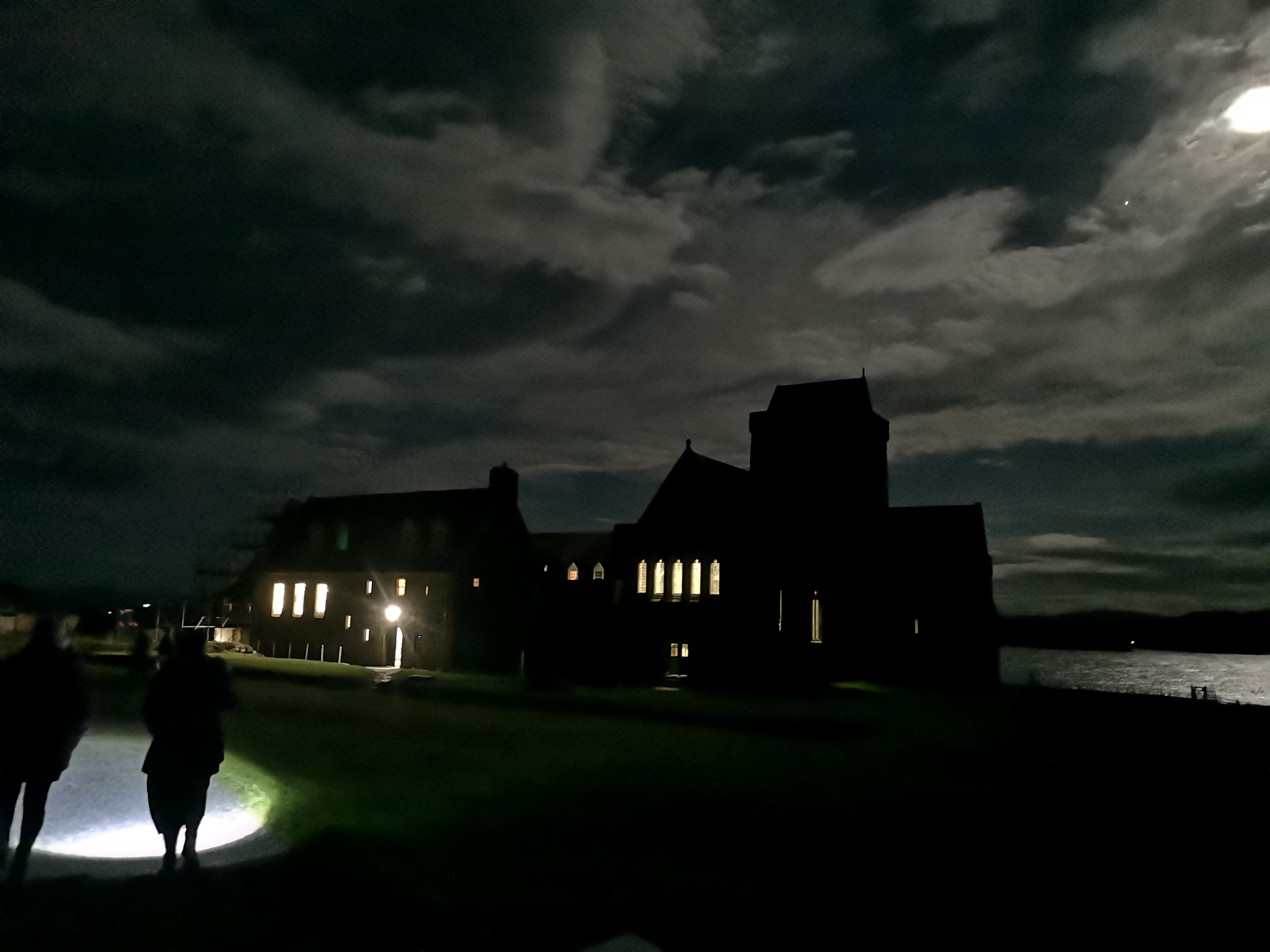
The boundary between seasons is always shrouded in mist, but nevertheless it seems clear now that autumn is burned out.

That great blaze of last-gasp beauty has been replaced by cold cold nights in which only the strongest stars out-compete the hooded moon.

Soon the thing will turn again. It will be wet hereabouts, but above us will turn to white.

Here, where cities and towns have thinned out only to strands, there is no hiding place from the coming of winter. It is not fooled by fire or distracted by screen. I fear it, knowing I must bear it. There is no other way.

Of course, beauty is not banished. Joy is not banished. Life does not end; rather the wildness that remains is still willd. It sleeps under surface of wood and glen, waiting.

Because we too are wild, we are not immune from winter. All we have is this; to seek meaning within it.

We look deep into darkness seeking colour and shape.

We strain for sound in silence.

The politics of division…

Photo by Marcelo Renda on Pexels.com

It rests like a concrete block, pressing down on our souls.

You know what I am talking about – the relentless messaging from our ruling class/government, echoed to a lesser or greater degree by ‘news’ stories in the media – all of which paints a picture of the world that just feels… wrong.

It is exhausting to keep it all in some kind of perspective; to keep striving to push back; to reframe; to give more considered perspective; a kinder, more compassionate set of goggles through which to view the world. Most of us reach a point (or many points) at which we simply switch everything off and seek the usual distractions.

How do we characterise what seems wrong? It is easy to take a swing at the pantomime villains whose faces are always in our news feeds – I have indeed done this many times – but this achieves little because what drives our political machine has changed. It is no longer a clash of ideas thrashed out through debate, protest and counter-protest. Rather what we have is an algorithm, through which power is mediated by the creation of division.

The appalling reality is that political success is achieved most not through inspirational, hopeful invocations towards higher ideals but through the creation of division because we are most enervated, most engaged, when we are outraged, offended, threatened or angry.

I wrote this once;

To the left, to the right

If they are not wrong

How might it be possible

For me to be right?

If they are not bad

How will we ever know

That we are good?

If they have success

How can I destroy it

To substitute my own?

If I grudgingly turn the other cheek

How many slaps am I entitled

To return?

From ‘After the apocalypse’

Anger is not always a bad thing, but when it is stoked in order to create convenient compartments into which to sell simplistic products/solutions, it becomes worse- far worse – than the old Roman bread and circuses. This kind of anger, bred as it is by a social media drip-feed of micro outrage and downright distortion, is toxic, but it is now seen by both sides of the political spectrum here in the UK (and of course, elsewhere too) as the only short-term means of getting and holding power.

Let me diverge for a moment and tell you a story from my week.

I play cricket for a small local team, Despite my introversion (leading to the obvious tendency to avoid/limit social events) I very much value the connection to the lovely bunch of blokes who make up this side. I am older than most and we are a diverse bunch, but I am motivated by two things. firstly, I love playing cricket. Secondly, I love the making of community, in this case all the more so because these are men that I would normally not share my life with. It is a chance to interact with different persectives, outside my own bubble. It is also good to feel that in small ways I can help to build a safe space in which others can feel welcomed and included, particularly those who have had some tough times.

In real community of any sort, we only get back in proportion to the investment we make. Part of the probem with the algorithm is that almost no investment of self is required.

Last weekend was our cricket club annual general meeting and dinner, which involved a complicated journey for me as it meant an overnight trip to an island. Fortunately William picked me up in his boat, which also give me a bed for the night and a chance to spend some time with my lovely lad. The dinner went well and afterwards the festivities moved to a local pub who sponsors the club, where much drinking commenced. I am not much of a drinker, so mostly I sat back and listened as people first relaxed then became exaggerated versions of themselves, getting louder and louder. In one case, this also meant making sexist and overtly racist statements.

Reflecting on this later with Will and his girlfriend (who was also present) made it clear that they were not impressed. I wondered at my complicity – should I have called out those bigotted statements for what they were? Was I just humouring him, people-pleasing as a I am prone to do? Perhaps, but after all, drunk people are not usually amenable to reasonable chastisement so a challenge was unlikely to go well. There is more here though…

Clearly, this bloke has had totally different life experiences to me. His childhood taught him different things. His politics where shaped by other ideas which were then stoked and re-enforced by the algorithm.

I have got to know this man a little and he is a warm, friendly chap, who loves his family. I sense in him a woundedness too, and have heard bits of his story that suggests where this comes from. I have set myself towards him, to try to hear from him and this investment must involve empathy and compassion. I might hate his views, but does that mean I have to hate him?

Photo by Markus Spiske on Pexels.com

Must all opposing views be called out? Even those who make victims of others? In the algorithm, the answer is a simple yes. In community it is always more complicated than that.

I am not the hero here. I am not always right. Even when I am right, compassion might dictate caution within community. It might need to start with relationship and then look for opportunities to talk things through. It might nor go well but it should not be for the lack of care.

The principle, no matter how noble, has to be moderated by the person. Or, to put it in another way If I speak in the tongues of men or of angels, but do not have love, I am only a resounding gong or a clanging cymbal.

The Upside Down House, Brighton by Ruth Sharville is licensed under CC-BY-SA 2.0

This kind of talk may seem like madness, but perhaps this is in part because it defies the zeitgeist imposed by the algorithm. The world is not divided into us and them, good and bad, right and wrong, rather it is made up of people who are trying to make sense of their lives, to find paths of meaning. Some of these paths lead us more towards the clenched fist than the open hand and the algorithm both encourages this trend and encourages it.

None of us are immune. Certainly not me. I am not the hero of this story. The holes you can see in what I have written are quite obvious.

That passage I quoted from first Corinthians ends like this; And now these three remain: faith, hope and love. But the greatest of these is love.