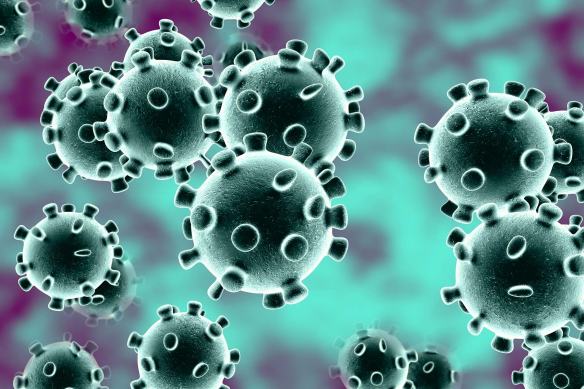
There will come a time when this virus is gone, managed, part of our recent history. We will emerge from our houses and flats and blink in new light.
What world will we make? What will we have learned during our enforced furlough from the way things used to be? Do we want things to go back to how they were?
Do we still think that it is not possible to make radical political and economic changes in the face of a major crisis (such as a climate emergency for example)?
Do we still think that an economy whose survival is based on increasing GDP year on year into infinity is every going to be sustainable?
Do we think that inequality and poverty are prices worth paying to sustain our own small kingdoms or can we do better than this?
We need new thinking, new leadership.
Perhaps this might help;
Every Easter I try to write a poem that gathers together something of where we are. This Easter I am fortunate to be spending with my wife, my kids and Emily’s boyfriend. The sun is shining and the garden is blooming. Meanwhile in the real world, others are locked in tiny flats, lonely and with little to eat, stopped from even visiting their local parks.
What does Easter mean in this context?
I care not for your carefully crafted theories of atonement
I process things by writing about them; you could say this this is my kind of contemplation. However, I have struggled to write much about this virus that has now suspended almost all our normal human activity.
Perhaps this might be something to do with a lack of requirement- a deadline can be very creative, after all. I have been toying with the idea of looking for some creative colaborations with other artists, but at present I am struggling to find a window to look through, so am not sure that I have anything to offer in such a partnership.
Facebook dulls and frustrates, full as it is with virtue signalling and foux-righteous indignation- I have enough of these things myself without being immersed in everyone else’s. I find myself equally repelled by the worship of NHS workers and the rants against hoarders and campervans. We might have hoped for so much more from such a vital communications platform in a time of isolation, but instead, it seems to be a conduit for cliche and condemnation.
The other day, in a moment of existential cynicism, I wrote the poem below. I hesitate to share it, because it is hardly a cheerful offering- in fact, feel free to skip past it – but in the end, I decided that it told part of a story that might be worth telling (you may disagree if you last to the end of this post!)
Barcode
While we shopped
While we stared at small screens
While we threw more and more plastic into our plastic bins
While we pumped full the tanks of our personal transport machines
While we told ourselves that consumption was a human right
And package holidays were reasonable compensation
For all our hard work
While we did all of these things, thinking
We could do them forever
The Earth waited
For the time when all this human hubris
Would become no more than a faint barcode
Buried in the strata of old rocks
Revealed from time to time
By waves of a clean clear sea
Reaching in from the far
Horizon.
I try to write what feels ‘true’, but if there is any truth in this poem, it is only partial, or perhaps situational. I (mostly!) do not think that humanity is doomed and best gone and out the way for the sake of the wider world.
But I do think that the human condition, COVID-19 or not, is a carrier of darkness. By this, I don’t only mean that we do bad things, which of course we do, but rather that pain, uncertainty, lonliness, doubt, fear, failure, despair and grief – these things are wrapped around who we are and what we are becoming. Positive thinking has it’s place, but tsunamis and viruses are not fooled.
If you are feeling some of these things now, you are not alone. I have even heard this collective howl at the heart of our humanity called this; The one true sadness of God
Through the last few months, I have been making my way slowly (with some dear friends) through a book by Richard Rohr called ‘The Universl Christ’. I have written about this book before because it is a beautiful, hope-filled piece of writing, exploring theology and philosphy in ways that seem ever more important and apt for the times we are in.
In one chapter, Rohr describes his acute pain at the loss of his dog after 15 years of companionship. I am not a dog owner, so the bond between man and animal is something of a mystery to me, but this matters not, because what Rohr was trying to describe was his own personal howl of pain and loss- how this individualised and seperated him, but then how in turn it became a connection between himself and God.
This is not the Talisman-God, worn like a medallion in the hope of warding off anything unwanted, rather this is the Christ, through whom all things live and have their being. The Christ who we glimpse deep inside the eyes of the other.
This is not the God of the prosperous and the healthy. S/he is not to be discovered on mountain tops, but dwells in the deepest valley, shadowed even by death.
To those of you who are suffering, this God offers no easy solutions, no promises that all these things will work together for good, if we could but understand his mysterious ways.
Instead, S/he offers this promise; I am here, where you are. In the middle of this darkness.
I wrote one more poem. I hope it makes sense;
The one true sadness of God
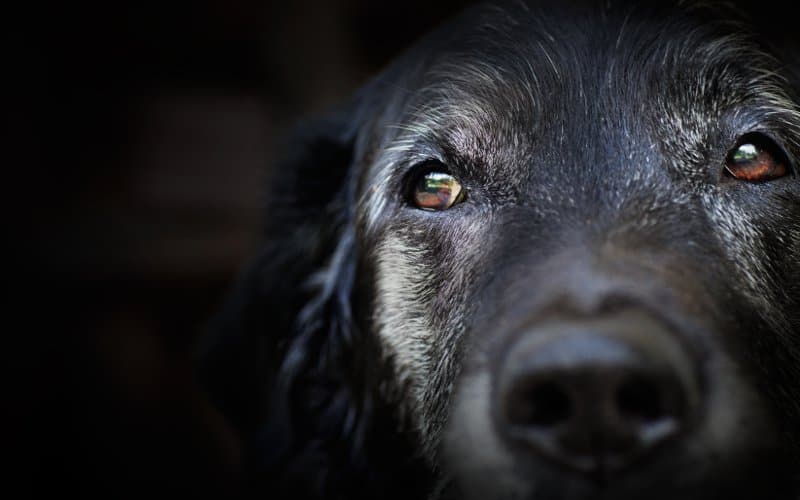
The black dog turned his face to me
And I stare into eyes that go on for ever
Like wells dug down
Into the wilderness of this world
Like weeping wounds
Nailed into the soul of God
For here are we, with hearts near broken
By all these broken things
Trapped between the birthing pains of our becoming
Understandably, there is a lot of fear around at the moment.
Most of us are living with background anxiety, which is almost unnoticed, a bit like the noise from a ceiling fan which we will only realise is there when someone switches off.
Then there are those spikes of things that approach dread and terror, perhaps when the threat posed by the virus comes closer to us or someone we love, or when we see empty supermarket shelves, or when we think about the consequences of our income security being undermined.
Some of us are suffering more than others- perhaps you are not sleeping, or noticing a spike in blood pressure. Perhaps the stress is triggering migraines or even panic attacks. If so, you are not alone. We are all feeling it, one way or another.
What can we do to manage this anxiety? I’ve been thinking about this a lot. It used to be part of my job to support people who were suffering from anxiety, back when I was a CBT therapist, so I really should know something about this stuff. In many ways this feels different though, because what we are going through is a shared experience, despite the fact that the lock down is putting is all into our own little boxes to suffer alone. It is like sitting in an Anderson shelter back in 1940, but the bombs are silent.
But that kind of thinking does nothing to dispell anxiety, right? And actually, the war analogies are perhaps being overdone. The comparisons between now and then soon come unstuck when you think about it.
What we used to talk about when we put together a plan of managing anxiety is identifiying things that do not help (in the sense that they perpetuate the anxiety) and trying to do less of them, and then indentifying some things that do help, and doing more of them. The realistic aim is never to dispell anxiety alltogether, rather it is to recognise it and reduce it when it comes in such a way that love and life becomes possible again.
So can we apply some of this thinking to our current situation?
Identifying the things that might be making things worse
In my old CBT days, we would look for two patterns; firstly, we would look in detail at some the last time an anxiety incident really spiked. We would consider what triggered it, and what ‘automatic thoughts’ arose in us at the time.
By ‘automatic thoughts’ we meant those ideas about ourself and the world that sit just below consciousness, shaping our actions and reactions. Most people struggle to identify these at first- after all, the are mostly subconscious. One tirck is to ask yourself some simple questions in relaiton to the incident; What does it say about me that I reacted like that? What does it say about other people? What does it say about the world? Pretty soon, what begins to emerge is a set of clues as to what is pushing us towards anxiety, and why we are being so hard on ourselves.
In coronavirus terms, some of us are more vulnerable to anxiety because of the automatic thoughts that we already carry with us. “I am not someone who copes well with things” “My mother always said I was weak” etc. The thing is, we can’t change these ideas overnight, but it can help to identify the pattern. Simply put, the universe is giving us a bit of a kicking right now, but there is no reason to join in. It is important to be kind to yourself, and realise that you, like all of us, are doing the best that you can.
The second pattern we would look for would be what we called ‘safety behaviours’, by which we meant those habits, patterns of coping and self managment that evolved alongside the anxiety itself. The strange thing is that many of the things we do to help us cope do not help at all in the long run. At best they stop our nervous systems from finding more healthy ways to deal with the anxiety, at worst they become a problem in their own right. Two examples that spring to mind from both ends of the spectrum are as follows; people faced with social anxiety will often use a mobile phone as a ‘fidget’ and way of distancing themselves within social situations. Nothing wrong with this, right- we all do it a bit. But then ask the same person to imagine going in to a social situation without their phone, and a pattern of dependency might be revealed that actually perpetuates the social anxiety, but does not make it go away. In this way, something that starts out to be a good thing, helping us enture the social sphere eventually leads us down an backwater which we find hard to escape from.
A more extreme version of this is somone who uses substances to suppress comlex emotions and anxiety- this might range from drugs/alcohol through food and even the dopamine highs of sex or anger. Which of us can honestly say we have not done one or more of these things? Having a drink might even be socialy subscribed within our culture, despite the huge problems this brings in to the lives of many people.
So, in the age of coronavirus, what safety behaviours have we been reaching for? Remember, this is not intended to beat you up- we are all being kind to ourselves, right? But perhaps it is good to be honest, and recognise where these might be potentially problematic.
here are three common safety behaviours that I would like to emphasise that I think we have all been drawn towards at present.
Anger. Faced with fear and uncertainty, we humans have the propensity to look for people to blame. In most complex situations (such as a pandemic) it is hard to find a target for this blame, so instead we have this unfortunate tendency to scapegoat. We look for others who are ‘less than’- whose behaviour or attitudes can be seen as somehow reprehensible. This turns to anger because ‘they’ are ‘putting us at risk’ or ‘stockpiling food so that I can’t buy beans’ (the last one being one of mine!) Anger like this however is a dangerous drug. It reduces complexity to apparent black and white simplicity and it potentially makes victims in a situation where there is quite enough trouble all ready.
Infotainment overload. Faced with fear and anxiety, we are all glued to our screens. Of course, the internet is an incredible gift to us in lock down, allowing us to connect and communicate in ways inimaginable a short while ago. Of course, it can all be a bit too much though, right? Do we really need to rolling news to be on the TV all day, cycling though the same tales of doom? Does it help us? Social media brings an even greater mixed blessing, as it enable people to vent anger and strong opinion. Screen based communication has this way of not being real, but instead being ‘hyper-real’- a polished up, simulated version of reality. We are not ourselves on Facebook, we are our hyperselves. The virus is not real on Twitter, it is hyperreal (with a load of expletives thrown in for good measure!)
Stockpiling. It is not US who are responsible for the empty shelves. It is THEM. But how many of us have changed our shopping habits, even if just a little? This is not a phenomenon of the greedy careless individual (no matter how this might be portrayed on our screens) rather it is what happens when fear enters into the consciousness of every single shopper. So, I might buy 6 tins of beans when I normally buy 4 and then the twenty people after me do the same, which means the twenty first person goes beanless- which is a terrible place to be! I have also joked about panic gardening, because those extra turnips and courgetes might be the difference between life and death! Of course, there ain’t nothing wrong with a bit of veg planting, and actually I think we should all be doing it anyway, but I recognise that for me, this is a safety behaviour
Indentifying what we can do that will help
This emerges from the discussion above, because we are all different. However, I started to make a list of things that might help. Here we go…
Limit screen time. Not for everyone, because we are addicted. But what about those books you were going to read? Is it time to get the guitar out again? How about checking the news just twice a day, and limiting Facebook to once or twice too?
Switch off notifications on your phone. Related to the point above.
Look for ways to help, if you are able. One of the best ways to feel alive is to love. Love comes in many forms. It might be doing some shopping for someone else, or it might be a phone call to someone you have not heard from for a long time but you know will probably be on their own. Inversely, those who get the most out of helping others are often those who need the most help themselves.
Avoid worst case scenario thinking. There will be an inevitable time for asking ‘what if’ but if we stay there, it can become a worm hole into anxiety. Give yourself some time for these questions, then try to move on to something practical and positive.
Keep your communication kind. At risk of getting all soft and squishy, social media is often a race to the bottom. We all get sucked in to a good scandalised whinge sometimes. Now more than ever, resist. Let’s try and out-kind one another.
Divide your time into useful blocks. Particularly those self isolating or in lock down at home, the days can be very long. It can help to set a daily agenda- a bit like the morning ‘Parliament’ on St Kilda, where each day, the men (and it was just the men, the women were too busy) met to decide the work of the day.
Keep physically active. Did you see the story about the bloke who ran a marathon on his 7 meter balcony? That might be a bit extreme, but nothing reduces anxiety like aerobic excercise. Make use of this each day- if you can’t get out of the house, there are loads of other excercise options. Remember those old Jane Fonda videos on Betamax in the back of the cupboard?
Talk to someone. For intorverts like me, lockdown has some real advantages. I like to be in my own internal space, but I know too that if I am in there too long it is not good for me. If you are feeling isolated and alone, then reach out. Ask someone if they would be your virus-companion. A little can go an awful long way.
Get outside if you can. Green spaces change things inside you. This is not just tree-hugging cant, it is scientific fact. Check this out if you don’t believe me. We have the gift of spring bringing renewal all around us, go and immerse yourself in it. Celebrate it.
Do something new. Learn origami. Take up bridge. Write poetry. Use the time you have been gifted with for something new.
Look for grace, not grievances. To a certain extent, fear arises not only from circumstance, but from the part of that circumstance that you attend to. If you look for cynicism and anger you will find it. If you look for hope and stories of human goodness, they are there in abundance too. Which ones will find greatest traction on social media? I refer you back to the start of this list. That is not to say that we live in unreality, but rather that we choose to celebrate the grace that is all around us when we can.
Take moments for stillness. I read a beautiful poem recently in which the poet described what we are going through right now as ‘the great silence’. The best that could come out of this for our nation and for our planet is that we might take this time to pause and consider our path to this place and the road we might wish to take beyond. Perhaps meditation or prayer might help. Or perhaps it is enough to listen to birdsong.
Laugh as often as you can. Look for the absurd in yourself and the world. We Brits are supposed to be good at this, right? After all, nobody espected the Spanish Inquisition, or Coronavirus. The other day we went for a walk and met a couple walking down a track. They looked terrified and scurried by, hugging the fenceline, keeping as far from us as possible whilst watching in case we made a movement towards them. Unfortunately, the woman walked into a tree. You have to enjoy that, surely?
It has been said that the most often used command recorded in the Bible is this one; do not fear. Easy for Jesus to say, harder for us to impliment. Religion is certainly no antidote to anxiety.
But we humans do need to search beyond our current cirumstance into the beautiful beyond. Don’t lose your wonder. Remember the mystery that is beyond everything. The universe is not done with us yet.
Keep safe friends, and let’s meet on the other side.
We are doing some new things, because in these uncertain times, the only way we know how to respond is to do so creatively. Our small business has fallen off the same coronavirus cliff edge as many many others. All workshops have been cancelled and most, if not all, of the galleries we work in partnership with have closed or are about to close. No point getting bogged down in the worry though- so many of us are in the same position and we will get through somehow.
We have done some things already- I have totally revampled our online shop, so if you are needing any special gifts for people, then please check us out. We’ll be adding more products soon, and probably doing a COVID-19 sale!
Both Michaela and I wanted to think of ways of linking to people on-line too. She is going to offer some on-line pottery lessons, but clearly these will still have to be fairly local, to get clay to people and back to put in the kiln. But poetry knows no such geographical restrictions.
Below are some details of some new on-line workshops we are planning. If you are interested, please get in touch.
Poetry for the sociably distanced
The human animal is above all a social creature. How do we make sense of a world in which every-day social activities are suddenly forbidden? How do we continue to recognise our shared humanity?
We would argue that for such times as this, we have poetry.
Poetry connects us in at least two ways; firstly, it connects us internally with a deeper version of ourselves. Secondly, it connects us with the vulnerable humanity of others. Like many human activities, poetry is often consumed alone, but is at its best when shared with others.
We have often bemoaned the way flesh has been replaced by silicone, but now through the wonders of the internet, we can be together, even at distance. To that end, we have been thinking about ways to share poetry…
Introduction to poetry; a short on-line workshop for the sociably distanced
Poetry does not belong to the elite few.
Poetry uses YOUR language, not someone else’s.
You have been reading/writing/listening to poetry all your life, even if you did not know it.
If you don’t like poetry, you’ve been reading the wrong poems for you.
Poetry is the way we say things that matter.
In this workshop, we will talk poetry and read poetry. We will decide together exactly which direction to take but expect to talk about tricks and techniques as we immerse ourselves in lovely words.
The workshop works in two ways;
Individual, family or household group, connecting with Chris on skype or facebook
Multiple venues/individuals connecting on skype of facebook (as a group chat.)
Chris will e-mail a selection of poems in advance that will give a decent spectrum of poems- although these are poems that he likes, so you might want to share some of your favourites too.
COST
£20 each
£40 For family/friendship group (either one venue or multiple)
Writing poetry; a creative workshop for the sociably distanced
There are no experts here, just people who love words who want to encourage one another. This workshop will be split into two parts and conducted over skype or facebook (whichever is more convenient.)
In the first part, we will discuss what it means to write- our personal experiences, successes and failures and what we have learned along the way. We will then agree some challenges and go away to do some writing of our own.
In the second part, we will share our experiences and the words that have emerged.
These are worrying times. Faced with the known unknowns of Coronavirus, we are all having to take a step back from one another. We worry for our families and our friends. We worry for ourselves.
We also worry for our livelihoods. Our small business depends on gallery footfall and attendence at workshops, so it is likely that there will be some lean times ahead. But after a couple of days of anxiety about all of this, we decided that enough was enough. It was time to do something. It was time to reach out.
The internet, hitherto a mixed blessing, may save us all. It will allow continued connection, be a source of encouragment, and allow our fragile economy to return again to the beauty of simple trading, one on one.
To this end, we have been busy.
Firstly, we are updating our on-line shop, using a new platform. It has been a steep learning curve (for Chris – Michaela has no clue!) but we think it is working, and already looks mutch better. You can check it out for yourself here. We will be adding more pieces daily.
Next we have started to think about how we can connect with others who have found themselves cut off, in their own spaces. How we who are socially distanced become at very least sociably distanced?
What we are thinking is something along these lines:
Pottery for the sociably distanced
Online workshops, based around clay being delivered to you and then skype/facebook tuition. This might suit families/household groups, or groups of friends – who would not need to be in the same place, thanks to the joys of t’internet. We could deliver the clay locally, and get it back from you to fire it in the kiln.
Poetry for the sociably distanced
Again, online workshops, led by Chris. One will be an intruduction and celebration of all things poetry, the other will be an encouragement to actually write something. Again this might suit families/household groups, or groups of friends – who would not need to be in the same place.
Sociably distanced artists collaboration
Alongside the above, we are toying with setting up some online meet-ups for like minded creatives who might like to thing about a way to collaborate in response to these strange times. A poet and painter perhaps, or a potter and a fabric artist?
Like many of us, I take in the news and feel it dragging me into a pit of doom. The hits have come one after another; unforgiving extremist politics, me-first economics, mass extinctions; Trump; Johnson; melting ice sheets; refugee crises; austerity… and now, Coronavirus. It all feels like a vortex dragging us downwards and leaving behind a pervasive sense of fear and confusion. This in itself is dangerous as fear can be corosive. Where will this all end?
What if, along with all the bad, this might yet be a passage towards positive transformation?
The grand correction
This song came to mind, with its dark humour and selfishness (derailed in the last verse by something more outward looking)
But perhaps we are seeing the start of a correction in western civilisation?
We have said it before- the song was written in response to the stock market crash, which seems to have resulted in business as usual for those who continued to get richer and austerity for those with very little.
Likewise, the looming fears around climate change have seemed to paralyse governments, rather than vitalise them. We all know instinctively that we need to live more simply, consume less, change our additction to long haul flights and dirty energy use, but instead we find ourselves making tokenistic gestures – expensive eco-friendly cleaning products and a few less plastic bags – whilst changing nothing that really matters, because what difference does it really make if we change but no-one else does, right?
But then came coronavirus.
We still wait to see what the deadly implications of COVID-19 will turn out to be, but it has already done something remarkable; it has led to mass behaviour change. Our airports are empty. Our national football obsession has been set aside. People are allowing themselves to work towards a goal that is bigger than the individual- even if that goal is ultimately driven by individual self preservation.
Perhaps such changes will be short-lived, but then again, we know that we can do it now. Corrections to mass behaviour at economic and ecological levels are possible.
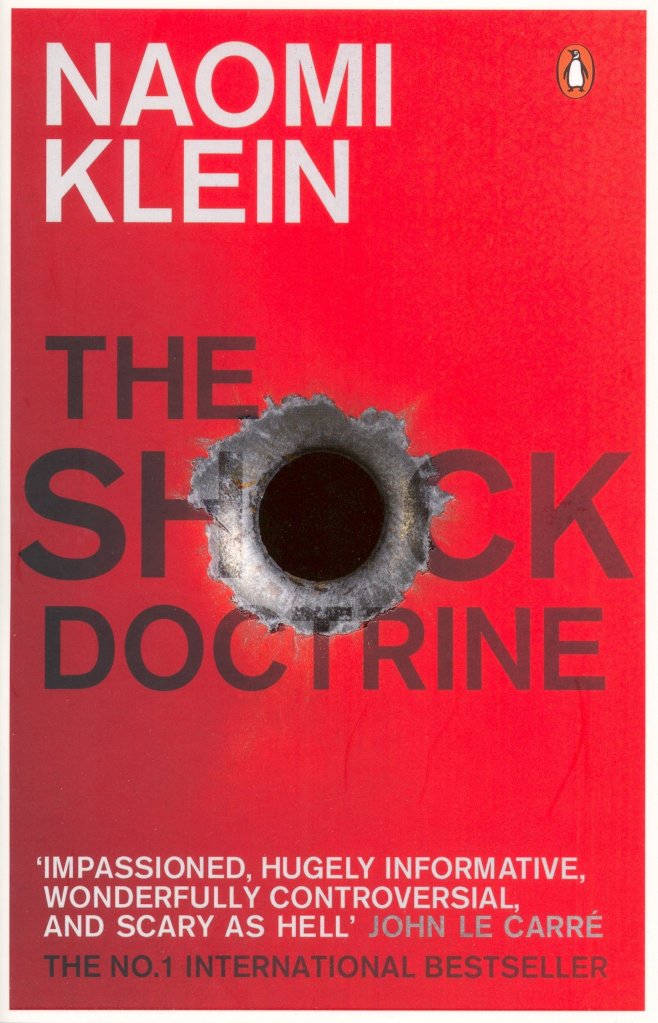
Shock doctrine
In 2007, Canadian author wrote this book, in which she laid out the impact of economic shocks had become the means by which power was meditated, often in an opportunistic and manipulative way by governments and power brokers.
Here is the author talking about this stuff in more detail;
What Klein has highlighted is the way that ‘shocks’ create fear, and that fear then creates opportunities for venture capitalists- using crisis to create policies that take power away from populations and put it increasingly into corporate hands.
However- and this is where the hope comes from – coronavirus feels like a different kind of shock. It’s effect is being felt by rich and poor alike. In fact, rich whitemen in the fifties and sixties, at the height of their earning capacity and personal power, might be the most vulnerable of all. It feels more like the kind of shock of total war.
It is for us all to be aware of Klein’s warnings about shock doctrines, but remember that out of great crisis emerged the unity of the Blitz and the emergence of the NHS in the UK and the development of a welfare state.
To reframe the words of Milton Freidman; “Only a crisis, real or percieved, allows the possibility of real change’.
Truth
Coronavirus has arrived a time when public trust in both politicians and the media is perhaps at an all time low. Both in the UK we have elected known and proven liars. It no longer matters that they lie because we expect them to. The manipulation of truth for political/financial gain has been normalised.
But look at what is happening to Trump at the moment in the US. He has tried to lie and bluster his way through the crisis, but the virus may yet show him to be the self-serving bafoon that he has always been.
In the face of a global pandemic, truth matters again. Not truth of the nuanced, compare-and-contrast kind. Neither of the ‘Oooo this is interesting’ clickbait conspiracy theory kind.
We have to look again towards scientific, objective truth, because what else will give us the tools we need to manage our responses to a virus that cares nothing for political creed, religion or skin colour?
Health systems
We have become used to negative reporting about our NHS but it is possible that this might yet prove to be it’s finest hour. Contrast the patchy and sometimes entirely absent health care available in the richest country in the world, the US, where access to medical help is entirely dependent on your level of wealth.
More than individual medical treatment, perhaps Coronavirus also highlights the fact that the health of a nation is often about prevention and public health initiatives. It is about good housing, nutrution and sanitary systems. It is about benfits and social care supports. Perhaps rich Americans (and others) will become infected becuase poor Americans (and others) had access to such inadequate health and social care. How might this shift the debate on the ‘morality’ of ‘something for nothing’ public health care? Can they really continue to rely on health care systems driven primarily by private profit?
Here in the UK we face different questions about the investment we make in our own systems after ten years of austerity. This is not just about Boris’s fabled 40 new hospitals, but also about social care and how we support general health and wellbeing. The magic money tree has been found after all, and perhaps it might have fruit yet for the picking.
(There is a much wider discussion to be had here about the nature of economic systems and how we borrow to invest in order to promote the common good, but here is not the place for it. If you are interested in reading more about this, go to the New Economics Foundation pages, here.)
Politics of unity, not polarity
We have locked ourselves into echo chambers where we often only hear one side of a nuanced story. Good/bad black/white polarities never work in the long run. All human activity has to be subject to compromise and political democracy does not work without it. This is perhaps the single most important thing to learn from the Brexit mess.
Trump is trying to apply the blame game to the fight against Coronavirus. It is a ‘foreign’ virus. Close the borders. Build a wall. It is not working as the ‘numbers’ make a mockery of him. Meanwhile the adults in the room have to start talking to one another.
In the UK, we have largely avoided any show of political division of the response to the virus. Perhaps this will yet come- perhaps it might NEED to come, but it feels as if people are coming together, not being forced apart.
North/South
It is hard to escape the fact that in large parts of the world, even the worst case scenario for Coronavirus (3 per cent death rate of those infected) would be dwarfed by much greater health and social care problems. Remember that people are still dying of starvation and diseases caused directly by malnutrition and poverty. Then there are the other outbreaks in Africa; Ebola, Measles, Lassa fever.
Are these deaths less important? Given that the COVID-19 is being imported into Africa from the West (eg new cases spread from Italy) rather than the old traditional fears of the dark heart of Africa giving us AIDS and Ebola?
Perhaps the blatant inequality might give us pause for thought…
Death
You might wonder at my attitude to death, given the above. Perhaps you might think I am downplaying the seriousness of Coronavirus.
But I have elderly relatives, and a sister whose immune system puts her in a high risk group. I am a man in my mid fifties so perhaps I too might be a victim. It is confronting, concerning and worrying on many levels. I don’t mean to pretend otherwise.
But I do feel that our attitude to death, in the cold light of post-virus panic, might have to change. We live as if death is another country that we are never likely to visit. We regard our health systems as insurance policies against death, as if it is our individual right to live for ever. But we all die. This may seem a shocking statement, which in itself tells a story.
Let not the fear of death rob us of the opportunity to live a good life.
Through a number of circumstances, choices and happenchances, both my kids have ended up living on boats. It sounds a romantic thing- they love being close to open sea and all the possibilities of adventure.
The realities of this life are made very real when the winter storms roll in. The power and viciousness of gales hitting a small fiberglass box can be scary indeed.
Aside from all the usual parental worries for the safety of our children, there lingers with me a feeling that their choice of shelter, positive though they may be, are also pushed by expediency. Their generation has been effectively priced out of the housing market by the soaring costs of home ownership and high rents.
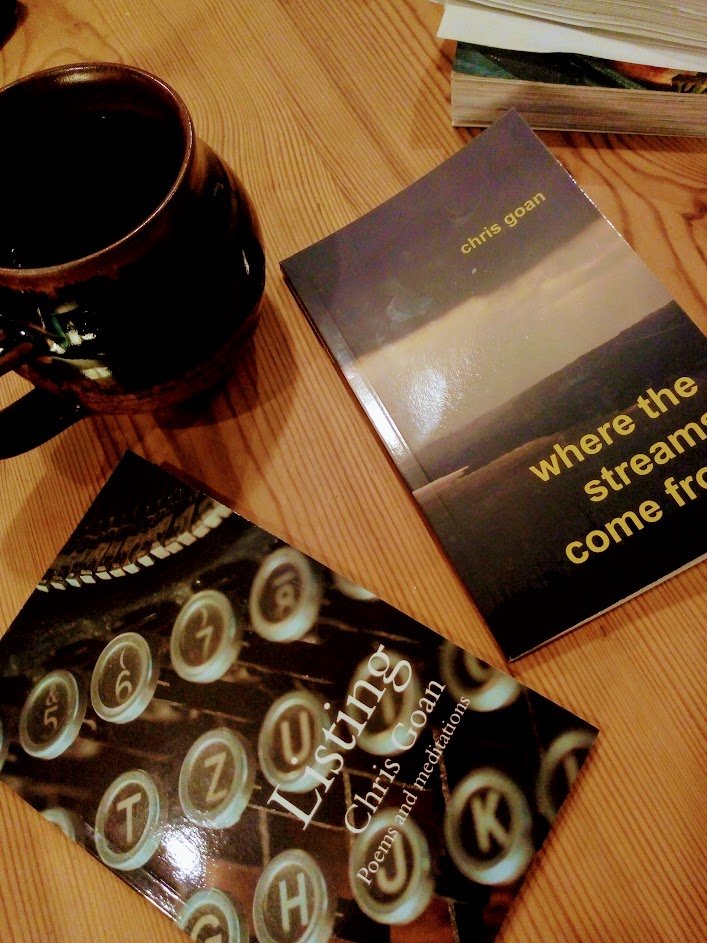
Over at Seatree, we have had some more copies of Chris’s books printed for direct sales. This meant another print run, and as ever, we got a couple of proofs printed to check before the larger run… all of which means that we have proof copies of ‘Listing’ and ‘Where the streams come from’ up for grabs. FOR FREE! We will even pay postage.
(One book has a couple of typos, but if you are anything like Chris, you will never notice them!)
To enter our little free draw, all you have to do is to visit our facebook page and post a comment in the giveaway post. Perhaps tell us your favourite poem (even if it is not one of Chris’s!) or even post a few lines of your own?
(If you are not on FB, drop us a line and we will enter you anyway!)
We’ll feed your name into our magic randomiser, then contact the winners directly.
Meanwhile, here is a newish poem, as yet unpublished, to whet your poetic whistles;
…
Bookshop
Written in ‘Bookpoint, for ‘National poetry day’ 2018
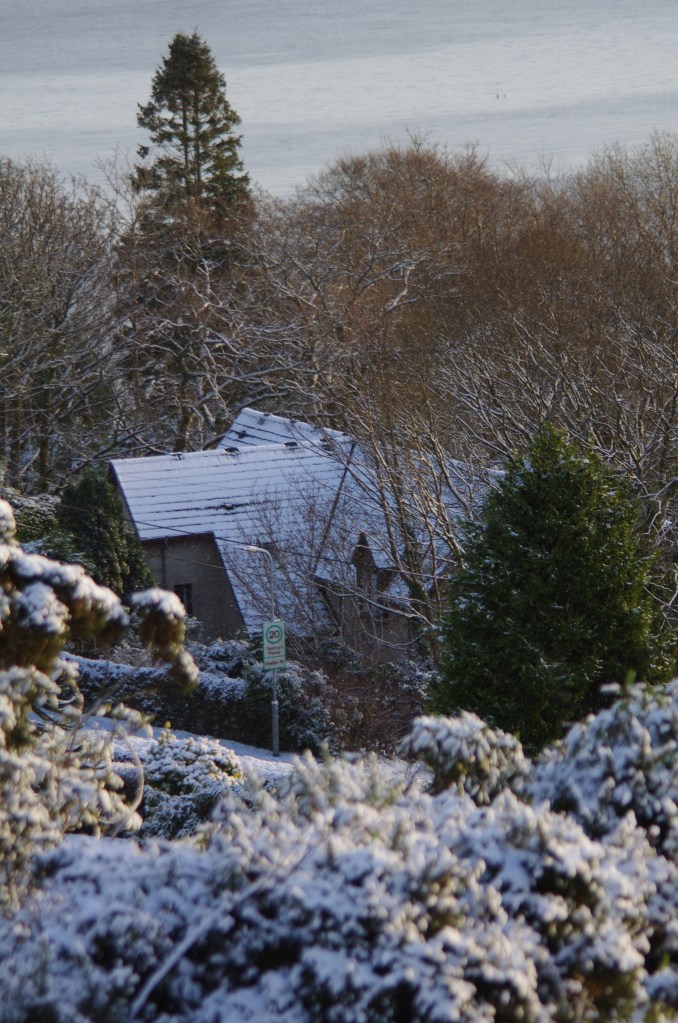
We live in a very beautiful place. Familiarity breeds a certain level of complacency, but I only have to leave our little corner for a few days and I find myself missing it. Specifically, I miss the quiet shelter of the oak trees, through we glimpse the water in summer but whose branches become frames for silver light as soon as autumn fades.
Little moments hit me like blessings. The red squirrels that dance along the finest tracery. The mixed blessing of deer munching in the bushes. The stars who have no competition. These blessings seem totally undeserved. Even allowing for the fact that reality is always so much more nuanced than a view from distance, we seem to be living out a kind of middle-class fantasy that is simply unavailable and unatainable to most. How did we end up here?
I suppose part of the answer is that we decided that we wanted to live more simply, with less impact on the planet, and with more connection to the earth, which is why I find videos like this so inspiring;
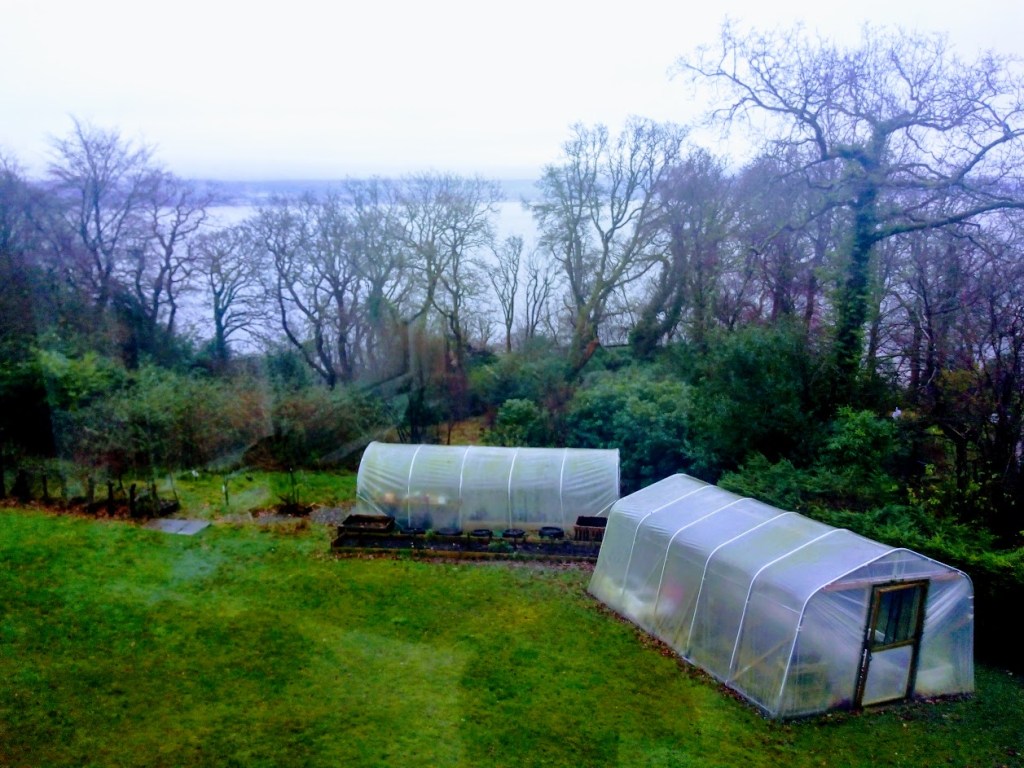
Since we moved here three years ago, we have done very little to the inside of the house (although this might be about to change) but we have done lots to the outside;
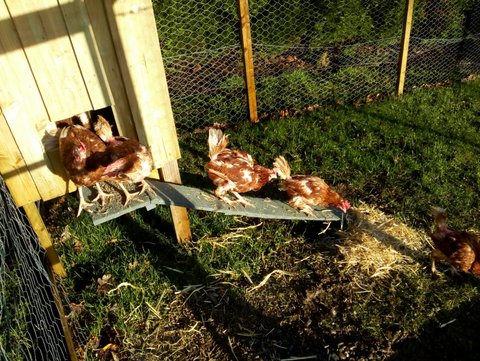
New chicken run
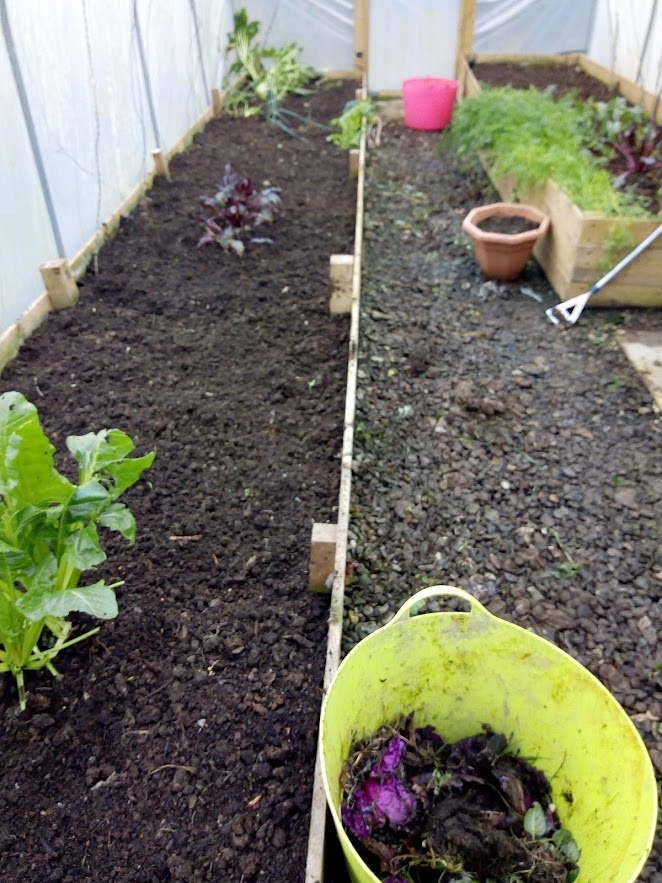
Poly tunnels x2
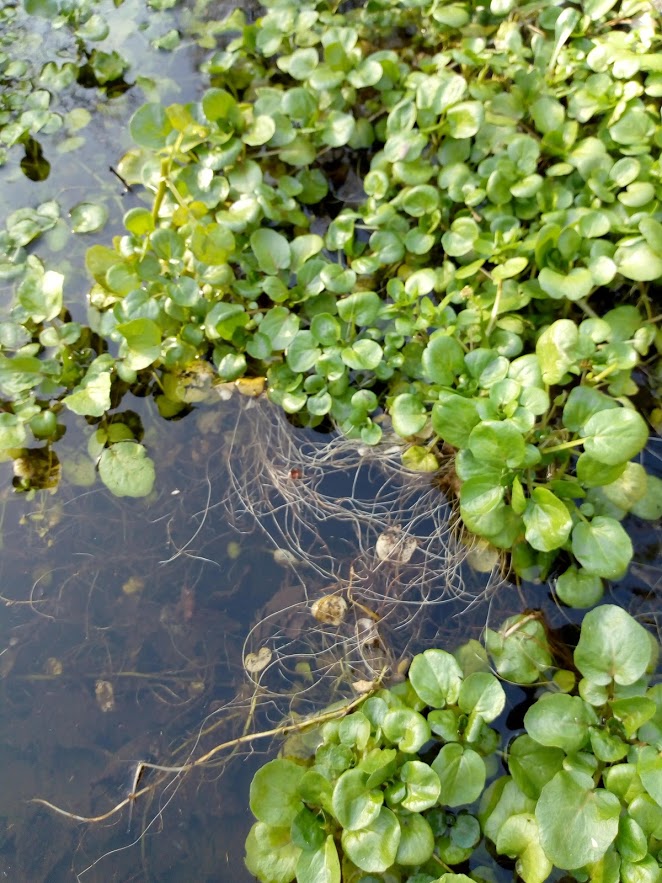
dammed a stream to make a water cress pond.
We have also cleared massive amounts of buddlea and huge overgrown Leylandii hedges, and have planted about 20 fruit trees, 5 oak trees and 50 silver birch trees.
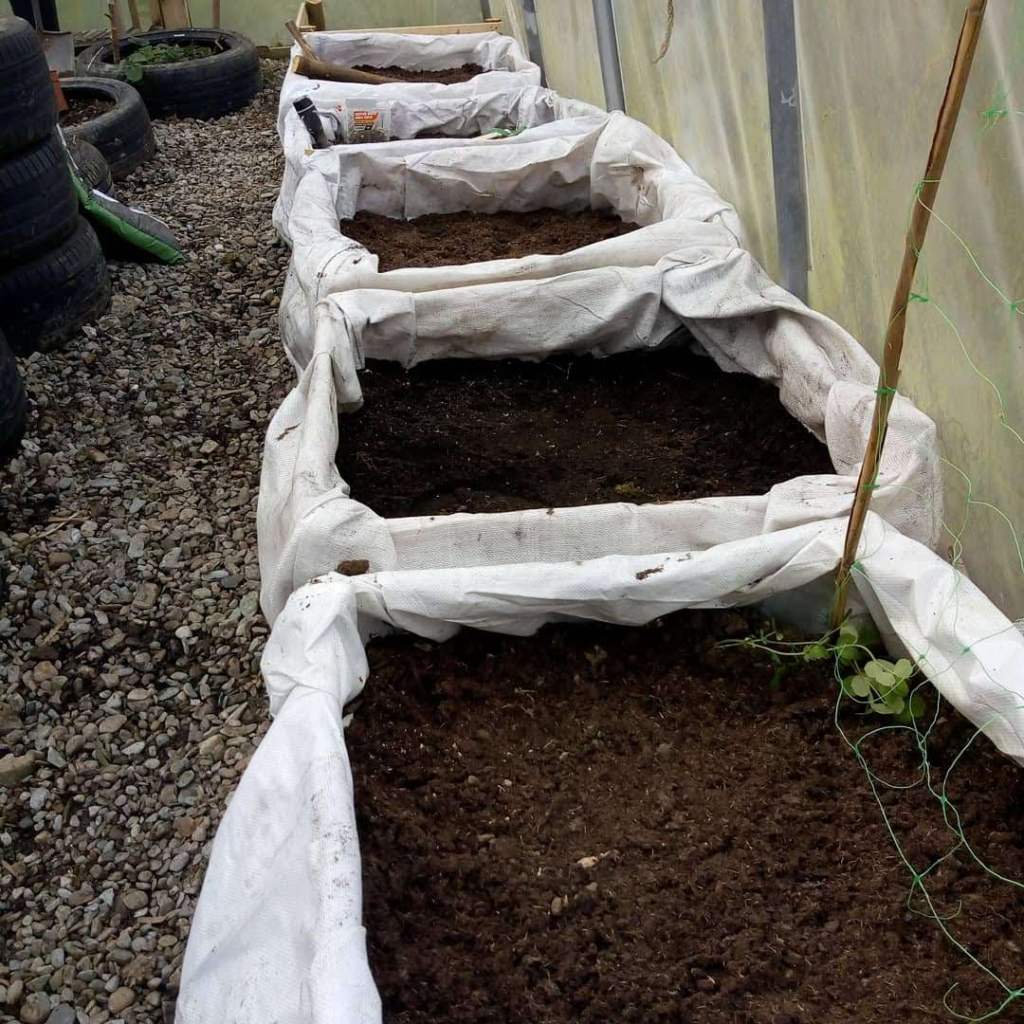
I have built some outdoor raised beds (the climate is so wet here that we need to improve drainage) but we need more of these, and they need a fence to keep the deer away from them.
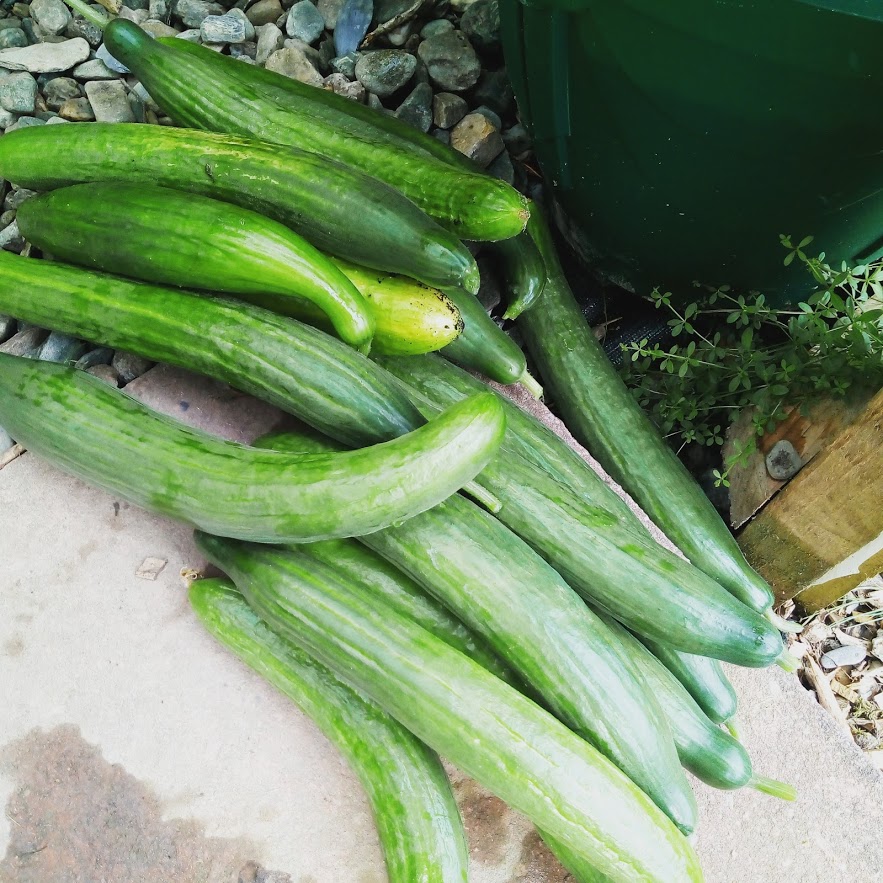
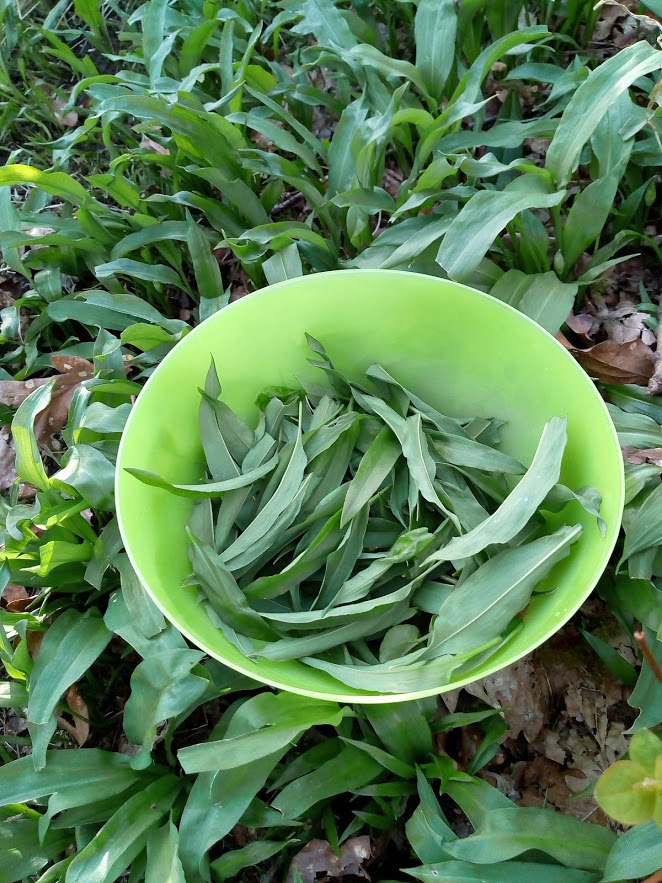
What really interests me is how we can use a small (ish) parcel of land to produce significant amounts of food. Part of this is about recognising what is already there. Some of this is obvious, like the wild garlic.
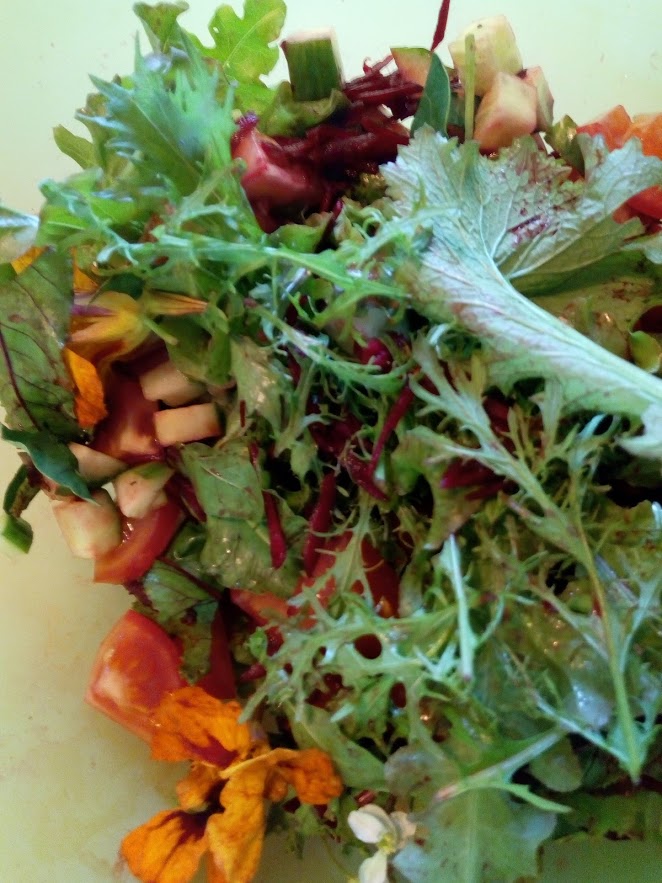
We have also tapped birch trees for sap, used many flowers and plants in salads and picked berries and crab apples.
The next step is to start introducing more edible plants into our forest garden. I tried to plant Wild Mustard, but this does not seem to have survived, and the tea plants are looking rather ropey (more eperimenting to be done with different plants here.)
I have no confidence in my mushroom and funghi collecting skills, but have decided to sow my own spores so I can be sure what I am getting- so we have some oyster mushroom spores for next season.
We have a long way to go, but watching videos like the one above makes me think that what we are aiming for is entirely possible.
Two things occur to me as I write this.
1.We reap not only what we sow, but also much that has been given to us by grace.
2. We live the life we decide to live, even if by default.