Pawned in the USA- Springsteen gets angry…

Bruce Springsteen’s new album Wrecking Ball is out soon, and it looks set to do some damage. In a good way. Too late for my birthday, but

I am not a die hard Springsteen fan- his music always seems a bit too industrial for my taste, although I love one of his old albums- Nebraska. However, industrial is what this new album needed to be, as Springsteen seems to have given voice to the disenfranchised working American man.

What he seems to have produced is a protest album- with the finger pointed at the very heart of the Capitalist machine, which Springsteen calls with such irony, unamerican.

This from a Guardian article;

“A big promise has been broken. You can’t have a United States if you are telling some folks that they can’t get on the train. There is a cracking point where a society collapses. You can’t have a civilisation where something is factionalised like this.”

“Previous to Occupy Wall Street, there was no push back at all saying this was outrageous – a basic theft that struck at the heart of what America was about, a complete disregard for the American sense of history and community … In Easy Money the guy is going out to kill and rob, just like the robbery spree that has occurred at the top of the pyramid – he’s imitating the guys on Wall Street. An enormous fault line cracked the American system right open whose repercussion we are only starting to be feel.

“Nobody had talked about income inequality in America for decades – apart from John Edwards – but no one was listening. But now you have Newt Gingrich talking about ‘vulture capitalism’ – Newt Gingrich! – that would not have happened without Occupy Wall Street.”

Worship music remix 4- culture…

Worship music is the cultural carrier of faith.

Or perhaps worship music is the carrier of culture into faith.

If either of these statements are true then what we sing together in churches is formational, fundamental. Our songs shape our belief, our worldview and our action in subtle and profound ways. Perhaps it is another one of those times when the medium might become the message.

What comes first, the culture or the song? Instinctively we would have to say the culture, but the idea of culture is one that demands a little more examination. I am using the term not to describe the shared tenants/creeds of the Christian faith but rather to describe something of the shared context, deep assumptions and instinctive reactions that people tend to converge upon in our collectives.

Culture is so powerful a force on how we live and think about ourselves that it can come to be indistinguishable from creed. I think I need to demonstrate this with a couple of examples.


I have spent some time in America, doing some worship music with a Southern Baptist Convention. There was, shall we say, a degree of cultural friction, but it was on the whole a fantastic experience. What was obvious to me as an outsider to this culture was the degree to which expressions of faith became interwoven with a whole set of wider assumptions- political, economic, commercial. These assumptions became totally self perpetuating, as many people seemed to have virtually no contact with people outside this culture. They shopped at ‘Christian’ shops, employed ‘Christian’ tradesman, listened only to ‘Christian’ voices (and only ones from a particular part of the spectrum) and voted always for ‘Christian’ politicians. God, community and country were indistinguishable.

I particularly remember a store with a whole isle selling nothing but Aslans, in all sorts of shapes and sizes. Next to another selling Bible cases decorated with the American flag.

Those who did not conform to a particular way of being were gently corrected, or would find themselves ‘outside’.

The best way of describing this culture I have heard is this one- Moralistic Therapeutic Deism. God exists as a kind of divine therapist, mediating the psychological and financial rewards of society upon those who can conform to a certain moral code. God is a personal saviour, who will guarantee self esteem and success. Those who lack these things need to repent, and get more God so that they get some kind of a chance in the next life if not in this one.

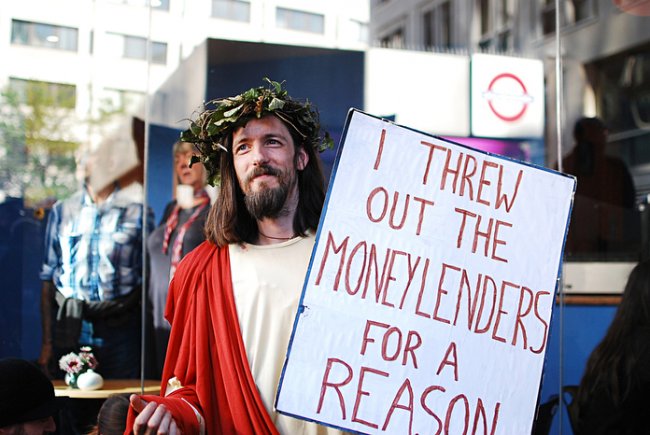
All this has real strengths but it is hard to fully reconcile it all with the story of Jesus. Jesus called us to go, not stay. He seemed intent on overturning tables erected by the religious folk. He gravitated towards the outsiders, the poor, the broken. He started no political parties, nor would be joined to any. And he certainly gave no guarantees for health and wealth.

If I sound critical of the American church, then this is only because these issues were so much more obvious to me as an outsider. We can make equally critical comments about our own religious institutions. Think back towards the days of Empire and the complicity of our own churches even with genocide.

But how is this perspective reflected in our songs of worship?

When you stand back and look at the canon of songs that we have inherited over the last thirty years written both sides of the Atlantic they have some common characteristics;

  • They focus primarily on individual encounters with a personal God. Often it is as if worship is the means by which God ministers to us in some kind of Holy Spirit therapy.
  • They assume that repentance is required to allow us to be acceptable to God, and therefore to receive his blessing. However, repentance is primarily concerned with individual morality- particularly sexuality or dishonesty. We hear next to nothing about injustice, consumerism, over consumption or the workings of international capitalism.
  • There is little call to collective action, apart from parallel individual actions in line with the point above. There is little idea that repentance can be collective, or that change requires sacrifice and joint action.
  • Then there is the theological assumptions of the unassailable centrality of penal substitutionary atonement. The only way to save the world is one soul at a time- and our interest is really only in saving them from hell in the next life.

Does this sound familiar? I am of course not saying that the views above are necessarily wrong, rather that they arise from culture. They are then reinforced and communicated within our songs.  Where then are the songs of protest, of prophetic vision, of renewed or alternative perspectives? The songs of the marginalised now welcomed home, the songs that disturb and challenge? The songs that confront power in the name of the weak? Where are the songs that remember the God who liberates captives not just in the abstract, who breaks actual chains? Where are the songs for the wayside pilgrim campfire, not those that require a graphic equaliser and power amplifier?

As ever, Brian McLaren has some interesting things to say on this issue. If not songs about personal relationships with Jesus, then what? He suggested some of the following in this article which is well worth reading in full;

  1. Biblical vision of God’s future which is pulling us toward itself
  2. Not just evangelism, but mission – participating in the mission of God, the kingdom of God, which is so much bigger and grander than our little schemes of organizational self-aggrandizement) is the key element needed as we move into the postmodern world.
  3.  Re-discover historic Christian spirituality and express it in our lyrics.
  4. Songs that are simply about God … songs giving God the spotlight, so to speak, for God as God, God’s character, God’s glory, God’s beauty, God’s wonder and mystery, not just for the great job God is doing at making me feel good.
  5. Songs of lament. The Bible is full of songs that wail, the blues but even bluer, songs that feel the agonizing distance between what we hope for and what we have, what we could be and what we are, what we believe and what we see and feel. The honesty is disturbing, and the songs of lament don’t always end with a happy Hallmark-Card-Precious-Moments cliché to try to fix the pain. ( Amen Brian!)

By way of another example;

Who remembers the song ‘Heart of Worship’? I’m coming back to the heart of worship, and it’s all about you. If I remember rightly, this came about as a result of a song writer/worship leader coming to the realisation that the music had taken over, so they stopped singing for a while to reflect and rebalance.

Then wrote a song about it.

It is not just the irony of this that should raise an eyebrow, it is the fact that the only cultural response to such a challenge to worship culture is to do the same thing again with a bit more passion.

Perhaps it might be time to do something totally different.

One of the things about the most recent renewal movement to sweep through the church, which I will describe using the words ’emerging/missional consciousness’ has been the LACK of songs, and the lack of singing.

I think this is partly reaction formation against the things mentioned above, but also because other forms of worship have been in the ascendancy. I have taken a similar journey with my own community, Aoradh. We became much more interested in ‘Alternative worship’, borrowing more from the art gallery than the auditorium. Worship became more about encounter within a shared space, with the emphasis being about openness and creativity.

All movement however need a corrective because the pendulum will swing too far and will overbalance the clock.

And all movements also need to communicate their hopes, dreams, ideas and worship. Within the emerging church this has tended to happen over the internet- blogs, podcasts, you tube clips, twitter feeds, even the old archaic websites.

But we still need to sing. We are not just individuals with access to chatrooms, we are also flesh and vocal chord.

Sing me a song of freedom and a song of hope, and I will sing it with you.

Songs for the downshifter…

My tongue is slightly in my cheek with the title above, but a song has been rattling round my brain today.

Do you have that thing when you are walking sometimes, where you find yourself pacing along to a soundtrack, John Travolta style? No one else can hear it, but it is in your head like a bumble bee in a bottle…

So I walked home from work on a lovely almost-spring day, with the sun on still water. I have a few days off, and all feels open and possible.

I see my light come shining

From the west down to the east

Any day now, any day now

I shall be released


Worship music remix 3- transcendence…

The first two pieces in this series are here and here.

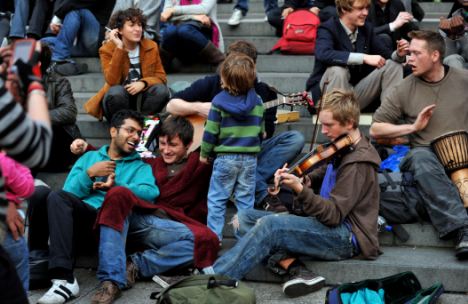
We are just back from our monthly Aoradh ‘family day’. This is the closest we come to a ‘church service’ that we do regularly within Aoradh. It usually involves filling up one of our houses with people, then one of us will co-ordinate a period during which a selection of folk – kids and adults – will take turns to lead others through a song, a prayer, some meditation, a poem, a clip from you tube. It is simple, messy and lovely.

Then we eat together.

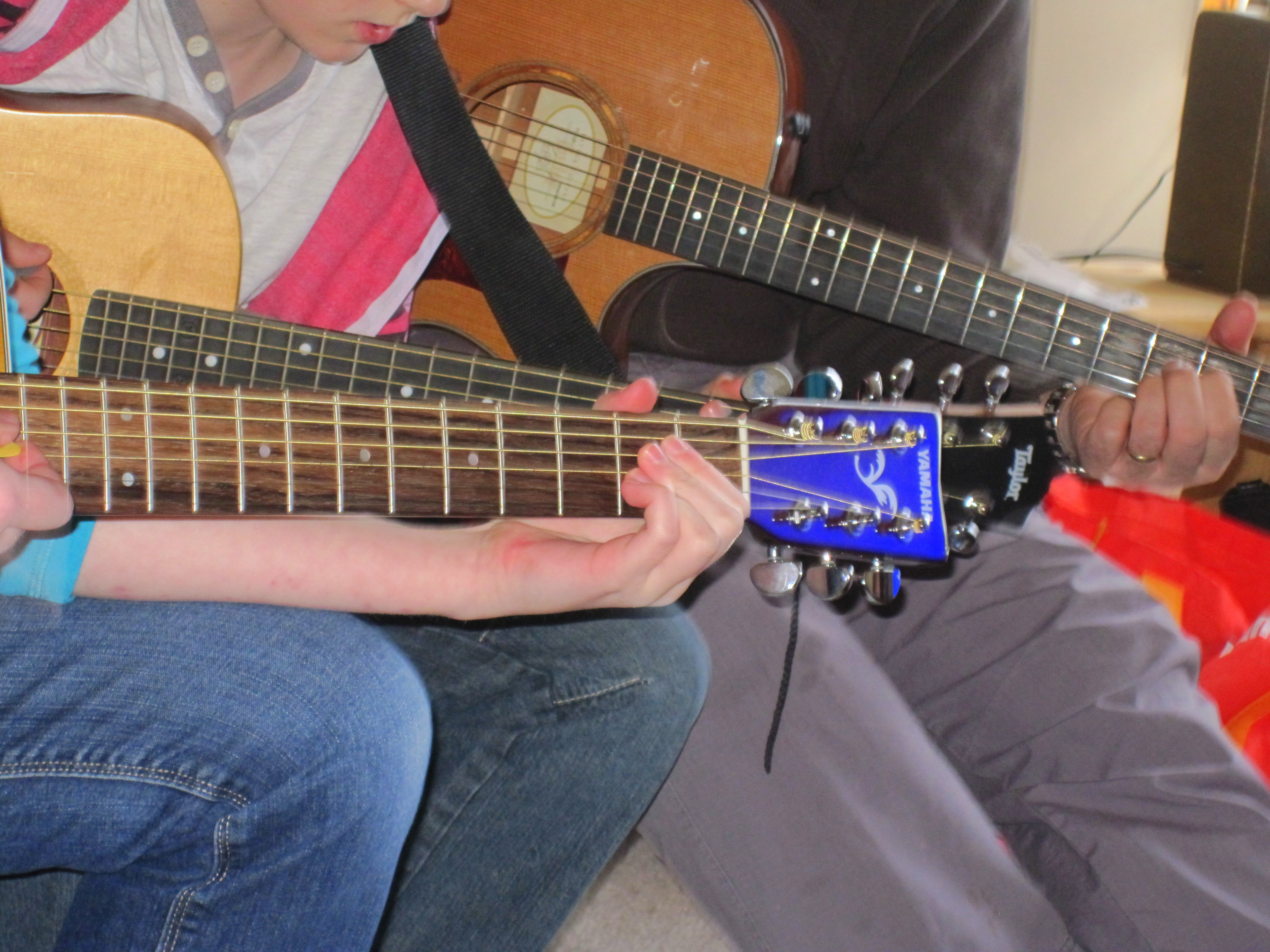
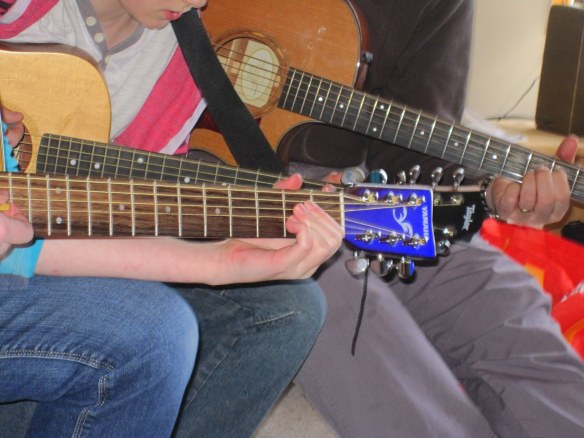
Today I was thinking about the distance I have travelled within the scope of what ‘church’ might mean. I was playing my guitar along with William and Rachel, and really enjoying it, because this is something I do fairly rarely these days.

There was a time when it was my whole life.

I was a ‘worship leader’ – one of those blokes (and they usually are blokes) who stand in front of people and whip up some spiritual fervour by the application of soft rock love songs to Jesus. I lived for those moments when the music took flight, and something kind of opened up. At such times, music was more than just notes. Performance became less about technique, and more about an attitude of humility and receptiveness.

But in the course of my journey from ‘organised’ church, other principles started to dominate the way I thought about worship. Primarily, I was convinced that the culture of ‘church’, with all its big and small liturgies, assumptions and traditions, easily came to be a black hole that swallowed people whole. It left us with no room for the other. It became about us, not about them. They were only important if they were willing to become like us. I was convinced that church should exist to send and to serve, not endlessly feed itself.

Our corporate worship was the same. It was all about music and preaching. Other ways if worshipping were not necessarily wrong (although some were guilty by association) but they were just not our thing. We knew what we liked and this was enough.

As I think about this now it is like a rainbow of only one colour. Still impressive, but monochrome.

It can also be so selfish, so self centred. Worship like this exists to make us feel good. The end we aim for is a spiritual/emotional high for us, dressed up in the clothes of adoration of the God that we make in our own image.

But I overstate my case. A monochrome rainbow can still be beautiful.

The word that came to sum up the change I was finding in my own aspirations in worship was this one;

Transcendence.

By which I mean the experience of God in the ordinary. The incarnation of the maker of the universe within the temporal, messy world in which we live and love.

Transcendent moments fill our lives if we look for them. And the more we attune ourselves to the looking the more we see.

They are everywhere in the natural world; sunsets, new leaves, mushrooms in caves, the lick of new born fur, the light of the moon on still water, the smell of rain on dry earth, the sea that goes on for ever. All these things will happen whether or not we are there as witnesses. But when we look in a certain kind of way a hollow space opens up in the middle of them into which we can meet with something transcendent. Into which we can invite/be invited by the living God.

They are everywhere too where humans also are. In conversations, in touch, in the longing for justice, in the decision to forgive, in the deciding to repay hurt with love, in the listening and in the laughing. Because God is a God of communion. God commands love, and love requires direction. Perhaps above all, the transcendent God is immanent when we come together in community.

They are encountered in art, because art can become a bridge to something beyond our business. Films, books, poems, paintings, sculptures, music.

They can even be encountered in church – for me, especially when we sing, when the chordal voices find the vault of the building and make it vibrate.

I had become so trapped in a view of God that was limited to one colour of the huge spectrum from ultaviolet to infra red and beyond, that I needed to go cold turkey. The guitar needed to go away for a while so I could hear the birds sing.

So I had some time to speak to people, with no agenda other than love.

So I could be creative, and make art in service of the Creator.

How about you? Where might your ordinary space become pregnant with the extraordinary, capricious, magnificent Living God?


The return of the protest song…

The Occupy London movement have launched their own music channel, along with an album entitled ‘Folk the Banks’.

More from the Guardian here.

The first album, called Folk the Banks, has a cover designed by the artistJamie Reid, who stuck a safety pin through the Queen’s nose on the Sex Pistols’ behalf all those years ago. This is not punk, though, but – as the title suggests – folk music.

Adam Jung, an activist from the US who is the driving force behind the project, believes the organisers have made the right choice of musical genre. “Folk makes sense because it’s traditionally the music of protest,” he said. “It’s the music of the people. It’s very appropriate for the first album to come from that tradition.” And even if this one doesn’t take off, there are already four others in the pipeline.

The 17-track album includes work by Tom Morello of Rage Against the Machine, Billy Bragg, Anaïs Mitchell, Ani DiFranco, Sam Duckworth and the stalwart anarchist collective Chumbawamba. Yours in exchange for a donation, it will be distributed digitally and, the organisers hope, on vinyl.

Vinyl! I hope to be able to get hold of this…

The power of song to communicate ideas and to allow passion to flower in the very heart of us all remains strong. Sing on I say- we need you.

Album review- Paul Simon, ‘So beautiful, so what?’

Michaela bought me this for Christmas.

I watched a bit of the Glastonbury footage of Paul Simon and loved it. My brother in law was there and walked away as he was not impressed so I can only assume that it did not come across as well to the live audience.

However the album is full of interesting little twists and turns, along with great hooks and harmonies.

I was also impressed as ever by the songwriting- and the poetry of the lyrics.

When you have written songs that were the soundtrack of a whole generation (Simon wrote all of those old Simon and Garfunkel hits that are so familiar that we forget just how good they were) it must be hard to keep creating something new and interesting.

Yet this album is just that.

Here are the lyrics of my favourite song from the album…

Love And Hard Times

God and His only Son
Paid a courtesy call on Earth
One Sunday morning
Orange blossoms opened their fragrant lips
Songbirds sang from the tips of Cottonwoods
Old folks wept for His love in these hard times

“Well, we got to get going,” said the restless Lord to the Son
“There are galaxies yet to be born
Creation is never done
Anyway, these people are slobs here
If we stay it’s bound to be a mob scene
But, disappear, and it’s love and hard times”

I loved her the first time I saw her
I know that’s an old songwriting cliché
Loved you the first time I saw you
Can’t describe it any other way
Any other way
The light of her beauty was warm as a summer day
Clouds of antelope rolled by
No hint of rain to come
In the prairie sky
Just love, love, love, love, love

When the rains came, the tears burned, windows rattled, locks turned
It’s easy to be generous when you’re on a roll
It’s hard to be grateful when you’re out of control
And love is gone

The light at the edge of the curtain
Is the quiet dawn
The bedroom breathes
In clicks and clacks
Uneasy heartbeat, can’t relax
But then your hand takes mine
Thank God, I found you in time
Thank God, I found you

Christmas cheeeeeeeese…

Like many of us, I have been rather hammering the ‘reclaim Christmas from the capitalists’ theme of late. But you really can go too far.

Brace yourselves…

Bless.

The thing is, she seems a really nice person- someone who always looks after everyone all around her. Salt of the earth. Would you tell her? Go on- be honest. You too would tell her how lovely the song is wouldn’t you?

There is a serious edge to these things though. Church and culture. Culture and church. I have heard sentiments like this (even expressed like this!) for years in and around churches.

But it has usually been all talk and no trousers. All tinsel and no gristle.

Flat picking…

Great programme the other day on Radio 4 about Richard Thompson.

If you like skilfully played guitar, it simply does not get much better than when played by Richard Thompson. Not so mention his song writing.

In the programme he talks about his guitar style- typically using ‘flat picking’- a combination of strumming and finger style. For the non guitar players, finger style guitar is usually the soft mellow arpeggio stuff, whereas strumming is much more rhythmic.  He will hold a plectrum between two fingers, and use his other fingers to play dazzling riffs at the same time. What Thompson achieves, on electric or acoustic guitar is to imbue everything he does with power and subtlety. It often sounds simple and understated- the signs of real virtuosity.