All manner of things shall be well…

I have been working on a song today. I used to write songs a lot, but stopped (unsurprisingly) when I no longer sang as much.

It forced me to return to rhyme, which I am usually glad to put aside when I write poetry.

I was thinking about those words of Julian of Norwich– All shall be well, and all manner of things shall be well. The theology behind these simple words is highly complex. Despite living in a time of the the Black Death, which religious people saw as the just punishment of a wrathful God because of the sin of the people, she chose to believe in love and hope. Interestingly, in our times when the theological debate around Atonement is causing such conflict, Julian had some very non standard views about sin and the punishment of God. This from the Wikipedia entry;

Julian believed that sin was necessary in life because it brings one to self-knowledge, which leads to acceptance of the role of God in one’s life. Julian taught that humans sin because they are ignorant or naive, not because they are evil, which was the reason commonly given by the church for sin during the Middle Ages.Julian believed that in order to learn, we must fail. Also, in order to fail, we must sin. The pain caused by sin is an earthly reminder of the pain of the passion of Christ. Therefore, as people suffer as Christ did, they will become closer to Him by their experiences.

Similarly, Julian saw no wrath in God. She believed wrath existed only in humans but that God forgives us for this. She writes, “For I saw no wrath except on man’s side, and He forgives that in us, for wrath is nothing else but a perversity and an opposition to peace and to love”. Julian believed that it was inaccurate to speak of God’s granting forgiveness for sins because forgiving would mean that committing the sin was wrong. Julian preached that sin should be seen as a part of the learning process of life, not malice that needed forgiveness. Julian writes that God sees us as perfect and waits for the day when humans’ souls mature so that evil and sin will no longer hinder one’s life.

Here are the words so far, still listening for their tune;

In the morning when I rise
In the evening when I die
You are there

In the cloister or the gutter
In the music and the song
In the heart that breaks wide open
In the right and in the wrong
In the tear that no one noticed
In the flow of every stream
In the leaf slowly unfurling
In things seen and yet unseen

In the mist of mellow fruitfulness
Or a stinking torture state
In the stab of empty promises
And twisting with our fate
In the road as yet untraveled
In the barrel of a gun
In the plan that comes unravelled
Or the journey just begun

In the cracks of what we concrete
In the atom and the bomb
In the hope of each spring morning
In a moment too soon gone
In the Bible and the bar room
In famine and the feast
In the spaces we make for him
And where we expect him least

I am learning trust in you
For all manner of things
Shall be well
All manner of things
Shall be well

Leaving…

I’ll not miss your snarling e mail

Or your apparent hysteria over things instantly forgotten

The ever worming mobile phone can canker itself

Into your flesh now-

For I am leaving

~

Neither will I miss those meetings around a table

Shadowed by glooming suits where

Words land like shot partridges

The elephant can trumpet in your ear now-

For I am leaving

~

I’ll not miss those twin pincers

Of guilt and responsibility

That claw me just before dawn

My pulsing vein has a fitted valve-

Now that I am leaving

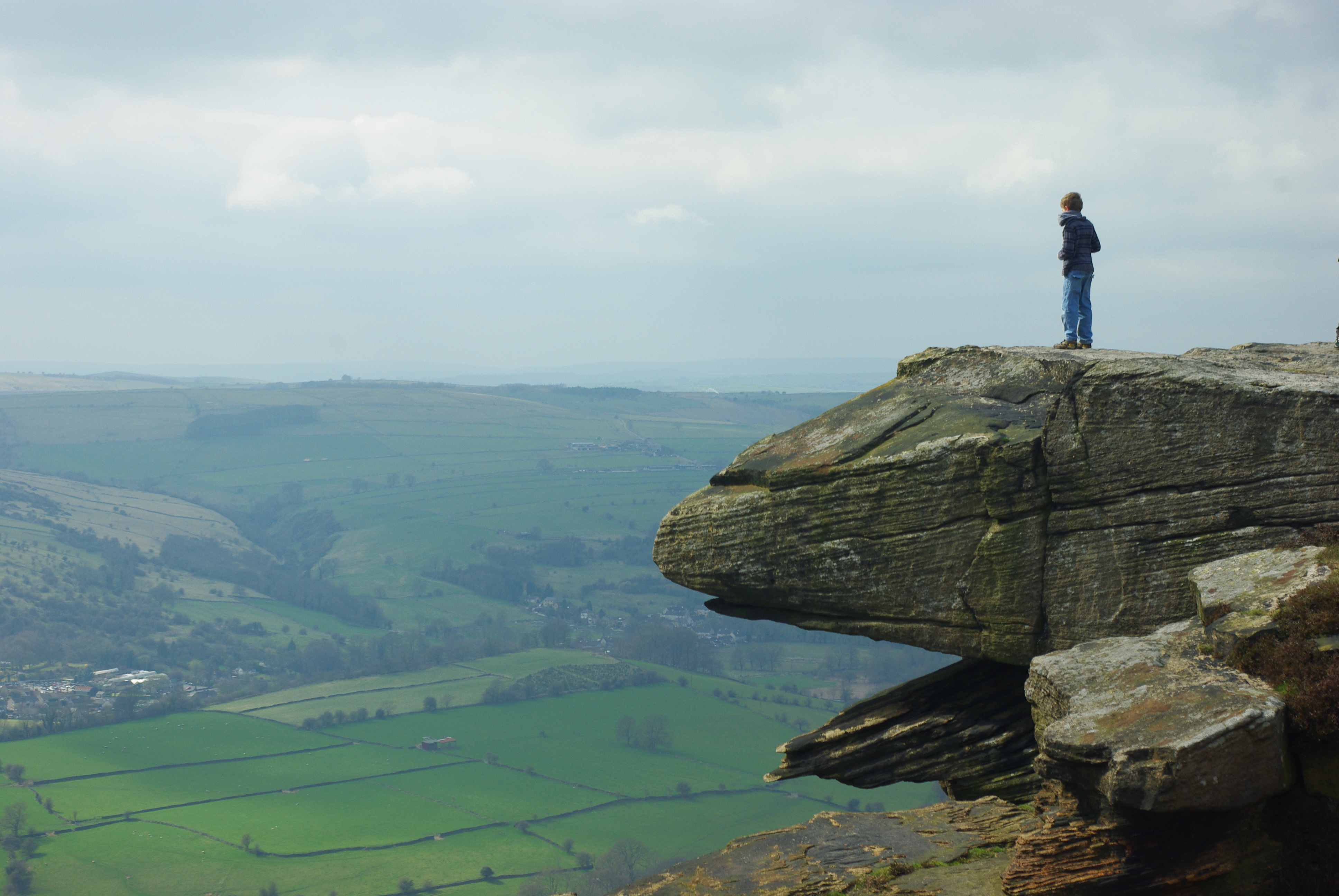
If you stand on the edge too long…

Sometimes, faced with a major change, we are full of the sense of opportunity. But if you are like me, these things ebb and flow- mostly as a result of fairly minor events that may have little real relevance to my future.

So an unexpected tax implication, or the failure of a small co operative venture, or even the harsh words of a friend- these things can feel like nails in a tyre.

Worry not however friends- I tend towards mercurial and what goes down will also rise. And as ever, I find melancholy makes me ruminate in word form;

Shrink wrapped


Squeezed in my own vices

Folded in like some second hand shroud

Shrink wrapped

All things

No longer

Possible

Goodness…

Such a twee, old fashioned word.

Why is that when we are surprised by kindness, or by grace, or by someone refusing to be sucked into the vortex of offence/defence, it breaks us open?

What is it that makes plain old boring goodness so simultaneously stolid and transcendent?

To be good gets bad press. It conjures up image of pious pew polishers and middle England smugness. But goodness in action can frequently reduce me to tears.

It is easy to be ‘good’ in the hallowed cloister of a church, or under the scrutiny of people we might seek to impress. This is not the kind of offering Yahweh ever found acceptable (Amos 5, 21-24.) What is more difficult is to live out a life of love- which in these emotionally restrained islands is better understood as ‘goodness’. Although goodness is something else too… less about a passionate decision towards the other (whatever the motivation behind this passion) more like an instinctive skew towards an active kindness…

Defining goodness is not easy, but we all know it when we encounter it.

It is less important to label it in ourselves. Goodness is perhaps not an attainable goal for the pilgrim (but strangely, love might be.) Rather let us just be diligent in our search for goodness in others. We will always find it I think. Sometimes we will find a lot and then there is reason for song. And in doing this, I hope we may discover goodness by accident.

I have been pondering this (as is my wont) in poetry. I think I prefer this previous attempt, but here is today’s offering;

Goodness

~

Smear of a tear

The diffident shuffle of an approaching shoe

The sound of breathing.

~

Choosing to stay here

In all this shit

Flecking this dark shadow

With morning manna

~

The pulse of your heartbeat

Taps at me like sonar

Happy Birthday Michaela…

Michaela is 44 today. Swinging into a new year.

She is enough to turn a grown man to poetry.

Nape

They can have your smile

The curl of you that calls out their song

And they can have your hand to hold tenderly

When the trees bend low under the weight of the sky

Your heart is a hospital

So even there they can find for themselves a soft place

Pulsing with the life of you

.

But under your hair

In the fragrant fold of a lobe

In the toss and tickle at the nape of your neck

Is a place all mine

Rowan Williams resigns…

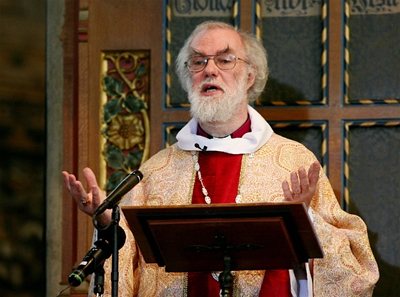
Today it was announced that Archbishop Rowan Williams is to resign as Archbishop of Canterbury and return to academia as master of Magdalene college, Cambridge from December of this year. I am not a member of the Anglican Communion, but my roots still reach back in this direction, and I feel a real sadness at the departure of this gentle, thoughtful and gracious man from his key leadership role.

His time as leader was marked by division- over women in ministry and homosexuality in particular. Time and again he has sought to be a bridge for debate and understanding, but the chasms remain between the liberal reformers and the Evangelical wing of the church.

Rowan Williams seems to have been criticised from both the liberal side (because of his reluctance to take on the theological conservatives in open warfare) and from the Evangelical side (because of his refusal to stand on a narrow interpretation of scripture on key issues.) But to me, there was always the feeling of deep integrity in all that he did. He has been a leader to be proud of. The Church in it’s widest sense will miss him greatly as it seeks to move into our new context.

As for the CofE- what next for the old girl? Who will be the next Archbishop? And what direction will he seek to steer? Can the Anglican Church survive in it’s current form?

The Guardian mentioned Archbishop Sentanu– who might yet be the first African born Black Archbishop. Another mentioned is Bishop Chartres, who has been opposed to the ordination of women, and was at the centre of the controversy over the way the church handled to recent protests outside St Paul’s Cathedral.

Whoever takes over, they will need our prayers, and could learn a lot from Rowan Williams.

Williams was never a popularist- there was little about what he said that could ever be reduced to a sound bite. It was always too thoughtful, too considered, to cerebral perhaps, or too poetic. So by way of grateful celebration for this man who truly has been an apostle in the fullest sense of the word, I will quote one of his poems.

It is slightly unseasonal, but nevertheless seems apposite for a man who seeks the depth of what it means to serve Jesus;

Advent Calendar

He will come like last fall’s leaf fall.
One night when the November wind
has flayed the trees to the bone, and earth
wakes choking on the mould,
the soft shroud’s folding.
He will come like frost.
One morning when the shrinking earth
opens on mist, to find itself
arrested in the net
of alien, sword-set beauty.
He will come like dark.
One evening when the bursting red
December sun draws up the sheet
and penny-masks its eye to yield
the star-snowed fields of sky.
He will come, will come,
will come like crying in the night,
like blood, like breaking,
as the earth writhes to toss him free.
He will come like child.

Rowan Williams

By the way- Greenbelt festival have just made all of their rich and varied back catalogue of downloadable talks free, including a couple by Rowan Williams here– well worth a listen.

International Woman’s Day…

Today is International Woman’s Day.

I wondered about the need for a day to celebrate half of us- seems a wee bit of an over generalisation. Perhaps it might suggest too that all the rest are ‘men’s days’.

But then again perhaps they are right;

  • Women make up half of the world’s population and 70% of the world’s one billion poorest people.
  • Women work two-thirds of the world’s working hours, produce half of the world’s food, but earn only 10% of the world’s income.
  • Of the 500,000 women who die in childbirth every year, 99% live in developing countries. In other words, in developing countries, a girl or a woman dies every minute giving birth.
  • Two thirds of the 800 million adults who lack basic literacy skills are women.

(Figures from Traidcraft. You can donate a few quid towards their work to support women to help themselves here.)

I can change little about the justices and injustices of this wonderful broken world we live in, apart from little bits of money here and there, and perhaps some words.

Because I still hope that poetry might find cracks and widen them.

I read an interview in which the opening lines of this poem were spoken by a mother over her daughter, and they did something to me. I hope that you will forgive this white, middle class man for presuming to use the voice of a woman in this way- as some of the words were hers…

I have a dream for my daughter

That she may live a life

Better than mine

That this plastic bowl I fill with water

Might one day be plumbed-in porcelain

That the cotton dress worn thin by the rocks I wash it on

Might become a pressed skirt and blouse all office white

That these Flip Flops sewn with telephone wire

Might be breathed upon by some God-mother

And become instead

An English bicycle

.

I have a dream for my daughter

That she may not be owned

Or used

Or victimised

She will be strong

Like bright green bamboo

She will speak

And men will listen

Weeping…

Today I watched a woman weeping

There were no tears

No wracking sobs

Her face bore no visible contortions

Instead she smiled and spoke of minutiae

To we, the ephemera

Made tiny and two dimensional

By the towering cliff she hung from.


She wept

And I watched.

Doubts and loves dig up the world…

A year ago I wrote a piece about doubting the existence of God. It received quite a bit of traffic for a while as it seemed to hit a chord.

Many of us who have been part of an overly concreted doctrinal system of belief have struggled to acknowledge doubt. It is almost as if any small incorrect belief would form a crack in the whole edifice of faith that might bring the whole thing tumbling down. To avoid this apocalyptic end to everything we have built our lives upon we contort ourselves into all sorts of defensive positions.

In my case, this involved two main strategies-

  1. Do not go there. When you feel the approach of doubt, turn in the other direction. It is better not to ask the difficult questions as the answers might be too much to cope with. Distract yourself with narrower, safer issues.
  2. Dishonesty. Better not to talk about doubt as this might infect others as well as yourself. You also might find yourself ostracised by the fervency and inflexibility of others.

Eventually of course something has to give or we become like stagnant pools, unable to flow, unable to sustain any kind of life. Faith fixed and defended becomes something else called religion. And religion belongs in the text book not in the soul.

I was reminded of this again after listening to this from Giles Fraser;

For my own experience of faith is that belief and unbelief commonly nestle alongside each other. Indeed, I cant make any sense of a faith that doesn’t include unbelief as a powerful element. “My God, why have you forsaken me” is, after all, the cry of Jesus at the very centre of the Christian drama.

As with much that is of the soul rather than the brain, faith and doubt finds voice in poetry. Giles quotes a poem he read that forms part of a memorial for Israeli prime minister Yitzhak Rabin, murdered by a religious man because he sought peace.

From the place where we are right
Flowers will never grow
In the spring.

The place where we are right
Is hard and trampled
Like a yard.

But doubts and loves
Dig up the world
Like a mole, a plow.
And a whisper will be heard in the place
Where the ruined
House once stood.

Yehuda Amichai