Against such there is no law…

fruit-1

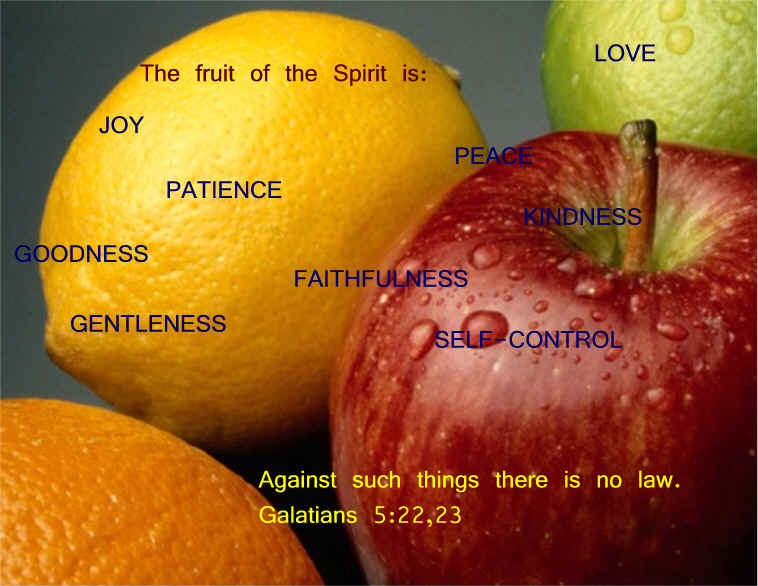
A continuation of some stuff based around the list of the fruit of the Spirit from Galatians chapter 5.

This poem kind of nods at all the fruit Paul mentions.

You can see the others by clicking on the ‘fruit of the Spirit’ category on the left.

Love is not against the law
Although in judicial circles
It is not encouraged

But where the Spirit of the Lord falls
Love is between us like oil on bearings

Joy is not forbidden
But wherever it breaks out
It is fragile
Like a bubble
In a pine forest

But where the Spirit of the Lord rests
Joy beats like a dancing drum in the middle of us
Calling us to dance

Peace is never prohibited
But like a dove above a shooting range
Its flight is fraught with danger

But where the Spirit of the Lord lives
The boundaries we keep are soft
And we are learning how
To forgive

Patience is permitted in most places
But only if you use it quickly

But where the Spirit of the Lord lingers
Patience is like the summer sun
Drawing out the sugars in the ripening fruit
Sweetening the harvest

Kindness is condoned even in the most unlikely places
But it will win you few contracts
And is not conducive to
Promotion

But where the Spirit of the Lord comes close
Kindness kind of follows after

Goodness will not result in a jail sentence
But neither will it pay its way
In the global village superstore

But when the Spirit of the Lord smiles
Goodness becomes the common currency
Gentleness is no crime
And in many places it is a clinical necessity
But it is easily overlooked
In the shadow of another conquest

But where the Spirit of the Lord draws near
Then hands all rough from hard works
Become softened to hold
And to heal

Faithfulness is never a traitor
Yet we live like weathervanes
Spun by the seasons
To face the prevailing winds

But when the Spirit of the Lord moves
Promises no longer require the threat
Of legal recourse

pulpit

Self control is thundered from the pulpit
But just in case the message falls on deaf ears
We deploy the secret pew police
Rule books at the ready
Swinging their
Truncheons of truth
To crunch the knuckles
Of the apostate

But when the Spirit of the Lord comes amongst us
There is a perfect law called…

Freedom

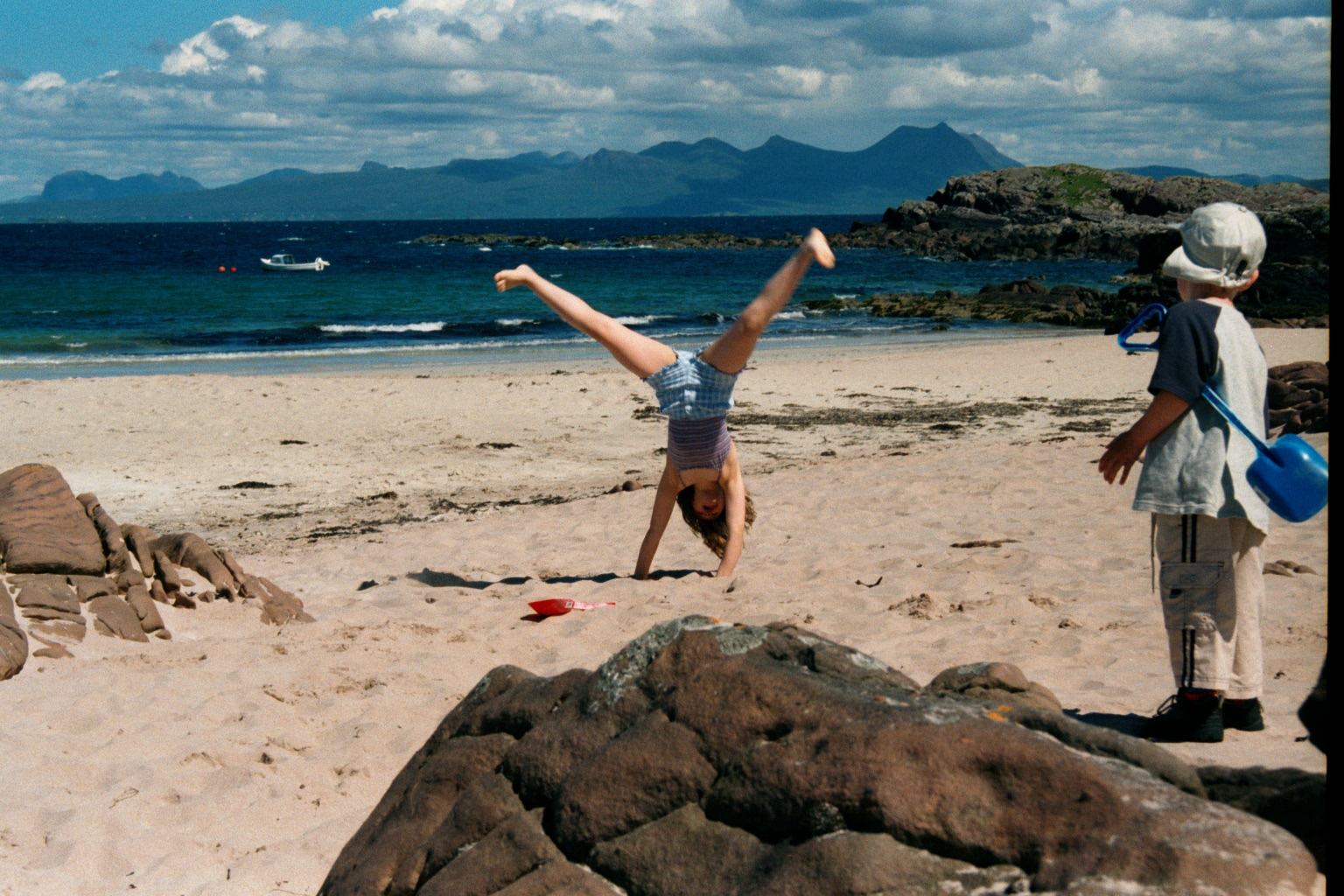
Emily and Will, somewhere in Wester Ross, 2003

Emily and Will, somewhere in Wester Ross, 2003

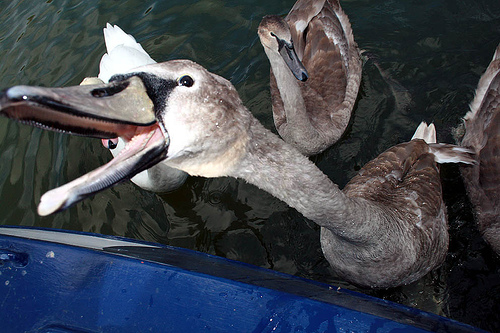
Swans on Bute…

dscf1469

It was an autumn day ringed with rainbows
With a brilliant light panning across the water
Polishing everything it touched into beautiful Technicolor

For a while the rain swept in
Hammering the surface of the loch to a million tiny ripples
Like frosted glass
Then just as soon, the still sea water became a mirror again
Holding the hills like Turner,
Or Rembrandt.

There is a purity to the air
Sparkling like the fine optics
Of the pair of new binoculars I borrowed once as a boy

I drive the coastline, heading for the ferry
And slow down as a family of swans cross the road
Through the gate of the boatyard
Mum and Dad dazzle in the sun
Whilst their dowdy offspring
Waddle in line astern

The absurd beauty of the day turns me all Beatrix Potter
And I wonder at the nature of their errand.
A complaint about a dirty mooring perhaps?
Or a measuring for a new set
Of webbed feet?

Shaking away the sort of smile
That lingers on the soul
I watch the last signet safely over the pavement
And scuttle back towards a more objective
Cynicism

It’s better for the image you know.

Port Bannatyne, Isle of Bute.

cygnets

Slower now…

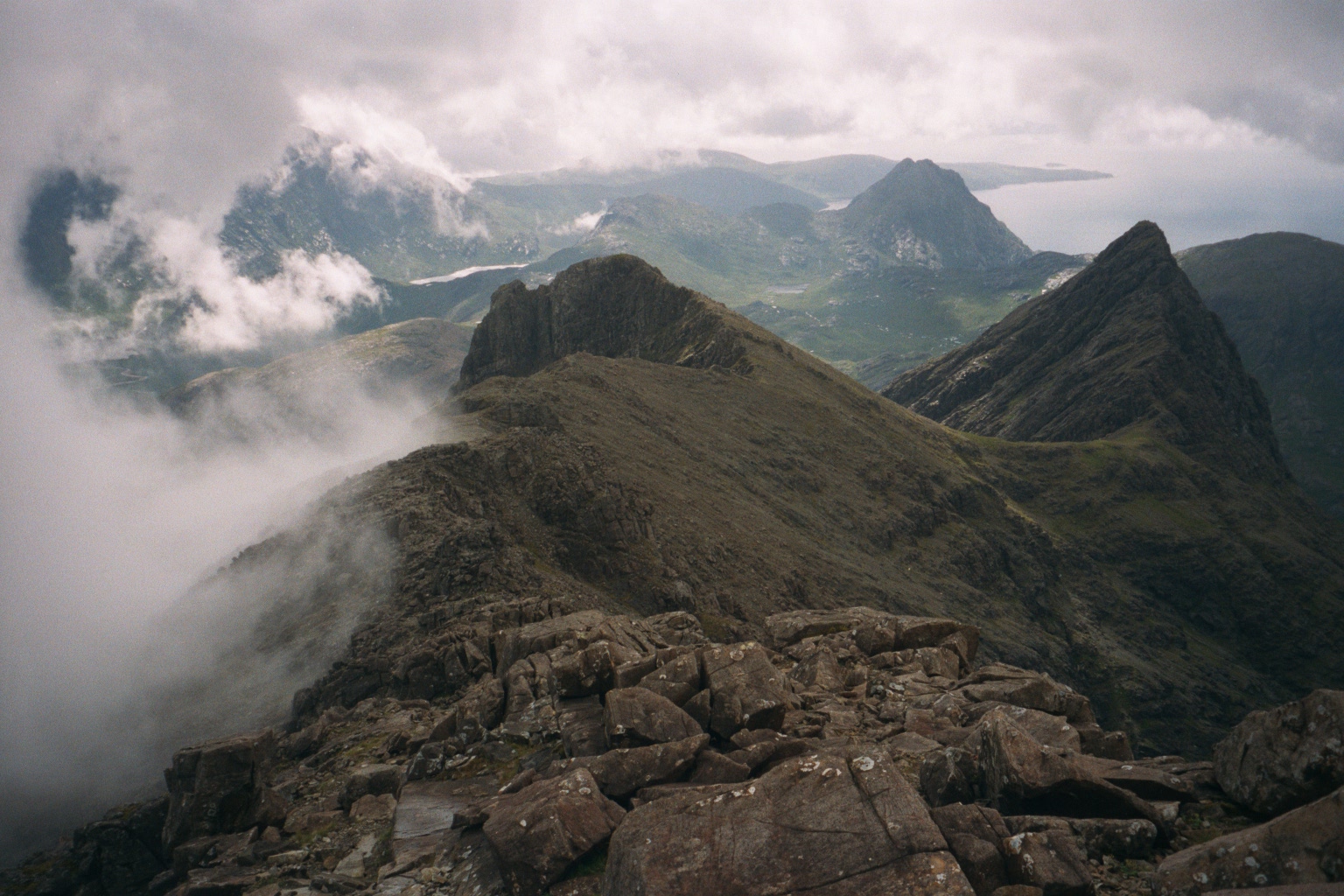
The Cuillin ridge, Skye, from Sgurr nan Gillean

The Cuillin ridge, Skye, from Sgurr nan Gillean

When I was a child
I saw as a child
Small
In the small things of landscape
Deep in the tickling grass
Held in the hollow of slow summer days
Now, like the grasshoppers-
Ghosts of memory
Gone forever

But now I am grown
And the woods are no longer wild
My dragons died through education
And the noise of cars on the B6139
(Heading for Newstead)
Drove away the bears.

Instead I lifted my eyes to the high places
Where horizons rolled from ridge to ridge
Always higher, always further north
Crossing the high, hard won corrie
Blood pumping
Free for a while
From the baser motives-
Above it all.

Then, slower now
At the end of heavy days
And in good company
I look again beneath my feet
And try not to trample flowers.

018_15-11

The Sentry- Wilfred Owen

Following on from my last post, here’s a bit more of Owen’s poetry.

I have just watched a programme on Channel 4 about the excavation of a dug out near Ypres in Belgium dug in 1917. It has been clogged with the mud and bones of some of the hundreds of thousands who died there for 90 years, but was found in remarkably good order (check out here for more details.)

It made me think of this poem.

Preserved like the shadow of Owen, who died aged 25, fighting a war that he did not believe in.

For people like me, Owen speaks clearly and immediately of things unimaginable to us- but where to him everyday normality.

Our fascination for stories of war is not healthy, or at least I do not think so. For every John Wayne or Bruce Willis, or docudrama about the Third Reich- there should be 100 Wilfred Owen’s.


Blogged with the Flock Browser

Remembrance day and war poetry

cenotaph_london

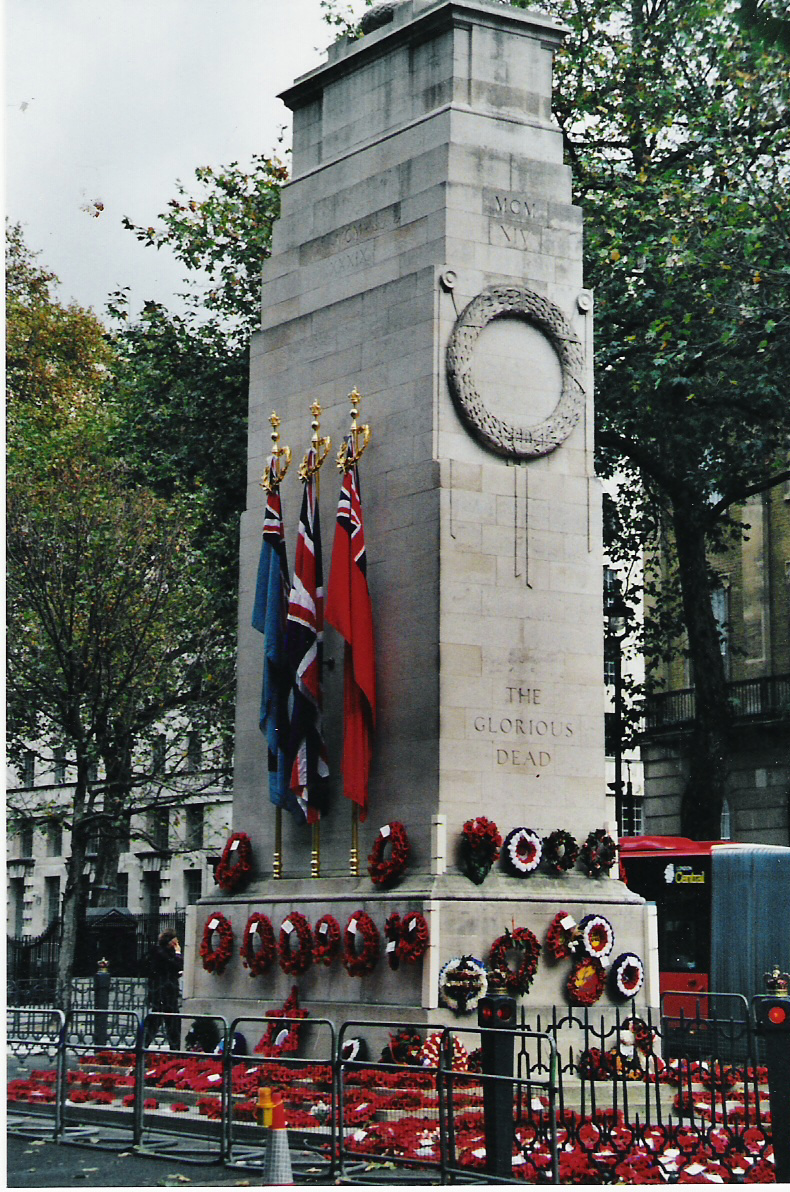
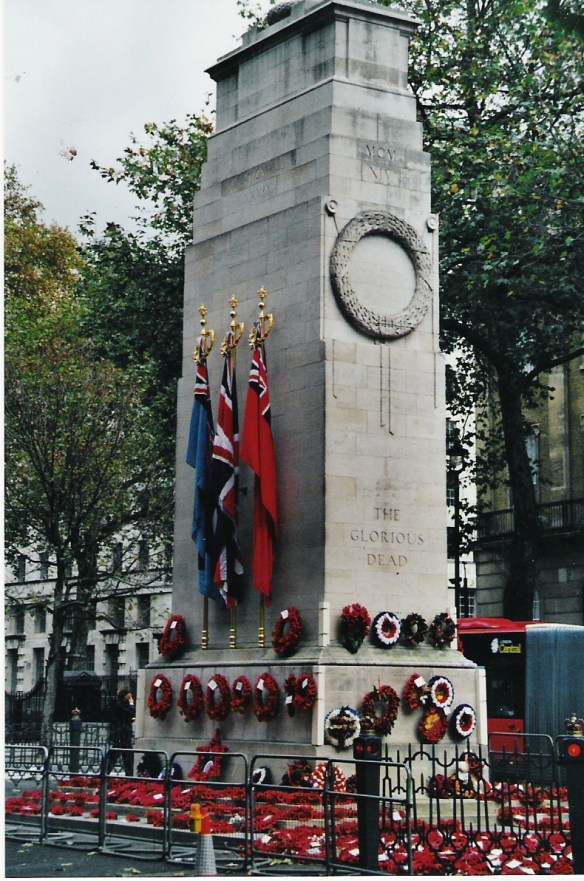
Michaela and I have just sat and listened to the Remembrance day ceremony from the Cenotaph in London. This ceremony is held every year, on the 11th hour of the 11th day of the 11th month, to honour first the dead of the ‘great war to end all wars’ (1914-1918) and then the subsequent second world war, along with all the post-empire skirmishes and border confrontations that our soldiers have died in ever since.

We were silent first through the emotional beauty of laments played by brass bands, then for the official minutes silence

I have had a mixed relationship with the ceremony. At worst, it seems to glorify and exalt the business of war. For a while, I refused to wear a red poppy, finding instead the white ones with an overtly pacifist stance to be more appropriate. It seemed to me the only response that followers of Jesus could take.

I spent some time working as a therapist in GP surgeries, and met several ex-soldiers struggling with post traumatic symptoms years after conflicts in Cypress, the Falklands or the wars in the Gulf. I heard their matter-of-fact stories of broken bodies and a culture of brotherhood, booze and easy violence that was both intensely supportive and ultimately destructive to the rest of their lives. I now wear red poppies with respect and humility.

But still, this balance between remembering those who suffered and died, whilst wanting to de-glamourise war and pursue peace- this is a hard thing to find at times.

This was highlighted too by my reaction to the front page of our local paper- the Dunoon Observer. In a creative response to Remembrance day, they printed a famous poem from the Great war on the front page. It is this one;
greatwar

In Flanders fields the poppies blow
Between the crosses, row on row,
That mark our place; and in the sky
The larks, still bravely singing, fly
Scarce heard amid the guns below.

We are the dead. Short days ago
We lived, felt dawn, saw sunset glow,
Loved, and were loved, and now we lie
In Flanders fields.

Take up our quarrel with the foe:
To you from failing hands we throw
The torch; be yours to hold it high.
If ye break faith with us who die
We shall not sleep, though poppies grow
In Flanders fields.

Lt Col John McRae


This poem was written in 1915, after a terrible battle, but still in an early part of the war, when glory still beckoned, at least for some. McRae was a staff officer, and the second verse always seemed to me to fit uneasily alongside the first. Some have called it ‘recruiting office rhetoric’- handing on the torch to others to have revenge…

But I applaud the Observer for printing poetry. I just would have preferred them to print another famous war poem- the one below.

I remember reading the first world war poets at school- Seigfreid Sassoon, and most of all, Wilfred Owen,
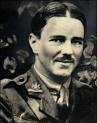
Wilfred Owen

Wilfred Owen

who was killed by a snipers bullet at just about the very end of the war. It was these men who first showed me that poetry can be something powerful. It can be healing, challenging, therapeutic, revolutionary, beautiful and harrowing- all at the same time.

This poem captures the whole thing of war for me. Here it is (with some notes pinched from here.)

DULCE ET DECORUM EST1

Bent double, like old beggars under sacks,
Knock-kneed, coughing like hags, we cursed through sludge,
Till on the haunting flares
2 we turned our backs
And towards our distant rest
3 began to trudge.
Men marched asleep. Many had lost their boots
But limped on, blood-shod. All went lame; all blind;
Drunk with fatigue; deaf even to the hoots
4
Of tired, outstripped
5 Five-Nines6 that dropped behind.

Gas!7 Gas! Quick, boys! – An ecstasy of fumbling,
Fitting the clumsy helmets
8 just in time;
But someone still was yelling out and stumbling,
And flound’ring like a man in fire or lime
9 . . .
Dim, through the misty panes
10 and thick green light,
As under a green sea, I saw him drowning.
In all my dreams, before my helpless sight,
He plunges at me, guttering,
11 choking, drowning.

If in some smothering dreams you too could pace
Behind the wagon that we flung him in,
And watch the white eyes writhing in his face,
His hanging face, like a devil’s sick of sin;
If you could hear, at every jolt, the blood
Come gargling from the froth-corrupted lungs,
Obscene as cancer, bitter as the cud
12
Of vile, incurable sores on innocent tongues,
My friend, you would not tell with such high zest
13
To children ardent
14 for some desperate glory,
The old Lie; Dulce et Decorum est
Pro patria mori.
15

8 October 1917 – March, 1918

1 DULCE ET DECORUM EST – the first words of a Latin saying (taken from an ode by Horace). The words were widely understood and often quoted at the start of the First World War. They mean “It is sweet and right.” The full saying ends the poem: Dulce et decorum est pro patria mori – it is sweet and right to die for your country. In other words, it is a wonderful and great honour to fight and die for your country

2 rockets which were sent up to burn with a brilliant glare to light up men and other targets in the area between the front lines (See illustration, page 118 of Out in the Dark.)

3 a camp away from the front line where exhausted soldiers might rest for a few days, or longer
4 the noise made by the shells rushing through the air
5 outpaced, the soldiers have struggled beyond the reach of these shells which are now falling behind them as they struggle away from the scene of battle

6 Five-Nines – 5.9 calibre explosive shells
7 poison gas. From the symptoms it would appear to be chlorine or phosgene gas. The filling of the lungs with fluid had the same effects as when a person drowned
8 the early name for gas masks
9 a white chalky substance which can burn live tissue
10 the glass in the eyepieces of the gas masks
11 Owen probably meant flickering out like a candle or gurgling like water draining down a gutter, referring to the sounds in the throat of the choking man, or it might be a sound partly like stuttering and partly like gurgling
12 normally the regurgitated grass that cows chew; here a similar looking material was issuing from the soldier’s mouth
13 high zest – idealistic enthusiasm, keenly believing in the rightness of the idea
14 keen
15 see note 1
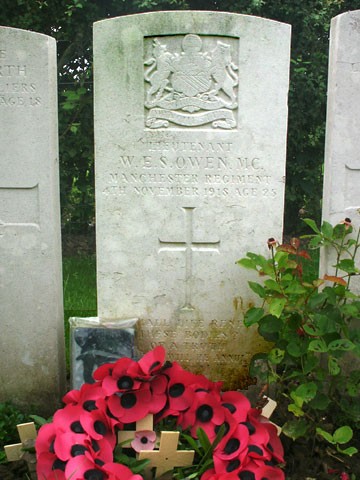
owens-grave

The fruit of the Spirit is kindness

kindness

I was sore
Abraded by the road gravel
And you wrapped me
In a soft bed
Of kindness

I was weary from the world
And like a soothing embrocation
You took these road weary feet
And slippered them
In front of a warm fire

I failed
Again
And stared down low
Until the soft music in your voice
Brought to me possibility
That I too
Could be loved

That I too could love
In return

So may you be showered with blessings
Like blossom petals
Butterflying about you
In this beautiful breeze

kind

The fruit of the Spirit is joy…

image from flickr

Something down deep
Wants out
Spleen and liver shiver
Pressure mounts
Rise up this heavy heart to heaven
And shout

This precious life and loving
In these veins now flowing
Will burst the banks old rivers
had formed
And pour out
On thirsty ground

So you and me-
Let’s find our feet
In freedom
And dance
Let’s live out lives
All open
To circumstance

For joy is a bubble building
In me
And Lord-
How beautiful
Is this world
I see

The fruit of the Spirit is peace…

After the rain squalling
And the bombs falling
After the back stabbing
And the tongue lashing
After love is betrayed
And dreams disarrayed
When the knife cuts and slashes
After sackcloth and ashes
Comes the peace

After the tumours
And cruel vicious rumours
After bodies broken
And evil words spoken
After guns cease their shooting
Troops no longer jack-booting
With the grave trodden down
And the trees now turned brown
Comes peace

Even after the failure
Of life-long labour
And after deadlines missed
After the getting pissed
When the pressure’s done mounting
And it’s all over-even the shouting
When the race has been run
In the setting of sun
Comes the peace

When anger burns out
After faith turns to doubt
When we give up on walking
And wolf packs are stalking
When the money is spent
Safety curtains are rent
At the end of all coping
Even Polyanna’s done hoping

Even then
Will fall
My peace

Blogged with the Flock Browser

Dressing up light for the dancing…

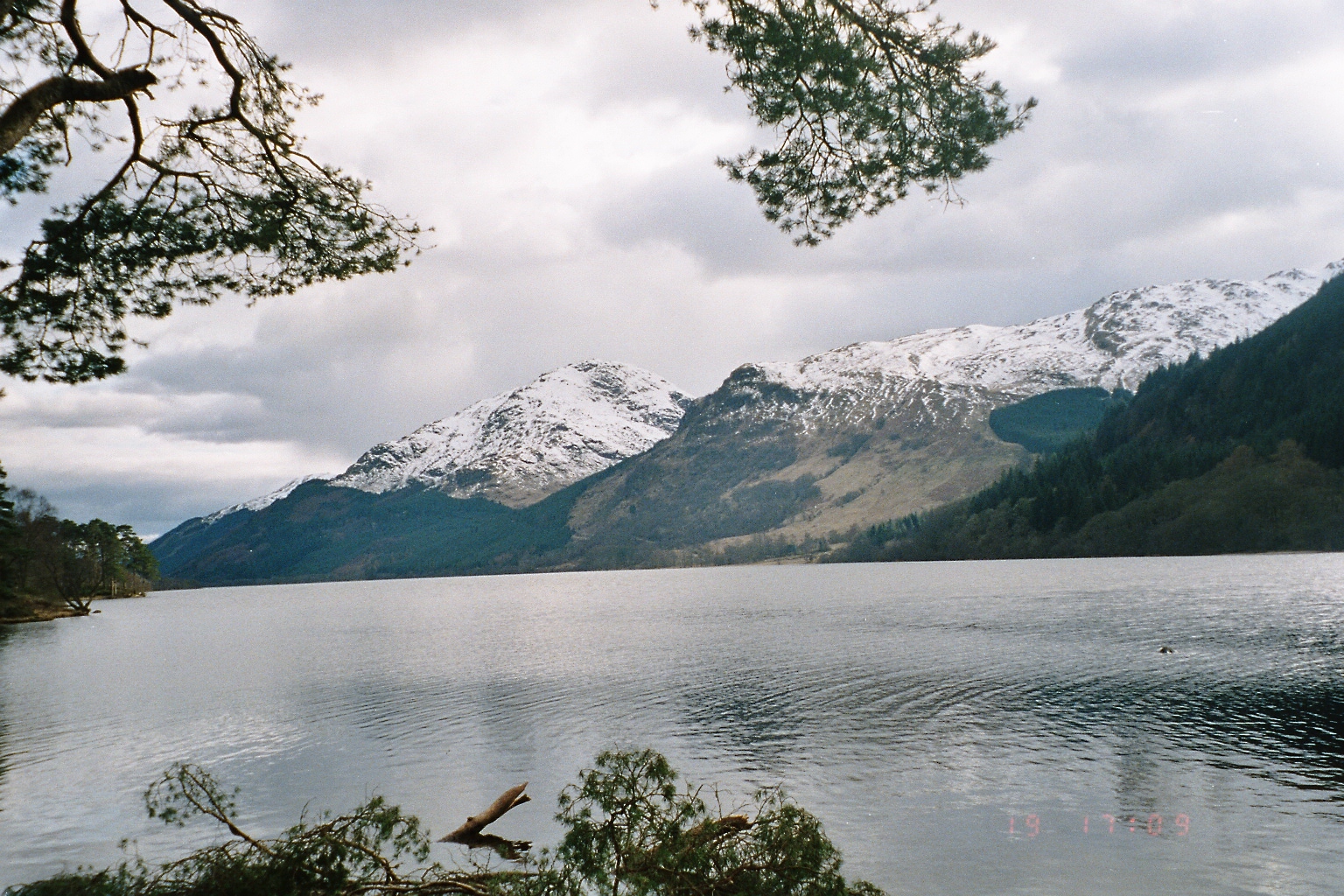
Snow above Loch Eck, Argyll

Snow above Loch Eck, Argyll

The snow fell very early this year.

Last year, it was after Christmas when the first snow appeared on the mountains around us. We are close to the sea, so mostly it rains.

But last week we had a spell of cold clear weather, and snow kissed the mountain tops.

Winter can be cruel here. Not in the Good-King-Wenceslas kind of way- but nevertheless it can sap at the soul. The dark nights, the constant wind and rain, the wet cold that seems to soak into your bones.

The hillsides become unstable sources of land slips, the whole landscape goes dead-bracken brown and lifeless, the trees skeletal against grey skies and the pine forests become one huge dark moss sponge.

For those of melancholic disposition, such as myself, there is a beauty to these winters. The shafts of cold sunlight that periodically turn the dull browns to shining bronze. The empty wildness of the landscape. But I know I will come to long for the springtime.

I have friends who experience depression. For them, winter is a dangerous time, containing the possibility of the end of hope. The days deny the reality of the coming of soft days and renewal, and just leave a dark tunnel with no distant exit point.

For us all, there is a pressing need for to transcend the darkness. To find light. To put it on like a coat and walk in it.

To dwell in warmth and companionship, to see beauty and to celebrate it.

Some things make this more possible- and for me, one of these things is snow…

First snows

The first snows of winter bring blessing
To the hills and the mountains.
Yesterday bottle-brown
Now blue white crystal and pure

Soon rain will bring spoil and destruction
Turning the white mottled brown
Releasing the streams
Yesterday’s secret tears running down

But for now
My vision is draw to the highlands
Captured by sparkling sunlight
Shining but showing no shadow
Driving the darkness away

Dressing up light for the dancing and leading me on

Dressing up light for the dancing, then it’s gone.