Two young girls jump to their deaths…

erskine bridge

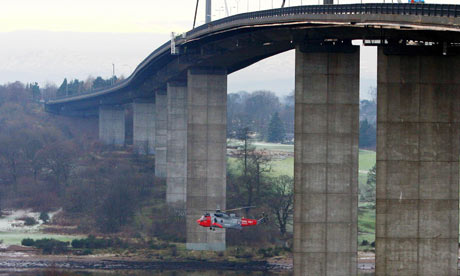
Along the Clyde from where we live is a bridge over the river, connecting Paisley to Erskine, and therefore known as the Erskine bridge.

It is notorious as a spot where people go to commit suicide.

So much so that there are four telephone boxes on the bridge with information about the Samaritans helpline service.

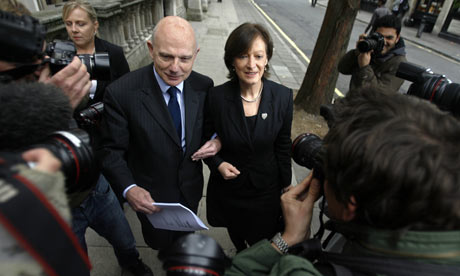
And yesterday, two young girls, aged 14 and 15, left the residential educational unit they lived in, stood on the parapet, held hands, and jumped off together.

Soon the fingers of blame will be pointed. Something surely should have been done to avoid this terrible waste of life?

But for now, the shock will be on families, friends and care workers.

My heart goes out to them all.

BBC iPlayer – Transatlantic Sessions: Series 3: Episode 2

I am just sitting with a glass of wine, flicking between the cricket (we might actually win this one!) and the sublime ‘transatlantic sessions’ on BBC4.

A long weekend beckons, with plans to canoe and camp, and I have just eaten well with my lovely wife.

Life does not get much better, so I thought I would share the love…

Vodpod videos no longer available.

Oppression, freedom and homosexuality…

stonewall riots

How far we have travelled…

There was a really interesting programme on Radio 4 this morning- part of the ‘Reunion’ series. This is the blurb from the website-

Sue MacGregor presents the series which reunites a group of people intimately involved in a moment of modern history.

Sue Lawley brings together the men and women who founded the gay rights campaign group, Stonewall. She is joined by Sir Ian McKellen, Matthew Parris, Lisa Power, Michael Cashman and Olivette Cole-Wilson.

In 1989 a small group joined forces in a campaign against a law now known as Section 28. This law banned councils from ‘promoting homosexuality’ or ‘promoting the teaching in any maintained school of the acceptability of homosexuality as a pretended family relationship’.

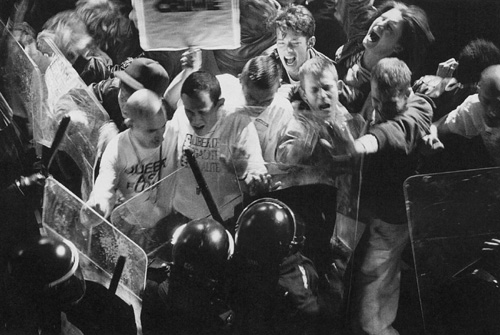
The gay rights scene at the time was radical and activist and there were no campaign groups engaging both gay men and lesbians together. Stonewall aimed to create a professional lobbying group that would fight against the discrimination of lesbians, gay men and bisexuals. Dubbed Stonewall to signal doggedness and to commemorate the New York riots in which gay protestors had fought back against police brutality two decades before, it called for full legal rights, which still seemed a loony-left pipe dream.

Stonewall’s moderate tone attracted criticism from more radical veterans of the gay rights movement, but also lent its advocates greater media respectability and a hearing from government ministers.

Since its inception, Stonewall has led the way with an impressive number of reforms, pressing ministers and taking test cases to court. These reforms include the repeal of Section 28, equalising the age of consent, permitting civil partnerships and overturning the ban on gays in the military. Another legacy has been to allow gay and lesbian politicians into the mainstream – not just demanding equal rights, but as representatives of the wider community.

You can listen again to the discussion- here.

I remember the time in the 80’s when Stonewall were starting to be listened to by the media. I was part of a Christian community who were at best uncomfortable with homosexuality- and at worst rabidly condemning and judgemental towards anyone who ‘came out. Even the most liberal of us who were uncomfortable with the hard doctrine, would have thought that homosexuality was just plain WRONG. Unbiblical. Against the laws of God. Sin.

Listening now to what the protestors were subjected to- I am ashamed.

Why were Christians not standing in the streets alongside these brave campaigners?

Because no matter what your theology, our greatest call is not to condemn people for their private sin, but to stand with the oppressed and the marginalised.

Isn’t it?

Listen to the programme, and I invite you to imagine twenty thirty years into the future, and wonder what people of faith will make of this matter then. Ask how this will compare with other civil rights battles fought in the 20th Century…

‘Road to recovery’, and ‘spiritual capital’….

BEWARE- this is quite a long post, but please bear with me dear readers, as I think it deals with rather important stuff… but then I would say that, wouldn’t I?

recovery

Powerful image from here.

I love it when you come across something unexpected that reeks of the Kingdom of God…

I spent all day yesterday at a development day and Annual General Meeting for the Cowal Council on Alcohol and Drugs. I am one of the volunteer directors of this company, who provide counselling and support for people with addictions in this area. I am proud to be part of the organisation, which like all such voluntary sector small companies has had some challenging times.

At present, I think it is a good healthy place to work, and brings genuine help to people who suffer from addiction to drugs and alcohol in our area. Our area (the west of Scotland) has seen too many lives cut short and families devastated by addiction. But there are many people who we are not able to help- and the purpose of yesterday was to try to consider how we might set our agenda for next year to do better.

I was part of a discussion yesterday about the concept of ‘recovery’.

Recovery is a word that I am very familiar with from the point of view of mental health services- in this context, it is life giving and hope enhancing. Check out the Rethink website, or the Scottish Recovery Network site. I seriously think that any Christians interested in seeing the words of of Isaiah 61 made real in our time should become familiar with what is happening in the area of Recovery- a lot of the sites are full of personal stories that make you weep. Chains are breaking, and we people of faith ought to celebrate and support as much as we can.

Until recently I was not aware of how much the concepts of recovery are starting to cross over into the the field of addiction.

This is an excerpt from a recent Scottish Government document called ‘The road to recovery‘, which specifically addresses addiction to drugs-

81. What do we mean by recovery? We mean a process through which an individual is enabled to move on from their problem drug use, towards a drug-free life as an active and contributing member of society. Furthermore, it incorporates the principle that recovery is most effective when service users’ needs and aspirations are placed at the centre of their care and treatment. In short, an aspirational, person-centred process.

82. In practice, recovery will mean different things at different times to each individual person with problem drug use. Above all, people aspiring to milestones in recovery must have the confidence that they can achieve their personal goals. For an individual, ‘the road to recovery’ might mean developing the skills to prevent relapse into further illegal drug taking, rebuilding broken relationships or forging new ones, actively engaging in meaningful activities and taking steps to build a home and provide for themselves and their families. Milestones could be as simple as gaining weight, re-establishing relationships with friends, or building self-esteem. What is key is that recovery is sustained.

83. Recovery as an achievable goal is a concept pioneered in recent years with great success in the field of mental health. The Scottish Recovery Network has been raising awareness of the fact that people can and do recover from even the most serious and long-term mental ill-health. 32

84. The strength of the recovery principle is that it can bring about a shift in thinking – a change in attitude both by service providers and by the individual with the drug problem. There is no right or wrong way to recover. Recovery is about helping an individual achieve their full potential – with the ultimate goal being what is important to the individual, rather than the means by which it is achieved.

‘Recovery’ is essentially a collection of grass roots movements growing out dissatisfaction by users of services who are sick of being ‘done to‘ by professionals, and are looking to break free- not only from the specific difficulties affecting their lives, but also from the industry and economy generated by medical, social and political attempt to ‘cure’ them. The fact that recovery is now forming a part of government documents is both a triumph and a threat. It is a threat because there is a real danger that the word becomes just a word. It stops to carry any passion, or any hope…

But back to our discussion yesterday.

One of the things evident to anyone seeking to discuss the possibility of recovery with people who have been forced beyond the edges of society by addiction, mental illness or stigma and discrimination, is that there can be no recovery without mental wellbeing, and there can be no mental wellbeing without real opportunities to build friendships, find meaningful activities and participate in our towns and communities as both recipients and a contributors.

I have blogged several times about the idea of Kanyini, and how the loss of identity, purpose and spirituality amongst Aboriginal people has led to a loss of their very selves. Anyone who has spent any time amongst people with addictions (who have may also have lost everything) will resonate with Kanyini. Bob Randall speaks movingly of how his own people have fallen into addiction, isolation and mental illness…

There was a discussion yesterday about how we might be able to encourage these things in our organisation, and more importantly, our community-

  1. Recovery capital– how do we give power and control back to people who use our services, and provide change opportunities, not ‘slots for treatment’?
  2. Social capital– how do people find meaningful social connections, from a position where trust and opportunities have all but disappeared?
  3. Spiritual capital- this gave some pause for thought, so more on this one below!

What is ‘Spiritual capital’? I suppose this rather depends on your definition of spirituality- but lets not get into that just now. In this context, I think Spiritual capital refers to MEANING. The meaning on life, the meaning of love, the meaning of small stuff, and the biggest stuff.

Most of us do not need to dig into this too much- we have no time, and the scaffolding around our lives- jobs, marriages, mortgages, etc- means that we are insulated from the biggest questions. But people who have none of this scaffolding and have reached the end of all their coping, even the bottom of the bottle- these people have a whole different place to look at spirituality from.

Interestingly, the discussion in one of the other groups seemed to get into RELIGION. There are some Christian organisations involved in addictions work. Some of them use high octane charismatic deliverance kind of stuff- which to be honest, I kind of find slightly disturbing. But then again, if it is meaningful and helpful to people involved, great. My fear is that one addiction is replaced by another on, called GOD- and this can indeed be a dangerous addiction for some…

But I wonder if Spiritual capital can be seen more commonly in encouraging people to consider things relating to the heart of who we are, rather than the material stuff that we surround ourselves with…

And in this, I think people who have suffered addiction, or experienced mental health problems, have much to teach the rest of us…

As for me, it started me thinking about a writing project, and I had a great conversation about the possibility of a ‘recovery cafe’ with my mate Ali…

Marcello makes a splash…

Followers of this blog might remember Marcel, who lived in our annex for a while, whilst on a placement with local artist Ronnie Ford. This is one of his pieces, titled ‘tree of life’.

marcel4

Marcel is a talented artist, who often uses Graffiti as a medium, and he is starting to do well- with exhibitions on several continents. He did a piece called ‘Hope’ on one of the walls of our house- you can see it here.

He has his own website now- check out some of his work.

Ronnie Ford has a new project which I will enjoy watching unfold, called the ‘Vibrant Art Movement’- which is Ronnie’s way of supporting and encouraging young emerging talent like Marcel. May it prosper and thrive…

The NHS and my little girl…

IMGP6134

Emily has been poorly.

After severe abdominal pain, she was admitted to Inverclyde hospital with suspected appendicitis. We spent two days in hospital- Michaela stayed over the first night, and me the second- we are home.

Thanks to all of you who enquired, prayed, sent best wishes, and just generally care for us…

The news is that it was not appendicitis, but was a burst cyst, which needed key hole surgery to clean up.

And like most of us who find ourselves needing the services of the National Health Service- I am so grateful. The nurse and Doctors (particularly the surgeon) were great.

And Emily is stretched out on the sofa- on the mend.

BBC iPlayer – The Scots: Natural Born Sinners

Just watched this great little film on the i-player- all about the relationship between Calvinism and the Scottish psyche.

It is played for laughs, but had some great theology thrown in there too.

Enjoy it here (for the next few days at least.)

Vodpod videos no longer available.

Reading to understand the other…

This summer I have been reading some literature in an attempt to combine my leisure time with an understanding of Islamic cultures far removed from my own experience.

I am not sure I picked the right source material.

Firstly I read this book.

a thousand splendid suns

I enjoyed the Kite Runner previously, which dealt with a similar period in the history of Afghanistan- but from a very different perspective. This book is beautifully written, with characters that draw you in, and stories that make you sad and glad.

Next I read this book.

the septembers of shiraz

It tells the story of an Iranian family at the end of the Shah’s rule in Iran, and of the Islamic revolution, and the subsequent persecution of the countries rich elite.

Both tell their stories well. The cultures and traditions of their countries felt vibrant and real. I felt the loss of something wonderful as the stories described the rise of religious intolerance that swept away and suppressed older traditions.

Typified perhaps by the blowing up of the Buddhas of Bamyan.

Both engage with the circumstances that resulted in the rise to power of the Extremists- the involvement of foreign powers, the cycles of violence and civil war. The ungrace that hardens peoples hearts towards unyeilding doctrines and bitter prescriptions for their enforcement.

But I wonder a little about both of these novels- written by naturalised Americans, who arrived in the USA as refugees fleeing from homelands. Their novels reflected both their own personal history, and the dominant perspectives and ideologies of their chosen countries.

So the bad guys were really bad- and were mostly Islamic extremists.

And the survivors fled towards democracy, enlightenment and freedom- in the West.

Accepting that many have indeed made this journey, including the authors themselves, I still wonder at the easy distinctions being made. And how the market in the USA is hungry for these stories, but blind to others.

I can not help but think that there are other stories being told. And eventually we will hear them too- not necessarily contradictory ones, but rather ones that complete a picture. Lives lived facing a different direction. Thriving whilst others suffer.

Like we do.

Hosseini’s title comes from a poem by the 17th Century Persian poet Saib-e-Tabrizi. Read it and feel the humanity that flows too in the blood of the other. Hold in your mind the TV picture of broken and battered Kabul, under a cloud of dust thrown up by tank tracks…

Kabul

Ah! How beautiful is Kabul encircled by her arid mountains
And Rose, of the trails of thorns she envies
Her gusts of powdered soil, slightly sting my eyes
But I love her, for knowing and loving are born of this same dust

My song exhalts her dazzling tulips
And at the beauty of her trees, I blush
How sparkling the water flows from Pul-I Bastaan!
May Allah protect such beauty from the evil eye of man!

Khizr chose the path to Kabul in order to reach Paradise
For her mountains brought him close to the delights of heaven
From the fort with sprawling walls, A Dragon of protection
Each stone is there more precious than the treasure of Shayagan

Every street of Kabul is enthralling to the eye
Through the bazaars, caravans of Egypt pass
One could not count the moons that shimmer on her roofs
And the thousand splendid suns that hide behind her walls

Her laughter of mornings has the gaiety of flowers
Her nights of darkness, the reflections of lustrous hair
Her melodious nightingales, with passion sing their songs
Ardent tunes, as leaves enflamed, cascading from their throats

And I, I sing in the gardens of Jahanara, of Sharbara
And even the trumpets of heaven envy their green pastures

Choose life…

choose life

Today I attended the annual Choose Life conference at Stonefield Castle.

Choose life is an organisation working to reduce the numbers of people who die through suicide in Scotland. In 2004, 803 people died through suicide in Scotland.

My mind was constantly filled with memories of my friend Neil who died in 2007. The tragedy of the end of his life and the grief and pain and loss his passing left behind has been one of the most significant events of my adult life. Sheila- may life continue to grow anew for you and the kids, and may you know that you are loved…

The conference today was creative and engaging- dance, film, poetry and discussion.

And I wrote this- changing a poem I had written already…

Sanctuary

Find for me a dark place

For at the moment, I can bear no light

Find for me a silent place

Because your words lie empty

And hollow moments echo

With their passing

Find for me a place to be

So that I may drag out the distant memory

The possibility

Of me