We live in a seemingly perpetual Advent. Not just because of all the early Christmas decorating, but because we are all still waiting; for vaccines, for ‘normality’, for release, for and end to isolation and for the possibility of touch. Strange then that the actual season of Advent is now fully upon us.
I find myself remembering an old project, birthed by Si Smith, called ‘We who still wait’. It was a collaboration of photography (Steve Broadway), meditations (Ian Adams) and my poetry. (It is still available, here.)
I wrote the poems quickly, over a short period of time. Some felt ‘forced’, others arrived with tears, which may seem strange to some, until you realise that poetry is essentially about opening a vein and what comes out can be unexpected and overwhelming. Writing these poems forced me to fully engage not only with my own fragility, but also with those aspects of faith that still remain. Sometimes it seemed as if faith had been removed along with my religion, but at other times entirely the reverse, that only through losing religion was it possible to rediscover something deeper and more true.
Anyway, I offer you one of the poems from ‘We who still wait”. It says as much as I can say today.
.
Open the sky
.
Open the sky and let some light in
Let this night be night no longer
Let stars shine down in shafts of love
Illuminating ordinary things
All down with dirt and common use
.
Let donkeys laugh out loud
For even basest things
Are silvered up with grace
Lubricated in kindness
He is coming
.
Not to penthouses, to plump up cushions of comfort
Not to stroke the fragile ego of celebrity
Not to strengthen the hands of the powerful
Or expand their empty empires
.
Not to shape new cathedrals from seductive certainty
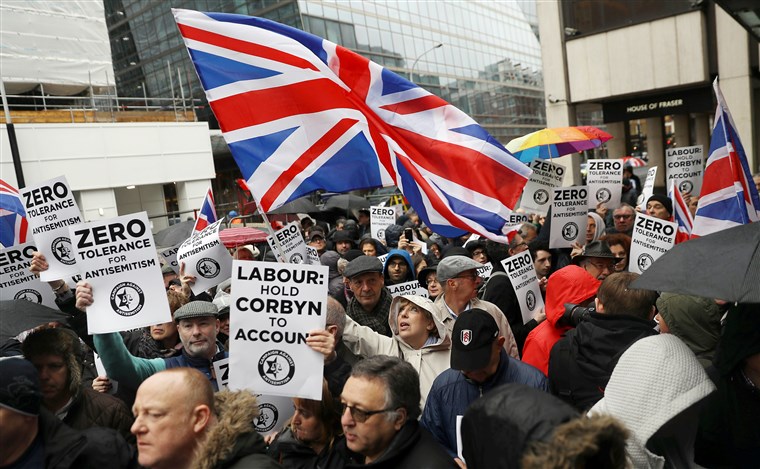
We live in polarised times. Populism has taken over politics and sold us simplified solutions to complex human problems. Brexit will either make Britain great again or destroy our economy. Trump has been and has not quite gone. On the British left, Corbyn rode a moderate wave of populism too for a while, before he fell/was pushed off.
The engine for this populism seems to have different parts; the rise of mass consciousness driven by manipulateable social media feeds; disenfranchisement and dissaffection with traditional politics; economic anxieties and austerity. We can also mix in with this the fact that much of the mainstream media is the the pocket of moguls with their own, mostly right wing agendas, despite Trump’s accusations of left wing bias. I suppose the fact is that politics in our (and America’s) first-past-the-post systems is always first about winning, and if this can be achieved via a populist illusion then so be it. Worry about the cost to integrity later…
Perhaps we are all tribal at heart. This seems to be one of the uncivilised persistant character traits of the social animal that we evolved from- the skew towards indentification with me and mine, to the detriment of you and yours. Politics at its worst feeds this instinct and left unchecked it is such a force for destruction. It is killing hundreds of refugees as we speak for instance. But even if I must acknowledge my own tribal prejudices, I re-joined the Labour party not because I wanted to ‘belong’ to anything, but because I am passionate about progressive change. I have seen close at hand what austerity and social injustice can do to both the winners and the losers and long for a politics of careful kindness in which we judge our success not on the extreme wealth of a few but the wellbeing of those most vulnerable. In this context, the purpose of a political party is to decide on a set of principles, then argue about the best way to put these into action. Oh- then how to sell these actions to the wider public who might or might not vote for them.
The other reason I re-joined the party was because of Jeremy Corbyn. I make no apologies about this, because even though he has become a polarising figure, the values that he represents are ones that I recognise. My late sister and I had many long discussions about how he represented, for us, a kind of politics that lit us up when we were young- a very British kind of democratic socialism in which the role of state is to mediate between the power of capital and the welfare of its citizens. He was regularly accused of ‘looking backwards’ and wanting to ‘return to the 1970’s’ but this misunderstands the Corbyn project entirely. The reason why Labour Party membership is more than all the other parties combined is because young people responded in droves to the idea of social change for the better.
But we are all having to examine the Corbyn era in the light of two major failings under his leadership.
The first was one of leadership itself. Initially I wondered whether he could find a way to lead in a different way; a more collegiate way. Could the party escape from Blairite neoliberalism through debate and aninflux of new ideas? It seemed possible for a while. But Corbyn, despite his fine record of being on the right side of so many issues (not least his long opposition to the dreadful Iraq war) was perhaps always more comfortable on the outside, marching with the protestors, than leading consensus. He had vast and well resourced forces against him but seemed also prone to shoot at his own feet regularly.
The second (and related to the first) is the issue of antisemitism. I wrote a long post for this blog about the Equalities and Human Rights Commission enquiry, but I never posted it because I simply did not feel that I could comment on the degree to which a minority group that I do not belong to should or should not feel aggrieved. I read it in full, trying hard to understand what had gone wrong and how a man whose whole life seemed to have been lived in opposition of racism in all it’s forms could have become forever associated with antisemitism. After reading the report, I do not necessary feel a lot wiser, but what is clear is that Corbyn was never able to reframe the story once it had been told.
Perhaps in part, he was also the victim of his own principles. Bear with me. Do you remember the raging arguments over whether the party should adopt the International Holocaust Remembrance Alliance’s definition of antisemitism? The fact that Corbyn was seen to be dithering and seeking to clarify the definition, then to adopt some of it but not all of it played entirely into the hands of those who portrayed him as antisemitic. To anyone who had actually read the defintion however, and tried to weigh the implications of some of the ‘examples’ given (as I did) Corbyn had a point. Don’t forget that there had been a real push from some Israeli quarters to equate antisemitism with criticism of the state of Israel. Corbyn had spent decades arguing (entirely correctly) for the rights of Palestinians, highlighting the on-going breaches of international law perpetrated by the State of Israel. The IHCR definition has been criticised all over the world- consider for example the debate in Canada, which can be read here.
But the fact is that even if Corbyn’s reasons for objecting to the IHCR definition arose from a decent principle, something about him, combined with the forces seeking to oppose him, meant that he was unable to communicate the complexities of his position. Worse than this, the infighting that rumbled on in the party meant that investigations into antisemitism were never free of politics and clumsy attempts to ‘manage’ them from the centre.
Why then, in the light of all this and what has happened to Corbyn since am I still a member of the party? Because I politics is not the point of politics. Politics is about an investment in hopeful change. The Labour party, in populist mode or in the rather more prosaic and lukewarm Starmer mode has always been about shaping policies of liberation and despite the many times when things have gone wrong, how else do we achieve change, if not through seeking to contrbute to the ideas that lead to that change being operationalised?
Like Corbyn, I have always been an outsider. I too have my blind spots arising from my own character flaws. I have been thrust into leadership roles for which I have been only, at best, partially equipped to manage. Like Corbyn, the principles that run through me are too important to ignore.
But also, perhaps like Corbyn, I have to be open to criticism and correction from those whose views, both within and outside the Party, diverge from my own. I have to recognise that progressive voices arise in unexpected places. I also have to acknowledge that any movement needs Starmers as well as Corbyns.
An ancient hymn book, full of messages celebrating privilege. Celebrating a relationship with God who is on OUR side. The one who will kick ass on our behalf.
Of course, there is so much more than that in this wonderful ancient poetry – lament, hope, beauty, thankfulness, stillnes – but on one level, they were written as Israel-first propganda.
The danger is that we adopt them as a personal me-first version of the same.
Consider the most famous of them all, psalm 22. We wheel it out when we need it, like some kind of holy comfort blanket. It is beautiful, full of hope and assurance, offering us the hope of God on our side. I read it over and over this week because I am preparing to lead the funeral of a dear friend of ours.
We will desperately need psalm 22.
Beyond this, I found myself wondering what else this psalm had to say to me right now, and wrote this poem.
It featured Samuel L Jackson, an underwater archaelogy team, and some historians shining light on the international slave trade, both here in the UK and in the wider world.
They visited forts on the coast of Africa where slaves were gathered ready for export, and marvelled at the fact that in the centre of the courtyard was a large church.
One story stuck with me, of how the purpose-designed slave ships, carrying men women and children that had been forcibly torn from their homelands, were brought up on deck to excercise. This was not done for humanitarian reasons, but to reduce the numbers who died en route and to make sure that the price they would fetch in the markets they were heading towards was high because they would be in better condition. It was about stock management.
However, it then takes another dark turn. When they were brought on to deck, they were made to dance.
.
Merchandise
.
Once upon a time, people were bought and sold like lawnmowers,
Or second-hand Hondas. Enterprising Christian young men sought their
Fortunes in foreign fields, chasing white ivory or black bodies, both of
Which were worth the trouble because (back then) acquisition
Was a moral imperative. After all, elephants and black people were
Dumb beasts, whose misfortune was to have economic value elsewhere.
It was dirty business, sawing tusks and chaining black children
So small wonder our heroes took carnal comfort between the unwilling
Legs of black women. They were men of science, designing fine ships that ensured
Their valuable assets were always transported efficiently
Every inch stacked and shackled but because our men were not monsters
They knew good management of stock meant value must be preserved and wastage
Minimised so each day the enslaved were pulled out on deck and made to
Apart from the fact that Trump is us. An extreme version of us, perhaps. The Hyper-us. He makes a virtue out of anger and malevolence. In Trump world, forgiveness is weakness and weakness is for losers.
Non of us are immune from this thinking, both in relation to others and even towards ourselves. It is so much easier to feel outrage and anger when faced with opposition and percieved injustice.
Or we could choose to forgive, no matter how hard this may be, and see where this takes us.
Grappling with the news of the death of an old friend. A long life, well lived with much love. Rest in peace, and may those left behind hold some of you for ever.
(A juvenile whale has washed up on the Cowal shoreline- thought to be one of a group of three that have been in the upper Clyde estuary for weeks. The animal was emaciated and out of place.)
Carcass
.
In the pre-dawn premonition
Before even half-light
A whisper of wings overhead
Felt, not seen (leaving me to wonder
Whether birds-eye views might help
Or hinder) Then a dark shape in the shallows, half
Submerged. Bulk no longer moving
With the waters, A hidden fluke flat to the sand
Like a lost cutlass
.
Incarnate no more
Just a carcass
.
In case we ever doubt that beasts feel grief
The parents swim in circles in the bay
And whilst we should avoid all anthropomorphic platitudes
I fear they are feeling guilt, as if that sonar shock which