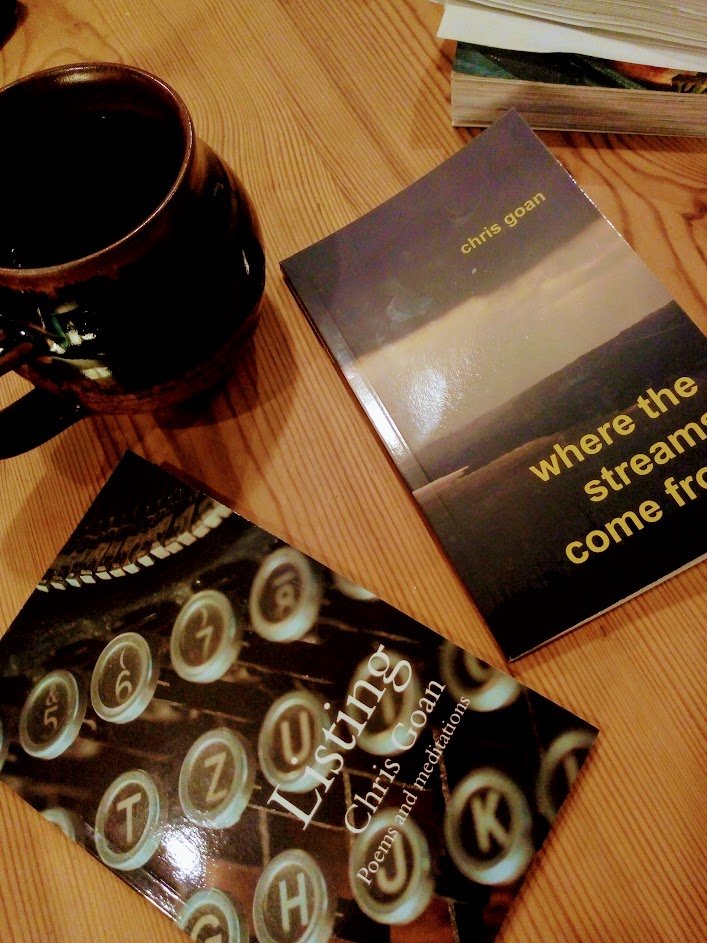
Over at Seatree, we have had some more copies of Chris’s books printed for direct sales. This meant another print run, and as ever, we got a couple of proofs printed to check before the larger run… all of which means that we have proof copies of ‘Listing’ and ‘Where the streams come from’ up for grabs. FOR FREE! We will even pay postage.
(One book has a couple of typos, but if you are anything like Chris, you will never notice them!)
To enter our little free draw, all you have to do is to visit our facebook page and post a comment in the giveaway post. Perhaps tell us your favourite poem (even if it is not one of Chris’s!) or even post a few lines of your own?
(If you are not on FB, drop us a line and we will enter you anyway!)
We’ll feed your name into our magic randomiser, then contact the winners directly.
Meanwhile, here is a newish poem, as yet unpublished, to whet your poetic whistles;
…
Bookshop
Written in ‘Bookpoint, for ‘National poetry day’ 2018
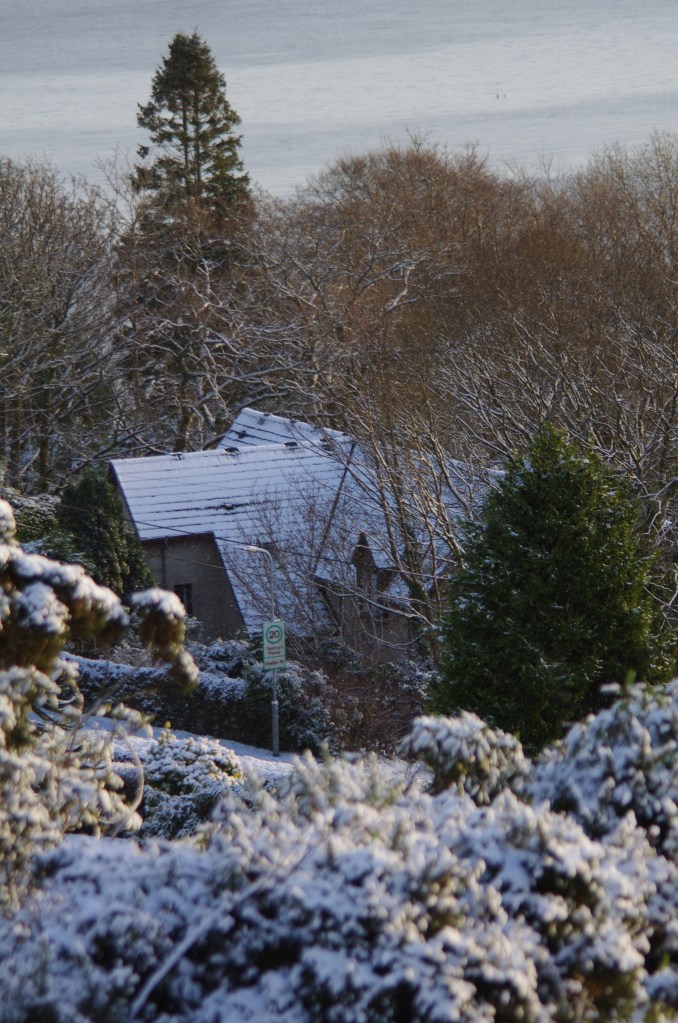
We live in a very beautiful place. Familiarity breeds a certain level of complacency, but I only have to leave our little corner for a few days and I find myself missing it. Specifically, I miss the quiet shelter of the oak trees, through we glimpse the water in summer but whose branches become frames for silver light as soon as autumn fades.
Little moments hit me like blessings. The red squirrels that dance along the finest tracery. The mixed blessing of deer munching in the bushes. The stars who have no competition. These blessings seem totally undeserved. Even allowing for the fact that reality is always so much more nuanced than a view from distance, we seem to be living out a kind of middle-class fantasy that is simply unavailable and unatainable to most. How did we end up here?
I suppose part of the answer is that we decided that we wanted to live more simply, with less impact on the planet, and with more connection to the earth, which is why I find videos like this so inspiring;
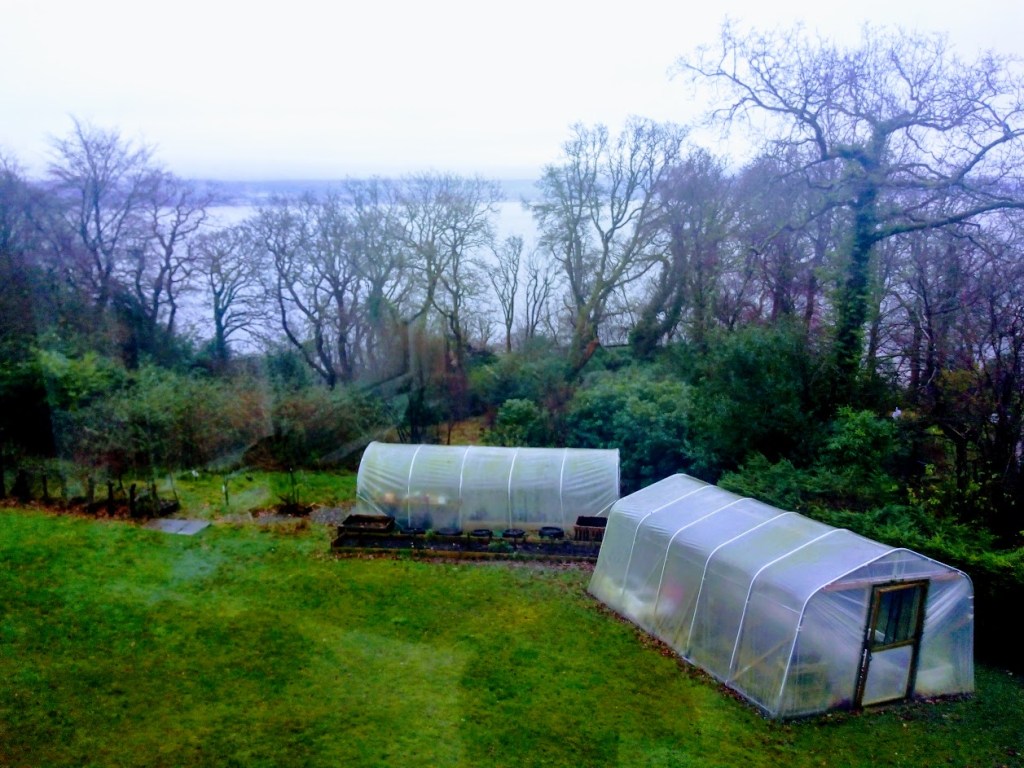
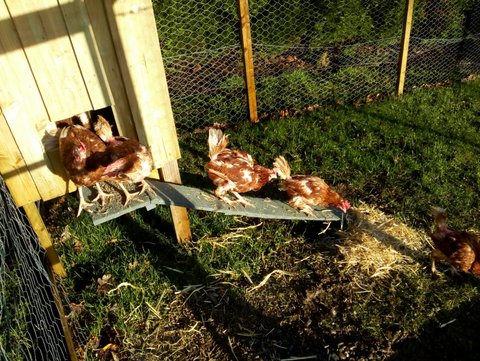
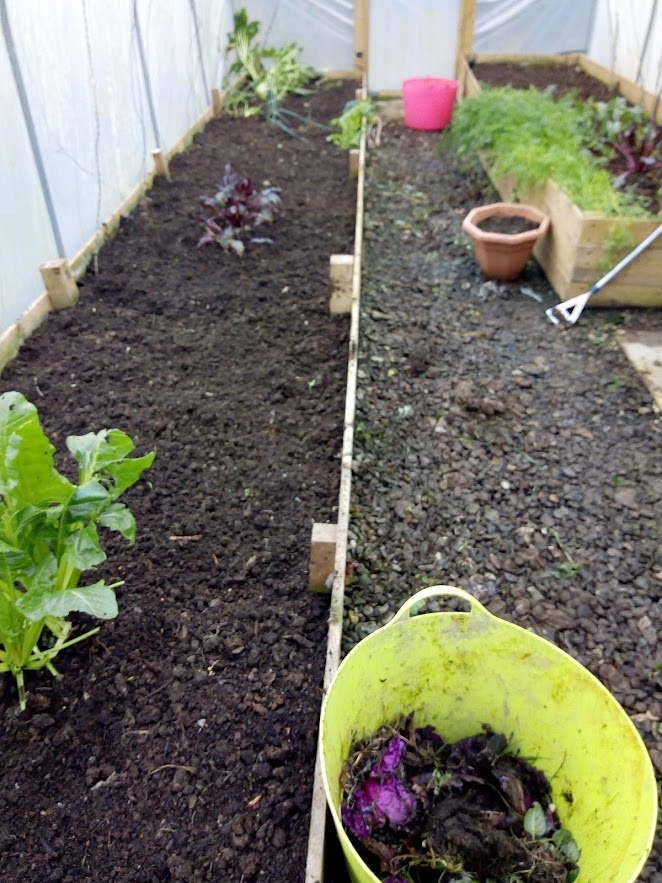
Since we moved here three years ago, we have done very little to the inside of the house (although this might be about to change) but we have done lots to the outside;
New chicken run
Poly tunnels x2
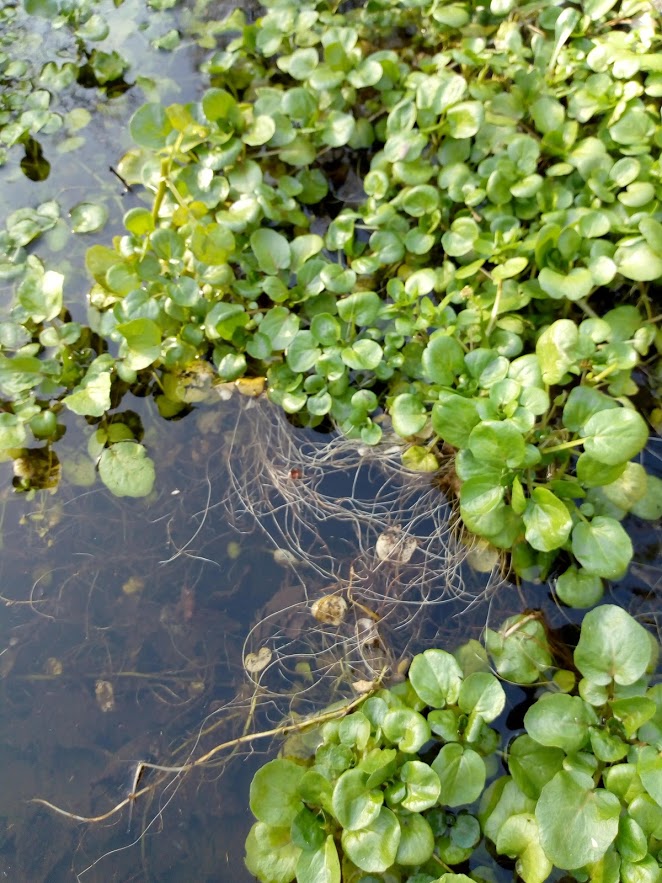
dammed a stream to make a water cress pond.
We have also cleared massive amounts of buddlea and huge overgrown Leylandii hedges, and have planted about 20 fruit trees, 5 oak trees and 50 silver birch trees.
I have built some outdoor raised beds (the climate is so wet here that we need to improve drainage) but we need more of these, and they need a fence to keep the deer away from them.
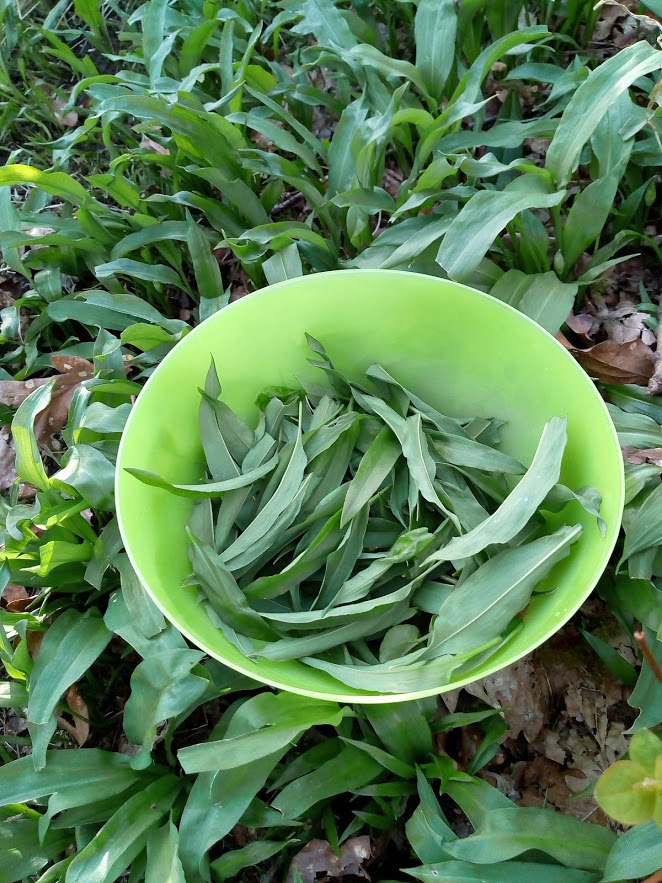
What really interests me is how we can use a small (ish) parcel of land to produce significant amounts of food. Part of this is about recognising what is already there. Some of this is obvious, like the wild garlic.
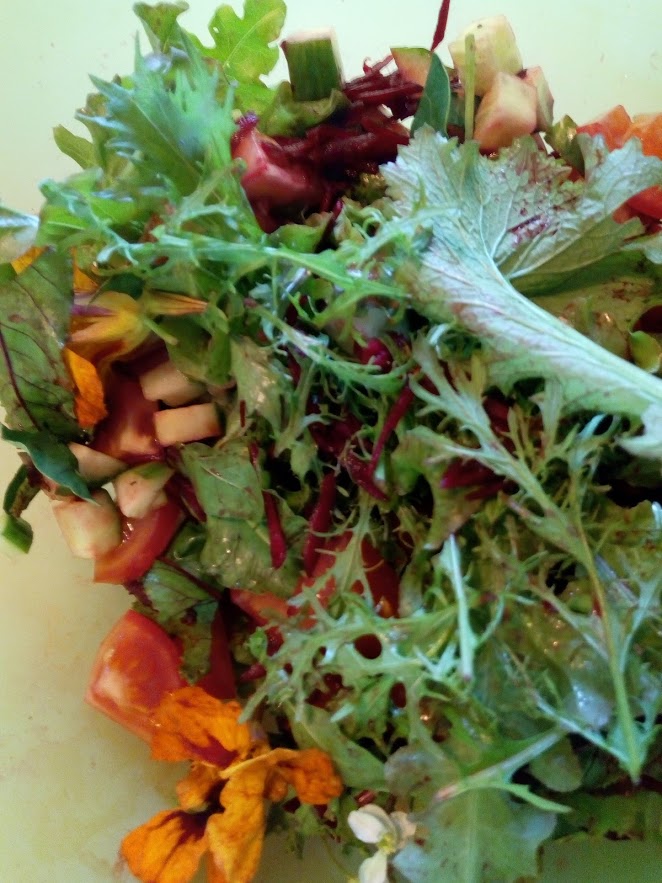
We have also tapped birch trees for sap, used many flowers and plants in salads and picked berries and crab apples.
The next step is to start introducing more edible plants into our forest garden. I tried to plant Wild Mustard, but this does not seem to have survived, and the tea plants are looking rather ropey (more eperimenting to be done with different plants here.)
I have no confidence in my mushroom and funghi collecting skills, but have decided to sow my own spores so I can be sure what I am getting- so we have some oyster mushroom spores for next season.
We have a long way to go, but watching videos like the one above makes me think that what we are aiming for is entirely possible.
Two things occur to me as I write this.
1.We reap not only what we sow, but also much that has been given to us by grace.
2. We live the life we decide to live, even if by default.
In the spring. In partnership with Wild at Art, I am leading a group of people on a poetry retreat. You can read more about it here.
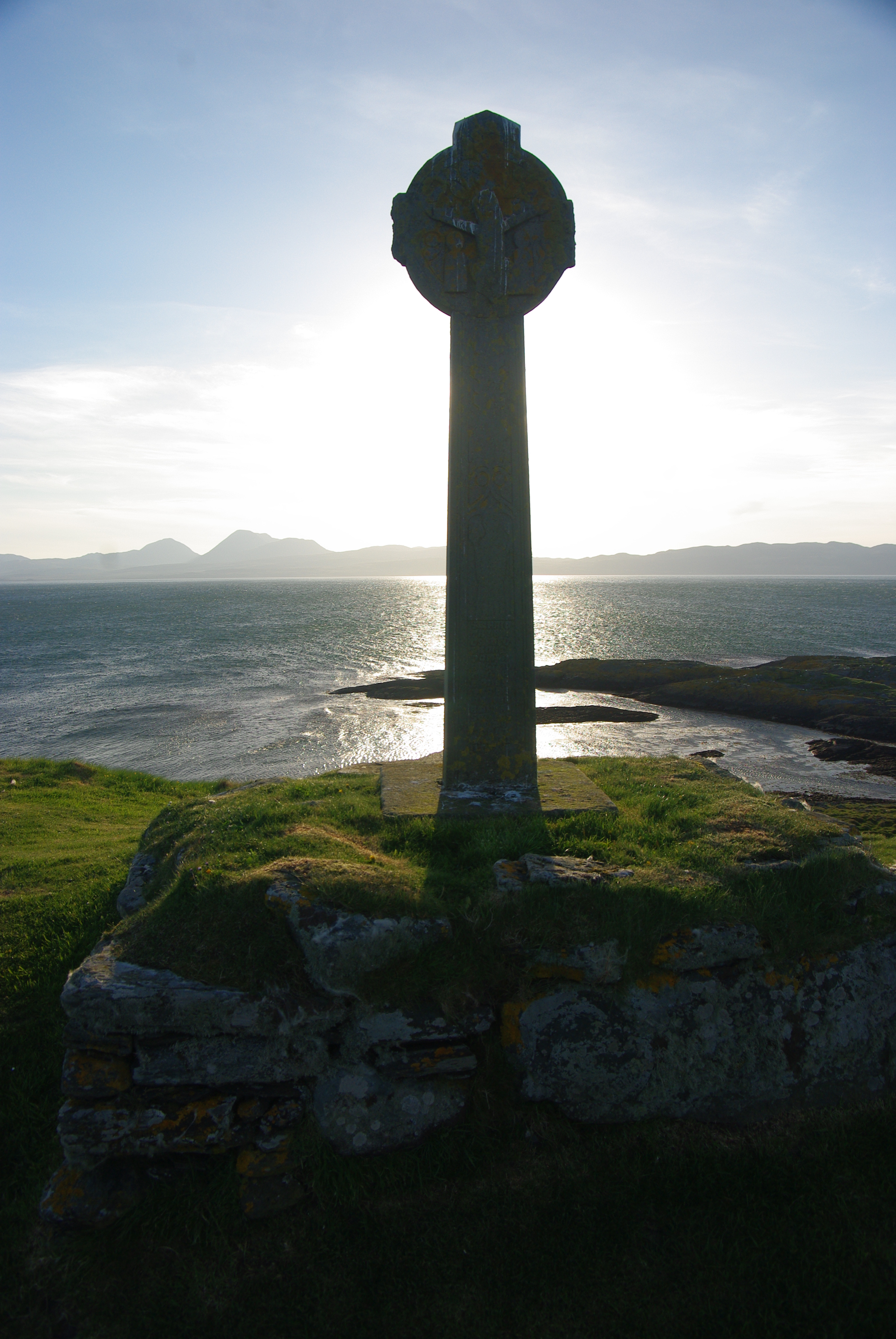
This retreat will use a familliar format to ones that I have led before. To spend time in the wild beauty of an uninhabited deserted island in spring is a truly magnificent experience, but retreats are much more than tourism. They are about delberately going deeper, beyond the surface of things. If there is a language for this kind of journey, it is poetry.
They say that everything that ever was
Is with us still and that we are all
Connected
Our DNA, or so they say,
Contains some manta ray
Along with pterodactyl
Every leaf and every tree
Grows in you and grows in me
Every fish and every bird
Listens close to our every word
For everything belongs to everything
And we are all
Connected
It is my intention to read poetry together and to encourage one another to write. We will have some activities ready that may help, but the island is our main tutor.
This retreat will of course follow a long tradition of pilgrimmage to these islands. It will remember some of our Celtic ancestors, and the journeys they made.
By the way, Ute Amann-Seidel (who set up and runs Wild at Art) was on radio Scotland last week, talking about her other project, Fire and Rain, which grew out of her loss and bereavement. You can find out more about this by following this link.
Dear friends, close and far, may peace be with you. May the world we live in be shaped by kindness, despite all the voices and forces to the contrary. May you know the warmth of love.
Peace be with us
.
In the quiet space between snowflakes
We listen to sad songs, and
Feel the prickle of tears, pushed
By beautiful broken things
Less than half-perceived
But never forgotten
.
In the warm space you made for me
I hide, guilty for those we left outside
Wishing our table was bigger
That every mouth was filled
Every refugee was home
Like we are. Hoping that
.
In the dark space between all those twinkling lights
Last Sunday was our anniversary. 29 years ago, I married a rather wonderful person. I did not know just how wonderful she was back then – my own woundedness made me myopic in that regard – but the time in between has left me in absoutely no doubt.
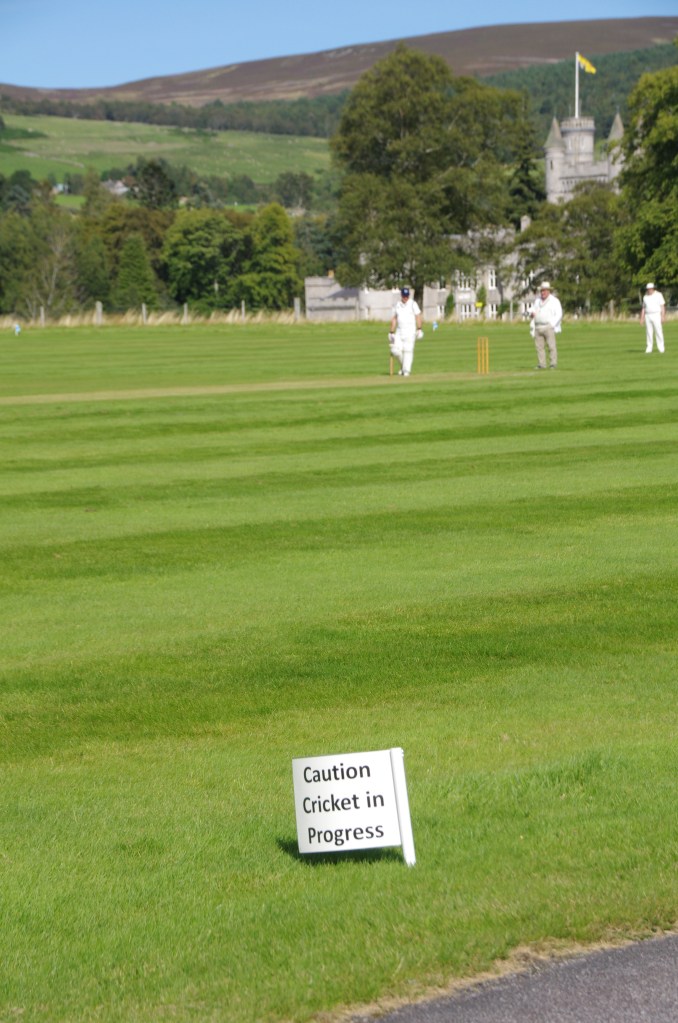
As evidence of this, she was quite happy to let me go and play cricket on our anniversary- choosing to travel up to Balmoral Castle (yes, THAT one, home of the queen, who was in residence. We saw her twice, but she was busy so did not linger, not even for cricket.)
In the light of all this, I think I must now confess. I forgot about our anniversary, resulting in the terrible message that cricket is more important than she.
Before you quite rightfully arrange for my incarceration, or worse, I would say that I had ordered her a present, but had just got confused over dates- a combination of dyslexia and being self employed, both of which can detatch me from the world… but not from Michaela.
We had an adventure together, driving back over the high hills in the gathering dark with less fuel in the tank than we were comfortable with. I could choose no better companion.
A bruised reed will he not break, and a dimly burning wick will he not quench: he will bring forth justice in truth
Isiaiah 42:3
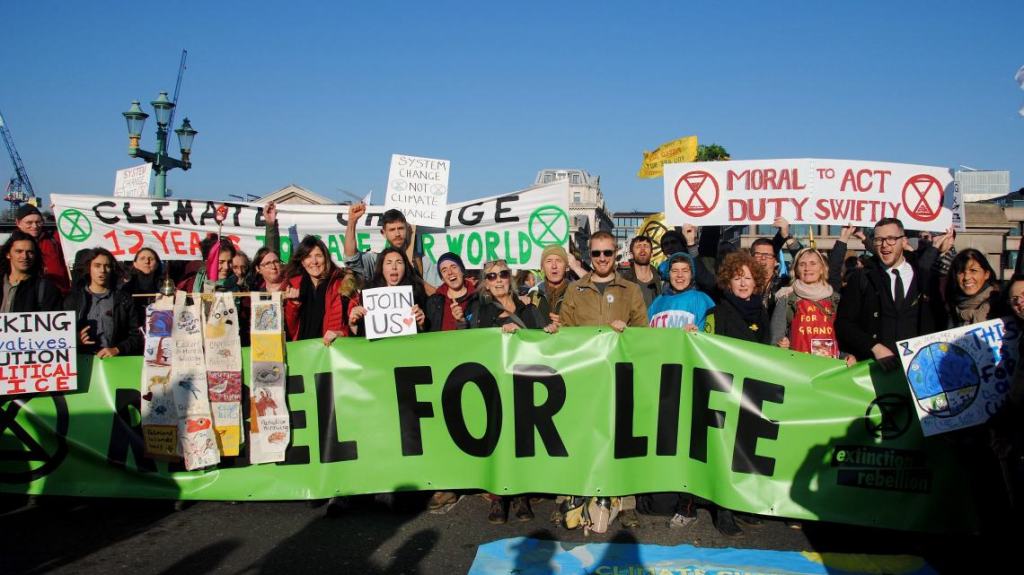
Open your FB feed. Finger your way up and down Twitter. Open any newspaper. What will you see? I guarantee you that bookending all the cat videos and other people’s holiday making the dominant message you will encounter will be this one;
CRISIS.
We will be titillated by a sense of threat and almost-panic, which will leave us nursing a constant, debilitating, border-line anxiety.
I know this because I play that game too. I contrbute to it. I share posts railing against climate change denial and the bloody awful Univeral Credit system in the UK. I do this because what else can I do but piss into the digital wind? At least raising the issues might do some good, right?
Or perhaps not. After all, these posts almost certainly only reach people who already agree with them. They achieve nothing, change nothing. All they do is stoke the sense of crisis and anxiety.
Perhaps it might be even worse and that this anxiety is debilitating and undermining our ability to actually change anything. After all, there is something about how we consume our social media that then consumes us, rendering us impotent and useless as a force for change. The end result is a feed back loop that traps us, nullifying any energy that might be left for actual activism.
Don’t get me wrong, there are times when we need to declare an emergency, in order to stimulate an emergency response. Real change often requires a crisis to pitch us into action. But when this crisis is framed in a way to make meaningful indiviual response seem impossible, it becomes a problem.
What can we do about it? I think it is time that even an old cynic like me has to start looking for stories of change that can inspre and unite local response. These are the stories that need to clog our FB feed- not just the virtue signalling ‘aren’t I cool’ thing, but in terms of celebrating the things done by others.
There also seems to me to be an impotant mind-shift in challenging what philospher Timothy Morton called Hyperobjects- terms that might represent something real, but are no longer useful terms because they are too big to get into our heads; black holes, the internet and of course global warming. Hyperobjects overwhelm us and render us powerless before them, like the approach of juggernauts. We have to find ways to break down hyperobjects so they become meaningful again.
We have to find ways back to hope.
It is a small thing, but this is one of the reasons I read and write poetry, so here goes again;
We are not helpless here
Thundering juggernauts will shudder to a halt
Inches from our upraised hands
We have made a stand
We are not victims here
Each injustice is remembered, not to avenge
But as the tender wounds of our becoming
Back when we made a stand
We are not broken here
Our bodies embrace their beautiful imperfections
And here, in our many shapes and colours
We make our stand
We are not defeated here There is much to do but we are many, and Whole worlds are reshaped by loving So right here, we will stand
This is the fourth in a series of blog pieces describing the place to which my faith journey has taken me. Out of these scattered thoughts, I am constructing a new creed, or rather I should say WE are constructing a new creed because these are not original thoughts. They arise from discussions, books, doubts, hopes and a profound feeling of HOPE for the emergence of a new kind of Christianity.
For each of these posts, I will try to follow the same format;
An introduction.
A look at the old paradigm.
A look at the new.
Finally, a ‘statement of faith’
There is a long tradition of apologetics in Western theology, which is the religious discipline of defending religious doctrines through systematic argumentation and discourse- as if it might be possible to cancel out any doubt or heresy by a convincing debate. That is not my point here. I have no interest in defending one narrow definition of faith because I think that this might miss the point of faith entirely. Let me say more.
What if the point of the faith that grew amongst those who called themselves followers of Jesus was NEVER about the defintion and codification of correct belief?
What if the point of faith was only ever the degree to which it set us free to live lives of love and service?
What if the depth of our spirituality is measured not in terms of the clarity and depth of our personal knowledge and enlightenment (despite all of the lovely ego rewards that would surely bring) but rather by the way that spirituality works out in our actions.
To put it another way, love is verb, describing an action. It is not an abstract concept that can be detatched from the messy business of shared humanity. Love has relevance for everything we do or say, or it has no relevance at all.
Or I could put it this way; Christian faith, divorced from active, engaged, sacrificial love has almost certainly lost it’s way.
…a watered-down faith that portrays God as a “divine therapist” whose chief goal is to boost people’s self-esteem.
It is religion reduced to ‘feeling good’ and ‘personal success’; faith that fits neatly into a lifestyle that values most the attainment of a life full of ‘me’ experiences, ‘me’ relationships. God is employed as a talisman, or a life coach for our attainment and to develop our consuming power. Casey suggests that it is this kind of faith that American teenagers are learning from church and from the Christian families that they grow up in.
Does it sound familliar? If we look below the surface of our own experience of Christianity in the UK, might an impartial observer not draw similar conclusions? But then this too is incomplete. There are many examples of people whose faith has driven them to acts of radical engagement; people who have placed themselves alongside the most needy, or made them seek careers of service.
Nevertheless, it is a constant matter of amazement to me that a religion that grew from followers of the poverty stricken prophet who gave the Sermon on the Mount could co-exist so comfortably with imperialism and capitalism- not just in the sense of religion turning a blind eye, but rather in providing the very philospohical and spiritual underpinnings for both. It is this that seems incredible. How ever did it come to this? It is as if Christianity has be co-opted to act as justification for a thousand acts of conquest and consumption; even genocides.
Take slavery as a case in point, and remember how the words of the Bible were used to justify the fact that black slaves working in cotton fields or sugar plantations were doing so because of the will of God. Author Jonathan Wilson-Hartgrove suggests that this tradition remains strong within American Evangelical Christianity. In his book Reconstructing the Gospel: Finding Freedom from Slaveholder Religion, he describes it like this;
“After the South lost the Civil War, slavery was abolished, but slaveholder religion never went away,” he says. “It never repented. And it is with us still.”
…another pattern of slaveholder religion is to separate personal faith from political engagement. If you’re not going to fight for white hegemony, slaveholder religion would like you to stay focused on personal piety and compassion ministries — to not be “too political.” So we also have to face the silence of white moderates as a vestige of slaveholder religion. It’s not just the Trump defenders who got us here. It’s also all the good Christian people who did nothing when a man who was endorsed by the KKK became a candidate for president.
To return to the question asked at the head of this piece, what is faith for? Despite the important cricitsms above, in my experience growing up in charismatic and evangelical protestantism, the point of our religion was clear. It was to save souls from eternal damnation in hell.All other activities were then measured according to the degree to which they facilliatated this goal.
What happened to us when we had been saved (although I always had trouble believing that I actually was) was never well defined in this evengelical mono-focus. Of course, we knew that we had to save others, but understanding what living a good Christian life looked like was more problematic. What were we to atually do with ourselves?
The world was essentially divided in two- the ‘saved’ and the ‘unsaved’. Salvation was so important that we were taught to be deeply suspicious of eerything from ‘the world’, which had been given over to Satan. This included art, music, science and partiularly other religions which were all deceptions of the devil. Service to the poor and needy was all well and good but unless it resulted in saved souls, it was a distraction.
What was left for Christians to do (when they hd been saved) was something called ‘worship’. We were to tell God how great he is, repeatedly, mostly in the key of G. I got very good at it, spending most of my spare time playing worship music. What else was a good Christian to do? Along with the rest of our faith, our worship reinforced our seperate-ness. It was an exclusive thing that took place in church buildings. We might have talked about seeing God in sunsets and rainbows, but we talked about it in church. Faith was validated and lived out through the public act of worship, and the correct study of the Word of God which was the climactic event of every gatheirng.
It was a faith that often over-employed its activist followers – to the point of absolute burn-out and beyond – in the support of the institution. I have heard it described as an elaborate wedding ceremony in which the same couple get married at the same time each and every Sunday. We did this because we thought it was a good thing to do. WE thought it served God. We thought it was the only way to live out our Chrsitian lives, short of going off into ‘the mission field’, which was only for a hallowed few.
Perhaps some of you will think this harsh. Perhaps you are right. Churches up and down the land are running food banks, night shelters, AA meetings, debt counselling, mother and toddler groups, even inter-faith dialogue meetings.
Things are never that simple; there is not good and bad, rather there are varying degrees of both/and. God was always willing to work with us in our incompleteness and imperfection- whilst drawing us forward into new encounter. I can testify to my personal similtaneous experience of both.
But Jesus never told us to worship him, he told us to FOLLOW him
Think about that for a moment. Can it be true?
As Richard Rohr puts it;
“Christians have preferred to hear something Jesus never said: ‘Worship me.’ Worship of Jesus is rather harmless and risk-free; following Jesus changes everything” (see the full context of the quote here)
The God Jesus incarnates and embodies is not a distant God that must be placated. Jesus’ God is not sitting on some throne demanding worship and throwing down thunderbolts like Zeus. Jesus never said, “Worship me”; he said, “Follow me.” He asks us to imitate him in his own journey of full incarnation. To do so, he gives us the two great commandments: 1) Love God with your whole heart, soul, mind, and strength and 2) Love your neighbor as yourself (Mark 12:28-31, Luke 10:25-28). In the parable of the Good Samaritan, Jesus shows us that our “neighbor” even includes our “enemy” (Luke 10:29-37).
So how do we love God? Most of us seem to have concluded we love God by attending church services. For some reason, we thought that made God happy. I’m not sure why. That idea probably has more to do with clergy job security! Jesus never talked about attending services, although church can be a good container to start with, and we do tend to become like the folks we hang out with. The prophets often portray God’s disdain for self-serving church services. “The sanctuary, the sanctuary, the sanctuary” is all we care about, Jeremiah shouts (7:4). “I hold my nose at your incense. What I want you to do is love the widow and the orphan,” say both Isaiah and Amos (Isaiah 1:11-17, Amos 5:21-24), as do Jeremiah, Hosea, Joel, Micah, and Zechariah in different ways. The prophetic message is absolutely clear, yet we went right back to loving church services instead of Reality. I believe our inability to recognize and love God in what is right in front of us has made us separate religion from our actual lives. There is Sunday morning, and then there is real life.
The only way I know how to teach anyone to love God, and how I myself can love God, is tolove what God loves, which is everything and everyone, including you and including me! “We love because God first loved us” (1 John 4:19). “If we love one another, God remains in us, and [God’s] love is brought to perfection in us” (1 John 4:12). Then we love with an infinite love that can always flow through us. We then are able to love things in their “thisness” as John Duns Scotus says—for themselves and in themselves—and not for what they do for us. (This from here.)
What I (and I think Richard Rohr) am proposing is not that we ‘set worship at war with works’ rather that we do the absolute opposite. We make them the same. They always were the same anyway We just forgot. Faith without action is… utterly pointless.
We forgot that the point of faith was never about our need for personal validation and security. It is not even about inspiring our our own moral correctness. It was certainly never about empire or the conquest of other countries for private profit.
What about all the saving of souls? Those of us brought up in the evangelical tradition will find it almost impossible to concieve of a Christian faith devorced from what we would regard as ‘the Great Commission’. It is our job to convert the world, right?
Or is it? This is something else that many of us have found our thinking undergoing a remarkable transition on. The Great Commission from the end of Matthew’s gospel says absolutely nothing about saving souls from hell. This is what it actually says;
God authorized and commanded me to commission you: Go out and train everyone you meet, far and near, in this way of life, marking them by baptism in the threefold name: Father, Son, and Holy Spirit. Then instruct them in the practice of all I have commanded you. I’ll be with you as you do this, day after day after day, right up to the end of the age.
(The Message)
Who is Jesus talking to here? Certainly to his disciples, probably extendable to us. He was telling them/us that what he had shown them and taught them was the way forward. He had set them free from narrow religion and reminded them that there is a better way, characterised by grace and love. He had planted hope in the gutter and showed us that our focus should always be on the poorest and most needy. He radically included the outsiders and those whose his own society excluded and hopes we will do the sae.
Jesus called this new way of living out life ‘The New Kingdom’. (Yes, the idea of a New Kingdom had other implications too, but we’ll get to these later.) The point of the Great ommission was to send out agents of the new kingdom, not to make converts to a religion called ‘Christianity’. This distinction may seem subtle, but it it not.
My point here is to ask again about this saving-souls-through-getting-them-to-say-the sinners-prayer stuff that many of us grew up with – what if this was a gross distortion of the message of Jesus? What if salvation is here-and-now thing, not just something reserved for the hereafter?
What if salvation is a intended as a kind of reconnection and restoration of the whole world, not just the chosen few?
I would go further still. What if many of the agents of this new kingdom are not ‘Christians’ at all? What if Christ ‘...plays in ten thousand places, lovely in limbs and lovely in eyes not his‘ as the magnificent Hopkins poem would have it?
What if some of those eyes and limbs are attached to people of other faiths, or none? I am afraid I no longer doubt this. Quite simply nothing else makes sense. Wherever love and grace are, there is God because S/he is the source of all love and grace.
What if Christ is another name for everything, so is in fact the world we are sent to love? Surely then it is our job to recognise him and join him there. It is not difficult to imagine that the Living God would be the breath in all living things and the electric spark that holds every atom in tension. It might be even more special than that though because this is where science and faith become one. What if that force that is the breath of all things and the spark that holds atoms in tension and the energy that sent the galaxies expanding outwards in to unimaginable vastness could actually be called by another name?
I think that name is love.
I believe that Christianity, if it is to be a religion at all, must be one that sends out, rather than only gathers in. It must be the place where agents of the kingdom of the living God are inspired, enabled and commissioned. These agents have a mission that arises from the very stones and soil on which we stand; they are called to find ever more creative ways to love the world. They might do this through missions of peace and justice, or missions of healing and restoration of relationship Because Christ is another name for everything, the mission might also call us to the ends of the earth, to every last species of animal, tree or spider.
A reworking of an old poem. I was thinking again about our redemption naratives, and how far they have travelled from love. Was the cross not ultimately about love? If not, what else? It was ALWAYS political, so I make no apology for associating this poem from the redemption story below it.
(Forgive the provocative title, but I hope it got your attention.)
How does faith live on when the institution of Church no longer feels like a safe or generative space within which to adventure? This is an old theme on this blog, and a discussion I have had a thousand times with friends both inside and outside our religious institutions. I have been left with the firm impression that there are thousands of us who have a simlilar experience, but conversely we all tend to feel alone. This post is aimed at people like me. I don’t mean to presume, but I think you are out there.
Sometimes it all sounds like whinging and sour grapes, as if we are stuck in a loop of criticism and dissatisfaction with what has been before, and although this might well be an important part of any change process, it is ultimately self-defeating. In the wake of all the deconstructing and critiquing of doctine, it seems that lots of us find ourselves in a similar place, asking ‘What next?’
To some of you, this may sound like navel-gazing nonsense. Even if you have read this far, you will accuse me of self-centred religiosity, but you will be wrong. I think this matters, not because I want this to be my ‘thing’. Not because I want to fill my own voids, but because I think there is a gaping void in our culture at the moment. At a time when our politics is swinging towards the nacissistic right, where are our reference points? What allows us to collectivise a vision for something better, more loving, more engaged, more egalitarian, more concerned about the state of our planet and the poorest inhabitants thereof?
Faith challenges us towards better. Religion anchors us to tradition. Both have their place, but sometimes the two are rightly brought into conflict and I think this has never been more important than right now.
Let me try to ut it another way;
Perhaps, like me (and many of my friends), you are on the fringes of organised religion. Perhaps you used to be an active member of a church, a leader even, who now finds it difficult to attend church regularly, if at all. Perhaps you have tried to find something authentic and true, but have struggled because different styles of church all just felt like window dressing for the same old product.
Perhaps, like me, you have been through the period of pain and mourning – a terrible feeling of losing something precious as faith seemed to be slipping away through your fingers. Perhaps you found yourself knee-deep in guilt and self-condemnation, convinced that there was something wrong with you.
Perhaps, like me, you felt very alone.
Perhaps, like me, you went on a lengthy deconstruction journey, desperate to understand what it was all about; digging into the theology that had felt like a prison; shaking at the bars of belief until they all loosened and fell away… leaving you with dust and rust and endless circuclar questions as well as a bookshelf bursting with books.
Perhaps, like me, you became angry and hostile towards the religion that you left behind. Perhaps, like me, you even became a know-it-all asshole who started to think of yourself as better than those old stick-in-the-muds who just needed to open their eyes and get themselves enlightened.
Perhaps, like me, you eventually realised that it was never that simple; that in fact Church was a repository for truth and beauty and love, even if it no longer felt authentic to you.
But perhaps like me you knew that you had to make a new journey because there was still a pull on your life towards meaning, toward social justice, towards beauty, towards creativity, towards love.
Perhaps, like me, you began to rediscover Jesus- not the one from TV or pulpit, but the Christ; the one who is in all things and who is ‘another name for everything’. The Christ who is the source of all things that are and all things that will be. Perhaps it all seemed too good to be true, too simple. Perhaps it charged you with the smallest tingle of hope. Perhaps it changed everything.
But perhaps, like me, you still feel disconnected. Not from God (however we understand her) but from others who are walking the same path.
Perhaps, like me, you are appreciating the freedom, but are also hungry for community and connection, even whilst being frightened of commitment (because in the past Church demanded far too much commitment.)
Perhaps, like me, you are starting to wonder what spiritual practices might be helpful as you make this new journey. Perhaps you wonder what others are doing, and whether any of these are done collectively.
Perhaps like me you have children, and wonder constantly ‘what will become of the children?’ How will their generation make sense of the spirituality we hand on to them. Without a vibrant ‘Church’, how will they find ways to church? What if we sell them short? What about Sunday School?!
If these questions are resonating with you, I have a proposal – particularly if you are in Scotland.
I have some good friends and we are all quite used to creating safe spaces for meeting and discussion. We have been wondering for some time if it would be helpful to collectivise some of our ponderings on these matters up here in Scotland. We even named a date and booked a youth hostel at one point, but then backed off as we had no idea what sort of numbers to plan for. Would it be just us or would there be lots more?10? 30? 50?
We suspected this would work best through relationship, because how else can we trust each other with something so important? After all, most of us are rightly wary of getting sucked in to a ‘new thing’, so it seemed likely that a networking meeting like this would start with friends and friends of friends who already had some bonds of trust. Having said that, some of the most important connections and friendships in my life have started through on-line connections, so if this is resonating with you, then consider yourself a friend already!
What we really need is some encouragement, so if you are interested in being part of this discussion, please can you get in touch? You can do so via a comment on this blog piece, or by contacting me by e-mail (thisfragiletent@gmail.com) of finding me on facebook or whatever other social media platform we spill ourselves on to. In doing so, you commit yourselve to nothing, apart from being kept informed and perhaps filling in a questionaire about how we make the next step happen.
I should say again- we are not trying to compete, or start a new ‘church’. Rather we are just seeking connection, sharing, mutual inspiration. We want to hear ideas, learn what others are doing and where they are finding truth and making a difference.
If you have read this far, then you might find our draft blurb helpful, so here it is;
What next?
An invitation to a be
part of a conversation.
What does it mean to seek to live a good life in Scotland, 2019? Where
do we find meaning? What is the role of faith and belief- is it a force for
good or does religion just get in the way? Where are the stories that inspire
us? What books/ideas/activities/films/podcasts have you found that might
inspire others? How do we respond to the challenges facing our generation;
climate change, rampant inequality, consumerism and loneliness? How do we overcome the isolation that many of
us feel as we ask these questions?
If these questions seem relevant to you perhaps you might
like to be part of a conversation.
Why?
Some of us struggle to find meaning within the old
institutions of faith. This is not necessarily because church is ‘wrong’, but
rather because it no longer ‘fits’ – or perhaps we not longer fit. For some this might have been painful and led to
a period of ‘deconstruction’ in which old certainties were shaken to the core.
But after all the deconstruction, what next?
We think that one of the barriers to new things developing
is that people who are on this journey in Scotland feel isolated and alone. In
part, our culture fosters this, with its tendency towards individualism and
disconnection, but in reality, we are far from alone. It just seems that way.
What?
A conversation like this needs a safe space and a little
time. It needs to be open and generous.
We propose to take a risk and book some affordable accommodation for a weekend of conversations.
We promise it will be informal and fun.
If you come (and we hope you will) then you will be
committing yourself to sharing- not just your thoughts and ideas, but also to
participating in the leading, the cooking, the cleaning etc.
Who?
If you are reading this and some of the questions are
resonating, then please get in touch. You may well already have a connection to
one of us, but it not, then this is who we are;
Marylee is a university chaplain, well used to working in an
environment that crosses the religious spectrum. Michaela is an artist and ceramicist.
David used to lead a church, now he is a teacher. Chris is a poet who used to
do social work. All of us are used to
leading small groups on retreats, workshops and the like. None of us have any
axes to grind- we just want to live lives that mean something.
Principles
We want to create a safe, open space for doubts, hopes and
ideas and we think the best way we can do this is as follows;
Generous orthodoxy. We do not need to define
correct belief in other people
Acceptance and inclusion of people of different
race, sexuality and doctrine.
Kindness and respect for one another.
We seek to support and encourage one another,
emotionally and practically






 this fragile tent