Blessing…

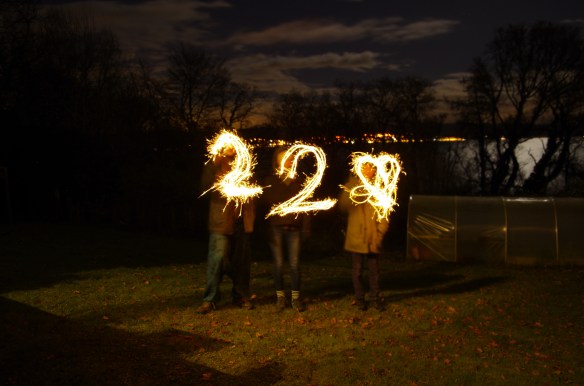
IMGP0600

Advent, day seven.

Yesterday, we woke to a woods hung up with ice and snow. The dark wet brown of the forest floor, wet from so many weeks of rain, was blanketed with white snow. It was beautiful, like a Christmas card.

Today’s poem is an old friend, written many years ago, at a time when the world seemed dark. Depression stalks many of us, but we are not alone.

We are never alone.


Emmanuel


Evening draws in closer

Frost, it hangs like lace

Tired leaves brown and speckle

Then slowly fall from grace

Sometimes it seems that spring is shackled

And summer fell in deep disgrace


In days like these when darkness seems

To swallow light

I offer you, my friend, this blessing;

Emmanuel

God with us


Life before life…

Advent, day six…

Before everything, was there nothing?

Before we were conceived, before seed, before egg,  before cells divided- nothing?

Or was a space waiting, like an empty womb?

Those of us with faith, and those of us without- we live in the same darkness.

We all wait for light.


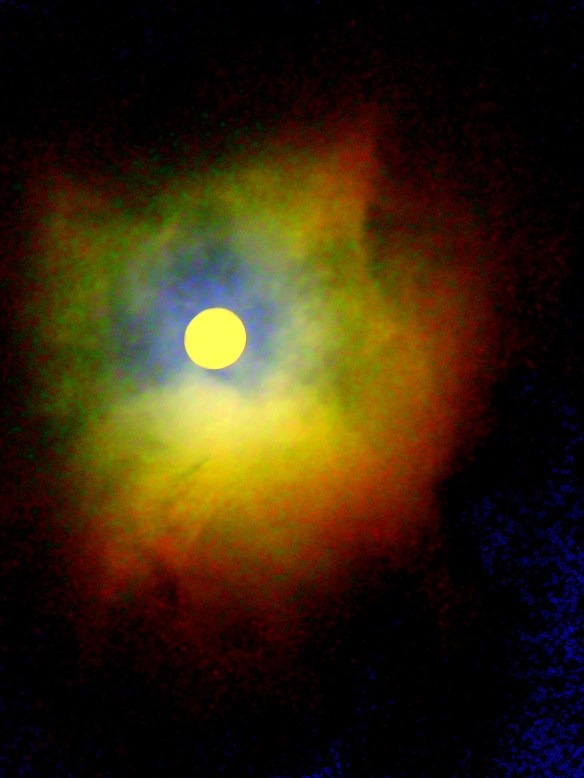
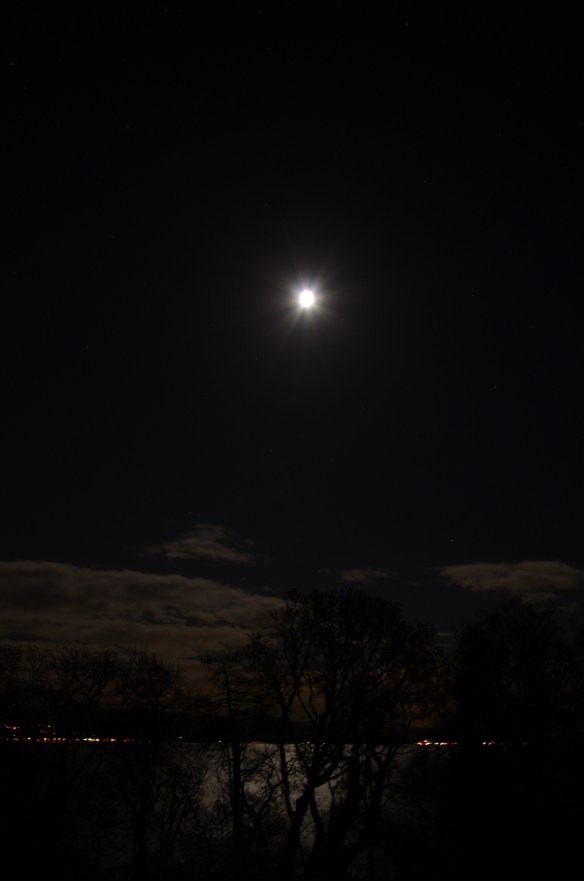
moon, neon


Unpregnant


In the corner of my gaze something moved

I blinked

Reminded of almost imperceptible stars

In sky almost black like bruises

Punched through with points of light


Did I form you like an idol from some ancient river bed?

Did I raise you up on a pole?

Are you just déjà vu

For the deluded last few

Will science yet prove us all fools?


But the night whispers

Mist of breath on puckered skin

Like the scent of sea to a sailor

It speaks of a yearning

For all those words unpoemed

Paintings not yet painted

Songs not yet sung

Reeds still to be fluted

Strings still to be strung.


The unpregnant womb

Is still waiting.


Those who see differently…


Pregnant-Teen-in-Shadows-001

Continuing our Advent journey, on day 5 we consider how we might come to imagine a different future.

I see the Bible as a magnificent library of books that record how mankind seeks to understand God. There are many ways to read and engage with the texts but one way that I find meaningful is to see the stories it contains as a process of evolution of understanding; humankind starts in innocence, then we stumbled into acquisition and successions of empire building. All through this process however, there were people who saw differently. People who risked everything to speak a different truth, calling us to a more lovely, more beautiful, more loving (otherwise known as ‘more holy’) version of ourselves.

These people were usually called ‘Prophets’. Men and women who belonged to the awkward squad. They were often irritants, weirdos, wild visionaries. Sometimes people in power listened. Mostly they did not.

Notice friends, that we have tended to understand the word ‘prophecy’ to be concerned with predictions of future events, but this is just one way to understand it. The more common use for the recorded prophetic utterances in the Bible was to speak truth to power. Prophets were people who saw things differently and were brave enough to do something about it. Some things have not changed. We need our prophets more than ever.

The Advent story includes an old man called Simeon who had spent a life time longing for things to be different. You can read about him here.

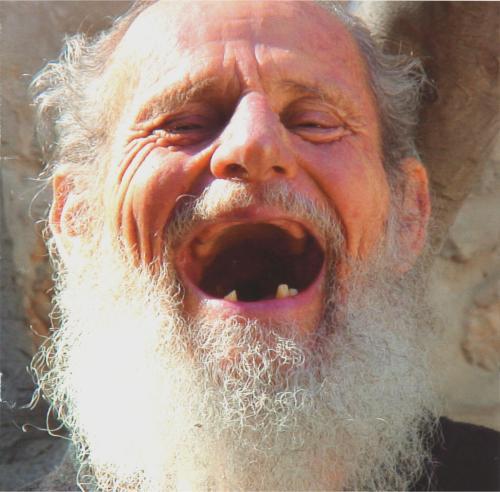
israel-125year-old-man-laughing


A shuffling walk, awkward

silences,

followed by strange words,

spat out like spears.

Be still my child

for the Prophet speaks.


“For unto us a child is born.

Unto us a son is given.

And the government shall be

upon his shoulders.”


“The Spirit of the Lord will dance within him;

He will turn the power games upside down

The poor will be his priority

Those locked out will be welcomed in

Fools will open their eyes for the first time

To the debtors

He will shout

jubilee.”


The Prophet was rigid

All angles like a marionette

Eyes shining.


“He is coming.”

“He is coming.”

Donkey…

Day 4 in our Advent journey, and today’s poem is a tribute to those of us who plod on, under heavy burdens, because that is what we have been called to do.

Blessed are you, the wage slaves. Blessed are you as you make the monthly mortgage, as you keep the electric meters turning. Blessed is the shrinking margin that you salt away for summer, and for the purchase of pink plastic things for the kids. For this too is holy.

It takes love to be a donkey. Lots of it.

creditcards


Another day drops with a dull thud;

Dawns yellow from behind my unpeeled eyes.

I sigh.

Still, this old world keeps turning.


Two cups of coffee and a three rounds of toast

Set me on the road-

For the mortgage must be met

There is the holiday to pay for

And the kids need new shoes.

I’ve played these blues

before.


There is a photograph on the dashboard

Stuck fast with love.

For their sake, this weary way

Is sacred;

It is my plodding pilgrimage.

Each hiss of tyre, another chant

Another spin of my holy prayer wheels.


I smile-

This old world keeps turning.

Herod…

Continuing our advent journey, here is another poem from We who still wait…

The comparisons are rather obvious don’t you think?

trumpie

The bones behind his face

Are buried deep under all that privilege

Clothed in a royal robe of bloated flesh

Barely bagged by pampered skin

Puffed up by great importance


But I see him; the boy he once was

Shadowed still in the shape of him

Betrayer of old terrors and teenage fears that

All of the subsequently acquired power

Could never fully vanquish


One day it could all be snatched away

The fear of it stabs at his innards


His knuckles are white with all that grasping

And bloodied by keeping it exclusive


How much could ever be

Enough?


Barren…

The beginning of the Advent story has nothing to do with Joseph or Mary or stables lit by starlight. Rather it centres around a childless woman weeping because what God has not given her.

Sure, the Gospel of Luke tells of a prophecy of a child to come called John who would be a joy and delight to his aged parents. But that was years down the line. She did not know. Her husband did not believe it possible.

There was just emptiness. Barren emptiness.

sad-woman


Elizabeth


They say every flapping scrap of life is

A brand new miracle

– I see them all in the street

Displayed there by their miracle makers

For the rest of us to worship


But I am earth

Not sky

I am dry desert soil

Blown around in the ordinary wind

I am empty

And can never be full

What use have I with all this holiness

If I am never whole?


Meanwhile in the temple

An angel

Whispered

1st Sunday…

bird, winter tree

Today, advent begins.

It is a season often out-clamoured by the churn and burn of preparation, in which we have no time for waiting. There is no time for quiet reflection when there are all those presents to buy.

It is an easy criticism because advertisements give us all the cultural indicators that we could ever want. It is they who define the season of advent after all. It seems that we need to order a new sofa and a new carpet for Christmas, and that Christmas is about… football.

But I would like to give you this seasonal invitation;

Take time. Peel back the surface of the season, just a little. Look a little more deeply when you can. Breathe deeply and remember that there is more. It may be wrapped up in mystery, but there is better- there is love. When you look for it, it is everywhere.

And what better to assist us on this gentle quest, than poetry?

So, as the advent season unfolds, I am going to offer you a poem each day- ones taken from this book; We who still wait. (If you should order a copy, you will get to immerse yourself in Ian’s meditations and Steve’s photographs also…)

So, on this first Sunday of Advent, we begin our season of waiting…

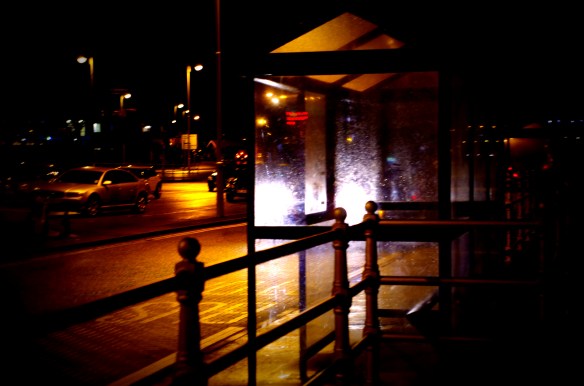
bus, bus stop, night

Advent 1


Here we are again.

Starting a new journey towards hope.

Setting out in uncertain times


towards a rumour glimpsed only in the shape of the stars

and the smell of something strange

in the changing of the weather.


Have I journey left in these brittle bones

what did it ever mean before?

How many false donkeys and tin foil angels can one man take?


We know that this Messiah fell from heaven not

on feathers, but to the stab and scratch of straw.

I get the humility, but when will things be different?


When will Kalashnikovs be melted into spades?

When will missiles be just fireworks in the shining sky?

When will Lions chose to nurture Lambs?


But here I am again

Starting a new journey towards hope


Rough Sleeping 2…

Following on from yesterdays post, here is the poem I wrote…
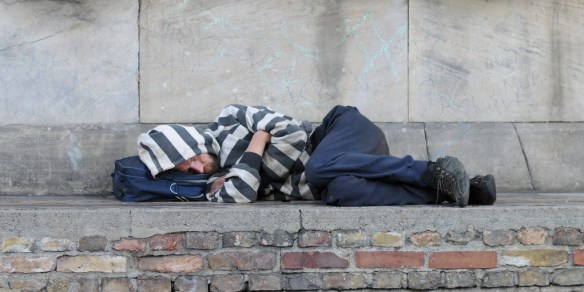
3833143342_2e3063287a_b-e1494347101309


Post-Tramp


They are everywhere

Hunched under blankets, cross-legged like broken Buddhas

Cups placed carefully in supplication.

Stubbed down like cigarette butts

They stink of the street

Soul-damped from all that recent rain


I walk by, wondering how it came to this?

What happened to the Welfare State?

Universal Credit, my arse. (1)


But despite my well-honed sensibilities

I catch a whiff of stale piss (and

Hegemonise,) because after all

We’re all Neoliberals now.

We must all self-actualise; pull on the power

Of positive thinking, lest we end up sitting here

On the street

With only ourselves to blame.


I walk on, eyes averted, but unable to fully

Escape the lingering stain of ‘we’

Polluting the place I made for ‘me’.

Perhaps there is such a thing as society (2)

(Or at least there was once.)


And what of these prodigal children?

Are they inoculated against love?

Or should each name should be spoken,

Each story woven up in purple prose –

Not as moral warning against the consequence of indolence,

But simply because it matters.

I have heard it said that we only truly know humanity

Whilst looking upwards

From very rock bottom.


But listen to me; what a middle-class, self-righteous twat I am

All I do is drop handfuls of inconsequential coin

Into wishing wells dug by other people’s

despair.

I am discomforted only in the direction of

poetry.


Meanwhile, William curls around the spikes placed to keep him clear of Waitrose. (3)

Emily can no longer sleep on the Camden Bench (4)

inclined as it is towards the right.

For even the cold ground has been subject to Mallification. (5)

It is hallowed now for holy consumption.

This new world only welcomes shoppers

like me.

There is no common ground any more

It has all been monetised.


Whatever happened to the Tramp?

Are there still ‘Gentlemen of the road’ who wander free,

Unconstrained by convention?

Were there ever?

Perhaps the Tramping never was a choice,

Rather just what happens when people are trampled down

By the myopic mythology of privilege.

The Tramp was only ever a ghost;

A white Golliwog. (6)


Tramp no more, for we are post-Tramp.

The Tramp has been Trumped,

Replaced by “Bad People”

And “Immigrants.” (7)

But then again, to paraphrase Jesus,

(Who did some Tramping himself, remember)

Perhaps the Tramp will always be with us.

While we walk past on the other side of the road.

Pointing our pulpits at interior, individual evils

(Because Our Lord was Neoliberal too.)

The permissive society is the problem-

Forget the Tramp.


But there I go again, throwing stones from distance.

Unlike the Religious Folk,

I serve no soup on the cold November streets.

I provide no shelter from the helter-skelter winds of winter.

I bank no food for hungry families.

These words fill no bellies –

Not even mine.


But I have spent a half-life responding bureaucratically,

Policing the ragged edge of a shrinking Welfare State.

Trying to address symptoms, never getting near to a cause.

I wore a professional role stiffer than serge and tried to fit people into boxes

Which seemed deliberately shaped to chafe.

Sure, I never knowingly left anyone of the street

But I learned enough to conclude that Maslow got it wrong; (8)

In the hierarchy of human need,

Shelter is not always the foundation of the pyramid –

Not for the unloved.

Those of us who were never held

Will fall forever.


Society is a cold sea berged by jagged realities;

Poverty is ugly.

It stinks.

It makes brutes of us all.

It stains souls like nicotine.

And the broken people, they break things-

They may break you.

So, tidy them away if you can;

‘Care Manage’ them, then  (9)

Close the case and move on, for

There are always more.


But blessed are the Vagrants

(According to the Book)

Holy are the holes in the shoes they walk in.

Blessed are the Hobos, for each one knows

That the Kingdom is theirs for the taking.

Blessed are the Down-and-outs,

for each one counts for more than me.

Blessed are the Beggars with their

grails of Polystyrene.

And blessed are the Tramps,

For they are the Chosen Children of the Living God.

And he is Jealous;

He wants them for his own.

He wants them for his own.


In the curve of a dripping arch

By the waters of Basildon

James sat down hard

And there he wept

For he had no Zion

And he had not slept for a week

His road was never walked as a pilgrim

It was a greased shit-chute

Which spat him here.


And James shouts into the darkness;

“Curse you, God-in-abstract.

Curse your cold stone steeples.

Curse your pigeon-stained glass.

Just give me a clear pane to look through.

For what use is a dry hereafter

When the winter rains come falling down?”


But when his rage receded

James pulled out his mother’s rosary

And prayed.


  1. Universal Credit; a controversial new system of benefits allocation brought in by the UK government, driven by Austerity and a wider agenda around ensuring that people who receive benefits are pushed towards work. It is widely regarded as driving people towards debt and homelessness.
  2. No such thing as Society’. A famous quote from a speech by former Prime Minister Margaret Thatcher.
  3. Business premises have been employing spikes embedded into the pavement outside their offices and trading spaces to stop homeless people from sleeping there.
  4. The Camden bench is a bench designed to be uncomfortable for sleeping on and unusable for skateboarders. It won a design award.
  5. In major UK cities, there is an increasing debate about the way that public spaces are increasingly ‘Mallified’. In extreme cases, private companies have taken over management and control from local authorities, but more commonly, priority is given to retail and commerce above all else.
  6. Golliwog; a Blackface stereotypical ‘cuddly’ representation of a Negro that was a famous marketing toy for Robinsons Jam in the UK.
  7. A reference to one of President Trump’s many Tweets.
  8. Maslow’s ‘Hierarchy of needs’ is an attempt to describe and prioritise how humans are motivated to meet their own needs. He suggests we start will survival needs; warmth, shelter, and it is only when we meet these basic needs that we are freed to seek wider psychological needs or self-fulfilment.
  9. Care Management; a system of assessment, care planning and resource allocation used by social care systems in the UK.


Rough sleeping…

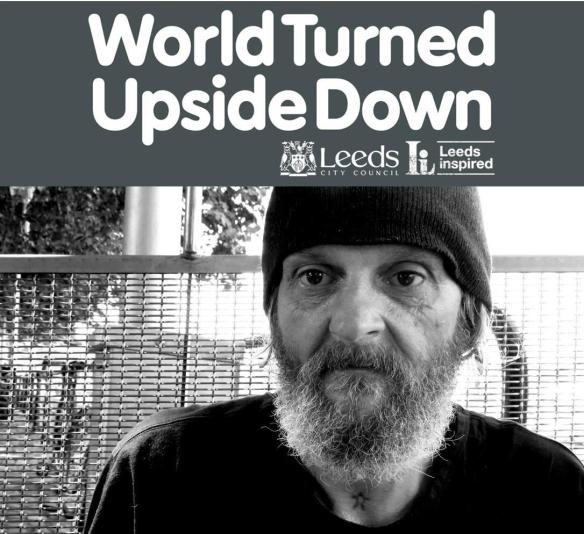
A few weeks ago now, I read a poem at a wonderful art event in Leeds. It was a long poem, written in response to some powerful photographs taken of people sleeping on the streets of Bristol by Steve Broadway.

world turned upside down header

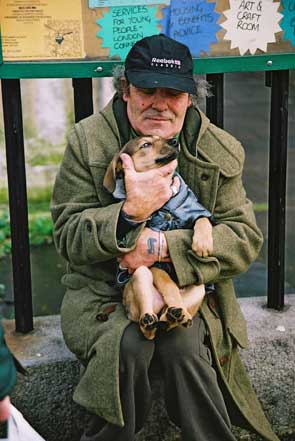
Here is one of Steve’s images, and this is what he said about his piece;

“This year, I’ve spent more time talking to some of the rough sleepers in our city.
They’ve all got their stories…
The thing that has struck me most is their quiet dignity and their gentle friendliness. 
I’ve never been threatened or verbally abused and they’re always happy to talk. 
None of them likes the way they’re forced to live. 
Some of them live in doorways.
Some live in small make-shift tents.
Some live in squats. 
Some get the occasional respite of a night shelter. 
Some are there because they lost their jobs and/or could no longer afford to pay their rent. 
Some are there because of their own foolishness in the past. 
Most are there due to circumstances beyond their control. 
There are sad stories of broken relationships, broken homes… of being unable to cope. 
There are sad stories of being verbally or physically abused by passers-by or rowdy drinkers. 
There are sad stories of being robbed of what little money they had or having their tents slashed.  
Many feel ashamed by their circumstances. 
Many just want to be given another chance.
Many simply feel hopeless… utterly hopeless.
Most feel that society doesn’t care about them.
The sad reality is that, once you’re down, it’s very difficult to get back on your feet again”.

Too right Steve…

Then, last week, Michaela and I visited London. It was the first time she had been since 1989. We walked ourselves to the ground, and spent hours in the Tate, but one of the memories that will stay with me for ever was of all the people on the streets. How is it possible to walk past, unmoved? My lovely wife made sure that she held the hand of each one we stopped to talk to, but even then it felt utterly tokenistic to drop coins into their hands. Each encounter left us more impoverished, in a way that had nothing to do with money.

Around the same time, I visited my home town, a sleepy backwater in Nottinghamshire- the sort of place where people may be poor but this is not seen on the streets, until now. For the first time ever, I saw someone begging outside the local supermarket. A common sight elsewhere, but all the more shocking when seen there.

Steve’s portraits have been nagging at me since I saw them. As usual, when processing things like this, I turn to the keyboard and start to write… I try to find a way to respond to what I have seen that is honest and from within.

homeless3

(Not one of Steve’s photographs. Think this was from The Guardian years ago)

My contention is this; in sociological terms, rough sleeping should not been seen as a singular problem, rather it should be understood as a litmus test for the health of our society. When the numbers of people rough sleeping rises, something is seriously wrong with society.

It should act then as a warning for the rest of us. Time to take a look at what we have become.

Estimations of the numbers of people rough sleeping are notoriously difficult for obvious reasons, but there is no doubt that the numbers are increasing dramatically.

guildfordymcahiddenhomeless2

(Another photo from an old Guardian article)

The individual stories these pictures tell are important. We should know their stories. Their stories should be told. But there is a danger in that too…

An iniquitous narrative has dominated our response to poverty in this country. It gained traction through politics, through social media, through rag-top newspapers, through all those ‘Benefits Street’ type of TV programmes. The narrative goes something like this;

Wealth and success are virtuous.

Poverty is shameful, and the proper reward of indolence and bad character.

Therefore, the benefits system should punish the poor. It should drive people away from state support by becoming so toxic and unyielding that no right minded person would want to continue receiving it.


The danger is then, that individual stories individualise the problem. In that dreadful neoliberal way, we ignore the collective- those complex societal reasons that cast people out onto park benches and drive them to food banks and advice centres.  We site the locus of the problem in THEM, not in US.

This allows us to avoid asking questions that might actually make a difference;

What if greed is not good? What if all human interactions can NOT be summed up in the language of free-market economics?

What it rampant inequality destroys all of us?

What if poverty is a cancer that brutalises and ravages down the generations? Surely then the proper focus should be on alleviating poverty, not punishing the poor?

What if the real problem is brokenness in society? A break-down in our relating-  an increased focus on one-step-removed-on-line-relating that strips flesh from our community and replaces it with silicon.

Our grandparents fought and died for a principle called universal benefits, seeking to banish the crippling shame of poverty forever. Each and every one is being dismantled. The only one left now is child benefit, and this will be gone soon.

There is a huge concern about the state of our health services- but remember that back in 1979, after a ten year enquiry into public health inequalities, the Black Report concluded that the issue of health was actually one of poverty. Everything else grew from there. Thatcher’s government buried the report under the thunder of war- the Falklands war.

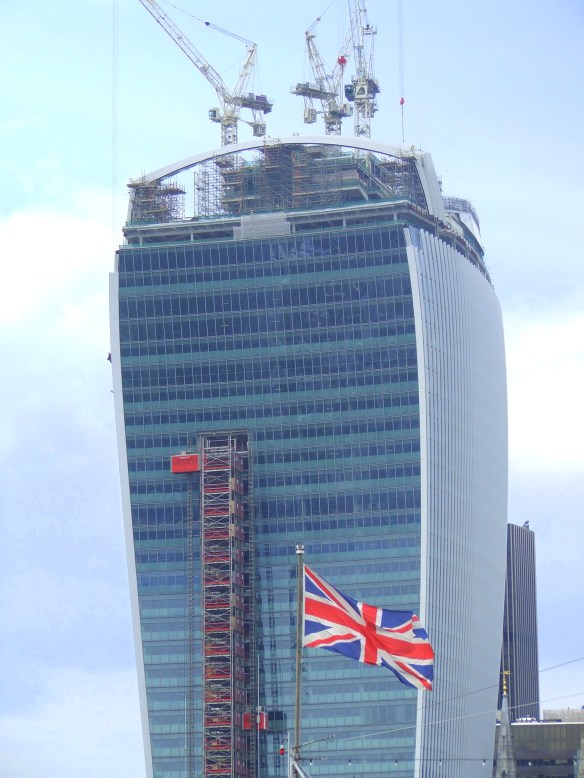
City of London, construction


In the face of all this, I am inadequate. My poetry, written from the comfort of my rural home, clangs like a hollow gong.

But after half a life time working in social work, it is all I have.

Tomorrow, I will post the poem…