Everyone needs heroes…

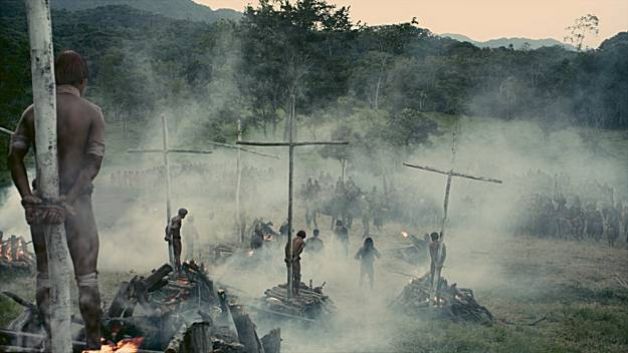
I watched a lovely film the other night- a Spanish language film called Even The Rain.  

A Spanish film crew helmed by idealistic director Sebastian (Gael García Bernal) and his cynical producer Costa (Luis Tosar) come to Bolivia to make a revisionist epic about the conquest of Latin America – on the cheap. Carlos Aduviri is dynamic as “Daniel,” a local cast as a 16th century native in the film within a film. When the make-up and loin cloth come off, Daniel sails into action protesting his community’s deprivation of water at the hands of multi-national corporations.

When riots break out in Cochabamba, protesting excessive fees for water, production is interrupted and the convictions of the crew members are challenged. Sebastian and Costa are forced to make an unexpected emotional journey in opposite directions.

It may sound a bit ‘worthy’, but it was very well made, well acted, and full of sharp irony. The crew were fired up by the injustice and genocide waged on the indigenous people of the new world by the Conquistadors, but found the modern day equivalent injustice inflicted by poverty and multinational corporations almost invisible.

Along the way we heard a lot about Bartholme de las Casas.  

I confess I had never heard of him. I have been fascinated (and horrified) by how the conquerors of the New World were able to believe that they were doing God’s work as the slaughtered and plundered in the name of the Holy Empire. It is refreshing and inspiring to discover a man of God who called it for what it was.

Arriving as one of the first settlers in the New World he participated in, and was eventually compelled to oppose the atrocities committed against the Native Americansby the Spanish colonists. In 1515, he reformed his views, gave up his Indian slaves and encomienda, and advocated, before King Charles V, Holy Roman Emperor, on behalf of rights for the natives. In his early writings, he advocated the use of African slaves instead of Natives in the West-Indian colonies; consequently, criticisms have been leveled at him as being partly responsible for the beginning of the Transatlantic slave trade. Later in life, he retracted those early views as he came to see all forms of slavery as equally wrong…

Bartolomé de las Casas spent 50 years of his life actively fighting slavery and the violent colonial abuse of indigenous peoples, especially by trying to convince the Spanish court to adopt a more humane policy of colonization. And although he failed to save the indigenous peoples of the Western Indies, his efforts resulted in several improvements in the legal status of the natives, and in an increased colonial focus on the ethics of colonialism. Las Casas is often seen as one of the first advocates for universal human rights

Don’t forget that all this was taking place 200 years before Wilberforce, our great protestant anti slavery hero.

Neither was Casas alone.

In September 1510, a group of Dominican friars arrived in Santo Domingo led by Pedro de Córdoba; appalled by the injustices they saw committed by the slaveowners against the Indians, they decided to deny slave owners the right to confession. Las Casas was among those denied confession for this reason.[14] In December 1511, a Dominican preacher Father Fray Antonio de Montesinos preached a fiery sermon that implicated the colonists in the genocide of the native peoples. He is said to have preached, “Tell me by what right of justice do you hold these Indians in such a cruel and horrible servitude? On what authority have you waged such detestable wars against these people who dealt quietly and peacefully on their own lands? Wars in which you have destroyed such an infinite number of them by homicides and slaughters never heard of before. Why do you keep them so oppressed and exhausted, without giving them enough to eat or curing them of the sicknesses they incur from the excessive labor you give them, and they die, or rather you kill them, in order to extract and acquire gold every day.”

These men were serving the Kingdom of God in the shadow of the Empire, and for this we can call them Heroes.
Looking through windows…

I heard this on the radio the other day;

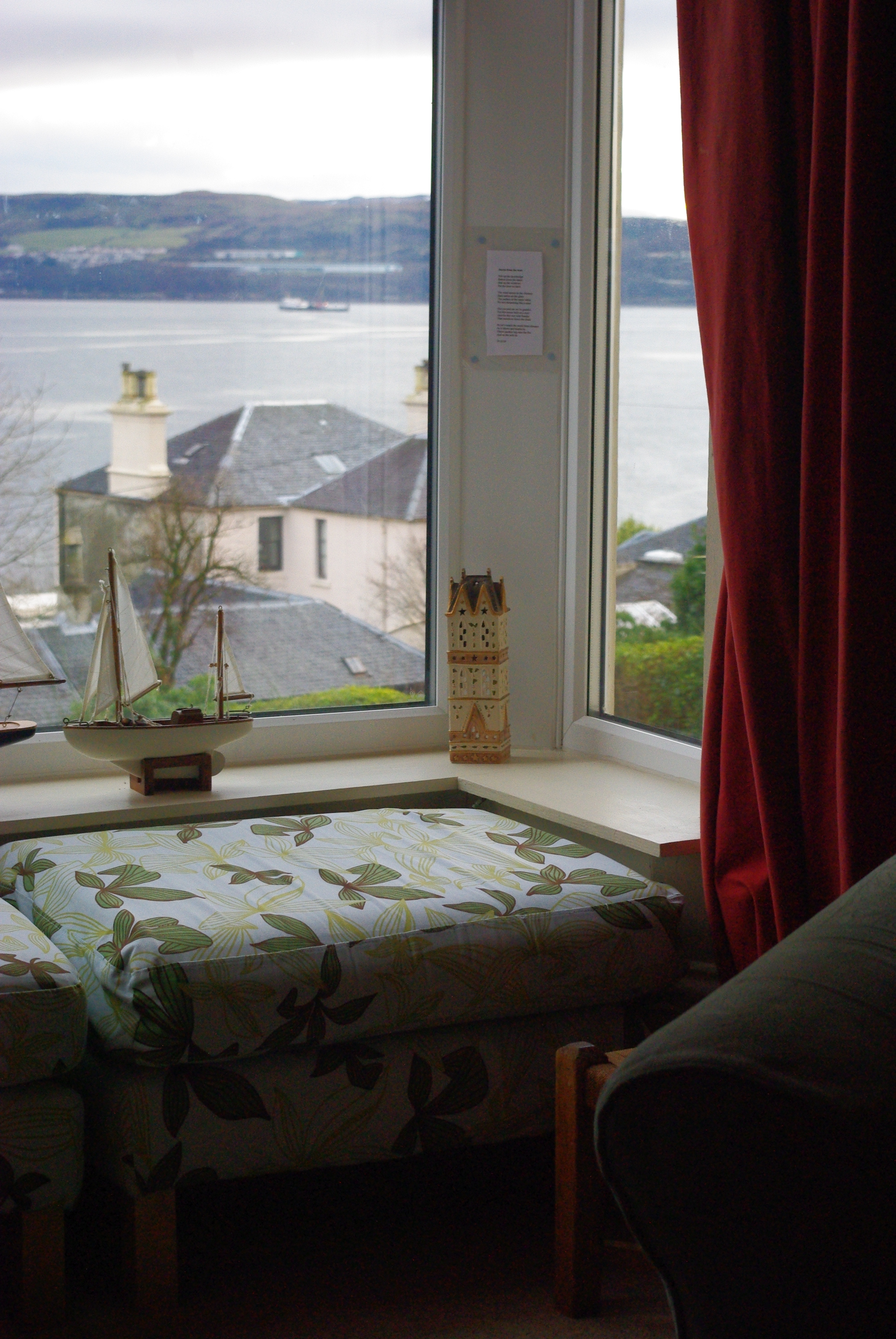
The room was suddenly rich and the great bay-window was
Spawning snow and pink roses against it
Soundlessly collateral and incompatible:
World is suddener than we fancy it.

World is crazier and more of it than we think,
Incorrigibly plural. I peel and portion
A tangerine and spit the pips and feel
The drunkenness of things being various.

And the fire flames with a bubbling sound for world
Is more spiteful and gay than one supposes-
On the tongue on the eyes on the ears in the palms of your hands-
There is more than glass between the snow and the huge roses.

Louis Macneice

It is a lovely poem, opening up all sorts of delicious possibilities. I particularly liked the second stanza, as it captures the whole world in an tangerine pip- the drunkeness of things being various.

It reminded me of the way poets look at things- looking through different windows perhaps, and seeing deeply.

It also reminded me of another poem- which the radio programme also made mention of later- by Gerard Manley Hopkins, with these lines;

Christ plays in ten thousand places,
Lovely in limbs, and lovely in eyes not his
To the Father through the features of men’s faces.

The first poem glimpses the size and wonder of the world, the second the spaces for God in it.

Amen to both.

Words and silence…

A lovely poem appeared in my inbox today courtesy of Minimergent (a more or less daily e-mail from Emergent Village.)

It hit a nail on the head.

I have been thinking a lot of how I struggle to pray- how words tend to be hollow- presumptuous, pompous, self seeking. How it seems as though I am speaking more to myself than to God at times.

And how I tend to fill everything I do with words- because words are the medium of my understanding, my meditation, my artistic endeavour.

So this poem makes a suitable prayer. Wordy though it may be;

I who live by words, am wordless when

I try my words in prayer. All language turns

To silence. Prayer will take my words and then

Reveal their emptiness. The stilled voice learns

To hold its peace, to listen with the heart

To silence that is joy, is adoration.

The self is shattered, all words torn apart

In this strange patterned time of contemplation

That, in time, breaks time, breaks words, breaks me,

And then, in silence, leaves me healed and mended.

I leave, returned to language, for I see

Through words, even when all words are ended.

I, who live by words, am wordless when

I turn me to the Word to pray.

Amen.


Madelaine L’Engle  ‘The Weather of the Heart’

Emily cuts her hair…

I mentioned previously that my daughter Emily had decided to cut her long hair short in aid of leukaemia research. She did this in memory of her Grandfather Robert who died from the illness.

She is sending her hair to a charity who collect it to make wigs for people in treatment.

You can still donate via her Justgiving site if you like (nearly £600 raised so far!)

Here she is with (almost) appropriate music by Richard Thompson;

Buy Nothing Day…

This Saturday is Buy Nothing Day!

We are being asked to consider our immersion in the stuff of commercialism and over consumption as Christmas approaches, by stopping buying stuff for one day.

It might be harder than you think.

It’s time to lock up your wallets and purses, cut up your credit cards and dump the love of your life – shopping.

Saturday November 24th 2012 is Buy Nothing Day (UK). It’s a day where you challenge yourself, your family and friends to switch off from shopping and tune into life. The rules are simple, for 24 hours you will detox from shopping and anyone can take part provided they spend a day without spending!

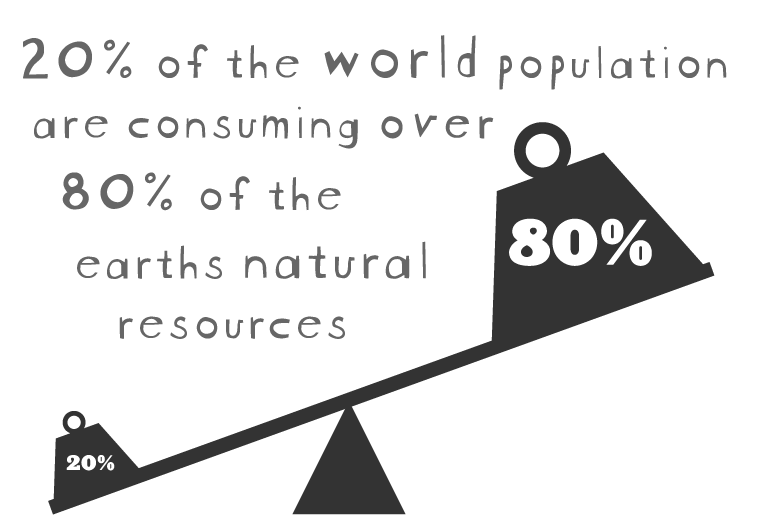
Everything we buy has an impact on the environment, Buy Nothing Day highlights the environmental and ethical consequences of consumerism. The developed countries – only 20% of the world population are consuming over 80% of the earth’s natural resources, causing a disproportionate level of environmental damage, and an unfair distribution of wealth.

We know all this of course- we the middle class, the former activists, those tired by the tension between a moral imperative and western lifestyle.

Will one day make a difference? This is of course up to us- but we have to start somewhere…

I liked this from the Guardian;

So perhaps it’s time for a new kind of materialism, based on an economy of better, not more: one that is rich in the good-quality work created by providing useful services, that makes things which last and can be repaired many times before being recycled, allowing us to share better the surplus of stuff we already have. It is emerging now in things ranging from furniture to tools, cars, fridges, clothes and food. “Repair, reduce, re-use, recycle”, long a mantra of green economists, could be the basis of a new economic model that performs the neat trick of boosting demand without increasing consumption

Turning…


Turning


I no longer know

Where swallows go

In winter

Or where the wind blows


I look and seldom see

The flicker of fading northern light

And now the sky

Is sleeping


In a nook of last years leaves

Something soft is stirring

What lies dark will find the light

The earth it still is turning

The Church of England- “…a national embarrassment.”

…so said a Bishop after the recent failure of a Synod vote to allow women bishops.

I have just been reading through the comments on the Guardian article for a (possibly unrepresentative) straw poll. Here are a few highlights;

So the head of the C of E is the Queen, but they don’t want to have female bishops?

Nice one, institutionalised religion in this country failing to learn from the mistakes of US extreme right wing politics. Decreasing their markets. Perhaps they enjoy being irrelevant.

Are we not equal in the eye of the Lord? No. He’s saving the socialist paradise for the afterlife.

Bloody hell. I despair. Where now?

I’m sorry, but the Biblical prohibition(s) on women holding positions of authority and engaging in a regular teaching ministry within the Christian church do not embody ‘centuries of entrenched sexism’. It is, rather, the plain teaching of Scripture, which is why the vast majority of Christian denominations have held to this doctrine for centuries. There is clearly spiritual equality between men and women (Ephesians 5.33; 1 Peter 3:6; Galatians 3:28) and Matthew 22:30 also implies that gender distinctions will cease to exist in the next life (as souls have no biological sex). However, the Apostle Paul also forbids women from teaching and holding authority in the churches (1 Timothy 2:11-15). The Apostles were all male. People who do not take the Bible seriously really should question whether they are Christians at all for if we do not define the religion of Christ according to its foundational documents then there is absolutely no other way for it to be defined and we may as well make it up as we go along, as Welby and other supporters of women bishops and ministers are doing. How a woman organises her life in the secular sphere is entirely her own business, but in the Christian church leadership is clearly intended to be male.

Surely, Church in crisis as there is no God?

Life’s full of contradictions so is the Bible.
That’s what makes it so fascinating.
Look hard enough and the truth shines out.
Look out for the good bits.

A woman without a mitre is like bread and fishes with a delivery bike.

Family name…

I have just spent a few days down in Nottinghamshire visiting family. My mother has been diagnosed with cancer, so had to go into hospital for a lumpectomy- and we wait the news as to what further treatment she requires. All very scary.

Because I went down on my own this time, I stayed with my mother- the first time I have slept in the house that I was born in since the say before we married 22 years ago. This has some disadvantages, as she has no hot water, and no central heating (beyond a few ineffectual storage heaters.) She suffers from a fresh air fetish and even with a hard frost, each room had open windows. I had taken the precaution of making sure I had my down sleeping bag, which I slept in under the duvet!

However, it also gave me time to sit and talk about family. The murky details of my family background are complex, and full of things that most upright folk would rather had been swept under the carpet. Some of it I knew, but some I did not.

So, it goes something like this;

My great grandfather was born some time around 1850 in Lincolnshire, the illegitimate son of a local landowner. His father took some responsibility for his offspring, but not much- he set his son up as a farm labourer. It does not seem to have been a happy arrangement- he was a bitter and angry man, who treated his own sons poorly. My Grandfather was born around 1883, and as soon as he was old enough, left home to go and work in the Nottinghamshire coal mines.

In case you are wondering how I could have a Victorian Grandfather, read on…

He married and settled in Kirkby in Ashfield, in the shadow of the Summit Pit. He had two children, both boys. Unfortunately, his wife was sick most of her adult life, and a large portion of his earnings went on medical bills- this was long before the advent of the Welfare State.

The boys grew- one was wayward, and rebelled against my Grandfather liberal use of the leather strap. He left home, but was killed riding a motorcycle. By then, his mother was long dead.

The other boy had children of his own- one of whom survives.

In the meantime, in the housing shortage during the second world war,  my Grandfather moved into a former railway carriage. Quite why he needed a housekeeper in such a situation I have no idea- but such arrangements seemed to be common. So it was that my 43 year old Grandmother escaped her work in a munitions factory and moved into the Railway carriage with my Grandfather- then aged 60.

My mother was born shortly afterwards- into every kind of poverty. Her parents seemed to have little idea as to the needs of a child- particularly in terms of emotional needs. She had no birthday presents, no Christmas presents. The shame of being the illegitimate child of this situation was so powerful that when my Grandfather died in the 1970’s, at the ripe old age of 93, she was terrified at the prospect of the vicar officiating at the funeral discovering that his family name was not the same as her maiden name. So much so that she began hyperventilating as she tried to explain. Such is the power of childhood shame.

The story became more difficult for her- a bad marriage, lots of bitterness, and no small amounts of damage done to my sister and me.

However- what this conversation enabled me to see, perhaps for the first time ever, was a chain of ungrace stretching back 160 odd years. All those damaged people trying to find ways to live better.

And I was reminded of some hard old words from Exodus 20;

…for I, theLord your God, am a jealous God, punishing the children for the sin of the parents to the third and fourth generation of those who hate me…

And feel little comfort for how the words go on;

…but showing love to a thousand generations of those who love me and keep my commandments.

The sins of the fathers are very human ones. I am not sure about all the judgement stuff in Exodus, but I am sure about the fact that damaged people can easily do damage, and that bitterness infects other people in ways that are hard to understand even in hindsight, even when right in front of our eyes.

May the scars we carry soften. May we not nurture any new hate.