
Hope deferred makes the heart sick,
but a longing fulfilled is a tree of life.
Proverbs 13:12

Hope deferred makes the heart sick,
but a longing fulfilled is a tree of life.
Proverbs 13:12

(Thanks to today’s Minimergent.)
We’ve all imbibed the culture of unrest so deeply. We just cannot believe that we could be respected or admired or received or loved without some level of performance. We are all performers and overachievers, and we think “when we do that” we will finally be lovable. Once you ride on the performance principle, you don’t even allow yourself to achieve it. Even when you “achieve” a good day of “performing,” it will never be enough, because it is inherently self-advancing and therefore self-defeating. You might call it “spiritual capitalism”.
Richard Rohr
I am 45 years old. My first career is possibly over, my second uncertain. Any hopes I had of making a way for myself through music of some other public magnificence are long gone.
In many ways, particularly for blokes, life is about a search for significance, ascendancy, personal power and the recognition of our peers.
Sooner or later (no matter how much of the above list you manage to manufacture) we all come to the conclusion that this is futile. Success is fleeting and always nuanced, and the pursuit of power extracts a price from our humanity. ( I saw that all toil and all achievement spring from one person’s envy of another. This too is meaningless, a chasing after the wind. Ecclesiastes 4:4)
So in the wreckage, what still stands?
This is the big question of those of us entering the second part of life. It is all too easy to fall into the way of Ecclesiastes chapter 1;
1 The words of the Teacher,[a] son of David, king in Jerusalem:
2 “Meaningless! Meaningless!”
says the Teacher.
“Utterly meaningless!
Everything is meaningless.”3 What do people gain from all their labors
at which they toil under the sun?
4 Generations come and generations go,
but the earth remains forever.
5 The sun rises and the sun sets,
and hurries back to where it rises.
6 The wind blows to the south
and turns to the north;
round and round it goes,
ever returning on its course.
7 All streams flow into the sea,
yet the sea is never full.
To the place the streams come from,
there they return again.
8 All things are wearisome,
more than one can say.
The eye never has enough of seeing,
nor the ear its fill of hearing.
9 What has been will be again,
what has been done will be done again;
there is nothing new under the sun.
10 Is there anything of which one can say,
“Look! This is something new”?
It was here already, long ago;
it was here before our time.
11 No one remembers the former generations,
and even those yet to come
will not be remembered
by those who follow them.
The book of Ecclesiastes plays with these themes constantly- the meaningless futility of life, and the inevitability of death. The success/failure of the wicked, and the success/failure in equal measure of the devout. The limitations of wisdom, and the fickle search for success.
If the words were authored by Solomon (as traditionally held to be the case) they seem all the more poignant. They are the words of a 4th C BC King of excess, who had it all, turning towards the end of his living, confused still about the worth of a life. Not all the monuments or pyramids or songs could convince him that his life was worth anything more than that of any other animal.
Reading this as a young man, I wanted to rebel at the cynical emptiness of it all. Surely God has a great purpose for me- am I not part of his great plan? I am not the great part of his plan?
Now I find myself relaxing into it as truth- although like all of these things, only a partial truth.
Because if the legacy we leave on this earth is not about our youthful appetite for stuff, for power, for significance; if it is not about hard measurable, visible outcomes- a deeper, less quantifiable legacy might still be possible.
The measure of grace that we stain our situation with.
The love that we give and receive.
And for this, I turn from Solomon to Micah, chapter 6;
With what shall I come before the Lord
and bow down before the exalted God?
Shall I come before him with burnt offerings,
with calves a year old?
7 Will the Lord be pleased with thousands of rams,
with ten thousand rivers of olive oil?
Shall I offer my firstborn for my transgression,
the fruit of my body for the sin of my soul?
8 He has shown you, O mortal, what is good.
And what does the Lord require of you?
To act justly and to love mercy
and to walk humbly with your God.
Walking humbly with God- this is the journey I now try to make.
Significantly.
Today I ‘signed on’ as a unemployed person. This entitles me to a small Jobseekers allowance, because of my contributions paid as contributions from my wages over the last twenty odd years.
I feel a song coming on;
I grew up in a Britain in which employment was a huge blight on society. This song became a kind of anthem for a generation, speaking about how people become less important than statistical processes.
I was reminded of this as today I received three letters from the benefits agency. They make absolutely no sense at all. Seriously- I would defy anyone to understand what they are trying to tell me. I understand something of the system, after all it was my job to support others through the morass previously, but even I was rather flummoxed. See what you think;
I am pleased to tell you that we can pay you jobseekers allowance from the 29th of July 2012. (Good, although I already knew that.)
You are not getting any more job seekers allowance because your partner is working for 24 hours a week or more (she is not, and we have told them several times, and in several ways that she is not.) If your partner is working for 24 hours a week or more you are not entitled to jobseekers allowance based on how much the law says you need to live on. (Huh?)
We cannot pay you jobseekers allowance from 30th January 2013.
I could go on, but I am sure you get the point.
Official speak, designed to give information in a way that is all about the information giver, not the information receiver. Information given to manage comeback.
Perhaps they can give me a job redesigning their letters?

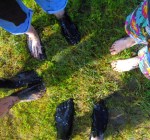
We are just back from a lovely holiday week spent in sunny Englandshire- firstly Northumberland, then Yorkshire and finally Lancashire. We swam in the sea, climbed mountains, and made the pilgrimage to Lindisfarne, barefoot over the sands (with some mud!) at low tide.
It was great to spend some time with my lovely family doing seaside things- and to appreciate again how lovely England is, with its layers of history laid down in a rolling landscape and in buildings of stone and brick.
We also fitted in celebrating the wedding of our friends Stacey and Bob. Congratulations to them as they start their married life together.
Here are a few photos- particularly of the magical walk over the sands to the Holy Island;










(I am writing this sitting in one of the great British wayside institutions- a Little Chef- somewhere near Skipton.)
We have been away on holiday for a week- more on this later- but today we attend our friends Stacey and Bob’s wedding at Beeston Manor, near Preston. Emily and I will be playing some fiddle/guitar music, and they kindly asked me to write a poem for the ceremony.
It is a humanist ceremony, and so I spent some time trying to come up with some way of saying something new about love. Not an easy thing to do without stumbling into a morass of sticky clichés. Also, my main poetic voice tends towards melancholic introspection, not quite the right tone for a wedding!
So, with every best wish to the happy couple- here is my poem of love;
The shared unknown
What more can be said of love that has not been said before?
I could sing to you of roses
I could scratch our names on trunks of trees
Or shower you with diamonds
We could walk through moonlight holding hands
Throw coins in Italian fountains
Or I could tell you of how, as a child
Someone sprinkled perfume on my pillow
And it smelled of you
Of how the sound of your voice is a flute
Blown by a desert wind
From some distant spice-filled oasis
But love is not captured in words
It also does the dishes
It takes the cold side of the bed
And knows all our guilty secrets
Love grows fat and grey and old
It gets sick and needs protection
So walk with me into this shared unknown
Love is a far horizon
Wherever you go is fine with me
These miles we’ll make together
For love is home when you are there
And will be so for ever
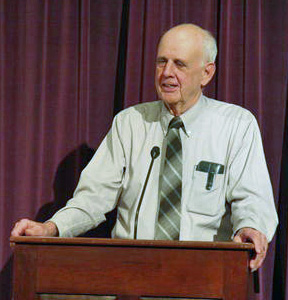
Wendell Berry is a prolific author, activist, poet and also a farmer in Kentucky, USA. He is also a life long Baptist Christian.
He came up with a list of what he saw as the best way to change our destructive Capitalist global economy into something more human scale, more sustainable and in tune with our environment, where ever this might be on the planet.
See what you think- might such a set of rules actually work in the real world?
A community economy is not an economy in which well-placed persons can make a ‘killing’. It is an economy whose aim is generosity and a well-distributed and safeguarded abundance.
Wendell Berry is a strong defender of family, rural communities, and traditional family farms. These underlying principles could be described as ‘the preservation of ecological diversity and integrity, and the renewal, on sound cultural and ecological principles, of local economies and local communities:
1. Always ask of any proposed change or innovation: What will this do to our community? How will this affect our common wealth.
2. Always include local nature – the land, the water, the air, the native creatures – within the membership of the community.
3. Always ask how local needs might be supplied from local sources, including the mutual help of neighbors.
4. Always supply local needs first (and only then think of exporting products – first to nearby cities, then to others).
5. Understand the ultimate unsoundness of the industrial doctrine of ‘labor saving’ if that implies poor work, unemployment, or any kind of pollution or contamination.
6. Develop properly scaled value-adding industries for local products to ensure that the community does not become merely a colony of national or global economy.
7. Develop small-scale industries and businesses to support the local farm and/or forest economy.
8. Strive to supply as much of the community’s own energy as possible.
9. Strive to increase earnings (in whatever form) within the community for as long as possible before they are paid out.
10. Make sure that money paid into the local economy circulates within the community and decrease expenditures outside the community.
11. Make the community able to invest in itself by maintaining its properties, keeping itself clean (without dirtying some other place), caring for its old people, and teaching its children.
12. See that the old and young take care of one another. The young must learn from the old, not necessarily, and not always in school. There must be no institutionalized childcare and no homes for the aged. The community knows and remembers itself by the association of old and young.
13. Account for costs now conventionally hidden or externalized. Whenever possible, these must be debited against monetary income.
14. Look into the possible uses of local currency, community-funded loan programs, systems of barter, and the like.
15. Always be aware of the economic value of neighborly acts. In our time, the costs of living are greatly increased by the loss of neighborhood, which leaves people to face their calamities alone.
16. A rural community should always be acquainted and interconnected with community-minded people in nearby towns and cities.
17. A sustainable rural economy will depend on urban consumers loyal to local products. Therefore, we are talking about an economy that will always be more cooperative than competitive.
I do not mean to be in any way rude to American readers, but there are lots of things that happen over on your side of the Atlantic that often seem to make little sense over here. I think this is partly because in many ways the Conservative, Christian, largely Republican middle America is so very different from the UK- even if this is just one part of your vast and wonderfully diverse country.
However, the influence that American Christian media has on certain strands of religion over here is significant- music, satellite TV, funding for ‘mission’, Evangelists, books- these are overwhelming dominated by US products.
Then I read this story in the guardian.
Here is Fox New’s take on it;
It goes something like this- CEO of fast food company (who donate millions of dollars to charities who try to ‘cure’ homosexuality) openly states his opposition to gay marriage. This causes a backlash, including from the Mayor of Chicago, and- Kermit the Frog;
However, step forward the right wing ‘Shock Jock’ Mike Huckerbee;
…former Republican presidential candidate and current Fox News host, Mike Huckabee stepped in to defend Chick-fil-A. In order to bolster support for the company, he encouraged people to visit their local franchise on Wednesday. It was dubbedChick-fil-A Appreciation Day.
As Huckabee put it, it had the “simple” goal of affirming “a business that operates on Christian principles, and whose executives are willing to take a stand for the Godly values we espouse”.
Too often, he said, “those on the left make corporate statements to show support for same-sex marriage, abortion, or profanity, but if Christians affirm traditional values, we’re considered homophobic, fundamentalists, hate-mongers, and intolerant”.
There is so much I could say about this story. I think we have to start with an understanding of how easy it is to be influenced and controlled by our culture. Culture in this case that is mixed with religion and becomes so rigidly conservative and controlled by assumptions and normative values that make anything outside seem threatening and requiring a defensive (or even an aggressive) response.
There is also the fact that for much of Middle America, President Obama (the physical embodiment of this threat) and is ahead in the polls, leading to great uncertainty. Mitch Romney’s blunder-ridden jaunt around Europe might make him a comedic figure this side of the Atlantic, but to many he is the hope for salvation.
Then there is that word ‘fundamentalism’- which in this context involves a literal interpretation of the Bible- even if thinking Evangelicals would admit that there are still nuances to this when we try to adopt words into our culture. I have been around this way of thinking for much of my life, and though I currently find myself at considerable divergence, it is clear to me that many people who hold to these beliefs are actually trying desperately to live a good life, according to the light of God revealed through the words of the Bible.
On this issue however, I find myself with more in common with Kermit than with Huckabee.
Partly this is because my theology sits quite comfortably with same-sex unions- I am quite happy to celebrate love and life long commitment wherever we might find it. Far from this being a threat to any kind of family values I hold dear, my hope would be for new families to thrive and grow as mine has done.
I also do not think that Christians need to engage in any kind campaign to protect their ‘rights’ to proselytise or to condemn others for what we would see as immorality. Let us raise our voices against injustice, corporate greed, globalisation, leave the rest to God, and resist the throwing of the first stone.


Great article on the Yes! magazine website (thanks to Brian McLaren for the link.)
The article deals with an old theme here- what makes for a full, satisfied life? How do we live in harmony with our community connections to facilitate this kind of living in those about us? (See here for example.)
There is a narcissism at the heart of our culture that elevates individual ‘success’ and fulfilment above all else. There has always been a terrible contradiction in this for me- in much of our activities, success for one has to mean failure for most. Add to this the effects of globalised inequality, in which overconsumption of the few requires the exploitation of the many and the myth of democratic meritocracy begins to look like what it is; thinly disguised Imperialism.
This way of organising ourselves has become a trap that we are all caught in. We in the West get fat behind our guarded borders, whilst those the other side of the frontier are sold impossible aspirational ideas of Western glamour and our obsession with new gadgets.
There is evidence everywhere that this arrangement is not working. This from the article mentioned above;
Our global economy is effective at many things—moving huge quantities of goods across great distances, for example, or turning mortgages into profits. What it’s not so good at is determining whether these activities are worthwhile when it comes to improving the lives of the people who live and work within the economy (not to mention preserving the natural systems on which the whole shebang depends). In many cases, economic policies that increase trade or production actually decrease well-being for millions, even billions, of people.
That’s the reality that’s leading more people (and, increasingly, governments, from Bhutan and Bolivia toBritain and France) to ask a very simple question: What’s the economy for, anyway? Do the rules and policies we create to govern the flow of money and goods exist to create ever more money and goods, or to improve our lives? And if we decide we’d like to prioritize the latter, how do we rewrite the rules to do that?
The article interviews makers of a documentary film, entitled The Economics of Happiness;
Here is what one of the makers of the film (Helena Norberg-Hodge, the film’s director and the founder of the International Society for Ecology and Culture) had to say;
In countries around the world, in fact, there is an epidemic of depression and suicides and eating disorders. With this film, we’re trying to show that, when you look at the big picture, these social issues—as well as our environmental problems—are linked to an economic system that promotes endless consumerism. Fundamental to that system are trade policies that promote the expansion of giant multinational corporations…
Norberg-Hodge and her colleagues strongly promote the idea of localisation as a solution to some of our social-economic woes;
I’ve spoken with some journalists who ask, “Well, how do we know what happiness is? Who are you to say what it is that constitutes happiness?” It’s true that there are many definitions, but I’m most interested in the abundant research that says that people all around the world, more than anything, need to feel loved, appreciated, seen, and heard—especially as children growing up. They need to be nurtured in order to become nurturing, loving and happy people. That is what localization is all about. That’s why localization is the economics of happiness—because it’s about restoring that human connection and care. In addition to research, consider our spiritual traditions. Virtually all of them have a clear message that love is the path to peace and to happiness.
Because people so need to be seen and heard, respected and cared for by one another, rebuilding community at the local level can dramatically restore human well-being…
…When people reach out to each other to start rebuilding the local economy—for example through the local food movement or local business alliances—we see a reduction in polarization, across political divides as well as across ethnic ones. At the same time, localization helps people reconnect to the natural world around them, something which fulfills another deep human need.
These are the things that really restore human happiness, and they come through localization.
I find myself instinctively responding to these words and ideas. They seem right. Possibly because they offer a means by which our spiritual life, community life, and economic life can come together again after being split apart by consumerism and accommodation with a culture founded on exploitation of others.
And as a follower of Jesus, the primary measure of a good life can never be economic success, acquisition of gadgets or protection of what I have already from those who have less. Living as a Christian in this kind of economic reality is like trying to fit a camel through the eye of a needle.
If there is to be any kind of change in our way of being, starting locally seems to me to be the only way forward. Find some friends and do things differently- it is the Jesus way.
 this fragile tent