Teaching, preaching- in small missional groups…

In the middle of all the laughter around the campfire on my recent wilderness trip, conversation took a much more serious turn. I found myself in the middle of a rather intense and difficult discussion with one of my friends and Aoradh chums. Some of this was about leadership in Aoradh- which I will return to when I have had a chance to process and discuss it again, but another issue flickered briefly in a way that surprised me- ‘Teaching’.

‘Teaching’ that is, in the traditional Christian/Evangelical sense of the word. Apologies to those not from a background like this, but those that are will know exactly what I mean. All our services revolved around one thing- the climactic 45 minute to an hour long sermon. Through this a skilled preacher would expound on a passage from ‘The Word’, inspiring us, shaping us, challenging us and bring us to repentant response.

This kind of spirituality grew out of Victorian spirituality- a combination of the elevation of the written words of the Bible  as the primary (even the only) revelation of God, and the syncretism of faith with modern rationalistic culture. So it was natural to engage with spirituality in the same way that we would engage with the study of medicine or chemistry- in a lecture hall, with the celebrity scientist at the centre, sharing his accumulation of knowledge- even his life long labour- with those eager for understanding.

Along with this of course, scientific rigour was required, along with reliable, testable source material. So faith became something it was possible to organise, define and defend. And we did this above all things by knowledge of the Bible- carefully cross referenced verses, once produced, ended all argument.

Perceptive readers may sense a certain scepticism in the tone of this piece. It is easy to have a go at all this from a post modern cynical perspective.  We can point to all sorts of problems that we inherited with this kind of spirituality-

  • The top down nature of it, casting us in the role of passive receivers, not active questioners
  • The potential it gives for the misuse of power and control
  • The one dimensional quality of a lot of preaching- the giving of one man’s (and it usually is a man’s) perspective on ‘truth’
  • The elevation of the words of the Bible to what I would describe as idolatry- a tendency to treat the words as some kind of unassailable blue print that arrived down on earth on the wings of an angel as the transcription of the very word of God (in case you are wincing at my heresy, there is a fuller discussion of this issue here.)
  • The changing communication style of the age- the shortening of attention spans, the endless competition of other media has now entered into the human condition.

There is also this question in me about my own experience of listening to preaching. I have had the privilege of hearing some really great preachers- people who hold the attention by their great oration and carefully constructed sentences. Preaching like this is an art form, all the more to be celebrated in this age of the 30 second sound bite. Some of my friends still are responsible for delivering sermons each weekend- and I celebrate their honest creativity- their genuine efforts in the long direction, to bring light into the lives of a congregation through words.

I also love to go and listen to speakers at festivals like Greenbelt- people who bring a totally new and sometimes controversial perspective.

But having said all this, when I consider the shape of my own journey, and try to remember how this was affected by teaching or preaching I have heard, I struggle to remember more than one or two actual sermons/teaching sessions (and even those, not necessarily for the right reasons.) Perhaps I was shaped by the experience more than I can remember the actual events, but considering the countless hours of preaching I have sat through, we might expect there to be much more connection between hearing a message, responding to the challenge, and life changes that flow from this.

I think that we have been caught up in the idea that refining our knowledge of a certain kind of moral interpretation of the Bible equates to something we called ‘spiritual maturity’. It was like a uniform we put on- a way of identifying with the church culture we belong to. But as I look back now, this is not the kind of spirituality that has deep value to me.

It is not that knowledge is unimportant, or that we do not need someone to give us some basic knowledge for the road, but despite all this, spirituality (in my experience) is only discovered in real places, encountering real people and asking questions of the experiences along the way.

I also think that the reductionism of faith down to basic facts is dangerous. It suggests that there is ONE understanding that we should all be conforming to- and increasingly I have found faith to be a glorious question mark, within which there are routes for many lines of enquiry.

Those of you that preach will right now want to tell me that there are other ways to skin the cat- and I would agree with you. Preaching can open up issues, not close them down. Preaching can soar like poetry in the ears of the listener. This kind of preaching I want to hear.

Perhaps preaching is reshaping too- think of all those wonderful TED talks that go viral on t’internet. Like this one;

So, what of our short discussion about teaching in small missional groups? How do we ‘teach’ one another in this kind of context?

The very idea initially took me by surprise. Why would I want to ‘teach’ my fellow community members anything? Does this not assume that I am some kind of God-expert who needs to sprinkle my knowledge on my disciples? Are we not learning together constantly just by living deliberately shared lives of faith? Ideas enter constantly into conversation through books we have read, things we have encountered through the internet etc.

Then I thought of our young people- who perhaps do need to learn some things in order to go through their own process of deconstruction/construction. Is it enough for them to learn in this kind of community chaotic way? Perhaps it is time to think again, if not about teaching, then certainly how we facilitate discussions around particular questions.

It is a work in progress- like most of my theological positions, but some principles seem important to me;

  • Open spaces. Learning requires safe spaces in which to adventure. We have to be free to get it wrong.
  • The honest question is worth a million cheap answers.
  • Community is teaching. Teaching is community.
  • We learn in different ways- listening, watching, reading, experiencing, discussing.
  • Everyone has something to teach.

hmmmm….

Seasoning…

I took a trip into the wilderness of Argyll at the weekend. Along with some friends I canoed along Loch Striven, camping on the shoreline amongst the birch trees and the bluebells. The air was alive with spring- birds stuffing last years grass into cracks being watched carefully by all those noisy cuckoos. The sea loch still enough to carry the tell tale ripples made by porpoise or the eager seals or the arrow like dive of the gannets. A huge moon rising over the hills bright enough to cast shadows.

On days like this it is impossible not to be aware of the new season- winter is over and everything is coming alive (even though it was VERY cold at night!) However, our connection to these things is increasingly distanced by the way we live. Our air conditioned centrally heated living spaces remain the same temperature the year long, the food we eat is available no matter what the growing season and the lengthening days serve only to facilitate our leisure pursuits.

It was not always like this. Many of the festivals we celebrate have their roots in ancient ways of marking the changing of the seasons. We humans have a way of ritualising and celebrating boundaries and transitions- particularly the ones that matter- the ones that might be the difference between life and death. So, the coming of milk to the fist pregnant ewe came to be called Imbolc in these parts, and the first blossom on the apple trees brought about the riotous dancing of Beltane. Then there was the celebration of the very last of the harvest- Lughnasadh. 

This connection to the natural world is one that many of us still crave, without always being clear why. It is something we only really experience when in the vulnerability of being in wild places. By watching the progression of the year from the sleep of winter to the wilt of late summer and the last blaze of Autumn it becomes possible to see once again this world for what it is, and our small place within it all.

Then the season becomes like a song. It finds its way inside us.

Wilderness retreat pictures…

We are back after a wonderful few days out in the wild.

This year the Aoradh wilderness trip did not venture out to one of the islands- a few people dropped out and so the boat charter would have just been too expensive. We decided that we would stay more local, so I scouted out a location half way up one of our lovely lochs- Loch Striven.  Five of us walked/canoed in from the road end and spent two days and nights in silence, in community and preparing lavish outdoor meals.

This time we managed to bake bread in a biscuit tin oven, bake potatoes and apples, cook mussels harvested from the shore in front of the tent, and spend hours sitting round the campfire talking and laughing.

Even though the weather was mostly lovely it was unusually cold, which was a shame as I took advantage of the trees to use my camping hammock/tarp set up- which turned out to be rather chilly.

This trip was very different to our other wilderness retreats but still really great- it made us appreciate again the wild places right on our doorstep here in Argyll. We also wondered whether it might be a chance to offer people short taster sessions of what wilderness and spirituality together can offer.

I also got to do some canoeing too, for the first time for a while. Andy and I clocked up around 18 miles of paddling. In the process of which we saw seals, porpoise and countless sea birds. Today we canoed to the head of the Loch and Michaela came to collect us. Lovely!

Into the wild…

We are off for a few days into wild places for our annual Aoradh wilderness retreat. Going to be very cold at night, so need to pack plenty of woollies…

A couple of quotes to strengthen the resolve!

“Thousands of tired, nerve-shaken, over-civilized people are beginning to find out that going to the mountains is going home; that wildness is a necessity; and that mountain parks and reservations are useful not only as fountains of timber and irrigating rivers, but as fountains of life.”

John Muir

“I went to the woods because I wished to live deliberately, to front only the essential facts of life, and see if I could not learn what it had to teach, and not, when I came to die, discover that I had not lived.”

Henry David Thoreau

In defence of Church attendance (by one who does not.)

The former Home Secretary, Charles Clark chaired some debates on the place of faith in our society recently. He argued that church attendance (in decline in the UK for decades, with some minor fluctuations) was not a good way to judge the importance of faith in the life of our society.

You can hear what Clark had to say here.

He argued that if we focus just on two polar opposites – the ‘Richard Dawkins’ position (there is no God, all religion is dangerous superstition and should be stamped out) and those who would firmly believe in the existence of a divine deity at the centre of the universe – we miss the obvious fact that most people are somewhere in between.

Most people instinctively dislike the extreme position. On the one side we have the God shouters- the Evangelical truth dealers and hell threateners. And on the other side we have the Dawkins brand of religion- elitist condescending rationalism that cuts the colour from human experience.

But in the middle we have millions seeking their own understandings of what it means to be body mind and spirit. 

What we know is that in order to make our spiritual enquiries- or journeys- many of us need a vehicle in which to travel. We need the shapes around us made by the journey of others.

And because we are social animals, we also need to make these journeys in community. We need to find ways of marking our anniversaries, our life boundaries, our coming and going in company. Ceremony and liturgy have their place too in allowing us into the depth of things.

Which brings us back to Church.

I no longer attend formal church services regularly- at least in terms of the sort that gather beneath steeples. That is not to say I never go, but rather that our ways of churching in Aoradh tend towards the informal. I am blessed with a community of friends who journey with me, and this is all the church I need for the most part.

Along the way I have spent a lot of time critiquing church, because Lord knows there is a lot to criticise. Most institutions lumber along with a weary momentum that appears to suppress life and vitality. But this would be a false stereotype- Churches are also places of light. Places where we might learn to be light givers.

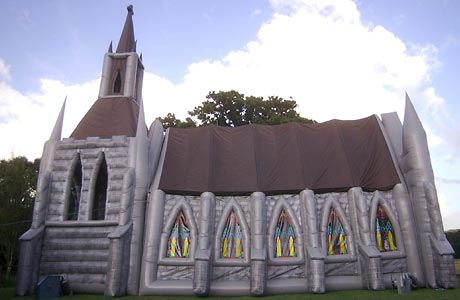
So here is my defence of arch and steeple, font and choir stalls, Priest and Pastor, organ and acoustic guitar, parish committee and conference, flower rota and Sunday school, back pew sitter and pulpit preacher.

If you are weary of soul and spirit, if you are hungry to encounter God, you may seek him in the mountains, or in a city train station, and you may find him there.

Or you could go to Church and sit on the back row.

Desperately seeking Spirituality…

Check out this article by Simon Cross on the Christian.co.uk site- he has included some discussion of our wilderness retreats.

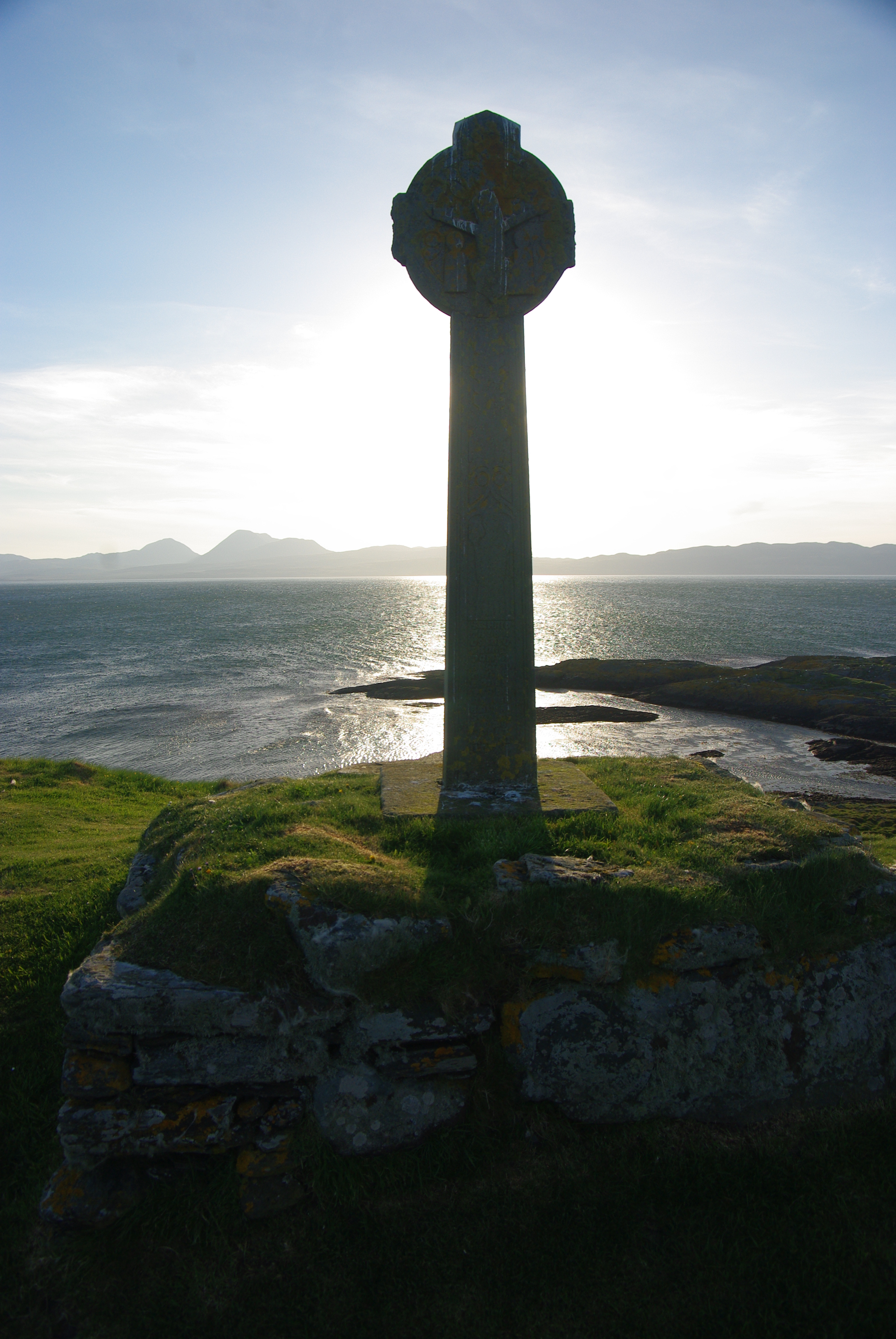
(There is no particular link to the image above by the way, other than it reminds me of one of our island retreats!)

Simon’s article was focussing on what he saw as a significant change in the way Evangelical Christians are approaching spirituality, and whilst I would not regard myself as Evangelical, I recognise the patterns he describes. Here is a quote;

“Contemplative spirituality is a radically different way of being for most evangelical communities.”

In contemporary British society, with its emphasis on the importance of activity and consumption, a sustained path of contemplative Christianity is profoundly counter cultural. Success is generally measured by achievement, and when it comes to contemplation, achievement is hard to measure, or display.

I interviewed Roy Searle of the Northumbria Community for a book about new forms of monasticism , and during our discussion he made the point that the way in which desert spirituality differs from ‘conventional’ Christian spirituality, is that it focuses upon the inner journey – or the ‘journey of the heart’. This is in contrast to ‘normal’ life which is marked by external signs of movement, progress and achievement.


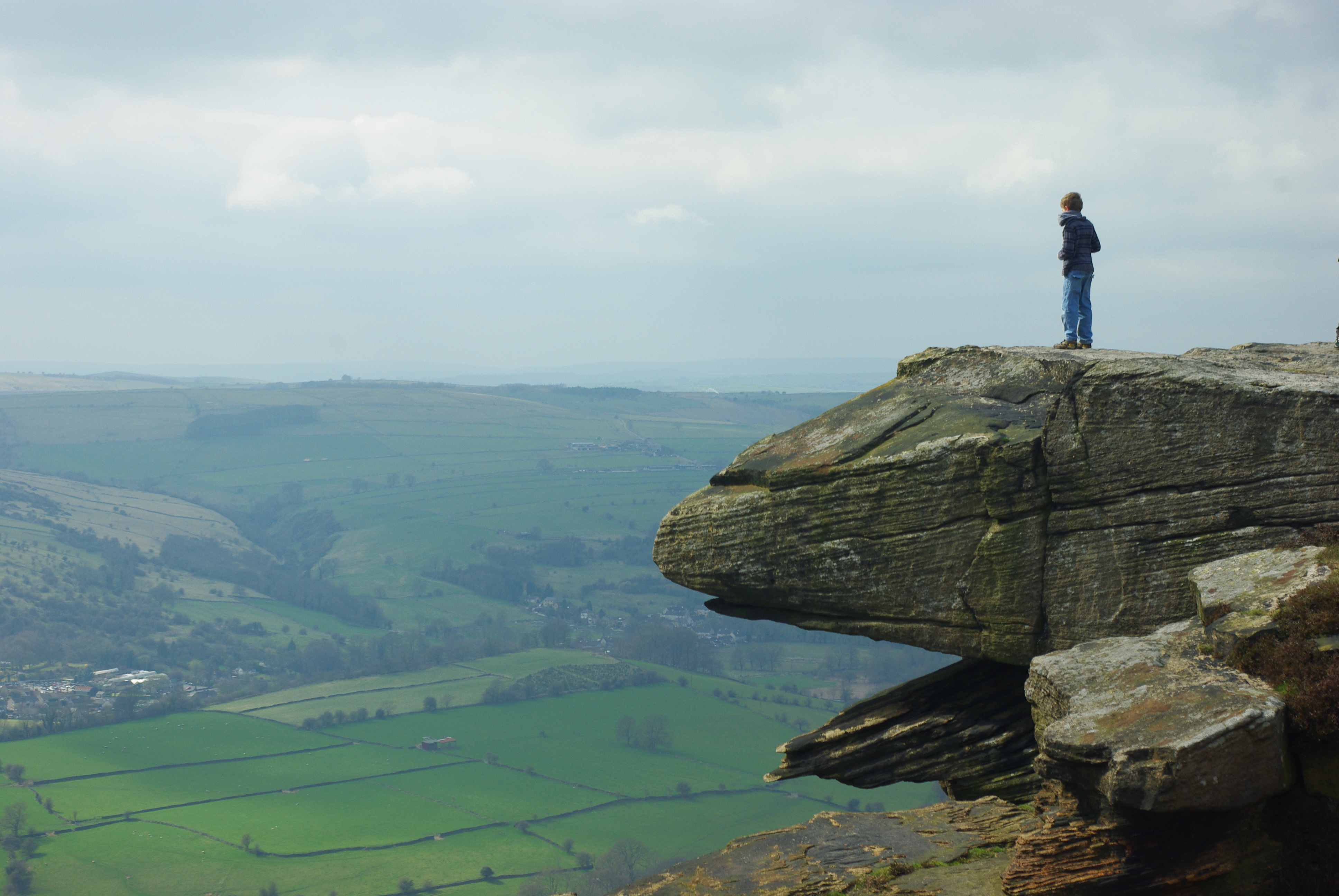
If you stand on the edge too long…

Sometimes, faced with a major change, we are full of the sense of opportunity. But if you are like me, these things ebb and flow- mostly as a result of fairly minor events that may have little real relevance to my future.

So an unexpected tax implication, or the failure of a small co operative venture, or even the harsh words of a friend- these things can feel like nails in a tyre.

Worry not however friends- I tend towards mercurial and what goes down will also rise. And as ever, I find melancholy makes me ruminate in word form;

Shrink wrapped


Squeezed in my own vices

Folded in like some second hand shroud

Shrink wrapped

All things

No longer

Possible

Ubiquiosity and self curation…

I managed to use two words in the title to this piece that my spell checker does not recognise. Possibly because I made at least one of them up, but also because in many ways blogging (another word the spell checker rejects) is a process by which we construct a new version of ourselves- a cyber me.

I was reminded of this by listening to a radio programme today about how humanity is being shaped by the digital media. It was particularly interested in the proliferation of photographic images that we take to illustrate and document our worlds.

It asked a lot of questions about how when faced with an event, or an occasion, or just a sunset, our first thought is how to record it on one of the many devices we habitually carry for the occasion. In doing this, we not only shape our own interaction with the world, but we also are creating a version of ourselves for other people- we are curating our own self exhibit.

As the programme described…

…imagine yourself in a picture in front of a staggering view, smiling into the camera. The picture was taken to display your adventure, your specialness in relation to the special place. It is taken to show others your uniqueness, despite another million other pictures taken in the same place. Just you, having a carefree wonderful time.

Because you were there, you know the wider story- the blisters on your feet, the tiredness and hunger, the row you had with your partner a few minutes before. Also, all those other dimensions- the smell of the place, the sounds in the liquid air.

But interestingly, when you come to think back on this experience in the years to come, the amazing thing is that your entry into the memory will be shaped by this photograph- it will be a telescopic frame that distorts the reality towards the exhibit you were creating.

You, on a good day…

Sure, this reveals us (particularly if like me you make yourself an exhibit on the internet) as rather vain, rather shallow, rather foolish. We are making a meal of what is ubiquitous.

But more than this I wonder whether we are missing out somehow. If every event has to be recorded and digitally validated on some kind of external hard drive version of who we are then what might this be doing to us?

Do we lose some dimensions of experience?

Does it distance us from ourselves and each other?

I remember a conversation on a small island last year. We were there to get away from all the electronic noise and retreat, seeking silence, community and the voice of God. Conversation turned to the camera. Most of us had one- one us had 4. I suggested that given that we were seeking to immerse ourselves in nature, potentially the camera could be a distraction, a barrier between us and the place of retreat.

I remember getting quite a strong reaction. People fiercely defended the camera as means of looking more deeply, as a tool to aid spirituality, not to get in the way.

Which it may be. Because these things are never simple and straightforward. It is not either/or, it is both/and.

There is an undeniable vanity in recording your life through photography and writing as I am doing here. It is our connection with significance, however minimal and fleeting that this might be in this age of information overload.

But there are other reasons too- and (unsurprisingly) I feel that these are valid, even if we have to acknowledge the contradiction. I write to allow me to think deeply, to live vulnerably and to seek out God in the small things and the unlikely places.

I am away next weekend to another small island with some of my friends. Can I really leave behind the camera?

Perhaps I will take it, and leave it in the bag for one day.

One step at a time after all…

Cricket, WOS style…


I have just had a really lovely day.

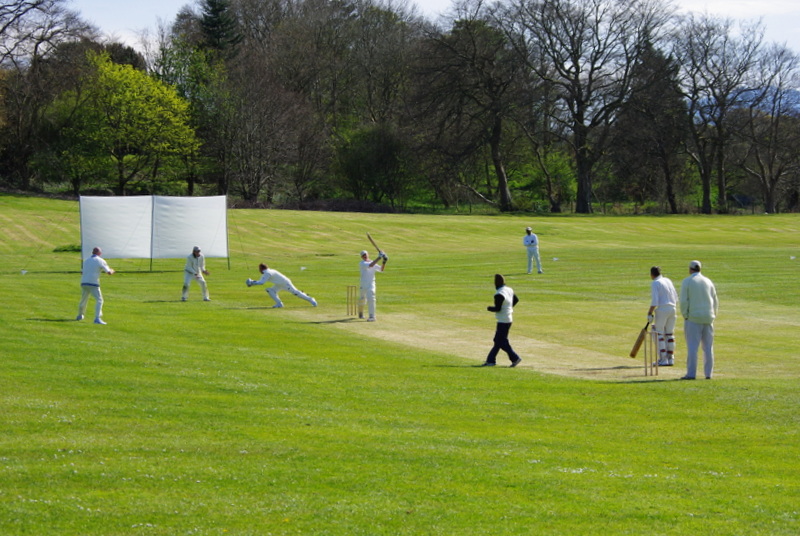
A slow boat over to Bute with friends from Innellan Cricket Club, where we played Bute. The sun shone and the cold spring air sparkled.

Which is more than can be said for our cricket– we lost big style. In our 40 over match, we managed 51 all out in side 24 overs. My contribution? 8 not out, one 4, the rest in singles. I went in at number 7 and was eventually just trying to block out some overs whilst losing partners at very regular intervals.

Bute had less trouble- they had an opening stand of 40 odd, then lost a few wickets before eventually overhauling our paltry score. My contribution, one over for no runs, no wickets.

The wicket had something to do with it- cricket up here in the West of Scotland so early in the season on uncovered pitches is a bit of a lottery. One ball will pitch an rear at your face, another will grub along the ground. Then worst of all, one will pitch go through the surface, and lift gently making it impossible to time a shot. Bute had three bowlers who were pretty fast, one of whom took 5 wickets in 5 overs, for less than 10 runs.

It was all over so quickly that we decided on a 15 over match. We lost that too. I was run out going for a mad single to end the match this time.

Cricket has this way of reducing everything to a simple bubble- the hard ball, the arc of its movement, and the bat in your hand. When we feel the simply harmony of this, we can forget about everything else for a while.

Here are a few pics;