Over the last few months, I have started to become a potter.
That may seem an odd statement from someone who has made a living from a ceramics business for close to a decade, but until recently, I messed around at the edges of the actual potting. The hands-on-clay stuff has been Michaela’s passion, and I have been her helper, provider of words and maker of frames. I always made things and have done a lot of glazing, but it was not really my thing- but this has changed, to the surprise of many, including myself!
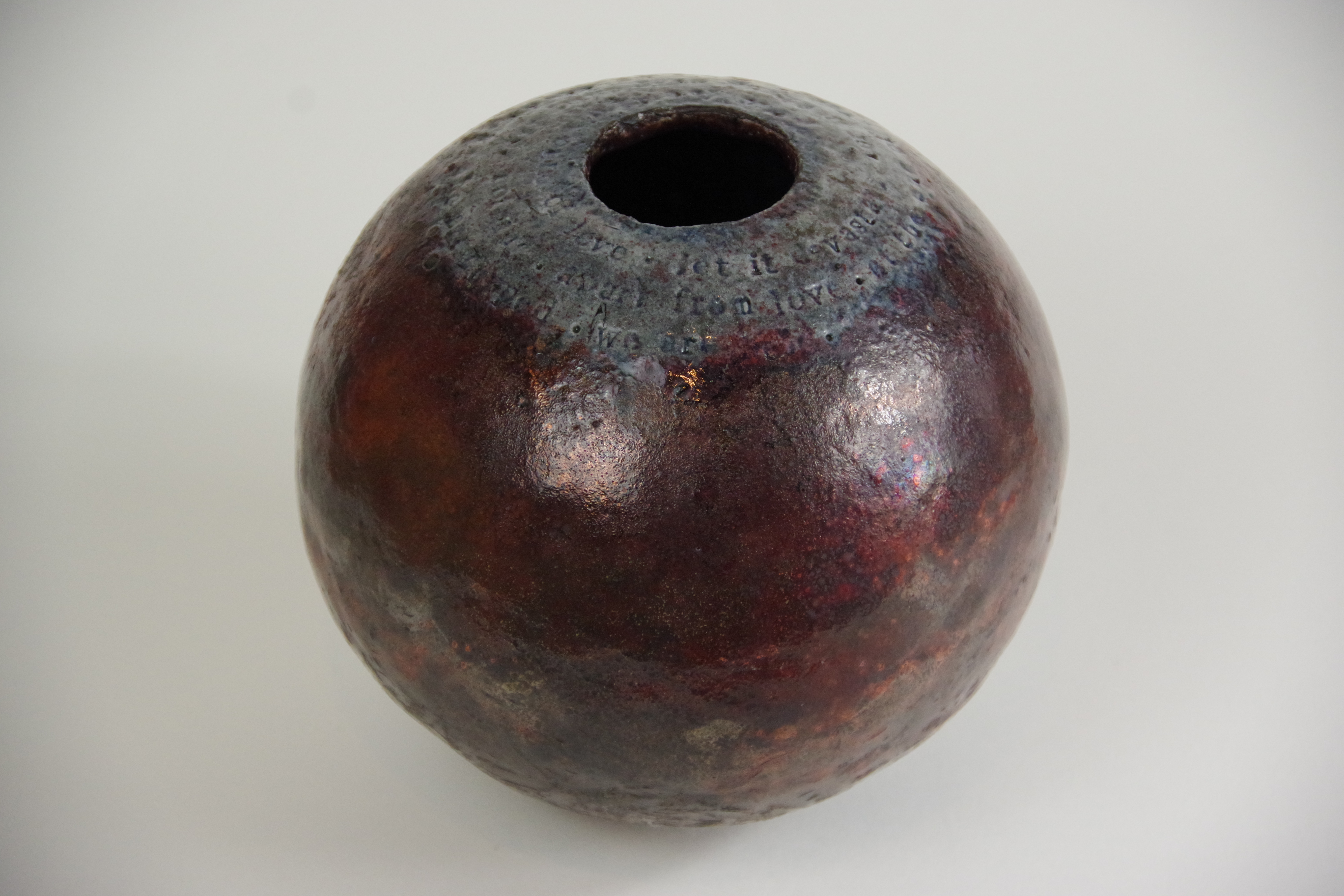
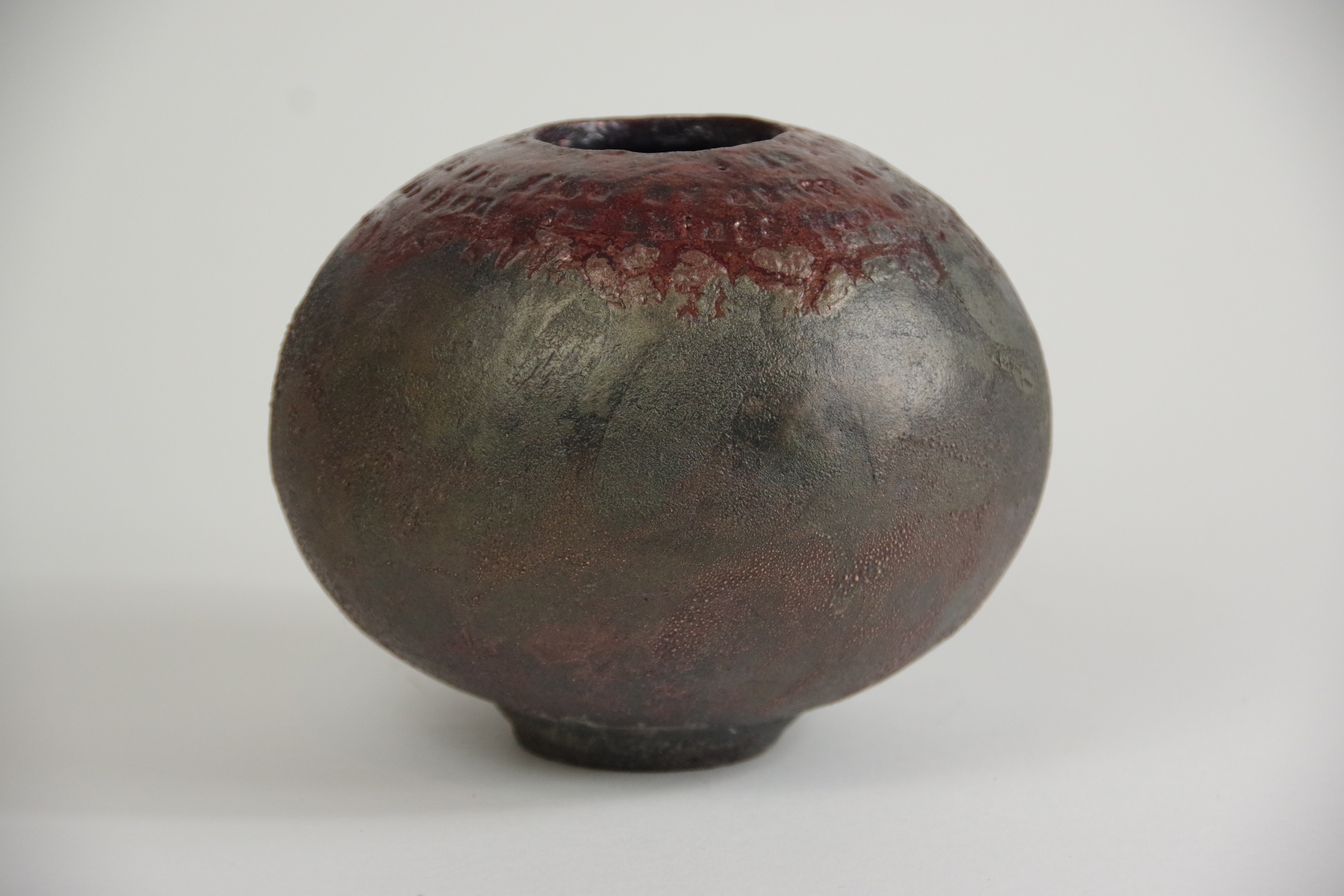
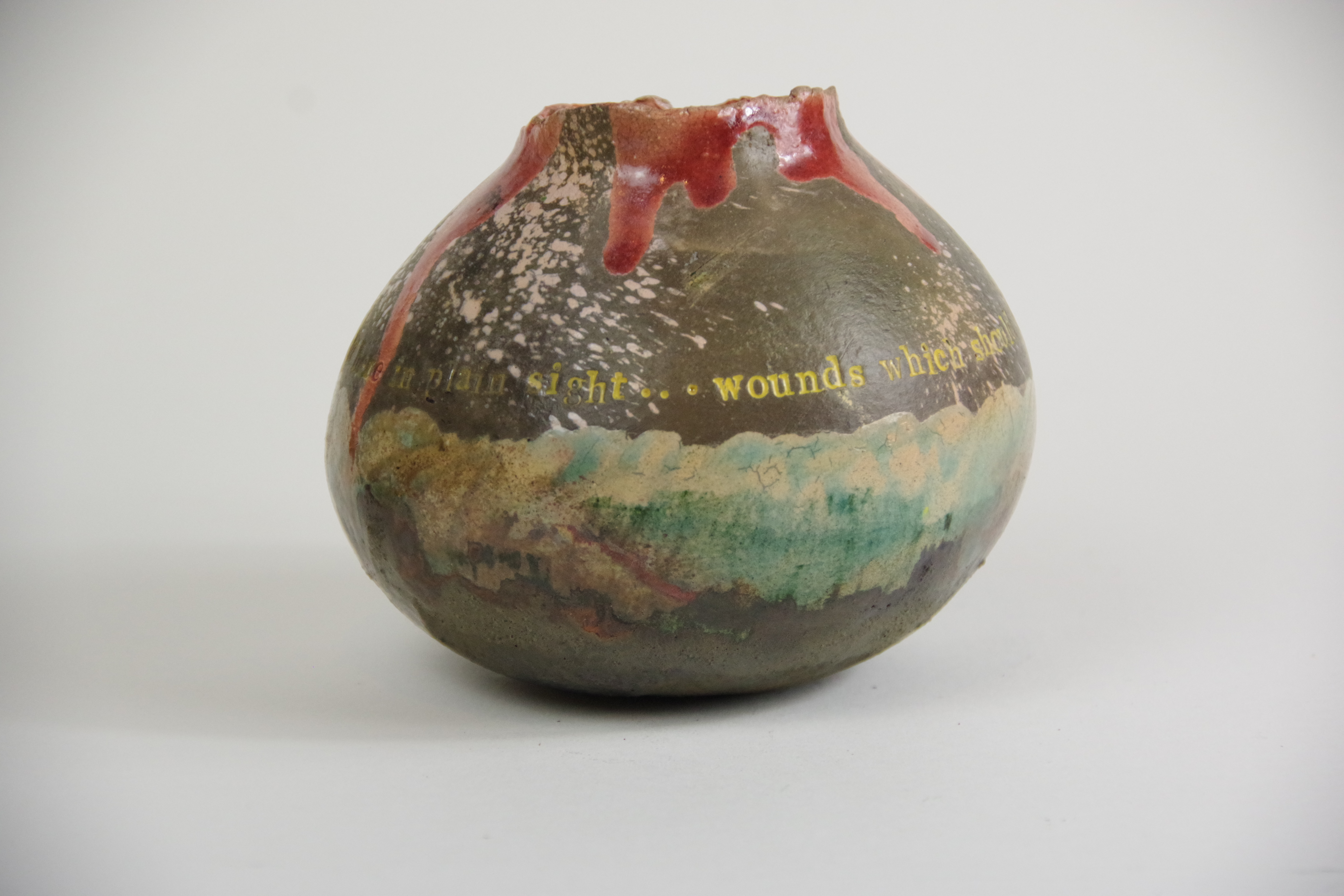
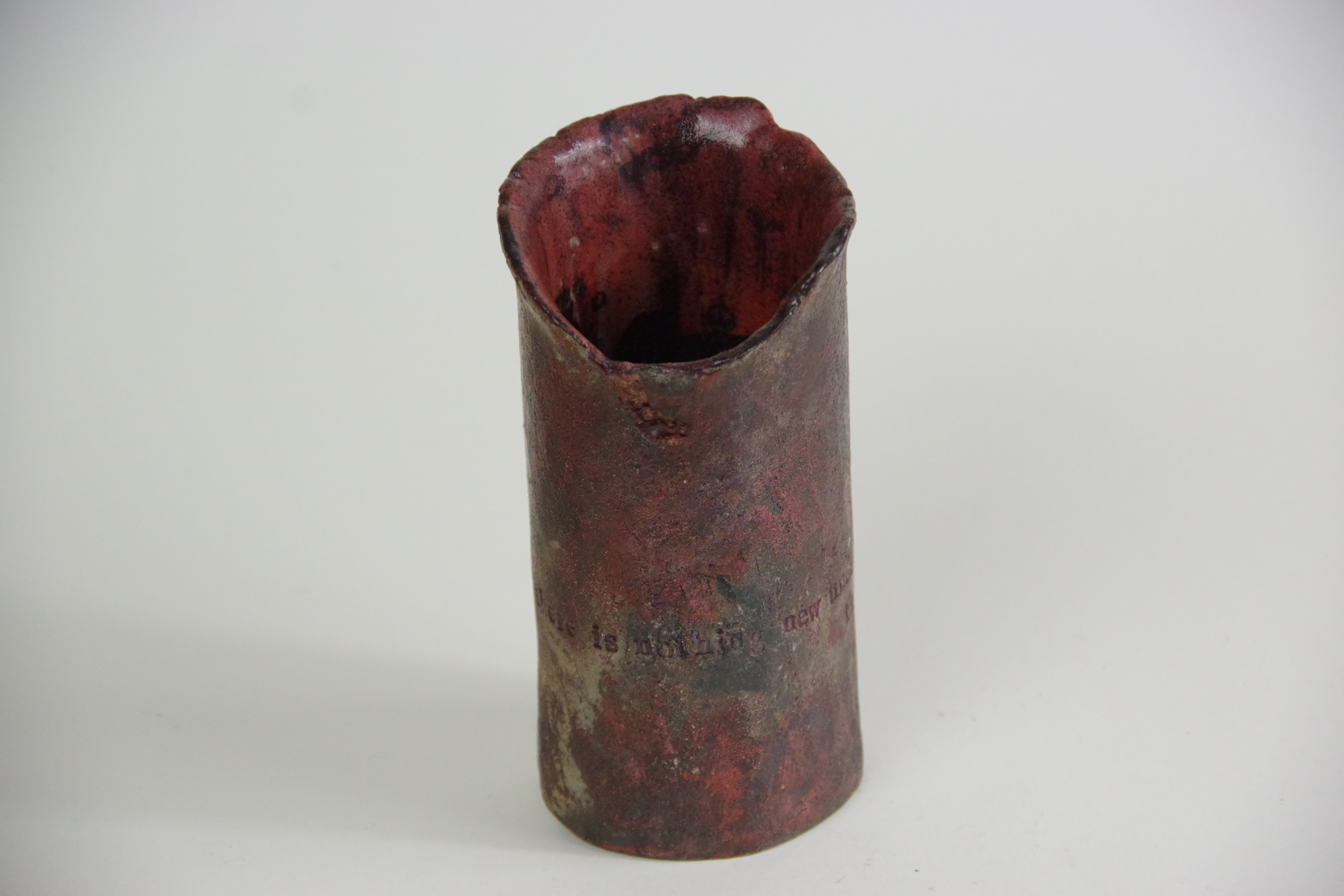
What changed? Well, I have been working on a new collection of ceramics, which we are calling ‘seatree elemental’. Here is the blurb.
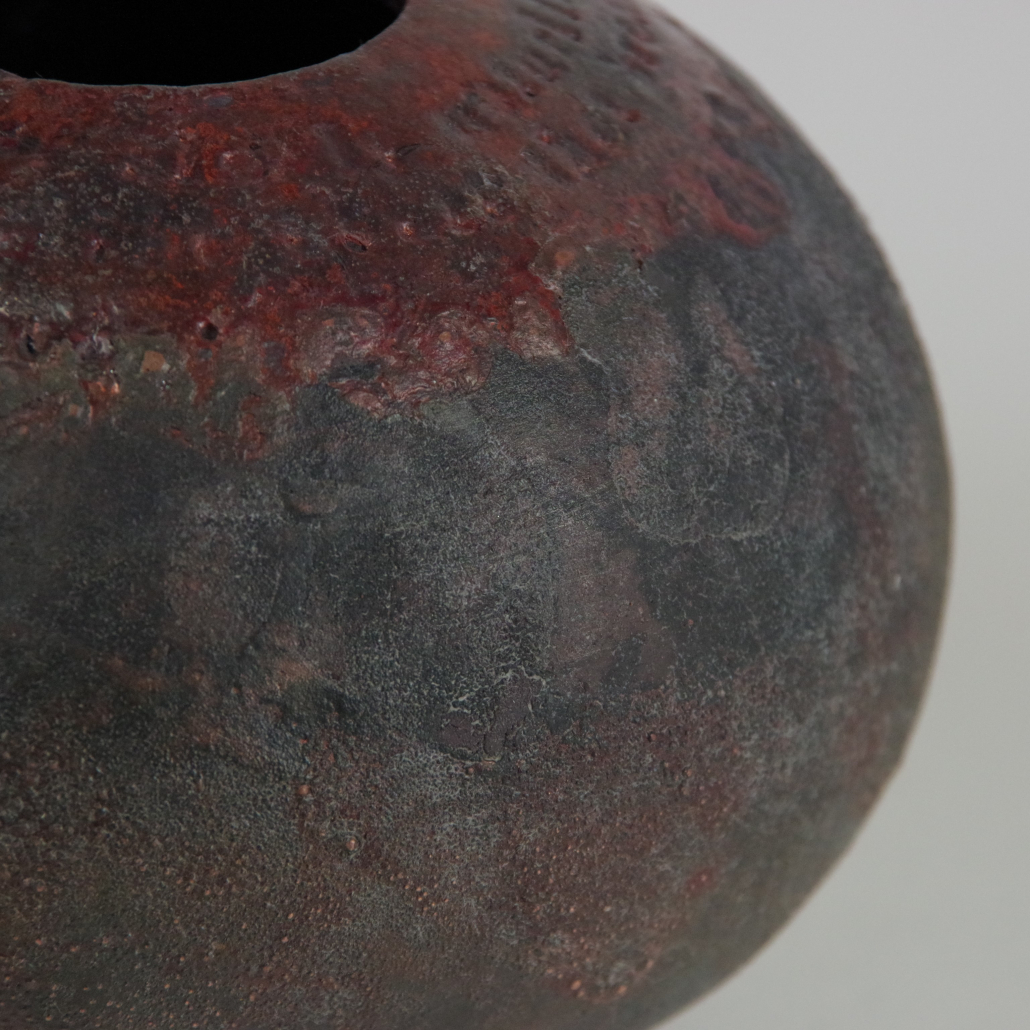
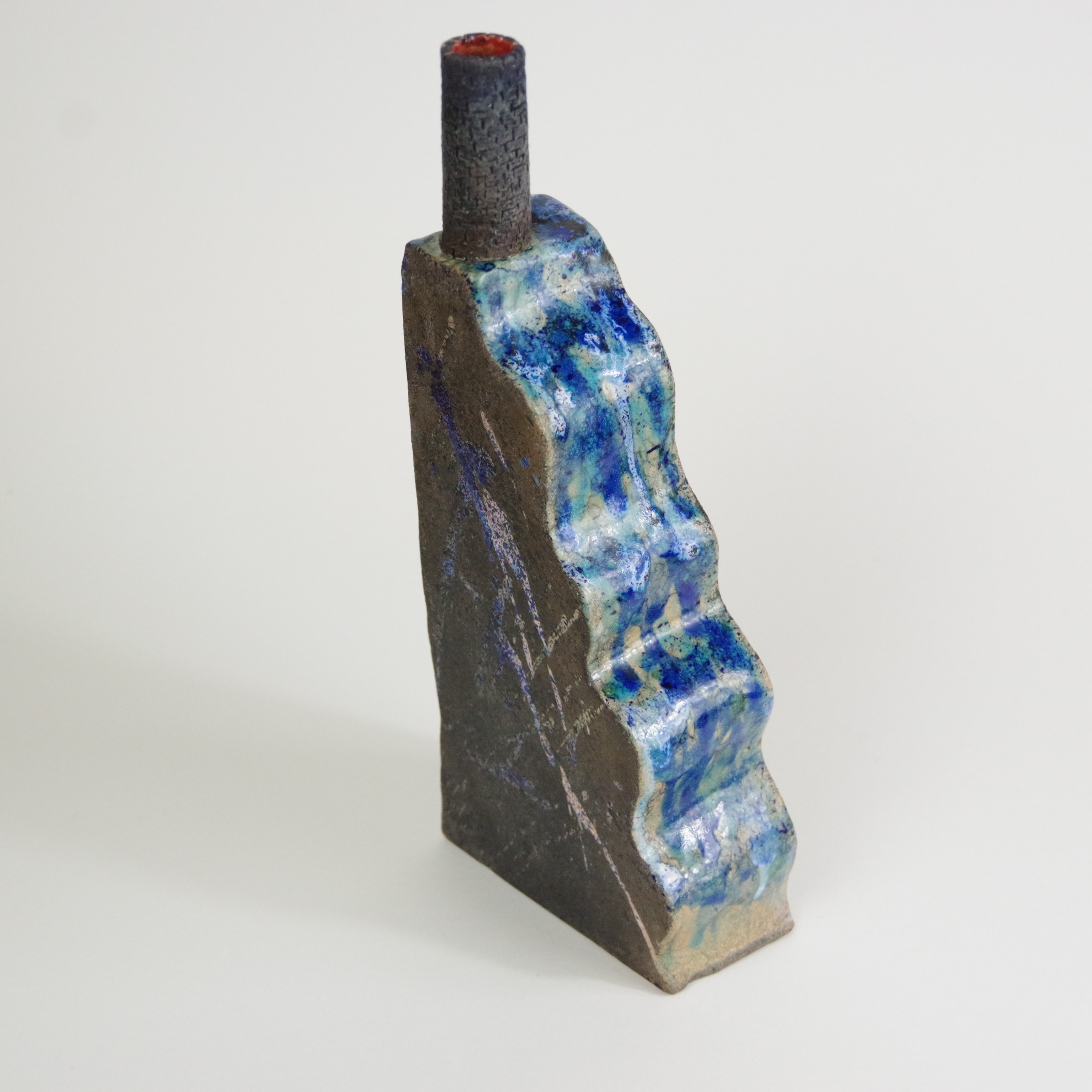
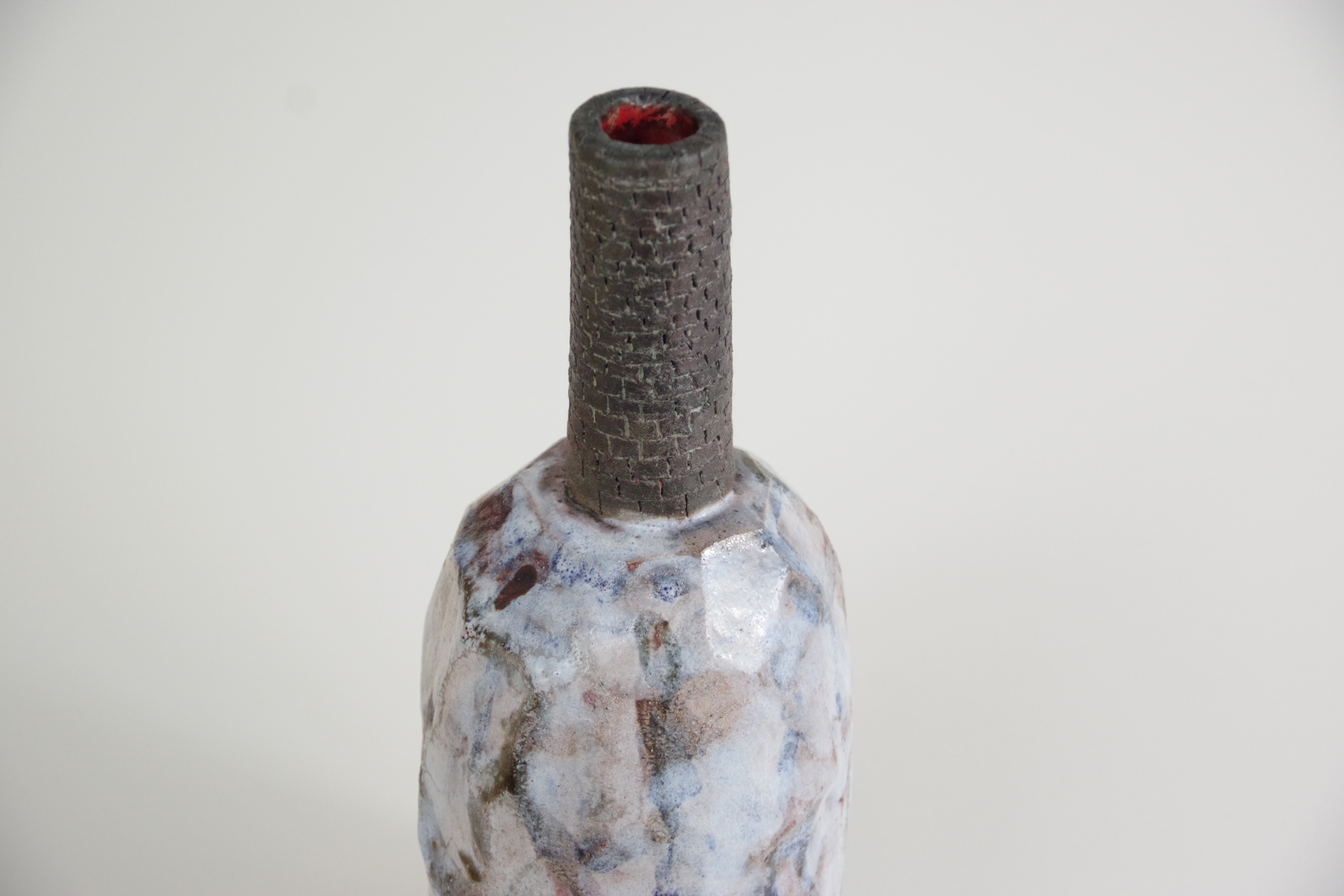
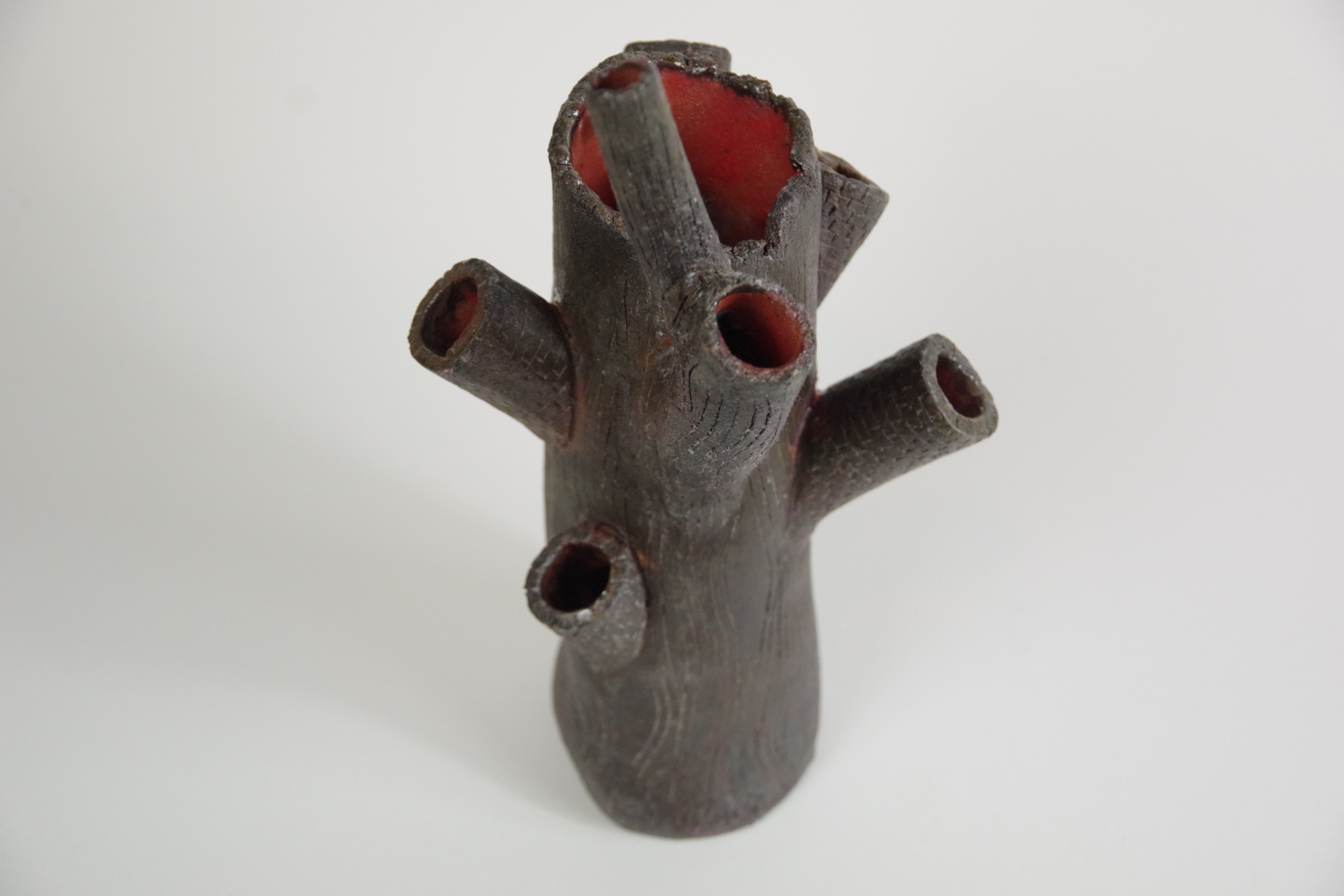
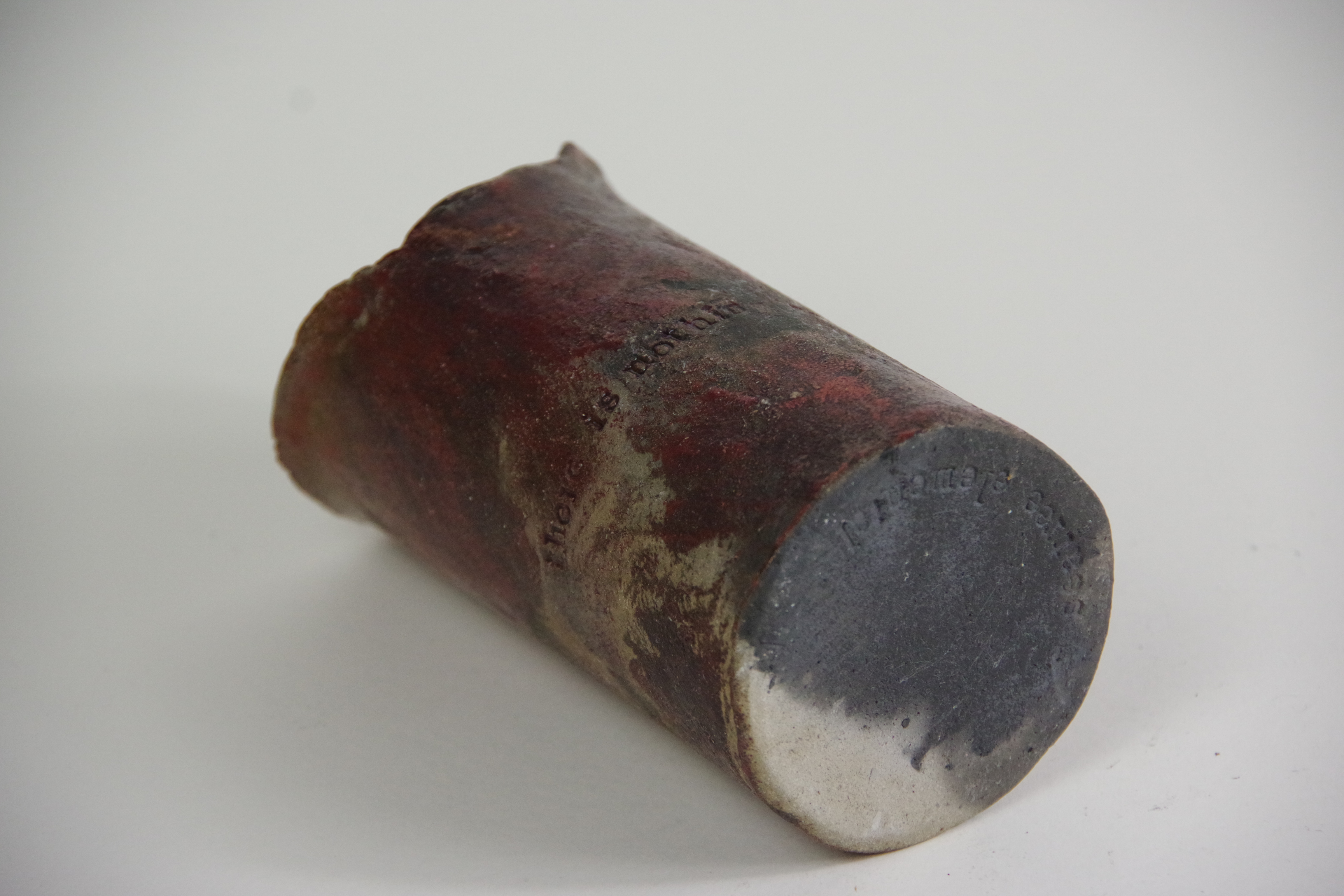
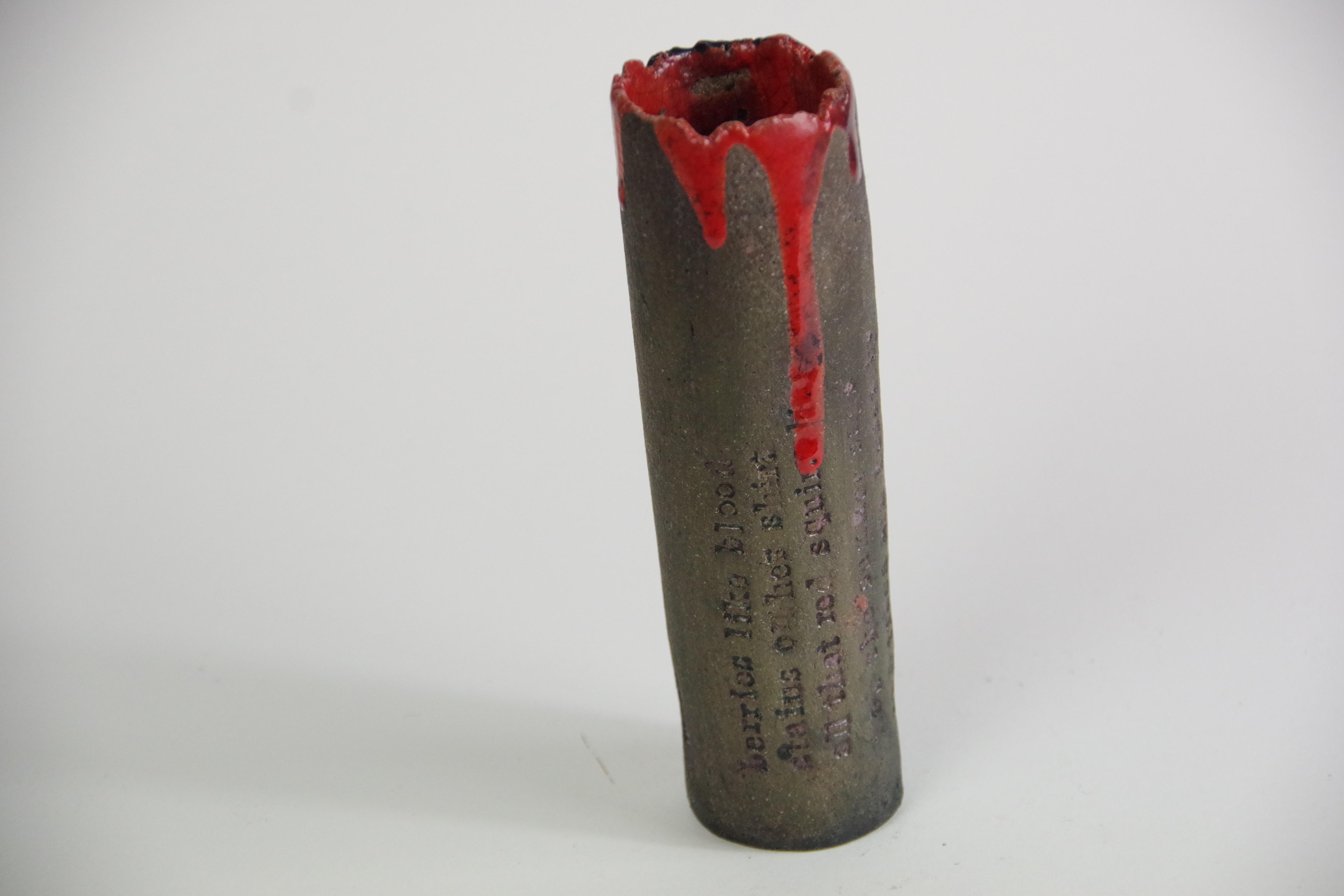
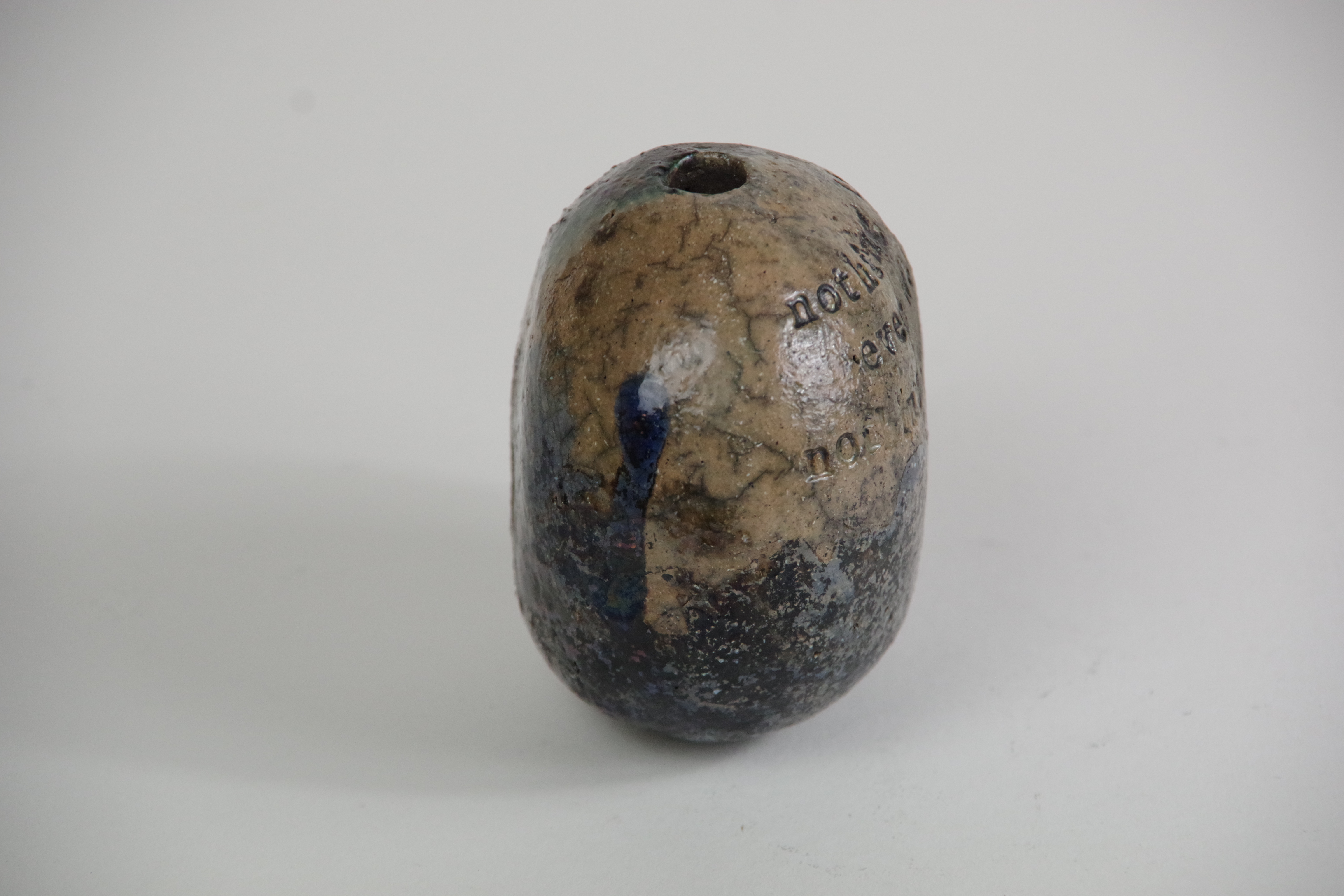
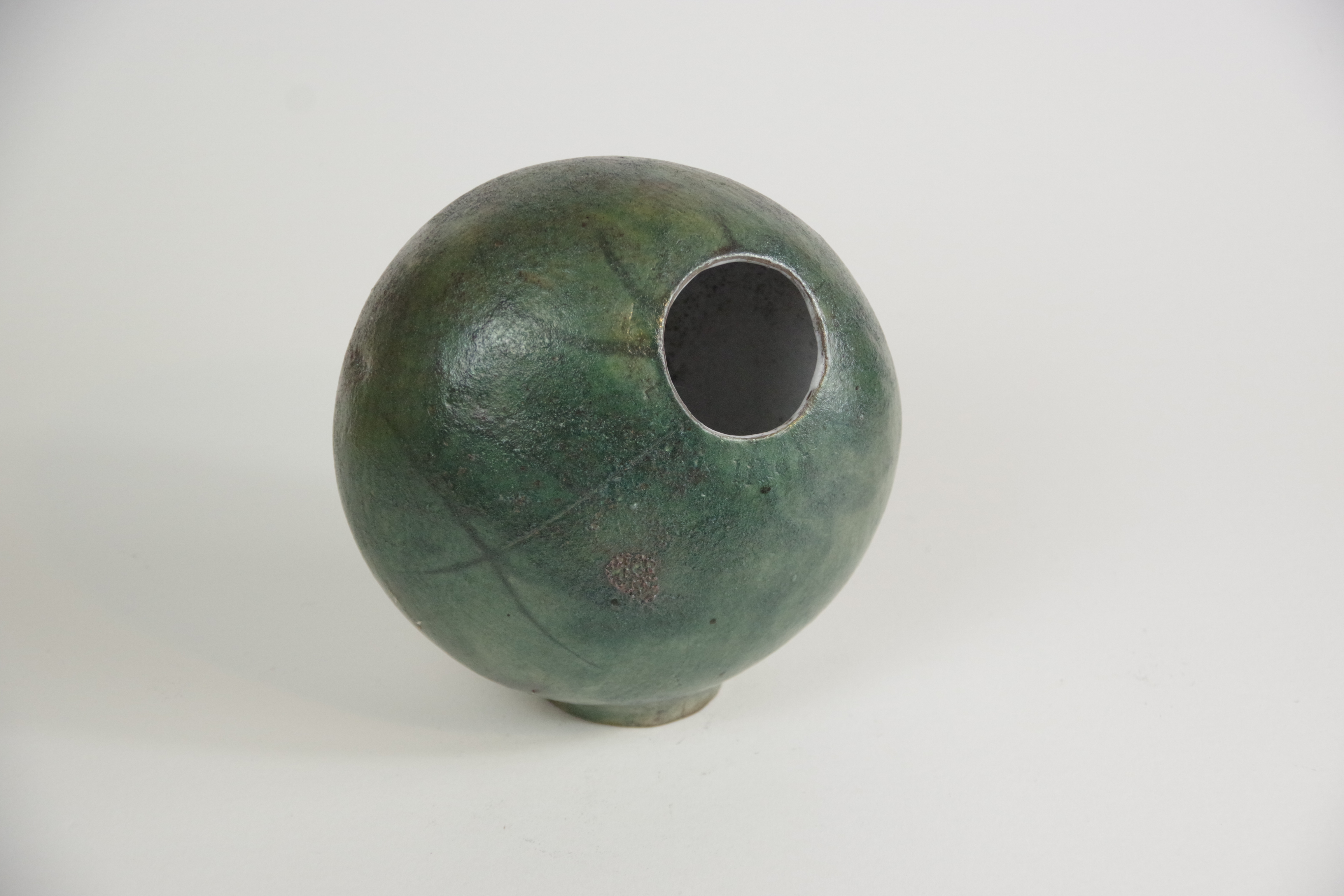
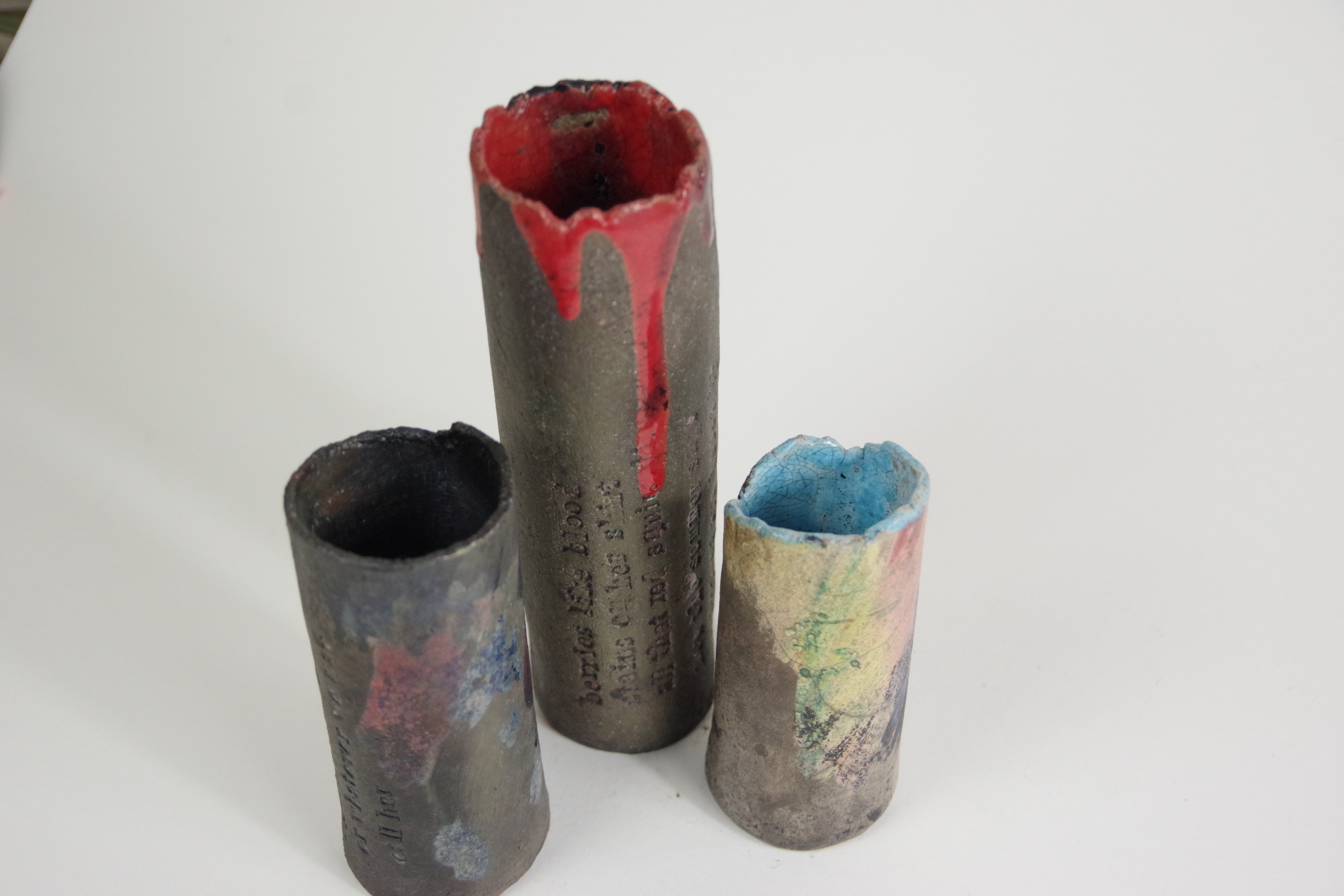
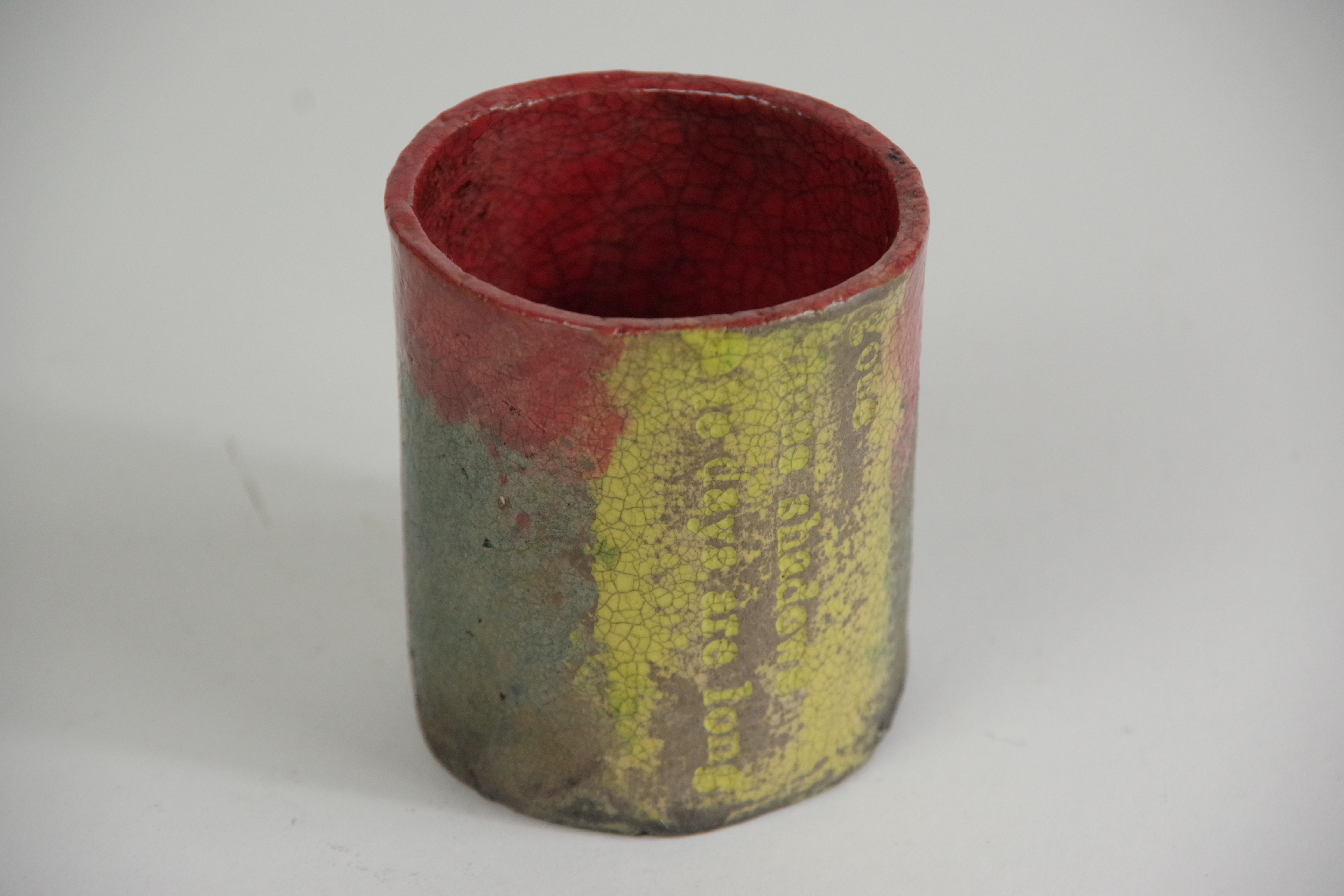
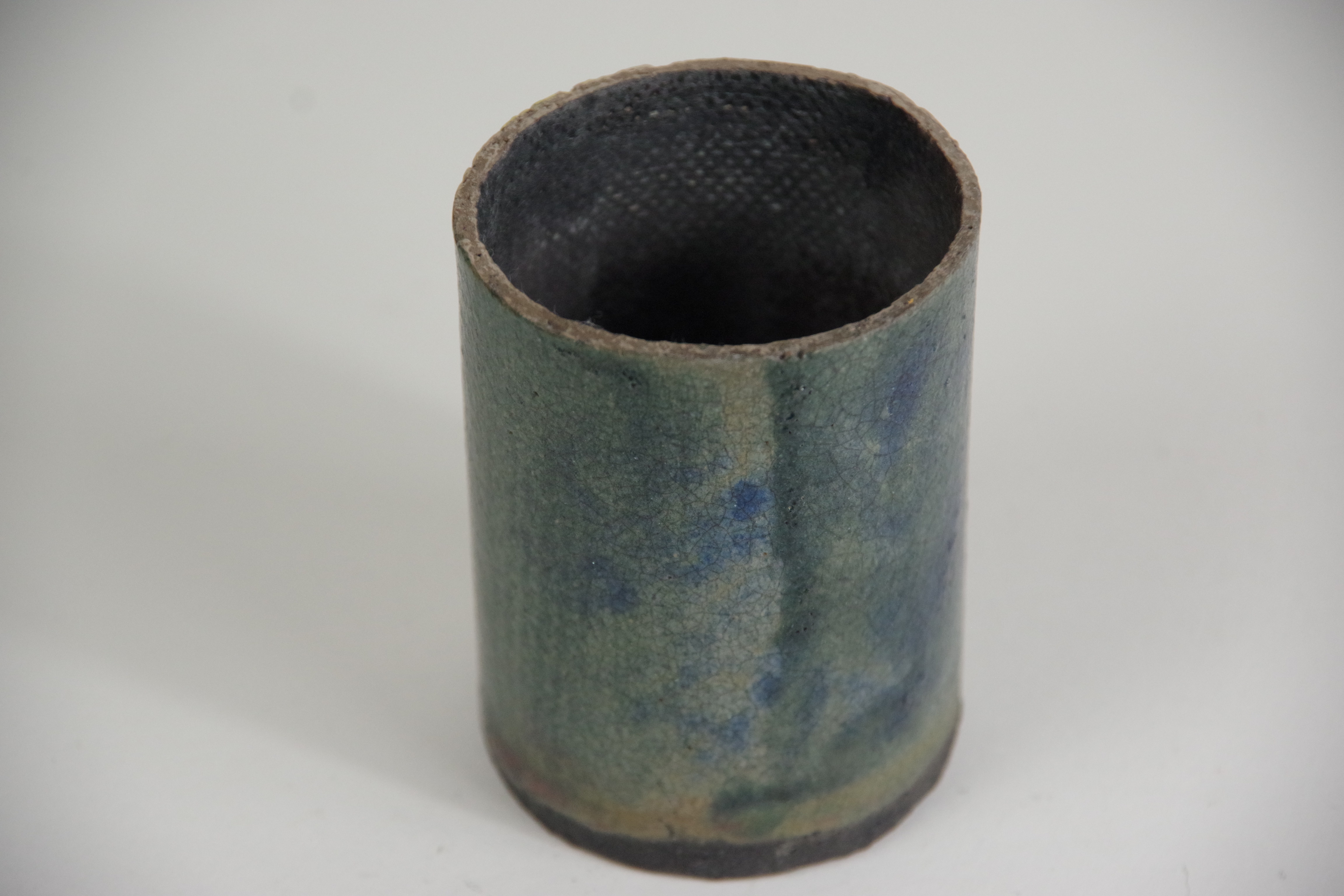
‘Seatree elemental’ refers to a range of ceramics using rough clays and alternative firing techniques, such as pit firing or raku firing. All pieces are hand built and unique, each one is different and one-of-a-kind.
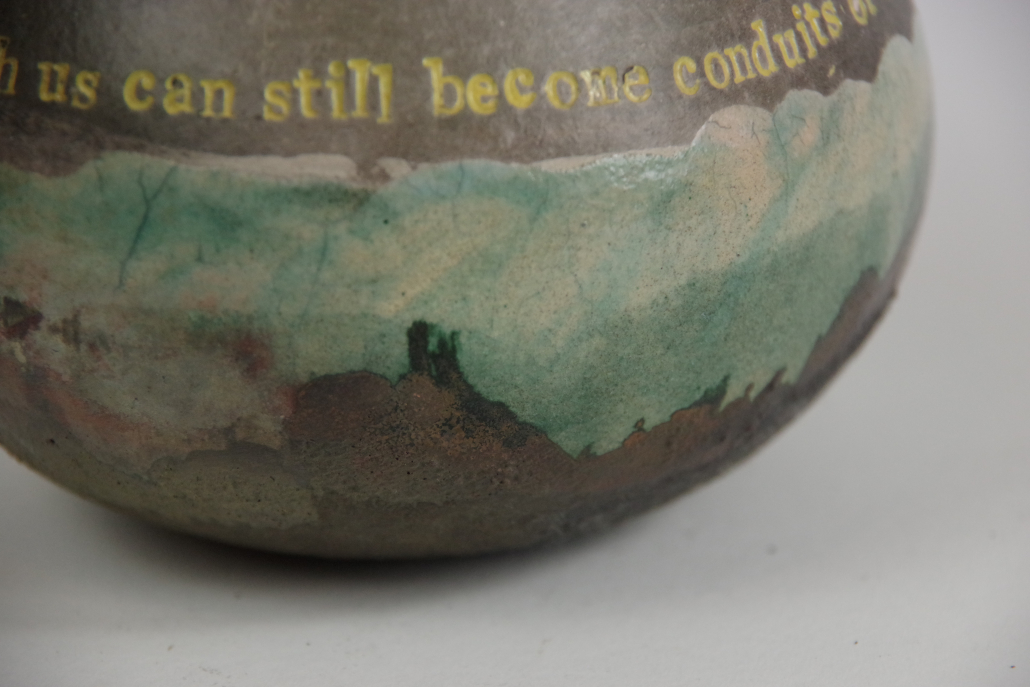
Although they utilise original poetry – just like other seatree work – you may have to work harder to read it, as we are sometimes happy to let the words be absorbed into the piece itself, as if they form part of the fabric. In this way we try to allow the different firing methods to shape the words too.
Why are we doing this?
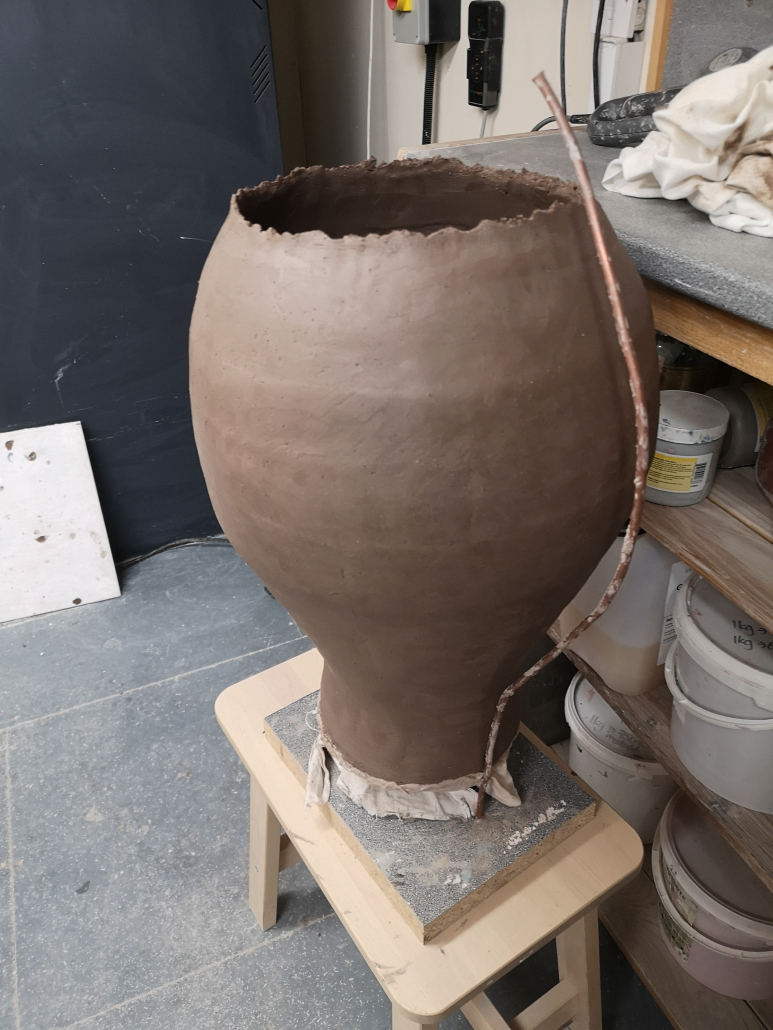
Well, it was necessary for our work to grow, to experiment and find new expression. I love the new rough clay, as it offers many redeeming features in its plasticity and drying qualities. Michaela hates it though, as she has a wierd intolerance of the scratchy rough texture and likes her surfaces to be much more smooth.
I am also loving the alternative firings, and how the organic shapes of the new work are transformed by the elemental nature of fire and heat, as if emerging from the very place they (and we) are planted.
Much of this process is rather hit-and-miss, with as many failures as successes. Partly this is because of our learning curve (which shows no sign of levelling off!) but also the very nature of firing large pieces like this one is challenging!
The poems chosen for seatree elemental are often more challenging in nature, as this work has emerged as a way for us to explore our relationship to all that is broken and all that is beautiful in this world shadowed by climate injustice. Just like our other work, you will see a colour spectrum inspired by the wild western fringe of Scotland.
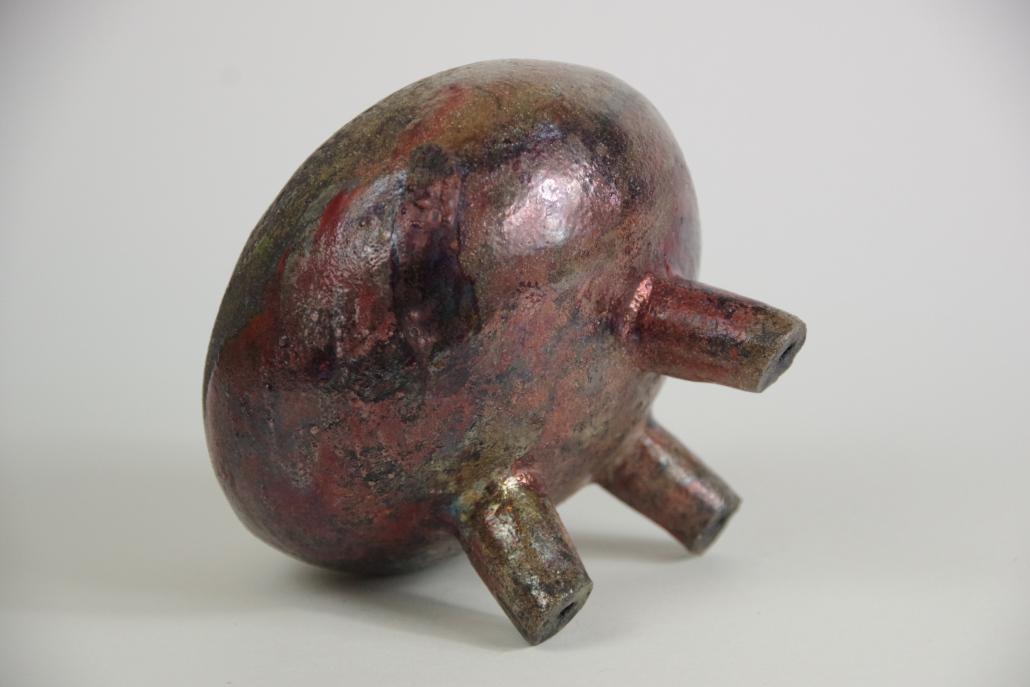
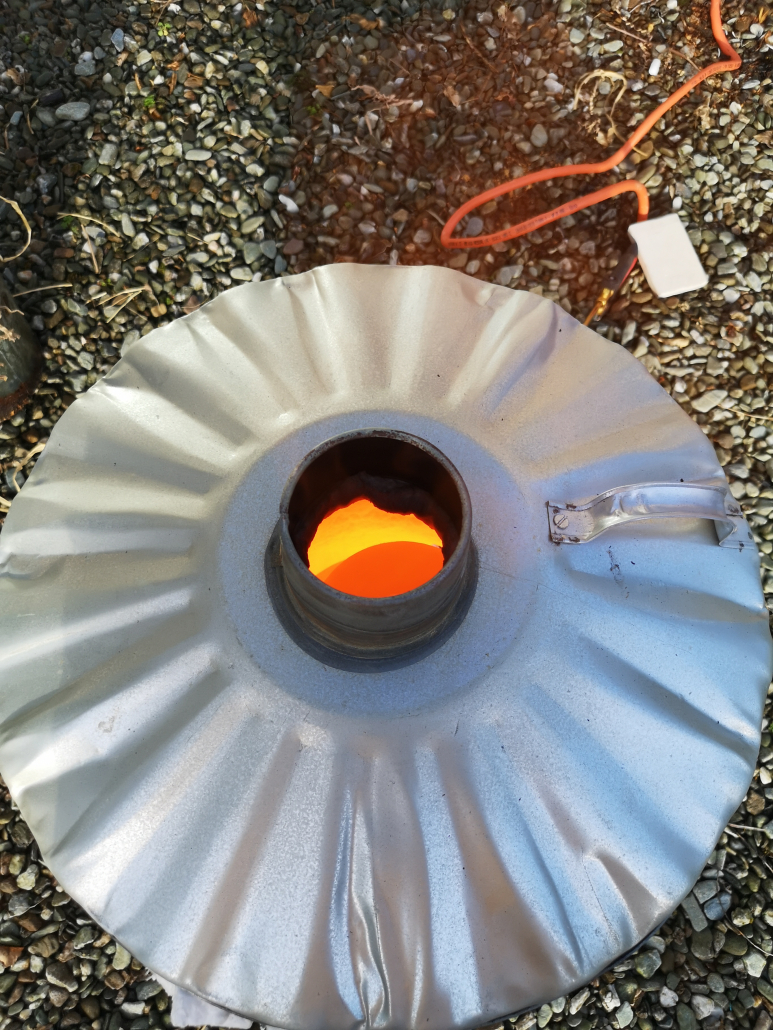
A lot of these pieces use a firing process known as raku (which our Japan-based friend tells us means ‘easy’ in Japanese – something I feel might be intended as irony!) Raku is a process by which a pot is heated quickly to around 1000 degrees using a gas burner, then it is placed in a reduction bin (a sealed metal bin containing combustable material.) By controlling the amount of oxygen reaching the glazes, the potter can produce a range of different colours (although much of this is also down to chance for relative beginners such as ourselves.)
Slowly, firing by firing – sometimes by firing pieces a number of times – I am starting to get the colours that thrill me. It is mesmeric.
We mentioned earlier that this work is in part a response to climate change and mass extinction, and we hope to pull together an exhibition of our work in the future, but for now, we have uploaded a small selection of our work in to our shop, which you can see here.
Here are a few more images of recent seatree elemental work. Most are not in our shop, but if you see something you like, feel free to drop us a line…
A few months ago, Michaela listened to one of those business webinar things aimed at small creative businesses, where they were talking about different ways for artists like us to make a living from what we create. The idea was that we could use Patreon as an exchange, in which people give monthly support in return for a sliding scale of content and ‘rewards’.
I confess, I was skeptical, but the reason we are still able to make a living through what we create is because Michaela works so hard to make it work so we gave it a whirl. To our (or mostly my) amazement, a number of people signed up.
This seems to me to be a miraculous and wonderful thing – that some people who I have never met would see something of value and beauty in what we make, so that they feel prepared to support us financially. Our lifestyle is nor lavish and so these small acts of support make a big difference.
How does it work? Well, check it out for yourself, here.The seatree patreon has four tiers, unlocked by different subscriptions, which include things like
access to a private video of yours truly reading a poem
a handwritten anotated poem
a monthly gift
a piece of seatree pottery each month.
The other thing I have discovered is how much I have enjoyed making these short videos. I hope our patreons will understand if I share one of these here as a sneak preview;
I saw a post on a certain social media platform yesterday that disturbed me. Perhaps this is foolishness, because surely what people splurge out into on-line spaces is mostly just ephemera, irrelevant to real life, so why give it any second thought?
Actually, we know now the power we have ceded to social media algorithms. Yes, there is much meaningless, dross and distraction, but also something much more sinister is in the mix, in part through unintended consequence, but also because of the deliberate manipulation by corporations (for profit) and politicians (for power.) Even when we consider ourselves aware and able to ‘read the feed’, we may be kidding ourselves. None of us are immune.
In fact, part of the reason this post disturbed me is because I don’t tend to see this kind of material in my feed. The algorithm understands me well and, in order to keep me hooked in, tends to deliver me material more sympathetic to the prejudices it has (correctly) identified. Or perhaps, in a more subtle way, a tweak in the algorithm is seeking my engagement in a different way, through outrage. After all, nothing titilates like offence. We all love our ‘rightness’ to be revealed by the wrong in others.
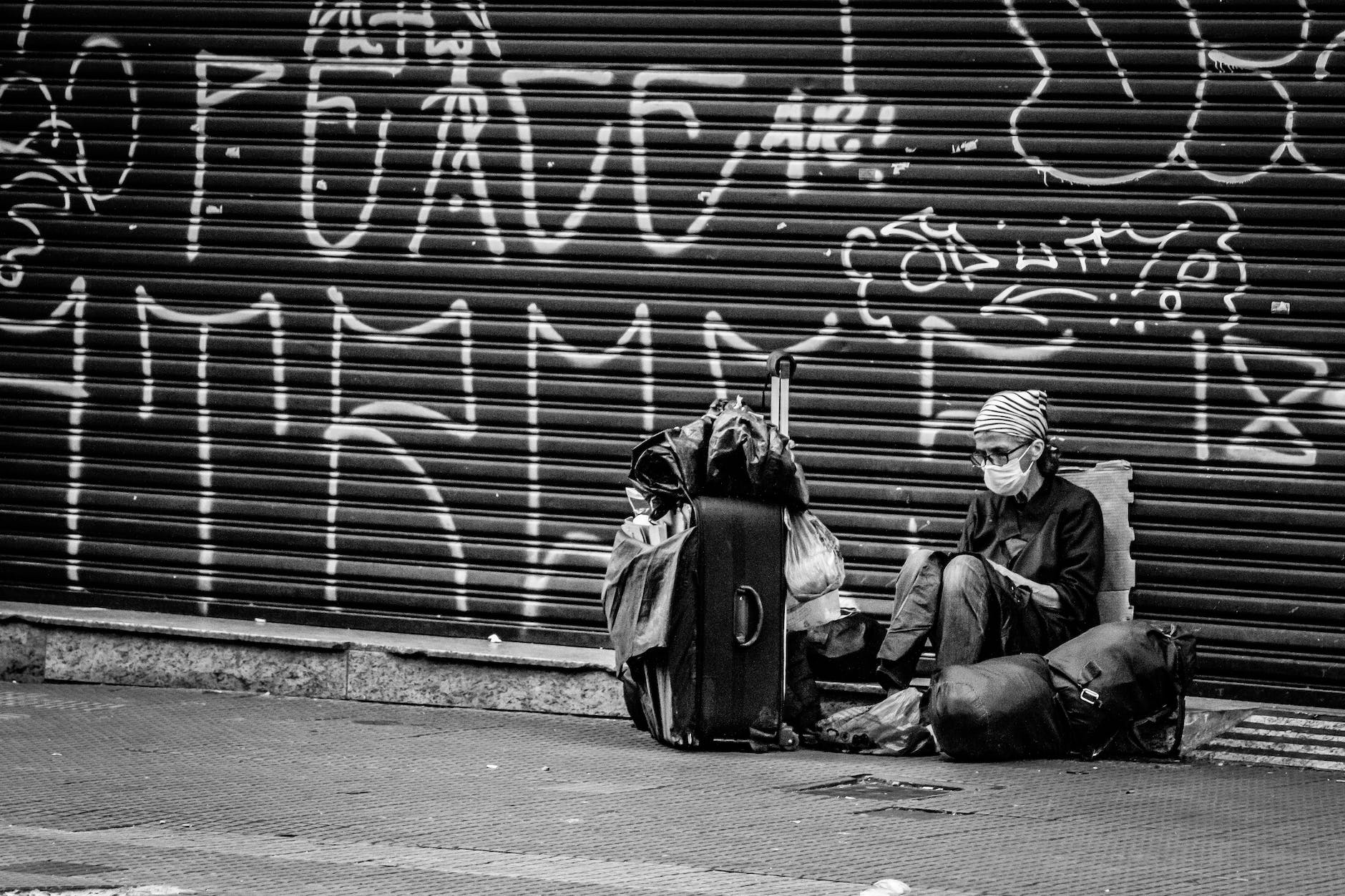
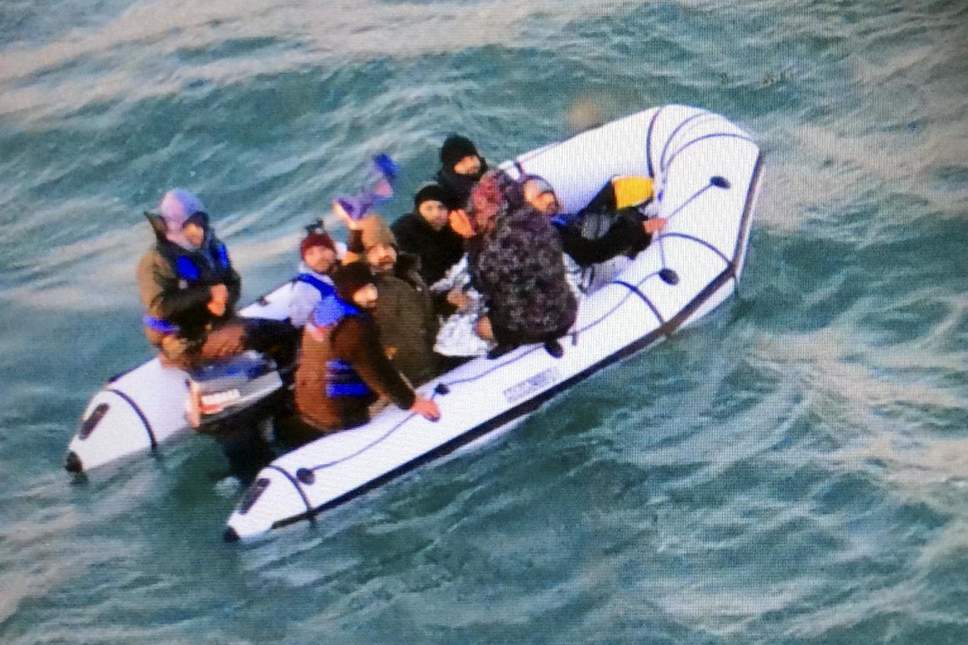
Here then, is the post in question. It was this picture;
One of my contacts had accepted the request and shared this to her feed, which was how I cam to see it. She is someone I went to school with a long time ago and have not spoken to for decades, but I remember her as a good person – a quiet, kind girl. The nature of social media links means that I only know her through her avatar now, which is full of family, love and horses. I wish her every goodness.
This connects me to part of my own story, growing up in a broken working class community, during the political and economic upheaval of the 1980’s, when Margaret Thatcher fought a war against the mine workers union in the cause of Hayek and free market. In my corner of Nottinghamshire this meant open warfare between striking miners and the police and eventually mass unemployment, poverty and a loss of community cohesion and pride. It is perhaps no secret that the current MP of this constituency is former miner (and former Labour party activist), Lee Anderson, whose bigotted ‘plainspeaking’ strident views have seen him elevated to the position of deputy chairman of the Conservative party. This transition from working class solidarty to a cruel game of blame-the-victim causes me deep shame for my place of origin.
I wanted to try to identify where this photograph came from. Google lens gives some limited tools to identify the origin of an image and as far as I can see, back in 2017, the photograph was first used by The Independent newspaper to illustrate an article by Sirena Bergman under the title of ‘Budget 2017: While pledging to help privileged house-buyers, Philip Hammond insulted homeless people across the country’. Back then, Hammond made comments about increasing taxation of cheap alcohol, which he calously and without anyevidence linked to homelessness, clearly playing to the gallery of middle English privilege.
In other words, this image was first used in an article which called out the scapegoating of the most vulnerable and broken people in our country. Here is some of what Bergman said;
The overt elitism in these measures is unfathomable. His comments on “vulnerable people” “cheap alcohol” and “so-called white cider” intentionally or not evoked images of the homeless population – currently standing at a quarter of a million people in the UK – and reinforced the idea that the privilege of not living on the streets gives us a right to dictate how they should spend their money.
Hammond did mention homelessness in his Budget – for about a minute, if that. He pledged £25m to tackle the problem, compared to the £10bn he’ll spend on helping people who want to buy a home.
Apparently, as a young person, home ownership is my dream. While I don’t doubt it must be nice to not be held hostage by exploitative landlords and have some semblance of security for my future, much higher on my list of dreams is to live in a world where the very basic of human rights – to have a roof over one’s head – is assured to every citizen.
I live in Hackney, one of the top ten boroughs of London with the highest levels of homelessness. In interacting with rough sleepers the number one issue people express is a lack of empathy from the public. They are ignored, mocked and abused for begging for spare change – an indignity no one should have to suffer. But a real attempt to tackle homelessness is non-existent in mainstream politics, where people who are out of work are vilified and homelessness is stigmatised and “othered”, despite the fact that one in three families are a month’s salary away from losing their home.
It is clear then that this image hs travelled a long way from it use in the above article. Google lens tells me that its first use associated with the words attached was by someone called Jerry Tilley on what was then called Twitter. I do not have an account on this platform anymore and so am thankfully prevented from a closer examination of Mr Tilley’s other offerings, neither can I be sure that he (if indeed he is a real person) made the image himself, but from a google search the account seems to travel alongside other right wing causes such as opposition to vaccinations. Division and scapegoating has become a feature mainstream politics both sides of the atlantic and perhaps Mr Tilley knows this well. Politicians and activists use this tactic because it works.
What about those veterans who are on the street though? Perhaps my response seems unsympathetic.
Are there a lot of street sleeping ex-service people? How many and what effort are being made to help them?
Is there evidence that the needs of other homeless people – particularly ‘migrants’ – are being promoted above our veterans?
Are veterans needs different to other homeless people? Are they primary?
(As an aside, when did we start using the word ‘veteren’ to describe ex-servicemen and women? It seems to me to be an American import, along with that sickly phrase that has to be intoned every time we meet someone ‘thank you for your service’. I would contend that this kind of solidier worship hides a lot of other problematic concepts, but this is for another time.)
Last year, Johnny Mercer, Minister for Veteran’s affairs, pledged to end veterans sleeping on the streets. He is an ex-serviceman himself, and placed a lot of personal capital in this issue, even saying on national radio “There should not be any veterans involuntarily sleeping rough in this country by the end of this year, and you can hold me to that!”. After news articles suggesting it had actually risen by 14% over the year, he had a very public argument with Carol Vorderman. Sides were taken, but the ‘problem’ remains.
Perhaps we should speak to pepole who are actually experts on homelessness and street sleepers? This article in the Big Issue magazine is perhaps a good place to start. Here are a few quotes;
It’s a matter that the UK government has been vocal in tackling – veterans minister Johnny Mercer has promised to end veteran rough sleeping by the end of 2023, calling the current situation “manageable”.
However, the strong connection between street homelessness and ex-services personnel is not always borne out in the statistics.
While the narrative of British veterans being left on the streets is popular with some quarters of the far-right, the Chain figures show that most veterans on London’s streets originated from outside the UK. Between July and September 2023, 44 British veterans were spotted on London’s streets compared to 92 people with a history in the armed forces outside the UK.
The Westminster strategy to achieve that goal specifically mentions veterans. It speaks about waiving a local connection to areas for veterans asking local authorities for help – a common issue for veterans who may move around the UK or have been away serving.
“It’s the first time there have been specific actions towards ending veteran homelessness,” said Buss-Blair.
“Having a viable route off the street is key. Ending veteran homelessness is eminently achievable.”
Measuring and understanding the causes of homelessness is never easy. It is by nature a hidden problem, and each homelessness story will be different. The common ’causes’ that often cited are sometimes refered to as the ‘eight D’s’- drink, debt, drugs, divorce, depression, domestic violence, dependency culture, and digs, meaning accommodation. These are true for everyone, whether veterans or not. But these ‘D’s’ seem oddly elastic, in that they become more powerful in certain social circumstances. Homelessness grows in situations of greater innequality and poverty, and when housing is short. If you raise the bar, then short people can not reach it.
Which is another way of saying two things; helping homeless veterans is possible, but the problem of homelessness is not seperable from their special case.
The other assumption made in the post that started this discussion is that there are migrants sleeping on our streets and that these people were being housed in hotels, somehow at the expense of efforts to shelter ex-servicemen and women. You do not have to look hard to find how far this concern is being spread.
“Over 6,000 homeless veterans who have given their service to our country will be sleeping rough on our streets tonight. Nearly 48,000 illegal migrants who haven’t given anything to our country will be sleeping in 3/4/5 Star Hotels tonight. The UK in 2020”, reads one post shared hundreds of times on Facebook (here) .
VERDICT
False. Approximately 1,000 asylum seekers are housed in hotels each night. The claim that there are 6,000 veterans sleeping rough each night is unsubstantiated.
There is evidence however that numbers of ‘migrants’ (these words are not neutral) sleeping rough are increasing. There were reports that numbers sleeping on the streets of London in November last year had risen by 800% over a two month period, from 11 to 102. (Remember that counting numbers of street sleepers is almost always impossible, and that actual numbers are almost certainly much higher.)
Why are migrants sleeping on our streets, particularly if many of them are Asylum seekers, with specific protections under international law? Perhaps in part this group of people share more than the ‘eight D’s’ mentioned above with ex-servicemen and women. The trauma and displacement that I have have had described to me by ex-servicemen during my previous work as a therapist has strange echoes in the stories of people escaping violence, forced out on to dangerous roads in search of sanctuary.
The rise in negative language around ‘migrants’ in the UK is not just a right wing phenomenon. The Labour party are picking around the edge of it, critical of incompetance and not ‘stopping the boats’, rather than calling out moral bankruptcy in the scapegoating and gaslighting that has been witnessed even from the dispatch box from our government.
And this is why posts like this one matter. Stoking fear of outsiders is easy. Blaming them for things is easy. We are rendered receptive by these messages by our tribe, and if we feel that tribe to be under threat, then we are even more swift to grasp them.
What is hard is to actually do the hard work of understanding why people are on the streets, and accepting that the job of stopping this happening is far from easy and that in part macro economic decisions are to blame every bit as much as individual decisions and experiences.
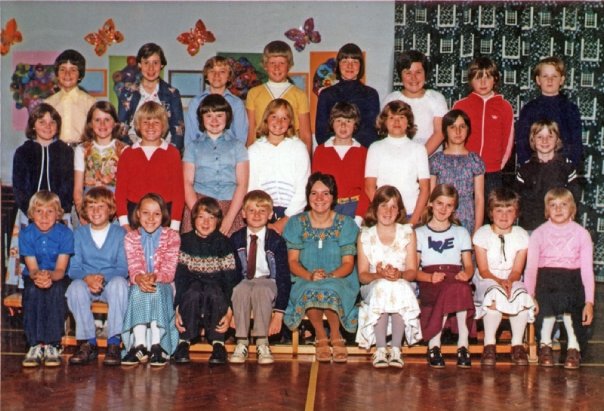
Here is a class photo, with bowl-cut me in yellow in the back row. I think the person who shared the post may be in here too, but my memories of everything back then are fragmentary – the gift of a difficult and damaging childhood.
I wonder how many of this class of mostly working class kids have experienced homelessness? Some will surely have done so, even if they did not sleep on the street.
I wonder how many of them have ever spoken to someone who has slept on the street?
I wonder how many will listen to Lee Anderson’s scapegoating talk and think that he is a man of sound judgement and common sense?
I was going to respond to that post on facebook with something like why do I have to choose? Why can’t we help them both? But I did not, because one of the other defining features of our social media avatars is that they are incapable of changing their minds through external correction. They are only capable of confirmation bias and reactive defensiveness. The sharer of this post is not my enemy, she is one of my community. Perhaps one day we will meet and speak of old teachers and school dinners.
The fact that ‘migrants’ are sleeping rough on our streets causes me deep shame for may place of origin. The same is true for veterans, or gamblers, or drinkers or drug takers. A society that insulates itself from this shame by blaming and scapegoating is heading towards dark places.
Another generation wraps up hope in polished paper
Laying it under Christmas trees, unlabelled
Because we all long for better.
Despite the darkness
We still hang lights.
Because of the cold
We still make fire.
Another holy family sets out on dangerous roads
Carrying their own precious gift, wanting only kindness
Because we all need compassion sometimes.
Despite house prices
There are many warm rooms.
Because of hunger
We share food.
Another baby pokes the membrane between there and here
Slides out into another manger full of short straws,
Because we all need to be held sometimes.
Despite our common comings
Every child is special.
Because of them
Our world turns.
Another Eastern ship comes in, full of Chinese electrics
Promising a flash of plastic pleasure for an hour or so
Because we all need satisfaction.
Despite the loneliness of our condition
We are ankle-deep in love.
When we are at our emptiest
We are most easily filled.
The picture postcard version of Christmas never happens – we don’t have snow or Victorian choirs. (We do have robins, and the recent arrival of a small baby though.)
Here we have been lashed and slashed by storm after storm and it is unnaturally warm. The darkness lasts even longer, before the hooded light bleeds in with a yellow hue, making the day seem reluctant, forboding.
The shadow behind this advent has been Gaza. I have mentioned it in passing during the course of these meditations but it has been there all along. How can we seek the truth of a story set in a place of such current brutality and violence? How can we seek justice through this story when the opposite of justice is so current? How can we seek peace in this story when children lie under the rubble of a building so recently collapsed? How can we talk of love when industrial slaughter is justified by hate and vengence right there in plain sight on our screens day-by-advent-day?
But then the answer comes. What else should we do, if not this?
What else is Christmas about?
I know, we can easily coorie in, behind our storm lashed window panes and make it all about us and those closest to us. We can hide in our own interior spaces and consume.
Like I am doing right now.
But Christmas eve is not for guilt, it is for wonder.
It is for being open to the possibility of goodness, in spite of all the evidence to the contrary.
It is about Emmanuel, God with us, promising peace on earth, if we will heed his call to make it, one house at a time.
It is about love, for family yes, but also spilling out wider to embrace as many as we can.
So, dear friends, may your home be warm this winter. May the lights be bright. May the table be loaded with goodness and may you be loved, not because you have earned it, but just because you are beautiful.
May whatever you have be enough.
If threre is an anthem to this Christmas eve, perhaps it is this one. Glen Hansard and Lisa O’Neil, performing Shane MaGowan’s old party song with such tenderness and joy at his funeral…
In the tradition (rather than the pedantic interpretation of scripture) these were men of learning coming from the east – but they are sometimes described as kings, but also this strange title ’Magi’, thought to be from the Greek magos which itself is derived from Old Persianmaguŝ from the Avestanmagâunô, i.e., the religious caste into which Zoroaster was born…
Think about that for a moment. These Magi not only held a different religion but came from a country/empire/culture that had oppressed and enslaved the people of Israel, as recorded throughout Hebrew scripture, yet here in the Gospel of Matthew they are given star status, centre stage, in stark contrast to the behaviour of Herod, King of the Jews.
They were wise enough (or crazy enough) to read the wisdom of stars thenset out on a journey inspired by what these stars told them. That does not seem like wisdom to me, it seems foolish.
Perhaps in a world of idiots, a fool is held to be wise. Wisdom has a context – and becomes prophetic when it sees what others cannot. Is this what the Magi were to their own context?
We can assume they were learned men, but knowledge and wisdom are not the same.
Perhaps they were just born that way, -gifted with stillness from birth. But then again, the personal security required for this kind of stillness seems to come from privilege – from bring raised by good loving parents in a safe and secure home.
Were they old or young? The wisdom of age after all can become conservative requiring a dose of wise recklessness from new generations. Was there this tension in their midst, an old mentor and his young followers, or a young whipper-snapper who was held back by the affectionate tolerance of his older teachers?
But how else might be become wise, if not through sustaining movement through adversity? We always seem to gain more from dark valleys than from mountaintops; from brokenness and depression rather than success and achievement. Perhaps the Magi were survivors.
Can wisdom arise from religion- from resting in scripture and following a narrow discipline and tradition? The evidence for this is at best mixed, but certainly I have met people like that. People whose faith has opened them up to deep learning rather than locking them down into doctrinal prisons. People of the open questions rather than the glib answer. The fact that these Magi made this journey at all suggests that they must have been people like this.
All I know is that we need wisdom now. We need people who read the stars, searching for new truth, new incarnations.
We need them to travel towards the light they have seen, and to navigate the messy politics they encounter along the way, taking no heed of the doubters, the scoffers, those who think their wisdom crazy.
We need them to cross the religious divide and break down barriers.
We need them to give gifts to hopeless causes, in order to bring hope.
The nativity story is full of ordinary people; shepherds, innkeepers for example, not to mention Mary, her cousin Elizabeth and Joseph the carpenter. I think it is important to look to the margins when we consider great events, even more so when we consider the coming of this king-like-no-other, who was rather adept a inverting power structures.
I am reminded of this quote;
If one really wishes to know how justice is administered in a country, one does not question the policemen, the lawyers, the judges, or the protected members of the middle class. One goes to the unprotected – those, precisely, who need the law’s protection most! – and listens to their testimony.”
James Baldwin, from No Name on the Street
Baldwin would know. He grew up in pre WW2 Harlem, and later added his incredible creative voice to the liberation struggle of black Americans during the protest movement of the 1960’s. He also said this;
You think your pain and your heartbreak are unprecedented in the history of the world, but then you read.”
We live in a world in which inequality is widening, but then this is an old problem, perhaps as old as humanity. Perhaps the goal was never full equalty anyway – after all, it has been said that communism is a Christian heresy – a slight distortion of the kingdom of God as teased out in odd parables by Jesus.
What seems to emerge from the gospels more clearly is that we do not start with economics, but rather with compassion. The big truth, as revealed in the gospels, turns out to be concerned with ordinary people turning away from anything that gets in the way of love.
A few years ago I participated in an advent project in which I contrbuted a lot of poetry, some of which has featured in this (and previous) years advent series on this blog. Here is another, featuring an ordinary hero from our nativity story…
Big man
He was as wide as the city gate
(Although half of him was heart)
Arms like beer barrels
Fists so big that even fighting men
Thought twice despite the libation
In the post-clatter calm that follows closing time
He lifts a broken man from the gutter
Props him on a wall while he
Wipes reek from wrinkled mouth
Lifts him like lost luggage, then
Carries him home
We draw closer. The season of waiting will soon be over. Presents, wrapped so enticingly, will soon be revealed. Feasts will groan in our bellies. Carols will have been sung.
But for now, let’s rest in the arms of anticipation. Lets be grateful for the good things in our lives.
For the people who hold us, nourish us, cherish us. (But let’s remember also those who spend too much time alone.)
For the security we feel – the roof that shelters us and the money that pays the bills. (But let’s remember also those who have no home and those caught up in the curse of scarcity.)
For the peace we dwell within – the safety of our streets. (But let’s remember that in other places not far away, children are sheltering from bombs.)
Before all the feasting let’s find some stillness and sit with gratefulness for a while.
Peace be with us


In the quiet space between snowflakes

We listen to sad songs, and

Feel the prickle of tears, pushed

By beautiful broken things

Less than half-perceived

But never forgotten


In the warm space you made for me

I hide, guilty for those we left outside

Wishing our table was bigger

That every mouth was filled

Every refugee was home

Like we are. Hoping that


In the dark space between all those twinkling lights

Peace is waiting

Like scented water

Fingered by frost and ready to fall -

Ready to anoint our dirty old ground

Like Emmanuel
We are not only this. There is not only this. There is not only me.
If our adventing is about anything, then surely these statements might make a good beginning? They are statements of hope and longing, but also ones which can be partially supported by experience- not in that old sense of trying to ‘prove’ the divine, but rather by our own sense of what I have come to call ‘the depth of things’. This concept is hard to describe, unless we use poetry. I was striving in that direction when I wrote this;
The life singing in you is not just journey,

Nor located at some distant destination.

It is here. It is now. It’s what happens

When wounds half-heal but bleed not

Blood, but good. It is not in the width of things

But their depth. It is the rediscovery of love.


from 'Brave', published in After the Apocalypse 2022.
What more can be said about this depth? Is it like old paint showing through, or the peeling back of onion layers, or the clearing of morning mists? No, all of these images have been overdone and also seem too concrete. The nature of what I am talking about always seems more ephemeral and more subjective than that.
I think we sense it first in its absence, as a deep longing for something better, more beautiful. At this level, we experience it as there must be more than this.
But there are always glimpses – fleeting though they always are – which give us hints. For me these come through things like this; poetry, through music, through wild places, and through acts of simple kindness. I sense them mostly deep in the dirty soft emotional part of me. As soon as I start to codify them in consciousness using my head, they dissolve.
Sometimes we can share these experiences with others. Perhaps religion can help us do this, but it can also hinder. There is another defining feature of these highly individual transcendent events however – they connect us. What they connect us to remains an open question, but the mystical traditions of all the major religions seem to agree on this. Some call it ‘oneness’ others ‘the ground of all being’ others simply describe it as ‘god’.
Again, in the absence of any other language, I turn to poetry;
Light of the world
The low winter sun takes power from
Puddles of last nights rain and I turn away
Resonating to signals sent from distant stars.
Something glints in the tops of bare branches -
A flash of wing or a white tooth or the
Coming together of choirs of angels.
And in a wet manger of clogged earth, summer
Sleeps, waiting for light to burst out
Brand-new hallelujahs.
For behold, the light is with us. The light is
In us. The light shines in the darkest places -
It even shines in me.
This advent, we remember again the fact that much of our spiritual life is lived in limbo because this season is about waiting.
We know this, but perhaps it might be usefuly once again to think about it again. Our waiting is perhaps too coloured by what we know to be coming- we think of advent as merely a countdown to Christmas, not as a season in itself.
We forget about the business of holy waiting.
What do I mean by this?
Well, we know about waiting. Here in Britain, we pride ourselves in being good waiters – we stand in orderly queues, patiently waiting for whatever we feel to be worth it and lots that is not.
.
Behind suburban fences
Middle England retires
Many minor offences
Fuel artificial fires
We grind teeth (and gears)
Wait for lights to go green
We wait out our years
Wondering what it all means
We seek petty distraction
Wait for ships to come in
He waits for her
And she waits for him
.
Meanwhile, in places not so far away, other kinds of waiting are taking place;
.
They wait at the border
Wait for the war
Wait for the sirens
For the shells to fall
In towns without rooftops
They wait behind walls
For men dressed in khaki
To kick down their doors
They raise up our faces
To the bright morning sky
Some slip cold embraces
Some people will die
.
I say this not so we count our good fortunes – I assmume that we do this already – but rather to help us remember that life is fleeting and fragile, and so our waiting should be used sparingly, lest our waiting is wasted.
This kind of holy waiting has no certainty, no guarantee, rather it serves as a spiritual practice, for the only waiting worth the time is that which has at the centre of it a hope of life, like pregnancy.











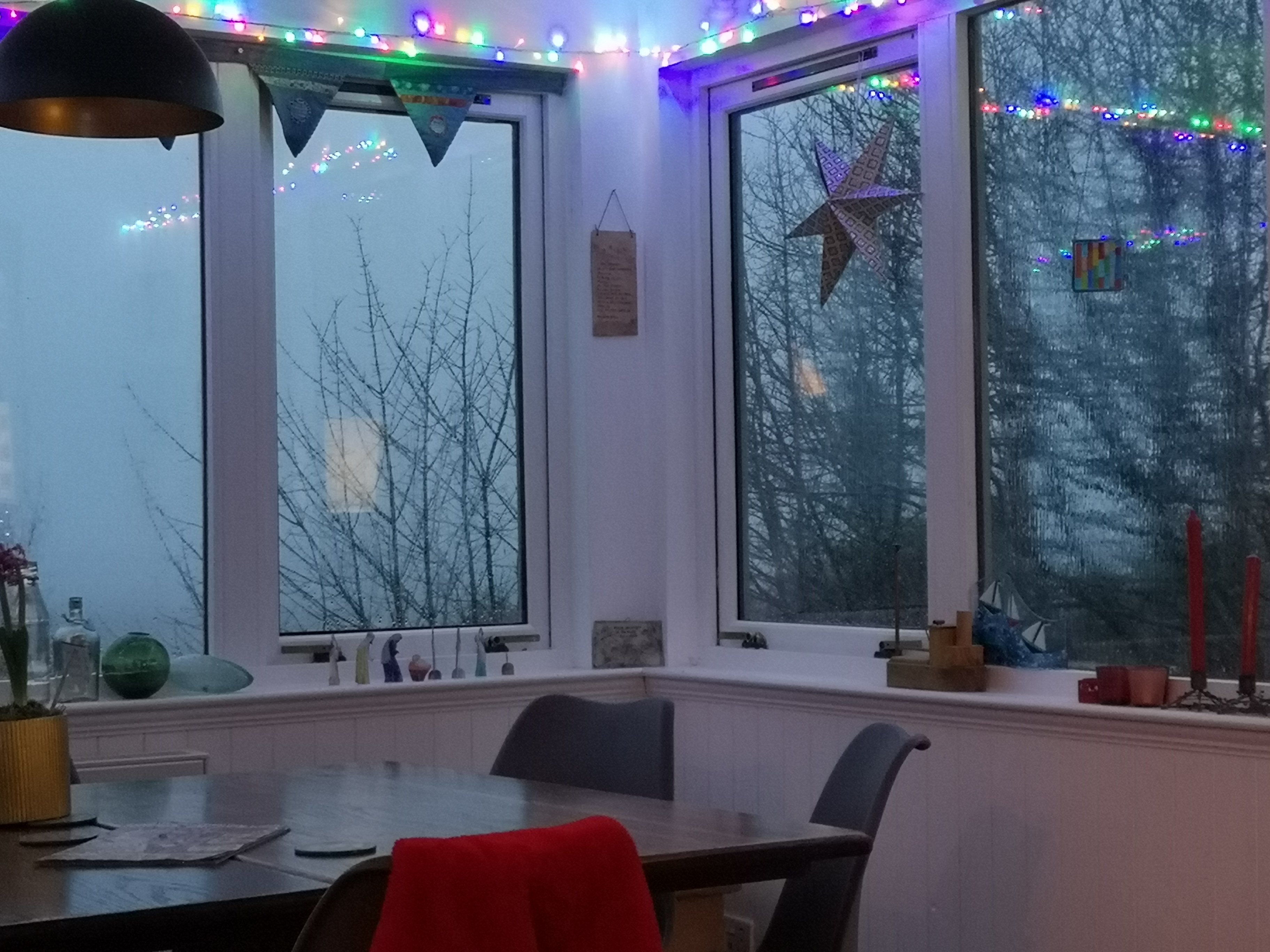


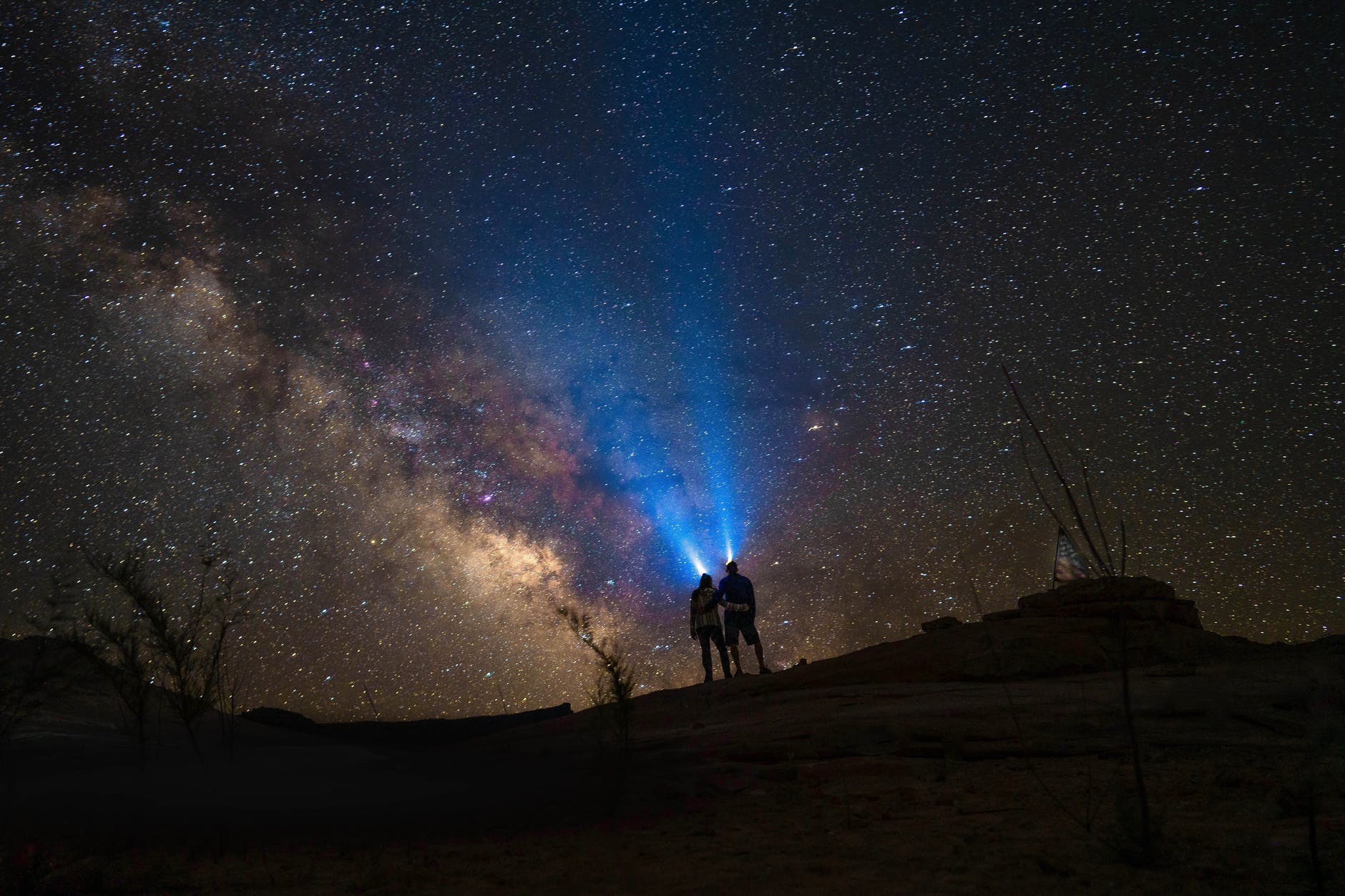
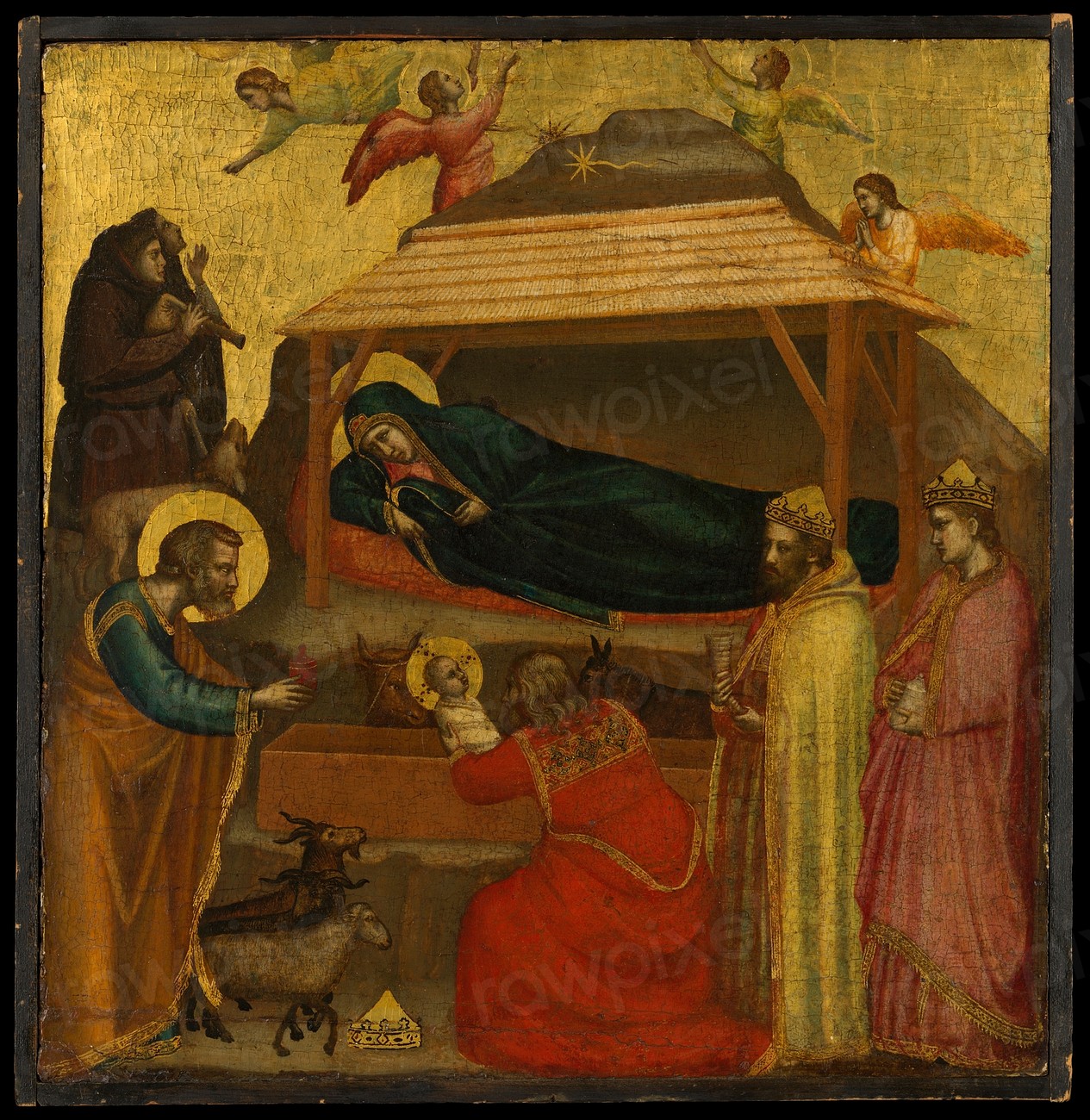
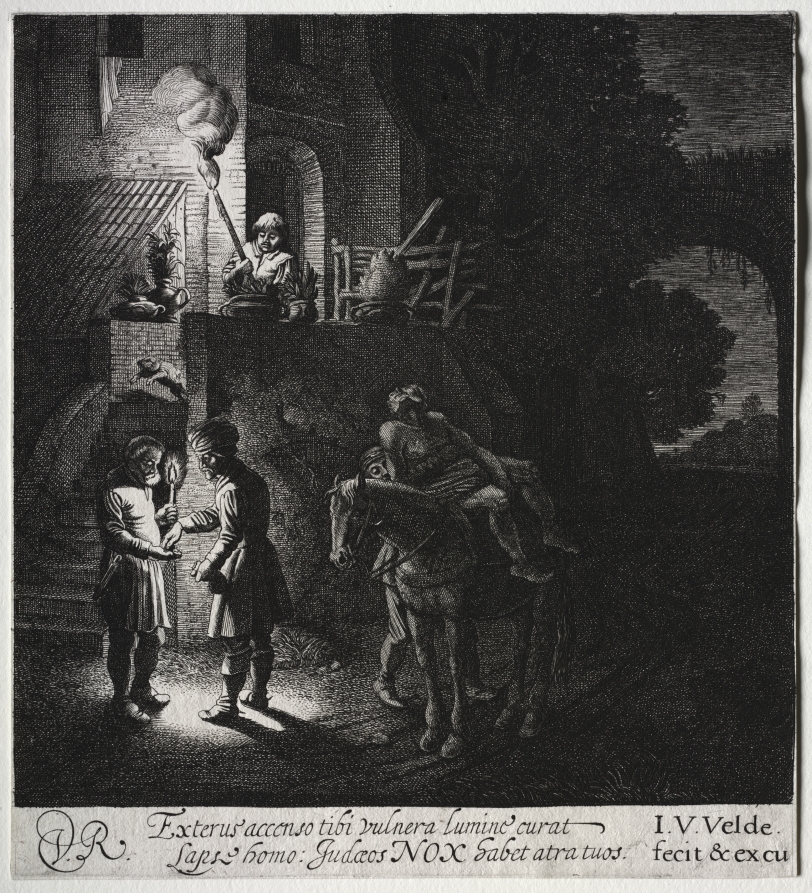




 this fragile tent