Knox casts a shadow…

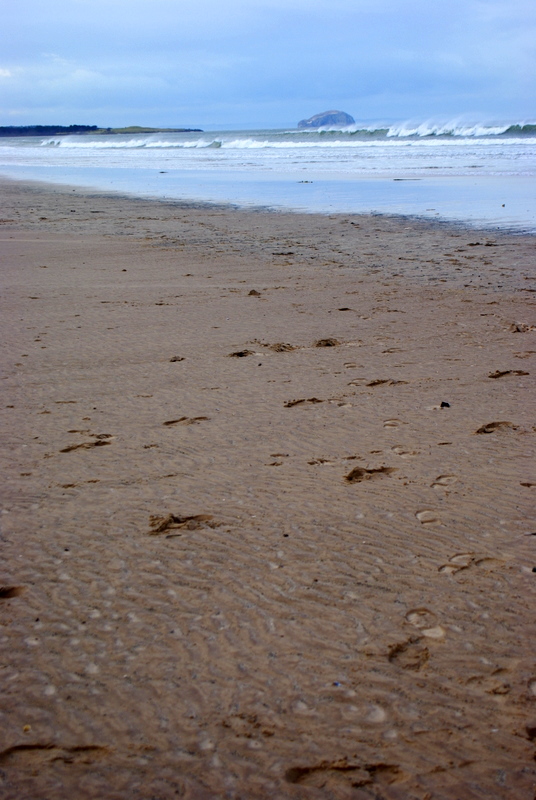
We spent today over in Haddington with my brother Steve and his wife Kate. It was a really lovely time, spent walking around the old market town and visiting one of the lovely beaches that are all over the coast thereabouts.

Haddington is a quiet market town these days, but this was not always the case. It was at one time the fourth biggest city in Scotland, after Aberdeen, Edinburgh and Roxburgh.

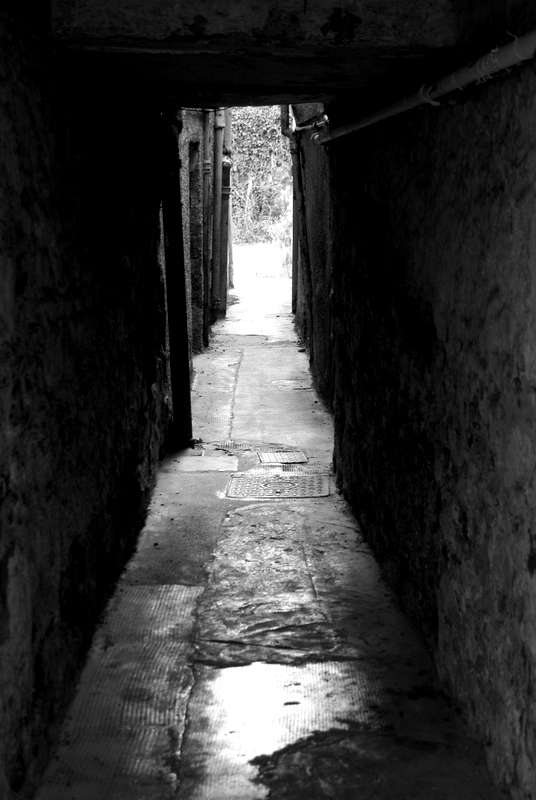
As we walked back to Steve and Kate’s house, I noticed a little set of stone stairs, all overgrown and boundaried by old railings. It seemed to lead up to a platform under an old tree. Further investigation revealed a stone monument…

It was hard to read, but basically it commemorated the birthplace of John Knox, protestant reformer, scourge of the unrighteous, whose memory is marked by a far more visible column that towers over the city of Glasgow;
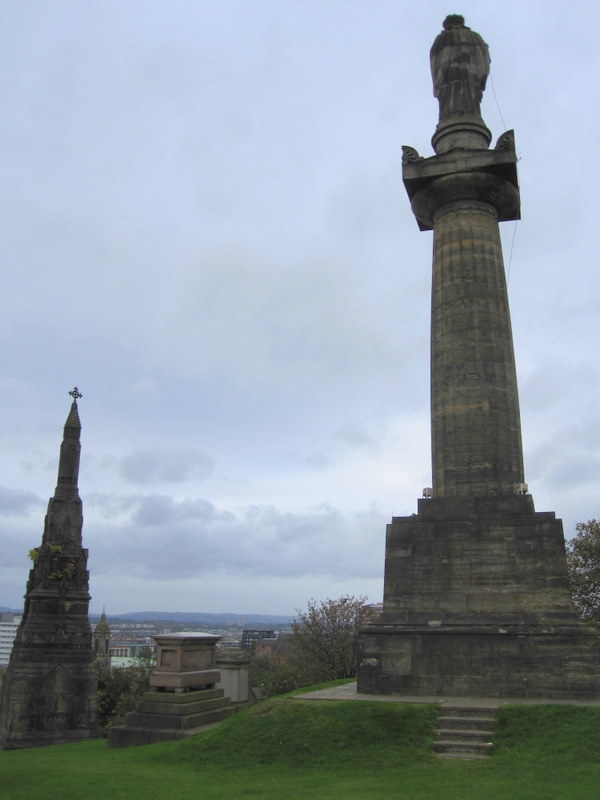
 

Knox lived a long and colourful life. His reforming zeal burst into a political/religious powder keg and led to armed revolution and murder. Ends justified the means. The Prince of Peace required the intervention of armed mobs.

And it all started in Haddington, when Knox was born a farmer’s son, and lost his mother early. Perhaps in a different place, with a happier childhood…

Today it all seemed to me to be sad, and a little absurd. I found myself asking again what good came out of all this religious warfare. Was any of it necessary? Is there anything that we can still be proud of with the benefit of hindsight?

Knox himself seems to scowl out at us from the pages of history. What kind of splenetic wrath would he subject us to if he could but see the outcome of his reformation?

Meanwhile the sea rolls over the beach and grains grow finer. And I seem to have fewer answers.

And that is OK.
Religious education in British schools…

There was an interesting article in the Guardian the other day suggesting that spending on religious education in British schools amounts to around £1 per pupil per year.

Not very much.

Does this matter? Well the author of a government funded report, Dr Conroy obviously believes that it does.

Does it really matter? If RE is really in such a state, shouldn’t it be
allowed to whither on the vine? My answer is a resounding ‘no’, and
that ‘no’ is based on what we saw in those schools where RE is done well. What they reveal is that good RE is about something absolutely fundamental: a space for serious, critical exploration of the meanings and values by which we live.

To live good lives, individually and together, we need to be able to make sense of our world and ourselves – and RE offers the only place in the curriculum where that can still be done systematically.

Most people I know who believe strongly in religious education come from a perspective of ‘defending the faith’ (whatever that faith might be.) What is interesting about this report is that it is not anchored to any idea of Holy Empire- rather it just appears to believe that religious education allows for a kind of moral and ethical evaluation of our communities and institutions that the rest of the curriculum simply does not have room for.

It also goes on to identify what is thought to be ‘good’ RE, and what might be ‘bad’. The ‘good’ seemed clear enough-

The point is that if we really intend that children should learn from religion as well as about religion then they must be introduced to the intellectual practice of trying to understand a particular set of beliefs and practices in their own epistemological terms, and then be allowed to apply critical faculties to religious claims. Such teaching does not turn religion into something foreign which ‘others’ do, but into something much closer to home in which we all participate – for we all have beliefs and attachments, and we all have to make sense of life and death.

However the ‘bad’ seemed to offer a little more in the way of surprise;

But what marked poor provision, above all, was teaching which contented itself with introducing students to the surface phenomena of religion. We saw RE teachers fall into the trap of responding to serious student questions (‘but why does it matter that Jesus died on a cross?’) by deflecting it or asking another student to answer. Prima facie this looks like the democratisation of the classroom but, at a deeper level, it is often driven by a fear of making substantive or normative claims, combined with limited time and resource and exam pressures. Such strategies lead to superficiality-as one student put it in a focus group when asked about the ‘usefulness’ of RE: ‘Let me put it this way, if a Jew came round for tea, I would know what to feed them!’ Learning about ‘facts’, important as it is, too rarely translates into a serious grasp of theshape of another’s life world.

To see the place of faith (as a lived experience, not an archaic abstract concept) advocated for so effectively, not least within the pages of the Guardian seems to me to be remarkable.

First day of lent…

In the unfolding year, it always seems surprisingly early, like snowdrops…

Our kitchen reeks of pancakes after last night- I think I must have cooked about 100, for family, friends and house group in order to mark the beginning of a time when we need to get serious, intentional and reflective as we move towards Easter. For some this is marked by doing without- fasting from a food, or an activity. For others, we mark this time by doing something extra- committing ourselves to some regular meditation or act of service for example. Marking these yearly rhythms is increasingly important to me, not least because of the influence of a friend.

Over the last few days we have had an old friend staying with us, Maggy Cooper, who is a retreat leader at St Beuno’s Abbey, a Jesuit spiritual centre in North Wales made famous by the BBC programme ‘The Big Silence‘. Some of it has found it’s way onto you tube if you missed it- and it really is worth watching for anyone who is at all interested in the power of ancient traditions (I have blogged about it previously here.)

When we meet with old friends, we find ourselves looking back over our shared journeys. All those years where we have been challenged, encouraged, and laughed together. Also all those more subtle ways in which we influenced one another- the convergence of ideas and opinions, and ideas that, once shared, take on a deeper significance in our lives.

Maggy is one of those people for us, and it was great to see her again…

Kaynes and Hayek, why their ideas still matter…

In order to look for new ideas of how to organise our economy, we have to understand the old ones. Never was this more important.

In the 1920’s and 30’s, two protagonists argued polarised opposite views in the midst of their own economic crisis. One (Friedrich Hayek) insisted that the free market would right itself, and that the job of government was to get out of the way, to reduce its spending and the proportion of the public purse that interfered with the self correcting forces of free market economics.

John Maynard Keynes fundamentally disagreed. He said it was the job of government to govern, and the primary way that they should do this was by managing the economy. He was concerned with the human consequences of boom and bust economics – mass unemployment, poverty.

These two polar opposite positions have been fought over ever since. One libertarian, one interventionist. One arguing for centralised control, the other wanting no control at all. Evidence for the failure of both positions exists.

The free market brought us vulture capitalism, Thatcherism and the current crisis. It became the mantra of the International Monetary Fund, and the basis on which it manipulated whole nations. Centalised managed economies did not do well in the former communist countries. And we in the UK remember the strikes and power cuts of the 1970’s.

However it is also possible to point to the stable, eventually prosperous and well managed period after the second world war when Keynes ruled the world, or the eventual triumph of the Free Market, until this current crisis of course.

The question remains as to how this argument will play out in our current context. It seems that the current political instinct is towards Hayek, whilst having to acknowledge that when the free market is really free, then the unbridled greed it releases is potentially destructive to us all.

There is a really good clip on the Guardian website, here.

Africa and the emerging church leaders…

The other day I was listening to some news about Uganda’s anti-homosexuality bill. It aims to criminalize the “promotion” of homosexuality, compels HIV testing in some circumstances, and imposes life sentences for entering into a same-sex marriage. It would also be an offence for a person who is aware of any violations of the bill’s wide-ranging provisions not to report them to the authorities within 24 hours.

Does anyone remember those ‘Transformations’ films? They described huge revivals sweeping through cities across the world, transforming whole communities. One of them described the revival taking place in Uganda;

How does a country undergoing such a process of freedom from oppression start to impose oppression on people as a result of their sexuality? Is this really the logical progression of revival- puritanical oppression of minorities?It should not surprise us I suppose – the lurch to the religious right is unfortunately a common phenomenon in Africa and elsewhere. It is all so depressing.

However, today I read on Brian McLaren’s blog something about a whole different movement – Amahoro Africa. It did something good to the heart to hear stories of how Christians are seeking a different kind of transformation.

I would love to go to this, but am not sure I would be much use…


Events and stuff up and coming at Sgath an Tighe…

Forgive the commercial, but I thought it might be worth mentioning some of the things that we have been developing around our lovely old house…

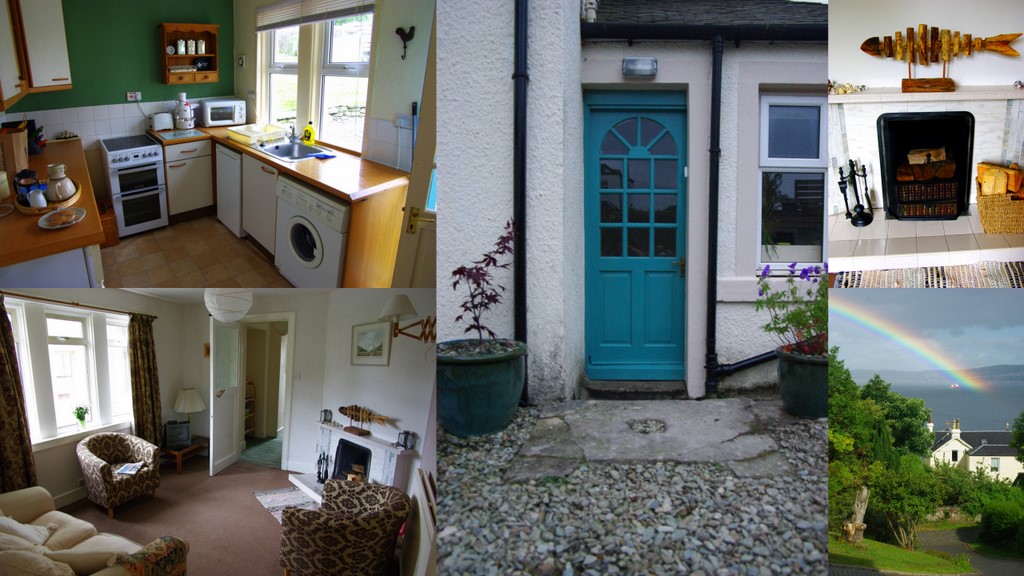
Sgath an Tighe is a lovely Victorian house with stunning views out over the Clyde estuary. It is used as a base for a number of different activities, including a working pottery, a place of spiritual retreat (including wilderness retreats) and craft workshops. We can also arrange guided mountain bike tours, individually led outdoor activities and life-coaching (via our friend Nick,) or maybe you would just like to rest and enjoy the tranquillity of the house, and this beautiful area.

There are shops and restaurants locally, and the town of Dunoon is within easy reach. Take a steamer cruise and explore the unspoilt hills and lochs of the Cowal Peninsula. Outdoor activities are on offer in the area with sailing, kayaking, sea fishing, quad bikes, clay shooting and more. Located at the edge of Loch Lomond National Park, the area is ideal for walkers and cyclists and boasts magnificent scenery.

Attached to the house is a delightful cottage. On the ground floor it has a living room, kitchen and a bathroom with shower. Upstairs there are two bedrooms: one light and spacious double, and one twin room with sea views. There is an open fire in the living room, (initial fuel included, further logs available), gas central heating (£25pw Oct-Apr), electricity and bed linen included, freeview TV, DVD player, CD player, and the kitchen is equipped with a cooker, microwave, washing machine and freezer. Wi-fi The cottage leads onto a shared, enclosed lawned garden with a sitting-out area and furniture, vegetable gardens and free-range chickens. Parking is available, and a cycle store. Guests are greeted with a welcome tray. No smoking.

Prices range from £263 to £558.

Website: www.sgathantighe.co.uk

Email: michaela.goan@fsmail.net

There it is!

Over the next few months, the plan is also to develop part of the house for bed and breakfast, which will then allow us to have more space available for planned retreats, which is what we are both passionate about.

So if you are looking for a holiday up amongst the mountains and lochs, then get in touch!


Pawned in the USA- Springsteen gets angry…

Bruce Springsteen’s new album Wrecking Ball is out soon, and it looks set to do some damage. In a good way. Too late for my birthday, but

I am not a die hard Springsteen fan- his music always seems a bit too industrial for my taste, although I love one of his old albums- Nebraska. However, industrial is what this new album needed to be, as Springsteen seems to have given voice to the disenfranchised working American man.

What he seems to have produced is a protest album- with the finger pointed at the very heart of the Capitalist machine, which Springsteen calls with such irony, unamerican.

This from a Guardian article;

“A big promise has been broken. You can’t have a United States if you are telling some folks that they can’t get on the train. There is a cracking point where a society collapses. You can’t have a civilisation where something is factionalised like this.”

“Previous to Occupy Wall Street, there was no push back at all saying this was outrageous – a basic theft that struck at the heart of what America was about, a complete disregard for the American sense of history and community … In Easy Money the guy is going out to kill and rob, just like the robbery spree that has occurred at the top of the pyramid – he’s imitating the guys on Wall Street. An enormous fault line cracked the American system right open whose repercussion we are only starting to be feel.

“Nobody had talked about income inequality in America for decades – apart from John Edwards – but no one was listening. But now you have Newt Gingrich talking about ‘vulture capitalism’ – Newt Gingrich! – that would not have happened without Occupy Wall Street.”

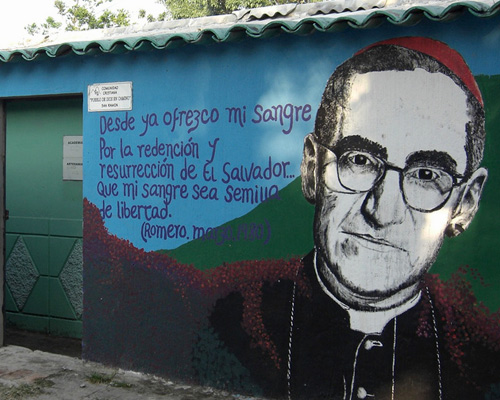
Oscar Romero on the Kingdom…

Via the Emergent Village daily ‘minimergent’

A future not our own

A prayer / poem by Archbishop Oscar Romero
(murdered, 24 March 1980)  


It helps, now and then, to step back

and take the long view.
The kingdom is not only beyond our efforts,
it is beyond our vision.

We accomplish in our lifetime only a tiny fraction of
the magnificent enterprise that is God’s work.
Nothing we do is complete,
which is another way of saying
that the kingdom always lies beyond us.

No statement says all that could be said.
No prayer fully expresses our faith.
No confession brings perfection.
No pastoral visit brings wholeness.
No programme accomplishes the church’s mission.
No set of goals and objectives includes everything.

This is what we are about:
We plant seeds that one day will grow.
We water seeds already planted, knowing that they hold future promise.
We lay foundations that will need further development.
We provide yeast that produces effects beyond our capabilities.

We cannot do everything
and there is a sense of liberation in realizing that.
This enables us to do something,
and to do it very well.
It may be incomplete, but it is a beginning, a step along the way,
an opportunity for God’s grace to enter and do the rest.

We may never see the end results,
but that is the difference between the master builder and the worker.
We are workers, not master builders,
ministers, not messiahs.
We are prophets of a future not our own.

Start it all over again…

It is my birthday today! Thank you dear friends for your cards, messages and presents.

Not so long ago around this time I was in hospital recovering from nearly drowning. So each new year is one of added blessing.

Today though my mind is on my lovely daughter, in the middle of preliminary exams for her highers. It is a rollercoaster of fear, hope, defeat, optimism, confidence, hopelessness. Today she was given a bad result, and also struggled through a maths exam.

So today I offer her the words of a song from a Heidi Talbot album that Michaela gave me-

I’m the sea that surrounds you
the garden that grounds you
the sun and the wind and the rain
I am every season
you’re every reason
to start it all over again

Soon you’ll sail a wild river
we’ll set sail together
and oceans will call out your name
and by stars you will follow
your hopes for tomorrow
and start it all over again

And if you stagger or stumble
if dreams start to crumble
I’ll pick up the pieces of pain
I will cradle you cry with you
pray that you’ll try to just
start it all over again

Who has eyes that can see
all the things you could be?
who has ears for the sweetest refrain?
may your heart sing forever
where the sea meets the river
and start it all over again

Karine Polwart