Christmas albums…

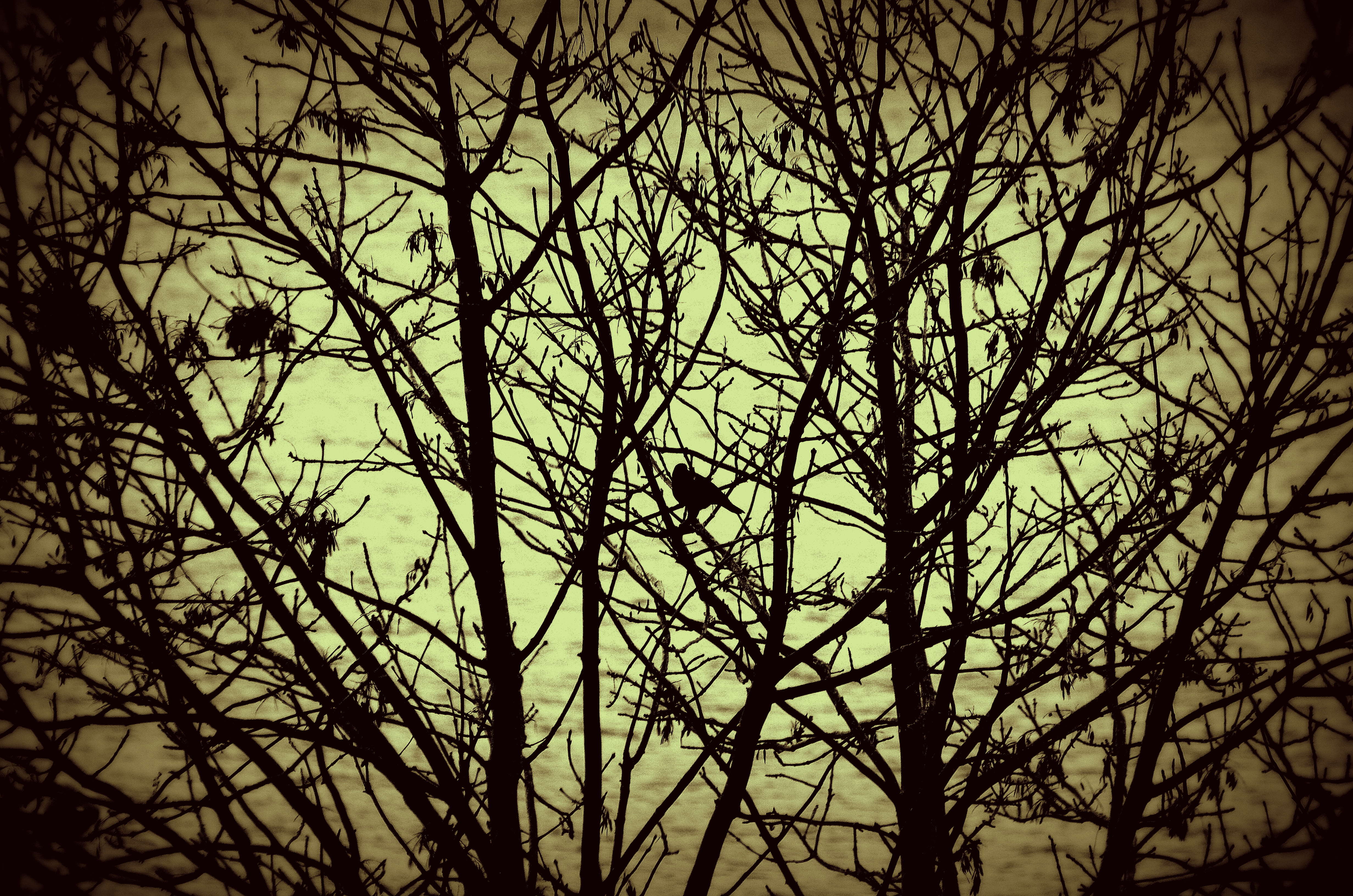
bird, winter tree

Is it just through getting old that I am starting to be increasingly moved by a certain kind of Christmas music?

I don’t mean all the dreadful rechurned musak that pours upon us like secreted sticky puss from the speakers in every God forsaken mall at this time of year. That makes me feel ill. It distances me from everything that seems real and beautiful about the Christmas itself. It sets me against it all and I have to fight to find my way back in towards the light.

Other music has exactly the opposite effect.

Nostalgia has some part to play, I must admit. The sound of a Salvation Army band echoing along the street unfailingly reduces me to tears. Then there is the back-of-the-neck tingle of a choir singing Once In Royal David’s City in some fecund incensed cathedral vault.

But beyond this, we seem to be collecting a series of Christmas albums from the most unlikely of artists. Perhaps they sell well and so there is a commercial pressure to produce them; people have to make a living after all. All I know is that they have the effect of taking me deeper into something truthful at a time when meaning is obscured by so much tat and tinsel.

Never more do we need the artist, the poet, the troubadour. Not just for a spike of ephemera via twitter and a bit of Facebook sharing; more because without them, we lie barren, and Christmas is just economics.

So here is my little list. I know you will add lots more…

Bruce Cockburn, Christmas.

Tracey Thorn, Tinsel and Lights.

Sting, If On a Winters Night.

Kate Rusby, Sweet Bells.

Good guys don’t swear…

I have been thinking about bad language.

Partly this is because some of the writing I am doing has to have some of those words in the mix. Without them it is simply not credible.

Also I have been playing an album by Sun Kil Moon a lot recently, and it has a lot of swearing on it. To be honest, I kind of wish it hadn’t, even though I love the album.

But good guys do not swear. Or at least that is what I was told growing up. Except a lot of them did; as I listened to their conversations when at rest; as I heard them dodge death from behind the wheel of the car or nurse a thumb whacked by a carelessly swung hammer…

Perhaps they were not really good I thought.

But I grew up swearing too. Not much; less than most, more than some, I would say. Michaela never swears. Not even at me. (I know- scarcely credible huh?)

For me, certain words act like the valve on a steam boiler. Over use them and the valve is no longer effective. I do not use them against actual people, although sometimes I wish I could.

Some words I never use, and I am never sure why really- they are just words after all. Language is always evolving and the taboo associated with words seems to evolve… even if most of them are always something to do with reproduction in some way or other.

I knew a woman once who inserted the word fuck between every other word she ever spoke. I fucking went to the fucking shop to fucking get some fucking milk. You get the picture. I asked her what she did when she really needed a swear word in an actual emergency and she looked at me slightly confused, then told me to fuck off.

Beware, spake I, lest when needed, your words lie sticking in the dirt like arrows shot too soon. She was not fucking impressed.

But some things deserve to be sworn about- some people are indeed bastards.

Some things that happen in this world deserve to be punched right in the nose with the ripest bit of Anglo-Saxon we can put into print.

Not by me though. I am a good guy.


Indigo, a history lesson using poetry…

indigo-bg

If I was to choose a favourite word, I might have chosen this one; Indigo. I have written about this before (here) when I said this;

I think it reminds me of something half remembered from primary school- a reading set of books that only the keen readers ever progressed to taking home.

Or an ink pen whose innards bled blue blood all over my fingers.

It describes colour, distance, depth. It contains a promise of space beyond space- like a night sky.

Gregory of Nyssia, a 4th Century mystic, likened the move towards God as to a journey into holydarkness. He suggested that the deeper and further we go, the more darkness we find in the light. For him, God is unknowable- a dark purple mystery, drawing us on- calling us to explore further and further…

Indigo.

In we go.

Then I discover something I did not know about indigo; and that is that like sugar, tobacco, mahogany and many other exotic luxuries that we have come to believe should be ours almost by right, indigo has had a terrible cost.

See for yourself;


Indigo

BY CHITRA BANERJEE DIVAKARUNI

Benegal, 1779-1859

The fields flame with it, endless, blue
as cobra poison. It has entered our blood
and pulses up our veins
like night. There is no other color.
The planter’s whip
splits open the flesh of our faces,
a blue liquid light trickles
through the fingers. Blue dyes the lungs
when we breathe. Only the obstinate eyes
 
refuse to forget where once the rice
parted the earth’s moist skin
and pushed up reed by reed,
green, then rippled gold
like the Arhiyal’s waves. Stitched
into our eyelids, the broken dark,
the torches of the planter’s men, fire
walling like a tidal wave
over our huts, ripe charred grain
that smelled like flesh. And the wind
screaming in the voices of women
dragged to the plantation,
feet, hair, torn breasts.
 
In the worksheds, we dip our hands,
their violent forever blue,
in the dye, pack it in great embossed chests
for the East India Company.
Our ankles gleam thin blue from the chains.
After that night
many of the women killed themselves.
Drowning was the easiest.
Sometimes the Arhiyal gave us back
the naked, swollen bodies, the faces
eaten by fish. We hold on
 
to red, the color of their saris,
the marriage mark on their foreheads,
we hold it carefully inside
our blue skulls, like a man
in the cold Paush night
holds in his cupped palms a spark,
its welcome scorch,
feeds it his foggy breath till he can set it down
in the right place,
to blaze up and burst
like the hot heart of a star
over the whole horizon,
a burning so beautiful you want it
to never end.
 
 
Note
Paush: name of a winter month in the Bengali calendar
The planting of indigo was forced on the farmers of Bengal, India, by the British, who   exported it as a cash crop for almost a hundred years until the peasant uprising of I860, when the plantations were destroyed.

Chitra Banerjee Divakaruni, “Indigo,” from Leaving Yuba City: Selected Poems (New York: Anchor Books Doubleday, 1997).

Happy birthday Emily…

Emily, canoe, holy loch

My lovely daughter Emily hits 19 today. Paddling off into the future…

She came home with friends last night and we had a late night laughing and playing games. These are the things that light my life, and I am so proud of her…

A couple more photos, including my very favourite (the last one);

My snow angel 1

William and Emily, Dun I, Iona

Michaela with Emily, some time in the late nineties, Keswick.

Absent voices…

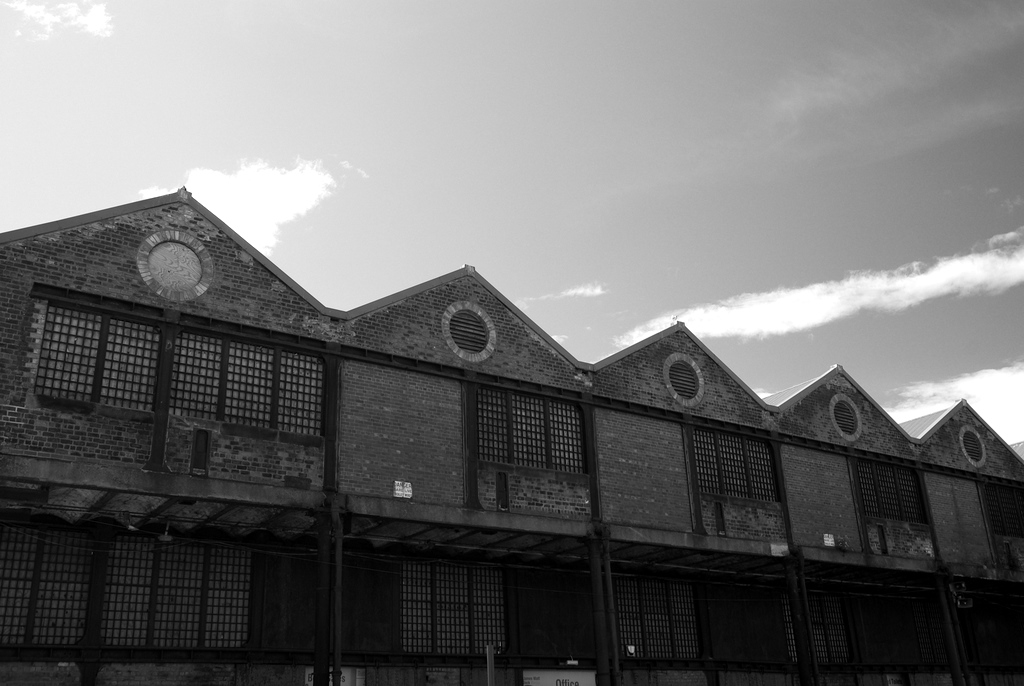
sugar warehouse, Greenock dock

Several times a week we drive past some old buildings on what is left of the old docks in Greenock, known as the sugar sheds. These cavernous places are remnants of the once mighty Greenock sugar industry, in which huge quantities of the stuff was brought down the Clyde from the colonies in the West Indies to be converted into all the stuff that we are now addicted to.

The buildings are stunning- like vast Cathedrals, with light filtering down from high windows. It has massive cast iron doors and columns that shout out with Victorian pride.

More recently I have been looking forward to a project called Absent Voices, which has gathered together artists poets and musicians to this end;

Absent Voices is an artist-led project centred on the Scottish town of Greenock, telling the creative story of Greenock’s sugar industry. Using the category A listed Sugar Sheds on James Watt Dock as a catalyst, eight artists are working within the community and reaching out to the wider world. Absent Voices is principally funded by the Heritage Lottery Fund.
.
The artists in Absent Voices are:Alec Galloway, Greenock born glass artist & musician; Alastair Cook, an established Edinburgh-based artist; Anne McKay, a Gourock based painter and folklore archivist; Rod Miller, a Greenock artist and photographer; Yvonne Lyon, a musician & songwriter of international renown; Kevin McDermott, singer songwriter of Kevin McDermott Orchestra; Ryan King, glass artist and musician and Alan Carlisle, glass artist and recording engineer.
.
The Sugar Sheds is category A-listed building which sits at James Watt Dock in Greenock: this vast red-brick and cast-iron former sugar warehouse with its distinctive zig-zag exterior sits in the shadow of Greenock’s Titan Crane and opposite Greenock Morton FC’s Cappielow Stadium. It has not been used for sugar-making since the 1960s. Its doors were shut on sugar completely in the mid 1990s. Prince Charles is a known supporter of retaining the former sugar warehouse and even visited the building in 2002 to add his voice to a campaign to save it from demolition. Despite several attempt to demolish it and a fire in 2006, it has now been made wind and watertight and part of it is currently used as storage space. The building was used as a venue during the 2011 Tall Ships Race, which opened many eyes to its potential as a space which could be used for public events.
.
Old gate, sugar warehouse, Greenock dock
I scoued the Absent Voices website, and there is hardly a mention of the despicable origins of the sugar cane that was being processed in Greenock. The voices that seemed well and truly absent were those whose lives were lived in service of the plantations where the sugar was grown.
.
The notable exception I am proud to say, appeared to be our friend Yvonne Lyon, who has included slave songs in her exploration of songs of work. (However, it later turned out that the website might not fully represent the actual content of the exhibition- see below!)
.
I am particularly sensitive to this because of the debate around this rock on the shore a few hundred meters from my front door. It is a legacy of a time when our relationship with colonial exploitation and oppression made it possible, if not essential to regard the ‘others’ as less than human.
.
In case you think I am making a bit of a mountain out of a molehill, check out the Scottish government’s own description of the Triangular trade, from their own website. Here are a few bits that are relevant to Greenock;
.
…from the 1750s onwards ships did leave from Port Glasgow and Greenock for the triangular trade, often transporting enslaved Africans to Virginia as well as the Caribbean.
.
After the American War of Independence the slave trade was consolidated into the ports of London and Liverpool, and Scottish investors and merchants invested through those routes. A steady direct trade was maintained with the Americas with the importing of slave-produced goods throughout the period and beyond.
.There are dominant architectural reminders of Scotland’s importance in the trading of sugar produced by enslaved labour, such as giant sugar warehouses in Greenock. Leading up to 1813 – 1814 one of the largest sugar companies in the world operated from Greenock. These warehouses signify the major role of Scottish plantation owners.
.
By the early 19th century they owned a third of the plantations in Jamaica (which was the largest producer of sugar).The British Islands of the Caribbean and the colonies of the Americas were owned and run by British settlers and administrators. It was common for merchants in Britain to establish their own plantations or create relationships with agreed suppliers for plantation goods. Therefore it was British people who bought, sold, and oversaw the enslaved.
.
Networks or communities were often established that resulted from ties back home. Alexander Horsburgh, the surgeon with responsibility for business affairs on the Hannover, noted in his journal in 1720, that there was an established Scottish network in Barbados, Antigua and St Kitts. The Hannover sailed from Port Glasgow and Horsburgh was instructed by its Scottish owners which Scottish plantation owners to contact with his cargo of enslaved Africans. These included Colonel William McDowall of Wigtonshire, a plantation owner on St Kitts.

.

Lady Nugent, the wife of the one time Governor of Jamaica, also noted the high presence of the Scotsmen on the islands. That Scottish presence started in the early years of the colonies and continued. Mrs Alison Blyth noted on her visit to Jamaica in 1826 that:

“…the Lord indeed knoweth. I always thought that wherever I went I would be proud of my country but here I feel almost ashamed to say I am a native of Scotland, when I see how her sons have degenerated”.

In telling the story of the Sugar Sheds, I am genuinely staggered to hear that this dark history of the sugar trade was not in any way engaged with in a meaningful way. Sure, the Sheds were built well after the slave trade officially ended, but they were built using wealth and prosperity that still cost the lives of hundreds of thousands, and represent the rich corner of a triangle of misery. The people cutting the sugar may no longer have been slaves, but the lives of the freed workers of the Caribbean were if anything made worse by the abolition of slavery.

During my lunch break today however, I took a walk to the McLean Museum to actually visit the Absent Voices exhibition. I looked at the paintings, listened to the songs and watched some of video footage. It was really lovely, and a large part of the content clearly confronted the relationship of the sugar trade to slavery. It was art at its best- asking uncomfortable questions and making us confront issues that lie buried.

Why is this central part of the exhibition missing from the publicity and the website? Was it ‘mission creep’ from what was intended only to focus on a local Greenock landmark? Certainly there are not Caribean or African artists involved in the project.

I was particularly moved by Anne McKay’s paintings, some of which feature the spirits of the slaves in the hills looking down over Greenock…

If you get a chance, go along and take a look.

Light from top window, sugar warehouse, Greenock dock

Bringing home the silverware…

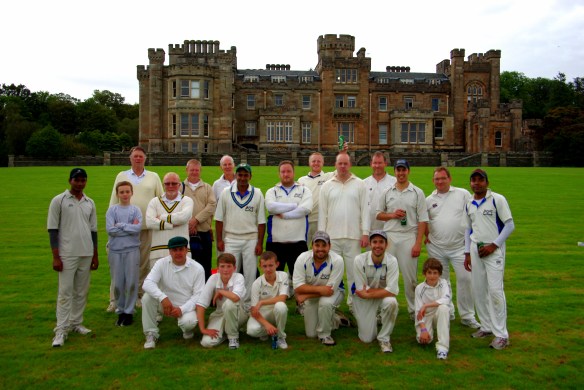
team photo, Innellan Cricket Club, Royal Botanical Gardens Edinburgh CC

We had a great night last night at Inellan Cricket Club’s annual dinner. Previously these things have been all male affairs, a bit like stag nights, but this year we made an effort to make it a family affair.

I am not really what you might describe as ‘clubbable’. I am not always at ease in social groups and tend to find my place at the edge of things when I can, looking in. In the scheme of things, a cricket club seems a slight thing- we are hardly saving the world. We are hardly contributing to the great cultural life of the nation. However, I would like to suggest to you that in these times when our culture has splintered and broken down into indvidualised consumer components, there is a deep value in clubs like ours. They are part of the glue that is helping us cling together.

The club is going through one of those transitional phases, when a lot of the long standing players, who carry the memories and the traditions of the club, are one by one slowing down, nursing broken bodies and choosing to hang up their bowling boots. Some of them are turning to that most dreadful of sports, the graveyard of leisure pursuits; golf….

Last night, as he has done for decades, the MC and heart of the evening was Gordon McKissock, president and sartorial example to us all as he took centre stage. But this was for the last time, as Gordon is stepping down as president and player. He will be very much missed, and I am secretly hoping he might yet change his mind.

Quite simply though, the club needs new players more than ever. In the new year I think it is time for an advertising campaign…

But last night was all about celebrating the history and traditions of the club, which was formed some time back in 1985. It has been a place full of characters, and the stories told of their exploits are rich and long. Some of this history has been gathered into the prizes awarded each year- the Duck Cup, supposedly for the player with the most ducks in the year, but often awarded fairly randomly. The Wayne Pursely trophy for the best fielding- in memory of a young former player who died. Then there is the Tim Weal trophy, in memory of a true bearded original, known for umpiring on a chair with a beer hat in place. This trophy is awarded to someone who has done something really stupid, on or off the field of play. There are usually many candidates.

This morning our mantelpiece has a few more objects. Matt was rightly awarded the fielding trophy for some outstanding catches and run outs.

Will got the best batting average this year- which amazed us all, but was reflective of consistency with the bat all year. He has now done the double as he won the bowling trophy last year.

The only trophy I have ever won previously was the ‘most improved player’ (won this year by young James.) My name is on this trophy underneath my son Wills, who had won it the year previously. It seems I am forever destined to be out shone by him as this year I won the bowling trophy, and my name is underneath Will’s again. Next year the batting trophy for me I assume!

However,  I did beat him to one other trophy- this year, perhaps by some fluke, and perhaps reflective of the rather low standards we set this year, I was awarded the player of the year cup, for a combination of batting, fielding and bowling. It is all downhill from here folks… for me anyway. Will and Matt, that is another thing all together.

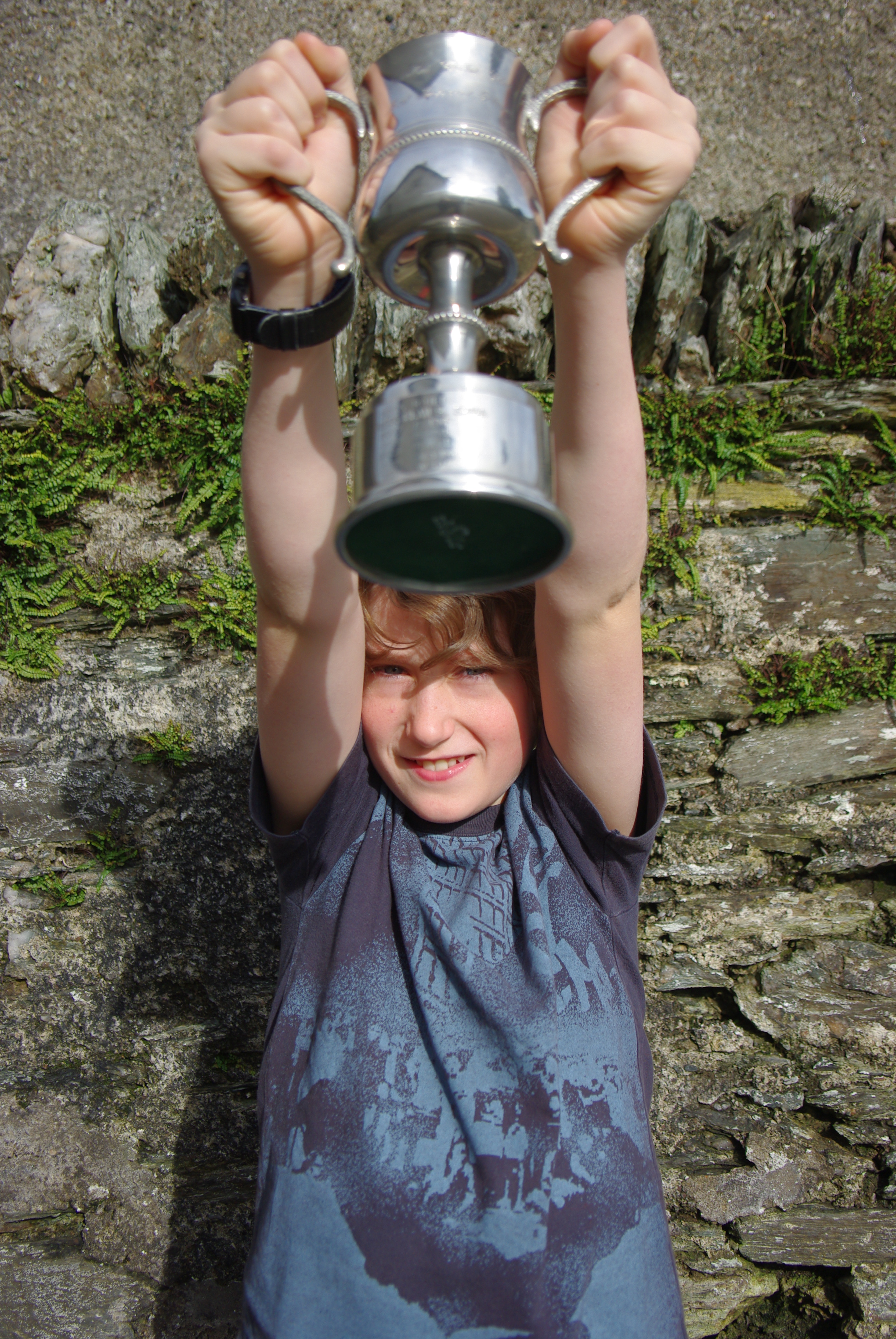
Here is Will when he won his first ever trophy;
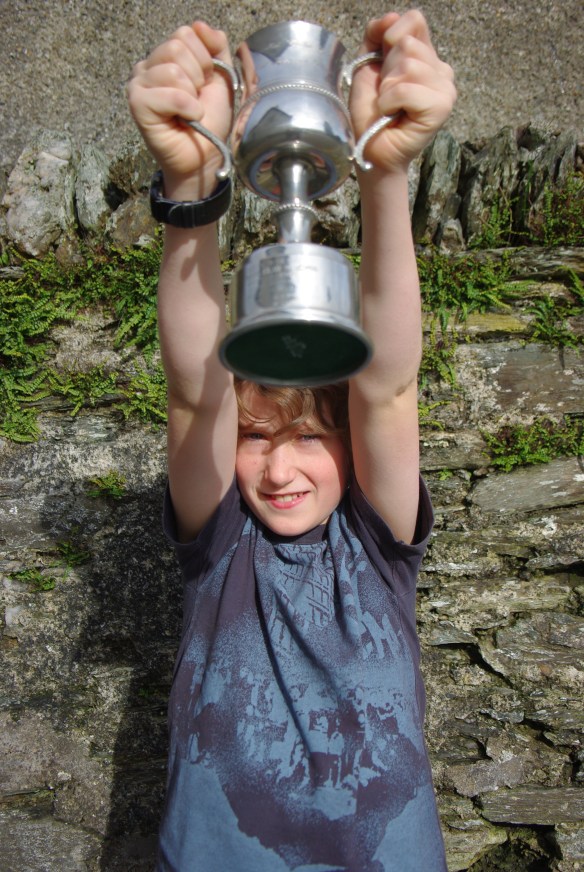
William, cricket cup

A kind of joy…

When I was young and first met my wife, part of the soundtrack of our lives was a couple of albums by Everything But the Girl.

Tracey Thorn (the Girl in question) started making music again a couple of years ago, although I had not heard any of it until yesterday, when I heard a song called ‘Joy’. It made me cry. There is something in it that opens me up.

I ordered the album- a Christmas album of all things. I suspect it will be spinning a lot over the next weeks.

Here it is;


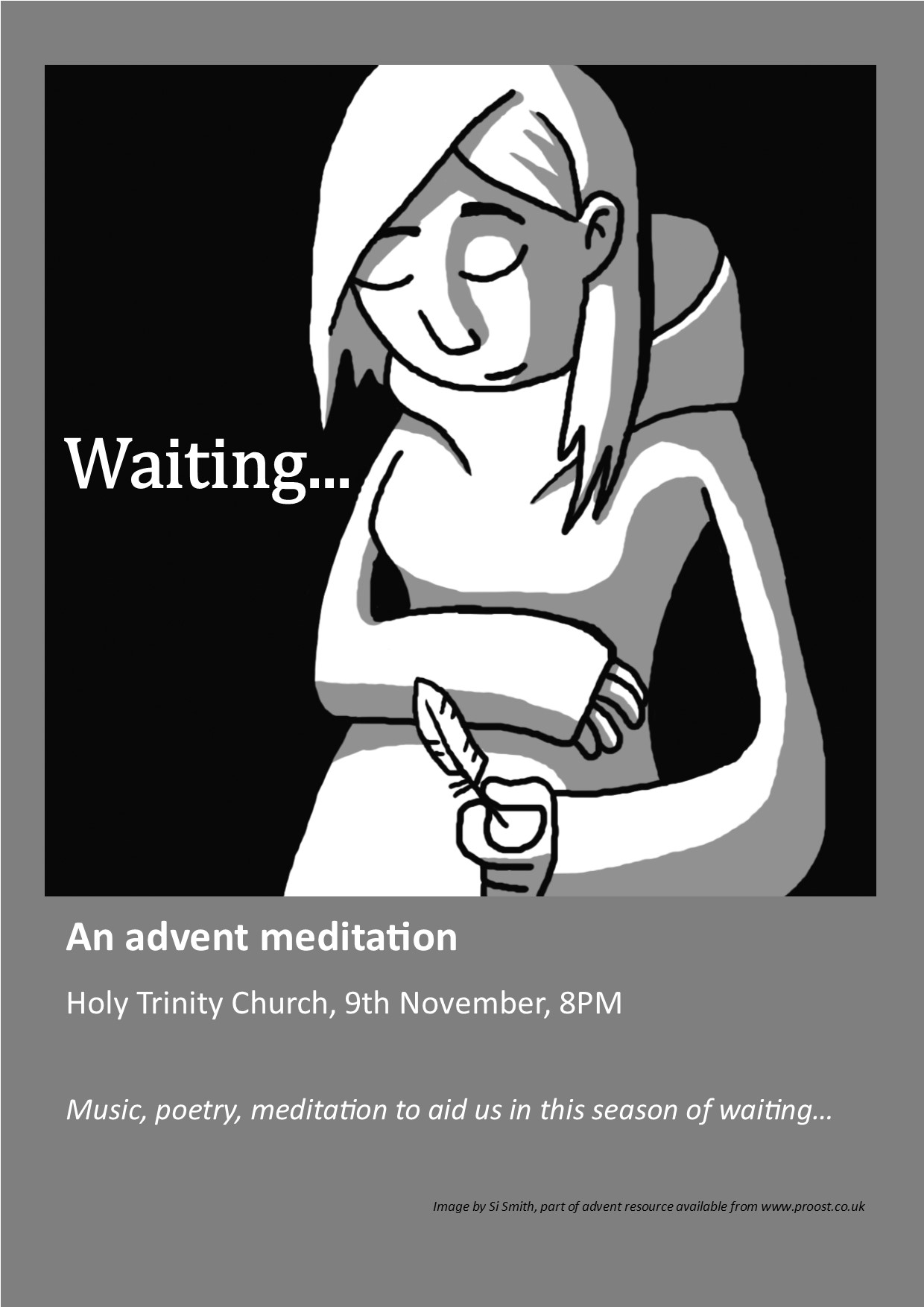
We Who Still Wait- advent poetry/art/meditation project…

We who still wait

Our advent collaboration, inspired and curated by Si Smith, and involving Photographer Steve Broadway, Ian Adam’s meditations and poems by me is now available!

You can get hold of it here in dowload for now, but hopefully you can order it in actual paper soon too. (It would make a lovely Christmas present I reckon, in fact some of you might be getting just that!)

Any help with the social media spreading the word thing would be appreciated as ever…

Here is the blurb from the Proost website;

This beautiful Advent product evokes the sense of waiting and watching at this season. Its available here as a download for £3.50.

Expect beautiful poems, challenging punchy prayers and thoughts and some beautiful photography in this devotion resource aimed at taking you through the 25 days of December up to Christmas Day.

From the book, this is from Elizabeth:

They say every flapping scrapping life is 
A brand new miracle
– I see them all in the street
Displayed there by their miracle makers
For the rest of us to worship.


Four great artists have come together to make this book happen.  Chris Goan, Ian Adams, Steve Broadway and Si Smith have brought their collective creative wisdom together to shape a wonderful book and it’s one we’re very excited about here at Proost.

In addition to this version there is also a Bonus Edition available which includes all of Steve’s original photographs for personal use.  That edition is £5.

A hard copy of the book is currently being created and will be made available shortly.

Growthism; like trying to cure an alcoholic with vodka…

economic_growth_3

I know that this blog has been full of discussions about politics and economics recently- sorry to those of you are are not interested, but here is another one…

I have been looking for new ideas, alternatives to the monocultural madness that seems intent on cycling us through boom and bust, and subjugating all morality to the single imperative of economic growth, or Growthism. 

Cameron has been at it again- warning us all that another economic crisis is on its way. Naomi Klein and her Shock Doctrine comes immediately to mind. Whip up the fear then continue to push through all those exploitative policies while we are sll too emotionally and physically distracted to mount an effective resistance.

And what is the disaster that Cameron is prophesying? Simply this- the bursting of another bubble of business confidence and the terrible spectre of the lack of economic growth. 

Real people can and do suffer during such times (although not Cameron and his ilk it seems) so this should be a matter of concern, but quite frankly we have been here before, and we will be here again. The alcoholic analogy works I think- we are addicted to the consumption of our planet, even though it makes us sick and may ultimately kill us all.

Monbiot, writing today in The Guardian, say as much and says it well;

If it goes down soon, as Cameron fears, in a world of empty coffers and hobbled public services it will precipitate an ideological crisis graver than the blow to Keynesianism in the 1970s. The problem that then arises – and which explains the longevity of the discredited ideology that caused the last crash – is that there is no alternative policy, accepted by mainstream political parties, with which to replace it. They will keep making the same mistakes, while expecting a different outcome.

To try to stabilise this system, governments behave like soldiers billeted in an ancient manor, burning the furniture, the paintings and the stairs to keep themselves warm for a night. They are breaking up the postwar settlement, our public health services and social safety nets, above all the living world, to produce ephemeral spurts of growth. Magnificent habitats, the benign and fragile climate in which we have prospered, species that have lived on earth for millions of years – all are being stacked on to the fire, their protection characterised as an impediment to growth.


Is it not also time for a government commission on post-growth economics? Drawing on the work of thinkers such as Herman Daly, Tim Jackson, Peter Victor, Kate Raworth, Rob Dietz and Dan O’Neill, it would look at the possibility of moving towards a steady state economy: one that seeks distribution rather than blind expansion; that does not demand infinite growth on a finite planet.

It would ask the question that never gets asked: why? Why are we wrecking the natural world and public services to generate growth, when that growth is not delivering contentment, security or even, for most of us, greater prosperity? Why have we enthroned growth, regardless of its utility, above all other outcomes? Why, despite failures so great and so frequent, have we not changed the model? When the next crash comes, these questions will be inescapable.

Well said George.