OK, so I am no Picasso…

I have just been looking at some photos of bits and pieces of art that I did recently as part of a retreat. A couple of them I am childishly pleased with and so I offer these to you much in the same way as bringing something home from school to show mum, who will no doubt pin them to her fridge for a while until it gets all curly and finishes in the bin.

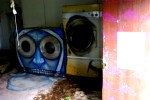
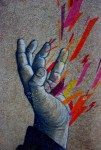
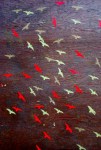
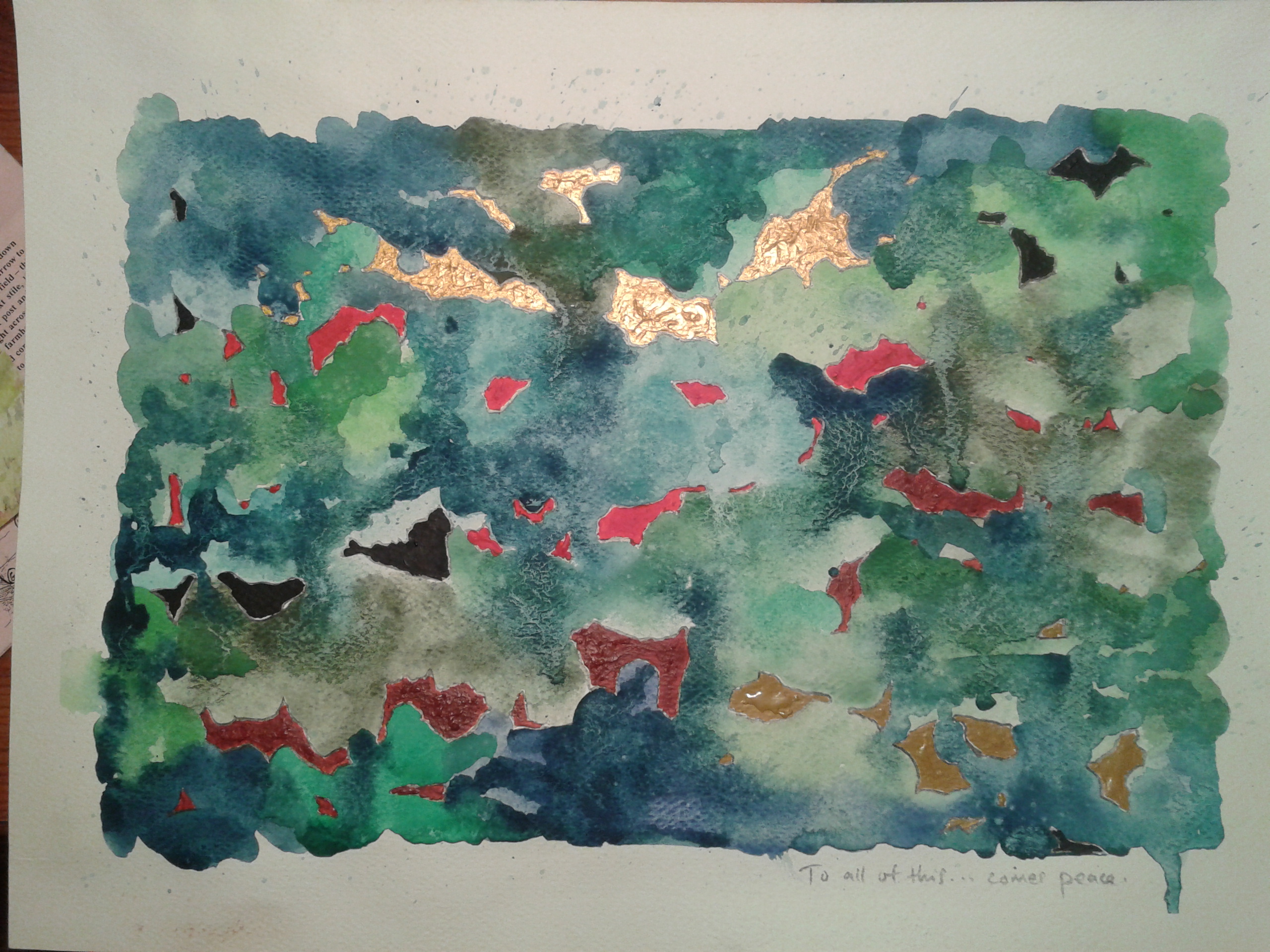
The first one was a water colour wash, made when I was thinking about peace. Peace falling like water. As I made the wash, I deliberately left areas dry, almost like islands of anxiety. After the wash dried, I started to fill in the islands with different colours. Blood red and the fear of death. Yellow for sickness. Gold for money. Black for depression. Bright red for anger intolerance and hate.
2013-01-24 18.53.54

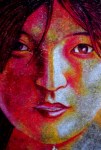
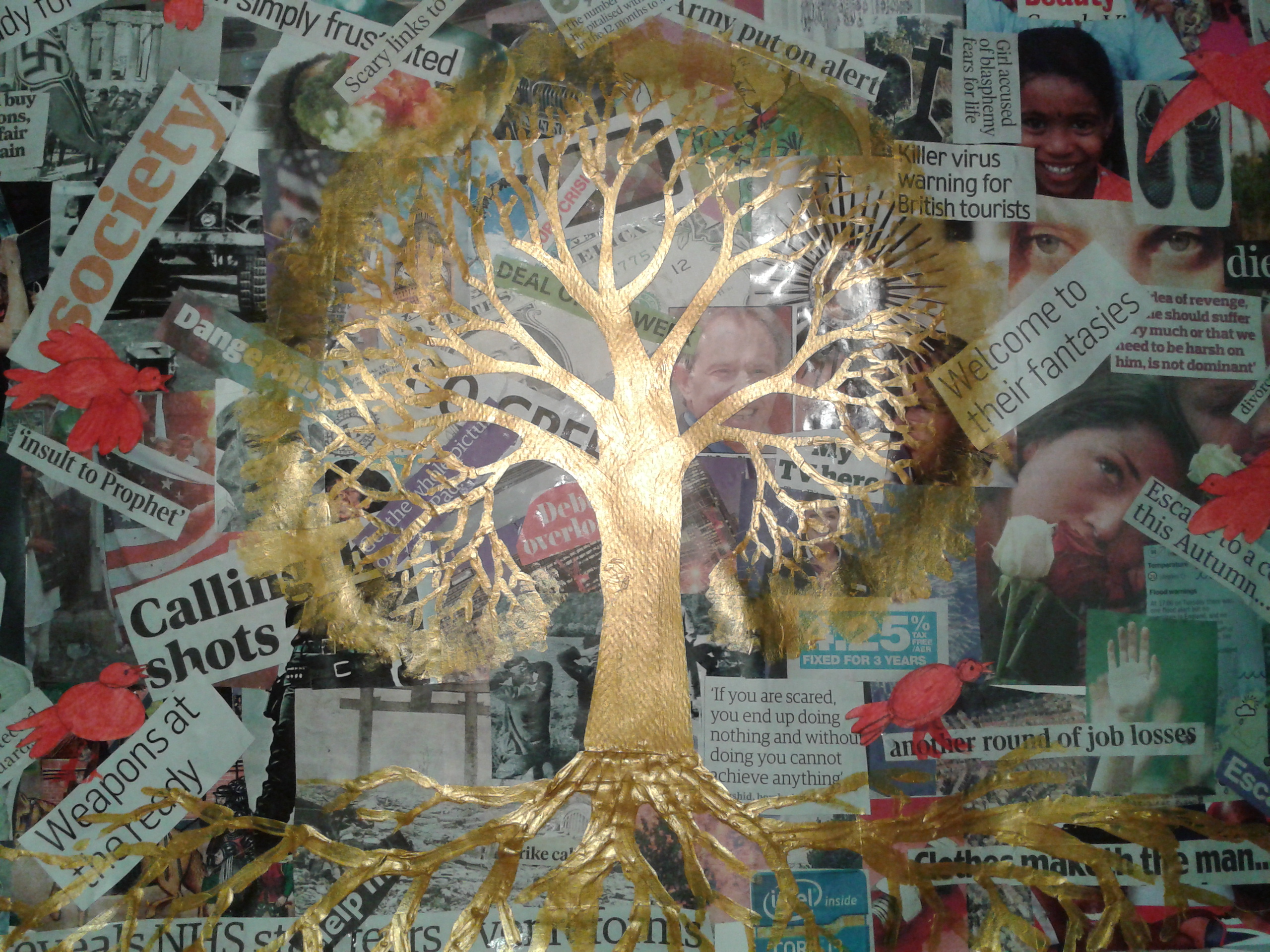
A day later, I spent a much longer time making a much bigger piece. In fact I spent around 7 hours cutting out clippings from newspapers, imagining the whole mess of us- the good the bad the glorious. Gathering all the strands of the things that we would hold as important and trying to link it all together.

Next I got hold of some lovely gold acrylic paint and started to paint a tree over all the clippings. I wanted it to be a noble tree, a beautiful tree- to symbolise the Kingdom of God. The tree was not of the newspaper clippings, but it was on them and through them. It did not obliterate the words or the pictures, but it transformed them, illuminated them. It was a totally different medium but it was rooted deep into the mess of it all.
2013-01-25 08.13.46


Oh yes- and I forgot about my red birds. They came from this passage in Matthew chapter 6 (part of the sermon on the mount.)

25 ‘Therefore I tell you, do not worry about your life, what you will eat or drink; or about your body, what you will wear. Is not life more than food, and the body more than clothes? 26 Look at the birds of the air; they do not sow or reap or store away in barns, and yet your heavenly Father feeds them. Are you not much more valuable than they? 27 Can any one of you by worrying add a single hour to your life[e]?

28 ‘And why do you worry about clothes? See how the flowers of the field grow. They do not labour or spin. 29 Yet I tell you that not even Solomon in all his splendour was dressed like one of these. 30 If that is how God clothes the grass of the field, which is here today and tomorrow is thrown into the fire, will he not much more clothe you – you of little faith? 31 So do not worry, saying, “What shall we eat?” or “What shall we drink?” or “What shall we wear?” 32 For the pagans run after all these things, and your heavenly Father knows that you need them. 33 But seek first his kingdom and his righteousness, and all these things will be given to you as well. 34 Therefore do not worry about tomorrow, for tomorrow will worry about itself. Each day has enough trouble of its own.
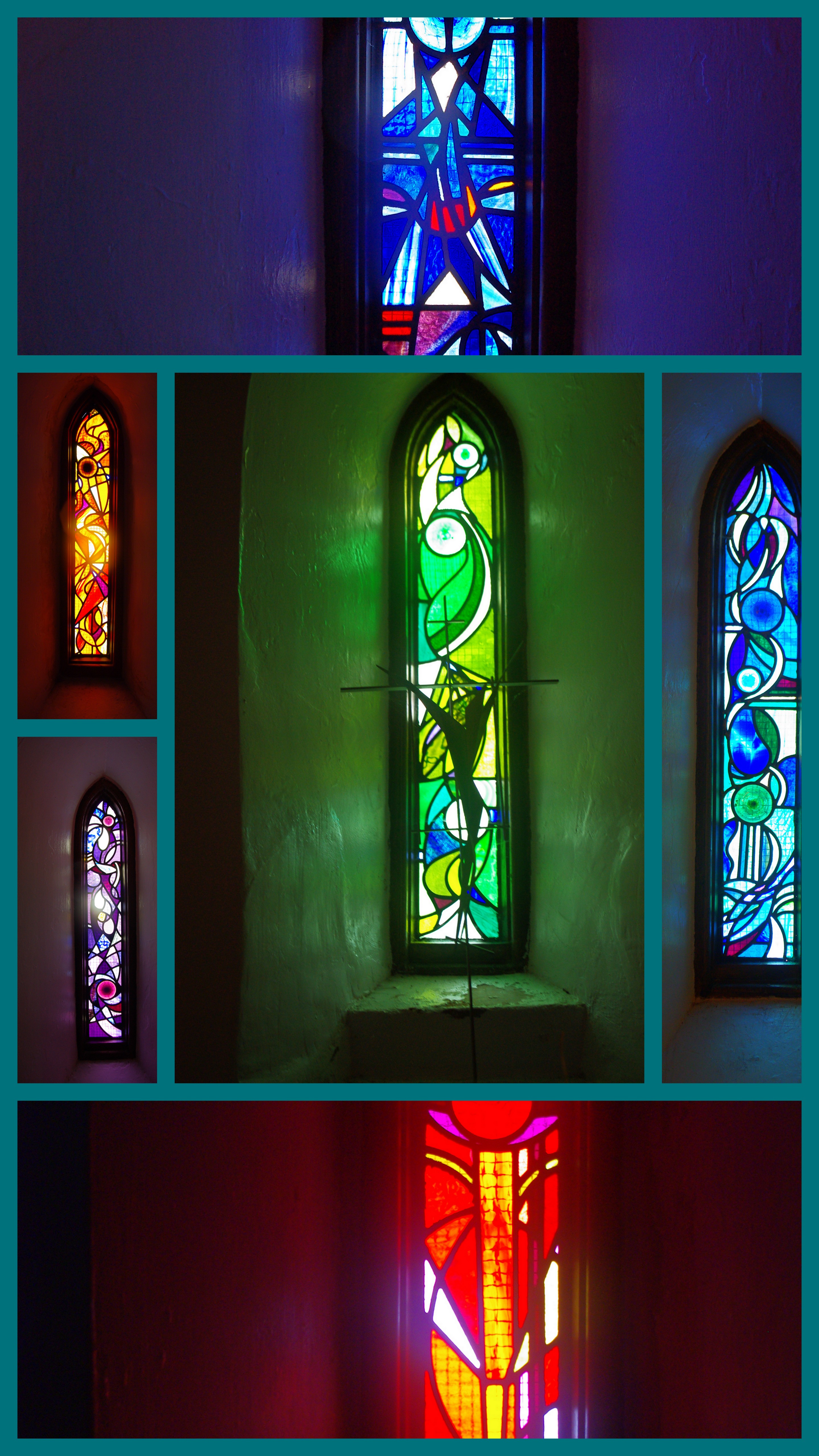
 

Stained glass…

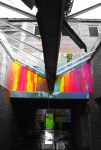
Here are some photos of the lovely stained glass from the Rock Chapel at St Beuno’s.

The story goes that a retreatant called Claire Mulholland overheard a conversation about a fund raising bid to fit new windows in the chapel, and she offered her services. There is an account of her decisions to use the different colours and shapes to display different moods here.

Winter 20122013


Creativity and internal conflict…

There was an article on Bruce Springsteen in the Guardian today. I am not a huge fan- but there is one of his albums, Nebraska, that I have played a lot. It is a spare, bleak collection of songs recorded on a basement 4 track cassette recorder. Some of it makes the hairs on your kneck stand out.

It was both shocking, and yet not a surprise to read this;

While he was working on his 1982 album Nebraska, he felt “suicidal”, according to friend and biographer Dave Marsh. “The depression wasn’t shocking, per se,” Marsh explained to Remnick. “He was on a rocket ride, from nothing to something, and now you are getting your ass kissed day and night. You might start to have some inner conflicts about your real self-worth.”…

The Boss was driven, he admitted, “by pure fear and self-loathing and self-hatred”.

“I’m 30 years in analysis!” Springsteen said. “You think, I don’t like anything I’m seeing, I don’t like anything I’m doing, but I need to change myself, I need to transform myself.

“I do not know a single artist who does not run on that fuel,”

I was reminded on an old post I wrote, reflecting on some words by David Bailey– he said that he had never known a good artist who did not have absolute confidence in their work. This seemed nonsense to me, as those I had met seemed full of doubts and fears about everything they created, and quite a lot about themselves too.

This may reflect my own skewed perspective of course. Success perhaps belongs to the bombastic.

But then again, creativity does appear to relate to introspection, and no one instrospects like those of us who carry damage. We have been hiding deep inside ourselves, and built all sorts of defences to keep it quiet down there. One of the ways of communication left to us is through art. There is no better example than Peter Howson.

Or Bruce of course.

Ubiquiosity and self curation…

I managed to use two words in the title to this piece that my spell checker does not recognise. Possibly because I made at least one of them up, but also because in many ways blogging (another word the spell checker rejects) is a process by which we construct a new version of ourselves- a cyber me.

I was reminded of this by listening to a radio programme today about how humanity is being shaped by the digital media. It was particularly interested in the proliferation of photographic images that we take to illustrate and document our worlds.

It asked a lot of questions about how when faced with an event, or an occasion, or just a sunset, our first thought is how to record it on one of the many devices we habitually carry for the occasion. In doing this, we not only shape our own interaction with the world, but we also are creating a version of ourselves for other people- we are curating our own self exhibit.

As the programme described…

…imagine yourself in a picture in front of a staggering view, smiling into the camera. The picture was taken to display your adventure, your specialness in relation to the special place. It is taken to show others your uniqueness, despite another million other pictures taken in the same place. Just you, having a carefree wonderful time.

Because you were there, you know the wider story- the blisters on your feet, the tiredness and hunger, the row you had with your partner a few minutes before. Also, all those other dimensions- the smell of the place, the sounds in the liquid air.

But interestingly, when you come to think back on this experience in the years to come, the amazing thing is that your entry into the memory will be shaped by this photograph- it will be a telescopic frame that distorts the reality towards the exhibit you were creating.

You, on a good day…

Sure, this reveals us (particularly if like me you make yourself an exhibit on the internet) as rather vain, rather shallow, rather foolish. We are making a meal of what is ubiquitous.

But more than this I wonder whether we are missing out somehow. If every event has to be recorded and digitally validated on some kind of external hard drive version of who we are then what might this be doing to us?

Do we lose some dimensions of experience?

Does it distance us from ourselves and each other?

I remember a conversation on a small island last year. We were there to get away from all the electronic noise and retreat, seeking silence, community and the voice of God. Conversation turned to the camera. Most of us had one- one us had 4. I suggested that given that we were seeking to immerse ourselves in nature, potentially the camera could be a distraction, a barrier between us and the place of retreat.

I remember getting quite a strong reaction. People fiercely defended the camera as means of looking more deeply, as a tool to aid spirituality, not to get in the way.

Which it may be. Because these things are never simple and straightforward. It is not either/or, it is both/and.

There is an undeniable vanity in recording your life through photography and writing as I am doing here. It is our connection with significance, however minimal and fleeting that this might be in this age of information overload.

But there are other reasons too- and (unsurprisingly) I feel that these are valid, even if we have to acknowledge the contradiction. I write to allow me to think deeply, to live vulnerably and to seek out God in the small things and the unlikely places.

I am away next weekend to another small island with some of my friends. Can I really leave behind the camera?

Perhaps I will take it, and leave it in the bag for one day.

One step at a time after all…

House for an art lover…

Ahhhhhh, home.

Today I rose at 7.00am after around 4 hours sleep, and drove to Glasgow to take Will to a Gaelic drama event. We then went to buy a car (always one of my least favourite activities) as the long Argyll roads are taking their toll on our current one. Later we watched William’s play, then (another of my least favourite activities) went to the dreaded IKEA to buy bedroom furniture.

Apart from being a very expensive day, it was also an exhausting one.

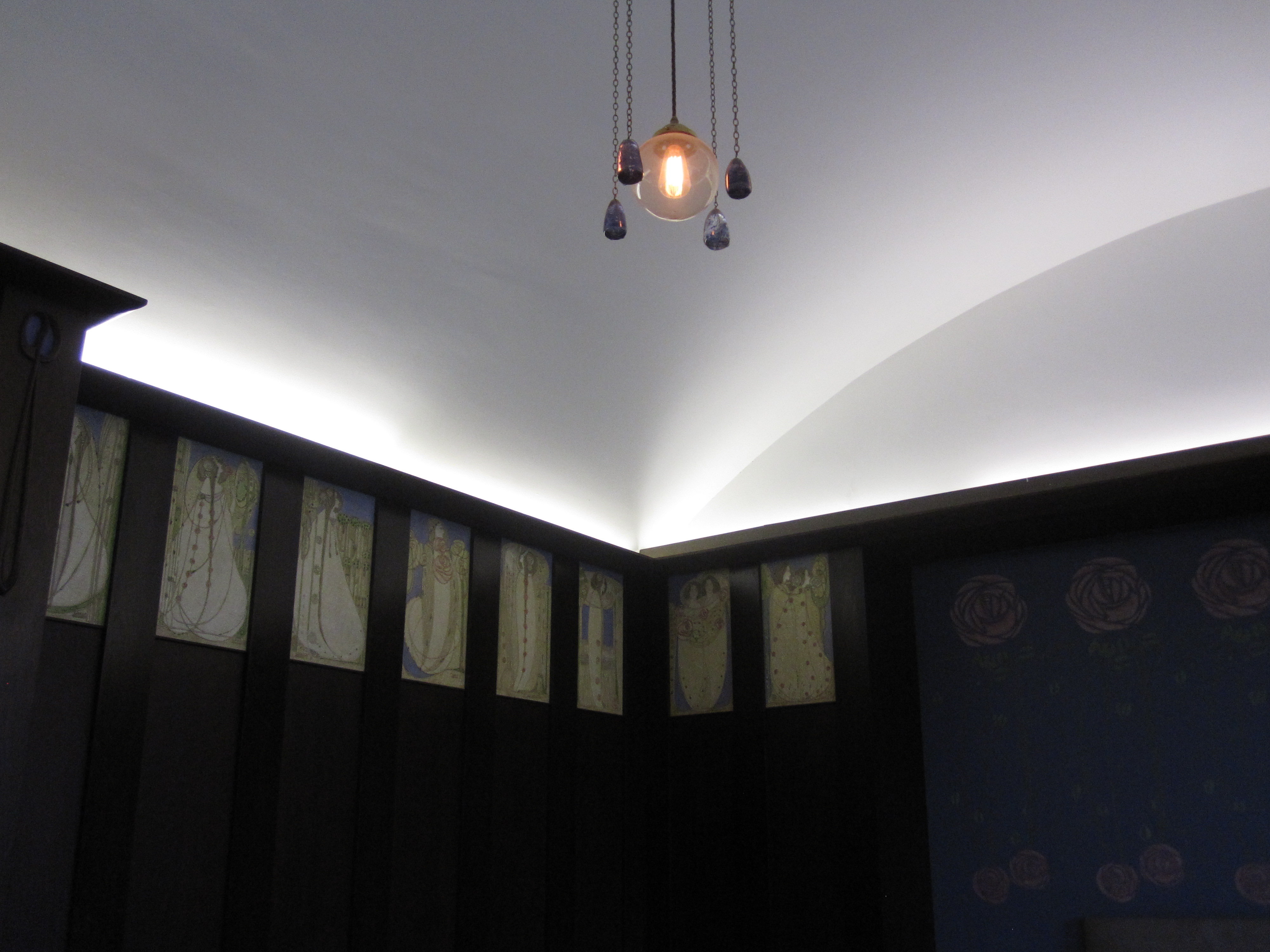
However, in the middle of all this, Michaela and I had a a couple of hours to kill in the middle of Glasgow, so we took the time to visit this place, which M had been wanting to go to for years. She is a lover of the interior designs of Charles Rennie Mackintosh and was in her element. The house was not actually built by Mackintosh, but was finished only around 10 years ago, to designs that Mackintosh entered in to a competition.

There is even a piano incorporated into his design- which I sat playing for a while, until I realised that I had attracted an audience.

The spaces that Mackintosh designed has been faithfully created without the need to pander to the domestic requirements of real live clients (unlike the other CRM house that has been preserved intact, the Hill House.) He wanted no ‘art’ on the walls, no clutter on the mantelpieces- in fact, he designed the fireplaces deliberately without any kind of shelving. He wanted the house itself to be the art to be loved. If you wanted other kinds of art, then it should be tidied away afterwards into cupboards.

I am not sure how I feel about this place. The spaces are undeniably lovely. The light falls through the illuminated panes, and finds all those lovely organic shapes. But there is an esoteric exclusivity about it too. Like lots of the art that we inherit,  it depends on the excessive wealth of the minority who could afford to indulge their own interests and tastes. What do you do if you have more than you could ever want or need, several times over- after you have done a bit of philanthropic giving to assuage the conscience?

You commission some art of course.

I am being unfair I think, as without these people lots of art that moves millions would never have come into existence.

And I like to think that my house too is for art lovers (note the plural) but let’s not lock it away. Let it be the oil between us.

Still, after all it is lovely and if Michaela likes it that is good enough for me…

Worship music remix 3- transcendence…

The first two pieces in this series are here and here.

We are just back from our monthly Aoradh ‘family day’. This is the closest we come to a ‘church service’ that we do regularly within Aoradh. It usually involves filling up one of our houses with people, then one of us will co-ordinate a period during which a selection of folk – kids and adults – will take turns to lead others through a song, a prayer, some meditation, a poem, a clip from you tube. It is simple, messy and lovely.

Then we eat together.

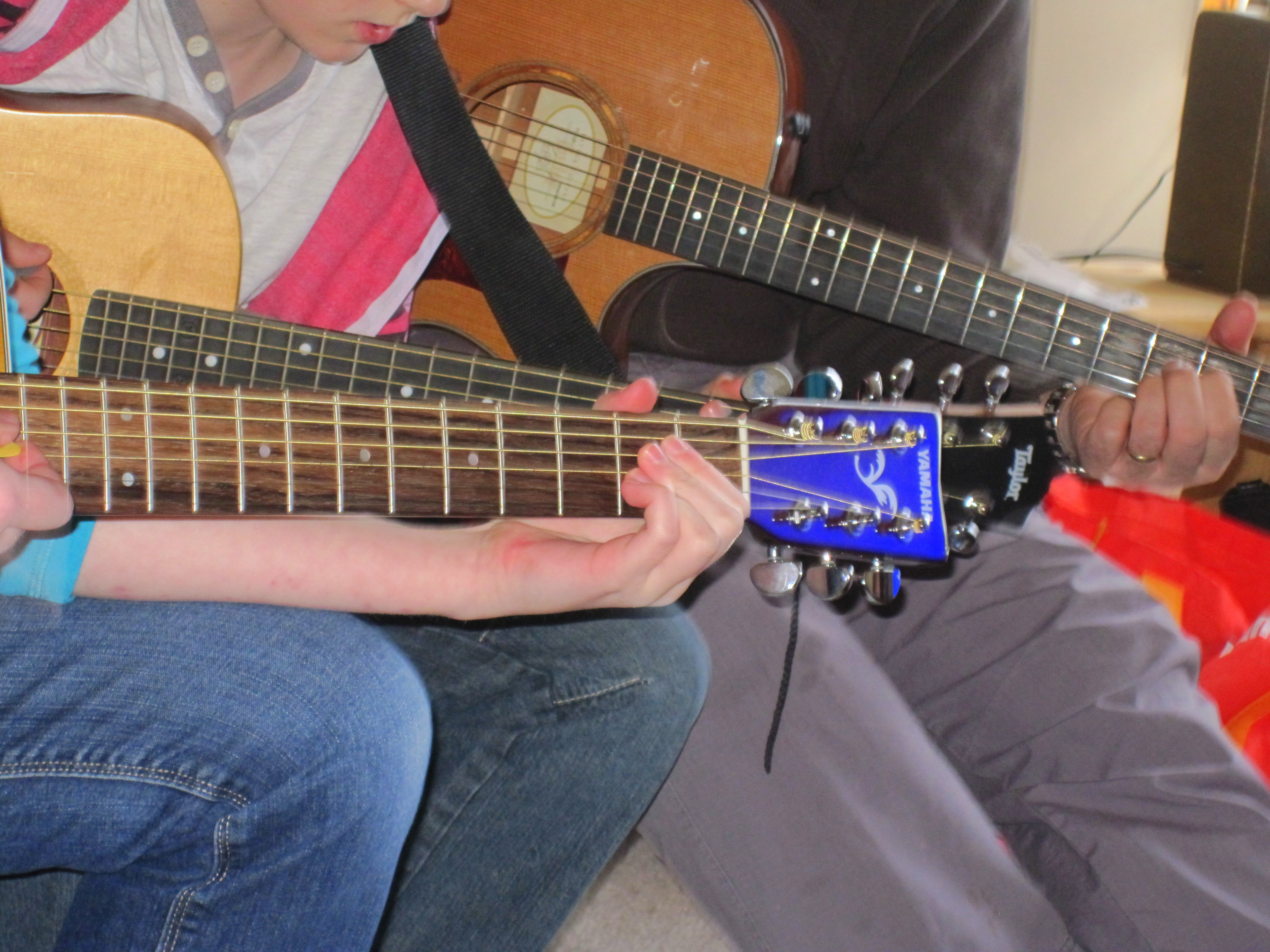
Today I was thinking about the distance I have travelled within the scope of what ‘church’ might mean. I was playing my guitar along with William and Rachel, and really enjoying it, because this is something I do fairly rarely these days.

There was a time when it was my whole life.

I was a ‘worship leader’ – one of those blokes (and they usually are blokes) who stand in front of people and whip up some spiritual fervour by the application of soft rock love songs to Jesus. I lived for those moments when the music took flight, and something kind of opened up. At such times, music was more than just notes. Performance became less about technique, and more about an attitude of humility and receptiveness.

But in the course of my journey from ‘organised’ church, other principles started to dominate the way I thought about worship. Primarily, I was convinced that the culture of ‘church’, with all its big and small liturgies, assumptions and traditions, easily came to be a black hole that swallowed people whole. It left us with no room for the other. It became about us, not about them. They were only important if they were willing to become like us. I was convinced that church should exist to send and to serve, not endlessly feed itself.

Our corporate worship was the same. It was all about music and preaching. Other ways if worshipping were not necessarily wrong (although some were guilty by association) but they were just not our thing. We knew what we liked and this was enough.

As I think about this now it is like a rainbow of only one colour. Still impressive, but monochrome.

It can also be so selfish, so self centred. Worship like this exists to make us feel good. The end we aim for is a spiritual/emotional high for us, dressed up in the clothes of adoration of the God that we make in our own image.

But I overstate my case. A monochrome rainbow can still be beautiful.

The word that came to sum up the change I was finding in my own aspirations in worship was this one;

Transcendence.

By which I mean the experience of God in the ordinary. The incarnation of the maker of the universe within the temporal, messy world in which we live and love.

Transcendent moments fill our lives if we look for them. And the more we attune ourselves to the looking the more we see.

They are everywhere in the natural world; sunsets, new leaves, mushrooms in caves, the lick of new born fur, the light of the moon on still water, the smell of rain on dry earth, the sea that goes on for ever. All these things will happen whether or not we are there as witnesses. But when we look in a certain kind of way a hollow space opens up in the middle of them into which we can meet with something transcendent. Into which we can invite/be invited by the living God.

They are everywhere too where humans also are. In conversations, in touch, in the longing for justice, in the decision to forgive, in the deciding to repay hurt with love, in the listening and in the laughing. Because God is a God of communion. God commands love, and love requires direction. Perhaps above all, the transcendent God is immanent when we come together in community.

They are encountered in art, because art can become a bridge to something beyond our business. Films, books, poems, paintings, sculptures, music.

They can even be encountered in church – for me, especially when we sing, when the chordal voices find the vault of the building and make it vibrate.

I had become so trapped in a view of God that was limited to one colour of the huge spectrum from ultaviolet to infra red and beyond, that I needed to go cold turkey. The guitar needed to go away for a while so I could hear the birds sing.

So I had some time to speak to people, with no agenda other than love.

So I could be creative, and make art in service of the Creator.

How about you? Where might your ordinary space become pregnant with the extraordinary, capricious, magnificent Living God?

The graffiti ghosts of Polphail village…

I came across a lovely blog the other day- Westcoastings. Well worth checking out not just because the author is but a skip across the peninsular from here, but also because it is beautifully written.

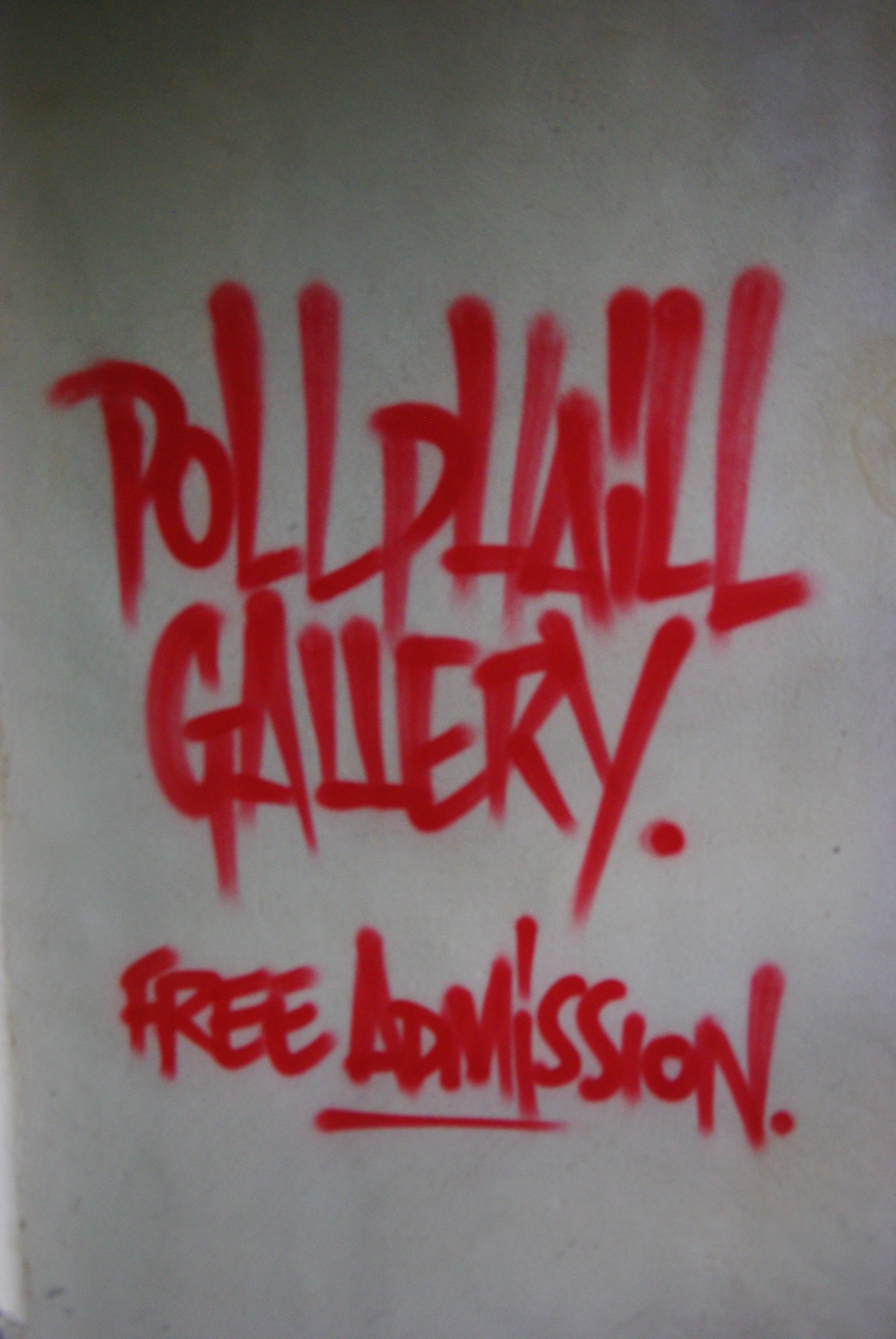
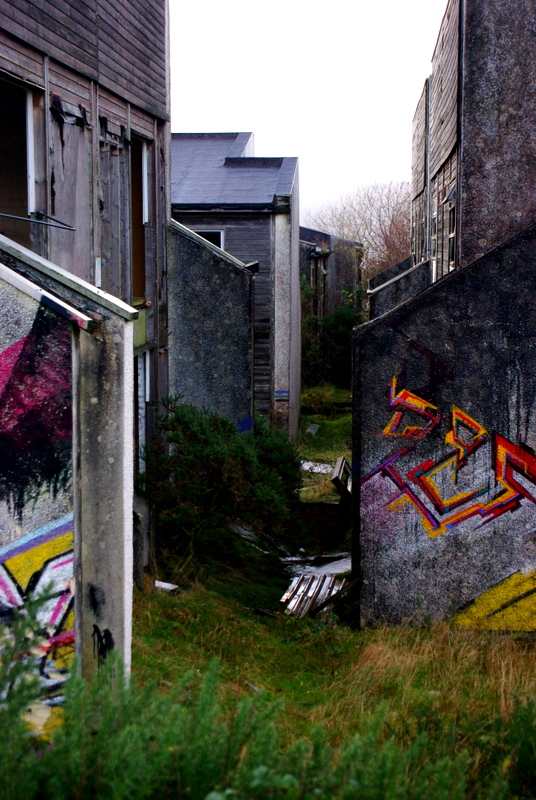
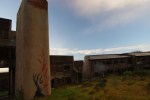
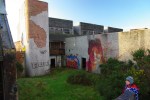
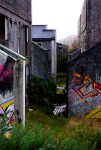
It also mentioned Polphail village– a collection of empty buildings out along the coast built in the early 1970’s to house the workers of a proposed oil platform construction yard. The yard never happened, and the houses were never occupied. Instead they have lain empty for all these years, slowly soaking up the west coast weather and mouldering into the hillside. It stands as one of those failed 1970’s macro economic experiments gone wrong- and despite many false dawns no alternative use for the site was ever found.

It is already an atmospheric place- a strange piece of urban decay in the middle of wilderness- as if a slice of the inner city had been teleported in some kind of science fiction experiment gone wrong.

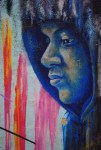
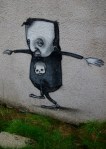
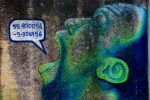
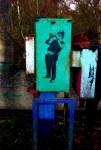
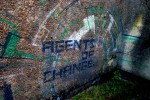
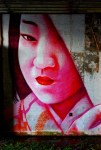
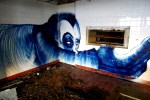
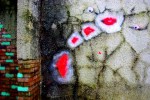
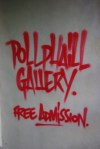
What I was not aware of however was that a Graffiti outfit called Agents of Change used Polphail as a blank canvas (hmm- perhaps that is not the best metaphor come to think of it) for all sorts of wonderful art.

So this afternoon we took a trip out there, cameras in hand.

It was a rather wonderful experience. It feels like some kind of furtive secret discovery, and the contrasts and contradictions land on you like lead weights as you wander round.

Soon it will all be gone, either because the site will be demolished, or simply because it will fall down. Either way, if you visit- be careful!

Here are some more pics- click to open…

Ancient artefacts…

We took a trip to the Burrell Collection the other day.

This is an incredible accumulation of objects- ancient Greek/Roman, impressionist paintings, Sculptures, swords and armour, fragments of 400 year old tapestry and 1000 year old stained glass windows.

It was all gathered together by William Burrell an extremely wealthy Glasgow shipping merchant. He spent his life gathering it all, and then left it to Glasgow council, along with money to build something to house it in, which had to be in a rural setting. It took the council another 40 years to find somewhere- eventually settling on Pollock park. The collection is so big that only a fraction of the artefacts can be displayed at a time.

Which asks rather a lot of questions about the nature and meaning of art and antiquities. What drove this man to accumulate so much stuff? We who visit Pollock Park may well benefit from his obsession, but can this kind of single minded avarice ever be a good thing?

Burrell might well have been a great bloke (we was known also for his philanthropy) but his legacy seems to be to be rather mixed.

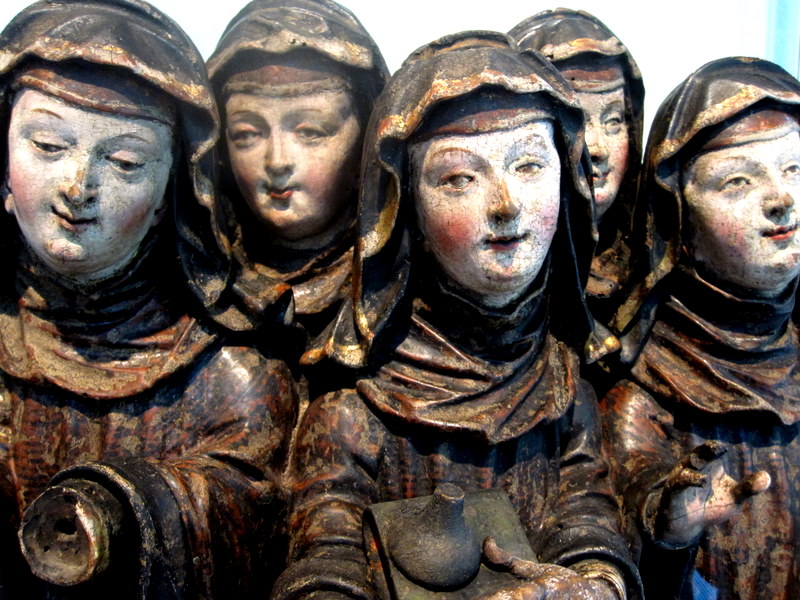
He also collected a number of religious objects- the earliest printed Bibles, fragments of reliquaries and carved statues that somehow survived the zeal of the reformation. Fragments that adorned books made in the great monastic houses.

As I stood and looked at these objects I wondered about what they meant to the people who first beheld them. Where they power statements even then, or were they objects of wonder that drew people to look towards the heavens and worship? Perhaps even then they were both.

The one above (a collection of Nuns carved in Germany around 600 years ago) looks like the carver wanted to display the subjects as full of joy and fun. I wonder if people disapproved?

Investment in icons is unlikely ever to be enough- they can become idols in the beautiful blink of an eye…

Soaking in some culture…

M and I are just back from a lovely couple of days in Edinburgh- I had to attend a meeting about mental health improvement (which was actually really interesting- might say more about this later) and so we took the opportunity to go together and spend some time in the City.

And we found ourselves drawn like hungry creatures to the great honey pot of culture that can be encountered in Edinburgh. We spent ages in bookshops, music stores- and more interestingly, in art galleries.

Michaela spent 4 hours in the David Mach ‘Precious light’ exhibition– and was so captivated that she then took me in there too.

You enter the exhibition through a space filled by three crucified figures- the power of which are simply inescapable.

Then you enter a series of galleries full of art inspired by the words of the King James Bible. They are astonishing- huge collages of explosions of images- disturbing combinations and all sorts of mysterious weirdness.

This is the only exhibition I have ever been to where people walk round with tears running down their faces.

My favourite were a series of collages of heaven- in 4 seasons, juxtaposed with grotesque collages of hell, set in lots of cities. As Michaela pointed out- the heaven images were not nearly as powerful- mostly just lots of folk in happy activity- but the contrast with the hellish ones was electric.

Michaela’s favourite was a nativity scene- this does not begin to do it justice-

The other thing that you encounter in the exhibition are two heads- one of the Devil, and one of Jesus, made of matches, which are then burned.

Here is Mach talking about the Devil one.

The burning of the Jesus one was more controversial of course. Mach

The interesting question is whether such powerful religious art could ONLY be done by someone who is not religious? Could a Christian make art as powerful as this about the Christian story?

If you can- go and see for yourself…