Proost advent 19…

Today we have a poetry reading for you – with a difference. This one features a conversation with the poet who wrote the poem back on day 7, and then some stunning poetry from an old friend…

From the show notes for this pod;

“This episode features two Australian poets- Talitha Fraser and Stevie Wills, and is the first of what we hope to be a more regular immersion in poetry, and the story behind the poems.

Stevie lives with cerebral palsy which has affected her speech patterns, so listen carefully, because hers is a voice worth listening to! She speaks movingly about her long powerful poem which tells Mary’s story. It is a stunning piece that she was keen to allow to stand on its own. We recommend checking out her website to see/hear more of her work!

https://www.steviewills.com.au/

Talitha is a long term Proost person, having been a key part of previous poetry collection curation. She is active within feminist spaces and activism for indiginous rights in her adopted city of Melborne, although she was born in NZ. You can find out more about Talitha and her other projects here;

https://linktr.ee/the.recollective

The conversation in this chat was a privilege to be part of. We hope you enjoy it as much as we did.”
Advent 24: Christmas evening…

Still, we feel the tingle.

The picture postcard version of Christmas never happens – we don’t have snow or Victorian choirs. (We do have robins, and the recent arrival of a small baby though.)

Here we have been lashed and slashed by storm after storm and it is unnaturally warm. The darkness lasts even longer, before the hooded light bleeds in with a yellow hue, making the day seem reluctant, forboding.

The shadow behind this advent has been Gaza. I have mentioned it in passing during the course of these meditations but it has been there all along. How can we seek the truth of a story set in a place of such current brutality and violence? How can we seek justice through this story when the opposite of justice is so current? How can we seek peace in this story when children lie under the rubble of a building so recently collapsed? How can we talk of love when industrial slaughter is justified by hate and vengence right there in plain sight on our screens day-by-advent-day?

But then the answer comes. What else should we do, if not this?

What else is Christmas about?

I know, we can easily coorie in, behind our storm lashed window panes and make it all about us and those closest to us. We can hide in our own interior spaces and consume.

Like I am doing right now.

But Christmas eve is not for guilt, it is for wonder.

It is for being open to the possibility of goodness, in spite of all the evidence to the contrary.

It is about Emmanuel, God with us, promising peace on earth, if we will heed his call to make it, one house at a time.

It is about love, for family yes, but also spilling out wider to embrace as many as we can.

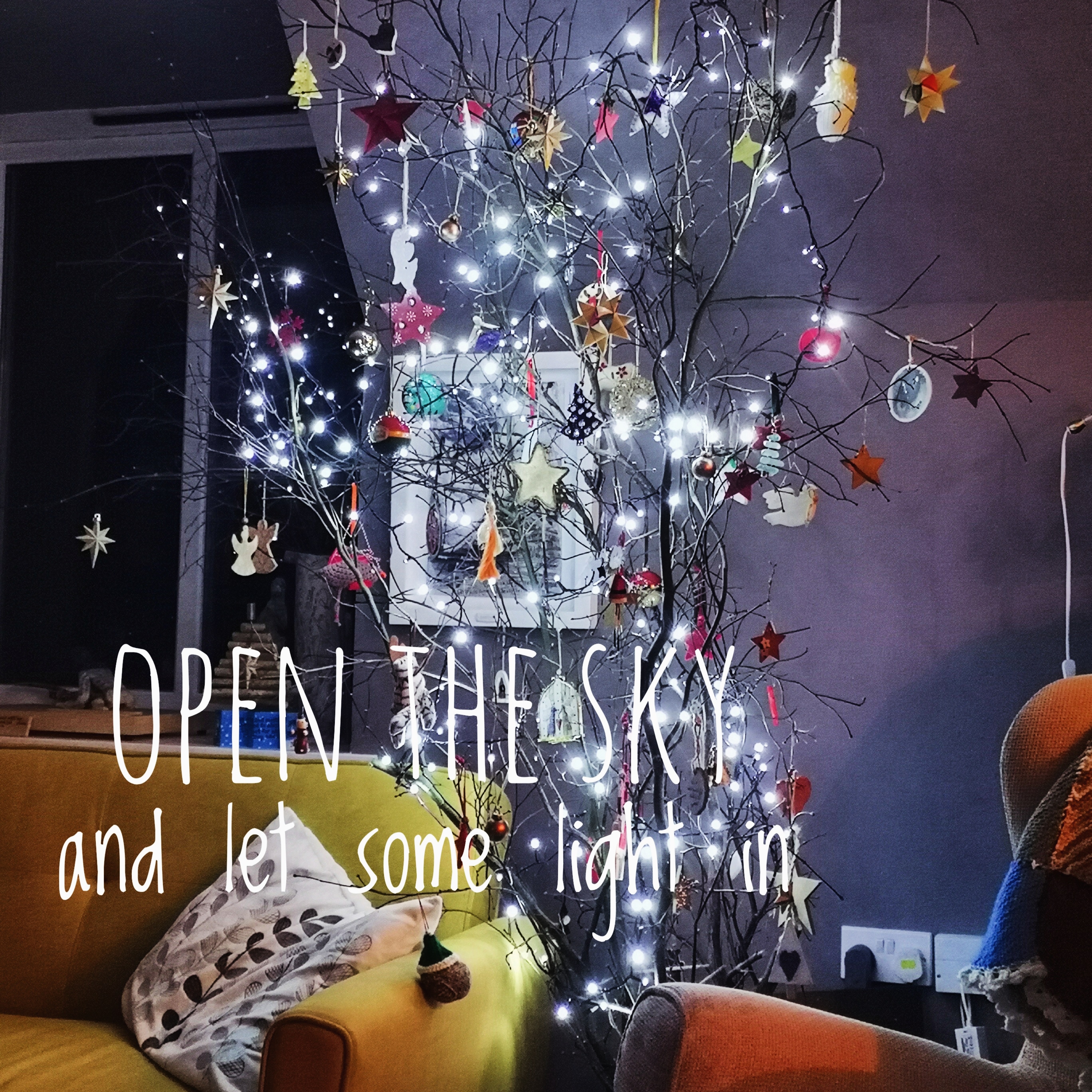
So, dear friends, may your home be warm this winter. May the lights be bright. May the table be loaded with goodness and may you be loved, not because you have earned it, but just because you are beautiful.

May whatever you have be enough.

If threre is an anthem to this Christmas eve, perhaps it is this one. Glen Hansard and Lisa O’Neil, performing Shane MaGowan’s old party song with such tenderness and joy at his funeral…

‘The Places In Between’ review…

I have just finished this book- and thought it worth posting a quick review, as it’s subject material is Afghanistan- post 911.

The author Rory Stewart is an ex soldier, some time diplomat- including serving as deputy governor of an area of occupied Iraq. But in 2000 he packed in work and walked for 6000 miles from Turkey to Bangladesh.

And following the invasion of Afghanistan in 2002, Stewart decided to take a winter walk across the middle of the country.

Which was by any measure a rather mad thing to do. The country was shattered by war, traumatised by successive violent and oppressive regimes and the route he chose was thought to be impassible in winter- because of deep high mountain snow and plunging temperatures. Then there was the political situation- the minefields (both literal and figurative) to stumble into.

And of course, the strong chance that he would meet people who might seek to do violence to him.

But the end result was a walk through a varied landscape and a variety of cultural/religious situations that tells us a great deal about the country in which British soldiers are still fighting in our name.

The book is in many ways of a style more akin to travel writing of a previous generation- which suits me fine, as I love Newby, Herrer, Theroux.  It is writing that emerges from perilous encounter and adventure. And it is very well written.

Stewart relied entirely on the kindness and hospitality of Afghan villagers and local leaders for food and shelter. This made me very uncomfortable as I read the book, as some of the people he imposed himself on had very little themselves. At times, he (and the dog he picked up along the way) was clearly an unwelcome burden.

But I think this book is worth reading for these reasons-

  • It is a contemporary window into a country that we only know through the very limited eyes of  journalists ’embedded’ in the occupying forces- living in military compounds and making short forays in armoured troop carriers.
  • It is very strong on the majestic history of the country- of its former empires and mythical cities and leaders- stories that live on through ancient writing and poetry. Stewart is currently living in Kabul and heading up the Turquoise Mountain Foundation, which is investing in the regeneration of the historic commercial centre of Kabul, providing basic services, saving historic buildings and constructing a new bazaar and galleries for traditional craft businesses.
  • The book also introduces us to the great diversity of Afghanistan- with its different people, traditions and religious divisions.
  • It confronts some of the easy stereotypes- the violence, ‘noble savages’, a country suffering from PTSD, as well as Blair’s rather patronising quoting from the Koran. But is avoids siding with any of them- giving an impression of a country that is all of these things, and none.
  • It makes clear the human cost of war, and the long term effects of the power struggles and violence that always follow in it’s wake.
  • It is literary, well informed, sensitive to religion and culture in ways that I can only assume are detailed, well researched and accurate.
  • Finally, it reveals a love of this place- in all of its mess and beauty.

Recommended reading as an essential antidote to the infotainment contained in the dreadful repetitive rolling news of Sky and BBC news 24.