Teaching not learning…

school-assembly


I had lots of good discussions on my recent wilderness retreat, one of them was a chat with Andrew about teaching in church.

This was relevant as in my ‘church’ we do not really do teaching- most of us have had a belly full of sitting in church services listening to people preach at us. This has been replaced by lots of different kinds of learning however- reading, internetting, discussing, visiting other places. Whether or not this is a fair exchange has been the cause of some discussion.

Andrew however (who is a NT scholar at Aberdeen University, so his opinion seems well worth listening to) described his own frustration with how church has become addicted to teaching, but has forgot entirely about learning.

I had to think about that- surely if someone is a good teacher, then this has to be measured by the degree to which his or her (but lets face it, in this context it is more likely to be his) pupils learn?  Well no, says Andrew, at least not in the context of Church. Rather, his experience of preaching/teaching is that it is mostly totally disconnected from learning; rather it offers a kind of moralised, spirtualised entertainment for the faithful. Rather than challenging anyone to change, to develop, to grow, to explore, to adventure with the Spirit, it actually just provides a religious diversion from real life.

Another friend of mine, Graham, called it ‘theological masturbation’ over on his blog;

 I used the phrase ‘theological masturbation’ where I referred to our tendency, in Bible study groups just to ‘self pleasure’. Groups becoming just sharing of points and opinions with no vulnerability or attempt to relate it in an active or missionary way to the world outside…

The interesting question is, if people are not learning from our teaching, what do we do instead? How do we set people free to learn for themselves?

My initial response to Andrew was that I thought it was something to do with hierarchy. Churches have people whose job it is to teach others- the paid ministers. Therefore the rest of us step back and leave the hard work to them. Sometimes they (and in turn, we) are inspired, but mostly we defer responsibility to them. What if we actually had to come up with our own solutions to the small theological questions that surround our every day life? Sure, it might be possible, even necessary, to not get into the meat of all of them, but no faith is possible without a search for meaning- and in this instance, the meaning we find is our own, it is not lazily appropriated.

However, I am not fully satisfied with this answer- after all, we are all standing in a long line of followers of Jesus, and to suggest that others have not got things to teach us is foolish. We are all subject to the influence of others, and why not at least listen to people who have given this more thought than we have.

There is still the issue of learning. What are we learning for? Is it to refine the subtleties of our doctrine? There has been a lot of this kind of learning after all. Or should learning be actually about being schooled in the disciplines shown to us by Jesus? These are perhaps best understood in terms of learning to love one another, to live in community, to let go of all the stuff that gets in the way, be they possessions, selfish obsessions, or sins. This kind of learning seems to be to be as much about unlearning, simplifying, going deeper and slower.

I write these things not because I have learnt well- rather because I am a long term remedial pupil in need of extra tutoring.

I think that is what the Holy Spirit was tasked with was it not?

Which makes me wonder again whether we have not made his job rather difficult- by filling the classroom with theological masturbation.

Perhaps what we actually need is a small island with no internet or phone reception…

Church, in photographs…

church service


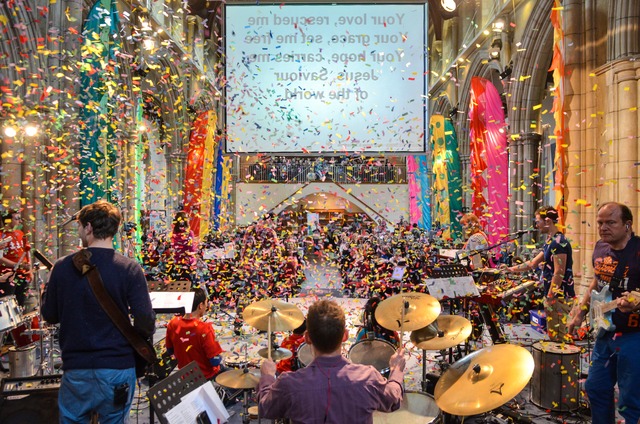
Check out this lovely collection of photographs sent in to the Guardian Witness Assignment entitled ‘Your Church Congregation’. It rather dispels the stories of the death of Church as the pictures of full of life and humanity- real people meeting and trying to share good life in the name of Jesus. I found looking at the pictures quite emotional, despite my journey away from established religion.

There is life in the old girl yet…

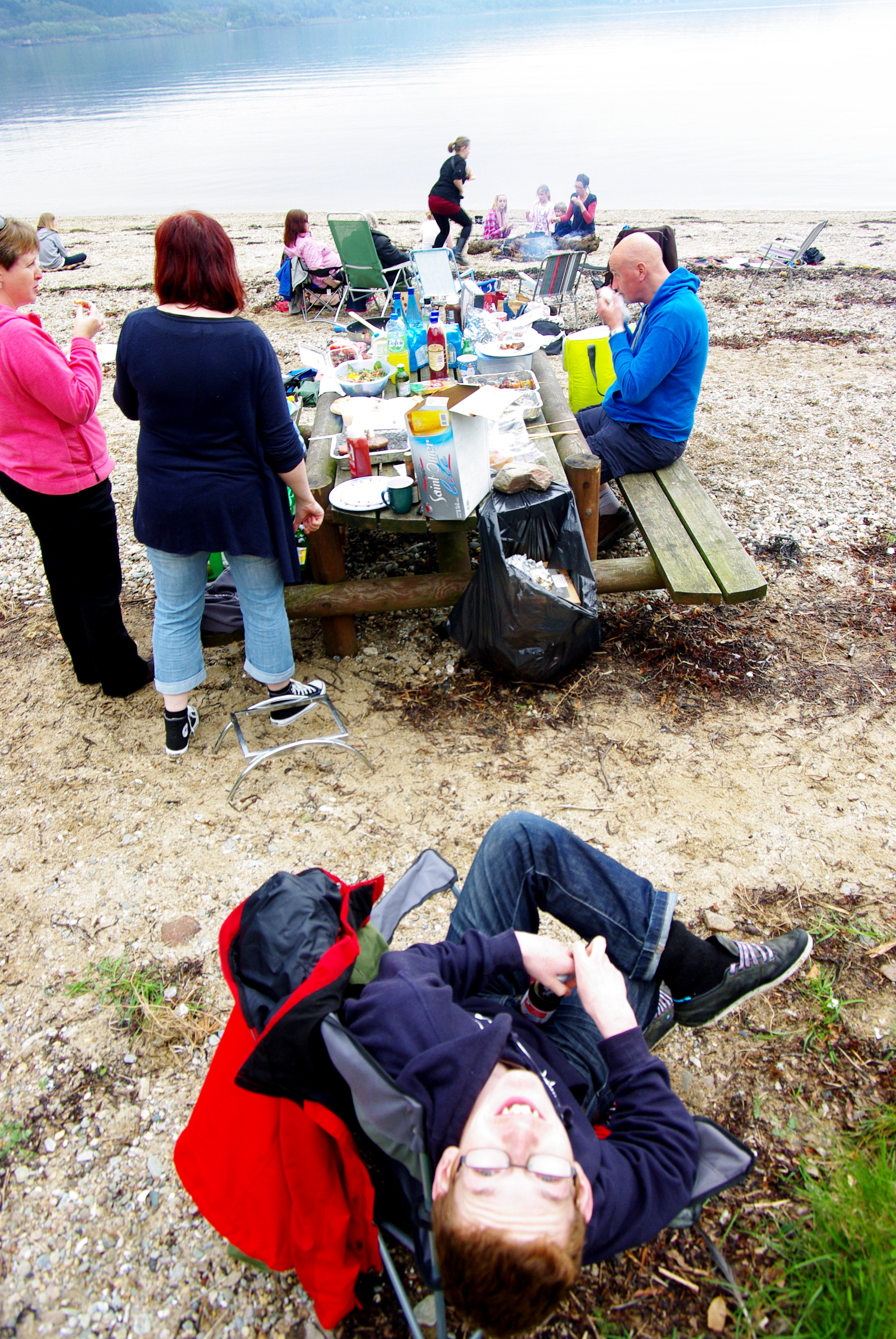
Here is one of my own congregation;

Andrew upside down

Christianity and Capitalism- to resist or to accommodate?

I have been dwelling on economics over the past few weeks. One of the things that has often troubled me has been the role that Christianity has had to play in developing a culture of enforced inequality, both locally and globally. At best we have become guilty by association, at worst we provided the moral justification for the whole shebang and then enshrined it in liturgy.

I have written about this before- if you are interested you might like to check out these posts;

Capitalism; a conspiracy against the common good?

Capitalism and Durkheim

capitalismrocks

Jason Clark has an interesting piece on his blog about the relationship between Evangelicalism and Capitalism, particularly in the US. It is a tough read, but basically, he contrasts two potential kinds of analysis which he characterises as ‘Cultural dispisers’ and ‘Cultural accomodators’.

Firstly the dispisers;

William Connolly, in his 2008 work Capitalism and Christianity, American Style, sets out firstly to diagnose how the ‘capitalist project’ has been perverted and warped by its resonant relationship with conservative right-wing Christian religious beliefs.[1]

Connolly describes how this relationship between an Evangelical right-wing ethos and capitalism is best understood through ‘assemblages’ of media, churches, cultural consciousness, and a ‘spiral of resonances’ that produce the Evangelical capitalist resonance machine.[4]

Connolly’s response to this contention and diagnosis is to suggest that it is within an alternative and ‘counter political movement’,[6] a democratic and left-wing visualisation of a new ethos, that capitalism might be redeemed.[7]

Now for the accommodators;

Pete Ward, in his 2002 work Liquid Church, offers an account of the relationship with Evangelicalism to capitalism that contrasts starkly with those of Milbank and Connolly.

Where Milbank would warn us of the complicity of the Evangelical Church in conforming to the practices of capitalism, and Connolly of the pathologies of the Christian ethos that shapes those practices, Ward critiques the Church for failing to embrace commodification as a spiritual practice and suggests that the Church should be engaged with it even more. For ‘rather than condemn the shopper as materialist Liquid Church would take shopping seriously as a spiritual exercise.’[17] Where the underwriting of commodification by ecclesial practice is inherently evil for Milbank, according to Ward it is a vital and theologically necessary ecclesial practice to the Church.

I have not read Connolly’s book, but I have read Pete Ward’s Liquid Church- which is a great book, although I do not think the points made by Jason do it full justice. What Ward was seeking to do was to get the church to engage fully with the culture we are part of- to flow in its veins. He reckons that it is only by doing this that we understand, that we become relevant, that we can become part of the mission of God for our times. I am not sure that this is the same thing as ‘accommodation’.

Ward uses the example of advertising as a case in point- he suggested that rather than dismissing all such commercialism as ‘of the world’ and therefore having no spiritual significance for the followers of Jesus, rather we can learn so much about the collective spiritual yearnings of our age from advertising. Is this accommodation, or is it being engaged as thoughtful critics?

I am much more convinced by Mike Frost’s book Exiles, in which he compares Christians living in our post-modern, post-Chistendom world to the Jews exiled in Babylon. It is simply not possible to live lives of isolation- neither is it our calling. Rather we have to learn to live as engaged, loving, active agents of the Kingdom of God. This might involve the celebration of aspects of culture, or it might also require us to resist other elements- injustice, prejudice, the power of the strong over the weak. This also brings us into contact with the language of sin and evil- the ways of living that tear into each other and destroy us.

The other polarity that Jason proposes in his piece is that of the dispisers. This is not a word I would have chosen to apply to myself in relation to Capitalism- more because I do not think it would be honest. At the same time as asking my intellectual and theological questions about Capitalism I am very conscious that my whole lifestyle is wrapped up in it.

Back to the direct relationship between Christianity (particularly Evangelical Christianity) and Capitalism. How might we characterise the ways that faith has accommodated? I started making a list;

  1. By emphasising personal, individual salvation above all else. The only useful purpose of mission is to save people from hell after they die.
  2. By embracing success culture. We use the same corporate structures, we reward our religious successes as we would our CEO’s, we value hard measurable outcomes, we construct programmes.
  3. We make mission a kind of hostile take over. Business success involves out performing the opposition, and rejoicing in their bankruptcy. So it is that we see any form of religion not our own as our economic enemies.
  4. Christianity is a lifestyle choice that requires no change to the way we live our economic lives. Yes, I know there is the old ‘tithing’ argument around Evangelical churches, but we drive the same cars, live in the same houses, take the same holidays, fill our lives with the same gadgets- or (and here is the sting) even if we do not have these things, we aspire to them.
  5. We bought into lives characterised by individualism over the collective. The model given to us by the life of Jesus and the early church was all about the collective- how we live for one another, how we hold things in common, how we find ways of including the poor, the weak. Yet these things are not really part of our DNA.
  6. We failed to demonstrate any kind of radical alternative. The best that we have been able to offer is how to live as better Capitalists- more sensible, more responsible, with greater probity.
  7. We did not see injustice, inequality, poverty, unfair taxation, usury, over consumption, environmental destruction, as any of our business. Which relates to point 1.
  8. And where there was visible discomfort with Capitalism, we lacked any coherance, we lacked leadership, we did not become a critical movement. Rather we splintered and focused on totemic side shows live homosexuality and women bishops- all of which is destroying our credibility anyway.
  9. Our mission to the poor was conditional on redeeming them to become like us. Difficult one this, but stay with me. There is lots of wonderful Christian history of engagement with the poor from the Salvation Army right through to local soup kitchens. These activities clean up the edges of Capitalism- but also justify the dominant ethos. It encourages us to lift people back into becoming productive consumers. Like us. It does not suggest that the problem might be in any way systemic.
  10. We forgot that the Church exists not to give us a better life, but to serve the lost and the least. If we are serving the lost and the least, how can we have convinced ourselves that our unsustainable greedy lifestyles are God-given rewards for our moral superiority- which we Brits built an Empire on, and then passed the baton to the USA?

So, the question at the head of this piece- to resist, or to accommodate?

I think we need to resist what should be resisted, and to where there are seeds of justice, of beauty, of grace- there we should plant ourselves alongside and accommodate for all we are worth.

And what would church look like if we took each of these 10 points above and reversed them?


Chalke on homosexuality- video

My last post on this issue at the moment.

I feel I must say sorry to my friends who are troubled by my take on this issue- angered even. My last post was unfortunately rather flippant and did not do justice to the depth of the issue. All I would say is that I do not do this because I am drawn towards controversy for its own sake. I do it because I have come to believe that the church has got its attitude towards gay people badly wrong.

We isolate people at their point of greatest need. We place them on the outside with no possibility of acceptance and inclusion. In another e-mail recently I found myself saying this;

human sexuality is highly complex- some people can indeed change their sexual behaviour to a certain extent, but the harsh fact is that most can not. The implication for this majority then is that God created them with a different sexuality, but who they are will never be acceptable to His people on earth- short of a half life of loneliness and struggle. The end results are high suicide rates, mental illness, isolation and some people end up living in (not always healthy) ghettos where they feel safer. Despite a shift in societal attitudes gay people still live in fear of all sorts of prejudice.

The other end result is that they are driven away from the church and from God. We have two friends whose children grew up in the church but always knew themselves to be ‘different’. Both are now far far from the church. I also have friends who deal with their sexuality by keeping secrets- trying to display surface acceptability. What they long for are stable, monogamous, loving relationships- and to be accepted and loved by their peers.

All of these friends will describe their utter incomprehension at being told that they are loved, but that their sinful lifestyles can not be accepted. They would describe their sexuality as fixed from the earliest age- in the same way as others have blond hair. The arguments about original sin make no sense to them- and they would point to others who are born with a physical disability, who used to be excluded but are no more.

The reason why we in the church have adopted the position we have is based on our interpretation of scripture. This has been a crucial journey for me- in trying to understand what these scriptures mean, and to set them in the wider context of the life Jesus calls us to.

And a long time ago I decided that if I was going to make an error in my theology, I would err on the side of grace. I would err on the side of love. I would err on the side of acceptance.

What I think we need is for people who have an apostolic voice to speak on this issue with love as the primary imperative.  People who are prepared to risk the storm that will surely fall on their heads- risk their jobs, their reputation, even losing their friends.

Step forward Steve Chalke;

http://player.vimeo.com/video/57125373

Asylum…

Argyll and Bute hospital 3


Something I wrote for a Greenbelt event a couple of years ago- which came back to me recently when discussing brokenness. Originally it was written to make comparisons between organised church and psychiatric care.

There was a concern in the land

In every town the roads were lined with beggars

There were homeless orphans and widows cast out onto the streets

Lunatics were stoned by children

And melancholics drowned their sorrows with gin

The pain of it all was in the middle of us

The Jesus in the least of these

Was weeping


So the good people gathered

“What is needed” they said “Is asylum.”

A safe home where broken people can live out their lives in care-

Protected from all of the mess of life,

Fed and warm and watered.

So money was gathered

Stones were shaped and raised

Staff were retained and clothed in starched clothing

-The heavy doors were opened wide in welcome


And so they came- the halt, the sick, the lame

The motherless and the pregnant child

All those broken by worry and grief

The shakers and the mutterers

All the awkward squad

The outsiders now came inside

They were home at last

old painting, Argyll and Bute hospital grounds


It went well for a while

All was orderly and planned

Starved frames filled out

Songs were sung again in the entertainment hall

Gardens were laid and tended

Sheets danced in the evening sunlight

And a bell rang out to warn of the dowsing of night candles


But time passed, and shadows fell

Budgets were tight, and the paint peeled on windows

The good folk who had once been so generous had other calls on their coin

A few still visited on feast days but for the most part

Out of sight became out of mind.

uniformed building


And there was trouble

The awkward squad was still awkward

The asylum split into ‘us’ and ‘them’


‘We’ had roles- uniforms and clipboards, rotas and registers

Big bunches of keys danced at our belts

We had dreams- of advancement, romance and families

We had homes away from this home


‘They’ stood the other side of our desks

Dirty and lacking in motivation

Ungrateful and manipulative

Un co-operative with our assessments

Lacking insight into the nature of their dysfunction.

They had ceased to be like us

Rather, they lived out regulated half-lives

They ceased to be flesh

And became instead a collection of paper

In manila folders

listening

Despite all the material provision- something was missing

Despite all the person centred plans, the person was not at the centre

Despite the close press of humanity, there was no family

Despite all the risk assessments, there was no adventure

Despite all the planned activity, there is no purpose

Despite the safety of the high walls, I am still destroyed


So it was that care became captivity

Individuals became invisible

And home became hollow

And toxic

While Jesus in the least of these

Was weeping

locked door

The ‘Shaping Of Things To Come’ event, reflections 2…

missional

Here is the word of the moment (from Michael Frost);

Excarnation

…defined as the burial practice of removing the flesh and organs of the dead, leaving only the bones. More of this later.

Frost gave a whistle stop tour around what he saw as cultural trends. He suggested that he was less concerned about the process of getting people back to Church, and more about the irrelevance of church within our cultural context; in particular, the fact that we have failed to pose the right questions, or to articulate alternatives.

He used the following analogies;

The Gate Lounge (Airport waiting room)

(An idea pinched from Martin Baumann.) The suggestion is that increasingly we engage with our world as tourists, in a place of constant transition. We live in, and create, sterile artificial environments that we pass through quickly, always on the way to the next non-real, commercially curated experience. This leads to a kind of life where we skim over the surface, living a commodified experience that lacks satisfaction.

It also leads to a disconnection from place, community, belonging.  Frost mentioned the film ‘Up in the air’, which I reviewed previously on this blog here.

Screen culture

We are increasingly a culture whose head is down- always looking at our tiny screens. Life is lived in the abstract, and we develop two selves- a screen self, and a real self.

Frost mentioned the novel ‘The Lost Memory Of Skin’, about a man who is addicted to internet pornography, but has never had real sex.

Dualism

Here the church may have contributed to its own disconnection, as we have presented a polarised perspective on everything- heaven/hell,  earth/heaven, world/church, flesh/spirit. Jesus is presented as living in the soul and waiting in heaven, not incarnate- flesh blood and spit here, right now.

Likewise church has followed the same disembodification as the rest of our culture- we learn through sermon podcasts rather than the process of experiencing and testing truth in community. We create individual worship experiences in auditoriums with a stage at the front and us, eyes closed, seperated from those around us.

Back to the word, ‘excarnate’. We human beings are made to experience the infinite depth of what we inhabit. We are tingling flesh on tingling flesh. Strip away these parts of what we are, and all we become are dry bones.

Frost described a communion service he once attended- a large empty church with the floor covered in black plastic. In the middle of the room was a mountain of stinking, oozing, rotten rubbish- the human kind- every kind of filth. The putrid juices ran out in rivers into the room and the communicants struggled to stand clear, and to cope with the smell.

Then two people in swimming costume entered the room, and walked towards the filth. They waded in, first ankle deep, then up to their waists. From there they led a service of communion.

The imagery is astringent. We follow Jesus- God-who-took-on-flesh, whilst at the same time living a world that increasingly avoids touch.

I am not sure whether you find this analysis of current cultural trends to be exaggerated? Frost is of course an agitator, but I there is something in what he describes that make me sit up and pay attention. Whilst engaging with our culture, seeking to understand and participate within it, we also have a duty to understand the Zeitgeist, and where necessary, to oppose- and perhaps most importantly (in the way of Jesus) to oppose by example.

Frost described how his community (Small boat, big sea) are seeking to do things differently. They have agreed to apply this method, and to hold each other accountable for it. Each week they will;

Bless three people- with words, gift, favour

Eat with three people- sharing their table as an image of Kingdom

Listen deliberately

Learn from the life of Jesus

‘Sent’ consider life as a mission

In this way, we might not exist only in our ‘head’ (excarnate) but encounter God in practice- in the mess of real flesh.

The ‘Shaping of Things to Come’ event, reflections 1…

shape


I attended this event yesterday, and will post a couple of reflections on things that were said.

I was slightly reluctant to go- partly because I was not sure just how much a couple of blokes from Australia and South Africa could really tell me about future development for church in Scotland. In this, I think I was partially right- both Frost and Hirsch spoke very well about their developed passions- each linked in with piles of books available at the back of the room, which is fair enough I suppose- both have a living to make. However, the groove that the books gave to the themes were general, not specifically tartan.

There was a considerable contrast in the styles of the two men. Hirsch was more technical, more given to making categorical statements gleaned from Scriptural interpretation. I confess to finding this a little alienating. Frost was passionate, inspirational and well practised with each story and each illustration.

It has been a while since I was in the presence of so many professional Christians. I would reckon that 90% of the people there (around 100-150) were in some form of ministry. The impact of days like this on the shape of the Church in Scotland has the potential to be significant then. I think that most of us who attend events like this are already quite well versed in the nuts and bolts of the arguments. We have read (at least some of) the books, and have had an eye constantly on the state of the Church for years. What we tend to do then is to take away a few nuggets of issues to chew on further. These will of course be different, but here is the first of mine;

Hirsch began the day by talking about the ‘Five Fold Ministries’ from Ephesians 4;

10 He who descended is the very one who ascended higher than all the heavens, in order to fill the whole universe.) 11 So Christ himself gave the apostles, the prophets, the evangelists, the pastors and teachers, 12 to equip his people for works of service, so that the body of Christ may be built up 13 until we all reach unity in the faith and in the knowledge of the Son of God and become mature,attaining to the whole measure of the fullness of Christ.

Hirsch’s contention was that Churches could not grow without a recognition of the importance of each one of the ministries of church- what he called APEST- Apostles, Prophets, Evangelists, Shepherds and Teachers. He suggested that many of these roles have been scandalously neglected by institutional church, and that because Ephesians 4 is foundational we do this at our peril.

He also said that although this is not a ‘silver bullet’ to deal with the monster of secularism and church decline, it is a ‘sliver telescope’. Without these things, we can achieve neither unity nor maturity.

My perspective skews my response to this kind of analysis. I am much more interested in church-at-the-edge, church-in-the-gutter, church-around-the-dining-table. These kinds of churches are very resistant to grand labels. Neither am I sure that Paul’s list is either foundational or fully inclusive of all the leadership roles that Church (with a big C) requires.

To be fair, Hirsch did point out that Ephesians was a letter sent not to a church in strife, or in need of outside correction, but rather to a collection of small house groups, full of very ordinary people. We are not talking Megachurch here, where individuals are raised up high on some kind of spiritualised stage. This might suggest that people who contain within them the different gifts are fully formed mature versions of the same- more that this is their starting point towards any goal.

This is where I think that the analysis has some use. We have become very used to all those personality tests, seeking to codify and categorise our humanity- often to understand better how we fit together, how we approach different issues in different ways.  So it may be with these ‘five fold’ ministries- each one looks at the Gospel from a different perspective- each one is a different mode of awareness, or form of intelligence. Here is a little more on how this might work for each one (with some of my own thoughts about the perspectives they bring);

Apostles are people who feel the ‘sentness’ of church. They keep the movement intact, guard and maintain its integrity, see the big picture.

They have to deal with personal issues and structural issues about the use and misuse of power.


Prophets are people who are highly sensitive to the spiritual depth of a situation. They listen to the voice of God. They often might use art or writing as a means to display and engage with these issues. Hirsch used the phrase ‘Canaries in the mine’- the first to sense problems, the first to notice the change of atmosphere.

They can also be difficult, awkward individuals who upset others around them.


Evangelists are recruiters to the cause- gifted communicators and networkers. Without them a movement can not grow.

They can also be driven by the buzz of the sale room, and the conquest of another closed deal.


Shepherds are people driven to heal, to care for, to nurture and to protect. They feel the needs of others around them deeply. They keep the peace.

They can also become worn down by the brokenness of other, and tend to lose the big picture because of the intensity of the small ones.

Hirsch suggested that the church has overemphasised this ministry- all those ‘pastoral’ positions in church, and points out that the Greek word associated with this gift is only very rarely (one or two) times used in the NT.


Teachers connect the dots, help others understand detail.

Most of the time this word is used in the NT refers to ‘false teachers’- pointing to the danger of what happens when ideologues get hold of the gospel and use it as a web to make their own power.


The interest for me in all this is two fold. Firstly I will talk to my friends about how this might relate to the skills gifts and characters that we have. It might be a useful way to recognise and uphold/encourage individuals.

Secondly,  it might be a useful tool of analysis- to take a look at our activities through different sets of lens.


Crash course in Churchianity…

I heard a story about Church the other day from one of my close friends that made my eyebrows shoot skywards. More on this later…

I have spent too long deconstructing institutional Church in all its glorious contradiction. Initially I did this as someone who had been chewed up by a negative experience of church – burnt out by it all – and then latterly, more from a respectful removed distance. Eventually however, all this deconstructing has to stop and we need to start constructing again, or we are remain caught in some kind of pointless cynical loop.

All things change. The usual human cycle of any project of human organisation always goes something like this; new thing-expansion-slowing down-dissatisfaction-deconstruction-emergence of new ideas-start of new thing. 

Except in Churches, things sometimes seem to go so slowly. It is almost as if the religiosity of these institutions becomes a gate for the flood of change. If the shape of Church is God-ordained, defined by theology, supported by Scripture and managed by the chosen ones then how could it ever need to change?

My answers to this question, thought over long and hard, are as follows;

  • Change will happen, even if you try to ignore it.
  • The institutions of Church are human constructs, not divine templates floated down on angel cushions.
  • Church arises in a particular time, place and culture- it answers the questions of this place, and everything about it is shaped by these requirements.
  • But then the time place and culture have moved on, and there is a danger of disconnection.

Sure, many will suggest that culture may change but not The Truth, but I am afraid I do not agree with this either. What we once held as absolute gospel truth on all sorts of things has shifted- the divine right of Kings, remarriage after divorce, the place of women (even though this is still a work in progress.)

Back to the story;

My friend grew up in a Church in the north of Scotland and she frequently visits her parents there still. The Church they attend has a room at the back, with a glass partition between it and the main auditorium. The sounds of the main Church building are piped in by speakers on the walls, but otherwise the room is a smaller version of the main Church- plain, unadorned, lacking in any distractions such as toys or books.

It is known as ‘The Training Room’- where young people learn how to behave in Church. When to stand and sit, how to keep silent and when to sing, how to dress and to maintain proper decorum.

Initially I was shocked. How far have we come from the Jesus way of putting the kids first (see Matthew 19.)

But is this so very different from what we all have to go through in entering Church? We learn first of all to conform- to how to behave; to what is correct. Later on we may be able to question some of the edges of what we have become, but the pressure to conform, to belong, is too great.

Perhaps this might serve us well in part. We DO have things to learn, and we learn best in our collectives. However, these collectives also need to be learning, changing institutions and this is not an easy thing to achieve. In the worst case scenario the choice we have is to accommodate or take the nuclear option- and leave.

Leaving is no panacea of course, because as individuals or small groups setting out on our own we will start to form our own Training Rooms.

The open question for all of us is; how do we remain open, questioning, teachable, lovers of the way (not sitters on the pew?)

I have some flickerings of an idea as to how we might do this- and it is about being a sent people, not a gathered people. It is about going with love, not staying with doctrinal truth.

Hmmmm.

In defence of Church attendance (by one who does not.)

The former Home Secretary, Charles Clark chaired some debates on the place of faith in our society recently. He argued that church attendance (in decline in the UK for decades, with some minor fluctuations) was not a good way to judge the importance of faith in the life of our society.

You can hear what Clark had to say here.

He argued that if we focus just on two polar opposites – the ‘Richard Dawkins’ position (there is no God, all religion is dangerous superstition and should be stamped out) and those who would firmly believe in the existence of a divine deity at the centre of the universe – we miss the obvious fact that most people are somewhere in between.

Most people instinctively dislike the extreme position. On the one side we have the God shouters- the Evangelical truth dealers and hell threateners. And on the other side we have the Dawkins brand of religion- elitist condescending rationalism that cuts the colour from human experience.

But in the middle we have millions seeking their own understandings of what it means to be body mind and spirit. 

What we know is that in order to make our spiritual enquiries- or journeys- many of us need a vehicle in which to travel. We need the shapes around us made by the journey of others.

And because we are social animals, we also need to make these journeys in community. We need to find ways of marking our anniversaries, our life boundaries, our coming and going in company. Ceremony and liturgy have their place too in allowing us into the depth of things.

Which brings us back to Church.

I no longer attend formal church services regularly- at least in terms of the sort that gather beneath steeples. That is not to say I never go, but rather that our ways of churching in Aoradh tend towards the informal. I am blessed with a community of friends who journey with me, and this is all the church I need for the most part.

Along the way I have spent a lot of time critiquing church, because Lord knows there is a lot to criticise. Most institutions lumber along with a weary momentum that appears to suppress life and vitality. But this would be a false stereotype- Churches are also places of light. Places where we might learn to be light givers.

So here is my defence of arch and steeple, font and choir stalls, Priest and Pastor, organ and acoustic guitar, parish committee and conference, flower rota and Sunday school, back pew sitter and pulpit preacher.

If you are weary of soul and spirit, if you are hungry to encounter God, you may seek him in the mountains, or in a city train station, and you may find him there.

Or you could go to Church and sit on the back row.