I had a lovely time on recently with a couple of friends. We were meeting up to have ‘that church conversation.’ You know the one- about how we are hungry to live a life that has passion and integrity- in the Jesus kind of way- but at the same time Church is ripping us apart.
There are all sorts of reasons for this- many of my friends have gone through it. It is about relationship, theology, styles of worship, boredom, leadership issues. And sometimes just a longing for more. For a better way of living out faith.
My heart goes out to these friends, as it is a painful time.
Don’t get me wrong- I am not advocating leaving church, neither do I think that the hurt and pain we go through in this process is good, like a partially healed wound that we pick at. But the transition to new things often means a process of separation from the old- even if later we are able to find ways to reconnect with the rich traditions that are part of our DNA.
Both of my friends described their own struggles and hurts. Many of them were familiar to me. One of them was not however- because one of these good people was gay.
And as a gay person, their connection to church was always going to be filtered through a different set of experiences. I hope that this person gets the opportunity to tell their own story in full- I have no right to do this on their behalf.
Then this evening, by chance I came across this. A story told rich in grace and humility. From outside the Church. A voice from the margins that we need to hear.
Following on from my somewhat negative previous post, I have just been reading a couple of reports from this conference.
The discussion focused on the future of Christianity in the USA- and this is clearly potentially very misleading. The global growth of Christianity is a very different discussion. However, the influence of American Evangelical Christianity on the UK religious scene is huge- all the TV channels, the publishing juggernaut and the big name preachers. We watch changes there with interest, knowing that the impact of these changes will be felt this side of the Atlantic.
Brian McLaren believes that over the next period, the Conservative Evangelical denominations (protestant and Catholic) in the USA will “constrict, tighten up, batten the hatches, raise the boundary fences, demand greater doctrinal, political, and behavioral conformity, and monitor boundaries with increased vigilance.”
He believes that this will drive out many, whilst increasing the anxiety and ‘bunker mentality’ of those left inside the denominations. At the same time, he sees a new coalition forming-
That new coalition, I believe, will emerge from four main sources:
Progressive Evangelicals who are squeezed out of constricting evangelical settings.
Progressive Roman Catholics (and Eastern Orthodox) who are squeezed out of their constricting settings.
Missional mainliners who are rediscovering their Christian faith more as a missional spiritual movement, and less as a revered and favored religious institution.
Social justice-oriented Pentecostals and Evangelicals — from the minority churches in the West and from the majority churches of the global South, especially the second- and third-generation leaders who have the benefits of higher education.
Scott McKnight points out that Conservative Evangelical Mega churches in the USA (and I believe,the UK equivalents) are in fact growing. He does not believe that ‘Evangelicalism’ is made up of one stream- believing that some incarnations will be around for a long long time to come.
However, what he sees as now having ended is the old ‘Evangelical coalition’-
The evangelicalism that formed in the 1940s and 1950s, more accurately called “neo-evangelicalism,” was a reaction to strident forms of fundamentalism, a call to serious intellectual engagement so that evangelicalism could gain both theological and academic credibility again, and a formation of a big tent coalition to work together for evangelism and theological development. By and large, this big tent coalition combined the Calvinist and Wesleyan segments of evangelicalism, found places for Christian colleges, parachurch ministries, missionary societies, and a plethora of magazines and radio stations, and gave a privileged place to evangelical leaders like Billy Graham and Carl Henry.
But perhaps the most powerful piece was by Philip Clayton who had this to say-
A major national survey recently published in USA Today shows that 72 percent of “Millennials” — Americans between the ages of 18 and 29 — now consider themselves “spiritual but not religious.” Even among those who self-identify as practicing Christians, all of the traditional forms of Christian practice have sharply declined from previous years: church attendance, Bible study, prayer. Doubts are higher, and affiliation with the institutional church is sharply lower. All of us who are still connected with local congregations already know this pattern, up close and personal. Still, it’s sobering to see the trends writ large; after all, we’re talking about almost three-quarters of younger Americans!
The decline of traditional churches and denominations will presumably continue, so that by 2020 the effects will be as devastating in the U.S. as they already are in Europe. (On a typical Sunday, for example, 0.5 percent of Germans attend church.) Numerically, two-thirds or more of mainline churches will close their doors or struggle on without a full-time pastor. Denominations will merge in order to be able to maintain even minimal national staffs and programs. A larger and larger proportion of those who still go to church will attend large “mega” churches, those with 2,000 or more attendees on an average Sunday.
Clayton issued what he called a ‘call to church’-
We churchpeople were the center of American society since this nation was founded. We enjoyed power and prestige; we were the center of the action; we counted presidents, educators, and industry leaders among our numbers. But those days, it appears, are over. We still have a crucial role to play in the world. But it’s no longer a world that revolves around us.
This new role actually makes it easier for us to model ourselves and our communities on the Head of the church, who “has no stately form or majesty that we should look upon him” (Isaiah 53:2). As Dwight Friesen puts it in Thy Kingdom Connected, the church can no longer be a “bounded set,” defining itself by the people and ideas it’s opposed to. We now have to be a “centered set,” pointing toward — and living like — the One whose life and ministry we model ourselves on. If we can’t communicate our Center with power and conviction, no one’s going to listen. Oh, and by the way: we have to find ways to do this that don’t sound or look anything like the church has looked over the last 50 years or so.
Finally, Clayton talks about an age of experimentation in church-
What does “church” look like when you take it out of the box, replant it, and let it grow organically? It’s going to stretch and challenge you; it’s going to take openness to forms and practices you’ve never seen before:
churches that meet in pubs, office buildings, school classrooms, or homes . . . or virtual churches, like those at SecondLife.com;
churches that have no leader, or have leaders who don’t look like any pastor you’ve ever known (OMG, what if they have piercings?);
pastors who are hosts to discussions, who can listen long and deep to doubts and questions before presenting the answers on which they center their lives;
churches that don’t have buildings, denominations, pastors, or sermons; that don’t meet on Sundays; that consist mainly of people who don’t call themselves “Christians”;
churches whose participants are drawn from many different religious groups; churches full of “seekers”; churches that consist mostly of silence (like the Quakers) or of heated discussions between participants.
Not only conservatives will wonder and worry where one should draw the line. And that’s the point: we’ve now entered an age where we no longer know how to draw lines, because the old criteria just don’t work anymore — except to exclude the vast majority of the people whom we hope to interest.
All this sounds very familiar from this side of the Atlantic. We are much further down the line that it all.
We have our Evangelical enclaves- who tend to be exclusive, embattled, and increasingly fuelled by an agenda that looks either to African or American Mega churches. Despite their vigour and apparent success, they are largely irrelevant to the larger cultural situation- and their engagement with mission is simply to attempt to create more ‘converts’ to their own kind of belief system. These churches feel to me to be about marketing and mass consumerism.
And then we have the huge majority of spiritually interested consumers, who may have been inoculated against Christianity, but not against Jesus.
And then we have a growing number of experimental pioneers, whose methods are increasingly being adopted by the mainstream traditional churches- through things like Fresh Expressions-
We live, my friends, in interesting times, where change is normal, and the future uncertain. But I have no doubt that church will continue, and that the mission of Jesus will be carried forward into new generations. Some will resist any change fiercely, others will embrace it.
We had a lovely evening tonight with friends, discussing life, childhood, faith and children.
Drinking wine and listening to good music.
One of our friends described her son as ‘not clubbable’- meaning that he was not comfortable joining in-groups. Such groups are scary, exclusive, and make too many demands that he does not necessarily want to be committed to on a week by week basis.
Does this remind you of anything?
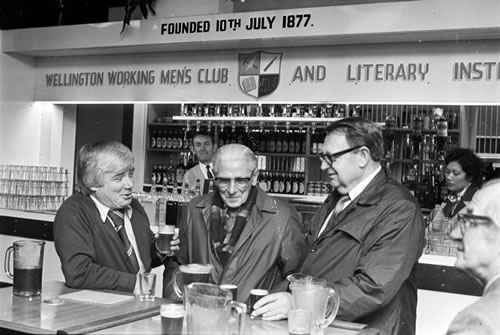
The decline in membership of unions, bowling clubs, debating societies, womens institutes, working men’s clubs etc etc.
And churches.
Perhaps we are increasingly not churchable.
Or perhaps churches can no longer behave like clubs…
I shared lunch with some friends today- I meet with three other blokes to pray every couple of weeks. It is a really good mix of folks as each of us are very different, but share a desire for honesty, friendship and to create a safe space to share faith and life.
Today we spoke about church.
It is a familiar theme. I am the only one of the group who is no longer attending a regular Sunday morning service in a church building. All of my friends are still hanging on in there- just.
It is not that any of us do not appreciate the value of meeting and worshipping communally- it is just that the baggage that comes with this seems to have a high price- and also that the activities through which communal worship is celebrated can just be so suffocatingly irrelevant- for us, let alone for our kids or our friends and neighbours.
The question of what might be possible as an alternative has exercised much discussion, including on this blog.
In particular, today we asked a local version of this question…
A couple of days ago, in response to a comment on this piece by Aileen, I wrote this-
I wonder if we were ‘over sold’ some of the ideas about what it means to be a Christian. We have been told repeatedly that people are of two sorts-
Saved and unsaved
Good and ‘of the world’(or even ‘evil)
Transformed and untransformed
Enlightened and deceived by the devil
We have the Holy Spirit who will sort us out- they don’t.
This dualism allows us to then suggest that Christians are elevated above all other people- more holy, more loving, living better lives. And then when we discover (as we inevitably do) that Christians are often just as screwed up and damaged /damaging as the next person, we are exposed to a great disappointment- and what the Americans would call a ‘disconnect’ between our rhetoric and reality.
I have come to believe that the Kingdom of God at loose on the earth is NOT the same thing as ‘the church’. Rather “God plays in ten thousand places, from the father to the features of mens faces, lovely in limbs and hands not his”
The question is, if this is true, what the POINT of the church is? If Christians are untransformed by encountering Jesus- what is the point?
I think I would reply that we are not untransformed- the very fact that you and I are asking these questions is proof of that. Rather what we come to is an awareness that we can reach higher, and deeper- and expect an encounter with the divine as we do this that is so much more than a one directional intellectual exchange of religious ideas/doctrine. But also that we are called to walk humbly- and to hold ourselves in awareness of our sinful state- not other peoples sinful state, but our own.
Perhaps then the purpose of the church is to be a sprinkling of salt, bringing out flavours of the world, and a source of light that illuminates good and beautiful things. This kind of church I can belong to!
I have no desire to start a new church though- in the sense of a new institution, or a new exclusive gathering of people who try to sell their ‘product’ and their version of truth to everyone on the outside.
But what began to emerge today in our discussion was the possibility of a more regular celebration event, in partnership with others where possible.
In many ways this might compliment some of the more intimate small group church things that I love.
Who knows what might emerge, but I have a feeling that it might be time to make some noise again…
A while ago, I wrote a long piece about my (rather negative!) reaction to the dominance of positive thinking within our culture, and perhaps more particularly within our faith based structures.
My friends will smile. Michaela (sometimes known as Polyanna) is almost universally optimistic in our family- a bit like a cross between Christopher Robin and Tigger, and me- well let’s just say I can be a bit of a donkey! But I suppose that is the point. We live in a life of variety and fluidity. Life has this way of throwing in the unexpected- to bring huge joy, sometimes followed by terrible pain and loss. Our roads are long and there is blessing and holiness in all these things- wherever the journey takes us.
We should beware those voices who push us towards a view of life, and an understanding of God, that is based on relentless positivism. There lies a danger that we live our lives towards a kind of wish-fulfilment- a seductive philosophy/theology of success and power which undermines the core messages of the Gospel… and is very much at odds with the way of Jesus.
Equally we should beware the voices of gloom who counsel us that all is lost and the end is nigh. Too many lives are walled in by defeat and damage done by life- and for these people, the way of Jesus is to seek to be a chain breaker and a freedom maker. Some of this might involve the shift of mind-set towards embracing the possibility of change- that old sleight of hand trick called Cognitive behavioural Therapy that I have practiced in my mental health career. The dominance of this approach to almost every human problem is not without good sound reason- even if the cynic in me might also point to the economics of providing short term, focused, ‘one-size-fits-all’ kind of interventions.
Ann’s take on mission embraces both powerlessness, the eschewing of power AND the power of positive thinking. She cites Seligman, that great doyen of the American ‘self help’ movement. As I read her article I found myself saying YES….yes…(but)…
The YES was to some of these things (my emphasis)-
When we muster an intention to do things like Jesus, i.e. to follow Jesus – even in the most modest of ways – we arrive at the portal into the economy of abundance, where virtuous processes flow and grace cascades; By doing it like Jesus (even just a tad, and even just with the intention – because there is so much grace around) we trigger virtuous processes that gain momentum.
This relevance and transformational power of faith make it urgent to articulate and promote the resources at the heart of faithfulness that lead to human flourishing. And we need others to help us pass the test of public reason – it is not sufficient for our theologians or evangelists to simply assert the virtuous processes that faith sets in train.
I have not read the book (but it is now on order.)
Root asks the questions as to what a church would look like if it were based upon a theology of despair. He starts with Luther’s theology of the Cross– and suggests the church needs to reclaim a crucial piece of Luther’s insight, which he frames something like this-
God brings life and possibility out of death and impossibility.
I am taken back again to the Cross. To the point of absolute brokenness, failure and despair. To the point where all dreams ended, all hopes vanished and all future was stolen.
In my working life, I have met many people who are in this place. If our call is simply to tell them than in three days, there will be resurrection, and all things will be made new, then we are in danger of dishonest dealing.
because it is not our cross
and we are not gifted with foresight
and because our voices will not be credible
and because those who are broken and in mourning are blessed
Something else that is crucial to me is the possibility that ‘God is to be found in the broken places. That he is made known in nothingness and death’.
Like the Navajo rug perfectly woven apart from one flaw, which allows entry of the Spirit.
And that healing comes most deeply not through a denial of pain- or it’s manipulation into insignificance- but rather through the transformation of discovering God within our difficulties and broken parts.
We hear that increasingly, Christians do not go to church. What I mean by this is that many people who would see themselves as having a real and vital faith are seeking to find ways to live out this experience outside organised religious institutions.
A study by George Barna, looking at 20 million American Christian ‘Revolutionaries’ (Oh how Barna loves a label!) had this to say-
“A common misconception about revolutionaries,” he continued, “is that they are disengaging from God when they leave a local church. We found that while some people leave the local church and fall away from God altogether, there is a much larger segment of Americans who are currently leaving churches precisely because they want more of God in their life but cannot get what they need from a local church. They have decided to get serious about their faith by piecing together a more robust faith experience. Instead of going to church, they have chosen to be the Church, in a way that harkens back to the Church detailed in the Book of Acts.”
I liked this description, not because I see myself as a ‘revolutionary’, but because Michaela and I (along with a number of our friends) find ourselves trying to do just this. For me, the issue is not Church as a noun, but Church as an adjective. And at present, where I am, I find that the noun often gets in the way of the adjective. If you see what I mean.
There has been some discussion about ‘Churchless faith’, and whether this will increasingly be the future of faith in the West. Alan Jamiesons book of the same title is well worth checking out on this issue. There is a good summary of the issues from a New Zealand point of view here. Some of the stories told sound very familiar from a UK perspective, and I suspect that we have far more in common with those down under than with the USA faith community in terms of the Post Christian nature of our society.
I came across Spirited Exchanges at Greenbelt, and later met up with Jenny McIntosh (the New Zealander who came to the UK with a vision to get things going here) at a Tautoko Network weekend. I really liked Jenny, and on this basis alone, I wish them well!
This from their website about what they are-
Spirited Exchanges UK Network is an umbrella name for a variety of initiatives. It is based on the recognition that many people of all ages and backgrounds are struggling with issues related to faith, church and institutional religions:
some want freedom to explore the questions without being told the answers
some have been abused in a controlling church culture
some have had life experiences that cause them to doubt God
some are hurting, some are angry, some are bored
some are hungry for more spiritual reality
some are simply curious
Spirited Exchanges UK :
does not try to convert people
does not try to lure them back into a church fellowship
does not try to “fix” problems
does not assume problems are there when they are not
In summary, Spirited Exchanges UK lets God defend God.
I have been thinking about my own journey outside church- the process of having to separate my relationship with God with my relationship with an institution. Having to learn (and then relearn) what spiritual practices allow me to contine to pray and worship and live out a life of faith- and having to take responsibility for this myself, not relying on the developed, even if sometimes uninspiring, programmes that church lays on for me.
Of failing to do this at times.
And having to turn, and turn again.
This journey has been special for me, but I still recognise that CHURCH, in its bricks and mortar form, with all its baggage and stipends and organ funds- this church too is beloved of God.
Our awareness of the false boundaries we made between the ‘sacred’ and the ‘secular’ may have been replaced by a deeper awareness of the present Kingdom of God, but this Kingdom still needs its ambassadorial residences. It still needs places where it’s agents can collectivise and practice the disciplines of love.
Many of us who adventure outside Church may yet return. And if we do not, we are still learning how to become- Church.
I was listening to the radio this afternoon in my office whilst tidying up some papers, and was captivated by this programme–
The compelling true story of two sisters, Annie and Carolyn Moore, who died in the mass suicide at Jonestown in Guyana on November 18th 1978. Over 900 people died that day, followers of Peoples Temple and its leader, Jim Jones. This documentary drama is one family’s experience of Peoples Temple, which began with the highest ideals. It’s told through the actual letters between Carolyn & Annie and their parents back home.
This told the story of Jim Jones and his People’s Temple church right to the bitter end- from the unique perspective of insiders- people who kept faith in Jones right to the very end. Two women who were in leadership positions in Jonestown, and whose parents even seemed supportive of their involvment.
What was fascinating is a kind of insight that emerges as to how people would be prepared to follow this man- prepared to put their faith in him- to believe in the world he created, and be even be prepared to die at his suggestion…
Attempts to make sense of what happened at Jonestown have tended to paint Jones as something other than human. He is seen as evil personified, able to cast a mystical spell over the brainwashed people he surrounded himself with. They, in turn, we tend to see as weak lambs to his slaughter.
But hearing this programme made me think that this was too easy.
There was so much about Jones that was attractive, and I could imagine how seekers after a radical spiritual way of life could be attracted to him. How I might have been interested in the way of life he offered…
Another thing I began to wonder about was the degree to which the dreadful end to the People’s Temple and Jonestown was an extreme example of a more common experience- namely the power we ascribe to leaders in religious/church contexts.
I came across this post recently, by Bill Kinnon, where he quotes from this series, which discusses the role of sociopathy in church, and in Christian leadership. I have a mental health workers suspicion of easy labels given to human patterns of behaviour- but perhaps it is worth lingering with this concept for a while…
Here are a few quotes that Bill uses-
The Sociopath is unable to develop any kind of true, loyal attachments to people. This inability to be genuinely connected to others renders their experience of life bland, colorless, boring, and tedious. Consequently, they turn to power, not love and relationship, as the primary motivational factor for their lives. The sociopath seeks to gain power through which she can find some sense of connection to humanity by causing the suffering of others. The more she is able to make another suffer or hurt, the greater her sense of personal power, and the more exciting and invigorating life becomes.(Dr Martha) Stout says that the motivation for self aggrandized power is so strong in the sociopath that many of them work hard to place themselves in leadership positions because the authority of an office or position gives the sociopath the tools and avenues she needs to both feed and fuel her mental illness.
Itis stunning the extent to which Christians forgo what they know to be true, pure, and right when they get to sit across the table from a powerful and charming bishop, pastor, or seminary professor. Studies show that otherwise normal and healthy personalities will do some of the most atrocious things in their blind allegiance to an official with a title.
The suggestion made here is that around 1 in 25 people could be described as having sociopathic tendencies, and that sociopaths will tend to gravitate towards situations where they can exert power, control and manipulation. Places like church.
Gulp.
I have posted before about the phenomenon that has come to be known as church abuse. (See here and here for example.) Many of us carry hurt and scars from finding ourselves part of church situations where leadership goes badly wrong. There are of course many reasons for this, and throwing around accusations of sociopathy at our leaders is unlikely to help.
But there are wolves who come dressed as lambs. When we see a hint of tooth or claw, may we have the discernment and the courage to recognise what we see.
There are some suggestions as to what to do when you are confronted with leadership like this here.
If you are in this situation- God be with you. It can be extremely difficult.
I had a good chat with our friend Kathryn tonight about spirituality and mental health problems.
Kathryn has been studying with ICC in Glasgow and has a passion for working with people who have problems with mental illness. To this end, with her husband Bobby she has been running a furniture recycling/reallocating project- in her spare time that is, as well as her day job!
She also has this idea for a kind of friendship group where people who have mental health problems (and lets face it, this is many of us at some point in our lives.) This has formed part of her studies, and tonight was a chance for us to talk through some of this stuff- which was great, not just because it was good to see Kathryn again, but also because this subject kind of beats in my heart.
The bias that I feel Jesus had towards the poor and broken, and the hope that we feel for a new way of being- categorised by grace, and radical inclusion, according to the rules of the New Kingdom- these things are all in there for me.
As part of her project, Kathryn asked me to consider some questions- which I found surprisingly hard to answer given that this is an area of constant reflection. In particular she was interested in how church might provide help and assistance to people experiencing mental ill health.
Here are some of the things that I was chewing on-
I want to suggest that all of us are potential sufferers of mental ill health- including many people within church. We too easily start with an ‘I’m OK, you are not OK’ way of thinking- which leads us to believe that we have the answers to other people’s problems. Perhaps in part, we might actually be part of the cause!
We often fail to acknowledge MH difficulties amongst people within church- the stigma is as strong, if not stronger, against mental ill health within church as without- because we add assumptions about spiritual weakness to all the other negative assessments.
Another assumption we tend to make is that our job as Christians is primarily to bring people inside the club by making them realise that they are outside. Our job then easily becomes to invite people into our buildings, and hope they will then become like us. The support available within church for people who have MH problems has often been far from perfect, and very poorly integrated with other community resources.
Christian groups/churches seeking to support and provide care for people experiencing mental ill health easily fall into lots of traps. I would include some of these-
The evangelical trap- Our real (covert) motivation is to convert. Most folk see this coming and run a mile. Some may indeed convert- repeatedly. The difficulty is that conversion does not make the illness go away, and we may find ourselves being dishonest and conditional in the way we offer love and support.
The therapy trap- Christians tend to do bad therapy. Bad therapy often does more damage. It is easy to inadvertently be the ‘expert’ and then let people down when we fail to deliver.
The dependency trap- Sustaining relationships with people who have experienced real damage can be extremely hard. If people find something that is helpful and supportive, it can easily become a full stop. The dependency that begins can be an impossible burden for those running groups also, leading to broken promises and further alienation and rejection.
My strong feeling is that Christians ought to be attracted to failure, rather than being seduced by success. I also believe that Jesus calls us to the poor in spirit.
But I am not sure that he calls us to ‘rescue’ people- rather that he asks us to practice a form of radical inclusion.
I think too that all streams of ‘therapy’ have a thing at the heart of them- for CBT it is about therapeutic allegiance, for person centred counselling it is ‘unconditional positive regard’ and for psychoanalysis it is ‘transferance’. All these seem to me to carry something of Jesus about then- they are related to LOVE. They are in some senses a Christian heresy.
I wonder whether we might yet work out how better to understand the relationship between Spirituality and mental health problems? Is this something that Emerging Church might yet do better?
To accept that our fallability is not a sign of individual weakness, or spiritual corruption, or demonisation. It is just part of who we are.
As part of my job, I am currently leading one of the groups responsible for planning a redesign of mental health services. I am enjoying it so far- I like the creative process of developing new things.
The remit of my group is to look at how we develop mental health services in primary care and also to think about how services might help to prevent mental health problems- and contribute to the mental wellbeing of our society.
It is a huge subject, that requires connections across many parts of society- statutory services, housing providers, voluntary bodies, social networks etc etc. It does not take long to realised that mental wellbeing and mental health are very different issues. It is possible to have a severe mental illness, and yet still have good mental wellbeing, but poor mental wellbeing can easily lead to mental ill health. In fact, good health of any sort is simply not possible without goon mental wellbeing.
It is a subject close to my heart, as it resonates deeply with my faith.
I believe that the followers of Jesus are to be a source of blessing for our communities. Too often, we get into pointless condemnation or narrow defensiveness- the foolish idea that we need to ‘defend the faith’ against rising secularism and Godless sinfulness. But the call of Jesus is to show a better way- a way of love and service that transforms lives and communities, and wherever we see the flowering of these good things in society, then we are to savour them with salt, and illuminate them with light.
Because the alternative is grim.
Here is a quote from one of the documents that I have been re-reading for my group-
Across Scotland, the UK and European Union, stress, anxiety, depression,hopelessness, isolation, fear, insecurity and distrust are increasing. We witness daily the effect of this on the lives of individuals, families and whole communities.
Many people in Scotland find themselves isolated and vulnerable due to their mental health status, poverty, class, ethnicity, age, disability, gender, sexuality, homelessness and many other forms of exclusion. The resulting lowself esteem and feelings of being undervalued have serious effects for them
as individuals, for their families, their colleagues, the wider community andScotland.
The consequences of cycles of social exclusion for how people think and feel are complex:
Some people faced with chronic stress and disadvantage may retreat and stop participating. Their social networks reduce, their vulnerability increases, their incomes and security reduce and many spiral into cycles of anxiety, depression and other more severe mental health problems. This not only impacts on them as individuals but can damage relationships between family members, partners, parents,
children and siblings with a chain of negative results-
changes in life situations – having babies, getting old, losing a job, becoming disabled, getting ill or family separation – can result in people becoming isolated, vulnerable and excluded
others may get resentful and angry and act on these feelings in their personal and community relationships, through aggressive behaviour, violence, abuse, theft or vandalism
hopelessness and low expectations may mean some people do things which might be considered to be ‘risky’
Taken together, such experiences are damaging to wellbeing. People, families, groups and communities of interest do not feel involved, connected,safe, secure, caring, creative or active. These types of experiences also affect how communities function: communities can come to feel more and more
vulnerable and close ranks, displaying exclusive attitudes and behaviour; or become divided and disarmed by fear of ‘the other’; or find it hard to believe that it is possible to break the cycle and create a different future.
From the ‘Small change, big impact’ conference report, 2006.
It is possible to get all doom and gloomy when looking at this picture. The question is what can we do about this? How can we break the negative cycles that are at work on individuals and groups? How do we break down isolation and low confidence and self esteem? How do we do this in a way that supports, encourages and empowers, rather than just further labels people as responsible for their own failures?
The report digs into some community projects that have begun to do this, and identified some of the characteristics that appeared significant-
Even though the projects developed independently they articulated a shared sense of purpose: to bring about connectedness
With self – A sense of self and worth internally for the individual,
With others – A sense of belonging and worth in relation to family, communities of interest and the community
With the bigger picture – Creative engagement between individuals,the family, diverse communities of interest and the community that opens doors for a caring and creative society to flourish
Between communities of interest and individuals,
Spatially – Knowing it is ‘my place, I belong here’ so that people feel safe, involved and want to invest
Institutionally – We delivery agents participate too, it effects us also.
It is OUR agenda, our community, our Scotland. We are community too. We are participants with a specific role to facilitate processes that encourage and enhance social development across services to make it easier to respond effectively and holistically to a community as it develops and grows.
The report goes on to speak of the importance of the arts in this process too…
Does this sound familiar? That list of characteristics of groups that build communality, health and satisfaction- does it not sound like what CHURCH is supposed to be? Is it not possible that this is the role that church USED to fill within society?
No longer however. Perhaps we squandered the opportunity, or perhaps the world left us behind. But the challenge to us all- perhaps particularly those of us in church, is how we might again be a blessing to our communities- not so that they might fill our pews again (at least not as an end in itself,) but rather so that we might be change-agents of the Kingdom of God.
This perhaps requires a different set of skills traditionally valued by church- networking, hospitality, reconciliation, listening, neighbourlyness- providing opportunities for real, deep connections between people.
Perhaps it also demands of us that we become JOINERS with others, rather than just INVITERS to our own safe places.









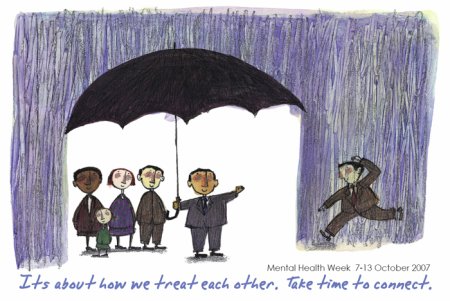
 this fragile tent