I am (not) inspired by Pete Rollins…

I have been reading another of Pete Rollins’ books on and off through this past year- this one- ‘The fidelity of betrayal’.

the-fidelity-of-betrayal

It has some great stuff in it, but to honest, I have struggled a bit more than I thought I would to get through it. This surprised me, as I devoured his last book- ‘How (not) to speak of God’.

Perhaps I did not give it a fair crack of the whip, as I read it in something of a piecemeal fashion.

But I think too I may have seen a bit too much of his gig. It goes something like this-

The life of faith is a life of contradiction. Therefore all things we think we know about God, when we really stop and think- we do not really know after all.

All the tenets of faith we were given as absolutes are (not) true.

Faith is formed as we learn to become faithful betrayers of our inherited traditions.

Faith is formed as we  learn our status as (A)theists.

Now I kind of see where he is going with this, and I think the commentary on faith is important and thought provoking. But I can not help feeling just a little weary with the ‘let’s turn this upside down and then see how it looks from the other side’ kind of style. I find myself kind of seeing it coming, then chuckling to myself when it surely arrives.

But then again, I do think this man is an important contributor to the theological and philosophical debate in our time. Let me quote a passage for you to kind of illustrate my dilemma with this book…

In a chapter called ‘forging faith communities with/out God’ (there he goes again- get it?) he has this to say-

…once this is understood, and people are invited to begin to deconstruct their religious systems, individuals will either be brought to a deeper understanding and appreciation of their faith, or they may find they never really had faith in the first place. In the former case the deconstruction will enable the individual to delve deeper into an appreciation of his or her faith, while in the latter the individual will leave such things behind. Both of these are preferable to either mistaking the true miracle of faith for a system of thought or of using that system as a way of hiding from oneself a lack of faith.

Well I guess… I certainly have found myself to be in the former case most of the time, although I have to acknowledge that some of the time I perhaps slipped towards the latter.

Rollins goes on to give some consideration to the creation of spaces that allow people to explore and deconstruct.

Following on from this there is a need to continue the long Christian tradition of forming spaces in which we collectively invite, affirm and celebrate the miracle that lies behind the miraculous, beyond magic, beyond the sacred, and beyond the secular. We need to continue forming places that can render these ideas accessible at an immediate level- a level that does not depend on the contingencies of one’s education or the ability to think in abstract ways (this from Rollins?!)

The question here is not “how do we make these ideas intelligible”, for the miracle itself can be rendered intelligible only as unintelligible. What this means is that the miracle of faith is a happening, an event, that defines reduction to the realm of rational dissection…

…In contrast to forming space that will make sense only to people who are highly educated, we must endeavour to form spaces that make sense to NOBODY, regardless of the level of education- spaces that rupture everyone and cause us all to rethink

Right.

Again- I get it. Faith discovered/encountered/inspired/agitated through performance art. Or as Rollins calls it- Transformance art.

And then I think of my own community, and our experiments with worship curation. The process that Rollins describes seems so far beyond us. It is too hip, too serious, too absorbed in it’s own rhythm somehow… and I find myself slightly and surprisingly alienated.

And I find myself longing for something much simpler- where deconstruction is not the only language we use, but we also construct things that are small, but beautiful.

But I still think we need Rollins- and I am looking forward to what Ikon have to offer at Greenbelt festival this year…

Faith and the internet- ‘Beyond Belief’…

belief

Check out this really interesting radio 4 programme- this episode digs into the relationship between faith and the internet… including the bloke from Ship of fools, and St Pixels.

The discussion ranges from internet addiction, through to whether church can ever be ‘virtual’. Someone quotes ‘The word became FLESH and dwelt amongst us…’

You can download it as a podcast here.

Post emerging church…

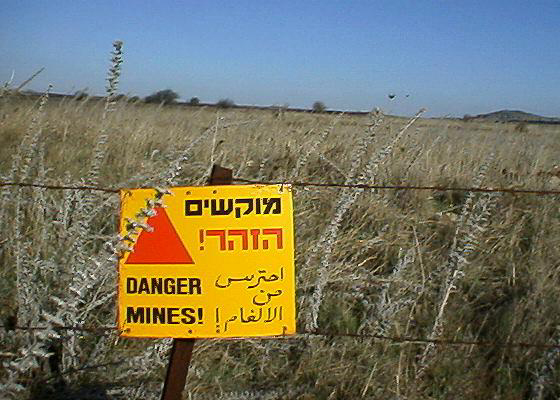
minefield

I have been part of a discussion on the Emerging Scotland Ning site about the challenges facing those of us who are part of the Emerging Church conversation in Scotland. Check it out- but I thought it worth reproducing some of the points here.

One of the bits of the discussion as been about the new boundaries that what ever forms of church that emerge may well face. This list is far from exhaustive, but here are some of the issues that are developing;

SMUGNESS AND ELITISM
I think most radicalism has to deal with this- we tend to think we have it made. And then we realise that we do not, and indeed, other people have been doing the same as us for years!

LACK OF SUPPORT
I first floated the idea of some kind of Emerging Network in Scotland for this very reason. But many of us have a fear of hierarchy and restrictive structure. The model of facilitated network seems an important one.

STYLE OVER SUBSTANCE
I do not care how you worship, where you meet, whether you swing incense or swing your cat. I believe that the time has come to find old and new ways to worship, and engage with passion and creativity- using all the arts, not just guitar driven soft rock!

THE MISSION OF GOD
I grew up with a view of the gospel that I now see as limited. ‘Repent for the Kingdom of God is at hand’ takes me in many new directions, but like you, i am coming to see that the old directions are still valid too- namely saving souls. How we do that is the stuff of much discussion however!

LIMITED PERSPECTIVES
I suppose we need to localise AS WELL as globalise. I need to start with my community, and together we then look outwards first into the locality, and then into the wider world. Limited perspectives, it seems to me, are inevitable. What we need to ask the Spirit of God to show us, is where the bridges are that we can walk on into new places, new ideas. For me, this is exactly what the EC discussion has been so far- but there is so much more!

CONSUMERISM
The spirit of the age? It is certainly an interesting time for capitalist expansionism! A time perhaps for church to raise voices that propose a different way of being. But what this looks like locally is the interesting thing- because it will probably be different for you than for me.

DOUBT
It may not be normal for you- but it is for me. I make this statement not as a theological one, but as an honest starting point. I know people who never appear to doubt. I know others who can not bring themselves to admit this lest the whole edifice of faith comes crashing down. Doubt is not the absence of faith for me, but the place in which it is tested and developed. It is not an either-or, but a both-and. Does this make me a syncretised post-modern? Perhaps, but I have tried the alternative, and it was dishonest. And i suspect that Thomas expressed the opinion of more than just himself when he doubted- and indeed that he continued to vacillate through his life!

THAT ‘POSTMODERN’ word.
It is just a set of lenses to examine stuff with. Limited and incomplete. I think it is a healthy thing to have an understanding of the thinking behind it, but then let us forget about it, and just get on with living and loving!

TRUTH
‘You shall know the truth and the truth shall set you free’. Hmmm. I struggle with this.
Whose truth? What about the Bible and the uses we put the words in it to? Is truth something we take into us a we encounter Jesus through the Spirit?
The nature of truth and the discussion surrounding it could take up this whole site.
Perhaps it should!

POWER/DOCTRINE
I would agree that powerlessness is not necessarily the same thing as having no power- particularly when used as a challenge to the miss-use of power (if you see what i mean!) So the example set by Jesus and followed in Modern times by Ghandi, King etc- was a use of powerlessness, in a powerful way. The problem for me is that the church plays a different kind of power game too often- both politically, and more crucially, in the use of doctrine. All doctrinal statements are incomplete, and may even be wrong. So I am all for doctrines- particularly ones that are anchored to the church fathers- but I still think we should hold them lightly and use them softly. Apart from in application to OURSELVES. Accountable to our community. Accepting that we need to learn, but we also need to start from a firm place. There is that bit in Romans 12 (or is it 13?) about ‘disputable matters’…

INDIVIDUALISTIC FAITH
I think that Christianity without community is not Christlike- but I suppose there have always been others who have followed a different calling- a poles or into caves for example. I also believe strongly in the idea of small theologies, worked out together- that relate to the big theologies, but chew on them within a local expression of faith.
However- the language of church that you use is too much like a triumphalistic version of empire-christianity that i am happy to leave behind! That said, and setting aside my developed prejudices, the very ideas of church as the Bride of Christ also seems to me to be a discussion thread worth starting in it’s very own right…

DISCIPLESHIP

I am sure you are well aware of the mis-use that we have put words like ‘discipleship’ to.
I do not fully agree that the EC is about ‘maturing out’ of Church-  but neither do I accept that the models of church that predominate do not need the challenge of radical outsiders who will plot a different and dangerous path.
This is not necessarily what I feel called to- a have a skew towards the making of safety nets. But I welcome the hope and challenge brought by others.

A postcard from our community…

dscf36141

Another piece of heaven.

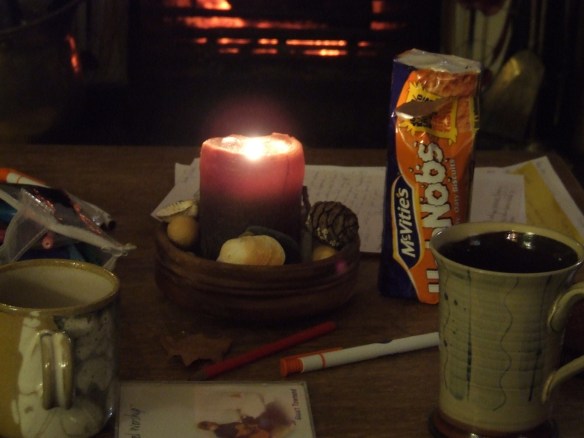
Housegroup has just finished again tonight. Just 9 of us, a log fire, and a packet of hobnobs.

And this evening, we shared with a friend who had finally made contact with a long lost daughter, we laughed a lot, and cried a little.

We shared our struggles with all the stories of God ordering genocide in the OT (Check out 1 Samuel chapter 15.)

And we wrote letters to some friends.

Lovely. And I am so grateful.

That familiar question- what is emerging?

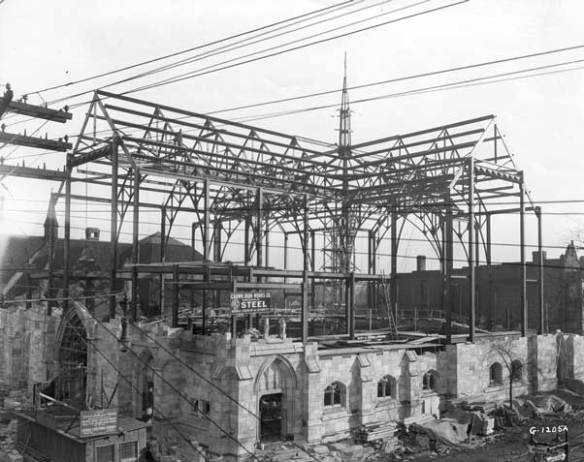
building_church1

Like many others, I have been participating in the emerging church ‘conversation’ for a few years now.

It has been wonderful.

It has transformed the way I think about and understand faith, and brought me again to a deep love of Jesus and all he calls us to.

It has brought me into contact with wonderful people who are traveling in the same direction.

It has given me a genuine hope that things are changing- that something NEW is happening.

The Lion of Judah is circling again…

But it has also brought me into conflict with others- whose core beliefs lead them to adopting different positions in relation to some of the building blocks of faith. And within me, after these years of discussing and blogging and reading- I also wonder where we are up to with this thing.

I particularly wonder where we are up to in Scotland, 2009.

So- some questions!

Where are new forms of church emerging and in what ways are they different?

Where are the agitators, the innovators, the people who pioneer new (emerging) forms of church?

The term seems to be used too as a way for traditional churches to seek renewal. Is this genuine change, or is it merely an attempt to do the same things, but be a bit more trendy?

Where is leadership coming from? Do we need it, or is there still a reaction against centralisation and control?

How do we find mentoring and companionship? Do we still need sympathetic and skillful people who will hold us accountable? Where are these people?

These seems to me to be a difficult, but very important questions. Our reaction to them will no doubt very much depend on where we start from.

I am part of a small group of people outside established church. We meet in houses and celebrate in non-religious environments. We form partnerships where we can, and have many friends, and some folk who view us with at best considerable suspicion! Groups like ours have many advantages- freedom, mobility, passion and excitement. But they are also fragile and ephemeral. They tend to depend on a small group of innovators, and are held together by friendship. When the storms begin (as the surely will) many things can simply destroy such gatherings.

This may be the natural order of things. Perhaps what survives is what is of worth. But perhaps too, like me, you are hungry for connection and for ways to seek and to provide support. Perhaps you are facing a difficult situation, and just need to speak to someone who has been there before.

Perhaps too you are, or have been, part of church situations where you no longer feel at home, New ideas and ways of doing things are in your mind, but the leadership of the place where you are is not open to such things. Perhaps what you need is to find others who have adventured still within such a situation.

There is a discussion thread that digs into some of these things on the Emerging Scotland site.

Church attendance on the rise in the UK?

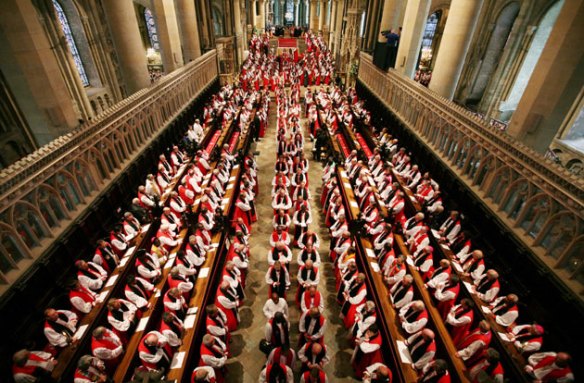
canterbury-cathedral_39564a

Well I never.

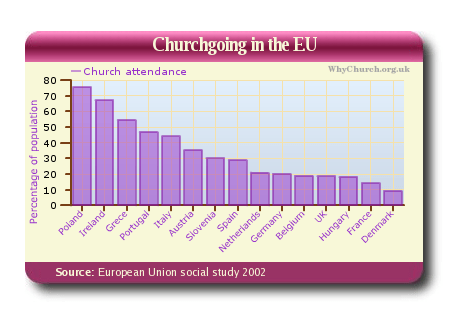
There has been a bit of a buzz around that church attendance figures in the UK are on the up! This after decades of dropping like a stone. These are the sorts of stats we have become used to (from here)

att_trend_chart

eu_church_att_chart

att_trend_chart

Of course, the picture was never simple- some individual churches are growing- the odd American imported super church, Black Pentecostal churches, and Orthodox churches- these have all been on the increase… albeit from a low base.

But statistics- they can be very misleading, so I did a bit of searching to see if I could find specific details of the studies.

The first one concerns a study done by Tearfund- mentioned in the Telegraph here.

A survey of 7,000 people by Tearfund found that 26 per cent say they went to a church service in 2008, up from 21 per cent the year before.

In addition, the proportion who say they attend church every month has risen from 13 per cent to 15 per cent, while one in 10 claim they go at least once a week, up from 9 per cent.

These are the highest figures recorded by the development agency for more than three years, contradicting research that has claimed churchgoing is in steady decline across Britain.

Young adults and pensioners are said to have taken up churchgoing in the greatest numbers, with a 10 per cent rise in attendance reported among the over-75s. Geographically, the biggest increase was seen in Wales (12 per cent).

It would mean that 7.3million adults now go to church – excluding weddings, baptisms and funerals – once a month. Official figures show that only 1.7m people attend Church of England services every month, while a further million attend weekly Mass at a Roman Catholic church.

The full details of the Tearfund study can be found on their website- here.

Another Telegraph articles makes the link with the deepening economic crisis- here.

Numbers of people attending Cathedral services have been on the increase for a while- see here and here.

So what are we to make of this? One swallow does not make a summer, but the numbers quoted in the Tearfund study are significant- as is the year on year 4% Cathedral attendance increase since 2000.

I think we people of faith should pay little heed to these figures. Let us instead remember some lessons learnt when church attendance figures looked like the charts above, which I think should include some of these-

  • We can no longer expect ‘attractional’ models of church to fill the pews.
  • Church is not about sacred buildings, but about letting loose the people of faith into the towns and cities about us.
  • The new context requires new ways of interpreting the gospel, and a re-examination of how the enculturalisation of church has contributed to a lack of relevance.
  • But the old mystical/contemplative traditions have much to teach us too.
  • Faith is discovered through action and interaction, not through didactic teaching.
  • Doctrine is not the most important thing.
  • Love is.

On being thankful to those who walk in a different direction…

A friend told me this story recently (Thanks Audrey- or Alistair?)…

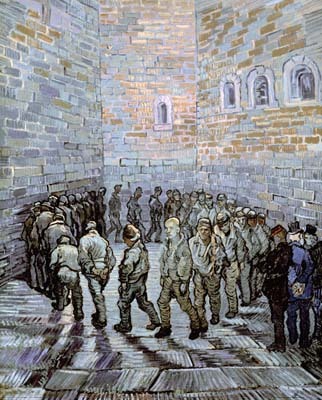
Inside Victorian prisons, a regime of order and control regulated every aspect of the lives of the inmates. There was a way of doing everything- eating, sleeping, talking/not talking, working and…exercising. In this way it was hoped that people would find redemption and restoration to the society that the grew from.

Exercise was important- to escape the harmful miasmas lurking in the damp prison air- to fill the lungs with clear clean (but regulated) air. Exercising was done in in the exercise yard, and like all things, there was a right way to do this.

Men walked in clockwise circles, one behind the other.

Apart from the lunatics. For prisons then, like now, contained many folk who had mental health problems.

The guards discovered that trying to control these folk was a waste of time, and so they were allowed to walk in the direction that suited them- even anti clockwise.

exercise_yard_or_convict_prison-400

I have been thinking a lot about change recently.

How do things change? How do we take something that seems like it has just always been- and move on to something new?

Perhaps most of us are like me- we simply do not change things easily. Stability is our goal- a maintenance of what is, lest the future bring a feared but undefined consequence. Better to walk in the circles that are trod by others, and leave the wandering to the lunatics.

Except that as much as I worry about change, I am also drawn to it.

I am tired of walking the same circles, and long to wander free- to adventure…

So it occurred to me again how grateful I am to those people who dared to defy convention, and show another way.

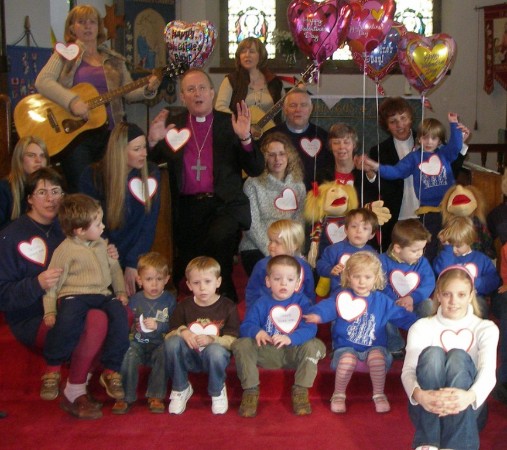
2007_01162007ireland0179

I have to confess that the image of prison described above brought to me the image of institutional church. Not bad– well regulated in fact, well thought through, run by fine upstanding people in the pursuit of a worthy goal.

But somehow stuck. Held in by walls- made of stone and doctrine. Built on a solid foundation of faith and fervour, but now somehow set in cold stone. An organisation that grew in reforming zeal, and remained anchored to the culture that formed it whilst the world drifted away…

And let us not kid ourselves that only traditional ecclesiastical forms of religion fall into this category- because I would dare to suggest that almost any organisation (perhaps especially faith based ones, for all sorts of complex reasons to do with the mixing of organisation and ‘election’) will concrete itself into an exercise yard within 30 years of its inception.

I have walked those circles for too long. Time to find a road that goes somewhere else…no matter how uncertain.

And that is where I still find myself- on the road. It does not come easy to me, as I am happiest at home with the people I love, and love me in return.

But there is this thing that draws me onwards.

dscf3166

But back to the point of this post- those folk who walk in other directions.

I confess to doing this reluctantly myself, and with considerable caution. And so I am very grateful to those others who first broke away from the circle, in the face of approbation and punishment. Risking the label of the lunatic, or worse, heretic (they still burn those don’t they!)

Because where would we be without our agitators, our eccentrics, our malcontents? Where would we be without our lunatics (if you will forgive the use of such a pejorative word?)

So thanks Rollins, Maclaren, Bell and Pagitt. Thanks too those countless others who stand up and say that there is MORE. There is a better way to be in this place we find ourselves in.

We can follow after Jesus.

But I suppose the lesson to all of us is that in about 30 years, it will be time for others to break down the walls we erected.

The legacy of church in the lives of children of the fundamentalists…

I met with some friends yesterday as part of our on-going attempt to get a supportive network for people who are interested in emerging/missional stuff in Scotland (details here for those who are interested- I will post an account of our meeting later.)

It was a great day- with many interesting conversations, and capped off with a visit to Glasgow to see some live music (Welsh language band 9Bach and The Broken Family Band- brilliant both.)

godstop1

One conversation we had was about kids and church. Like me, quite a few of my friends have grown up in church situations in which narrow belief systems and codes for living were espoused. For me it was to be part of an evangelical/Charismatic tradition, in a difficult family context. For a couple of other friends, their history comes from Lewis, and the stern austere, almost puritan, Free Church of Scotland. Then there are a few Baptists, or Pentecostals, and Catholics.

For many of us, the journey of faith ever since has contained an attempt to come to terms with some aspects and attributes of God- and what he expected of us- that were given to us by our backgrounds. When I say ‘given’, I include things we were told, and a wider way of seeing things that we just internalised though socialisation, if not indoctrinisation.

Some of my friends came to a point where they rejected church, because they could no longer live with some of the narrow and judgmental views that it represented for them. In losing church, it was difficult not to lose God too- at least for a while. Add the abusive actions of some of  the servants of Jesus in churches we are familiar with, and it perhaps makes it all the more difficult for people to find church again, or even to hold on to faith at all. (There is some more stuff about abuse in churches here and here and here.)

businessman-voodoo-doll-giclee-print-c12350887

But my friends and I- we remain drawn by the wonderful person of Jesus- and he leads us back to God the Father, God the Spirit- and the ecclesia- the collectives of the agents of the Kingdom of God.

As previously mentioned, yesterday, the discussion turned to children in Church. We all grew up with Sunday schools, and weekends regulated by attendance at a series of mostly boring services. The question concerned how much of this we felt we could inflict on our own kids?

Can we protect them from our experiences?

Where our experiences actually bad?

If so, in the balance of things- was there more bad than good?

The interesting thing was that all of us came to the conclusion that despite the difficulties, our church backgrounds, with all their guilt-and-confusion-inducing narrow viewpoints, brought to us mostly good and positive things.

Perhaps this was because we are a limited sample- people who still try to follow Jesus, rather than the many who have lost him entirely. These people are the prodigal lost sheep the Church may never return to the fold. My prayer is that Jesus will still bring them to him…

But I wonder if there is also something of a generational passing of the baton towards the new post-modern generation. We represent a punk generation, who later find an ironic pleasure in prog-rock, whilst also being drawn to Madrigals and Gregorian chant. There has been the necessary rebellion- but ultimately, there is nothing new under the sun, and the next generation will need their points of departure from ours!

Time will tell whether what they inherit from understudying the whole missional/emerging experiment equips them for their own journeys of faith more than our own childhoods.

For their own children’s sake- I hope so.

kids-in-church

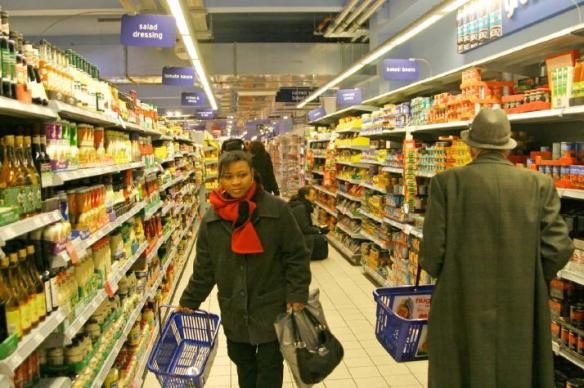
Capitalism, and Church as supermarket…

super_market

In a recent post on his Missional Tribe blog ‘beyond missional’ Frank Viola asked some questions about the effect of the current financial global crisis on Churches, and indeed the Kingdom of God. You can read his post here.

It has been a regular theme of my pondering, and of course, my blogging! See here and here.

It seems that many Church groups and organisations, built as they are on a financial platform that depends on a stable prosperous Western capitalist economy, are beginning to feel the pinch. Church, in this form, is embedded within the dominant economic realities of the day. In it’s organisation at least, it is no different from any other business or institution- it has mortgages, profit and loss, staffing costs and maintenance costs.

Some suggest that the Western world is undergoing a massive shift. Capitalism is reforming, in the face of a crisis as big as it has ever faced before. Some are even asking again whether a system based entirely on expanding the ways in which people can be made to want MORE is sustainable. Particularly as the system also depends on huge inequalities between the consuming countries (in the West) and sweatshops and mines of the South,

Crisis has this way of holding up a mirror through which we can see ourselves from a different perspective. Some Christians are starting to ask again whether this really is the only way to live- and how this reflects our calling as agents of the Kingdom of God.

Perhaps this challenge also falls on our institutions. Has the way that we have done church easily become based on a consumer choice?

Church, becomes a shiny supermarket, at which we buy spirituality- packaged to be portable within our context.prosperity0909

In my country (Scotland) this is less and less relevant, as people simply no longer visit our spiritual supermarkets. For some this is because they have lost their market appeal. I wonder if this is also time for people of faith to stop stacking product, and hoping customers will come to buy. It is time to remember that the church that Jesus loves is built of flesh, and has no steeple…

And to remember again the words of Jesus from Matthew chapter 5, where he calls us to a radically different way of living…

Lest I descend any further into polemic, I am forced to confess my own dependence on this context- my mortgage, my car, my gadgets. And buildings- they have their uses, particularly in our climate!

But I no longer feel the need to put my resources (money time and energy) to sustaining an earthly institution.

Frank Viola quotes Beuchner;

“I also believe that what goes on in them [support groups] is far closer to what Christ meant his Church to be, and what it originally was, than much of what goes on in most churches I know. These groups have no
buildings or official leadership or money. They have no rummage sales, no altar guilds, no every-member canvases. They have no preachers, no choirs, no liturgy, no real estate. They have no creeds. They have no program. They make you wonder if the best thing that could happen to many a church might not be to have its building burned down and to lose all its money. Then all the people would have left is God and each other.”
~ Frederick Buechner, Quoted on pg. 277 of Reimagining Church.

I have found myself part of such as small group as described above, called aoradh. We meet in houses, or village halls, or pubs. We have no paid staff, and things can be pretty chaotic, as we do not have any leaders either. We look for partnerships and create spaces where we can, seeking to be a community who are faced outwards.

This way of being is strangely credit-crunch proof I find!

The Underground Railway…

In response to Brian McLaren’s event in Glasgow (mentioned in my previous post- here), here is an excerpt from part of a book called ‘Blue-dark’, available here.

I reproduce it as a kind of mission statement- a reminder of what I set myself towards.

I have a feeling I may have posted this before, but for my own sake at least, I think it is worth saying again!

The term ‘underground railroad’ was first used in relation to an organisation of people who helped slaves escape from the American south to the northern states who had declared against slavery.

80906515CJ001_AUSHWITZ_BIRK

In the dark days of the Third Reich, when the whole of Europe was under the heel of dictatorship, still there was a remnant. There were men and women who were uncontaminated by circumstance, and emboldened by passions born of a different Kingdom. Sleeping now like spring in winter were memories of better times now gone. And with the sleep came dreams of justice for the oppressed, liberation for captives, and ministry to the sick and the lame and the alien in a conquered land.

Ordinary people – just like you and me, in an extraordinary situation, performing simple acts of heroism, in the face of certain prosecution and possible death. At first they were loud in their outrage, but hard lessons taught caution and subterfuge, and so they went underground.

And quietly, in the shadows, they grew bolder, and found that they were not alone. Many people opened up their lives and their homes, and began to gather the unlovely and the unloved, to give food, and warmth and shelter. They found others who still kept the light alive. And so they formed a network. No-one knew the whole of this network – the overall plan was less important than the simplicity of saving those immediately at risk. But almost by some hidden hand, Jews, gypsies, gentiles, escaped soldiers, political undesirables – all were passed down the line – closer to freedom, closer to the other Kingdom.

So was born a time of heroes.

And the Underground Railway…

I think that we are called to live what we believe.

And to believe in how we live.

It sounds simple, but so few do. Jesus said that when we are born again in him, we become new creations. The old parts of us are dead and gone, and the new person is made in His image. This means that we become more like him.

More passionate
More compassionate
More holy
More real
More loving
More merciful
More open
More hungry for justice
More whole
More like a child
More willing to go for it!

Less selfish
Less concerned about earthly security
Less proud
Less jealous of what others have
Less carnal
Less judging of others
Less earthbound
Less empty.

So what gets in the way? Why is it that the old habits drag me down? It is almost as if the old man, who is dead, rises in me like a corpse and fills me with the smell of death.

And somehow this becomes normal. It becomes culturally acceptable. We see it all around us, in both the secular and the so-called sacred. Jesus told us to enter through the narrow gate, because the alternative is broad and easy, but leads to destruction. Narrow is the way to life, and only a few find it (Matt 7: 13-14).

He was never much into going with the flow.

What would it be like to live what we believe? It would mean loving God, and loving others. Simple.

Unlearning lots of layers of stuff that get between us and Him, between us and people.

I believe it is possible. Because I have seen it. I have seen men changed. I have felt it. I am not the same.

And I am not my own – I belong to a different kingdom. This kingdom has different rules and has a different culture.

So I decided to set myself again to live what I believe. I became less tolerant of the smell of death, and instead went for life, and laughter, and freedom. Like Lazarus, I walked to the mouth of the tomb, and looked out.

And I began to see a world full of different colours. It brought me to tears, but still I wanted to sing praise songs, redemption songs, songs of freedom.

But also, I saw again the people all about me through new eyes. Some were broken almost beyond repair, at least in this world. Others were hungry, others were homeless. And here and there were people captured by addictions and close to death. Many of them had been inoculated against God by their experience of religion. It was almost as if he was giving me a window into their souls. And my heart broke open.

I decided that it was wrong, and something needed to be done. But it is hard to go against the culture, to swim against the tide.

What is needed, I thought, is an underground railway…

(From ‘Blue Dark, 2006, by Chris Goan)