
How to read a landscape…

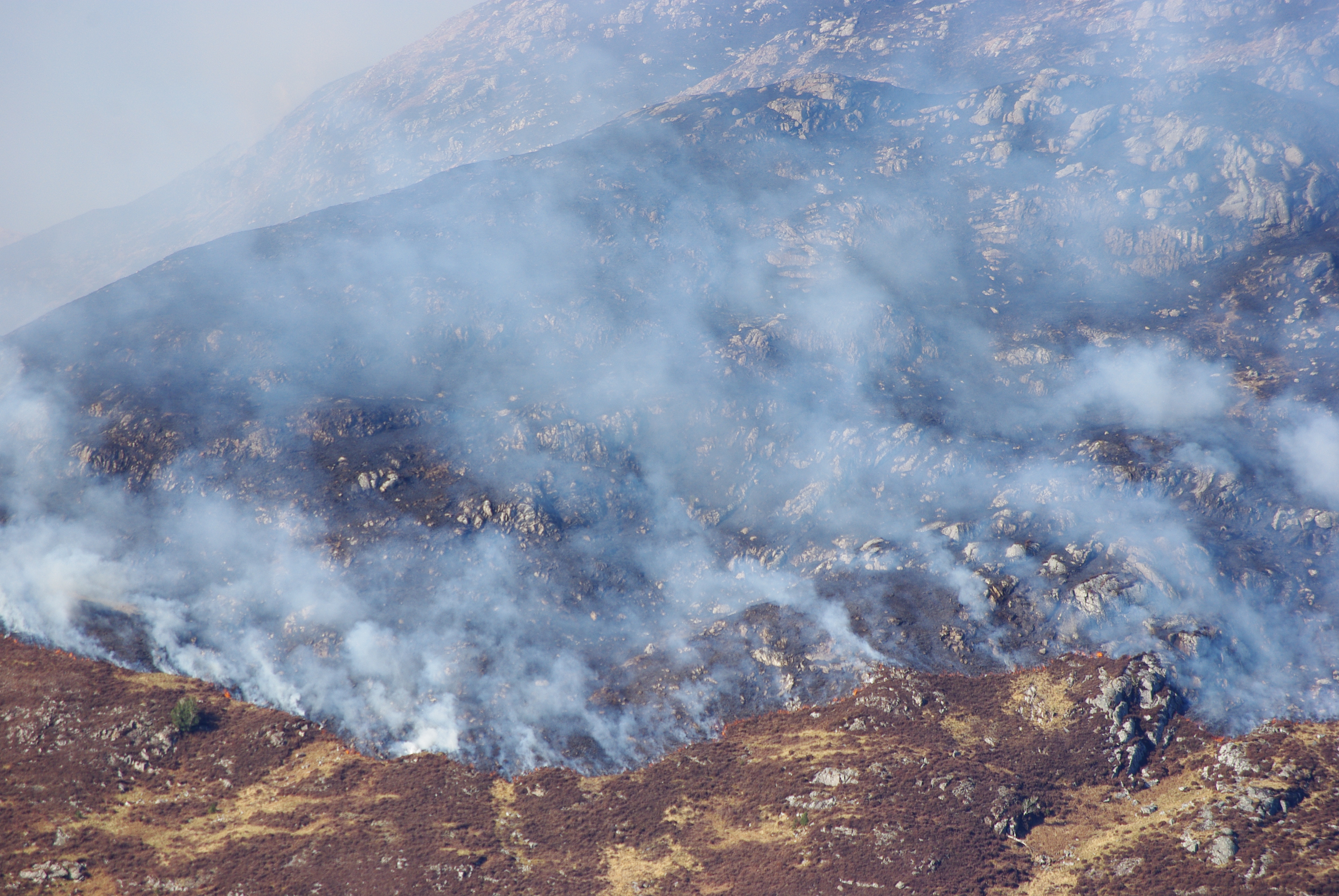
I live in a ‘wild’ place – mountains, broken tree-lined shores, deep lochs, forests. I am surrounded by iconic British animals- red squirrels, sea eagles, pine martens, deer. Tourists come here and wonder. Locals are proud. All of us are nature-blind, because this place is anything but wild.

There is this strange thing that happens when we look at the Scottish landscape (or perhaps at any landscape) in that we do not know what we are seeing. Partly this is because we have lost our folk memories of what we are NOT seeing.

Despite every metric pointing to a continual precipitous decline in our ecosystems- a loss of diversity measurable in almost every way, and in different biomes – most of us are not able to grasp just how bad things are here in Scotland. There has been an average 15% decline in abundance of 407 terrestrial and freshwater species since 1994. There has been a 49% decline in average abundance of Scottish seabirds. 11% of species found in Scotland are threatened with extinction from Great Britain. Meanwhile, we thrill to nature propoganda shots of the sea eagles of the noble stag as if all is well.

This film tells a story that we need to hear.

How has it come to this, and what can we do about it?

As mentioned in the video, wealth is at the heart of the problem. Land ownership in Scotland has a particular flavour and pattern that arises from a history that we can not be proud of. This from here.

No other European country has such a narrow base of proprietorship as Scotland. Half of all privately owned rural land is held by 421 people or entities. The roots of such disparities lie in the past. The 18th- and 19th-century Highland clearances emptied the glens and readied them for private takeover. On the continent, and eventually in England, the great estates were broken up by inheritance and land taxes. By comparison, Scotland is still feudal in scale.

There are already fears that Scotland’s new proposed Land Reform Bill has been gutted, ending up with something far less than that recommended by the Scottish Land Commission in their report from 2019. It is hard to escape the power of wealthy elites.

The video above mentions the possible use of a land tax, of the kind proposed by Common Weal.

Land prices in Scotland have risen at a rate
outstripping many other ‘investment assets’ with
stocked commercial forest land in Scotland,
for instance, increasing in value from £8,500
per hectare in 2018 to £21,000 per hectare in
202210 (had such land increased in price only by
general inflation, it would be worth just £9,500
per hectare in 2022). The selling price of such
land has also consistently been over 120% of the
asking price on the market which is indicative
of demand for purchases being substantially
higher than supply. Similar patterns have been
observed in other types of land in Scotland in
recent years so it is not a stretch to say that
communities are simply being ‘priced out’ of land,
even where legislation has made some steps
towards making it theoretically easier for them to
purchase such land assuming they somehow had
the capital to do so. The high profile failure of a
local community to be able to enact a community
buyout of the Tayvallich Estate in Argyll – which
had an asking price of £10.5 million, equivalent
to around £7,800 per hectare – is indicative of
Scotland’s broader failure to enact land reform
and will only be one of many such failures until
reform is embedded. A local land tax can, should,
and must be a part of this reform, not just by
raising revenue which would directly benefit
communities who cannot otherwise access the
land around them but also by acting as a break
or even reversal on the price of land sales (which
would have to factor in the tax burden of the
asset) and, if done right, would bring prices back
down into the range at which communities would
have a better chance of owning the land around
and under their own feet.
Read the whole report here.

For most of us, far from the seats of power in Edinburgh or London, there remains the important, ordinary urgency of learning how to read a landscape.

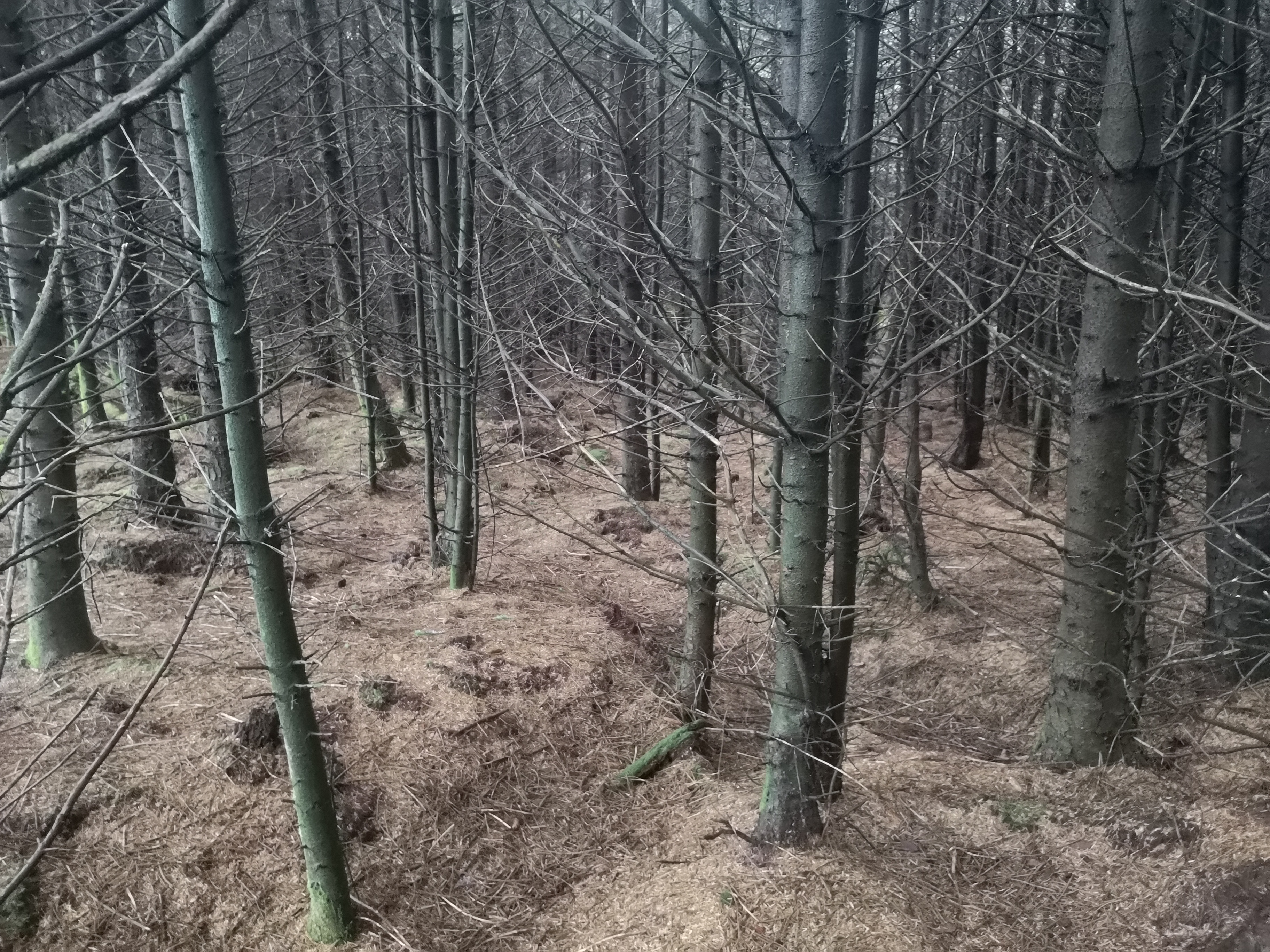
The photograph above is taken just above my house- one of the many many vast plantations of commercial forest in my home county of Argyll. They are better understand as green-brown deserts.

Here in Scotland, our challenge is mostly NOT preservation, it is the urgent need of restoration and recovery of our ecosystems. Think about that- in contrast to other European countries, we have ALREADY lost much of what should be here. In order to see any recovery, the task required is a mult-generational re-seeding and re-populating of our mountains and valleys.

We have to be able to SEE this and imagine an alternative.
Time to look to the left…

capitalismrocks

In the wake of the Referendum debate up here, we are all wondering if the remarkable upsurge of political engagement can actually lead to real change, and what new/old political or social movements might be the vehicle that will allow this change to take place.

My feeling is that despite all the noise and smoke, real change is not inevitable.  This is partly because maintaining momentum is a challenge, (particularly in the wake of the NO vote) and perhaps even more because there is no real clarity over WHAT people want to change. There has been a clear expression of dissatisfaction- both with the current socio-political status quo, and with Westminster (which was usually seen to be English) in particular, but the Yes campaign up here seemed to me a combing together of very great complexity under the deceptively simple duality of yes/no. People were able to invest hopes and dreams along with a way to vent their spleen, but consensus over the sort of society/economy/community that should replace the one we are part of now? This is a wholly different issue.

Regular readers of this blog will know that I was not convinced by the nationalist argument, but that I am desperate for change. The process of engaging with the referendum has therefore been a painful one for me- one that I feel to have driven wedges between myself and things I hold dear- as well as people I hold dear. Aside from the personal aspects of this however, to a certain extent, what has happened is what always seems to happens in the UK- it has become another means by which the political left splits itself apart.

The challenge then for radicals on both sides of the referendum campaign is to find a way to come together again. If the real issue was not nationalism, but a desire to be in charge of shaping things towards our own destiny, then what happens now that these things need to be filtered again through the current political machinery? For the NO voters like me, now that we have rejected one possible change process, what are we going to put in its place?

I have spent hours and hours since the referendum reading stuff about alternatives, and how policy might be different. If you are interested, here are a few links;

The New Economics Foundation. A collection of ideas on how to achieve greater environmental, social and economic justice.

Countless articles in Newspapers (mostly The Guardian, which is the only one to give voice to persistent thoughtful radicals.) Including this one

The big idea of the three main parties is the same: not capitalism, or neo-liberalism, or social democracy – but growthism. This term was coined by the author Umair Haque to describe the pursuit, above all other things, of economic growth. Never mind who it benefits, who gets left behind or what it destroys; never mind if its practices are unfair or unsustainable: if the numbers go up, everyone is happy, and if they’re not happy, give them a tax break.

Common Weal. “…a vision of what Scotland can be if it rejects the failed Me-First politics that left us all in second place and instead builds a politics that puts All Of Us First.”  A collection of reports on a range of political and economic solutions.

The Green Party. The only UK political party that has a comprehensive set of radical policies on everything from social welfare and defence- not just the environment! I confess that as a lifelong (albeit latterly reluctant) Labour supporter, I am on the cusp of making the leap towards the Greens. I am gathering a clarity over the changes I long for and the Greens seem to have most of these things as policy objectives. A change from Growthism to sustainability, and emphasis on social justice and progressive fair taxation, and a defence policy that is as radical as almost anything I have ever seen- a real movement away from the military industrial machine.

I had a long discussion with a friend recently- someone still heartbroken and raw from the referendum. One of the things we talked about was whether change had to be local or more global. My feeling is that it has to be both. Activism has to be rooted in real community, local connection, but it needs to be connected to something bigger- to leadership, creativity and passion that has a wider expression. This is what the Left has failed to achieve for some time- possibly because Labour (ostensibly a Leftist party, but actually as rooted in the accommodation of growthism as any party) was seen as offering all that the Left could offer. However, also this might have something to do with it too;

“The smart way to keep people passive and obedient is to strictly limit the spectrum of acceptable opinion, but allow very lively debate within that spectrum….”
― Noam Chomsky, The Common Good

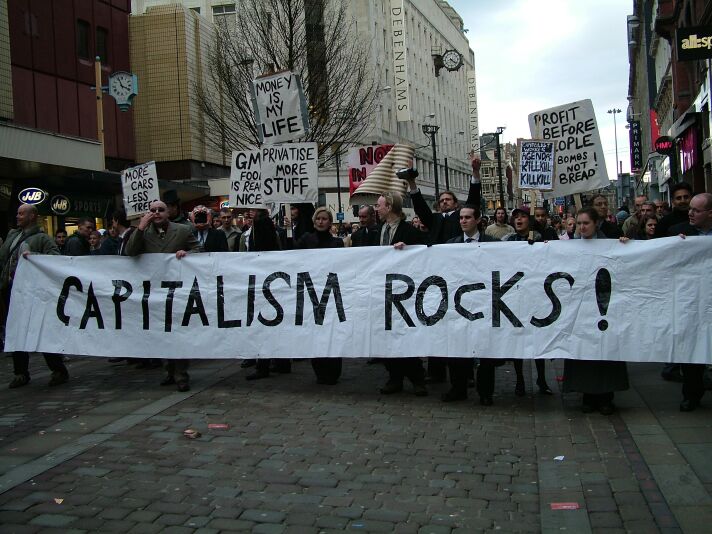
We need to forge local connections, but we also need to look beyond them. Part of this might well require healing some of those divisions with our political allies. When we look to the left, let us see people of hope, not people of division.