Seatree artist retreat- help needed…

For years now, we have been trying to get a project over the line. It has often seemed like it was never going to happen, but now we are finally on the cusp of making it reality.

When we moved to our house, we were not looking for lots of land. Our brief was simple – a smaller house, with room for a pottery studio in which we could work and run workshops, and a small vegetable patch to grow as much food as we could. The aim was for a simple lifestyle, as environmentally sustainable and low impact as possible. Things did not quite work out in the way we planned…

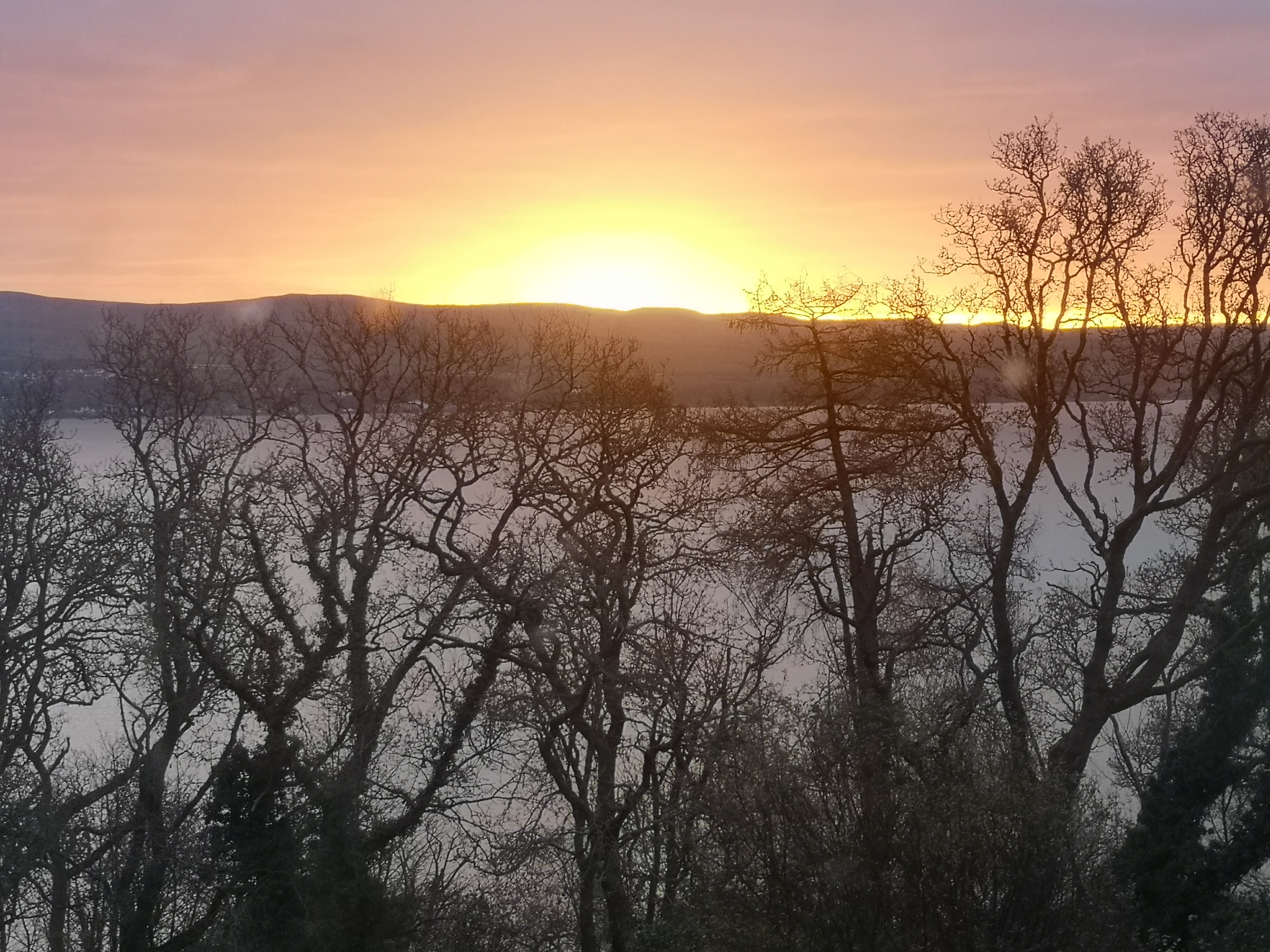
Firstly, we ended up buying a house that came with a large area of overgrown woodland. When we moved, it was impossible to explore most of it, choked as it was by invasive rhodedendron and buddleia. I felt the responsibiity to care for this land keenly – to take out the invasive species and let the old oak trees breathe. I have since spent a long time and lots of hard work trying to do just that – and slowly it has started to transform the woodland back to what it always should have been- a pocket of beautiful oak rainforest, perched above the Clyde estuary…
The other thing that did not go to plan was that we had an unfortunate brush with officialdom. When we moved to our new house, we asked a series of questions of Argyll and Bute planning department about what permissions we needed to obtain to work from home and run pottery workshops for members of the public. We were told (by e-mail) that we required none. Accordingly, we built workshops and pretty soon a third of our income was made up of people paying for pottery workshops.

Unfortunately, following a complaint from a neighbour about us running a business from home, the planning department conducted an investigation, and decided that although our activities were not in breach of planning, the building we had erected as our workshop was not deemed to pass building regulations for recieving members of the public. We appealed, on the basis that we had previously been informed by e-mail that building regulations were not required, but to no avail. Conspiracy theorists might well enjoy the fact that our beloved council deleted all documents and e-mails relating to our enquiries, meaning that the ombudsman was not able to rule in our favour. Such is life. We adapted and moved on…
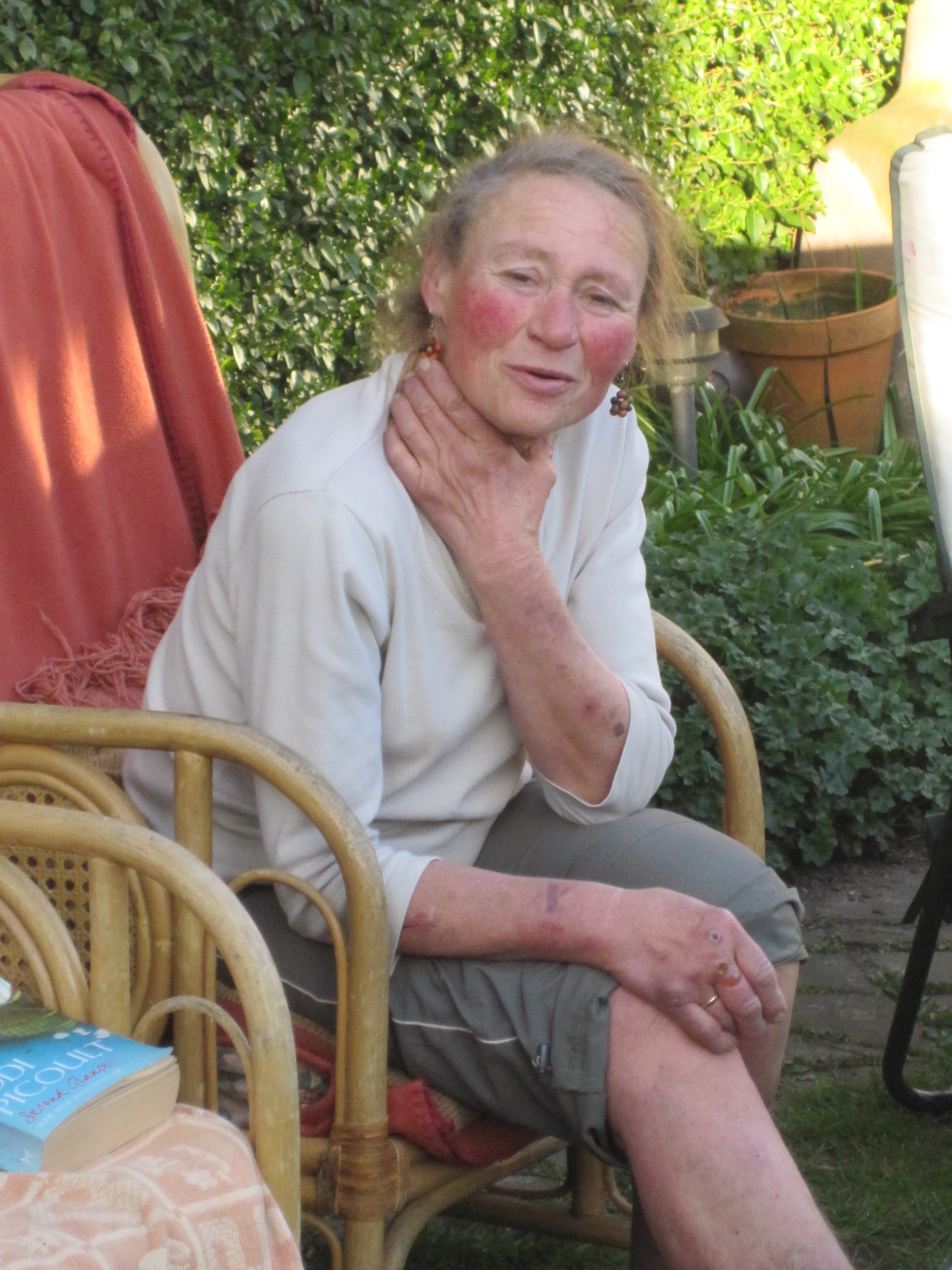
My mum died. Here she is, sitting in a garden, her favourite place in the world. She never got to see our new garden, here in the Clyde, being too ill to travel north. When it came to a share of the small amount of inheritance from the sale of her house that was coming to us, I wanted to make something that might form a lasting memorial.

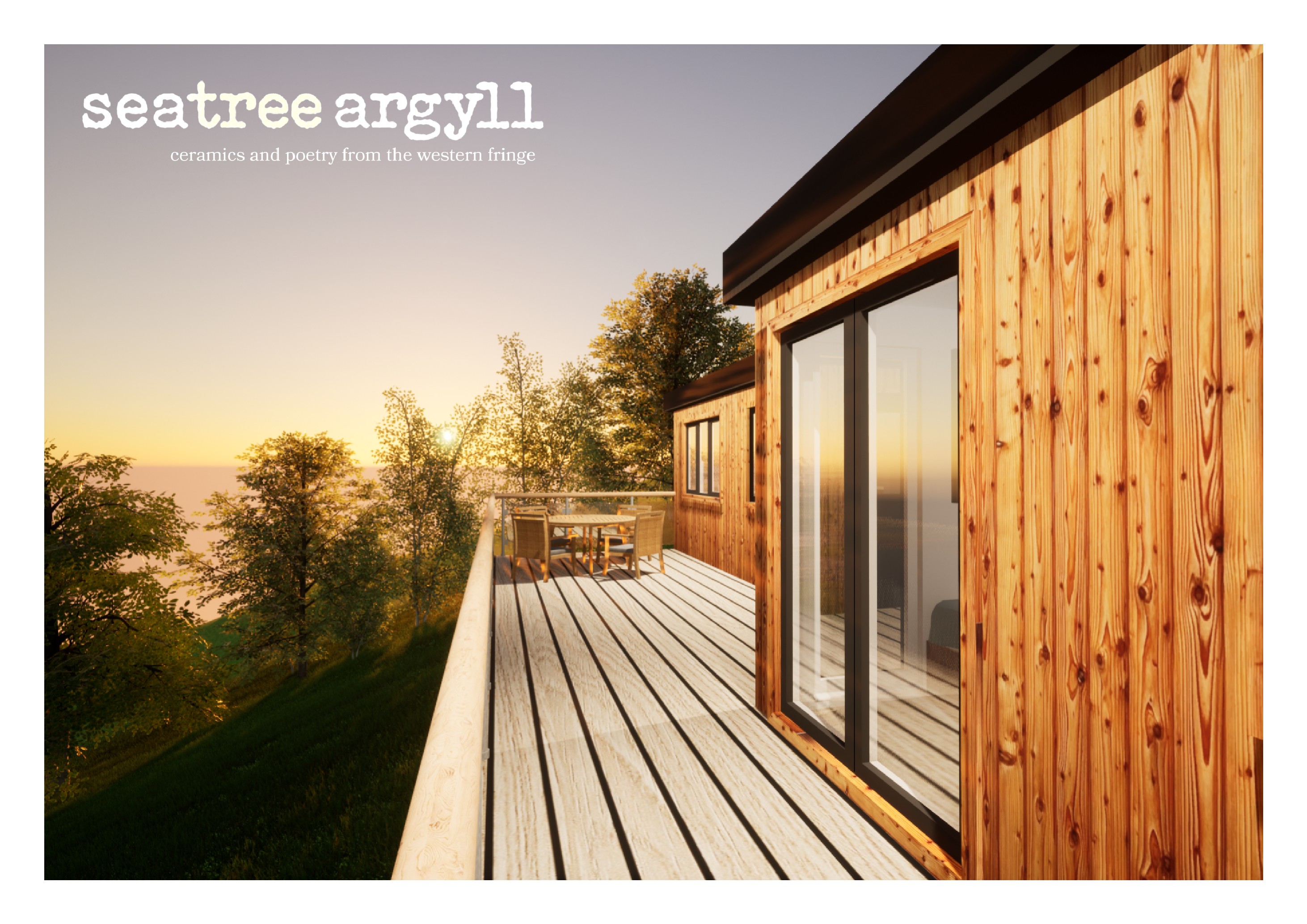
Could we use it to build a new workshop? Something that enhanced the woodland, built from sustainable materials and using low impact construction methods?

Even better, could we make a space in the woodland that might become a haven for people – for artists and makers to spent time creating and recharging their passion?

Fortunately, we have a friend who runs a company who have the skills to make something like this happen. Without Stuart and his company Fynewood, we would have given up long ago as we have tried to navigate the labyrinth of planning. Along with Ronan (who handles design and planning) we came up with something…
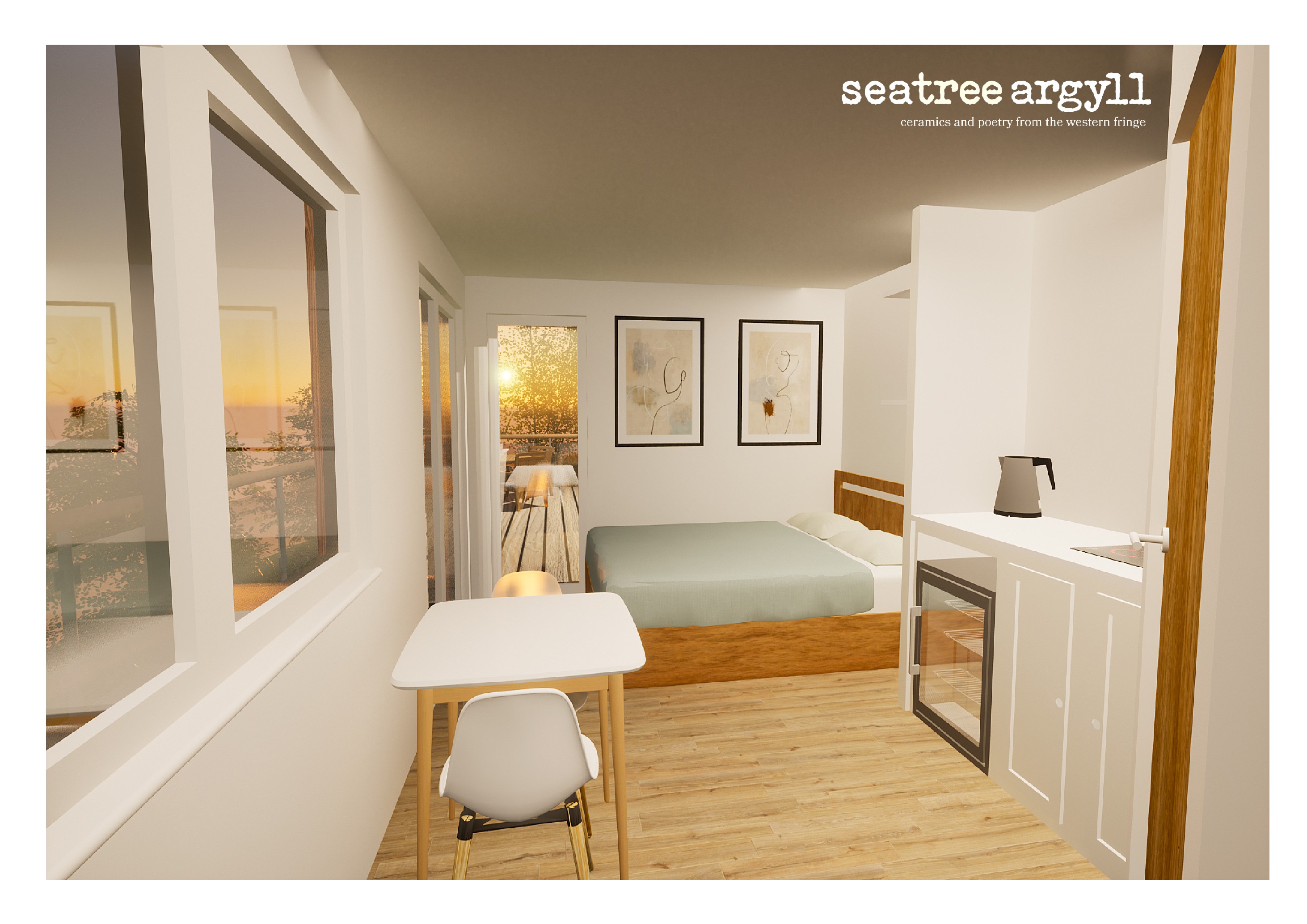
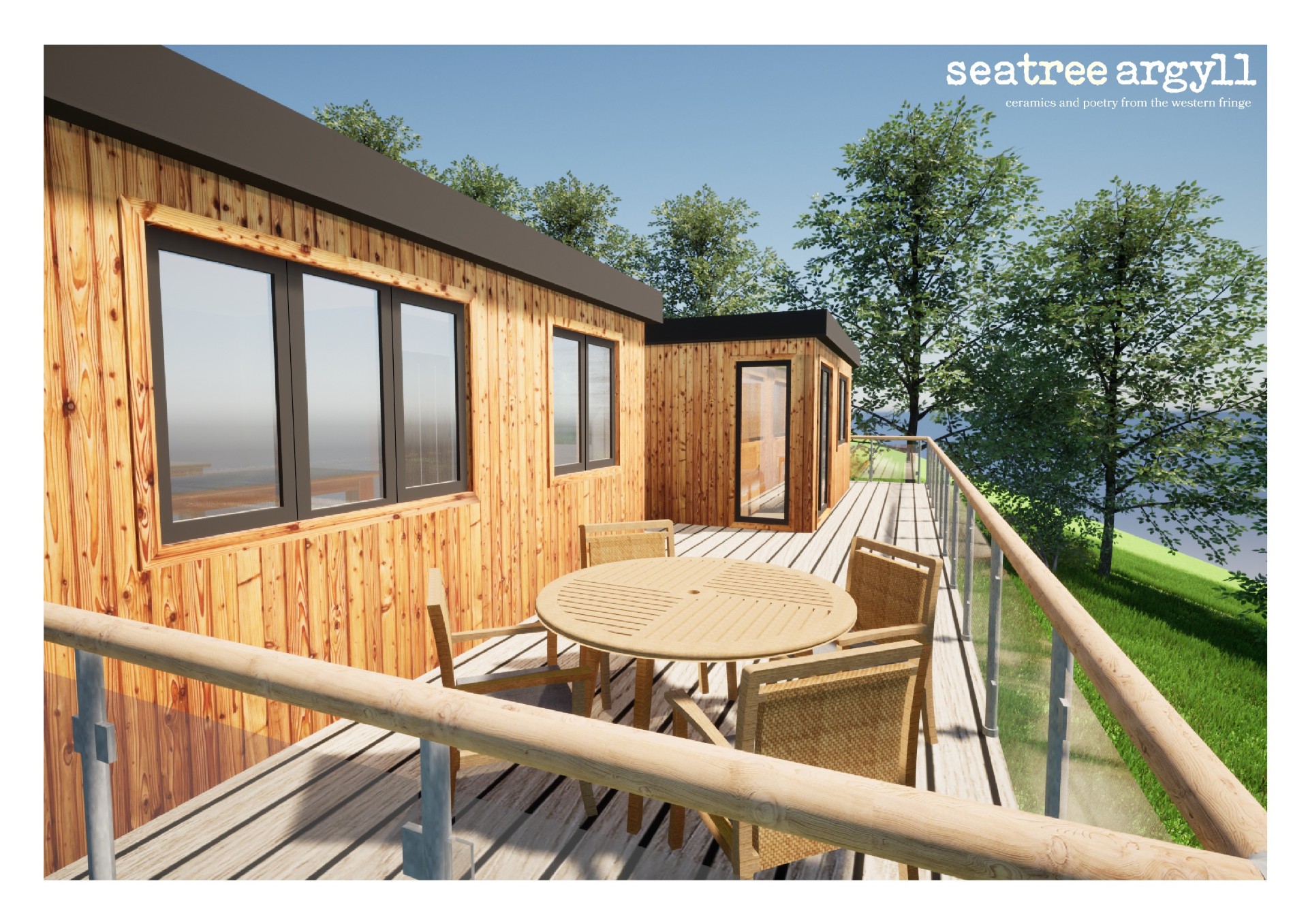
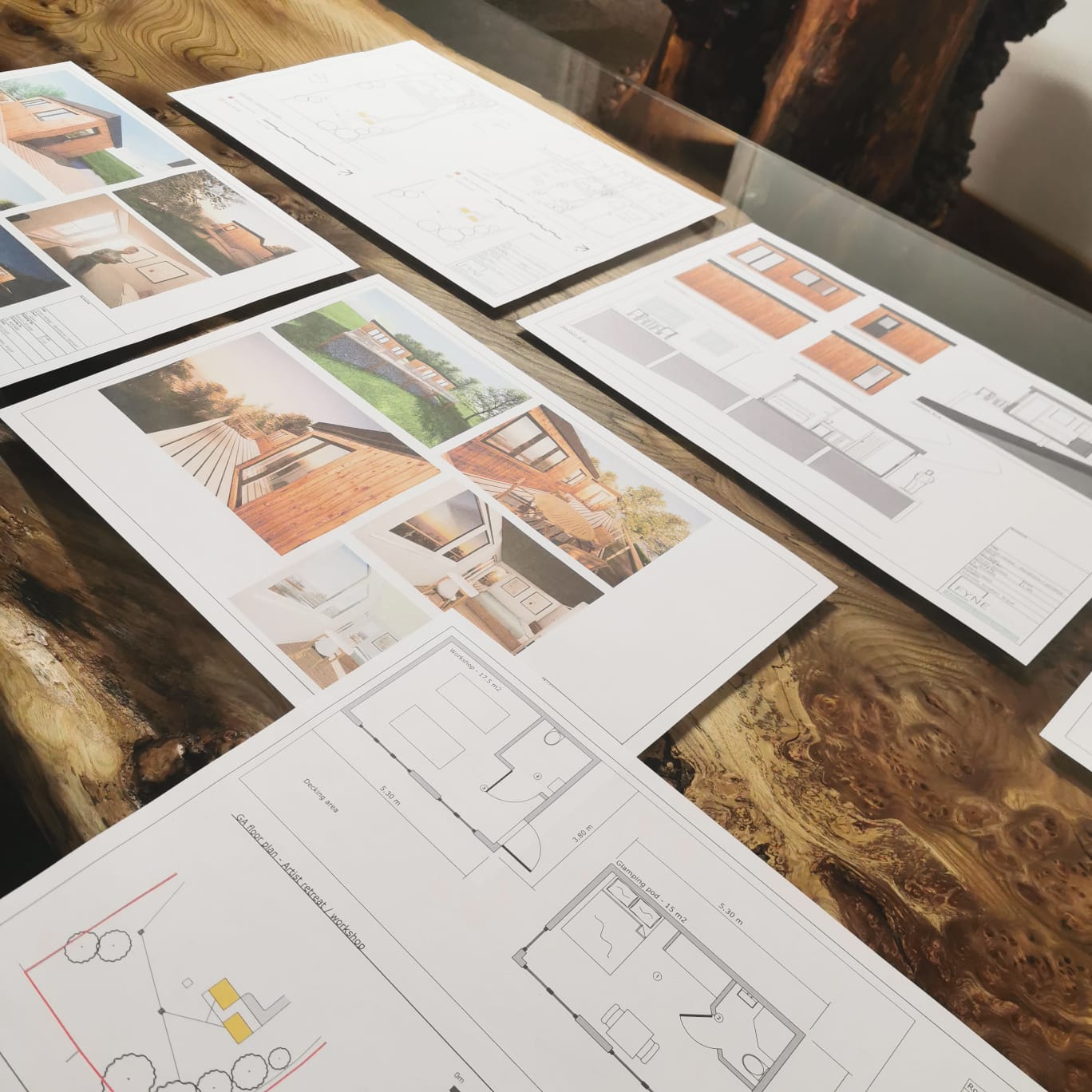
We now have planning consent to put up two small buildings – one a micro-lodge with shower and amenities, the other a workshop with disabled access loo. We intend to make the whole site fully accessible to people in wheelchairs by putting in a graded pathway and decking.

We will then use the premises in a number of different ways;

  • A place for people to make artist retreats. People will be able to book both the accommodation and the workshop for either four, seven or eleven nights.
  • We intend to make some slots available at low/no cost to artists who would otherwise not be able to participate.
  • Our own workshops. Pottery, retreat days, poetry and writing days.
  • Guest workshops. Working with our network of artists and creatives, to host a wide range of arts, crafts and writing.
  • Bookings by other artists to run their own events.
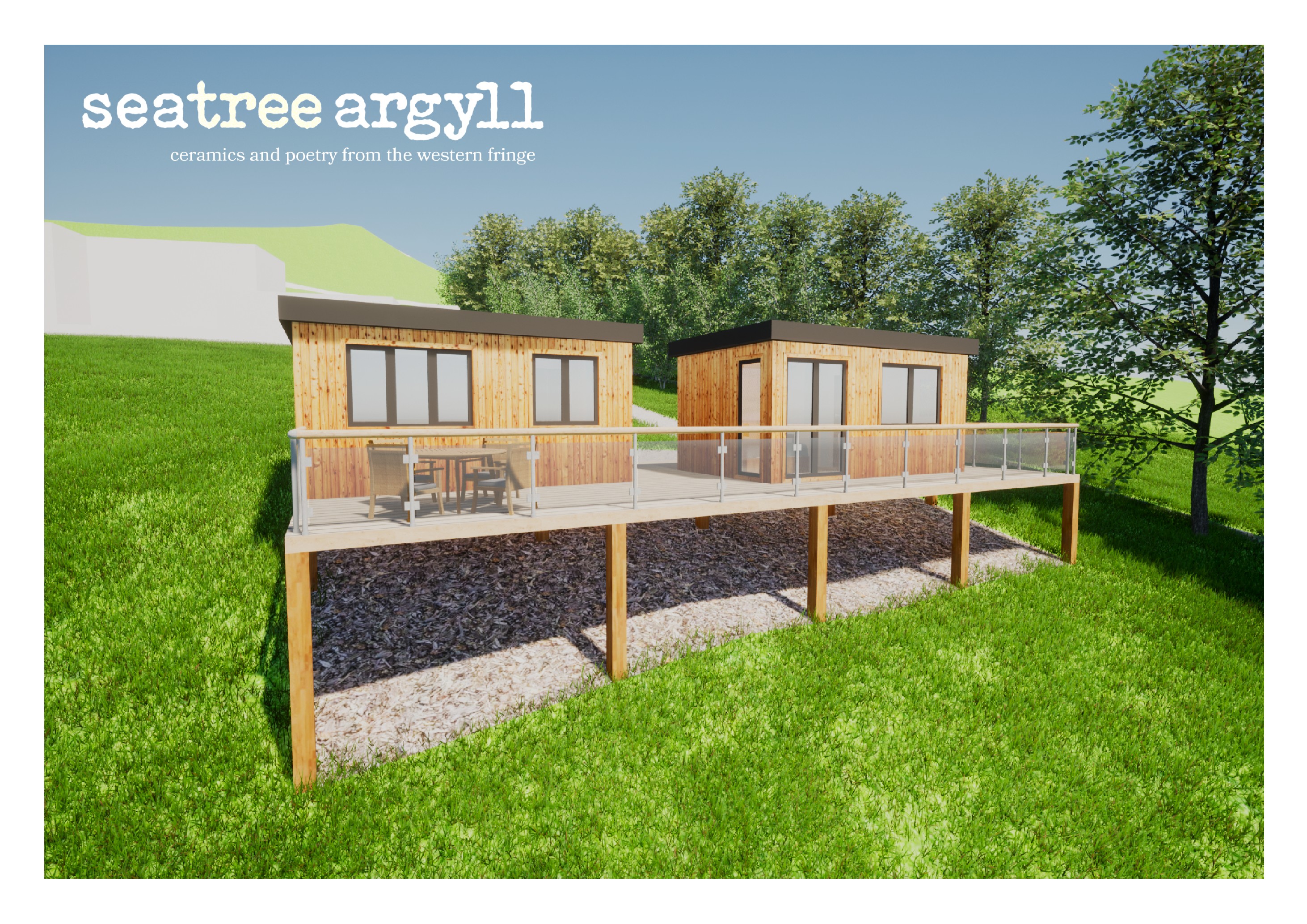
As you can imagine, the costs of making this happen is a real challenge – particularly as these costs have been rising constantly, making everything much more expensive than when we started this process. Conditions imposed by the planning department have raised these costs further – we are still negotiating some of these conditions.

Despite this, we are pressing forward, determined and very grateful for the support of Fynewood.

But now we need your help.

Firstly, there is this survey.

If you are an artist, and you have ever taken, or would like to take, an artists retreat, then we would love to hear from you.

If you have undertaken workshops, would like to start or attend more, we would love to hear from you.

If you have run workshops yourself, we would love to hear from you.
Crowdfunding

The next way you might be able to help is to support this project more directly – specifically with the accessibility side of the project. Feel no pressure, but if this project connects with things that you find important and you have some spare cash to put towards it, then we would be most grateful.

Back in 2020, we were amazed when our crowdfunded ‘shop shed’ was so well supported. We decided to reach out once more to our wonderful supporters.

We have set up a new crowd funding portal, with a set of rewards as before – both physical things, but also the opportunity to book in advance as a way of investing in the future.

You can take a look here.

Creative Scotland have a system of match funding crowdfunded donations (up to a combined total of £10K) so your contributions might count for double!

Help us make this plan a reality. Help us create a space for hospitality and creativity, Let us bring good things out of this good ground, together.
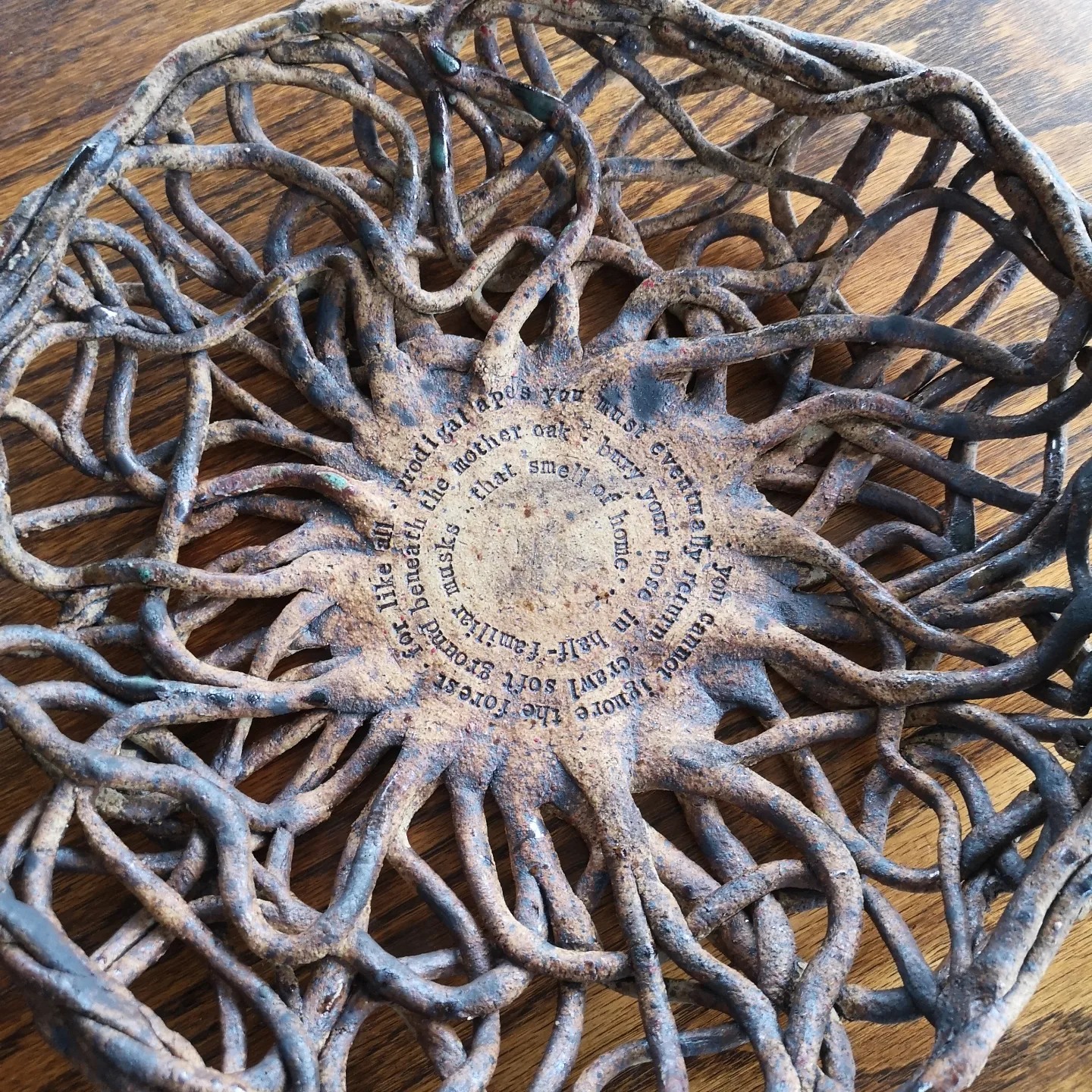
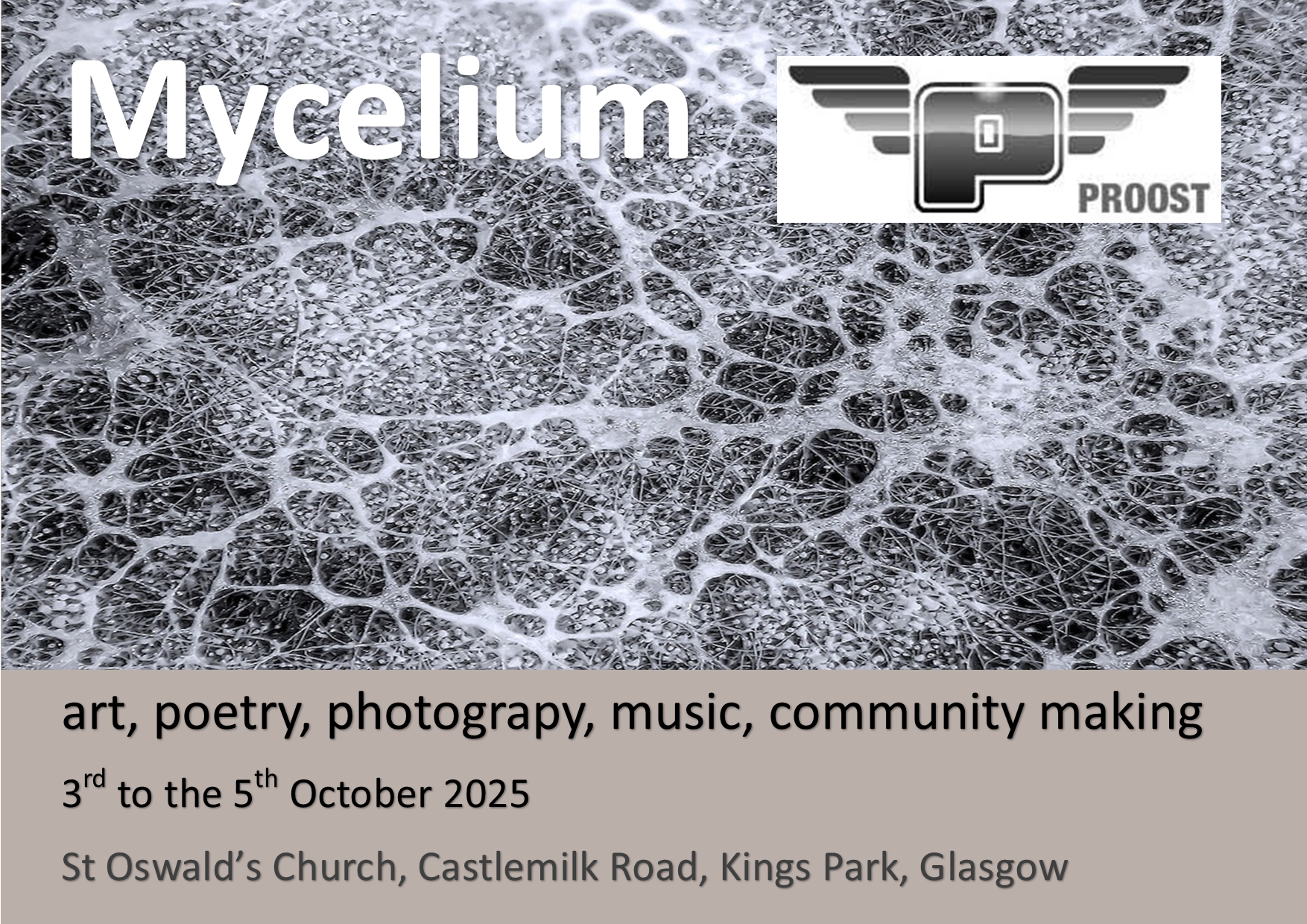
ARTISTS CALL – weekend exploring the theme of Mycellium, with Proost.

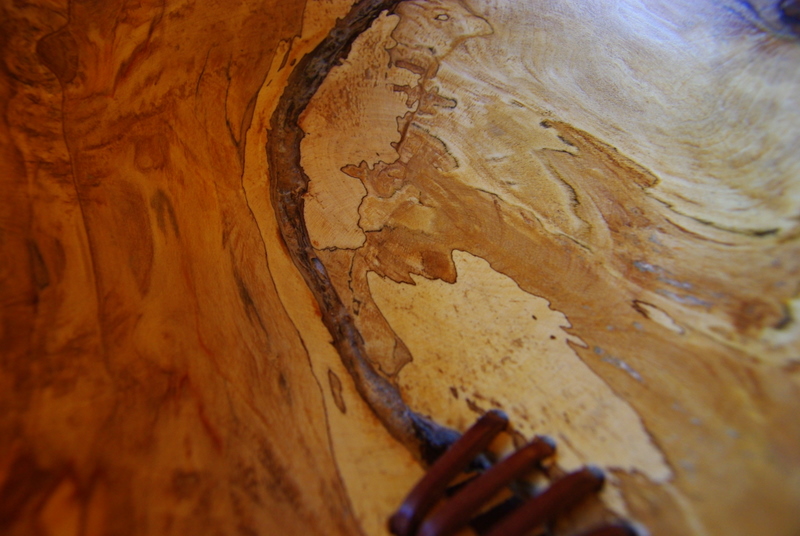
fungus bowl, seatreeargyll.com

Here is a quick update on the Proost meet up for artists in Glasgow. First, the key details;

PROOST MEET UP, 2025

Date: 3rd October 2025 (6:00 PM) to 5th October 2025 (4:00 PM)
Location: St Oswald’s Episcopal Church, King’s Park, 260 Castlemilk Rd, Glasgow G44 4LB

Hosted by: Proost, in partnership with local Episcopal and Church of Scotland Churches
Cost: The gathering is free, with the aim of making this gathering as accessible as possible for all.
Accommodation: Informal hosting options are available for those who need them, and we’re happy to provide guidance on nearby accommodation options to help you make your stay as comfortable as possible. Let us know how we can assist you!

WHAT IS IT ALL ABOUT?

Many of you will remember Proost as it used to be- a publishing platform established on the edge of what we used to call ’emerging church’ or ‘missional groups’ or ‘alt worship’. It gathered a community of creatives who made poetry, art, video, music, liturgy and much more. For many of us, it gave a sense of belonging and connection – and ways to collaborate with other artists in both gathered and dispersed events. We live in different times now, but if anything, creatives need these connections more than ever.

We need art that engages, that challenges, that allows us to go deeper.

We need to hear from people who are otherwise marginalised.

We need to speak of justice and peace, so challenge where appropriate.

We need to take allow our art to connect with the deep spirituality of the earth.

The landscape of faith and culture has changed a lot in the decades since Proost first came on to the scene. Communication technology has made publishing easier, yet at the same time so much harder because of the sheer volume of content being produced. Funding streams and generating income is a massive challenge. Against all this, we have a powerful tool called community.

This is our dream for a new Proost- the means by which we combine our voices, our creativity and our resources to transcend the limitiations imposed by our context in service of justice. We think this is a holy pursuit, made ever more urgent by the crises gathering around us- wars, climate breakdown, inequality and political/economic impotence.

Much of this discussion has been taking place via two podcasts…

The main feed

The poetry feed

… and we have made a start with some collaborations around Advent and Lent.

But we feel that community also needs to make physical connections. We need to come together in one place, to share stories, to make plans and art together.

WHAT WILL WE DO?

The idea is simple- choose a theme and then invite people to respond to it using their art – music, poetry, painting, dance, pottery, photography, animation, video – or anything else.

We will make space for as many contributions and expressions of creativity as we can comb together in the form of installation or performance. The only limitation is that you need to bring those contributions in person!

We are so grateful to St Oswald’s Episcopal Church (King’s Park, 260 Castlemilk Rd, Glasgow G44 4LB) in partnership with local Episcopal and Church of Scotland Churches for generously hosting this weekend.

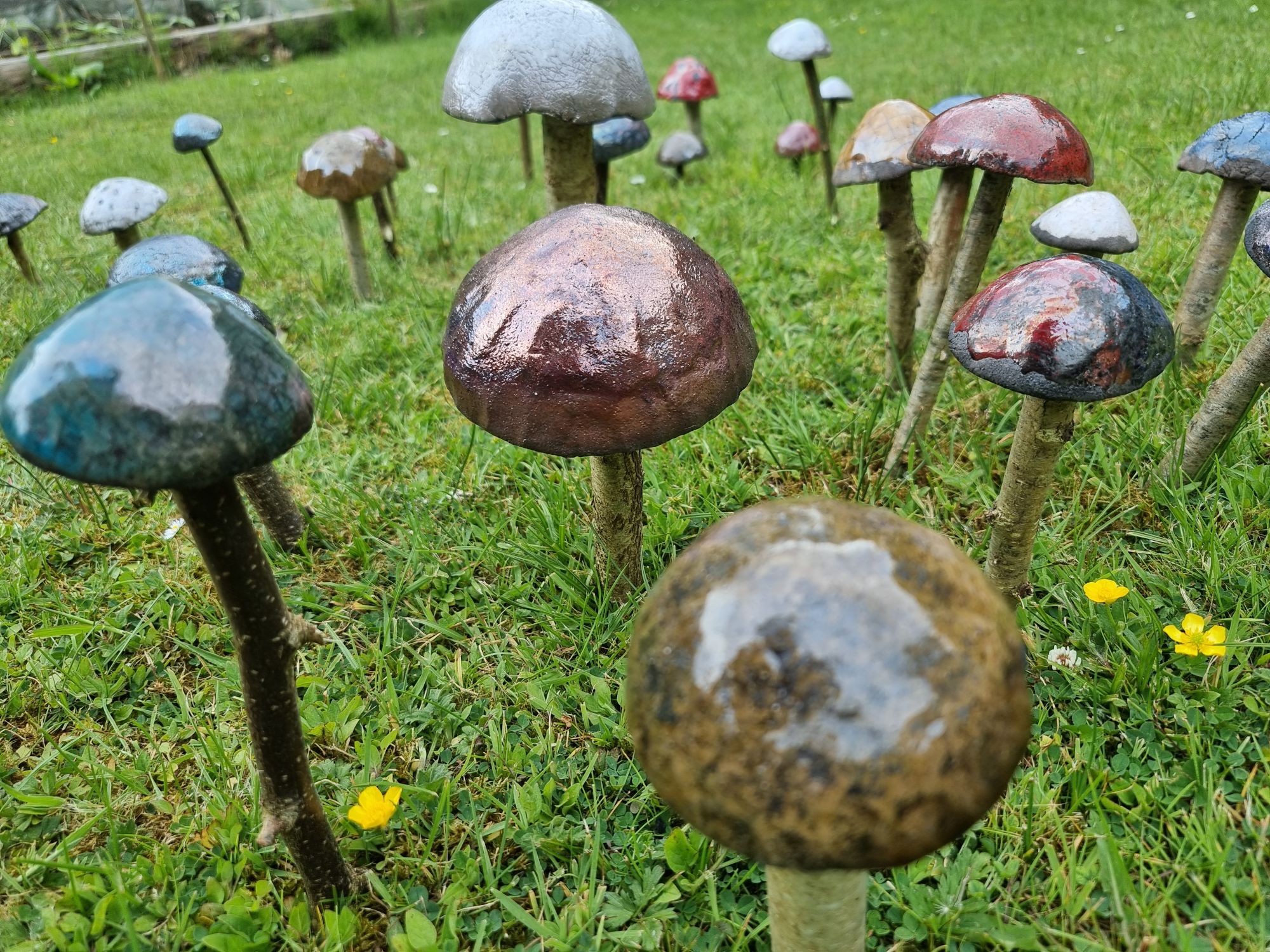
Installation space will be in and around the St Oswalds. (This will include a large mushroom-related ceramic offering!)

Performance opportunities will be via 1. A great big Ceilidh on Saturday night – dancing, hopefully interspersed with all sorts of other poems, songs and stories. 2. Sunday afternoon event. Both will be open to local people.

We want to keep Saturday day-time for discussion and chat amongst Proostians – working out together what seems important, and how this project might progress. There will be themed discussions led by different members of the team.

20250519_1500171594497244553114269

WHY MYCELLIUM?

This is the theme we have chosen for our meet up. Some of the reasons for this will already be in your heads, but here are some ponderings that might help unleash your own creative responses.

Soil science is advancing rapidly – we now need to stop thinking of soil as just inert dirt. It might be more accurate to regard it as a living entity all on its own – but if that is a little fanciful surely we need to understand that it is a complex ecosystem- one which almost all other land based life on the planet depends upon. Without soil, we die. Crucially, the role of mycelial networks in connecting, communicating and making communalities is increasingly being understood to be so much more important than previously thought.

Mycelium is the way that trees ‘talk’ to one another. Think about that- one life form relies upon another lifeform in order to share nutrients, warn of disease and so much more.

We modern humans tend to think about the natural world as being characterised by competition, the elimination of weakness and ‘survival of the fittest’. We have taken Darwinian ideas, misunderstood them and used them to justify our economics, our politics – even our spiritualities. The more we understand about mycelium, the more we need to think again.

Perhaps the ‘survival of the fittest’ might better be understood to mean that we survive best when we seek to fit with our context – when we seek connection and community.

What are we connecting with? Does mycelium only represent a way to understand human interrelatedness – with both each other and with the wider natural world? I would argue however that we might consider this connection to be much deeper than that.

These ideas have always been at the heart of the Christian story, not least the mystical traditions and the Celtic wisdom traditions, both of which have long emphasised that it is through God that all things live and have their being. In the Celtic understanding, God is to be found at the centre of everything, even us. We encounter him by going deeper.

Richard Rohr, in his magnificent book ‘The Universal Christ’ show us a different window into this way of understanding, in which the Christ is ‘another name for everything’ – the cosmic consciousness through which the universe expanded and came into being. We are all held in this commonality and invited to participate according to the deep truth of love.

As followers of Jesus, there seem to me to be so many other resonances here.

  • Unity and Oneness:

Jesus called for a unified community, where individuals, despite their differences, are “perfectly joined together” in their minds and judgments. 

  • Body Analogy:

He used the image of a body with many parts, each playing a vital role, to illustrate the interconnectedness and interdependence of his followers. 

  • Love for Neighbour:

Jesus emphasized the importance of loving one’s neighbour as oneself, which encourages cooperation and mutual support within a community. Compassion and love are a natural law that we need to be drawn towards.

  • Serving Others:

He demonstrated the importance of serving others, highlighting the value of helping those in need and working together for a common good. 

  • Collaboration and Partnership:

Jesus encouraged his followers to work together, emphasizing the importance of partnership in living as agents of the Kingdom of God.

HOW TO GET INVOLVED?

We need ideas, songs, poems, film, images, dance, liturgies. We will ‘curate’ these in advance and include as many as we can. HOWEVER- this is about community, so we need you to bring your ideas, not just to send them. We will make the event together.

We have some very limited funding, and the offer of some accommodation. We don’t want money to be an obstacle for anyone.

This is the start of a new thing. Come and help shape it. On saturday we want to explore ideas together- to talk of Poesis and dream of how art and spirituality move togther and miight lead us forward.

If this is interesting to you, what you can do is

SIGN UP VIA THE PROOST WEBSITE

This will not commit you to anything- we will keep you informed, that is all.

If you have ideas you want to talk through,or want to know more, or have questions, we would love to hear from you- you can get in touch via the website, or drop me a message via the comments below, or send me an e-mail at thisfragiletent@com

Creating open spaces for encounter…

Photo by Zachary DeBottis on Pexels.com

I have this grandiose, unreasonable, impractical and unlikely-to-ever-happen-in-the-way-I-want-it-to idea.

(Full confession, I have a lot of these, but this one feels more urgent – it beats in my chest.)

I want to create events in which we use art (music, poetry, photography, dance, film, painting, etc etc) to make open, inclusive spaces for encounter…

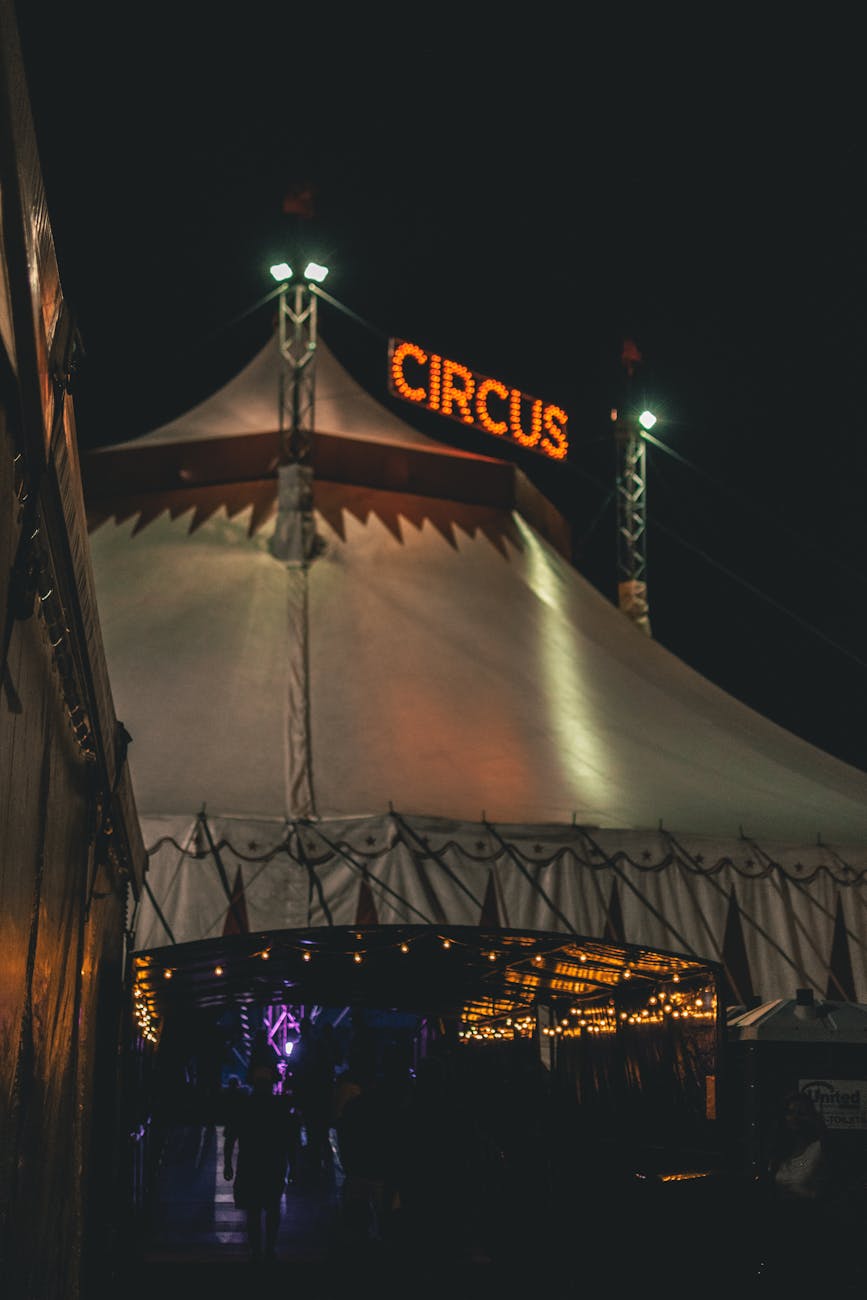
A kind of circus for the spirit.

What do I mean by ‘encounter’? I made this list for us to pick from. You can have all of them, just one, or any combination inbetween;

  • thinking deeper
  • connecting
  • laughing together
  • collectively hoping for better
  • Lamenting all that we have lost
  • making spiritual connection
  • protesting where it is overdue
  • lyrical, poetic, sensonry immersion
  • imagining a healing for our broken world
  • including those who have be excluded
  • chaotic collaborations between artists and disciplines
  • weeping together

I am sure this list will get longer, but questions may occur to those of you who are (justifiably) suspicious of my religious intent. Am I just trying to reclaim my long rejected evangelicalism? What am I selling? What version of god am I re-hashing? My only answers are that we all approach these things through our own experiences and limited perspectives, but what I am dreaming about is a space in which, broadly, we accept difference.

I could spout truisms about being ‘intolerent of intolerance’, but if I’m honest, some of my prejudices are precious to me, so I may have to work hard to stay open. (I suspect most of us are the same, to variable degrees.)

There is a tension here too in that art of the middle ground – inoffensive and safe – is very much not what is in my mind. Art has to challenge, divide and even outrage, not because that is an end in itself, but because it seems to be an emergent quality of good art, as well as an emergent quality of any attempt to engage with our culture in a prophetic (as in failthfully critical) way.

As for the god I reach towards, what I said above applies too. I long for a movement towards good, and feel sure that art and activism are vital components of the pre-political, spiritual journey that we make individualy and (perhaps more importantly) collectively.

Whether the idea of god (or God) is helpful to us as we make this movement is ambigious to me – I think this position is consistent with my (current) understanding of the teachings of Jesus, but I am interested too in how other faith traditions – or none – might illuminate our open spaces.

What might this circus look like? How might it happen? Where would it happen?

Don’t spoil my dream with practicalities! Dreams don’t have to be tested by reality. Except I really hope this one is, so here goes…

Think of a theme… something fairly broad and abstract but likely to provide a window into which we project and see. Perhaps it could be a subversion of an old religious idea like ‘redemption’, or a more opaque concept like ‘obscure’, or a politically charged idea like ‘equality’.

Invite artists and co-conspirators to consider the theme… this is where we need to be well networked, to invite a wide range of creatives into our ‘big top’. The community that develops must seek to include, to treasure, to encourage, to mutually inspire. They will bring their egos too, so each event will need a curator – someone who can see the whole picture and put together a story…

Find a space and time… we need venues prepared to host us and take risks. Perhaps these might be underused church spaces? I love the idea of doing things in forests too. Each artist ‘owns’ this space and time, so they use their own networks/social media to create anticipation.

Collaborate… on day one, the artists bring their work together. Poems and songs are woven with pictures and film clips. People dance and bang drums. There may even be juggling. An order is agreed. Technology is made ready.

Perform… on day two, the big top doors are thrown wide and members of the public are invited inside. The event unfolds. People laugh and cry. They catch glimpses beyond and long for better.

Photo by Timur Weber on Pexels.com

How do we pay for all of this? (There you go again, with your dream-bubble popping.)

Is art of this kind every capable of funding itself? I don’t know. It depends on what artists need to get out of it, I suppose. Ticket sales might cover some if not all costs, and artists may have their wares to sell… artists have to live after all, we can’t exist on ideas alone.

There are other values- the community, the friendship, the tribal nature of the happening. Then there is the wider exposure, the potential spin-off colaborations, the love of the art and the ‘experience’, but I am painfully aware that many artists get frustrated with these kind of discussions. Artists have to eat and pay the rent too, so my dream also contains the hope that we can pay a fair wage.

I suppose I would be upfront here and say that I don’t think the circus of the spirit will make any of us rich- otherwise it will cease to be of the spirit and be increasingly of the wallet.

I would love to know what my artist (and non-artist) friends think of my unreasonable idea…

Community has to be small, or it becomes bureaucracy…

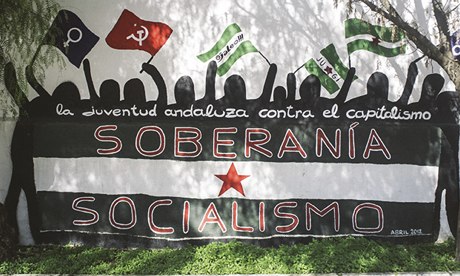
A socialist mural in Marinaleda.

I have never been a communist, not really.

However, I remember vividly the moment when the idea of communism took hold of me. I remember the discussion as a 15 year old boy around how it might be possible to live a different way- where our lives were not controlled by the profit principle, and where we shared what we have in order to live in harmony with one another, not in competition. It was electric.

Alongside all this was a whiff of something else- radicalism, danger. Our heros were no longer empire builders, but rather the challengers of injustice, the small people who stood in front of tanks or challenged corrupt authority only to be shot in their pulpits. There was a possibility of change, of things being better, simpler, more human.

It was also impossible to ignore the fact that communism seemed to fit remarkably well with the ideas of another radical, called Jesus.

Some people say that ideas like this are dangerous. Perhaps they are. For most of us however, they became the background hum of guilt inside our middle class lifestyles. Slowly our radicalism was buried by salaries, mortgages and the shopping run. It survived only in a few donations to charity, the odd sponsored third world child and the choice of newspaper we read.

I never believed in the inevitable rise of man towards utopia. I always doubted that capitalism would be defeated. Partly this was because we had little reason for optimism after Stalin’s purges and Mao’s cultural revolution. Like many I started to believe that Communism could not survive its encounter with broken humanity- that greed and corruption would always mean that the psychopaths would rise and that without the sharp edge of competition for personal gain we become blunted and lazy, leading to a slow decline. Capitalism was not perfect, but perhaps it could be managed I thought, to mitigate against some of the more damaging effects. Social welfare systems, health systems, progressive taxation to redistribute some wealth, protection under law for workers in employment, education for poor kids to give them a fair start. Democracy as the best compromise solution.

Perhaps these ideas are dangerous too however. They mean that certain hierarchies of unequal power and wealth remain fixed and unchanging. However, what real alternatives are there? Communism is bankrupt after all.

Meanwhile the world is in turmoil. Markets rise and fall, governments react paradoxically by blaming poor people for the excesses of the rich and powerful. All those things that might be seen as mitigations on the pursuit of profit are being slashed- education, health, welfare, social housing, unionisation.

In Europe, this is no where more apparent than in Spain. This from here;

Spain experienced a massive housing boom from 1996 to 2008. The price of property per square metre tripled in those 12 years: its scale is now tragically reflected in its crisis. Nationally, up to 400,000 families have been evicted since 2008. Again, it is especially acute in the south: 40 families a day in Andalusia have been turfed out of their homes by the banks. To make matters worse, under Spanish housing law, when you’re evicted by your mortgage lender, that isn’t the end of it: you have to keep paying the mortgage. In final acts of helplessness, suicides by homeowners on the brink of foreclosure have become horrifyingly common – on more than one occasion, while the bailiffs have been coming up the stairs, evictees have hurled themselves out of upstairs windows.

When people refer to la crisis in Spain they mean the eurozone crisis, an economic crisis; but the term means more than that. It is a systemic crisis, a political ecology crack’d from side to side: a crisis of seemingly endemic corruption across the country’s elites, including politicians, bankers, royals and bureaucrats, and a crisis of faith in the democratic settlement established after the death of Franco in 1975. A poll conducted by the (state-run) centre for sociological research in December 2012 found that 67.5% of Spaniards said they were unhappy with the way their democracy worked. It’s this disdain for the Spanish state in general, rather than merely the effects of the economic crisis, that brought 8 million indignados on to the streets in the spring and summer of 2011, and informed their rallying cry “Democracia Real Ya” (real democracy now).

For most of us, all this is happening on a scale that makes it impossible for us to fully grasp. We might focus on one small injustice, even raising voices of protest, but the entirety of the system is unchallengable, because it is too big. So what we have even in Spain is the call for better capitalism, better democracy, but no clear idea of what this might look like.

All of which is a long pre-amble to the reason for this post.

What exists at a human scale that might still gather real alternatives to all this naked profit-and-loss-boom-and-bust madness that we are dwarfed and diminished by?

For a long time, the idea that ‘communism does not work’ has irritated me. The smug example that is usually used to prove this dictum are Soviet Union collective farms- spectres of mass crop failure, starvation, forced labour and perhaps the worst sin of all, lack of productivity.

Today however, I read this about a small Spanish village called Marinaleda ;

When the 1,200-hectare El Humoso farm was finally won in 1991 – awarded to the village by the regional government following a decade of relentless occupations, strikes and appeals – cultivation began. The new Marinaleda co-operative selected crops that would need the greatest amount of human labour, to create as much work as possible. In addition to the ubiquitous olives and the oil-processing factory, they planted peppers of various kinds, artichokes, fava beans, green beans, broccoli: crops that could be processed, canned, and jarred, to justify the creation of a processing factory that provided a secondary industry back in the village, and thus more employment. “Our aim was not to create profit, but jobs,” Sánchez Gordillo explained to me. This philosophy runs directly counter to the late-capitalist emphasis on “efficiency” – a word that has been elevated to almost holy status in the neoliberal lexicon, but in reality has become a shameful euphemism for the sacrifice of human dignity at the altar of share prices.

Sánchez Gordillo once suggested to me that the aristocratic family of the House of Alba could invest its vast riches (from shares in banks and power companies to multimillion-euro agricultural subsidies for its vast tracts of land) to create jobs, but had never shown any interest in doing so. “We believe the land should belong to the community that works it, and not in the dead hands of the nobility.” That’s why the big landowners planted wheat, he explained – wheat could be harvested with a machine, overseen by a few labourers; in Marinaleda, crops like artichokes and tomatoes were chosen precisely because they needed lots of labour. Why, the logic runs, should “efficiency” be the most important value in society, to the detriment of human life?

The town co-operative does not distribute profits: any surplus is reinvested to create more jobs. Everyone in the co-op earns the same salary, €47 (£40) a day for six and a half hours of work: it may not sound like a lot, but it’s more than double the Spanish minimum wage. Participation in decisions about what crops to farm, and when, is encouraged, and often forms the focus of the village’s general assemblies – in this respect, being a cooperativista means being an important part of the functioning of the pueblo as a whole. Where once the day labourers of Andalusia were politically and socially marginalised by their lack of an economic stake in their pueblo, they are now – at least in Marinaleda – called upon to lead the way. Non-co-operativists are by no means excluded from involvement in the town’s political, social and cultural life – it’s more that if you are a part of the co-operative, you can’t avoid being swept up in local activities outside the confines of the working day.

Private enterprise is permitted in the village – perhaps more importantly, it is still an accepted part of life. As with the seven privately owned bars and cafés in the village (the Sindicato bar is owned by the union), if you wanted to open a pizzeria or a little family business of any kind, no one would stand in your way. But if a hypothetical head of regional development and franchising for, say, Carrefour, or Starbucks, with a vicious sense of humour and a masochistic streak, decided this small village was the perfect spot to expand operations, well – they wouldn’t get very far. “We just wouldn’t allow it,” Sánchez Gordillo told me bluntly.

This is one tiny village, even if others are starting to copy what they have done. I am sure it is no utopia. People will squabble and fall out and scratch at one another. The Mayor probably has too much power and charisma and it may well all go to his head.

What it leaves me with mostly is this- community works only in the small scale.

Love is only possible in the press of real relationships. It can not exist in abstract theory. It is not real unless tested in actual shared lives.

We all need to believe in something bigger, something better. For this village it has become a unifying factor. They see themselves as an egalitarian oasis in a mad unsustainable capitalist desert. I admit I am inclined to agree. I liked what the Mayor had to say- “I have never belonged to the communist party of the hammer and sickle, but I am a communist or communitarian,” Sánchez Gordillo said in an interview in 2011, adding that his political beliefs were drawn from those of Jesus Christ, Gandhi, Marx, Lenin and Che.

All this to me is a call back towards real community- let us forget the big scale, the macro economic choices of a distant and devalued government. Let us live an alternative- called community.

How this looks in your locality will have to be different to mine- but the central ideas will be the same, be they the ‘Christian heresy’ that is communism (according to CS Lewis) or actually those words of Jesus that we conveniently ignore.

Where did I put those olive seeds?

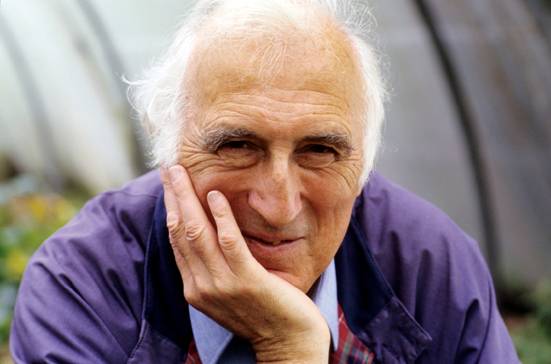
Vanier on community…

jean-vanier

‘Community can be a terrible place because it is a place of relationship; it is the revelation of our wounded emotions and of how painful it can be to live with others, especially with ‘some people.’ It is so much easier to live with books and objects, television, or dogs and cats! It is so much easier to live alone and just do things for others, when one feels like it…. While we are alone, we could believe we loved everyone’.

Jean Vanier ’Community and Growth’
I pinched this quote from my mate Graham’s blog.
.
Because Vanier puts into words what most of us instinctively know to be true. Our relating is mostly driven by self- our need for friendship/entertainment/validation/collaboration.
.
It is this kind of relating that allows us to believe that we live ‘good’ lives, that we are ‘nice’ and that we are ‘Christian’ even.
.
My experience is that community first teaches us that we are none of these things.
.
Most of us recoil at this point- surely there must be something wrong with the people we are communing with? Joe is a pain the arse, Gill is a power hungry despot-in-training, Jim has far too many opinions and should just shut up before I slap him. Better to just go home and watch TV.
.
I confess I have watched a lot of TV.
.
But still, there is community. They have not kicked me out yet…

Return to Kanyini…

A few years ago I wrote about this film on TFT;

Back in 2008 I wrote this;

The concept of kanyini has been brought to us by a beautiful man called Bob Randall who grew up as an aboriginal boy on the outskirts of a cattle station in central Australia. His father was a farmer of Scottish extraction, but appears to have had no concern for him at all. Like 50,000 other black kids of mixed race (between 1910 and 1970) he was forcibly removed from his mother, and sent to school hundreds of miles from home. He was forced to learn the rules of white culture- the clothes, the way of life, the religion. He learnt to appreciate the contradictions between the words of Jesus, and the actions of these, his followers. Since then, he has been a welfare worker, a songwriter, and author, and now, works with Australia’s black community.

To be a native Australian in these times is to be part of a community with huge problems- health, crime, substance misuse, soaring suicide rates. It is a community living in the shadows of the sky scrapers of new Australia, but also in the shadow of genocide, in which everything ans almost everyone who was part of the oldest culture in the world was all but destroyed.

It is also the story of a Diaspora of westerners (particularly Celts from Ireland and Scotland) often still under the shadow of their own experience of oppression and injustice, who become in turn the oppressors, murderers and rapists of a whole culture.

It is their story, but it is also ours. It is the story of what happens when we become disconnected from who we are.

Because to hear Bob Randall speak is to feel the pull of something wonderful. He describes a culture where people are connected to land. Birds, trees, all living things- they are family. The proof of this connection is that we are… alive! And because everything is connected, everything is OURS, not MINE. Everything is already created in a perfect state and our job is to become part of it.

Bob describes his memory of life as a kid like this;

These were beautiful people, because they lived in a beautiful way.

Bob’s concept of Kanyini feels right. It has simple truth- and seems to encapsulate the idea of community as I understand it should be. It has 4 components;

  • belief system

  • spirituality

  • land

  • family

I am reposting this partly because I found the film in full (as above), but also because I think that this list is a good one to consider as we look again at the year to come this is a good place to start.

If life for the people in this film started to unravel as they lost connection with the things above- might the same be true for us?

How do we challenge this, for ourselves and our communities? Our connection to something we can believe in/live for, our connection to the divine, our love of where we are located, our existence within an extended family (whether or not we have blood ties.

May 2013 be your year of Kanyini.

Brokenness as a place of becoming…

Simon and I did a talk at Greenbelt festival about community, based on some of our experiences in Aoradh. We spoke a lot about the challenge, the exposure and the pain of community- how it was impossible to move closer to one another without also being wounded, hurt and (hopefully) changed.

If I were to pick one man to discuss this with in more detail, it would be John Vanier, founder of the L’Arche communities. He speaks and writes with such gentle integrity about his own experience of being broken. I was reminded of this recently when reading a short review of one of Vanier’s books From Brokenness to Community.

When we follow Jesus, writes Vanier, we are called to reject certain aspects of the world. We accept loss of wealth and status and comfort. We embrace downward mobility and climb back down the world’s ladder of success. This process can begin when we discover our mutual brokenness. We acknowledge our poverty and then we understand what it means that Jesus came to serve the poor. We recognize our infirmity and then we discover God doesn’t work primarily through those who think they are well, but through those who know they are sick. All this happens in the context of community—a place of pain and trial, but also reconciliation and celebration. Community is where the ego goes to die, and in its place we find resurrection, communion, and even salvation.

Here is Vanier himself talking about the same things;

It is worth watching some of the rest of the clips in this series. There is a deep sigh in me when I hear him speak about love and community and the possibilities of finding our being as we give it away in love of others. I know these things to be true.

I also know them to be elusive. I know them to be things that can not be grasped or owned- they are not aspirational as one might seek promotion or personal fulfilment- they are rather discovered in the shit of our own failure.

May we find the place of becoming, not because enlightenment is something we can conquer, like some spiritual Everest, but more because this is the only honest and hopeful thing possible when faced with the brokenness in me, and also glimpsed in others.

On the Aoradh workbench…

We are doing some work for installations to be used at Greenbelt festival– a combination of sculptural pieces and soundscapes/poetry. It is so lovely to be actually producing something- much of our work of late has been of the mental/community building kind.

There is an interesting old discussion which has at times been quite heated in Aoradh– what comes first, the task or the community? One of my friends actually left because he found the community bit too ambling and directionless- he wanted to get busy and use time efficiently. The business of community is rarely efficient. However, community for the sake of our selves, with no reaching out, no service, no connection- this would be a pointless thing, and certainly not  a Jesus-like thing.

This years GB theme is ‘Saving Paradise’ and our part of contribution involves three pieces, representing sea, forest and river. We will use this in conjunction with soundscapes made in wilderness locations, along with poetry. These will be projected using ultrasonic speakers, which is a bit of tech that I am looking forward to playing with.

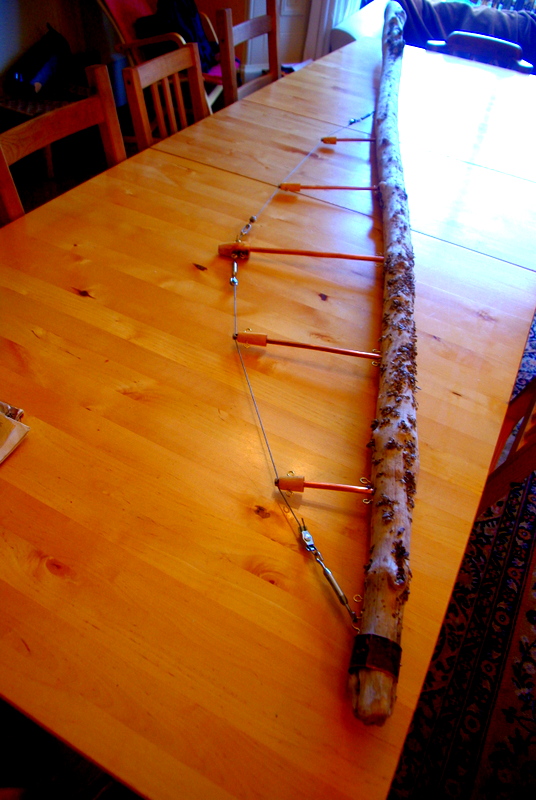
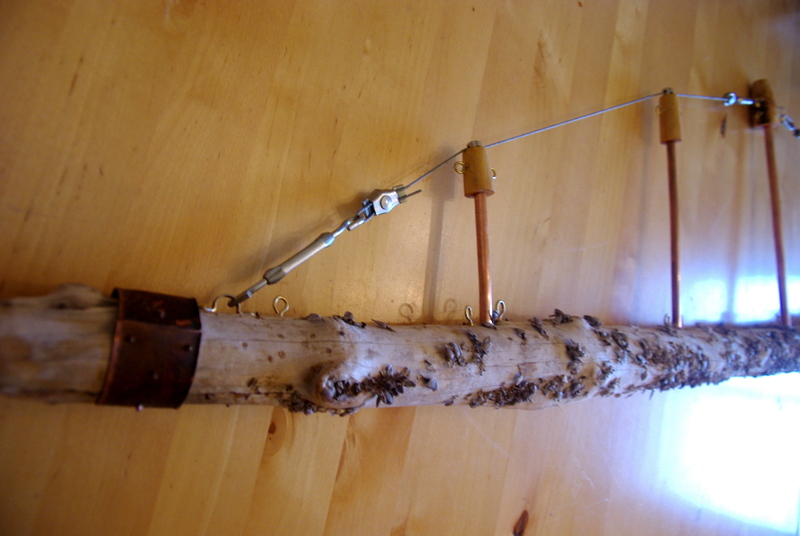
The sculptures are a bit trial and error, but here is the work so far- firstly the ‘Sea’ piece, which will have ‘sails’ attached;


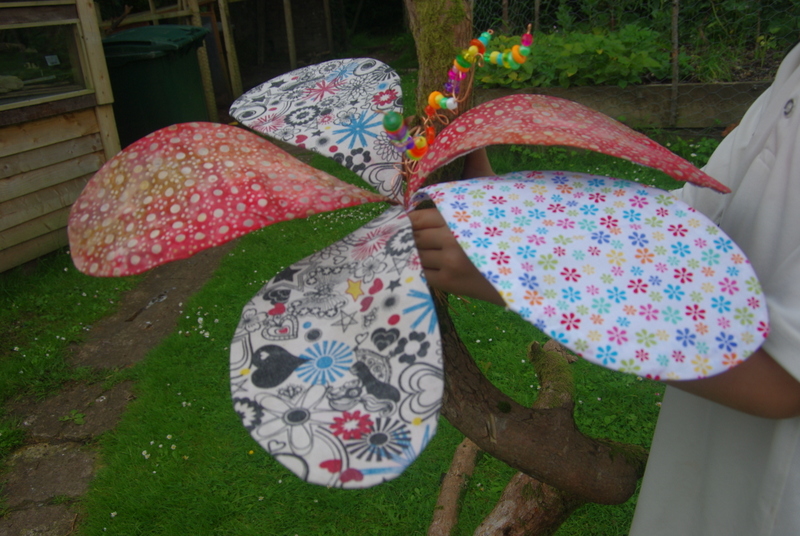
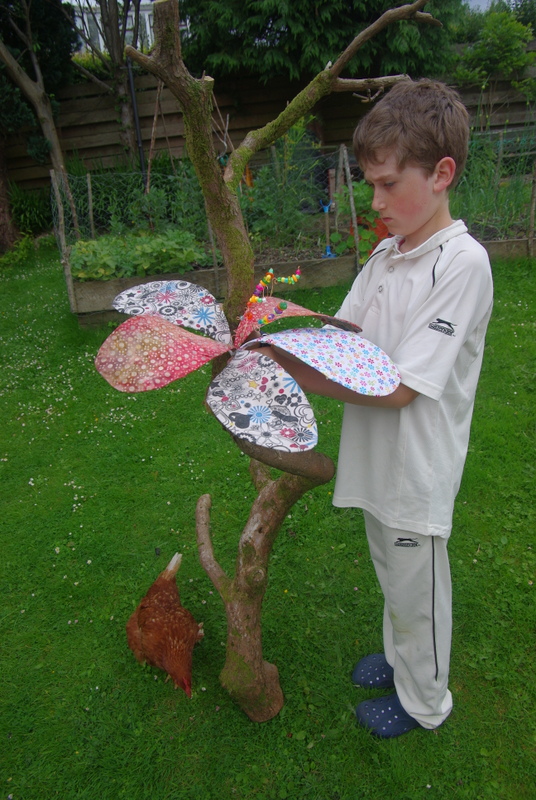
Then there is the work that Pauline has done in designing some ‘flowers’ that will be attached to another piece of wood to represent ‘forest’. They look great- better than I had imagined they could be. Here is the prototype along with William for scale;

Making missional community…

Image

We have been away for a couple of days in England, visiting our old church, Calvary Christian Fellowship, near Preston. It has been a glorious spring weekend, full of sunshine, hazy blue skies and green shoots everywhere.

All of which felt very appropriate as we were asked to come to talk to CCF about our experience of the process of making small ‘missional’ communities. They are in the process of trying to change the structure and focus of their organisation towards a collection of such groups. It seems to me to be a very interesting and potentially difficult process- akin to turning around a large oil tanker on a lake, but if anyone can do it I think they can.

Michaela and I did a bit of a double act- I spoke a lot about the thinking behind some of the changes that we have been through, and she described the actual practical experiences. In between we showed photographs, did some activities, and we used a large double sided loom to weave together the names of our community- something that Aoradh first developed for Greenbelt Festival. It has since been used at a few different events up and down the country.

What is created is this lovely thing, messy and rough around the edges, interconnected and full of humanity. We think it is rather a good analogy for the making of community…

Image

It is 10 years since we moved away from CCF up to Scotland. For us this trip was a chance to take stock for ourselves as to the journey we have made. There have been challenges and times of real hardship, but also very great blessings.

This morning, Michaela and I have both taken a day off, which is fortunate as we are both exhausted. We came back to Dunoon on the last (midnight) ferry yesterday.

One of the things we tried to speak about with clarity is the question of what community (or church) is FOR.  It is easy for our groups and activities to become all about OUR needs, OUR spirituality, OUR comfort zones. God might then be adopted as some kind of benign mascot. I think the primary way we avoid this is to constantly make community a place of sending, as well as gathering. Hence, we used this poem;

There is a time for all things under heaven

A time for the sent  ones of God

To follow the rough roads

Into the barren broken places

To look for the marks left by Jesus

On the soft tissue and brittle bones

Of the Imago Dei

The stinking, wretched

Image bearers of the Living God

.

Time for the insurgency of God

To follow the mission

Into the hostile places

To seek out the secret stains left by the love

That was woven  into the very core

Of the Imago Christi

The failing, faithless

Manifest images of the Christ

.

Time for the dancers of the new Kingdom dance

To look for the music of Jesus

Amid the static and street noise

Tuning to the high fluting fragile sound

Vibrant and resonant;

To the gracenotes made there by Spiritus Sanctus

We, the discordant, cursing and gossiping

Vessels of the Spirit of the Living God

.

Time for the revolutionaries of God

To follow the long hard march

Unyoked and with easy burdens

Looking for the soft places where people are

Where freedom flickers, where hopes soar

To seek out the Participatio Christi

With weak but willing hands and sore feet

Learning to partake in the labours of love

For now is the time for holy huddles to scatter

On the winds of the Spirit

From ‘Listing’, available from Proost.

The bowl…

My mate Simon and I went for a pint the other day, which is actually something I do fairly infrequently these days as there is usually something that gets in the way.

The simple act of a pint or two and a table to sit and talk around has been about as close as most of we blokes get to a deep spiritual discussion – although this too seems to be a practice that is dying. Pubs here can not make a living unless they convert to restaurants. As we all know, this is not a sign of people drinking less but is more to do with the availability of cheap booze for consumption in our private spaces.

Anyway, the reason I mention this is because Simon and I were talking about our community (Aoradh) during our trip to the pub. We are thinking about offering a session to Greenbelt Festival in the ‘talks’ category under the strapline of something like ‘Don’t do it like us’.

All of these buzz words that have been applied to communities like ours in the wake of what we used to call ’emerging church’- alternative worship community, missional community, new monastic community. They all feel slightly pretentious and self serving to be honest. It feels like these labels belong to others in an urban context – trendy people who have big glasses, sharp haircuts and jeans with a baggy gusset that hangs to the knee.

Yet Aoradh has now been around for almost 6 years. It has developed and changed, stumbled then got up again, and we continue to experiment with a form of faith community fairly rare (as far as we are able to understand) certainly in the Scottish context.

Something that Simon said the other day in the pub has stuck with me. As we tried to map what we were and what we have become, he said something like this;

“We are an unhealed community.”

Simon was thinking about the people in our group who have serious illnesses, and the fact that our life of faith has to contain the awareness of sickness, brokenness and imperfection.

As I have thought about this, it seemed  important. It is not that our group is characterised by sickness – far from it –  but rather that we all have to live with the idea of a God who is real in the ordinary. A God who is not a magic talisman of success, but rather walks with us through the difficult times too.

There is also within this a challenge for faith- because we are  forced to confront the idea of a God-who-does-not-heal. A God who abides within brokenness, and lives within the uneasy question and the honest doubt.

Or even more challenging- a God-who-heals-sometimes, and some people. But not me.

My Michaela had a long term incurable illness (Ulcerative Collitis) that affected her from the age of 14 until 34, when all symptoms abruptly disappeared.  It is an open question and a grateful acceptance all wrapped up together.

All of which leads me to the Bowl.

In the recent winter storms, an old tree at the bottom of our garden was blown down, unfortunately into our neighbours garden;

A friend of ours was borrowing my chainsaw (through our local ‘timebank‘), as he is a wood turner, and I mentioned some pieces of wood from this tree. Some of it was dried already by age and the effect of the ivy that had dried out and hardened the wood. When he heard this he was excited.

Peter took the wood and promised a bowl for us out of it.

Amazingly, later that same day, he turned up, with this-

It is a lovely thing. A tree from our own garden, grown over who knows how many years, then spelted with sickness and disease before finally being broken by a storm.

Transformed by the craftsman.

Not healed or restored, but shaped and made beautiful.

Carved into the shape of service and hospitality.

As good an image for the hopes of community as anything else I can come up with…