
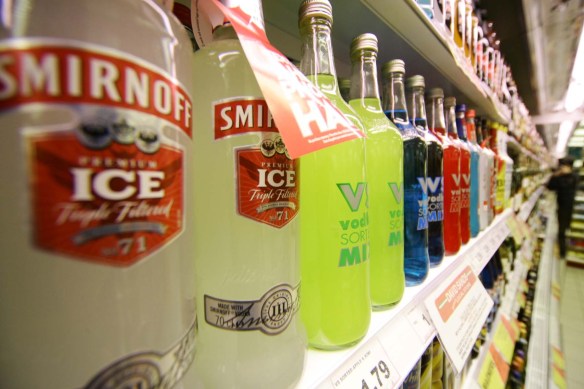
As someone who works in social care and mental health, I have a particular interest in the effects of alcohol on the lives of individuals and wider communities. A recent draft policy document I was reading suggested that people whose lives were directly threatened by addiction may well be referred to community mental health teams for emergency intervention. This was of some immediate concern as I manage some of these teams, and resources/skills/training to meaningfully engage with trying to help people at a point of life such as this have not been discussed as yet- although it is already a major part of what we try to do.
I am also a director of a addictions charity, providing counselling and support, employment advice and links to other health care and rehabilitation. It is a good organisation, but there is always the perception that we can only do so much, for some people.
The recent news about alcohol related deaths in Scotland is staggering. A recent NHS study took a long hard look at death rates from statistics collected in 2003, and examined the root cause of death of people from cancer, liver failure, as well as serious accidents and mishaps. Their conclusion was that one in 20 people in Scotland die as a direct result of alcohol- roughly twice the previous assumed rate. Check out the story from the Herald here, or from the BBC here.
Here are some of the facts-
8 people die every day.
More men than women, and significant amounts of younger adults.
Alcohol accounts for one in four men and one in five women who die between the ages of 35 and 44.
It also accounts for one in twenty hospital admissions- 41,400 in 2003. Goodness knows what the cost of this care was in terms of lives shattered, employment lost and taxes spent.
Scots spend £5 billion each year on booze.
Deaths have doubled in the last 15 years.
Co-incidentally, the amount we drink has also doubled.
Prices of alcohol have plummeted. (70% more affordable than in 1980.)
Scotland has the eighth highest consumption rate in the world.
Compared with the latest figures compiled by the World Health Organisation (WHO), the Scottish Government said this would place Scotland as having the eighth highest pure alcohol consumption level.
This put the country behind Luxembourg (15.6 litres per capita), Ireland (13.7 litres), Hungary (13.6 litres), Moldova (13.2 litres), Czech Republic (13.0 litres), Croatia (12.3 litres) and Germany (12.0 litres).
But it put Scotland ahead of Russia – where alcohol-related deaths have cut the average life expectancy for men to 59 – and also the US and China.
What is to be done?
This is certainly no simple issue- but rather a complex socio-economic-sociological one.
For my money (even as someone who enjoys the odd pint, or dram) prices have to go up. High prices =people drink less. It works.
And we need to do everything we can to challenge the drunken-hero-good time girl/boy- morning after war story culture. The getting off your face in order to have fun- seen across class, gender and age barriers in Scotland. Works nights out, birthdays, Saints days, sports events- all are a reason to drink, and to celebrate excess.
And for people caught in addiction- these are not second class citizens who are burden on the health services- characterised as ‘scum’ and ‘neds’. They are you and me- a product of the society that we have created together.
The role of Christians in this issue is interesting. The tradition of evangelical groups who championed the temperance movement as a response to the Victorian concerns about their own alcohol related societal problems is interesting. There are still Christian groups who operate in this tradition- sometimes adding a charismatic fervour to this tradition- for example the Maxie Richards foundation who are active in our area.
I am not convinced that temperance is the answer. But all power to those who try to make a difference. There are many chains that need to be broken…
 this fragile tent