That word- ‘Faith’…

Now faith is confidence in what we hope for and assurance about what we do not see.
Hebrews 11:1-3

I think the word ‘faith’ is one that I overuse.

This is possibly because it can be a rather generous, non-specific word with which to describe personal, private belief. I use it in this way more as a badge of introspective spirituality rather than a declaration of religious conviction.

Because conviction, certainty and clarity of belief have simply never come easy to me. The words of Hebrews above easily rang out as evidence of my failure- my lack of faith. Others seem to have no such spiritual weakness. They are like St Paul. I am like St Thomas.

Today however, an analogy came to me.

I was thinking about another noble human characteristic- courage. Most of my generation have never had their measure of courage tested by war or extreme adversity- but we are all stirred by stories of those who have.

The spitfire pilots of the Battle of Britain who took to the skies against overwhelming odds. The men steeling themselves to climb a wooden ladder to almost certain death as the whistle blew to start an attack in the Somme.

And if these images are a little too martial for your tastes, then we might also mention the man who stood before a line of tanks in Tiananmen Square armed with nothing more than a flower, or those who push themselves beyond the outer limits of human endurance in the high Himalayas, or the polar icecaps.

Some of these people seem to be over blessed with courage. Or perhaps under concerned with fear.

And this courage can be like a force of nature- it can be transformative, inspirational and raise for us an ideal that we can all aspire to. Or at least admire from afar.

At the same time though, this kind of courage can be blind, foolish and self seeking. It can be abused by others (and ourselves) and is easily allied to causes far less noble. In this way, perhaps courage can be dangerous.

And it can also be deceptive- because courage is an entirely subjective experience. Who knows what measure of fear was overcome by the people who achieved such admirable feats in the face of adversity? Were they naive and uninformed? Dulled by some kind of narcotic? Driven by deeper demons?

Or was their courage merely a front- a means to force down the fear, and despite all their lack of confidence and self belief- to press ahead anyhow?

Does this work for you as an analogy of how faith might also be an active force in our lives?

In his book ‘How (not) to speak of God’ (which I loved) Pete Rollins talks about (a)theism. Contained in all our ideas about God is also the fact that what we know is incomplete, imperfect and error strewn. He would contend that the only honest way to approach God is to start from the point of (a)theism- where our theories about God are confronted with our unknowing.

I too have come to believe that belief in God is an amalgam of all these things-

Our faith and our doubt

Our knowledge and our uncertainties

Our crowning confidence and crippling fears about the future

Our theology and the place where theories fail

Our transcendent experiences of the divine and our plunges into Godless darkness

Times of declarative joyful certainty, and nights of lonely doubt

Times when the fragrance of the presence of God hangs in the air, and times when all is meaningless and barren

Times just to hold on to the hem of hope

And after it all, there is still

God.

Holy week- darkness…

So, it is almost Easter.

Last night in housegroup we continued to read and discuss the Gospel of Mark, and by some quirk or accident (or design), we came to Mark 14.

The bit that describes how the  Sanhedrin  gathered together anddecided to kill Jesus, even before Pesach if possible.

In the meantime, Jesus was in Bethany, in the house of Simon the leper. Here he was anointed on the head, probably by Mary, the sister of Martha and Lazarus, with very expensive ointment of spikenard.

Some of the disciples were furious; the oil could have been sold to support the poor.

In this context, Judas went to the Sanhedrin and offered them his support in exchange for money. From this moment on Judas was looking for an opportunity to betray Jesus.

Darkness.

It settled on us as we read. It was tangible.

There is a tradition in the church to mark this darkness by celebrating Tenebrae. A service in which candles are gradually extinguished, and then as the darkness falls, a book is slammed shut. It is the end.

There is this verse in Mark where Jesus predicts the terrible effect the next few says will have on us, his followers- “All of you will have your faith shaken” or as the NIV puts it-

“You will all fall away,” Jesus told them, “for it is written:
” ‘I will strike the shepherd,
and the sheep will be scattered.” (v 27)

Faith and doubt. Doubt and faith. Mingled.

Light gets swallowed in darkness.

For a while.

Post emerging church…

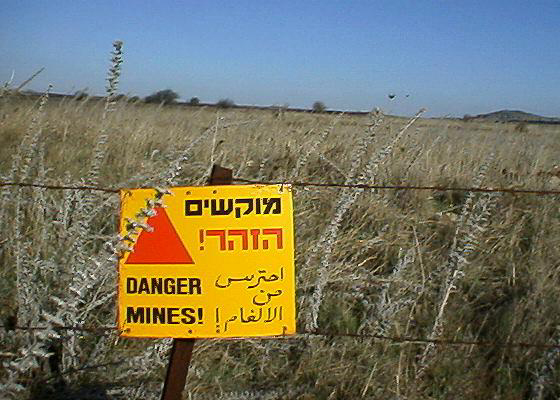
minefield

I have been part of a discussion on the Emerging Scotland Ning site about the challenges facing those of us who are part of the Emerging Church conversation in Scotland. Check it out- but I thought it worth reproducing some of the points here.

One of the bits of the discussion as been about the new boundaries that what ever forms of church that emerge may well face. This list is far from exhaustive, but here are some of the issues that are developing;

SMUGNESS AND ELITISM
I think most radicalism has to deal with this- we tend to think we have it made. And then we realise that we do not, and indeed, other people have been doing the same as us for years!

LACK OF SUPPORT
I first floated the idea of some kind of Emerging Network in Scotland for this very reason. But many of us have a fear of hierarchy and restrictive structure. The model of facilitated network seems an important one.

STYLE OVER SUBSTANCE
I do not care how you worship, where you meet, whether you swing incense or swing your cat. I believe that the time has come to find old and new ways to worship, and engage with passion and creativity- using all the arts, not just guitar driven soft rock!

THE MISSION OF GOD
I grew up with a view of the gospel that I now see as limited. ‘Repent for the Kingdom of God is at hand’ takes me in many new directions, but like you, i am coming to see that the old directions are still valid too- namely saving souls. How we do that is the stuff of much discussion however!

LIMITED PERSPECTIVES
I suppose we need to localise AS WELL as globalise. I need to start with my community, and together we then look outwards first into the locality, and then into the wider world. Limited perspectives, it seems to me, are inevitable. What we need to ask the Spirit of God to show us, is where the bridges are that we can walk on into new places, new ideas. For me, this is exactly what the EC discussion has been so far- but there is so much more!

CONSUMERISM
The spirit of the age? It is certainly an interesting time for capitalist expansionism! A time perhaps for church to raise voices that propose a different way of being. But what this looks like locally is the interesting thing- because it will probably be different for you than for me.

DOUBT
It may not be normal for you- but it is for me. I make this statement not as a theological one, but as an honest starting point. I know people who never appear to doubt. I know others who can not bring themselves to admit this lest the whole edifice of faith comes crashing down. Doubt is not the absence of faith for me, but the place in which it is tested and developed. It is not an either-or, but a both-and. Does this make me a syncretised post-modern? Perhaps, but I have tried the alternative, and it was dishonest. And i suspect that Thomas expressed the opinion of more than just himself when he doubted- and indeed that he continued to vacillate through his life!

THAT ‘POSTMODERN’ word.
It is just a set of lenses to examine stuff with. Limited and incomplete. I think it is a healthy thing to have an understanding of the thinking behind it, but then let us forget about it, and just get on with living and loving!

TRUTH
‘You shall know the truth and the truth shall set you free’. Hmmm. I struggle with this.
Whose truth? What about the Bible and the uses we put the words in it to? Is truth something we take into us a we encounter Jesus through the Spirit?
The nature of truth and the discussion surrounding it could take up this whole site.
Perhaps it should!

POWER/DOCTRINE
I would agree that powerlessness is not necessarily the same thing as having no power- particularly when used as a challenge to the miss-use of power (if you see what i mean!) So the example set by Jesus and followed in Modern times by Ghandi, King etc- was a use of powerlessness, in a powerful way. The problem for me is that the church plays a different kind of power game too often- both politically, and more crucially, in the use of doctrine. All doctrinal statements are incomplete, and may even be wrong. So I am all for doctrines- particularly ones that are anchored to the church fathers- but I still think we should hold them lightly and use them softly. Apart from in application to OURSELVES. Accountable to our community. Accepting that we need to learn, but we also need to start from a firm place. There is that bit in Romans 12 (or is it 13?) about ‘disputable matters’…

INDIVIDUALISTIC FAITH
I think that Christianity without community is not Christlike- but I suppose there have always been others who have followed a different calling- a poles or into caves for example. I also believe strongly in the idea of small theologies, worked out together- that relate to the big theologies, but chew on them within a local expression of faith.
However- the language of church that you use is too much like a triumphalistic version of empire-christianity that i am happy to leave behind! That said, and setting aside my developed prejudices, the very ideas of church as the Bride of Christ also seems to me to be a discussion thread worth starting in it’s very own right…

DISCIPLESHIP

I am sure you are well aware of the mis-use that we have put words like ‘discipleship’ to.
I do not fully agree that the EC is about ‘maturing out’ of Church-  but neither do I accept that the models of church that predominate do not need the challenge of radical outsiders who will plot a different and dangerous path.
This is not necessarily what I feel called to- a have a skew towards the making of safety nets. But I welcome the hope and challenge brought by others.