Starbucks, learning from church??

Terry sent me a link to this- which raised a few painful chuckles.

Painful as it was very familiar!

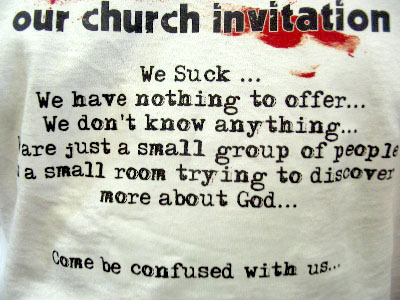
Not quite sure what point they are making though. Is the issue about image and presentation? Do we just need to be hipper and more trendy? I thought this had been tried, and had not worked, at least in the UK. Perhaps we are just not trendy enough? Perhaps we aimed at Starbucks but got stuck somewhere in a 1950’s milk bar?

Perhaps too the church in America is a bit different- they can still count on large numbers of folk who go every Sunday, even though numbers are going down there also.

For my part, I think that church as an institution does need change. But perhaps the real issue is that we Christians need to change the way we live out faith, rather than the way we institutionalise it…

The clip above seems to be challenging the church to market itself better. Is this what we should be about? Sure, I can see the wisdom of being creative and relevant in how engage with the world around us, but I still feel uncomfortable with the idea of ‘church marketing’.

I think this relates to a certain extent to New Labour, and ‘spin’. In 1997, I was euphoric along with many others as the Labour government swept aside the Tories and finally came into government. They had finally found themselves a winning formula that was eminently marketable, just as the Conservatives seemed to degenerate into a sleeze jelly.

But ideology, passion, reality- all seems to have been subordinated to spin. The message was lost in the marketing.

But I also feel a bit uncomfortable with the idea of church as ‘corporation’.

Church is (or I think SHOULD be) a collective of activists, whose rules of engagement are counter cultural, as well as intra cultural. We are called out, to seek and to save. To liberate captives and bring sight where there is blindness.

Marketing techniques, whose aim is to attract more people in, to build up the corporation- nope, not for me I think…

The men who talk too much…

whiskyI met up with a friend this evening who I had not seen for a couple of years. We met at a conference in Holland at which I was leading worship a few years ago. He is a lovely guy with a deep and passionate faith and a restless, driven energy.

It was great to see him again- to hear of his news from Ireland and work in Finland. And so sit in front of a fire with a glass or two of Whisky.

It came to me again how much or paths have taken different directions.

When I met him he was a Charismatic Catholic and I was attending a Baptist Church. He left Catholicism and moved into a Charismatic Evangelical church, and now is in a small house church. His theology is firmly towards Spirit inspiration of the Holy Word of God.

As for me, well I meet with friends in a house, get involved with other things via an arts group and seek wider fellowship with people who have found a place within the ’emerging church’ discussion.

My friend and I, as we have done previously, soon got into deep discussion. Sometimes this conversation verged on argument, but not really- although it was passionate and heart felt. Another friend bowed out early and went home, and Michaela kept out of our way too…

The point of conflict was about the usual things around emerging church- the totemic issue of homosexuality, the way we understand and read the Bible and the issue of ‘Demonic deception’ that began in the roots of the emerging church movement. He had read a book that spelled out the dangerous errors present within and underneath the EC. We could not go into detail, as Michaela was giving him a lift home, and called time at 1 AM.

Is there any point in these conversations? Neither of us was likely to make any major shifts in thinking.

I suppose you could say that they have the effect of rehearsing the arguments, testing the core assumptions and developing a deeper understanding.

But I think they may be also energy sapping and distracting. The EC has not got it all sorted- but then, who has?

Meanwhile, there is the real stuff to get on with- the living and loving and the serving and greeting of old friends.

Church: as garden, park, glen and meadow…

the-church-in-emerging-culture

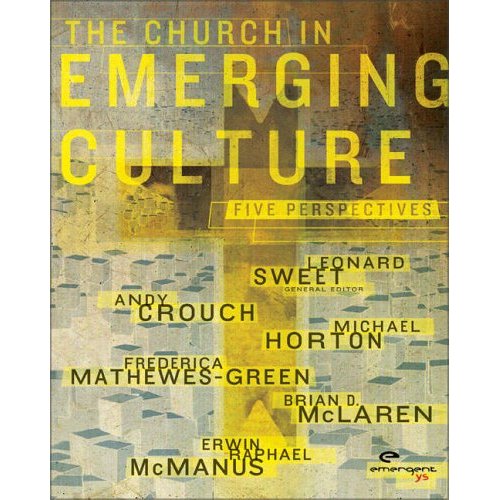
I have been reading this book- ‘The church in emerging culture’, ed Leonard Sweet. It takes a look at where church is up to from 5 perspectives- Andy Crouch, Michael Horton, Fredrica Mathewes-Green, Brian McLaren and Erwin McManus.

I have lost my way with it a little- more because of the format I think. Each person writes a chapter, then the other authors get a chance to put in footnotes and comments. I like the idea, but in practice, it makes for a strange book- lots of the comments are congratulatory, or disagreeing whilst being terribly nice.

However, there is an introduction by Leonard Sweet in which he uses this image to make us think about the different ways of being church. I have simplified (because I had to- the bloke it too clever for me!) the discussion, and reproduce it here.

What do you think? Is this a good analogy?

I suppose the interesting thing is that flowers and fruit grow in all of these places- and they can all be very beautiful…

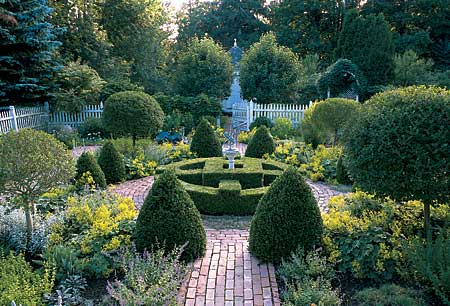
Garden- traditional church?formal-garden

An ‘enclosure’- fenced off enclave of righteousness. Rooted in traditions. Collaboration between divine gardener (God), master gardeners (ministers) and horticulturalists (theologians), along with the canonical seasons.

Fruit and flowers grow and are appreciated.

The outside of the garden is of little concern. The garden is shaped and hallowed.

The garden demands that we walk slowly, prune quickly, earn the flowers by hard work- composting them well with the goodness distilled from previous generations.

Alien seeds are not tolerated. Constant struggle to win back the garden from the encroachment of time and surrounding wilderness.

Park- evangelical church?phoenix-park

Made for walking. Tied together by paths and vistas. Taking the old story of nature, and reforming it in new ways.

Rather than setting up high barriers, the park regulates the space by RULES. It is open to visitors at appointed times and under the supervision of park-keepers.

Technology and innovation are employed in parks- fountains, play areas- things that attract visitors.

The park manager decides which features to include in the park, borrowing from a wide variety of flora and fauna- but does not do so uncritically- always striving to work within the opportunities given by landscape and tradition.

Glen- progressive church?welcome-to-glen-clova-scotland

The glen is an open and unprotected, surrounded by encroaching vegetation and forest.

It is defined by the relationship between landscape and soil fertility that allows settlement. The edges of the glen- its crags and steep slopes, require hard work to navigate. People avoid these places because of the fear of falling.

Glen dwellers revel in the mystery of the seed and season. They travel in packs of people of group consciousness. They are concerned with the cultivation of food from the land to feed the hungry, not about the beauty of gardens and parklands.

In the garden, you are what your parents planted- here, you are what your seeds become…

The people of the glen have to be highly adaptable and innovative to survive. The thin soil easily washes away, and new production methods have to be embraced.

However, in the Glen, tradition is powerful. People are more likely to look backwards than forwards. The reformers often seek to purify what already exists…

The meadow- emerging church?meadow-grass-blue-flowers

A tract of moist grassland where flowers and grasses grow in profusion- all muddled together. There are also boggy places with fragile mosses and lichens. Willows and shrubs also grow there. They just happen. They are not managed by humans. The are rich in botanical (theological) diversity.

They are what first grows after devastation- for example, a forest fire.

Meadows are then inventive, creative and developmental.

The plants that grow in the meadow are intermingled and to some extent dependent. A Flax will never become a meadowsweet, but they will grow side by side. Beauty is evident in each. Fruit grows amid flowers and weeds.

Dwellers in the meadow are not interested in rules or doctrines- but rather in images and relationships and stories that bring people together.

There may be no easy, well trodden paths, but the meadow invites you to run through it bare foot. In this way, every generation can cut its own path. Every generation can turn from a world in which we have tried to garden everything and walk free.

In the meadow, all parties are active, none are passive.

In the meadow, there is a high rate of invention, but a high rate of failure. Plants come for a while, but die away to be replaced by other plants, as the soil conditions and moisture levels change.

God the symmetrical…

symmetry

The other day we Michaela and William were having a discussion about people’s faces- I think they had been drawing faces at school. William was rather astonished that his friend had eyes that were not level- one was higher than the other. His face was not symmetrical.

Michaela suggested to him that everyone’s face was different, and no-one was perfectly symmetrical, and so Will chewed on this for a while and said

“…apart from God’s face. His must be symmetrical.”

Michaela did not know how to respond, and so made a few comments about us being made in the image of God. She later recounted the story to me with a bemused expression on her face.

This kind of left me thinking.

There is something appealing about being able to sketch a predictable, perfect shape out of our knowledge and understandings of God.

For generations people of faith have been trying to do just this. We look at our scriptures and listen to our prophets and from these glimpses of the divine, we fill out a version of God that we cast in concrete and endlessly reproduce.

The image that came into mind when thinking about the concept of a symmetrical God was one of those paper chains that you make by folding paper and cutting it to make a connected chain.

paper-chain

Is it possible that this metaphor works as a way of understanding the process of theological explorations for who God is?

We take the source material- fold it according to our particular perspective, and then make careful symmetrical cuts according to our own understanding- ensuring the inclusion of acceptable texts and that when displayed, all is orderly and connected.

The great age of modernity, with its enlightened gifts of rational systematic analysis, needed a symmetrical God more than most. We needed solid propositional concepts, measured, tested and cross referenced against scripture, which is given unassailable status as Holy, inerrant, the very Words of God.

Increasingly, the modern theological edifices, in all their apparent certainty, are being re-examined by this new generation- in many ways that is what the ’emerging church conversation’ has been all about.

And many of us are no longer interested in Symmetry- at least not as a first priority.

Who says that symmetry is perfect anyway?

Poster-theology.

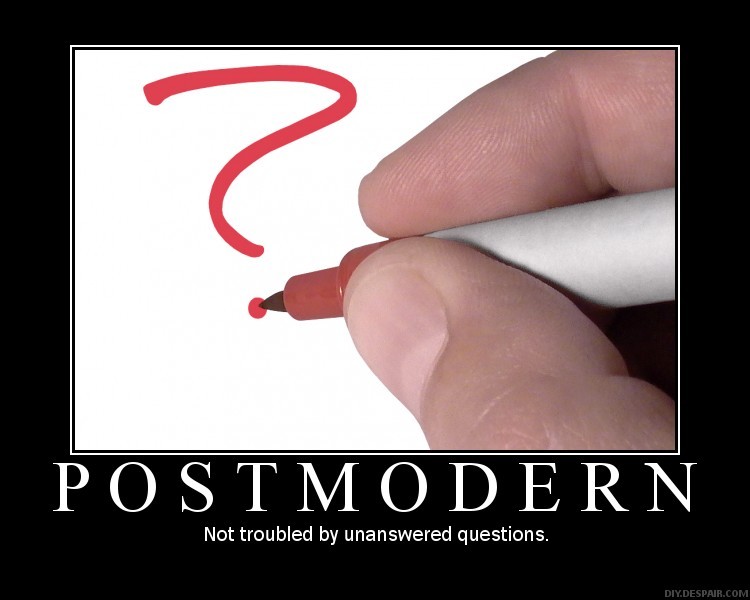
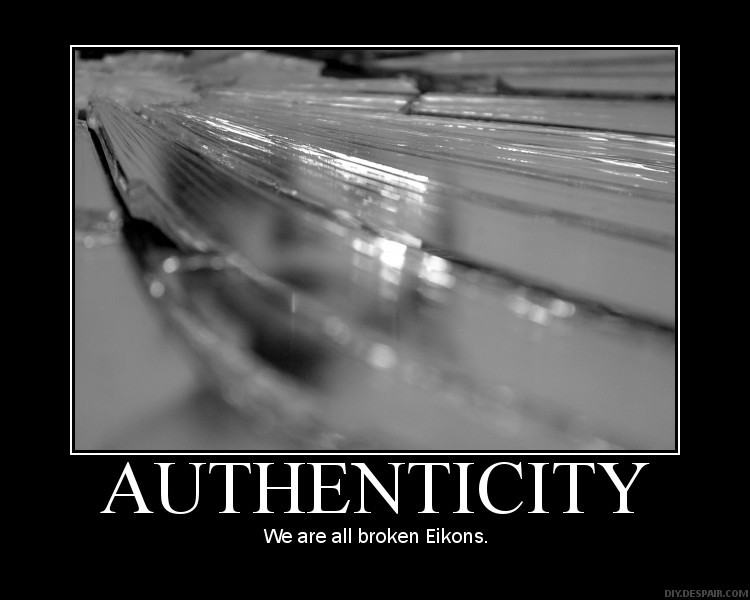
Following up from the poster I used in my earlier post- I thought I would borrow a few more of Katiejen (at Emerging Grace)’s images– cos I like them. Thanks Katie!

I like them because they each capture something of a common journey that many of us have found ourselves on- and because they can be as simple or deep as you want to make them.

And there is the old adage about pictures speaking a thousand words- although I do love words…

(By the way- one word used here is EIKON- which is a lovely word, defined here as- ‘Eikon is the Greek for icon and refers to the visible manifestation of the invisible’

I suppose your reaction to them will depend on that usual combination of personality/thinking style/theological position…

Emerging Church/Missional church network- lets get started!

(Check out this series of posters- here)

I have posted some stuff before on our embryonic Emerging Scotland network (or whatever it comes to be called!) here.

Today I circulated a document as follows- if you want to know more, get in touch!

Emerging Scotland Network… getting things started.

What?

It is clear in my mind that the proposal is for a facilitated network, which imposes few restrictions or obligations on members. We need to decide pretty early on what we would seek to embrace and include. My preference is for a very ‘generous orthodoxy’- and again, this seems to fit in with those who returned the questions.

The object is to support and sustain one another, share ideas, resources and find companionship and encouragement, and there may be grounds for formal/informal mentoring or partnership arrangements.

People may be part of existing church situations in which they are seeking new ways of being or doing, or they might be planting something new- or perhaps just dreaming of doing…

How?

By a variety of means: websites, blogs, on-line networking, but also face to face meetings, retreats, information sharing events etc.

We are clear that the development of a website is a priority, but only to facilitate real human contact! Stewart has a possible way of making this happen- but might appreciate input from anyone who has skills/interest.

Sharing ideas/ skills/ resources – labyrinths, prayer rooms, musicians, poets, and people who know how to support and empower through prayer. Not to forget preachers and evangelists etc etc!

What next?

This is up to you!

Below is a list of dates. Michaela and I will facilitate the first couple to get us started, and then others can take their turn. Please give consideration to whether you could host such an event or meeting!

These meetings will have an open invitation, but for practical purposes, we will need to know numbers in advance…

What will we do at the meetings?

This too is up to you! I suppose it could be a shared coffee, or something more developed?

But I would suggest a combination of the things below-

Ø Business stuff- organisation of the network, ‘leadership’, accountability etc

Ø Creative prayer and worship

Ø A focus on key themes, for example- kids in the new context, the Bible, sectarianism, poverty, worship, rural/remote issues etc

Ø Specific local stuff relevant to the host area.

It might be that if you have an event or activity that coincides with one of these meetings (or we could make fit) then this is an opportunity for people to lend a practical form of support to one another.

So – dates… please put these dates in your diary, and we will try to fill them all… IF PEOPLE WANT TO SUGGEST OTHER DATES, let me know!

Date

Where

What

Facilitators

24th January, 2009

Starbucks,

Borders Bookshop

Glasgow Fort shopping centre

Just off the M8

Glasgow

Meet and share session

A chance to check out the thing a bit closer- and find out more.

Sort out some business issues- fill some dates, and allocate some tasks,

Chris and Michaela Goan

01369 707009

chris@goan.fsnet.co.uk

28th-29th March, 2009

Chris and Michaela’s house

179 Marine Parade

DUNOON

WEEKEND RETREAT/OPEN HOUSE.

A chance to spend some more in-depth time with people, and God. Come for the day, or for the weekend (we have room for quite a few, but obviously first come, first served!)

Kids are welcome, but we need to plan things around them- so let us know!

No cost- but you might need to bring some food along to throw into the communal pot.

This might include- quiet room, walks along the shore, worship sessions, specific group discussion times, sharing meals and sitting round log fires…

Chris and Michaela Goan

01369 707009

chris@goan.fsnet.co.uk

16th May 2009

?

?

?

27th June 2009

?

?

?

12th September 2009

?

?

?

21st November 2009

?

?

?

Chris Goan

14.10.08.

Renovation as a spiritual discipline…

This week I am on annual leave, and am taking the opportunity to do some work on the house.

Our house is old and well lived in so is always in need of renovation and repair. When time, energy and money allows, I will start a project, and work like a slave until it is done. I get stressed as I feel responsible for getting the thing finished.

This time, however, things are different- as I am the understudy to a craftsman.

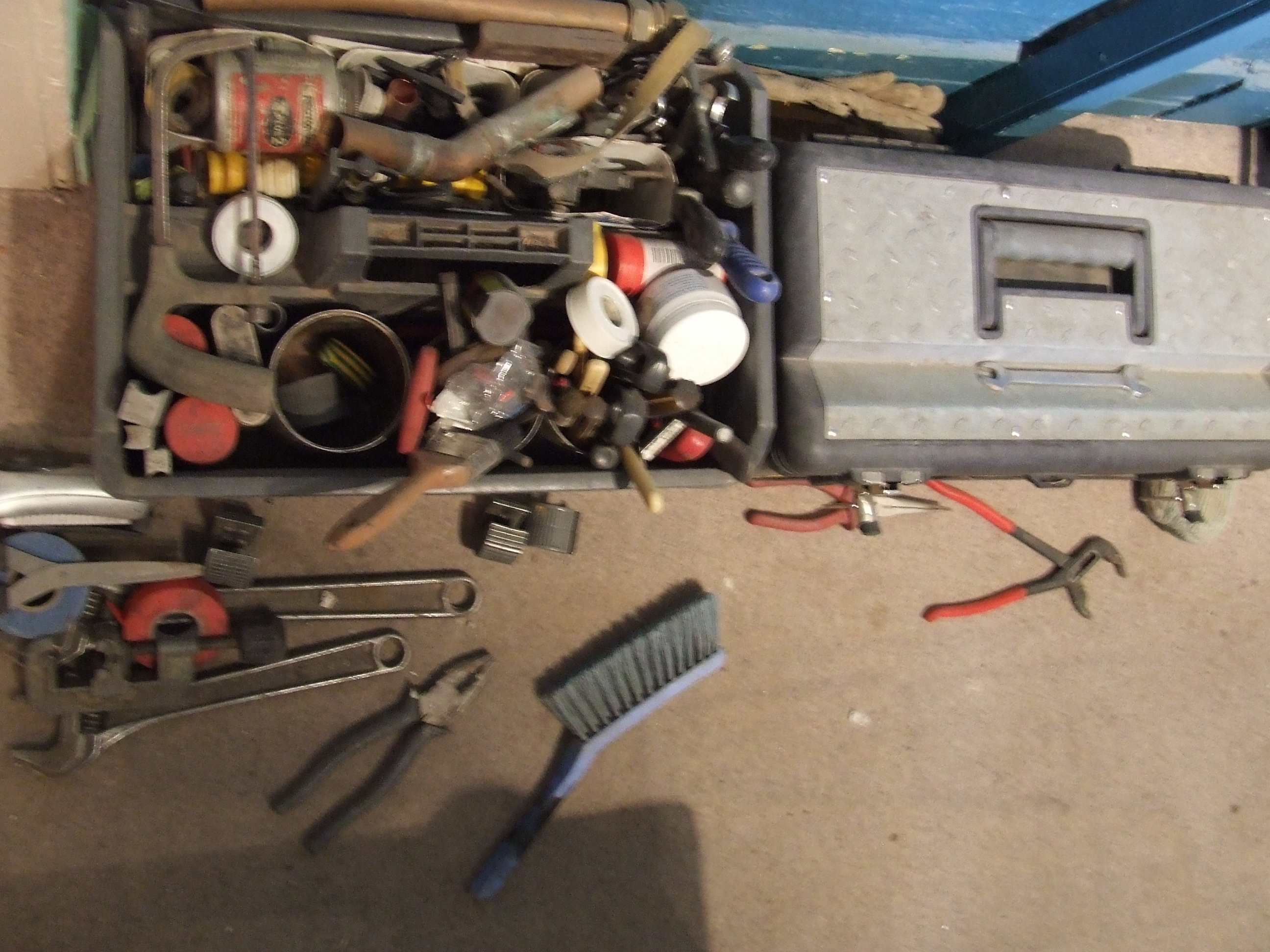
Michaela’s uncle is up here to upgrade the plumbing.  This involves ripping out a massive inefficient old boiler that is asthmatic and rusty, and virtually rebuilding the boiler room around a sleek and compact new model. We will then rip out the old hot water tank, which is surrounded by a network of pipes- many of which are redundant.

What we will be left with is something that still burns the same gas, but quite a bit less of it, and will provide the house with heat and hot water just like the old one- only it will be reliable, and cleaner.

And after a day testing my bad back carrying huge bits of old plumbing, and sawing and drilling, I am tired, but not stressed. I am working with a man who has been a plumber for 40 plus years. There is next to nothing he does not know about pipes and plungers. And he has pride in a job not just done, but well done.

So, this left me thinking…

We, the church, are in need also of constant renovation. Some (perhaps me sometimes) would even wish to demolish and rebuild. Houses are to be lived in, and as we live in them, they become tired and worn. Plumbing leaks and boilers break down.

Technology brings new innovations- new gadgets and household appliances, new ways of using space, and so the building evolves and changes- or it’s value will plummet, and it might find itself only fit for selling on to property developers, or- dereliction and demolition.

But- people still need a roof- a place of warmth and shelter, where family can be nurtured and loved.

So renovation- which is born of hope, nurtured in vision and achieved through hard work, broken finger nails and skinned knuckles.

And as we renovate- how we need to learn under skilled craftsmen- men who need to prove nothing, and take no personal glory from the acts of resurrection they release. Rather the quiet satisfaction of a life lived well.

Leadership in the new context, lessons for post-charismatics…

There are many questions to be asked in the wake of the so called  ‘Lakeland outpouring’. I asked some of them here but I came across the post below on the ‘subversive influence’ blog. Check it out…

Reinterpreting the Lakeland Fallout : Subversive Influence

Because, I very much agree- the issue is not really about Todd Bentley- but it is about leadership. It is about the power and control we give to (or is taken by) Christian leaders- who are seemingly unassailable because they are seen as anointed from on high, and are perhaps supported by the machinery of a spiritual institution that is all powerful, at least to it’s members.

For people like me, who no longer feel inclined to ally myself closely with movements like these, it might be easy to step back into our small groupings and feel all superior. After all, we knew this was going to happen didn’t we?

But we are at a turning point in the history of the Christian Church in the west, at least. The old is shrinking, and the new is… well where exactly?

Is the church emerging? Is something new being built that will become the proclaimers of the Kingdom of God in this new context?

I hope so, but we have a long way to go yet- and it seems to me that like any other human organisation, our new church will experience conflict, broken relationships and lack of clear direction…

Jesus Promised us the Holy Spirit, as comforter and guide. But it seems that he has also always used LEADERS… and  we who have been part of whatever the ’emerging church conversation’ is now going to call itself desperately need leaders.

Brother Maynard said this;

My informal appeal to post-charismatic and missional bloggers for the month of September might be to spend some time thinking and writing on the forms of leadership (apostolic or otherwise) which we need to see in the church today. What characterizes this form of leadership? How do we recognize leaders, and how is their authority derived and exercised?

Well I am a month late- it is now October, but I will belatedly attempt to take up the challenge!

Leaders.

They have to be big strong accomplished and invulnerable don’t they? They have to charismatic and Charismatic, attractive and attractional, visionary and focussed. Leaders are focussed on goals and strategic targets- and the organisation of resources (money and people) towards the achievement of these.

Except I think that this kind of leadership no longer works. It is no longer works for me. It makes me want to walk in another direction. My context is Post-Christian semi-rural Scotland, and our attempts to engage with our neighbours in a place where church has a poor reputation, and for most, little relevance.

Before I go on, I had better describe something of where I live, work and worship…

I live in a small town, but I am still connected to friends who live in urban situations. I am used to management in my working life (which always seems to me to be a very different thing from leadership) and now find myself within a small community with no designated ‘leader’, with all the strengths and weaknesses that this leaves us with.

We are small. We seek to be partners with others, not competitors. Our ambitions are shaped by bringing our limitations and strengths together, offering them to God and asking him to use them. So for us, leadership remains very much like facilitation- taking a loose agenda and encouraging one another to take some risks. The true leaders are those who are prepared to take a slightly larger risk, whilst always seeking to put the love for others before the task at hand…

Tensions are manageable, but painful. People’s commitment to the group is based on relationship, so the very existence of our project demands that we look after one another.

For us, this sort of works- most of the time. I suppose it kind of fits our characters, the context that we have grown out of, and the time and energy our group members have to spare. There is a kind of core group, but a lot of others who are less involved, and might or might not see themselves as ‘members’, but still contribute to and benefit from some of the things we do.

But this kind of absence-of-leadership does not resolve all of the issues. I decided to make a list of leadership issues that apply in my own context. Forgive me if some of these are obvious- but I think that they need to be re-stated.

  1. As things get bigger, they become more complex. Does this mean that things must always be more centalised? Does the imagery of industrial or military command structures really ever fit a church context, or should leadership be best understood as a supportive network– where the comparisons are better made with web-based networking or discussion sites like Facebook or Wikiedia? Here, the issue is not control- although subscribers might have to agree to a degree of regulation. Rather it is a network based on trust and mutual commitment. LEADERSHIP in such a network seems to require a whole different set of skills- the maintenance of good communication, facilitation, ‘framing’ discussions and issues to allow others to engage and respond, providing opportunities for engagement- but not removing responsibility or using power.
  2. But power always remains an issue? There will always be power differentials. Some will always have more to say, more influence and more abilities etc. Does there need to be a way of balancing this- sharing it out? Whilst democracy might not be the aim, methods of engaging and making sure that the voices of the marginalised are moved to the centre also require leadership.
  3. We all need people to look up to. This may not always be healthy, as unrealistic expectations on both sides can emerge- but it seems to me that this network will form around people who others look to with respect. They in turn will look to others who they respect. The danger is that this system throws up more hierarchies- more Todd Bentley’s. We need to have a way of celebrating gifted individuals, whilst making sure that their giftings are not overvalued.
  4. We all need a hand on our shoulder sometimes. Finding sypathetic and understanding mentors in this network can be hard. Without mentoring, how do people grow into the new spaces that church is moving into? How are they held accountable? How is gifting recognised and encouraged?
  5. We all need to see the bigger picture. Housegroups are great, but most of us also love to meet in a larger group- to make some more noise at times, and feel part of something bigger. Internet connections are no substitute for human ones. To bring people together requires organisation. Organisations need to be led.
  6. Women, minority groups etc. can no longer be excluded, and must be encouraged. For too long, the white, male, middle class church professional has been centre stage. It’s time to share.
  7. Authority, orthodoxy and mission statements- these are corporate words, not Kingdom ones. In a network, these will still be important- but should be decentralised. People should be encouraged to work out their own understandings, within practice, not within the academy, or even the blogosphere! There might be some room for ‘big theology‘- but it should be general, and generous. The emphasis should be on ‘small theology’ (Karen Ward’s words not mine) worked out in community. Lets agree that we will disagree on much, but share most. There will always be a difference between broad PRINCIPLES and POWER STATEMENTS that rely on expert interpretations.
  8. Leadership should be judged by servanthood, not by status. Easily said, I know. But there are some things that can be done to encourage this- make some leadership positions time limited perhaps.
  9. People are always more important than projects. That is not to say that we should avoid doing stuff if it upsets people- but that we should get that 1 Corinthians 13 stuff out as a set of goggles through which we examine our programmes, lest they become resounding gongs.
  10. The roles of apostles ( and the other 5-fold ministries)? How does someone come to be called an apostle? I think that this is not a title, but a role performed by a very few- whose influence is recognised over a long period of time. These people have great responsibility, but will always be fallible and human. Let us never pretend they are super-Christians- in fact some of them will be super-human (in the sense of being all the more connected with their humanity). As for the other ministries- i wonder whether we should keep the focus LOCAL, and measure it in COMMUNITY…

I think that is enough for now…

Check out also this really interesting series by futurist guy that begins here

Blogged with the Flock Browser

Emerging church- a review from the blogosphere…

Well, it had to happen.

The emerging church is no longer ‘the new thing’. In fact it might well now be the old thing.

Does that mean that we have now emerged, and so do not need the label or the ‘conversation’ any more?

Here are some links to blogs that wrestle with this issue- if you are interested in this issue, then these guys are well worth reading;

Jason Clark blogging at deep church

tallskinnykiwi

Scott McKnight

I have posted two earlier discussions in this vein too- here and here

So what do you think? Has the term become a liability- something to be defended, but useless as point of definition?

If so, why do I feel a sense of loss?

I think, for me, it has been a useful portal to a whole set of thoughts, challenges and concepts that have turned me upside down, but have been a real blessing in my life, and in people all around me.

It has also been a way that our small and isolated group could reach out to people in the wider world,and find support and common understanding. Does our planned but as yet unrealised) ‘Emerging Scotland Network’ (see here) need a new name even before it begins?

And if the label is dead- what next? The emerged church? The missional church? The new monastics of Dunoon/Watford/Wherever?

I suppose in others, I still wonder if this is a movement towards something, or away from something else? And whilst the journey may be life long, then there are still fellow travelers, and way side inns- otherwise who will survive the journey?

In my self, I just kind of feel that I have lost a lifeboat, and it’s back to swimming again.

So I will use the term for a little longer… how about you?

constructing amongst the deconstructors…

There are lots of concepts and key words that have been reference points for those of us who have been following this emerging church ‘conversation’…

Post-Christendom.

Post-Charismatic.

Post-Evangelical.

Post-modernism.

We live in world in flux. The personal angst seen in the popular culture of the sixties and seventies has found its way into the very structure of our society, and into our institutions. Everything is now questionable, everything is old and tired and broken down…

Another word we hear a lot is deconstructionism, a philosophical term first used by Jacques Derrida in the 1960s- who began to form a method of thinking about concepts that allowed him to get behind the assumptions and rationalisations that the modern world operated under. You can check out what wikepedia has to say about this stuff here.

I like this quote from John Caputo;

Whenever deconstruction finds a nutshell — a secure axiom or a pithy maxim — the very idea is to crack it open and disturb this tranquility.

The suggestion for we Christians is that not only are our institutions based on a whole set of modernist assumptions that are being challenged, but that the world we serve is likewise deconstructing itself about us, and we ignore this at our peril…

But here is another quote, culled from a useful article (here) by Alistair MacIndoe, from the Rock Church in Dumbarton.

And how long must it be before we learn that our task as Christians is to be in the front row of
constructing the post‐postmodern world? The individual existential angst of the 1960s has
become the corporate and cultural angst of the 1990s. What is the Christian answer to it? The
Christian answer is the love of God, which goes through death and out the other side. What is
missing from the postmodern equation is, of course, love.’
N.T. Wright 1

We Emerging types have used too many destructive words- perhaps even relished them, and the feelings of superiority this has given us.

But now the real work begins- the purpose that God gave was to go and tell people about Jesus- and (to paraphrase Francis of Asisi) if necessary, use words…

How we do this- how we start to tell again the stories of Jesus, and turn people again towards his beautiful way of living in these our complex times- this is for me to work out, with my community. So we turn to that other buzz-word at the moment-

Missional.

But, I am convinced that God is creative, and seeks to make and remake, not to break down and destroy. And so for we, his servants, it seems clear that we should start the spiritual cement mixers, and fire up the brick kilns. Busy times are ahead.