Over on proost.community, the lent collaboration continues- an invitation for creatives of all disciplines to share some of their work in order to mark, celebrate, protest, pray, engage with meaning as this season unfolds.
I have just listened to the whole (superb) album, wondering again how we allowed this history to be almost erased in the overwhelming telling of the story of the war in Gaza.
As Jonny asks below – who is the terrorist? What does this word even mean in an age in which terror is edited out by an AI interface, whilst simultaneously being used as a justification for genocide?
There is another way, but it requires peaceful, determinded, creative confrontation with Empire. We are grateful that art provides a means for us to do this.
Backbone was an album recorded by me (Jonny Baker) and Jon Birch after I had been on a trip to visit Israel/Palestine with Amos Trust in 1998. It was a protest album really with a mix of anger, lament and a tinge of hope telling stories of what I had witnessed. Since the Hamas attack in October 2023 and the completely disproportionate razing of Gaza to the ground and the genocide of its people, we have both watched with horror both at what has unfolded and the complete lack of intervention by the international community. Those songs we wrote back then have been on both our minds and seem sadly poignant now. So Jon has stripped back the album and completely remixed and remastered the whole thing. It stands the test of time we think but is much better sounding. We have set up a Jonnys in the Basement band camp page (jonnysinthebasement.bandcamp.com) and would love you to go and have a listen – see what you think. Do buy the album or make a donation – every single penny will go to Amos Trust for their work in Gaza.
This video of me doing an acoustic version of Terrorist was me incensed at the American and Israel bombing of Iran and the disgusting rhetoric about Epic Fury whilst wearing baseball hats sounding like teenagers playing video games. No mandate from the American people, no international mandate. Just the violence of Empire.
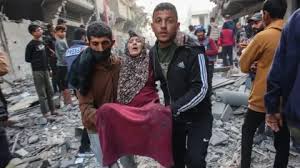
The background to this advent is horror in the holy land. We all know this, but it has become almost impossible to talk about freely. Even the words we use to describe what is happening in Gaza (not to mention the West Bank and Lebanon) are contested.
Genocide.
Aparthheid.
Terrorism.
Antisemitism.
In part this appears a deliberate consequence of the propoganda war, but it leaves many of us exposed, angry and fearful. The internet algorythm then plays the polarisation game and we find ourselves divided against each other, each with a different version of the ‘truth’.
There are sensitivities here that we have to acknowledge – the terrible history of the Jewish people and the horrific attack that was the catalyst to this event, but we now must call the Israeli military response what it is – the most brutal attack on an urban population in modern history, desctived as genocidal by the International Criminal Court.
There is no equivalence here, no proportionate response. It is violence unleashed, and almost 70% of those killed have been women and children. There is no justification for this kind of slaughter.
Amnesty International agrees. The 297 page report makes for harrowing reading.
“Our damning findings must serve as a wake-up call to the international community: this is genocide. It must stop now.”
– Agnès Callamard, Amnesty International
They are in no doubt what needs to happen.
Meanwhile the rest of us feel powerless, or complicit even. After all, our government continues to offer broad and unflinching support to a regime that is infliciting unimaginable suffering on a whole people. Hundreds of companies in the UK make items used by the Israeli war machines. Our media is oddly compliant, despite the exclusion of journalists from the war zone and the 146 journalists and media workers killed by Israeli bombs.
This powerlessness impacts us like a moral injury – it becomes an unresolvable cognitive dissonance which means that most of us have to just switch off to it all, because what else can we do?
Many, including many of our friends, caution us against outright opposition to Israel’s genocide. After all, do they not have a right to defend themselves? It all seems so complicated, so let us just offer up prayers for peace and leave it to higher powers to sort out. But there is no peace in light of such on-going brutality, and there can be no peace without justice, without restoration and a rolling back of the violent jugernaut that has been cruhing the Palestinian people for so long.
Thoughts and prayers are not enough.
A few weeks ago, Michaela and I joined an Iona Community zoom call to hear from a man who had lost 19 members of his family to a bomb strike in Gaza. He has know idea why they were targeted, but it may be because he is a journalist. One of the participants in the call started to offer words of compassion, but he stopped them.
I don’t want your sympathy, he said. It means nothing to me. I don’t know you and you don’t know me. I just need you to do something.
This stayed with us for weeks. But what could we do? How can any of us respond to what is going on?
We tried informing ourselves- finding out as much as we could about the history, from the mess the British left after they left and the massacres of 1948 right through to all those himan rights violations followed by the ebb and flow of violence and counter-violence.
We noted in particular the role played by Christians in this mess – how Christian Zionists seem to outnumber Jewish ones for instance, and the hold that a certain myth of Israeli ‘specialness’ has even within mainstream churches, which blinds us to so much brutality. If you want to know what this looks like in the West Bank for example, listen to this…
We looked to see if we could support organisions working for peace like the Amos trust because perhaps getting money into the right hands is the answer… how much it is needed after all!
Then Michaela woke up with an idea in her head.
What if we could put something in the hands of the CEOs and politicians that have power and influence. Something simple but beautiful.
An object of meaning that they had to choose to either keep or throw away.
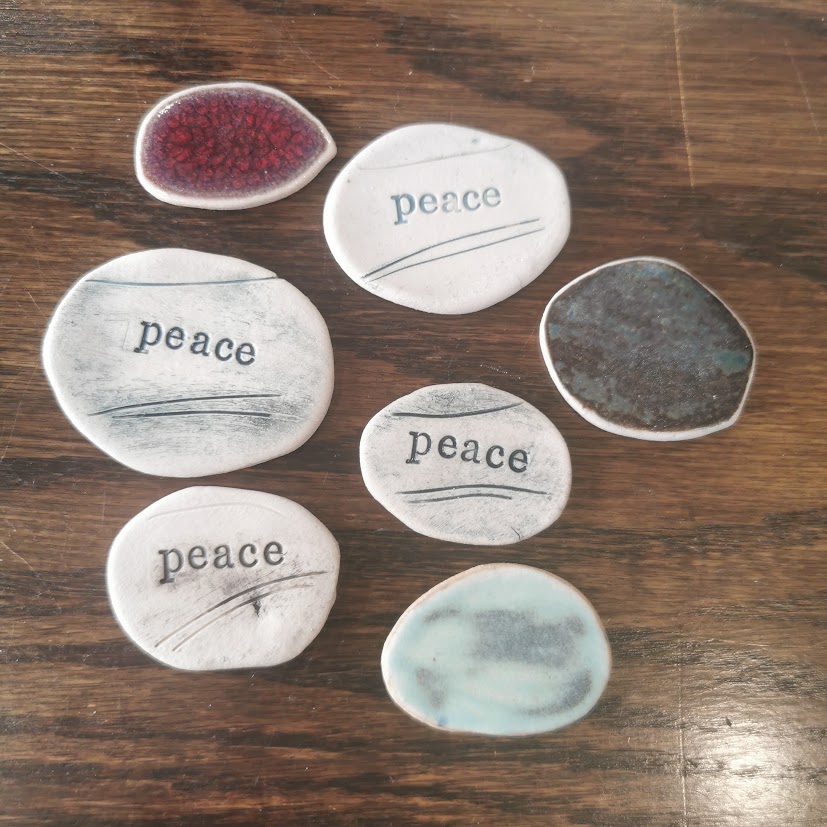
So far she has made 413 of these ceramic stoneware pebbles, with a glaze on one side and the word peace on the other.
Friends have helped with the making and glazing, and we intend to post them out to CEOs of UK companies who make items used in the Israeli war machine, and to our politicians and to those conpanies on the boycott list who support the Israeli government or military financially.
We are calling them pebbles of peace.
Want to get involved?
Each envelope will cost around £1.50 to post. Already we have posted out about 300, and these costs have been covered by a community of people who have chipped in to add their voice to the outrage. There are still a couple of hundred to go (we will fire another batch in the kiln in a week or so) so it you want to help out, either by supporting some postage, or even by taking a batch and posting them yourselves, then let me know.
We wrote this to go along with the pebbles.
Pebbles of peace
We are a group of friends longing for peace in the middle east. We represent no big organisation or interest other than that of our own.
We feel overwhelmed by the scale of the hurt and pain being caused by the war – on all sides. The thousands of dead children and the hundreds of thousands whose bodies will carry wounds in body and soul for generations to come.
When will it stop? Who will be the peace makers?
We think that change happens through brave people like you making hard decisions towards peace, even at personal and collective cost.
We send you this little token of peace and invite you to pick it up.
What you do with it is up to you.
You can keep it…. or throw it away.
If you keep it, our hope is that you will be doing so as a commitment towards using whatever power or influence you have – big or small – to make peace.
We know these things are complicated, so we make no other request.
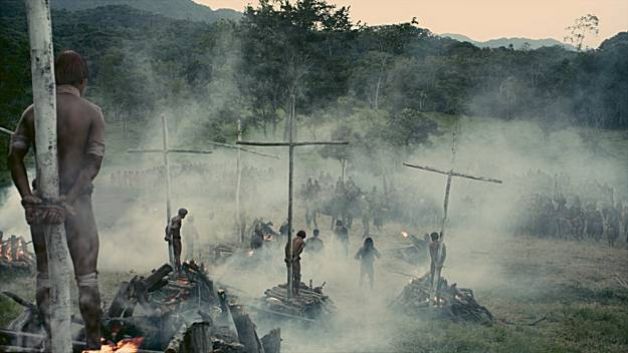
I watched a lovely film the other night- a Spanish language film called Even The Rain.
A Spanish film crew helmed by idealistic director Sebastian (Gael García Bernal) and his cynical producer Costa (Luis Tosar) come to Bolivia to make a revisionist epic about the conquest of Latin America – on the cheap. Carlos Aduviri is dynamic as “Daniel,” a local cast as a 16th century native in the film within a film. When the make-up and loin cloth come off, Daniel sails into action protesting his community’s deprivation of water at the hands of multi-national corporations.
When riots break out in Cochabamba, protesting excessive fees for water, production is interrupted and the convictions of the crew members are challenged. Sebastian and Costa are forced to make an unexpected emotional journey in opposite directions.
It may sound a bit ‘worthy’, but it was very well made, well acted, and full of sharp irony. The crew were fired up by the injustice and genocide waged on the indigenous people of the new world by the Conquistadors, but found the modern day equivalent injustice inflicted by poverty and multinational corporations almost invisible.
I confess I had never heard of him. I have been fascinated (and horrified) by how the conquerors of the New World were able to believe that they were doing God’s work as the slaughtered and plundered in the name of the Holy Empire. It is refreshing and inspiring to discover a man of God who called it for what it was.
Arriving as one of the first settlers in the New World he participated in, and was eventually compelled to oppose the atrocities committed against the Native Americansby the Spanish colonists. In 1515, he reformed his views, gave up his Indian slaves and encomienda, and advocated, before King Charles V, Holy Roman Emperor, on behalf of rights for the natives. In his early writings, he advocated the use of African slaves instead of Natives in the West-Indian colonies; consequently, criticisms have been leveled at him as being partly responsible for the beginning of the Transatlantic slave trade. Later in life, he retracted those early views as he came to see all forms of slavery as equally wrong…
Bartolomé de las Casas spent 50 years of his life actively fighting slavery and the violent colonial abuse of indigenous peoples, especially by trying to convince the Spanish court to adopt a more humane policy of colonization. And although he failed to save the indigenous peoples of the Western Indies, his efforts resulted in several improvements in the legal status of the natives, and in an increased colonial focus on the ethics of colonialism. Las Casas is often seen as one of the first advocates for universal human rights
Don’t forget that all this was taking place 200 years before Wilberforce, our great protestant anti slavery hero.
Neither was Casas alone.
In September 1510, a group of Dominican friars arrived in Santo Domingo led by Pedro de Córdoba; appalled by the injustices they saw committed by the slaveowners against the Indians, they decided to deny slave owners the right to confession. Las Casas was among those denied confession for this reason.[14] In December 1511, a Dominican preacher Father Fray Antonio de Montesinos preached a fiery sermon that implicated the colonists in the genocide of the native peoples. He is said to have preached, “Tell me by what right of justice do you hold these Indians in such a cruel and horrible servitude? On what authority have you waged such detestable wars against these people who dealt quietly and peacefully on their own lands? Wars in which you have destroyed such an infinite number of them by homicides and slaughters never heard of before. Why do you keep them so oppressed and exhausted, without giving them enough to eat or curing them of the sicknesses they incur from the excessive labor you give them, and they die, or rather you kill them, in order to extract and acquire gold every day.”
These men were serving the Kingdom of God in the shadow of the Empire, and for this we can call them Heroes.



 this fragile tent