You can find echoes of the same idea written many hundreds of years before by the prophet Isiaiah. Behold, I am doing a new thing; now it springs forth, do you not perceive it? I will make a way in the wilderness and rivers in the desert.
For some reason, this sentence always pokes me in the heart, right where I hope from. It has often come to me with tears. It was out of this place that I wrote this poem…
The great Becoming
.
How small we made you.
How constrained by our constraints;
We wore you like a lapel badge,
Pocketed you like a personal passport, then
Raised you at our borders like a flag.
We locked you in the pages of
Our Book, then threw away the key.
.
But how we worshipped you.
How we pointed at you with steeples.
You asked us to follow you, to
Give away our second shirts, but instead
We made a million icons, each one framed in gold.
We swayed and raised our egos, singing love songs-
Not to you, but to idealised versions of ourselves.
.
How is it that still, you love things by becoming them?
How was it that this brown-skinned man with the heart of a woman
Took upon herself another name for everything, so we could
Encounter her in all these beautiful things and bleed with her when she
Lies broken? And just when all seems lost, she whispers still;
See, I am making all things new.
Even you.
I think that when I first read these words, I saw them (or they were described to me as) the description of a one-off event – most likely a supernatural Jesus event – or prehaps an individualised thing done by our own personal Jesus. It may well refer to both of these things, or it might mean something… bigger.
What if this is a constant kind of ‘being made new’?
Rather than describing a divine rescue plan for a chosen few, what if it is the description of a great cosmic unfolding that began with an explosion of love so powerful that nothing can stop it from reaching outwards, and continues on and on not just through history, but through each and every one of us, every bade of grass, every living and love-made thing?
An unfolding that can be sensed in the kindness of strangers, the flow of water or the feeling we get in the pit of our stomachs when we stare up at stars…
We celebrate the Cosmic Christ, the God who loves things by becoming them (with a nod to the writings of Richard Rohr and his grounding in the Fransican tradition.) Christ might also be a word which means ‘another name for everything’.
Christ the substance through which all things have their being. S/he might be understood as the shared am-ness of all things. Through Christ we are interwoven and connected to all created things both human and non-human. Through Christ we are drawn to be lovers of the earth not because we are ascendent, but because we are included and interdependent.
Learning from the Celtic tradition, this same Christ is the very ground of our being, the truest deepest part of our personhood and our shared humanity. Sin is that which prevents us from being our truest selves, and this can be seen both in our individual lives and our collective brokenness.
This might mean that we discover Christ in our own souls not by addition, but by subtraction (with a nod to the wisdom of Meister Eckhart) by finding our way through all the mess, trauma and bad choices through to what was there all along, waiting for rediscovery and re-connection.
Remarkably, the story of Jesus (the historical Christ rather than the Cosmic Christ) suggests that god has been revealed not only through nature (the first incarnation) but through taking on flesh (the second incarnation) The life and death of Jesus is a deep call towards sacrificial love towards our human and non-human neighbours.
Christ taught a gospel of grace, in which we remember that the god who is the light behind our light and the soul within our souls knows our woundedness, and waits for us to journey towards her. A Christ who no longer is the deserter of earth, but an example of its greatest lover. A Jesus who is no longer a supra-human ‘other’, but rather one of ‘us’.
After the Celtic tradition, we seek to take our place in world where nature is the gift of being, but grace is the gift of wellbeing.
In other words, we enter the Kingdom of God (which the historical Jesus called us to take our part within) is way to describe a non-dual, engaged way to collaborate in the service of healing, peace-making and acts of love towards the world, with a particular emphasis on those parts of the human and non-human world that are broken, enslaved, endangered or subject to injustice.
So far, in terms of trying to uncover an origin story, perhaps it is. In future posts, I hope to turn again to examining the degree to which this story might influence our practices, our ways of worship and our organisational structures- following the narrative logic that it might suggest to us.
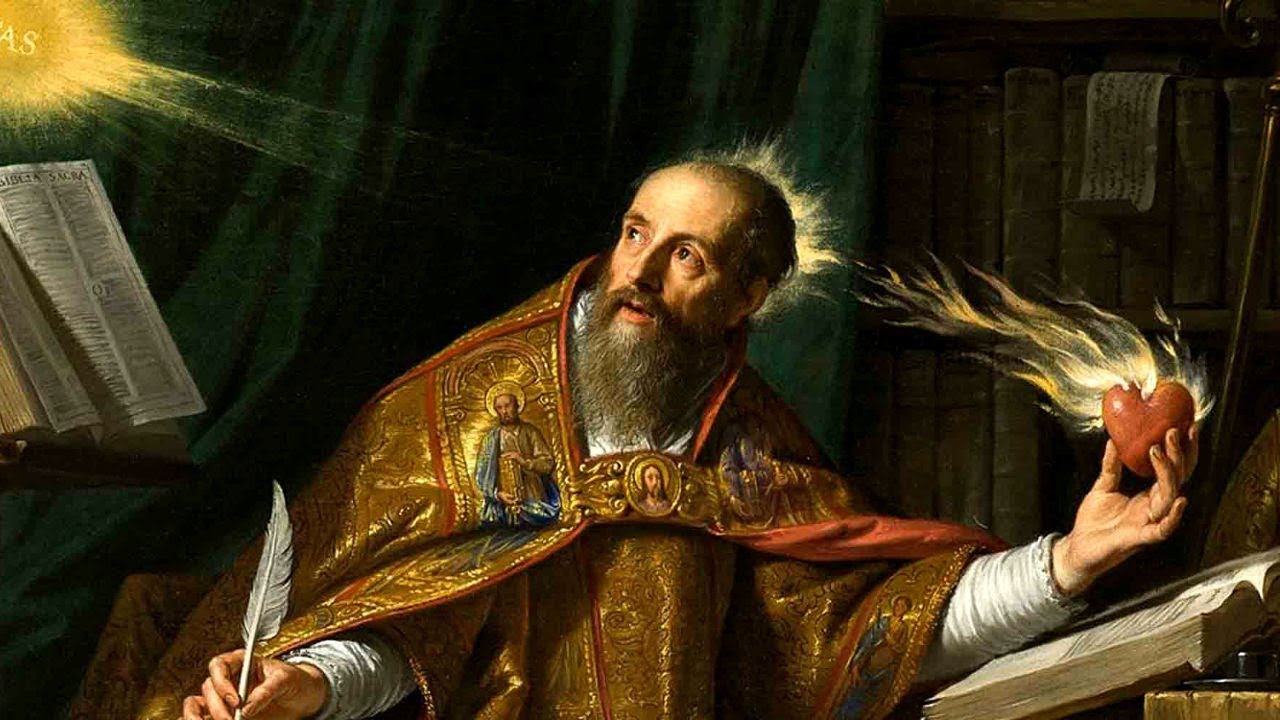
One more thing before we leave this story though. I made reference to how we might discover God in our souls through subtraction rather than addition. This takes us back to an old debate between Pelagius and Augustine of Hippo.
Pelagius, thought to have been a learned Celt, from somewhere in the British Isles or Ireland, travelled to Rome and started to write things that upset Augustine, who had proposed the idea of original sin as a theological technology for making sense of our relationship with god, and to give meaning to the death of Jesus on the Cross. Pelagius held with the Celtic tradition, which saw humans as containing the living god in the core of our being – clearly not compatable with original sin.
One side called us towards the inate dignity and sacredness of each and every soul. The other required salvation through a narrow gate, controlled by the power of the Church. You can guess who won the argument. Pelagius was written out of the Christian story.
What would the world look like if Augustine had lost the argument with Pelagius? What if we had never been convinced of our ‘original sin’, but instead built our thinking around the idea of original sacredness at the core of everything that has breath?
Without the empire that would we have had the religion of Christianity at all? What else might have filled this space?
What if the old Chritstianity is at the end of one of its natural cycles of existence?
What if it needs to be born again, and if so, who will be the midwives?
The point of this series of post is simple- renewal of a whole religious tradition to make it fit for purpose. For many, this is heresy of the kind that previously would have earned me a bloody end, but revolutionary reformulation is needed more urgently than ever.
After all, despite the grand proclaimations, what current use is western religion as a means of healing and restoration in our current broken world? I would argue that this is not just a minor issue requiring a slight shift of focus. Rather we need to remake our religion at source.
In this post, I attempt to reconsider our origin story, but first we have to consider the one that is still firmly in place.
When considering the stories told about the life of Jesus – those that have come to us through the inspired/historically accurate/mythological/unreliable (delete words as appropriate) written record – this thought occured to me;
If, by some strange circumstance, we lost all the scriptural records apart from the death and resurection story, would modern Christianity be any different? If we knew nothing of the teachings of Jesus – which we have ignored in large part anyway – could modern Christianity still stand?
Then there is a subsiduary thought.
If we only had the records of his teaching, and how he lived his life, WITHOUT the death and resurection story how might Christianity have developed- if it had been allowed to develop at all?
I think this is a significant question because (arguably) the religion Paul made – and was later adopted as the official religion of Empire – concerned itself to a large degree with the next life, not this one.
The origin story of this religion went something like this.
God is a divine judge who can bear no sinfulness, but because of his great love, he sent his only son into the world to be tortured and killed, taking on the rightful punishment of the rest of us, so that those who practice correct belief might be saved from eternal hellfire.
The degree to which ALL followers of the Christian relgion understood the origin story to be like this is, of course, debateable, but perhaps we can agree that this became the dominant Christian ‘good news’ story (or Gospel) fairly early, particularly in Rome, centre of the new Holy Christian Empire.
Meanwhile, those inconvenient teachings of Jesus slipped quietly down the list of priorities. For example, just off the top of my head;
The first shall be last and the last shall be first stuff
You don’t need two shirts on you back
Blessed are the poor (in spirit) and his recognition of the beauty and dignity of all people
Harder for a rich man to entire the kingdom than a camel through the eye of a needle
The band of malcontents, failure and low-lifes he spent his time with, who he saw as his disciples
Non-violence, offering the other cheek
The ‘new kingdom’ (perhaps better understood as ‘anti-Empire’)
Breaking national /ethical morality codes by speaking to women and Samaritans, lepers and Roman soldiers
The radical inclusion of outcasts and outsiders
The call to love for all and everything, even enemies
That question again- to what extent are these sorts of teachings central to our practice of the Christian religion?
Is it possible that we have made them at best ‘optional’ matters, much less important than saving souls from hell? We might hear preaching about them, but I think we can see clearly how Empire is always more important than the Kingdom of God’s anti-Empire messge. The dominance of American Evangelicalism is only the latest version of the same.
The goggles we have been given to look back at Jesus through make it very difficult to look afresh at the religion we have inherited, but if we were to invite an uninformed alien to read the gospels then visit one of our cathedrals, or attend one of our evangelical worship services, surely they would be very confused?
How did we end up here?
If the story of Jesus is the origin story not just of our religion but of our whole culture, it is hard to deny that this story does not seem to have been adopted whole. Rather it has all-too-often been interpreted in such a way as to protect the powerful and ignore the needs of the weak and oppressed. (One of the key ways that this replacement trick seems to have been wrought is by the deployment of a theological construct called ‘original sin’ but we will return to this later.)
Do we need a new origin story? Might we yet redeem our religion from the clutches of Empire? More than this, might there be somethng in this new origin story that might be useful to us as we grapple with the world that has been made in the shadow of the old one?
My answer to this is yes – and no.
Yes because the story as laid out above is not fit for purpose so we have to replace it. I say this because it fails to challenge the fundamental economically over-reaching, socially unjust and environmentally unsustainable problems created by the western culture it has sustained and developed within.
No because (many would argue) this was never the real story in the first place. The religion named after Jesus lost itself along the way. It became corrupted by those very things he spent so much time warning us against. Therefore, the task is not to make a new story, but to strive to find the one that was always there.
No also because rather than inventing anything new, perhaps the better strategy is to go back and examine what other followers of Jesus found most persuasive. We are not the first generation to grapple with these issues and perhaps others had a better story in the first place, engaging better with the problems described above?
This is difficult work, even for those of us who have been through painful deconstruction of the religion we previously knew. Where should we start? Who can we trust to guide and inspire us? After all, the Christian religion – particularly in Protestant form – sometimes seems like one long argument in which successions of men (it is always men) think they have a better grip on Truth than those before, and where did all of that get us?
One lesson we might take from the Protestant project is the failure of attempts to create correct belief based on ever more narrow readings of scripture, as if an ascendant Christian tradition would eventually reach a final ‘true’ position on all things – because the Bible says so. This approach has so many problems, but perhaps the more obvious one is that it is based on an unexamined and unacknowledged set of assumptions about the nature of scripture itself and the blind spots deployed to protect those asssumptions. I have written a lot about this – if you are interested, perhaps here is a good place to start.
If this approach was always flawed, and even worse has failed to deliver a religious framework that can engage with the crisis facing our society, perhaps we must instead find ways to prioritise practicalities and praxis – the efficacy and usefulness of religion. After all, what is belief for?
Or to put this another way – who cares what you believe if it does not change you/the world towards better? The saving souls business has too often been a distraction convenient to vested interests opposed to any real change.
It might be worth mentioning here my own process as I grapple with what might be described as ‘reconstruction’, along these lines;
I acknowledge those whose teaching/writing/leadership has inspired me, consciously holding on to the things I inherited that are ‘good’. These act like signposts or filters or channels through which I measure and encounter the new
I pay attention to what sings in my soul. I have decided to trust my own embodied reaction as a guide for accepting and adventuring. If I read something or encounter something and it lights me up emotionally/physically/spirituality (even intelluctually) then I follow this down and let it lead me to new places. are
What is useful? By which I mean the degree to which ideas contribute towards my understanding of peace love and justice. If they do not seem immediately useful in this regard, I am not necessarily rejecting them as ‘wrong’, rather I am far less interested.
Enough with picking over the old story, what about a new/old one?
A final look at Hartmut Rosa’s reframing of modernity, this time in order to place his thinking alongside some other broad themes.
Image by Si Smith, from After the Apocalypse
This post might be stating the obvious, but I wanted to sketch out a few ways that Rosa’s description of our human condition has resonated with many other themes explored on this blog. Here they are then, in no particular order…
Downshifting/slowing down/degrowth
If I am evangelical about anything these days, it is to encourage people to step back from those high pressure, high consumption, high stress lifestyles that can trap us in cycles of mortgage making and shiny-stuff-owning. Our experience has been that even when we percieve this way of living to be toxic, we find it extremely difficult to stop. Perhaps this is a cultural pressure, an mutual anxiety about being left behind or losing significance, or even falling into poverty and non-citizenship. Perhaps too this is an ecomomic issue, given that unsustainable growthism is built in to the very DNA of our ideas of what a ‘good’ economy might look like.
But even as I have tried to go against the flow – as I have turned towards simpler ways of life, as I have dug my veg beds and put up my poly tunnels – I have often wondered what difference I was making, even to myself. It has felt indulgent, a lifestyle new middle class dream in which I remake a paradise for me and mine. Is it credible that enough people might follow this path to make any kind of difference to the ecocide we are inflicting on the natural word?
Rosa had similar questions, and this led him away from ‘slowing down’ as a solution towards the more difuse and (dare I say) ‘spiritual’ idea of resonance. He pins his flag of hope to a solution dependent on a mass increase of connection to the essence, or the ground of our being, via deeper appreciation and communication with the natural world, or with the great beyond, or with art. Is this a crazy idea?
After the apocalypse
Perhaps it is crazy, but this idea oddly mirrors the arc of my last book – the collection of poetry entitled After The Apocalypse (Si Smith’s wonderful images for this book are all over these posts). I began writing the work for this book before the pandemic, as a kind of passive/active resistance to the rise of so many political and economic powers I found deeply troubling- the swing to the far right and the mainstreaming of lies and dishonesty, often in service of those who were happy to prioritise short term profit over climate or social justice.
In the end, because of the intervention of the pandemic. the book fell into three parts- before (protest) during (silence and enforced slowing down) and finally after, which dared to hope for change… even if the only way I could envisage this change was in a wider turn towards meaning, towards spirituality and connection with the earth.
Rosa would call this resonance.
It did not feel enough. I wanted to tear down border walls, remake the world better, liberate captives and feed the hungry. But given that none of these things were available to me (and even if they were, I am not the Messiah) what is left is to go deeper into the world, to live more fully and to connect with those I am in community with, both human and non human. If enough of us do this, then surely the wall will fall anyway.
(Celtic) Spirituality/Mysticism
It will be of little surprise that when Rosa talks of resonance, I hear it first and foremost as a spiritual matter.
Even the detail of how he described the process of resonance – in terms of how we feel a call towards something…
Phenomenologically speaking, we all know what it means to be touched by someone’s glance or voice, by a piece of music we listen to, by a book we read, or a place we visit. Thus, the capacity to feel affected by something, and in turn to develop intrinsic interest in the part of the world which affects us, is a core element of any positive way of relating to the world. And as we know from psychologists and psychiatrists, its marked absence is a central element of most forms of depression and burnout. Yet, affection is not enough to overcome alienation. What is additionally required is the capacity to “answer” the call: when we feel touched in the way described above, we often tend to give a physical response by developing goose bumps, an increased rate of heartbeat, a changed blood pressure, skin resistance, and so on. Resonance, as I want to call this dual movement of af<-fection (something touches us from the outside) and e->motion (we answer by giving a response and thus by establishing a connection) thus always and inevitably has a bodily basis. But the response we give, of course, has a psychological, social, and cognitive side to it too; it is based on the experience that we can reach out and answer the call, that we can establish connection through our own inner or outer reaction. It is by this reaction that the process of appropriation is brought about. We experience this kind of resonance, for example, in relationships of love or friendship, but also in genuine dialogue, when we play a musical instrument, in sports, but also very often at the workplace. The receptive as well as active connection brings about a process of progressive self- and world transformation.
Does this not sound like a mystical experience? An embodied call and response to something deeper than ourselves that ultimately is transformative?
Image by Si Smith, from ‘After the Apocalypse’
More than this, there is something about resonance that takes me back into my appreciation of the Celtic Wisdom tradition, which might be understood as first and foremost about connection with the great spirit that holds everything together. In other words, we resonante because we connect with the truest form of ourselves, which is god.
I am just back from leading a gathering of friends into what we call our annual ‘wilderness retreat’. These events have played a central part in my life now for… a long time. Decades. I could go back through the archive on this blog and chart each and every trip, remembering each one for a moment, or moments, but I would rather remember them in the form of friendship.
This year, 12 of us went back to an island called Garbh Eileach, exactly ten years after we were last there. It is part of an island chain called The Garvellachs, two islands down from the famous Eileach an Naoimh, with its monastery founded by St Brendan himself. Garbh Eileach is a different beast entirely, wild and wooded, exploding with life. While we were there, we saw deer, slow worms, white tailed eagles, golden eagles, a whale, some dolphins, seals, and innumerable other creatures, feathered, furred, scaled, crawling or swimming.
The island is also crawling with ticks. This caused a collective panic when we first landed. It would be possible to write a whole blog piece on this panic alone- on the ‘leadership’ nature of resolving it (which I carefully avoided as much as I could) and on the way that vulnerability in wild places might be psycologically and spiritualy significant – but this is for another time.
After all, no paradise is perfect.
Every year I spend a long time thinking about what we will ‘do’ as part of these retreat events. This usually comes down to a few ideas, a few scribbled words, along with a subdivision of time into ‘silence’ and ‘togetherness’ (although these are not mutually exclusive). The chat can be blue and profane, then will come a moment of deepest beauty and profundity. It is my experience that not only are these not mutually exclusive either, rather one can enable the other. The raw, earthy business of camping in wild places tends to be rather destructive to ‘nice’ facades, although some find this more true than others.
Unsuprisingly, given the recent output on this blog, this year my head was full of celtic spirituality, with the god who hides inside every living thing- even in us – discoverable not through addition but through subtraction, not by hiding our woundedness from the divine out of shame or condemnation, but by looking beneath it and through it, to that most foundational part of our being, which is god.
The mix of people who attend usually sorts out over the months and weeks- friends, and friends of friends. People have to drop out for all the usual reasons, but the boat usually stays full with others who take up empty slots. I hate to turn people who want to come away, but the limiting factor is always the transport – it is the only ‘cost’ – the boat charter being costly and tends to be in multiples of 12.
I confess to feeling slightly uncomfortable with the mix prior to this trip. Several of my dear friends could not come, so there were a number of new faces. Whilst I love to share these trips with new people, there is always a ‘getting to know the ropes’ phase. Not to mention missing my long term companions, because that is what these trips are for- to linger in wild places with people I love, and to dream of God, whatever of her remains within us.
It turns out that there is plenty.
One of the things we talked about on our trip was the old Celtic idea of an ‘Anam Cara’. Some of you will know the late John O’Donohue’s book of the same name, or even have heard the term used at weddings. It might have become mixed in with a lot of other celtic words and ideas that become so portable that they lose their meaning and power. So let’s reclaim it.
Anam Cara is not just a good friend, it is that friend who knows you. The one whom, when you are with them, you defend the least and share the most. More than that, Anam Cara is that friend who makes you a better person, just because of their friendship.
Not because they necessarily are better, more knowledgable, more spiritual, more mature.
Not because they are your elder, or your ‘mentor’ – at least of the one-directional kind. Top-down relationships are different. They can feel unequal. One big, the other small.
Anam Cara relationships are a soul deep connection that is somehow ‘enough.’
A connection that makes you more complete.
A connection to someone else which somehow intensified your own individuality, whilst simultaneously making us belong to something bigger.
Anam Cara is biased towards you – they are on your side – but they are not bind to your faults and limitations. In fact, because they know you, they know the faults better too – they may even call you out on them. You might do the same for them.
Anam Cara is something I have longed for most of my life.
Somehow, through these annual trips to make retreats to the wilderness, I have made connection with not one, but several people who have become to me, my own Anam Cara.
I have wondered how I came to be so blessed, and this made me realise that there was another ‘personhood’ in this Anam Cara relationship, and it is this.
The island.
If this sounds mystical and fanciful, perhaps it is, but allow we to explain myself.
For some time now, I have thought of god in a very different way to the God I was brought up with. Rather than God, the distant disciplinarian, who pre-judged me even before I was born, who made no allowances for my broken beginnings, whose favour seemed to rest only on my compliance with a narrow set of judgemental rules and commands (having said a single prayer that got me through the door), I instead began to catch glimpses of a god who loves things indiscriminately, wildly, with no thought of propriety or decorum. This god loved us so much that he unleashed herself on the world in the form of the Christ, who wears a coat of a million colours and in these parts of the world, many of them are green.
Then, through immersion in the Celtic wisdom tradition, it occurs to me that people have thought this way about god for thousands of years. Here is the god who animates blades of grass, who is in the weave of sinews that flex in the leg of a deer. Here is the god who lifts the arms of trees and is to be seen in snakes and crack addicts alike.
Remarkably, this is the god who lives in me. More than this, this is the god who IS me- not because I am god, but because through god, I am, and within me, is god. Because of my woundedness, the baggage I carry, the things I do to distract myself, the things I do that I should not and the things I should do but do not, then god is often obscured, deep inside, but she waits still, because like my Anam Cara, she is biased. She is after all, love.
As I seek to move in and to further understand this wisdom tradition, it seems unsurprising that when we linger in quietness in these wild places – particularly in the contained space of small verdant islands – our awareness of god who loves things by becoming them is closer. It enters into our relationships even, broken and imperfect as they surely are.
I feel a deep love for my friends, for those I share these islands spaces with. Sometimes this bursts out of me in unregulated and embarrassing ways. This is in part because I know them to be good, to be loyal, to be true, even to be slightly biased towards me and I towards them.
In part also, I blame the island, which embraces us all.
Trigger warning- this is a small diversion into Bible history. For some this might be a turn-off right there, whereas others may find it goes to places that they are simply uncomfortable with. There will also be bible scholars who will take issue with some – or all – of the things I am saying, because we are dipping into a vault of murky ancient history filtered through a religion which claims the authority of God on whatever it has sanctified.
But sometimes, in order to make things new, we need to look backwards too – in this case, to the very beginning – so that we can see where we came from, and perhaps where we turned left when we could have turned right.
So, feel free to disagree. Go and do your own research and I hope that this brings to you your own meaning. Find your own story, just as I look for mine.
I was at an Iona community family group meeting last weekend, in which we were discussing Christian humanism. I confess to approaching the discussion warily, as it seemed likely to be rather esoteric, but what actually happened was that it opened a window into something that I found interesting intellectually and more importantly, to offer ideas that might be very useful as we seek to rediscover our story. Or perhaps it would be better to say ‘as we seek to rediscover purpose, mission, our concepts of goodness and our prophetic voices’.
Just little things like that.
For those who have read this far who have no allegiance to Christianity, past or present, perhaps I should say a little bit more about this ‘story’ thing. Western culture was founded – or perhaps it would be better to say shaped then continuously disrupted – by the Christian story. I would argue that what we made of this story was always full of obvious tortuous distortions of the words of Jesus, such as we know them. After all, how can we reconcille conquest, empire, the accumulation of wealth, slavery, poverty, capitalism, etc etc with the words of Jesus? Christianity became a religion that had little to do with the core elements of the story Jesus told.
This is a bold statement, I know, but one that I believe I could ‘prove’ in a court of law.
Arguably, the tensions created by this disconnect have always been there throughout Christian history, characterised by purges against heretics, or successive Protestant reformations. Always, people talked about going back to true religion and recreating the purity of the early church. The source material for this protesting and reforming was always the Bible- viewed through the context and passions of the people reading it.
Part of the problem – the nature of the torturous distortions perhaps – comes about when we ask what the Christian story that we built western culture on actually is/was. There is the story of love, compassion, caring for the weak and poor, looking after widows and orphans. The inverted power structures, the value given to each person. The living lives colectively and fairly. But this never fitted easily with the cultures we created. What did fit was a different gospel, which might be understood as how personal sin results in eternal damnation, but for the sacrificial death of jesus.
Despite the sometimes cataclysmic changes that these religious arguments brought about, we have a different problem now. Churches are empty. Sure, I know there are exceptions, but here in the UK, the number of people who attend church is still declining, still aging, still arguing and as such the Church is less and less relevant as a moral or political force. It still has an important ceremonial function, but it has no prophetic voice. It has no story that anyone is listening to. Perhaps, given the tortuous distortions I refered to above, this might not be a bad thing.
But the end of one story (if indeed that is what we are seeing) leaves an empty space. People have always looked for meaning and purpose and without a story, what do we have? In a post-covid world, overshadowed by global warming and mass extinctions, how do we conceive of a better story? In a political system dominated by inequality and the failure of our institutions and political/economic systems to bring hope, how do we shape our story towards better things?
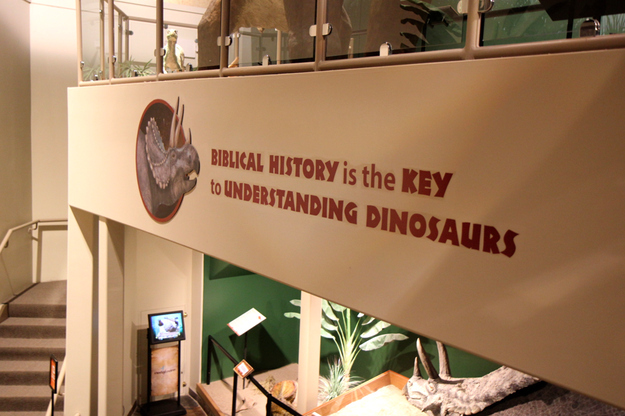
Can’t remember where I got this from. The Creation museum perhaps?
Given what I have said above, the Bible would seem to be a strange place to start, right? After all, even now there are plenty of people in the world who seek to use it as blunt weapon to bludgeon us towards their story – often a very narrow story that seems very much to be part of the problem; a story that is anchored to textual determinism, at least in relation to some of the words of the Bible, which is seen as a unified, divinely inspired and heavenly-delivered holy text.
But what if the Bible is much less than that, but at the same time, much more? What if it is a library of miss-steps, half truths, mythological history and open-hearted laments? What if it is one third poetry? What if there are no other books in human history that are like it?
More pertinently, what if the Bible – or at least the books of the new testament – contains great big clues as to how the words of a man called Jesus became repackaged into a religion called Christianity by a Jewish religious genius (who never actually met Jesus) called Paul?
This was what we ended up talking about at our meeting.
Remember those clues I mentioned above? Here is what we think we know – with the usual warning that some (many!) will take different views.
The oldest of the four gospels is Mark’s gospel. It is very different from the others, so much so that later scribes have tried to give it a different ending. He does not include the resurection.
The other gospels seem to quote freely from Mark, but spin off into other directions. They add many of the ideas that MAY have been influenced by Paul.
Paul never met Jesus, and we can infer tensions between him and the other apostles who actually did – many of whom get a very bad press in the gospels! Paul’s encounter with Jesus was mystical, and he seemed to trust this more than he did the words or experience of those who had been his disciples.
Paul was a sophisticated, educated man. The other apostles were not. (But Jesus picked them!) Without his innovation and leadership, it seems unlikely that the early Christian church would have survived – many other Jewish movements did not after all. The difference was… Paul.
The oldest actual book to be included is thought to be St Paul’s first letter to the Thessalonians, in which some believe he was correcting or addressing issues that had been created by an earlier letter around the second coming of Jesus.
This letter may well have been the Didache (pronounced did-a-kay), which was a letter from the apostles in Jerusalem giving instructions as to how to run a church. As such this letter certainly predates most of the NT books, but may well be earlier than them all. More on this later.
The canon of scripture that evolved over the next many centuries involved many good people struggling to make sense of a complexity of writings that most of us have no idea ever existed. The struggle to do this well, according to a set of principles that made sense, is to be honoured. But we have to remember that the library of diverse books that entered the canon was a human construct, that was shaped by context, best understandings and compromise.
All of which should leave us room to treat these incredible documents with respectful skepticism. After all, they are strong enough to allow our questions, our doubts, our various entanglements. The ‘truth’ they contain is no less real if we question its historicity for example (there are plenty of problems reconciling the Bible with the archeological/historical record.) We might learn as much from apparent contradictions as from attempts to ‘make it all fit’.
The bottom line here is that our interpretations and understandings of the Bible- what it is, what it has to say, what it means for our lives, our politics, our priorities – what STORY it leads us towards depend a lot on what we think the Bible is. If we are to allow it to shape us, I would argue that we must first loosen up a little. It is OK to take the book/s out of their leather case. Doubt them and see where the doubts lead. Believe them and see where the beliefs lead.
If you want to know more about the complex and fascinating (to me anyway!) bible history, then it can be difficult to know where to start. There is so much out there and unless you are an academic (and I am certainly not) then it is difficult to know who is dealing with these issues honestly and who is coming at them with a perspective pre-formed by their own tribe.
The Bible Project has tried hard to bring some of the acedemic perspective to a wider audience, with video’s like this one;
More controversially perhaps, and thanks to my fellow (and inspirational) Iona community family group member, I would point you towards some of the writing and speaking of a man called James Tabor, who communicates well around many of these issues, including via his excellent you tube channel. Videos like this one;
So where does all of this take me to? Can it really be a way towards a new and better story?
I think so, firstly because it allows us to break with the old one – not to dismiss it, but to include and transcend it. After all, arguably this is exactly what Paul did to the teachings of Jesus – brilliantly, and perhaps problematically. Secondly because It might encourage us to project new – yet faithful – understandings onto our context in a way that is free from some of the distortions. Of course, we will no doubt make new distortions, and for this we need those who will doubt and test them too.
Finally, I want to return to the Didache. I had never heard of this document, and this was interesting to me too. How is this not better known? (Perhaps you are far ahead of me however and the problem was just my ignorance.)
James Tabor has a blog piece that talks in more detail about this document. You should read it, but I will quote from it here;
The Didache was discovered in 1873 in a library at Constantinople by a Greek, Priest Father Philoteus Bryennios. This precious text, dating to the late 1st or early 2nd century CE, is mentioned by early Christian writers but had disappeared. Father Bryennios discovered it in an archive of old manuscripts quite by accident.
TheDidache is divided into sixteen chapters and was intended to be a “handbook” for Christian converts. The first six chapters give a summary of Christian ethics based on the teachings of Jesus, divided into two parts: the way of life and the way of death. Much of the content is similar to what we have in the Sermon on the Mount and the Sermon on the Plain, that is, the basic ethical teachings of Jesus drawn from the Q source now found in Matthew and Luke. It begins with the two “great commandments,” to love God and love one’s neighbor as oneself, as well as a version of the Golden Rule: “And whatever you do not want to happen to you, do not do to another.” It contains many familiar injunctions and exhortations, but often with additions not found in our Gospels:
Bless those who curse you, pray for your enemies, and fast for those who persecute you. (1.3)
If anyone slaps your right cheek, turn the other to him as well and you will be perfect. (1.4)
Give to everyone who asks, and do not ask for anything back, for the Father wants everyone to be given something from the gracious gifts he himself provides. (1.5)
Many of the sayings and teachings are not found in our New Testament gospels but are nonetheless consistent with the tradition we know from Jesus and from his brother James:
Let your gift to charity sweat in your hands until you know to whom to give it. (1.6)
Do not be of two minds or speak from both sides of your mouth, for speaking from both sides of your mouth is a deadly trap. (2.4)
Do not be one who reaches out your hands to receive but draws them back from giving. (4.5)
Do not shun a person in need, but share all things with your brother and do not say that anything is your own. (4.8)
As well as the similarities, there are real differences from the Christianity of Paul however. Communion for example is to be a simple thanksgiving meal of wine and bread with references to Jesus as the holy “vine of David.” It ends with a prayer: “Hosanna to the God of David,” emphasizing the Davidic lineage of Jesus. The bigger issues raised by the Didache are these (again via James Tabor);
The entire content and tone of the Didache reminds one strongly of the faith and piety we find in the letter of James, and teachings of Jesus in the Q source. The most remarkable thing about the Didache is that there is nothing in this document that corresponds to Paul’s “gospel”―no divinity of Jesus, no atoning through his body and blood, and no mention of Jesus’ resurrection from the dead. In the Didache Jesus is the one who has brought the knowledge of life and faith, but there is no emphasis whatsoever upon the figure of Jesus apart from his message. Sacrifice and forgiveness of sins in the Didache come through good deeds and a consecrated life (4.6).
The Didache is an precious witness to a form of the Christian faith more directly tied to the Jewish orientation of Jesus’ original followers. I encourage my readers to take a look for themselves. There are many versions both on-line and in print. You can begin here: Early Christian Writings: The Didache.
I wonder how this makes you feel?
Perhaps you are weary from all this deconstrction – I certainly am. The idea of being confronted with documents that start to undermine the very nature of the divinity of Christ might be the last thing we need. Anyway, this is not defnitive. The Didache is just an ancient document that never made it into the canon of scripture that became the Bible. It contains other problems too- not least the apocalyptic vision that Paul may have been clarifying and correcting in his letter to the Thessalonian church. Perhaps this document describes an evolutionary early set of followers trying to establish some kind of common practice. Perhaps we needed a theologian such as Paul to bring the whole story together.
But then again…
As with all theology, my last question is always , So what? How might these ideas lead to liberation, to renewal, to a new story?
What is most important, the details of doctrinal correctness, or the heart and spirit of the matter? It is the latter that gives us our story is it not, and to me at least, this rings all the more true when set free.
The referendum in Scotland is over. The narrowness of the result has left half of Scotland relieved, whilst many are sore, even heart-broken. This is democracy by referendum I suppose – a black and white duality that gives a one-size-fits-all answer.
My FB feed is full of people suggesting that the vote was rigged or finding other reasons to blame. It seems to reflect peoples anger and hurt as well as the refusal to let go of something that felt vitalising and alive. The referendum was a blank canvas onto which all sorts of hopes and dreams were projected onto, but it lit us up like politics has failed to do for a generation. Can it really be all over?
My own feelings are very confused, for all sorts of reasons. The referendum somehow never asked questions that I could get excited about. I tried to express some of this in a previous post, but do not feel that I said it well, and in the end I was left rather sore and deflated. For all of us now however the question surely has to be, what next?
For some, the issue remains sovereignty; authorship over national fate, and so the matter of devolved powers is top of the agenda. The constitutional changes needed to achieve this, not just in Scotland, but in the whole of the UK, are likely to have far reaching consequences. It will also be a protracted process involving lots of twists and turns, dodgy deals and uncomfortable compromises. This is democracy too. We make deals with the devil and rubber stamp them with 4 yearly elections in which people vote blindfolded.
What about followers of Jesus in these interesting times? Where do we look for leadership, for inspiration, for challenge to our inertia and complicity with empire? How do we continue to seek to be agents of the New Kingdom (rather than a particular earthly one?)
I started to make a list of things that I think might be important. None of them are new, but for my own benefit, I thought it was time to restate them;
Our primary allegiance is not to a flag or a country, rather it is to Jesus and the New Kingdom. This is not to say that we should not seek to be enthusiastic engaged critical lovers of the place where we live however, rather it is an encouragement to see ourselves as agents of something deeper, something purer and more loving. Something bigger than now, so that the now might be carried forwards into something better.
The rules of engagement with the place we live are given to us in clues by the life of Jesus, his sermons, the stories he told, and the stories of his failing followers ever since. Our job, which sometimes seems almost impossible, is to apply these rules anew in this context, this time. We have to start with the Shalom of God, made real in the person of Jesus. We are to people a people who first of all are learning to love. A people who seek to make peace. Too often we have been easily sucked into to making war.
Jesus had a skew towards the poor, the weak, the broken. It almost seemed as though he deliberately eschewed power in all of its earthly forms- particularly political power. That is not to say that he despised people in power- witness the ‘rich young ruler’, or the Roman Centurion – rather that he preferred the company of the small people.
Justice. This word clearly means different things to different people, then and now. from one perspective, Jesus’ teachings seemed to focus more on our inner lives, to the exclusion of protesting injustice, but on the other hand, you might see his whole life as being a lesson in HOW to protest injustice. How to look in the face of power and take the radical alternative path of love. How to turn the other cheek. How to scandalize by simple acts of mercy.
Community. Jesus seemed to place deep value in friendship, in shared life, in teaching and learning through close community. In a shattered society, where communality has been devalued and we worship instead the gods of individuality, personal growth, me, myself and mine. The way of Jesus might be described as deliberately putting the self (my ‘rightness’, my stuff, my needs, my art, my dreams, my own fulfillment) behind the rule of love.
Healing, restoration, stewardship. Again, the life of Jesus that we know about tended to be transitory, always on the move; he had 4 years on the road then they crucified him. But in all those years he sought to mend what was broken- as if to return the world to the way it was made. In our time, the whole of creation might just be broken. We are all vulnerable, particularly the poor and the weak. How might we become agents of healing?
Agents of peace and love might get angry- Jesus did after all. Because being engaged hopeful critics of culture and place might often lead to outrage. It is all too easy to forget the way of love, to turn from being people of the open hand, to people of the clenched fist.
Agents of the Kingdom are not bound by narrow sectarian divisions. Hard boundaries and walls were never the Jesus way. Rather he looked beyond the labels, the religious and political differences and saw real people. He even formed friendships and allegiances across the boundaries- to the frequent anger and disgust of those around him. Tax collectors, Romans, Samaritans. This was not political expediency, it was love.
How do I apply this to now – to the UK, 2014, to post referendum Scotland, to Argyll, to Dunoon, to my house, to my self? One small decisions at a time I suppose. Most of the time I feel like I get it all wrong, that my hands have formed themselves, almost unbidden, into fists.
I think that whatever happens next is not my really my concern. Rather it is to seek always to form in myself the way of love. The Spirit within me will do the rest. One shuffling step at a time.
The referendum was seen by some followers of Jesus as a means by which justice might be increased, by which love could have more elbow room, by which old wounds could be exposed to the therapy of new sunlight. Hopes and dreams became wrapped up in an ideal of renewed nationhood. Amidst the disappointment perhaps all we can do is return together to the way of Jesus. The point was never nationhood, it was love.
May we followers of Jesus be part of the healing of our nation. May we try always to see through the eyes of the poor, the weak and the broken. And when others around us seek to build walls of division, let us smile and step back, hoping for the best, whilst looking for cracks, through which the light can get through.
My sister challenged me to right something lighthearted here, and leave behind all the heavy economic/theology etc for a while, at least in part because some of it was making her cry (which in my book is no bad thing!)
I tried sis, I tried, but then I come across this;
I am trying not to get too excited by this old man. He is after all human, and like all of us, will be shown to have clay feet. But in the meantime he makes my heart dance.
At last someone is using a traditional seat of global power to speak the words of Jesus into the madness of our age. Those in power are rattled. The small people are engaged.
People get crucified for this kind of thing you know.
It has always been a bit of a strange thing to me how followers of Jesus came to be seen as collectively ‘holier than thou’. How over the millennia we serially get caught up in elaborate morality systems, measuring others by how much they share the same code and punishing those who do not.
It is not as though this was the model for life that Jesus gave us. As far as we are able to understand his way of teaching, way of living, he seemed to react against those in his time who lived this kind of religious life. Remember all those exchanges with the Pharisees, who had a rigid rule to measure everything against. By total contrast, Jesus seemed much keener for his disciples to live deeply and fully, opening themselves up to the wild ways of the Spirit and subjugating all sorts of rules to the overarching principle called love.
Having said that, let us not pretend that morality has no place within the life of faith. It is not as if anything goes. Choices we make in life have consequences – even passive choices. But those outside the holy huddles will often accuse those inside of rank hypocrisy, suggesting that we do not live according to our principles, let alone live up to the life of Jesus. Remember these words attributed to Ghandi?
I like your Christ. I do not like your Christians. Your Christians are so unlike your Christ. The materialism of affluent Christian countries appears to contradict the claims of Jesus Christ that says it’s not possible to worship both Mammon and God at the same time.
Or these, which he wrote in his autobiography;
I heard of a well known Hindu having been converted to Christianity. It was the talk of the town that, when he was baptized, he had to eat beef and drink liquor, that he also had to change his clothes, and that thenceforth he began to go about in European costume including a hat. These things got on my nerves. Surely, thought I, a religion that compelled one to eat beef, drink liquor, and change one’s own clothes did not deserve the name. I also heard that the new convert had already begun abusing the religion of his ancestors, their customs and their country. All these things created in me a dislike for Christianity.
All of this starts for me to highlight the fact that although shaping our souls towards love may involve a constant processions of moral choices, morality itself should not be the starting point.
There was a story in The Guardian yesterday that made a rather different point about morality- suggesting that there might be an inverse relationship between highly developed ethical/moral belief and ethical/moral action. In other words, perhaps those who have rigid moral belief might be LESS likely to act on these beliefs.
Ethical philosophy isn’t the most scintillating of subjects, but it has its moments. Take, for example, the work of the US philosopher Eric Schwitzgebel, who’s spent a large chunk of his career confirming the entertaining finding that ethicists aren’t very ethical. Ethics books, it turns out, are more likely to be stolen from libraries than other philosophy books. Ethics professors are more likely to believe that eating animals is wrong, but no less likely to eat meat. They’re also more likely to say giving to charity is a moral obligation, but they were less likely than other philosophers to return a questionnaire when researchers promised to donate to charity if they did. Back when the American Philosophical Association charged for some meetings using an honesty system, ethicists were no less likely to freeload.
One take on this is that ethicists are terrible hypocrites. As Schwitzgebel points out, that’s not necessarily as bad as it sounds: if philosophers were obliged to live by their findings, that might exert a “distortive pressure” on their work, tempting them to reach more self-indulgent conclusions about the moral life. (And there’s a case to be made, after all, that it’s better for people to preach the right thing but not practise it than to do neither.) But another possibility bears thinking about. It’s plausible to suggest that ethicists have an unusually strong sense of what’s right and wrong; that’s what they spend their days pondering, after all. What if their overdeveloped sense of morality – their confidence that they know what’s what, ethically speaking – makes them less likely to act ethically in real life?
Hmmm, what if our churches carry a similar kind of ethical corruption? Later the article describes something called “moral licensing”, the deep-seated human tendency that leaves us feeling entitled to do something bad because we’ve already done something good. It explains why people give up plastic bags, then feel justified in taking a long-haul flight, obliterating the carbon savings. It’s also why, if you give people a chance to condemn sexist statements, they’ll subsequently be more likely to favour hiring a man in a male-dominated profession.
How might this play out in our religion? A focus on those parts of us that are good so we can blind ourselves to those parts of us that are not? A compartmentalism that means we can live externally moral religious lives whilst compromising on some of the most basic ways of loving our neighbours.
One reaction to this (a very common one in our churches) is the call from the pulpit to be MORE moral. The call to purify, to get our moral codes sorted and organised. The degree to which this ever works is rather doubtful, to my mind at least. We are all of us a complex mess of aspiration and failure at the surface and subliminal levels; old sinful habits die hard in me.
What we need to do then, we followers of Jesus, is to return to trying to understand his relationship with morality. We have to remember that the moral leaders of his day clearly regarded him as immoral. He drank, he mixed with the unclean and ungodly, he broke religious rules, he disrupted churchyness, smashed up tables, upset good people and seemed to prefer low-lifes.
Morality was something to be challenged, to be tested, to be subjugated towards love. Morality was not to be seen as the goal, or the most valid measure, not even of righteousness.
Regular readers of this blog will have noticed that I often find myself mulling over the passages of the Bible that start in Matthew chapter 5, usually known as ‘The Beatitudes‘. I wrote an extended set of poetic meditations on these at a key point of my faith journey. These poems became a large part of my book ‘Listing’.
At the time, what I thought I knew about being a follower of Jesus had been broken down, smashed, deconstructed, so I desperately wanted to engage once more with the core of what Jesus called us to- and the Beatitudes are really the best place to start.
One of the things you come up against immediately is how impossible it all seems. Who can really live like this? What on earth did Jesus mean? Yet still, for people like me, there is this soaring tingling sense of excitement every time I read Matthew chapter 5. There is something so right about it all- simple, lovely, beautiful.
However, I read these words in the context of living in our western consumer culture, and this also brings me to total dissonance, because in many ways, the words of Jesus are simply not compatible with our way of living.
We can do three things with this;
We can decide that the words have to be read in the wider context of the Bible, and that Jesus was not really meaning it to be our manifesto for all time. He knew that it was impracticable to live like this, so merely wanted to make our sinful state clear to us, in order to accept his forgiveness.
We could use his words as a critique of culture, seeking to understand where our system – in its pursuit of profit, wealth, ascendancy, distraction, celebrity, shallow experience – has got things wrong.
We can really try to live according to the beatitudes.
It will be no surprise to you that I am caught between 2 and 3.
When Jesus saw the crowds, he went up the mountain, and after he sat down his disciples came to him. Then he began to speak, and taught them, not saying: “Blessed are the rich, because your wealth trickles down and everyone’s a winner.
“Blessed are those who are full, because that means you’re not scrounging off the rest off us.
“Blessed are you who are laughing now, because you’re obviously hardworking, responsible, decent people.”
He rather hit the nail on the head when he suggested that the problematic word was not necessarily ‘Socialism’, but rather that increasingly meaningless word ‘Christian’;
Many who might sympathise with the teachings of Jesus would scarper from anything Christian. Often, they’d have good reason to. It can mean judgmentalism, ludicrous doctrine and bad parties. Worse, it can mean bigotry, violence and terrible parties. The Christian right – embodied in the UK by groups like Christian Concern – has been so successful at promoting its ideology that you may well think Christians care only about what jewellerythey’re not allowed to wear, what days they’re forced to work, and gay men having big, gay sex. Christians have often done a great job of killing people who disagree with them, too, which doesn’t really help.
Probably the kindest thing one can day about “Christian” is that it’s meaningless. It somehow describes the beliefs of both the Westboro Baptist church and Desmond Tutu. It’s barely even biblical, appearing only twice in the New Testament (and one of those times merely tells where it was first said). Jesus didn’t use it ever.
In any case, it seems that Jesus cared less about what people believe than what they do. The sheep and goats are separated on account of their actions, not their beliefs. The man who said “no” but did God’s will was favoured over his brother, who said and did the opposite, and so on. Those who thought God was happy with them were brought up short, and told that actually God was happier with the people they saw as sinners. Labels weren’t his thing.
Ormerod concludes by suggesting that Christians need to have a louder voice- to shout about the beatitudes…
If we can’t do this now, in the face of a broken political and economic system as it cuts and slices its way to greater riches by attacking the poor, the sick, the refugee, then what use are we?
Talking of Christians on the Left- check this out;
Over the last few years, a number of people who would previously have been regarded as Evangelical Christian heavyweights appear to have changed their stance on homosexuality significantly. There seems to be a whole wing of Evangelicalism that is ‘coming out’- or do I generalise from the particular?
Is this accommodation with the changing views of culture- albeit lagging behind because of a dragging-anchor theological hermeneutic? Or is it the fact that Christians are finally catching the scent of freedom and justice on the breeze? Whatever, I celebrate the change.
I will not list the names I am thinking of, as this plays into the hand of the totemic brigade- you know the way it works, the degree to which a person is ‘OK’, ‘Biblical’, ‘Theologically sound’, depends on whether they agree with us on certain totemic issues. I try, but if I am honest I am guilty of a bit of this too…
I was first inspired by listening to Tony Campolo speak back in the early-mid 1980’s. He upset a lot of people at Spring Harvest festival some time around then (I think I was there, but the story might have become more important than fact on this one!) by telling a story something like this;
You know folks, X (can’t remember the exact figure) number of people have starved to death since I started to speak to you tonight.
And you know what is worse? Most of you people here do not give a shit.
And even worse that that, most of you are far more concerned that I just used the word ‘shit’ than the fact that those people have starved to death.
It is hard to convey how genuinely shocking hearing these words from a preacher at Spring Harvest was back then. Campolo has always been rather left field.
However, his stance on homosexuality in books of his I have read went something like this;
It is not the fault of gay people that they were born different, but the Bible is clear that the homosexual act is sin. It is however NOT a sin to be homosexual, as people have no control over their sexual orientation. Therefore to be gay and Christian is to be celibate.
I think he may even have used the old ‘love the sinner, hate the sin’ argument. If he did not, others certainly did in his wake.
Contrast this with the clip below. He does not need to talk about the theology- rather he tells a story, which is a very Jesus kind of way of doing theology of course.
The emotional musical soundtrack is a bit naff, but Campolo is always (ahem) Campelling.

















 this fragile tent