Doing church the new/old way…

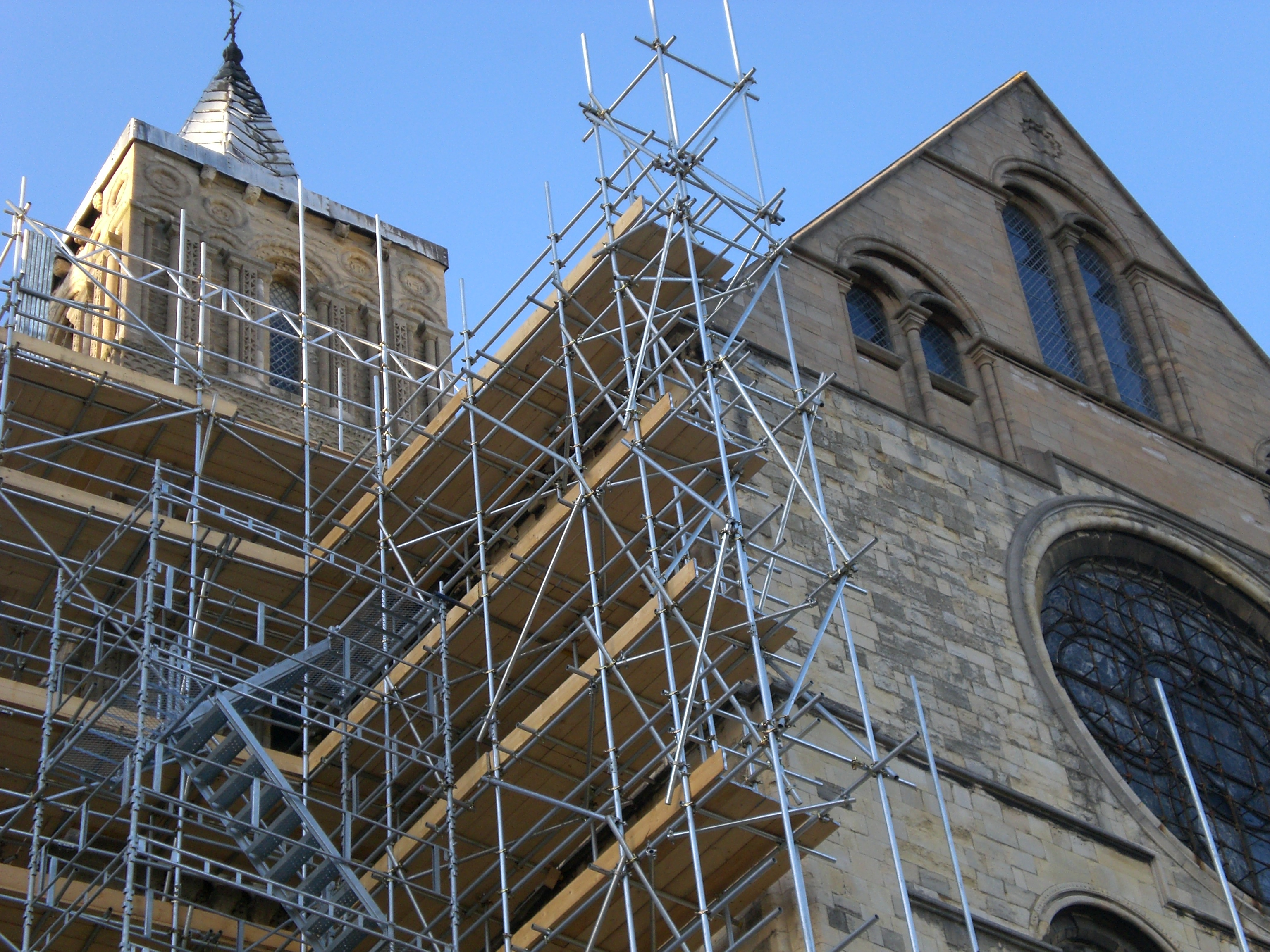
a church under reconstruction?

Michaela and I have just had a really lovely trip up north to spend some time with friends who are part of Garioch Church. We had been asked to be part of something called a ‘sounding board’- a group of people from outside the church who meet a couple of times a year to reflect on where the church is heading, and what challenges it is facing. We were looked after by Andrew and Jane magnificently and it was a privilege to hear something of their story, not least because it enabled us to reflect anew on our own.

Garioch is an area on the outskirts of the city of Aberdeen- a string of villages over a 10-15 mile area. It is a largely affluent place, with pockets of deprivation, fueled by prosperity from the oil industry. We had never spent any time in that part of Scotland before, and in many ways it felt like a different Scotland to the one we knew. It was busy, bustling, full of industry and people had a pace of life very different to our small west coast town.

The church has been trying to find a way of being authentically present in this new context. What they have done is really interesting and genuinely innovative. Rather than seeking to follow a familiar model of church planting, which goes something like- small group of people with lots of energy start a gathering, invite friends, it grows and so house becomes too small so they rent a hall, it grows so they need to buy own hall, appoint staff, etc, they did this;

Gairioch church wanted to remain based around homes, families, small community. They wanted to be a local, connected expression of faith- engaged in their small context. What they now have are three thriving home groups which are the focus of ‘church’. Once a month they meet in a school hall where they can make a bit more noise and feel a wider sense of connection.

Simple huh? Sounds very like that elusive but often used idea of trying to connect with a New Testament idea of what church looked like?

Alongside this deliberate emphasis on the small, they have found themselves having to grapple with some familiar themes- what does leadership look like in this context? How do you survive community? How do you continue reaching out when there is so much to do within the social context of community itself? What does teaching look like when traditional ‘preaching’ no longer fits? What about all the children? How do we manage all these competing demands with such limited time?

It was rather special to see them feeling for answers to all these questions- to appreciate the freedom that allows them to try, and the long tradition of Christian collectives who have done the same.

My own small community feels special too. We are different, in that we are one (rather isolated) community, and in many ways the pressure to lead, to organise, to manage is very different. As a result of this we are less hierarchical, more driven by the need to be joint travelers, not leaders and followers. This made for some interesting parts of our discussion at the sounding board day. How much do we as leaders, in taking responsibility, remove this in both obvious and more subtle ways from the people we lead?

I came home inspired, humbled and also grateful for the fact that people remain inspired by Jesus towards the new. That Christians in these times are still looking for new ways to love better, to live better, to serve better.

Yesterdays post was a rather cynical one about church names- I removed it as although a whiff of controversy in blogging is usually a good thing, I never like giving offence, and it turned out that some friends of mine have a church whose name I accidentally lambasted. As part of yesterdays post however, I said this, and I will repost it as a prayer for our churches everywhere!

I think the words of Jesus lead us on a path emphasising a whole different set of principles. Rather than our success he promised that the last shall be first. Rather than our satisfaction, he promised a hard road. Rather than storing up comfort and riches he pointed us towards the lost and the least.

When Church is defined as being the provider of success and abundance I also cringe for those whose experience has NOT fitted into this shiny stereotype. People who even whilst in this kind of environment feel unable to share pain and brokenness. People whose lives fall apart for no apparent reason.

I pray that the people in the shiny Churches grow in to abundant life, so that they can become a well of blessing for the rest of us whose lives are full of beautiful aching brokenness…

I think we can take heart and courage, because good things are growing in the cracks of Old Church.

Nihilism…

community 1

Readers of this blog will know that I am not one of those people who bemoan the passing of some kind of golden moral Christian age, when all was in its godly place.

Neither do I believe that our churches are the last repository of goodness within our sinful planet- the last means of the planets salvation.

But just sometimes, the zeitgeist gets me down;

The feeling that the beautiful creature, made a little lower than the angels, is busy shopping.

Is busy watching TV, obsessing about royal babies, caught up in rolling news bulletins showing the same clips of disasters in photogenic parts of the world.

Is concerned only with the next car, the next orgasm, the next holiday.

And I start to wonder again about the old Evangelical cliche about a God-shaped hole in the middle of us all.

I was thinking about this word recently;

ni·hil·ism  (n-lzm, n-)

n.

1. Philosophy

a. An extreme form of skepticism that denies all existence.
b. A doctrine holding that all values are baseless and that nothing can be known or communicated.
2. Rejection of all distinctions in moral or religious value and a willingness to repudiate all previous theories of morality or religious belief.
3. The belief that destruction of existing political or social institutions is necessary for future improvement.
4. also Nihilism A diffuse, revolutionary movement of mid 19th-century Russia that scorned authority and tradition and believed in reason, materialism, and radical change in society and government through terrorism and assassination.
5. Psychiatry A delusion, experienced in some mental disorders, that the world or one’s mind, body, or self does not exist.
And it took me back the Matthew chapter 5– The words of Jesus that have been known as ‘The Sermon on the Mount’. All those words about finding a better way of living, characterised by love, service, justice, peacemaking.
And in a moment of bleakness (you have been warned) I wrote this;

Nihilist creed


Blessed are the neurotic

But skin them under a cold cloak of positivity

For who wants to see their damaged flesh?


Blessed are those who have loved and lost

For this life has few survivors

We will all too soon be dust


Blessed are the kind, the shy, the meek

Though their fortune fails and their labours are ignored

While the go-getters steal away the earth


Blessed are the God-botherers, the long-skirt-wearers, those frozen-chosen

Let them gather in their holy huddles, to ward off

The must and draft of their empty buildings


Blessed may be the charitable, but beware

For friends offering favours will always want something in return

And their helping hands only serve to show the weakness of your own


Blessed are those with no dirty secrets, with nothing to keep out the light

Let them shine for a while because we are watching and waiting

Nothing falls further than a second rate saint


Blessed are the community-makers, village hall re-painters, singers of the songs of peace

But Rome did not rise without war

So let them march and wave their banners while we sharpen our steel


Blessed are those who still have something to believe in

Fools that they are

For we will construct meaning only from what we can buy and sell


There is nothing more

Scooping them up for the Kingdom…

koder-sharing-bread

Lovely chat tonight out at our pub discussion thingy- talking about the Kingdom of God.

It is an old discussion for many of us, but we were chewing again on all those mysterious stories that Jesus told us- those The Kingdom of God is like… stories. Mustard seeds, fields of weedy wheat, women making bread with yeast, corn falling on random ground etc. It is all rather mixed up and mysterious, particularly as the stories from Matthew’s gospel tend to have the odd bit of smiting and burning in torment, all of which does not fit with fluffy-Jesus very well.

We talked too about our understanding of The Gospel- which for most of us used to be the saving sinners from hell when they die thing, and how this version of the Gospel comes mostly from a reading of Paul’s letter to the Romans backwardly applied to the rest of the Bible, when actually the Gospel that Jesus talked about was this one;

Repent, for the Kingdom of God is at hand.

(Or perhaps)

Its time to turn things around, shake things up, take a long hard look at yourself, because there is a deeper, more beautiful way of living that has come to you- the insurgency of God…

Our discussion then turned to what living as an agent/citizen/participant in this Kingdom/Revolutionary movement/Insurgency might mean.

The old understanding of the Gospel made it all simple- saving the lost so that they might go to heaven. Our primary purpose is evangelism. All other tasks are distractions from the Gospel. I find this narrative very difficult on all sorts of levels now, but the mission of the Kingdom is far more challenging, vitalising, engaging- we leave behind the hard in-out legalism and instead have to practice the disciplines of love (Romans 13:10)

This might in the face of it seem rather woolly and directionless, like encouraging one another to go out and be nice. However love is not just a passive thing- it demands action, particularly in the face of desperate need and danger to those who might be regarded as the recipients of our love.

I began to wonder about the old call to ‘save the lost’, usually applied to those who are not like us, so therefore were in danger of roasting in hell.

My friend Pauling put it rather neatly- Love might involve “Scooping a few people up” she said. Some people need scooped. And we might need to do a bit of scoopage.

We laughed- but despite all those old dangers of paternalism/maternalism, sometimes scooping people up- lifting them, holding them, is just what we need to do. The lost and the least, the broken people, the awkward, the lame, the lonely.

We used to call this Salvation, evidenced by conversion. For some this leads to amazing transformation- there is nothing woolly about this kind of love, or this kind of insurgency.

Is it time to reclaim the language of salvation for the Kingdom of God?

We can call it Scoopage if you like.

Vilifying the ‘other’- benefits and dehumanisation…

A-Jobcentre-office-007

A few days ago I was having a conversation with some friends about my experience of claiming unemployment benefit last year. In the room where a couple of doctors, two ministers of religion and a buyer for a large company- all of us with loads of education, years of contribution to our society, each with families and houses. Most had been in receipt of benefits at some time.

I found myself doing two things, both of which now feel like some kind of betrayal.

Firstly I felt the need to justify claiming benefits- out of a sense of shame. I talked about it (unwittingly) as some kind of sociological experiment. I added in a little bombast about all the years I had paid national insurance contributions and that claiming in my time of need was an act of civil justice that I felt myself entitled to. I don’t know if I convinced my friends, but the words certainly felt hollow in my ears.

The second thing that I heard myself doing was to describe my relationship with the staff at the job centre- how many of them knew me as a social work manager, and responded differently too me- in a confused way perhaps- unable to look me in the eye. I also told the story of how I saw a claimant ( a man I knew from my previous work) treated really badly.

What I was doing of course was distancing myself from the role of ‘claimant’. I was casting myself as an agent of class consciousness, humbling myself like Jesus, but really being ‘different’.

I listened to the stories of the other people in the room as they described their time claiming unemployment benefit- after redundancy for example – and it occurred to me that I was not alone in my ability to find ways of seeing myself as different- not like the others.

In my case this goes deep. I grew up as the child of a single mother, entirely reliant on benefits. We had clothing grants, free school meals, even vitamin enriched orange juice to try to ensure health. As I grew older, I enjoyed a free education, right up to degree level. I am a child of the Welfare State. In some senses I have spent my whole career trying to pay it all back- believing that the only job worth doing was one in service of the poor, the weak the broken. But when I look back at my childhood, the primary emotion I remember was shame, embarrassment, the feeling of being less-than, outside-of. Factually I know that these feelings are not fully rational- how could I help the position I was born into? However, they remain strong even now, and I did not realise how much until recently.

These emotions are pervasive and damaging to those of us who spend any time on benefits. It is hard not to lose our selves, hard to keep rising and creating new things, new ideas, new projections of ourselves. Friends of mine who are on disability benefits are both reminders of this (because I know how hard it is for them) but also transcend this daily. They are able to live fully and deeply in ways that I still find hard. I celebrate them as heroes.

But currently things are being made much harder for people who are on benefits. This from here;

Decades of findings in sociology and psychology tell us that as soon as a group can be defined as separate, as an “outgroup”, people will start to view them differently. We’re all familiar with the negative characteristics people seem to identify with benefit claimants. They’re lazy, dishonest, stupid, “scroungers”, and so on. But there are also deeper, largely unconscious beliefs that likely have even more profound and insidious effects. These have to do with whether benefit claimants are even felt to be truly, properly human in the same way that “we” are.

This idea comes from a relatively new body of work in psychology on something called “infrahumanisation“. The infra just stands for “below”, as in below or less than fully human. The term was coined by a researcher at the University of Louvain called Jacque-Philippe Leyens to distinguish this milder form of everyday dehumanisation from more extreme kind associated with genocide.

This is a fascinating (and quite scary) process whereby certain groups are not felt to have the same range of emotional experiences as everybody else. Specifically, while people are fine imagining them feeling basic emotions like anger, pleasure or sadness, they have trouble picturing them experiencing more complex feelings like awe, hope, mournfulness or admiration. The subtle sentiments that make us uniquely human.

Not all low status groups are in this invidious position. Some – for example disabled people and the elderly – tend to be disrespected, but are also felt to be warm and unthreatening. There are only a few groups that have the dubious honour of being considered to be both threatening and incompetent. These include poor people, homeless people, drug addicts and (you’ve guessed it) welfare claimants. It is these most stigmatised groups that people have the most trouble imagining having the same uniquely human qualities as the rest of us.

You can try it for yourself. Imagine the most stereotypical “chav” you can. Imagine their clothes, their surroundings, their posture, their attitude. Now imagine them feeling surprise, anger, or fear. Easy right? Well now imagine them experiencing reverence, melancholy, or fascination. If you found that just as easy, congratulations. But I’d bet for a few of you it was just that bit harder. I’m ashamed to admit it was for me.

The reason this is scary is that it takes the “infrahumanised” group out of the warm circle of our moral community. If we don’t think of them as experiencing the same rich inner life that we do; don’t imagine them feeling things in the same way that we do, then we lose some measure of our empathy for them, and consequently our sense of ethical obligation. This would explain why people are so tolerant of the cuts – on an unconscious level, the people being hurt aren’t real, full people. If this is true then fighting the cuts is going to be much, much harder than just fighting myths and misapprehensions.

The most shocking thing about this kind of dehumanisation is that it is found most present where the respectable folk gather- in our churches, in out prosperous neighbourhoods, around the coffee machines in posh coffee bars. It is how good people justify privilege and inequality- be that material/financial or the blessing of emotional/psychological resources that allow us to gain a position of security that others fail to reach.

But let us remember that shit happens. Each one of us is only an unpredictable event away from needing to claim benefits. If this happens, we will start out with a conviction that we are different, but perhaps we are not.

There are many reasons for followers of Jesus to stand against prejudice and dehumanisation. The hope of a better society, the call to include the outsiders, the call to bring justice to the oppressed. Perhaps too we can just remember that if we allow the current nasty victimisation heard in the press and the politicians mouths to go unchallenged, we all lose.

Paulo Coelho on Jesus…

Paulo Coelho

Great article in The Guardian today- an interview with author Paulo Coelho. Here he is, taking about Jesus;

The Jesus of the gospels was, Coelho argues, similarly contradictory. “Jesus lived a life that was full of joy and contradictions and fights, you know?” says Coelho, his brown eyes sparkling. “If they were to paint a picture of Jesus without contradictions, the gospels would be fake, but the contradictions are a sign of authenticity. So Jesus says: ‘Turn the other face,’ and then he can get a whip and go woosh! The same man who says: ‘Respect your father and mother’ says: ‘Who is my mother?’ So this is what I love – he is a man for all seasons.”

Like Jesus, he’s not expressing a coherent doctrine that can be applied to life like a blueprint? “You can’t have a blueprint for life. This is the problem if you’re religious today. I am Catholic myself, I go to the mass. But I see you can have faith and be a coward. Sometimes people renounce living in the name of a faith which is a killer faith. I like this expression – killer faith.”

Coelho proposes a faith based on joy. “The more in harmony with yourself you are, the more joyful you are, and the more faithful you are. Faith is not to disconnect you from reality, it connects you to reality.”

In this view, he thinks he has Jesus on his side. “They [those who model their sacrifice on Christ’s] remember three days in the life of Jesus when he was crucified. They forget that Jesus was politically incorrect from beginning to end. He was a bon vivant – travelling, drinking, socialising all his life. His first miracle was not to heal a poor blind person. It was changing water into wine and not wine into water.”

Chalke on homosexuality- video

My last post on this issue at the moment.

I feel I must say sorry to my friends who are troubled by my take on this issue- angered even. My last post was unfortunately rather flippant and did not do justice to the depth of the issue. All I would say is that I do not do this because I am drawn towards controversy for its own sake. I do it because I have come to believe that the church has got its attitude towards gay people badly wrong.

We isolate people at their point of greatest need. We place them on the outside with no possibility of acceptance and inclusion. In another e-mail recently I found myself saying this;

human sexuality is highly complex- some people can indeed change their sexual behaviour to a certain extent, but the harsh fact is that most can not. The implication for this majority then is that God created them with a different sexuality, but who they are will never be acceptable to His people on earth- short of a half life of loneliness and struggle. The end results are high suicide rates, mental illness, isolation and some people end up living in (not always healthy) ghettos where they feel safer. Despite a shift in societal attitudes gay people still live in fear of all sorts of prejudice.

The other end result is that they are driven away from the church and from God. We have two friends whose children grew up in the church but always knew themselves to be ‘different’. Both are now far far from the church. I also have friends who deal with their sexuality by keeping secrets- trying to display surface acceptability. What they long for are stable, monogamous, loving relationships- and to be accepted and loved by their peers.

All of these friends will describe their utter incomprehension at being told that they are loved, but that their sinful lifestyles can not be accepted. They would describe their sexuality as fixed from the earliest age- in the same way as others have blond hair. The arguments about original sin make no sense to them- and they would point to others who are born with a physical disability, who used to be excluded but are no more.

The reason why we in the church have adopted the position we have is based on our interpretation of scripture. This has been a crucial journey for me- in trying to understand what these scriptures mean, and to set them in the wider context of the life Jesus calls us to.

And a long time ago I decided that if I was going to make an error in my theology, I would err on the side of grace. I would err on the side of love. I would err on the side of acceptance.

What I think we need is for people who have an apostolic voice to speak on this issue with love as the primary imperative.  People who are prepared to risk the storm that will surely fall on their heads- risk their jobs, their reputation, even losing their friends.

Step forward Steve Chalke;

http://player.vimeo.com/video/57125373

The silliness of religion…

2007_01162007ireland0179

Christianity is a lifestyle – a way of being in the world that is simple, non-violent, shared, and loving. However, we made it into an established “religion” (and all that goes with that) and avoided the lifestyle change itself. One could be warlike, greedy, racist, selfish, and vain in most of Christian history, and still believe that Jesus is one’s “personal Lord and Savior” . . . The world has no time for such silliness anymore. The suffering on Earth is too great.


Richard Rohr

(Courtesy of yesterdays minimergent.)

Imaginative encounters with scripture…

israel-125year-old-man-laughing

There are many ways to read scripture passages; some of you may remember a list I once reproduced here of some of them.

There is also this one- an imaginative reading. In this kind of reading, we immerse ourselves in one of the stories of the Bible- placing ourselves as one of the characters, seeing it from a human perspective, being part of the action. This kind of reading is often applied to stories from the gospels.

It is also a kind of interaction with scripture which appeals to people like me who write.

One of the passages I was given to aid reflection in my silence last year was the story of Blind Bartimaeus, in Mark, chapter 10. It is a lovely story, full of Grace, and here is my imaginative response;

Once-blind Bartimaeus

What a day.

There I was, sitting in the town square tying to sell a few pots, when everyone started to run down towards the road. Naomi and old Jebediah almost knocked each other flying in their haste.

“What is going on?” I shouted “What’s all the excitement about?” But no one would stop to tell me- they were all heading down to the road- even blind Bartemaeus picked up his stick and started to rattle his way out of the square, taking his begging bowl with him. Soon there was just me and old Martha who is so old that she has forgotten what day it is.

Despite myself I followed the whole village down the hill. They were all craning their necks to catch sight of something. “What is going on?” I repeated myself. Finally Naomi answered- “It’s that man Jesus- the Rabbi. The one I told you about. He is coming here! James saw him this morning and ran all the way back to tell us!”

Jesus of Nazareth! Of course I knew something of him- who didn’t? The stories were flying back and forward about what he was up to. Some said he was a new Prophet sent to speak to the people of Israel just like the old times. Others said he was a fraud who was just making trouble, and there had been quite enough of his sort in these parts.

There are even those would say that he is The One– the Messiah- come to fulfil all those old scriptures. Come to release captives, to bring sight to the blind, a declare the year of the Lord’s favour (if I remember my school boy Isaiah properly.)

What did I think of all this? A load of crap I said to all who asked- another loud mouth living off the bread of folk who have little to give in the first place. The country was full of ‘messiahs’ after all- every one with their own set of followers. Naomi is a little more gullible than me, shall we say- this was the third teacher this year that she had got all excited about. “This one is different” she would say, “he is not interested in money, or fame, or power- he just seems to talk about love and this thing that he calls the New Kingdom.” She also told me stories of miracles- but we have heard them before as well. A bit of religious trickery always seems to make people more ready to part with their coin. Naomi might live and breathe this sort of thing but I for one give it no attention.

Just then the crowd started to hush “He’s coming!” someone said. I was standing at the back as people lined the road, so I quietly climbed on the branch of a low tree to get a better view.

There were quite a few people on the road- mostly men, but a few women. I had no idea which one was Jesus- they all looked pretty ragged, but at the same time somehow ‘road fit’- these people clearly knew how to put in the miles. They walked in groups, talking animatedly and gesturing at one another- there was a lot of laughter and one man even turned a cartwheel to please the crowd.

Just then, right in front of me, blind Bartimaeus started to shout. He had no idea exactly how close he was to the travellers so he shouted really loudly;

“Jesus, son of David, have mercy on me! Jesus, son of David, have mercy on me!”

Son of David’ no less- how did this beggar know so much scripture? His father, old Timaeus, used to have a broken down farm over the other side of the village and he had no time for such things when he was alive. This blind man was calling Jesus ‘Son of David’- more or less calling him ‘Messiah’!

The folk of the village did not like it- they turned on him. I think some were just embarrassed- an important, famous Rabbi comes to town and gets shouted at by a beggar- it just does not look good does it? Others thought Bartimeaus was after money (he normally was after all) although if he could see the state of the travellers he would have known that they did not have much in the way of cash. There were also more than a few religious folk in the crowd who were scandalised by the suggestion that somewhere in this ragged bunch was to be found Messiah.

So they hushed Bartimaeus, aimed a few kicks at him- but he would not be quiet. Even louder he shouted;

“Jesus- son of David. Have mercy on me!”

The travellers stopped in the road and turned towards the noise and the crowd went still- apart from Bartimeaus that is who shouted even louder. Then out of the group of travellers, a man started walking towards him.

I do not know why I had not seen him before- certainly he did not look much different, his clothes were just as ragged and his feet covered with the same road dust- but there was no doubt in my mind that this was Jesus of Nazareth. He had this presence, this quiet authority. Not the kind of authority that requires a title or a set of soldiers to enforce- this was something I had not seen before. There was nothing threatening about him at all, and yet I still found myself shrinking back a little.

This man would walk into any crowd and would become its centre. He could walk into a room and it would almost change colour. I at once saw what the fuss was all about- why he had upset people so much, why people were talking about him everywhere.

Bartimaeus was not at the front of the crowd- he was towards the back, quite close to me and I watched as Jesus walked towards him. The crowd parted like the red sea for Moses and I thought it best to climb down from my tree, not wanting to be noticed rubbernecking. I was then more than a little embarrassed to find myself standing almost right next to Blind Batrimaeus, who was still shouting for all that he was worth.

“All right, all right Bart old son” I said urgently “he heard you- and he is coming. Hush now!”

And he did. He sat there in the dust and blinked into the mid day sun, arms outstretched. I looked up and Jesus had stopped about ten feet away from Bartimaeus, and the crowd formed a ring around us like a thick hedge to keep in the goats.

He was close enough now for me to see his face. He was young – younger than me – that much I can tell you but yet I struggle to describe what his features actually looked like. All I know is that his face was so alive. His eyes seemed to be laughing even though his mouth was still.

I wondered then if he had stopped short of actually coming right up to Bartemaeus because he realised has was just a blind beggar- the sort that line all the major roads shouting for mercy. A man of no worth and no consequence. A man who some religious types described as bearing the consequences of sin. An unclean man, an outcast. The only reason that Bartimaeus survived at all was because people in my town remembered his mother, who was a good soul and had a lot to put up with what with her waster of a husband and her only child born blind, so many of us dropped him a coin or a piece of bread (when no one else was looking of course.)

Suddenly Jesus spoke.

“Tell him to stand up and come to me”

I realised with a start that he was talking to me- that he was looking right at me. And in the presence of this ragged stranger, my heart started pounding. I opened my mouth, but words seemed to have got stuck.

“Come on man- introduce your friend to me and tell him to stand up” said Jesus.

My friend? I thought- does he think we are the same? Was he mocking me? Certainly there was laughter in his voice.


Still, I bent over and spoke to Bartimaeus again “Come on Bart old son- he wants to speak to you.” I put my hand on the arm of this unclean wretch and helped him to his feet. “He is right in front of you, waiting.”

Bartimaeus put out his hands- he had left his stick on the ground- and took a step towards Jesus.

Then another, and another, until his hands were actually in contact with this strange compelling man. Jesus did not flinch as the beggars hands even began to explore his face; instead he opened his mouth and roared with laughter.

And his followers laughed too- not an unkind laugh; not the sort of laugh that happens when a man trips over a stray dog or a woman drops her bucket down a well. There was no victim to this laugh, rather it was an inclusive laugh- the sort that sucks you in and holds you in its embrace. It seemed to arise from a kind of emotion that I can only call joy. I found myself laughing too- really laughing. It was as if the trees and the stone walls laughed with us.

Then Jesus leaned forward and spoke again; “What do you want me to do for you?” he said, softly- so softly that I think only a few of us heard him.

That’s done it, I thought- clearly he has no money and there was no way he could take this poor wretch with him, wherever he was going. This is where it gets ugly again.

Bartimaeus did not ask for money though. Instead he dropped his hands, stood an inch taller and said this;

“Rabbi, I want to see.”

The crowd let out a communal gasp. Many had heard the rumours- lepers who had been made clean, mad men who were calmed, even a man called Lazarus over in Bethany who seems to have been raised up out of his own tomb. But talk was cheap and anyway things like that never happened in my town. Not here. Not to some smelly blind beggar who we all stepped over on the street every day of our lives.

But Jesus seemed to have heard only what he expected to hear- he appeared delighted. There was mischief in his voice when he said;

“Go on then- on your way. Your faith has healed you.”

And with that, Jesus turned about and started to walk down the road.

Is that it I said to myself. Is this the work of a Messiah? He throws out a few smart words then is on his way? I felt cheated somehow- despite my cynicism, even I had started to believe that this Jesus was different from all the other would-be Messiahs.

Bartimaeus just stood there- eyes wide open, wriggling his fingers between the sky and his face. I felt sorry for him.

“Well that’s that then Bart.” I said. “Come on up to town with me and let’s get something to eat…”

But before I could finish my sentence, he was shouting again at the top of his voice!

“I can see! I can see! I can bloody well SEE!”

The crowd parted again as he stumbled towards them, dumfounded as he pointed out the branches of the trees against the blue sky, the lichen on the wall next to the field, the marks he had made in the dust with his feet, and the smoke rising from the village chimneys in the distance. We all watched dumbfounded as he ran back to his stick, picked it up, kissed it then hurled it far over the wall shouting;

“Good bye you old bugger, I’ll not be needing you any more!”

Then he stopped in his tracks and spoke more slowly;

Go he told me- on my way. Where on earth would I be going… if it is not with him?”

With that, once-blind Bartimaeus was up and half running, half stumbling down the road, still with a hand held out in front like the blind man he used to be, chasing after Jesus for all that he was worth.

As for me, I stood with the others, watching him go- unable to take it all in. Unable to believe that the most important thing that ever happened to this town- no, the most important thing that ever happened to me– was wrapped up in the rags of this creature running like a drunken goat down the road.

I was wondering what it meant. Wondering what had just changed right before my eyes. Looking for something to anchor myself to, but not able to see it…

But that was all years ago now. Bartimaeus came back a few weeks later. He told us the story of what happened over the next few weeks. He was our eye-witness as to how Jesus rode in to Jerusalem on a borrowed donkey, only to be arrested on trumped-up charges and put on trial. Bartimaeus was there when Jesus was whipped and beaten up. He was there when they paraded him through the streets, and watched as they crucified him and hung him there until he died. He also told of how the curtain in the great temple ripped right down the middle and the sky went dark at mid day.

And Bartimaeus told us how a couple of the women went to take care of his body early in the morning, only to find Jesus not dead but alive– of how he met with his followers, and even let once-blind Bartemaeus touch his face again, and of how they all laughed till they cried.

Bartimaeus is my friend now. He lives with Naomi and I and helps me make pots- all those years of living by touch alone has turned him into the most gifted potter in these parts- people come from miles around to buy what he has made.

Or perhaps they come to hear the stories. Of a man called Jesus, who on some days even I have come to believe was indeed the Messiah.

Local discussion forum thingy…

We have had a house group at our house for a number of years- some dear friends, a pot of tea and lots of chatter. However, for some time now I have been thinking that it is time to move on into something new. We have floated the idea of starting a local discussion- probably in a pub.

The are a few reasons for this- groups like ours (no matter how lovely) can simply become too familiar, too safe- and the Lion of Judah is not a tame lion. I just think it is time to step out again a little.

Next, those of us who were part of all the ’emerging church’ discussions/conversations/debates/slanging matches perhaps became a jaded with the same theological merry go round. Post modernity, post evangelicalism, post charismatic- we all embraced the questions but had no certainty about where the road might be leading- and that was fine.

But there comes a time when a new direction for our theological journey begins to become a little clearer. All those questions start to find some kind of answer, even if incomplete and held lightly.

Of late, there have been some discussions about ‘teaching’ within Aoradh. I was rather shocked at first as I was not that sure I wanted to teach anyone anything. I was happy to learn alongside others as we journeyed together, but the idea that other people should be shaped and moulded by  my (or one of my friend’s) knowledge and wisdom was rather beyond me. At first the whole idea of it seemed a step back towards something that I was glad to leave behind.

But of course, St Paul talked about the gifts given to the body of the church- apostles prophets teachers miracle workers healers helpers organizers those who pray in tongues. I am no longer given to treating the suggestions of St Paul to the people in Ephesus as a blue print for the organisation of ‘church’, but neither am I going to ignore him either!

Having said that, there are a few other positions in St Paul’s list above that still have no certified incumbents. Whilst I hope that we can be respectful of church tradition, I have no real desire to start a journey towards a new clergy. Rather let us use the passion and talent that we can, and encourage the same in others around us. If we have a teacher, let him/her teach.

Or let us just gather to learn together- this still sits much easier with me.

So- if you are in the Dunoon area, do you fancy being part of a discussion group?

My working idea has been to use some of the questions proposed by St Brian of Mclaren in his book ‘A new kind of Chrisitianity’;

1. What is the overarching storyline of the Bible?

2. How should the Bible be understood?

3. Is God violent?

4. Who is Jesus and why is he important?

5. What is the Good News?

6. What do we do about the church?

7. Can we find a better way to address the issue of homosexuality?

8. Can we find a better way of viewing the future?

9. How should followers of Jesus relate to people of other religions?

10. How can we translate our quest into action?

I am determined that any of these discussions has to start and end with respect for a diversity of opinion- and even to embrace this, and if we start to fight truth wars than we will not continue!
Up for it?
Here is a taster of St Brian, talking about Questions 9- pluralism;

Is God violent?

It is a question I was discussing with a friend last week. She, like me, comes from a background in which the stories of the Bible were regarded as unquestioned absolute fact. The problem is that as you start to take a look at some of these stories, you start to hope that they are not.

But if they are not, then the absolutes that faith has been built from start to come unravelled- if you pull at these bricks the whole wall will fall in.

I wrote a series here called ‘Bible Nasties’ in which I tried to explore some of the issues that arose from my own theological meanderings. You can catch the first one here, and the others via the links in the comments.

However, Brian McLaren does it much better in this article here. Here are a couple of quotes;

Let’s define violence simply: force with the intent of inflicting injury, damage, or death. I think believers in God have four primary responses to the question of God’s violence defined in this way:

1. God is violent, and since we human beings are made in God’s image, we’re free to use violence as one valid form of political communication (to borrow a famous phrase from Carl von Clausewitz), and in fact we are commanded to use it in some cases.

2. God is violent, but in a holy way that sinful humans are incapable of. That’s why violence is generally prohibited for humans except in certain limited cases. In those cases, only those designated as God’s chosen/elect/ordained, acting under God’s explicit direction, are justified in using violence.

3. God is not violent, so human violence is always a violation of our creation in God’s image — both for the perpetrator and the victim. If it is ever employed, it is always tragic and regrettable, never justified.

4. God is not violent, so violence in any form is absolutely forbidden, no exceptions.

McLaren goes on to describe his own struggles with this issue- how the violent version of God contrasts with the other version in the pages of the Bible- the loving, forgiving, self sacrificing one, who eventually casts himself as the victim of violence, not the originator of it. Which version is the truest one, because increasingly it becomes impossible to hold them both together.

McLaren points us to Jesus, and along the way, we again bump into how we understand attonement;

In my own grappling with this subject, a single question has brought things into focus for me: Where do you primarily find God on Good Friday?

If God is primarily identified with the Romans, torturing and killing Jesus, then, yes, the case is closed: God must be seen as violent on Good Friday. The cross is an instrument of God’s violence.

But if God is located first and foremost with the crucified one, identifying with humanity and bearing and forgiving people’s sin, then a very different picture of God and the cross emerges.

Both locations present a scandal. The former, it seems to me, subverts the entire biblical narrative. God is not then identified with the slaves seeking freedom, but with Pharoah keeping them in their place. God is not with the woman caught in adultery, but with those who want to stone her. God is not with Paul, accepting Gentiles as sisters and brothers, but with the Judaizers, upholding the Law. And God is not hanging on the cross, but stooping over it, pounding in the nail. That’s scandalous in one way.

The latter understanding subverts violence and all those who depend on it for their security, affluence, and happiness. God is with the slaves, not with the slave-drivers. God is found in the one being tortured, not the ones torturing. God is found among the displaced refugees, not those stealing their lands. And God is found in the one being spat upon, not in the one spitting. A very different scandal indeed — and a very different cross, with a very different, but no less profound, meaning.