
I saw a post on a certain social media platform yesterday that disturbed me. Perhaps this is foolishness, because surely what people splurge out into on-line spaces is mostly just ephemera, irrelevant to real life, so why give it any second thought?
Actually, we know now the power we have ceded to social media algorithms. Yes, there is much meaningless, dross and distraction, but also something much more sinister is in the mix, in part through unintended consequence, but also because of the deliberate manipulation by corporations (for profit) and politicians (for power.) Even when we consider ourselves aware and able to ‘read the feed’, we may be kidding ourselves. None of us are immune.
In fact, part of the reason this post disturbed me is because I don’t tend to see this kind of material in my feed. The algorithm understands me well and, in order to keep me hooked in, tends to deliver me material more sympathetic to the prejudices it has (correctly) identified. Or perhaps, in a more subtle way, a tweak in the algorithm is seeking my engagement in a different way, through outrage. After all, nothing titilates like offence. We all love our ‘rightness’ to be revealed by the wrong in others.
Here then, is the post in question. It was this picture;
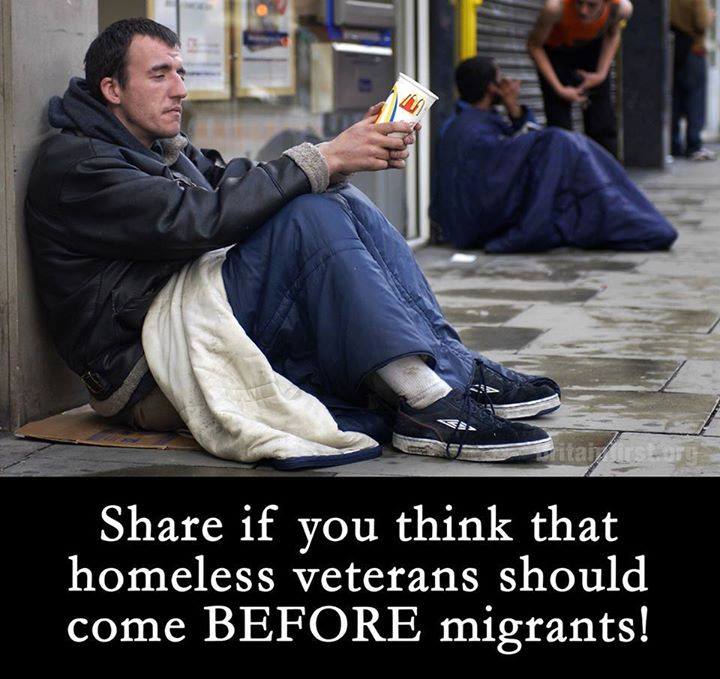
One of my contacts had accepted the request and shared this to her feed, which was how I cam to see it. She is someone I went to school with a long time ago and have not spoken to for decades, but I remember her as a good person – a quiet, kind girl. The nature of social media links means that I only know her through her avatar now, which is full of family, love and horses. I wish her every goodness.
This connects me to part of my own story, growing up in a broken working class community, during the political and economic upheaval of the 1980’s, when Margaret Thatcher fought a war against the mine workers union in the cause of Hayek and free market. In my corner of Nottinghamshire this meant open warfare between striking miners and the police and eventually mass unemployment, poverty and a loss of community cohesion and pride. It is perhaps no secret that the current MP of this constituency is former miner (and former Labour party activist), Lee Anderson, whose bigotted ‘plainspeaking’ strident views have seen him elevated to the position of deputy chairman of the Conservative party. This transition from working class solidarty to a cruel game of blame-the-victim causes me deep shame for my place of origin.
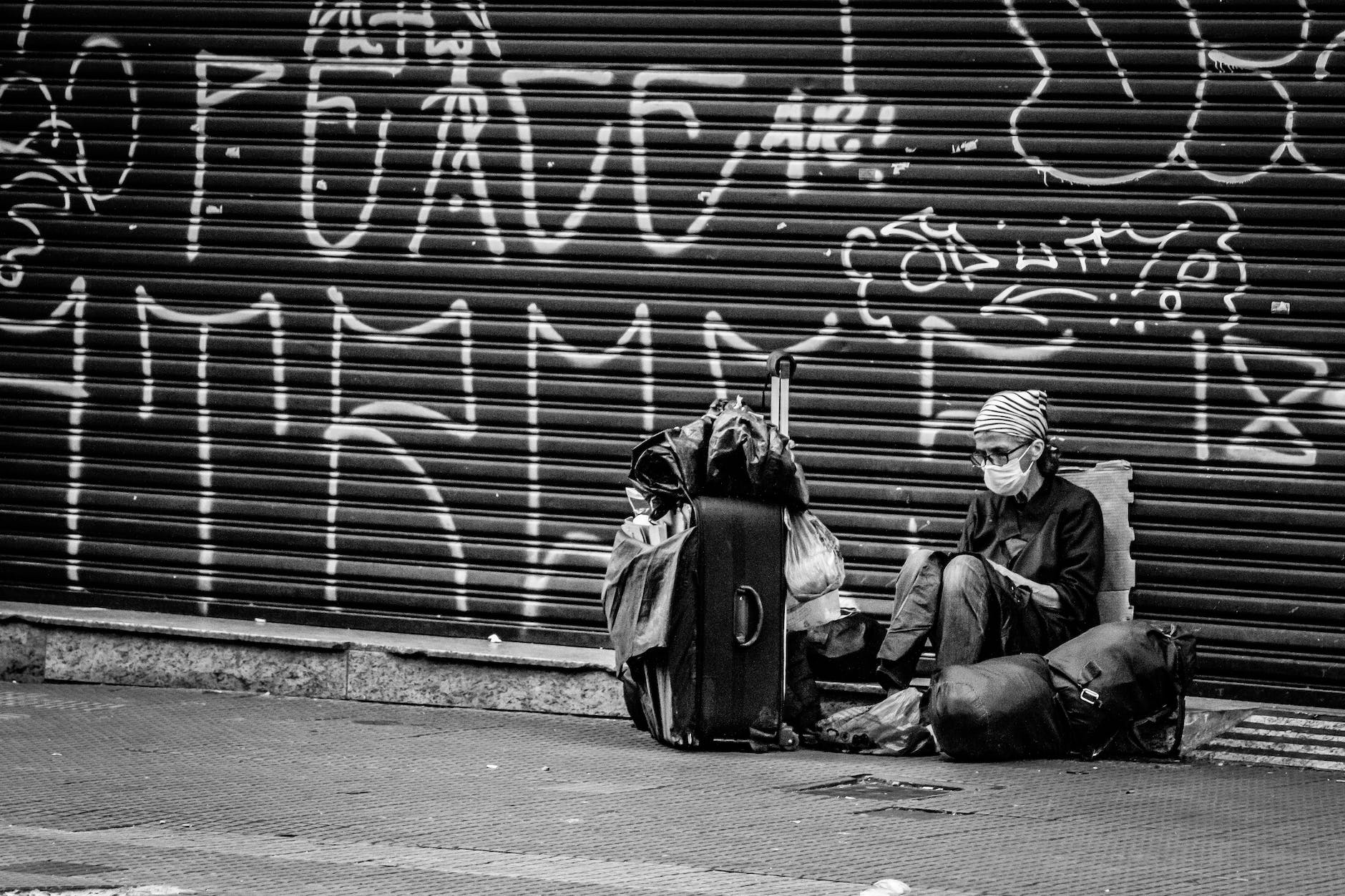
I wanted to try to identify where this photograph came from. Google lens gives some limited tools to identify the origin of an image and as far as I can see, back in 2017, the photograph was first used by The Independent newspaper to illustrate an article by Sirena Bergman under the title of ‘Budget 2017: While pledging to help privileged house-buyers, Philip Hammond insulted homeless people across the country’. Back then, Hammond made comments about increasing taxation of cheap alcohol, which he calously and without anyevidence linked to homelessness, clearly playing to the gallery of middle English privilege.
In other words, this image was first used in an article which called out the scapegoating of the most vulnerable and broken people in our country. Here is some of what Bergman said;
The overt elitism in these measures is unfathomable. His comments on “vulnerable people” “cheap alcohol” and “so-called white cider” intentionally or not evoked images of the homeless population – currently standing at a quarter of a million people in the UK – and reinforced the idea that the privilege of not living on the streets gives us a right to dictate how they should spend their money.
Hammond did mention homelessness in his Budget – for about a minute, if that. He pledged £25m to tackle the problem, compared to the £10bn he’ll spend on helping people who want to buy a home.
Apparently, as a young person, home ownership is my dream. While I don’t doubt it must be nice to not be held hostage by exploitative landlords and have some semblance of security for my future, much higher on my list of dreams is to live in a world where the very basic of human rights – to have a roof over one’s head – is assured to every citizen.
I live in Hackney, one of the top ten boroughs of London with the highest levels of homelessness. In interacting with rough sleepers the number one issue people express is a lack of empathy from the public. They are ignored, mocked and abused for begging for spare change – an indignity no one should have to suffer. But a real attempt to tackle homelessness is non-existent in mainstream politics, where people who are out of work are vilified and homelessness is stigmatised and “othered”, despite the fact that one in three families are a month’s salary away from losing their home.
It is clear then that this image hs travelled a long way from it use in the above article. Google lens tells me that its first use associated with the words attached was by someone called Jerry Tilley on what was then called Twitter. I do not have an account on this platform anymore and so am thankfully prevented from a closer examination of Mr Tilley’s other offerings, neither can I be sure that he (if indeed he is a real person) made the image himself, but from a google search the account seems to travel alongside other right wing causes such as opposition to vaccinations. Division and scapegoating has become a feature mainstream politics both sides of the atlantic and perhaps Mr Tilley knows this well. Politicians and activists use this tactic because it works.
What about those veterans who are on the street though? Perhaps my response seems unsympathetic.
Are there a lot of street sleeping ex-service people? How many and what effort are being made to help them?
Is there evidence that the needs of other homeless people – particularly ‘migrants’ – are being promoted above our veterans?
Are veterans needs different to other homeless people? Are they primary?
(As an aside, when did we start using the word ‘veteren’ to describe ex-servicemen and women? It seems to me to be an American import, along with that sickly phrase that has to be intoned every time we meet someone ‘thank you for your service’. I would contend that this kind of solidier worship hides a lot of other problematic concepts, but this is for another time.)
Last year, Johnny Mercer, Minister for Veteran’s affairs, pledged to end veterans sleeping on the streets. He is an ex-serviceman himself, and placed a lot of personal capital in this issue, even saying on national radio “There should not be any veterans involuntarily sleeping rough in this country by the end of this year, and you can hold me to that!”. After news articles suggesting it had actually risen by 14% over the year, he had a very public argument with Carol Vorderman. Sides were taken, but the ‘problem’ remains.
Perhaps we should speak to pepole who are actually experts on homelessness and street sleepers? This article in the Big Issue magazine is perhaps a good place to start. Here are a few quotes;
The issue of homeless veterans on the streets is an emotive issue and there is often an association made between ex-service personnel and rough sleeping.
It’s a matter that the UK government has been vocal in tackling – veterans minister Johnny Mercer has promised to end veteran rough sleeping by the end of 2023, calling the current situation “manageable”.
However, the strong connection between street homelessness and ex-services personnel is not always borne out in the statistics.
The Royal British Legion has previously said it is a myth that there is a high proportion of rough sleepers who have served their time with the forces.
While the narrative of British veterans being left on the streets is popular with some quarters of the far-right, the Chain figures show that most veterans on London’s streets originated from outside the UK. Between July and September 2023, 44 British veterans were spotted on London’s streets compared to 92 people with a history in the armed forces outside the UK.
The government has committed to ending rough sleeping by 2024 – a target experts believe ministers will miss.
The Westminster strategy to achieve that goal specifically mentions veterans. It speaks about waiving a local connection to areas for veterans asking local authorities for help – a common issue for veterans who may move around the UK or have been away serving.
“It’s the first time there have been specific actions towards ending veteran homelessness,” said Buss-Blair.
“Having a viable route off the street is key. Ending veteran homelessness is eminently achievable.”
Measuring and understanding the causes of homelessness is never easy. It is by nature a hidden problem, and each homelessness story will be different. The common ’causes’ that often cited are sometimes refered to as the ‘eight D’s’- drink, debt, drugs, divorce, depression, domestic violence, dependency culture, and digs, meaning accommodation. These are true for everyone, whether veterans or not. But these ‘D’s’ seem oddly elastic, in that they become more powerful in certain social circumstances. Homelessness grows in situations of greater innequality and poverty, and when housing is short. If you raise the bar, then short people can not reach it.
Which is another way of saying two things; helping homeless veterans is possible, but the problem of homelessness is not seperable from their special case.
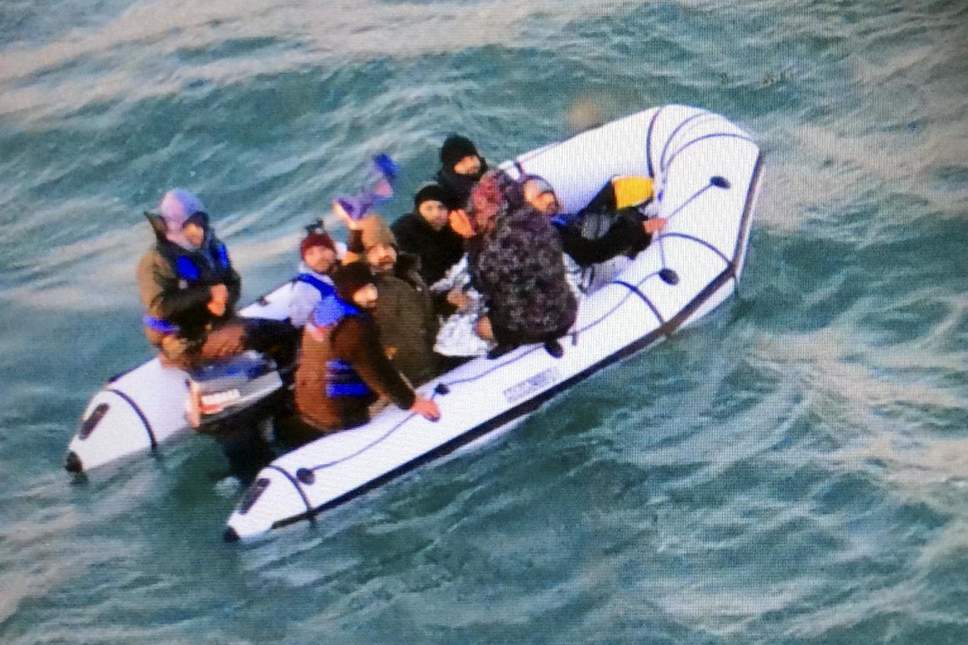
The other assumption made in the post that started this discussion is that there are migrants sleeping on our streets and that these people were being housed in hotels, somehow at the expense of efforts to shelter ex-servicemen and women. You do not have to look hard to find how far this concern is being spread.
Reuters fact checked some of these claims, including this one;
“Over 6,000 homeless veterans who have given their service to our country will be sleeping rough on our streets tonight. Nearly 48,000 illegal migrants who haven’t given anything to our country will be sleeping in 3/4/5 Star Hotels tonight. The UK in 2020”, reads one post shared hundreds of times on Facebook (here) .
VERDICT
False. Approximately 1,000 asylum seekers are housed in hotels each night. The claim that there are 6,000 veterans sleeping rough each night is unsubstantiated.
There is evidence however that numbers of ‘migrants’ (these words are not neutral) sleeping rough are increasing. There were reports that numbers sleeping on the streets of London in November last year had risen by 800% over a two month period, from 11 to 102. (Remember that counting numbers of street sleepers is almost always impossible, and that actual numbers are almost certainly much higher.)
Why are migrants sleeping on our streets, particularly if many of them are Asylum seekers, with specific protections under international law? Perhaps in part this group of people share more than the ‘eight D’s’ mentioned above with ex-servicemen and women. The trauma and displacement that I have have had described to me by ex-servicemen during my previous work as a therapist has strange echoes in the stories of people escaping violence, forced out on to dangerous roads in search of sanctuary.
The rise in negative language around ‘migrants’ in the UK is not just a right wing phenomenon. The Labour party are picking around the edge of it, critical of incompetance and not ‘stopping the boats’, rather than calling out moral bankruptcy in the scapegoating and gaslighting that has been witnessed even from the dispatch box from our government.
And this is why posts like this one matter. Stoking fear of outsiders is easy. Blaming them for things is easy. We are rendered receptive by these messages by our tribe, and if we feel that tribe to be under threat, then we are even more swift to grasp them.
What is hard is to actually do the hard work of understanding why people are on the streets, and accepting that the job of stopping this happening is far from easy and that in part macro economic decisions are to blame every bit as much as individual decisions and experiences.
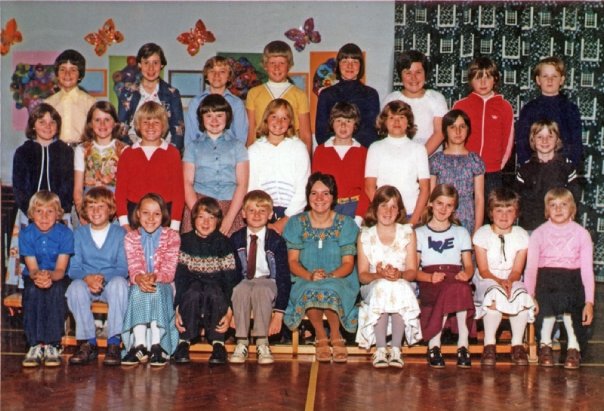
Here is a class photo, with bowl-cut me in yellow in the back row. I think the person who shared the post may be in here too, but my memories of everything back then are fragmentary – the gift of a difficult and damaging childhood.
I wonder how many of this class of mostly working class kids have experienced homelessness? Some will surely have done so, even if they did not sleep on the street.
I wonder how many of them have ever spoken to someone who has slept on the street?
I wonder how many will listen to Lee Anderson’s scapegoating talk and think that he is a man of sound judgement and common sense?
I was going to respond to that post on facebook with something like why do I have to choose? Why can’t we help them both? But I did not, because one of the other defining features of our social media avatars is that they are incapable of changing their minds through external correction. They are only capable of confirmation bias and reactive defensiveness. The sharer of this post is not my enemy, she is one of my community. Perhaps one day we will meet and speak of old teachers and school dinners.
The fact that ‘migrants’ are sleeping rough on our streets causes me deep shame for may place of origin. The same is true for veterans, or gamblers, or drinkers or drug takers. A society that insulates itself from this shame by blaming and scapegoating is heading towards dark places.
Compassion is not free, but it sets us free.
 this fragile tent