

I live in a lovely place.
Most days in the course of my work, I travel around Argyll- and I often visit the island of Bute.
Bute is an interesting place. It is the most populated of Argyll’s many islands- with a busy capital. It is not without it’s problems, like many small communities. The island has a rich history.
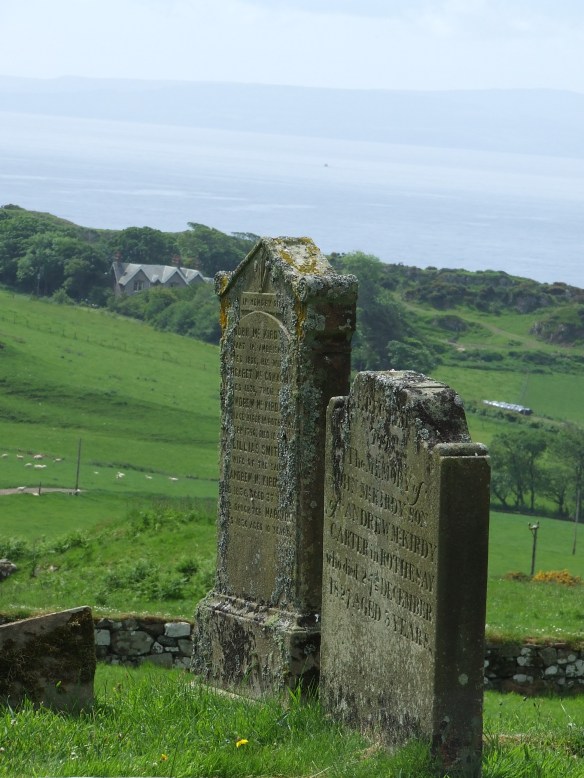
Last week I took a lunch break, and drove out to one of my favourite places- the church of St Blane.
It is a special place. Cupped in a south facing hillside on the south tip of the Island, overlooking the island of Arran, and its small neighbour, Holy Island, another early Christian site, now used as a Buddhist retreat .
The site was thought to be the location of a monastery established by St Catan, contempory of St Columba. He was one of the Ulster missionary saints who journeyed to Scotland to convert the wild Celts in the mid sixth century. St Blane was thought to be his nephew, who took over as abbot after Catan. Blane established other Monasteries, including one on the site of Dunblane Cathedral.
What might life have been like for these early saints? How did they make sense of life and faith and mission?
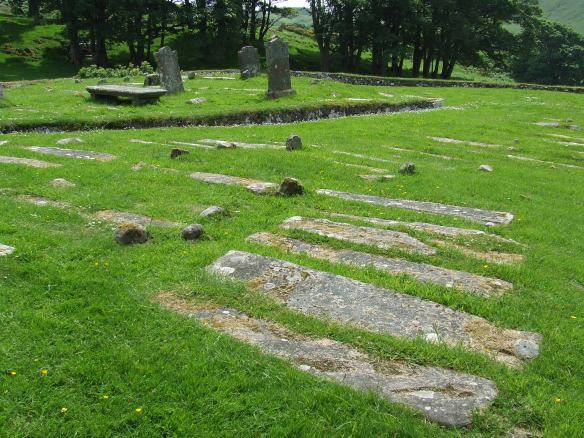
The site on Bute is rarely busy. It is surrounded by mature trees, full of the sound of rooks croaking. Centre stage is a medieval ruin, which fell out of use around the reformation. The story goes that the minister refused to have any truck with this new fangled religion…
In 1560 the parish priest, Sir James McWararty, refused to embrace the Protestant faith, and he also refused to relinquish his occupation of St Blane’s. He was still living in the nearby manse in 1587, and it seems that the response of the authorities was simply to leave the church to fall into disuse rather than tackle Sir James directly.
He must have been a formidable bloke.
And here we are, at another set of crossroads in the history of faith in Scotland. I wonder what marks we will leave that people might read in another 1500 years?
And if we make any- what they will make of us?
 this fragile tent