Principles… Groucho and theological formation.

groucho-marx

Those are my principles, and if you don’t like them… well, I have others.

Groucho Marx.

A funny guy, was Groucho.

But it seems to me that for thousands of years men and women have tried to find a platform for living that promised something solid and good and true.

In this way, perhaps we can guarantee a life of prosperity for ourselves and our children.

Perhaps too the sum of our days might then come to mean something. And the Gods above us might cease their indifference, and cause the sun to shine on our ripening corn.

And then perhaps we might live out long lives, and see the flowering of our children’s children…

old-man

So the story of wandering nomadic middle eastern people recorded in the Bible, seeking a code for life- this is not just ancient mythology- but it is the story of who we are too.

We follow their journey into the desert, where the wind blows and the wild animals are. We camp with them at the foot of the mountain, and pray for laws for life to be given to us on tablets of stone, and mediated by men of wisdom and strength.

If we can only learn what is required of us, and follow the code of the road that we travel together with our friends, through bandit country…

But then comes the twistings and turnings in the long road. The failings of our leaders, the fickle following of the flock, the empty promises of a distant God who appears to have forgotten his people.

The impossibility of these laws- which always place goodness beyond the reach of mortal man, and condemn us for what we can never be.

But then into the story steps the man called Jesus.

He walks with us for a while, and stands in the gap between being and becoming that we humans always seem to stumble in.

And though he is not a law-breaker, neither is he enslaved by it.

Everything about him calls us to a deeper level of being- back to core of who we are…

We once again find ourselves to be Children of the Living God.

serving-hands

Which brings me back to the point of my post.

If I am right, and there seems to be a universal desire to find spiritual truth and meaning in our existence, then what parts of our understanding do we bring to this search?

Cognitive behavioural psychologists suggest that there are three main levels to our mindfulness. I wonder if there may be clues within this that might help us to consider how we form our thoughts towards God?

The first level concerns out feeling and our acting– those immediate reactions and responses that seem to pop into our consciousness in an almost automatic way. We react out of understandings and experiences that are driven by core beliefs which will be to a large part hidden from us.

These feelings and actions are fickle and changeable. We can modify them sometimes, but often it seems as if they happen to us and around us, and we have little control.

I know people who approach God (or I should say I have approached God) in this way.

The image we have of God arises from a set of inherited assumptions and half understood yearnings. We reach for him in times of immediate need, and try to shape our actions in line with the behaviour of these others who seem to know him better.

There is something of the child in this. It is good. But it is also incomplete. We are more than just the sum of how we act and feel.

The second level concerns the structure of obligations and rules we tend to apply to ourselves. Once formed, we cling to them tenaciously, and though we can act against them, they still govern our acting and feeling in subtle ways.

Some of these rules are well organised into structured hierarchies- and serve us well. However, these exist alongside other assumptions about ourselves and how we relate to the world which may be less helpful. Assumptions formed out of pain or dysfunction, or through incomplete information.

Such rules and assumptions on which we base actions and feelings are not easily accessible or necessarily understood. The reasons we then give for actions may well relate to hidden experiences and understandings that still become the engine for whole ways of being.

Much of my faith experience seems to have been lived in the shadow of guilt induced by me breaking rules. We Christians are very good at rules, even when they are not written down.

Rules of how to dress, how to speak, how to spend time, how to sing, how to love one another, how to shop, how to speak to God. Many of these rules are good- they have evolved out of the history of our faith community and those who went before us. We pore over scripture and refine or understanding of these laws. Some seem more important than others to different groups and at different times. They may then give priority to those laws, and subordinate the others, and the people who follow them.

And mixed in with this structured law keeping are all the other assumptions- that shape the way we act and feel in less predictable ways. Partial and incomplete understandings that still we concrete into a shape that we call truth…

The third level concerns the core principles which become the building blocks for who we are. It is on these principles that the rules are formed from- and in turn govern our acting and our feeling.

These building block principles are formed early, and then take some shifting. Again, we are unlikely ever to have a full understanding of what these are- we only get clues to them as they arise into our conscious interaction with the world around us.

They concern cherished ideas on which we can stand tall, but also other core beliefs that may be less positive- perhaps based on ideas of our lack of worth and value, taken on as children, and still shaping us as adults.

If faith does not live within us at this level- then what value has it? If our theology does not start with the beautiful principles we see lived out in the stories of Jesus, then what value have the rules we employ and apply, or the acting out and feeling that result from our experience?

These things seem to be the flowers that later the Spirit of God would turn into fruit in our lives.

It is not that the laws or the acting out are wrong necessarily. They may be wonderful. But they may also be missing something of the heart of the matter.

Love. Joy. Peace. Patience. Kindness, Gentleness. Self control. Against such there is no law.


God’s great big hoover, revisited (with a bit of help from Tom Wright.)

I posted earlier about my memories of growing up as a young Christian in the shadow of apocalyptic theologising about the ‘end times’, and in particular the fearful spectacle of a rapture, which a friend of mine (Janet) likened to God hoovering up his chosen ones in a great spring cleaning exercise. The earlier post is here.

I heard recently that there was a new rapture film, based on the hugely popular Tim la Haye ‘Left behind’ series. I have not seen it, so do not know if it is any good. I wonder if it has terrified a new generation of Christian kids as the earlier films in this genre (mentioned in my earlier post) did me?

This is the new film;

lbtm

The lovely theological term used to describe ones view of the future is eschatology. My friend Ali always cackles that the word is just too much like scatology– perhaps in the case of films like this, he may be very close to the truth!

But what are we heading for?

Here’s a bit of Bishop NT Wright on the same subject;

God the symmetrical…

symmetry

The other day we Michaela and William were having a discussion about people’s faces- I think they had been drawing faces at school. William was rather astonished that his friend had eyes that were not level- one was higher than the other. His face was not symmetrical.

Michaela suggested to him that everyone’s face was different, and no-one was perfectly symmetrical, and so Will chewed on this for a while and said

“…apart from God’s face. His must be symmetrical.”

Michaela did not know how to respond, and so made a few comments about us being made in the image of God. She later recounted the story to me with a bemused expression on her face.

This kind of left me thinking.

There is something appealing about being able to sketch a predictable, perfect shape out of our knowledge and understandings of God.

For generations people of faith have been trying to do just this. We look at our scriptures and listen to our prophets and from these glimpses of the divine, we fill out a version of God that we cast in concrete and endlessly reproduce.

The image that came into mind when thinking about the concept of a symmetrical God was one of those paper chains that you make by folding paper and cutting it to make a connected chain.

paper-chain

Is it possible that this metaphor works as a way of understanding the process of theological explorations for who God is?

We take the source material- fold it according to our particular perspective, and then make careful symmetrical cuts according to our own understanding- ensuring the inclusion of acceptable texts and that when displayed, all is orderly and connected.

The great age of modernity, with its enlightened gifts of rational systematic analysis, needed a symmetrical God more than most. We needed solid propositional concepts, measured, tested and cross referenced against scripture, which is given unassailable status as Holy, inerrant, the very Words of God.

Increasingly, the modern theological edifices, in all their apparent certainty, are being re-examined by this new generation- in many ways that is what the ’emerging church conversation’ has been all about.

And many of us are no longer interested in Symmetry- at least not as a first priority.

Who says that symmetry is perfect anyway?

Poster-theology.

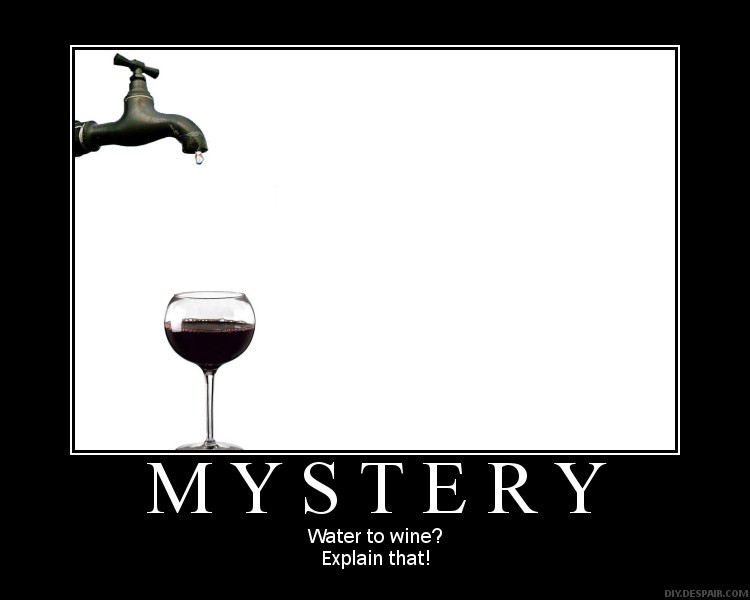
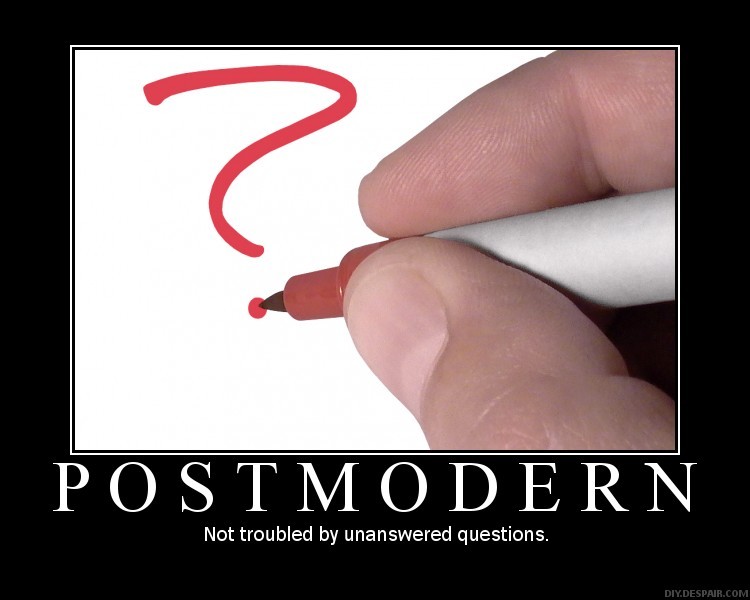
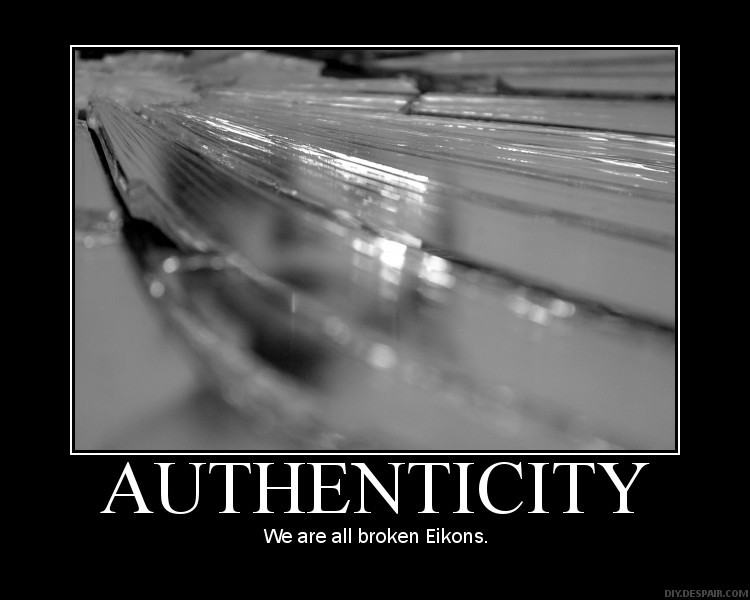
Following up from the poster I used in my earlier post- I thought I would borrow a few more of Katiejen (at Emerging Grace)’s images– cos I like them. Thanks Katie!

I like them because they each capture something of a common journey that many of us have found ourselves on- and because they can be as simple or deep as you want to make them.

And there is the old adage about pictures speaking a thousand words- although I do love words…

(By the way- one word used here is EIKON- which is a lovely word, defined here as- ‘Eikon is the Greek for icon and refers to the visible manifestation of the invisible’

I suppose your reaction to them will depend on that usual combination of personality/thinking style/theological position…

Gray theology revisited…

Earlier I posted a discussion about how we form our thoughts (our theology) towards God.

I confessed to being afflicted by a tendency to see the gray areas when others see black and white. Whilst I would not necessary wish my affliction on you, I have come to realise that it brings to me something that can be valuable as a spiritual tool in following after God.

I have come to believe that God reveals himself in the margins, in the cracks and crinkles of life. Perhaps this is because we have relegated him to this place only in our business and modern idolatry.

There are many big noise Christian leaders who appear to suggest that they have a mandate from God to bring him stage centre, and let him treat us to tricks and religious entertainment. The God Channel is full of this stuff. Forgive me if I seem judgmental and harsh- I too have longed for God’s tangible, measurable presence. But I have been around enough of this hot air to understand it for what it often is, and to be repelled by it.

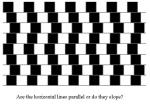
My experience of God is more like the squares above.

The solid blocks are like our theology- fixed and orderly and predictable. Constructed into an organised and seemingly complete brick wall. But God is not contained by the bricks, even though he might be willing to be encountered within them…

So as you look at the bricks, there he is in the corner of your vision. But impossible to pin down, Impossible to define and domesticate…

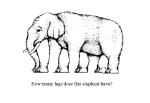
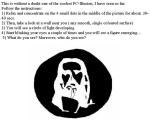
Here are some more illusions to further illustrate the point, and to have a bit of fun at the expense of your psyche (click to enlarge);

Blogged with the Flock Browser

How do we come to our understandings of God?

I have been thinking a lot about how we come to hold a set of beliefs and understandings towards God.

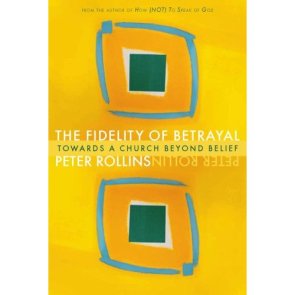
I have found Pete Rollins (part of the Belfast based IKON group) two books really challenging- he has this way of using parenthesis or slashes to convey something of the complexity and essential unknowabilty of our fumblings towards theology. Check these out if your head can cope with this;

One of the problems/blessings (to get all Rollins-esque!) of my particular personality is that I tend to see more gray than black and white. Where others see a simple issue- he is wrong, that is truth, this is what the Bible means by this, this is what is wrong with the world/the organisation/the church- I find myself always saying yes, but…

This is not always helpful. It can result in lack of clarity and prevarication. It can skew me towards a fence sitting position that has lots of questions, but finds no firm ground for to walk forward on. Kind of like some critics would categorise the emerging church do you think?

But how about theology? Is this not all about TRUTH? If we loose sight of the essential propositions that we hold in common, then all is lost, surely? This is how I was brought up. There were some gray areas, but these were overshadowed by the towering edifices of truth that we were given and encouraged to stand on like high stone walls.

So faith converted to theology (our theory and thoughts towards God) in this way;

Except, for me, this never really worked. I spend too much time with people to ever think that simple answers to complex human questions will suffice.

This sometimes leaves me at a place of dissonance with other more concrete but sincerely held theological positions all about me. At times it challenges my faith itself, but I have come to believe far from being a negative thing, this process of engagement, doubting and testing is in fact the very stuff of faith.

And that the ambiguities and difficulties brought to us by our reading of scripture and engagement with the wonders and mysteries of God will always result in a degree of uncertainty and struggle- and it is through honest engagement in this struggle that we encounter the Living God.

Or perhaps this just suits my personality, and so I make my theology accordingly?

This is the question that has been occupying my thoughts recently. Do we always tend to make an Icon out of our own perspective, and seek out others who will agree with us, and therefore make it seem more true, more dependable and therefore give it an illusion of universality?

Perhaps then, we form our theology a little like this;

If this is true, then does it matter?

Perhaps not. Perhaps this is a human trait- the gift of individual perspective.

Where It seems to become problematic is when we think that we are right, and everyone else is therefore wrong. It might be that you have been part of a group or denomination where version one of the theology-receiving model is enforced- leaving no room for any of your own exploration. This can be abusive and damaging.

So can the opposite- let us never be guilty of making God in our own image!

Which of course, unless you agree with me- you are/are not!

Theology, encapsulated?

I was thinking the other day about how incredibly difficult it is to have theological discussion with people outside your particular circle. The language that we use to describe our experience and understanding of God can be so prescriptive.

It is almost as our liturgy and our doctrines become mutually incompatible if they vary from each other by more than, say 3-4%.

Having said that, it may be easier to find common grounds for discussion if there is greater variance! We might be talking at cross purposes, but we are less likely to shout “Heretic!”

My friend and former neighbour Terry sent me this recently, which kind of makes the point nicely.

Its just for a laugh- enjoy!

Several centuries ago, the Pope decreed that all the Jews had to convert to Catholicism or leave Italy. There was a huge outcry from the Jewish community, so the Pope offered a deal. He would have a religious debate with the leader of the Jewish community. If the Jews won, they could stay in Italy ; if the Pope won, they would have to convert or leave.

The Jewish people met and picked an aged and wise Rabbi to represent them in the debate. However, as the Rabbi spoke no Italian, and the Pope spoke no Yiddish, they agreed that it would be a ‘silent’ debate.

On the chosen day the Pope and Rabbi sat opposite each other.

The Pope raised his hand and showed three fingers.

The Rabbi looked back and raised one finger.

Next, the Pope waved his finger around his head.

The Rabbi pointed to the ground where he sat.

The Pope brought out a communion wafer and a chalice of wine.

The Rabbi pulled out an apple.

With that the Pope stood up and declared that he was beaten, and that the Rabbi was too clever. The Jews could stay in Italy .

Later the Cardinals met with the Pope and asked him what had happened?

The Pope said, ‘First I held up three fingers to represent the Trinity. He responded by holding up one finger to remind me there is still only one God common to both our beliefs. Then, I waved my finger around my head to show him that God was all around us. He responded by pointing to the ground to show that God was also right here with us. I pulled out the wine and wafer, to show that God absolves us of all our sins. He pulled out an apple to remind me of the original sin. He had beaten me at every move and I could not continue.

Meanwhile, the Jewish community gathered to ask the Rabbi how he had won.

‘I haven’t a clue’ said the Rabbi. First he said to me that we had three days to get out of Italy, so I gave him the finger. Then he tells me that the whole country would be cleared of Jews and I said to him that we were staying right here.

‘And then what?’ asked a woman.

‘Who knows?’ said the Rabbi. ‘He took out his lunch so I took out mine.’