
Poetry
Needs
.
.
.
.
.
.
.
Space
.
.
.
And we
Need
Poetry
.
.
Lest our souls
Are strangled

Poetry
Needs
.
.
.
.
.
.
.
Space
.
.
.
And we
Need
Poetry
.
.
Lest our souls
Are strangled
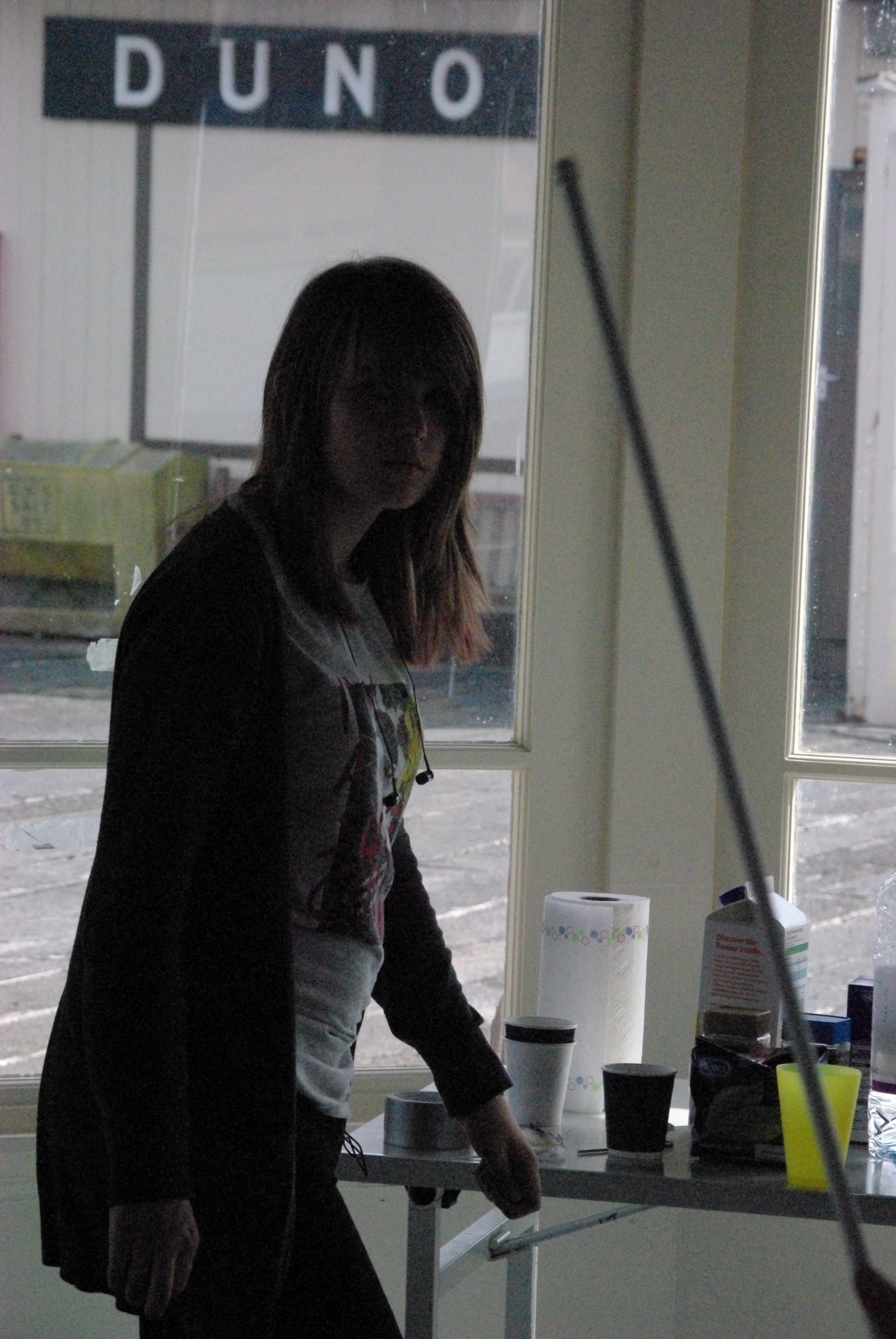
Taken on Dunoon pier recently- my lovely (and actually very good natured) daughter, with a sulky expression and her very own teenage speech bubble.

It has been a difficult period for Michaela and me. Life has thrown a few challenges our way over the last few months.
Recently we seem to have found ourselves in the middle of more conflict. Both of us are having a hard time at work, and there has been one or two other issues that have arisen closer to home.
I continue to find conflict so difficult. It disables me. I am caught between wanting to rise up and smite the ‘enemy’ with my club, and the strong conviction that we are called to a way of loving and peace making. Yes there is a time to stand up and be counted, but in my experience, conflict rarely brings the best out of anyone, and the ground we defend easily becomes poisoned- even when are relatively innocent parties.
Conflict also tends to reduce us to the core of who we are- the masks come off, and we are suddenly 15 years old again.
I have found no easy answers- and recognise my own dysfunction whilst hoping for better things.
Because conflict will come to all of us in some form, even if we attempt to live an insulated life- but all the more so if we follow the way of Jesus and set ourselves towards living more openly and deeply.
So I do what I often do in the face of the challenge of life, and start to write…
Conflict
It squeezes me stiff and sore
Making my brain beat slowly
Taking me down
Bending me like a creaking tree
In an angry wind
I wish I were stronger
Firmer of each conviction
More able to articulate-
Striped in black and white
Not a million shades
Of grey
But aged 43
The man I am
Always I will be
Soft and fragile
Skin thin and stretched
Too easily pricked
And too anxiously defended
Turn me Lord to tenderness
Teach me to forgive
In this sharp and ragged place
Point my way to peace
Because when I am right, I’m also wrong
This castle
Is built on sinking ground
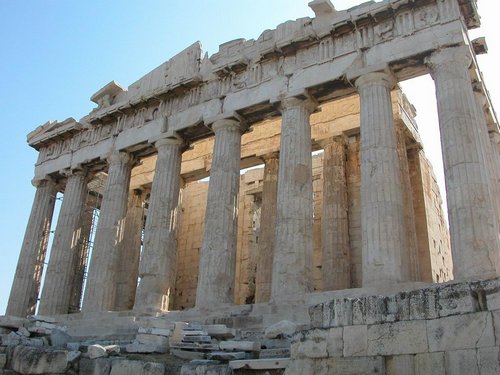
Been thinking about democracy today. After our recent messy election experience, it seems right to chew on this issue.
As is often the case, the origin of these ponderings was Radio 4. This time it was ‘Democracy on trial’ presented thoughtfully by (of all people) Michael Portillo. He has re-invented himself as an intelligent and generous commentator and media pundit. Did I get him all wrong when I cheered so loudly when he lost his seat in parliament in 1997?
Democracy is the unopposed dominant ideology of our times. It is impossible to imagine a ‘good’ society, country or culture that is not avowedly and organisationally democratic. Countries that do not conform to this stereotype are referred to as ‘regimes’ or ‘dictatorships’.
But modern democracy exists in a context, and with conditions. Can you imagine democracy that did not co-exist with a free market economy? If the will of the people demanded a control economy, with radical progressive tax policies could it survive the backlash from the IMF or whatever other powers of empire stood in it’s way?
And we Christians, perhaps under the influence of American syncretism between faith and culture, we tend to believe that democracy is the Christian, God-ordained way to organise society- despite scant evidence for this in the Biblical account of the life of Jesus, or the early church.
The modern Democratic ideal is only around 60 odd years old. It is always interesting to take the long view of these ideas…
The programme mentioned above took a little tour through the history of democracy–
It’s origin in ancient Greece- around the 4th Century BC- when some city states adopted a form of rule that allowed decision making to be made by some of the people- at least the males who had property, and were over 21. But the system was never popular- and carried with it the danger of mob rule- so much so that it was condemned by philosophers like Plato, and fell out of fashion, as a radical idea that simply did not work in practice.
And it was then forgotten.
There were flickerings in the middle ages- as parliaments were made in Iceland, then later in Britain. In fact we brits discovered democracy almost by accident as a series of accommodations and compromises were made- starting with that grubby little deal called the Magna Carta.
Across Europe revolution came and went, but democratic experiements (most notably the French Revolution) mostly ended badly. Other safer, more stable forms of government- involving political or dynastic elites. People who were educated and enlightened- people who were morally and religiously worthy. People who preserved the status quo and were not subject to the will of an uneducated mob.
Then there was the American revolution. Which pretty much amounted to one group of Europeans taking control from a different group of Europeans. And if you thought that this was in the cause of democracy, then you are in for a surprise. The authors of the American constitution took a pretty dim view of a broad electoral class.
Map from here.
Into the 20th Century, and democracies grudgingly emerged amongst the tattered flags of empire. And were tested in the most destructive and murderous wars that the world has ever known.
Until in 1945, only around a dozen countries were governed by anything that we might regard as democracies.
And for most of the last 60 years, democracy has slugged it out with communism to be regarded as the ascendant ideology.
The long view might caution us against a belief that human organisation is finalised and fixed now. Perhaps there might be yet new ideologies, or a return to older ones.
The idea that democracy has solved our problems- for example the rather fatuous democratic peace theory– is difficult for us to swallow. Our societies have much that is good, but also much that is sick and twisted. It has managed to exist alongside a lot of rather unpleasant things that are apparently being done in our name.

The question that many of us are asking in the wake of the recent election, is whether it is possible to improve our democracy- to make it more democratic. The focus here is on the mechanism, not the ideal itself. The ideological dominance of ‘liberal’ democracy has no challenge.
So am I wanting to do this? Well- no. As old Churchy said, Democracy is not perfect, but it will have to do until something better comes along.
I do think that it is kind of a duty of a citizen not to blindly accept what we are sold by the dominant power mongers of our time- our particular version of Babylon. We Christians are after all in (but not OF) this world.
Whatever that means!

So, in the interests of the celebration of milestones- this blog has just passed 100,000 hits from the opening post back in June 2008.
Uncool of me to mention it, I know.
Thanks to those of you who visit and read what I write.
I blog as a kind of therapy- but to be honest, if it were not for you, I would probably not bother!
Katherina sent me this clip today of Elizabeth Gilbert’s TED speech. She had watched it and thought of me, which was really touching- so thanks Katherina!
She is the writer of ‘Eat Pray Love‘, a book that Michaela enjoyed so much that she has bought copies for lots of her friends. She speaks well.
Her subject material is familiar to anyone who lives a creative life. We pursue those tender transcendent moments, seeking to capture and preserve them in some kind of abstract bottle. But they are fleeting, and even if we manage somehow to inhabit them (or be inhabited by them) then what next? How can we live with the knowledge that it has been done, and may never be done again?
In my moments of blundering creativity, I still resonate with her description of being part of some strange collaboration between me and something other…
A conversation between myself and some external thing that is not quite me, and may originate in something that is wholly other.
Something that I understand as…
God.

A while ago, I wrote a long piece about my (rather negative!) reaction to the dominance of positive thinking within our culture, and perhaps more particularly within our faith based structures.
My friends will smile. Michaela (sometimes known as Polyanna) is almost universally optimistic in our family- a bit like a cross between Christopher Robin and Tigger, and me- well let’s just say I can be a bit of a donkey! But I suppose that is the point. We live in a life of variety and fluidity. Life has this way of throwing in the unexpected- to bring huge joy, sometimes followed by terrible pain and loss. Our roads are long and there is blessing and holiness in all these things- wherever the journey takes us.
We should beware those voices who push us towards a view of life, and an understanding of God, that is based on relentless positivism. There lies a danger that we live our lives towards a kind of wish-fulfilment- a seductive philosophy/theology of success and power which undermines the core messages of the Gospel… and is very much at odds with the way of Jesus.
Equally we should beware the voices of gloom who counsel us that all is lost and the end is nigh. Too many lives are walled in by defeat and damage done by life- and for these people, the way of Jesus is to seek to be a chain breaker and a freedom maker. Some of this might involve the shift of mind-set towards embracing the possibility of change- that old sleight of hand trick called Cognitive behavioural Therapy that I have practiced in my mental health career. The dominance of this approach to almost every human problem is not without good sound reason- even if the cynic in me might also point to the economics of providing short term, focused, ‘one-size-fits-all’ kind of interventions.
I had two reminders of the issues discussed above this week. Firstly, Jonny Baker quoted some lovely writing by Ann Morisy in a discussion paper about mission.
Ann’s take on mission embraces both powerlessness, the eschewing of power AND the power of positive thinking. She cites Seligman, that great doyen of the American ‘self help’ movement. As I read her article I found myself saying YES….yes…(but)…
The YES was to some of these things (my emphasis)-
When we muster an intention to do things like Jesus, i.e. to follow Jesus – even in the most modest of ways – we arrive at the portal into the economy of abundance, where virtuous processes flow and grace cascades; By doing it like Jesus (even just a tad, and even just with the intention – because there is so much grace around) we trigger virtuous processes that gain momentum.
This relevance and transformational power of faith make it urgent to articulate and promote the resources at the heart of faithfulness that lead to human flourishing. And we need others to help us pass the test of public reason – it is not sufficient for our theologians or evangelists to simply assert the virtuous processes that faith sets in train.
The other article that interested me was a post reviewing this book on the Emergent Village blog.

I have not read the book (but it is now on order.)
Root asks the questions as to what a church would look like if it were based upon a theology of despair. He starts with Luther’s theology of the Cross– and suggests the church needs to reclaim a crucial piece of Luther’s insight, which he frames something like this-
God brings life and possibility out of death and impossibility.
I am taken back again to the Cross. To the point of absolute brokenness, failure and despair. To the point where all dreams ended, all hopes vanished and all future was stolen.
In my working life, I have met many people who are in this place. If our call is simply to tell them than in three days, there will be resurrection, and all things will be made new, then we are in danger of dishonest dealing.
Something else that is crucial to me is the possibility that ‘God is to be found in the broken places. That he is made known in nothingness and death’.
Like the Navajo rug perfectly woven apart from one flaw, which allows entry of the Spirit.
And that healing comes most deeply not through a denial of pain- or it’s manipulation into insignificance- but rather through the transformation of discovering God within our difficulties and broken parts.

We have had a lovely weekend.
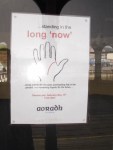
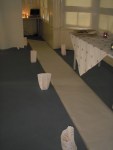
We set up Aoradh’s ‘Long now’ installation (developed for Greenbelt Festival last year) on Dunoon pier.
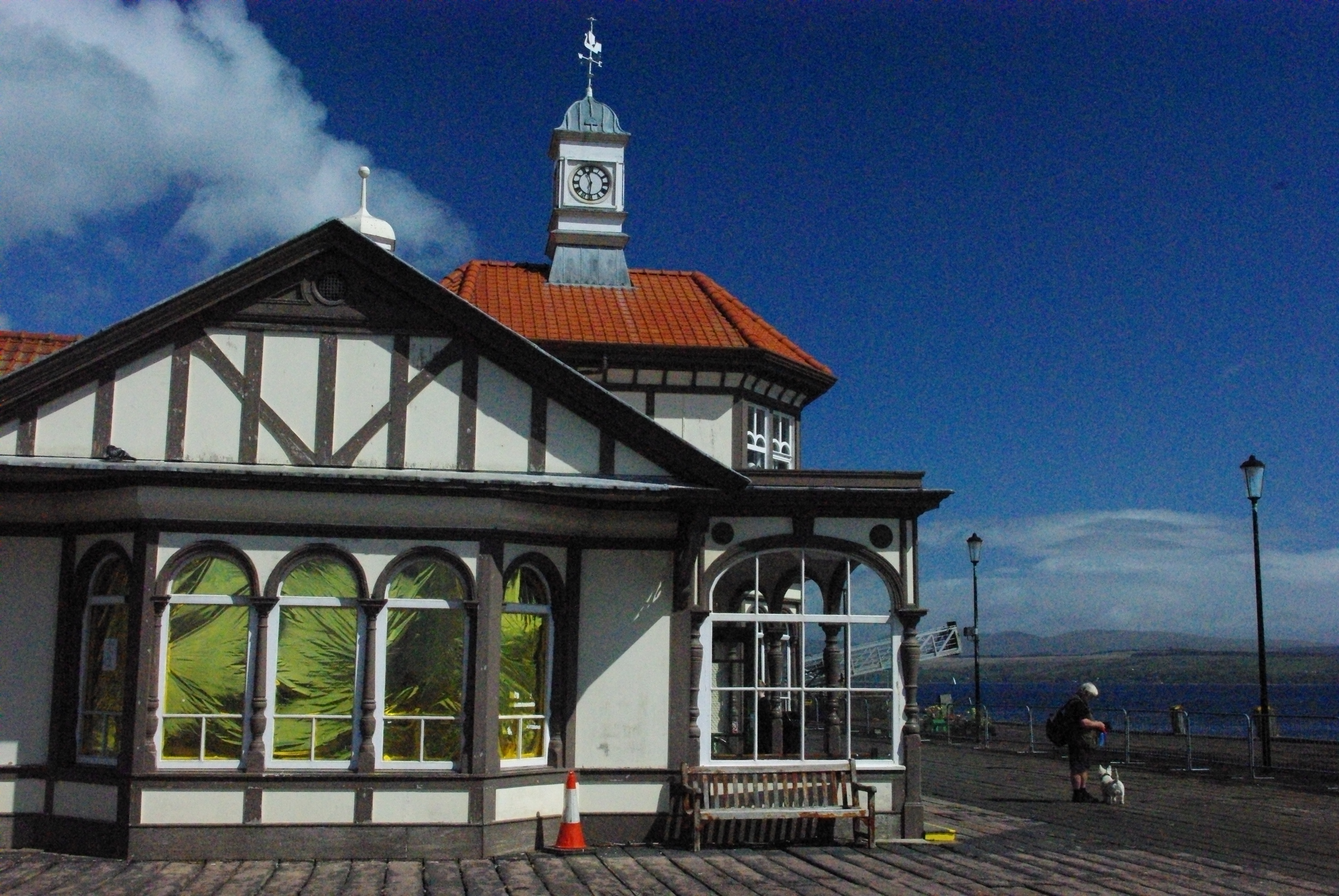
We spent Friday evening and Saturday morning setting up the lovely old Victorian room in a wooden building on the end of the pier. Considering we set the thing up in one hour for Greenbelt, this was luxury indeed!
The installation was then open to the public all day Saturday. One couple in particular will live in our memory. They were visiting Dunoon for the day to say goodbye to their grandmother, who was dying in the hospice. Whilst waiting for the ferry wondering what to do to pass an hour, they came into the worship space. And found themselves considering their life line, in the context of the certain knowledge that they would not see their grandmother again in this life. It is almost as if we set up this thing over the weekend just for them! May their times be blessed…
Today, we met for a meal in the holy space- then we sang some songs and Audrey led us through communion. I love these times… and as I have said before, the setting up and breaking down is worship for me.
So- some pictures…




We are just back from setting up the space on Dunoon pier for tomorrows Aoradh ‘Long now’ worship event…
It is always such a lovely place to be- an old wooden pavilion, spilling over with light (in fact often too much light, we have to mask off the windows.) Setting up and breaking down of the spaces we have set up there has always been a huge part of the pleasure of the thing. It is a time of companionship, laughter, shared meals and just the occasional moments of irritation as we all have our different understanding of how things should be done…
This is what the long now is about- if you are in the area, please come!
Welcome to ‘The long now’
You are invited to participate in a journey through time.
As you travel, you will make your own mark- your own timeline.
You will stop at stations symbolising-
- GEOGRAPHICAL time
- HISTORICAL time
- LIFE time…
Wherever we stand- whatever our perspective- we are standing in the NOW.
It is always NOW.
You will be invited to linger in this holy space that God gave us- NOW.
Finally you will be asked to think about the future;
the NOWs still being given to us, like gifts to unwrap.
In all these things
May we be learning to be grateful for the past
To participate graciously in the present
And to live in hope for the future.
Another interesting discussion on the radio this morning courtesy of Melvin Bragg’s programme ‘In Our Time’.
It centred around the work of Doctor, psychologist and ‘natural theologist’ William James– brother of novelist Henry James.

In 1901 William James began a series of lectures in Edinburgh, which came to be collected together as a book entitled ‘The Varieties of Religious Experience’.
It seems to me that James is of our time more than his. The modern obsession with logic and scientific reason- as the proper object and arbiter of all human endeavour- has been eroded by the events of the end of the 20th Century. Perhaps above all the fact that science has not delivered answers to the human condition, but rather has brought us huge environmental, moral and ethical problems that we all live in the shadow of- Ozone holes, radiation, global warming, the failure of free market economics etc.
In a world where the Zeitgeist was (and perhaps still is) overwhelmingly concerned with the rational and logical, even our approach to religion, James stood out as proposing a totally different way to understand faith. Rather than focus on doctrine and dogma, solidified and codified within religious texts, or in the institutions of faith, he suggested that only valid way to understand faith was in individual subjective experience. He went further and suggested that the faith experience was at the heart of what it meant to be human- and to understand this was to understand better who we are.
This led James to investigate mystical experiences, including by using hallucinogenic drugs. He was less interested in whether faith was ‘true’, or whether God existed, but more in the effect and usefulness that transcendent experience had on those who experienced it. This individualistic and self-centred version of religious seeking feels very post modern.
“Not God”, James states, “but life, more life, a larger, richer, more satisfying life, is, in the last analysis, the end of religion.”
James was also interested in how personality and ‘spiritual health’ interacted with our choice of faith (which resonates with this post) and he spent a lot of his time in the lectures discussing people who had undergone conversion experiences.
A couple of quotes from here–
James recognized a pattern in conversion experiences. It tended to happen when people were so low that they just ‘gave up’, the vacuum of hope providing space for revelation. The religious literature is full of stories along these lines, in which the constrictions and negative aspects of the ego are finally discarded; one begins to live only for others or for some higher goal. The compensation for becoming dependent upon God is a letting go of fear, and it is this that makes conversion such a liberating experience. It is the fearlessness and sense of absolute security in God that gives the convert their breathtaking motivation. An apparently perfectly normal person will give up everything and become a missionary in the jungle, or found a monastery in the desert, because of a belief. Yet this invisible thing will drastically change their outward circumstances, which led James to the unavoidable conclusion that for such a person, their conversion or spiritual experience was a fact, indeed more real than anything which had so far happened in their lives.
James acknowledged that science would be forever trying to blow away the obscuring mists of religion, but in doing so it would totally miss the point. Science could only ever talk in the abstract, but personal spiritual experience was the more powerful precisely because it is subjective. Spirituality is about the emotions and the imagination and the soul – and to a human being these are everything.
I find myself both in sympathy and at odds with James- in much the same way as I am with the pluralist times we live in. For him, religion was about personal transformative experience, a little akin to a piece of remarkable cognitive behavioural therapy. God became portable and useful- perhaps even something to be cherished as a way of giving life direction and meaning.
But I have this feeling that the Lion of Judah is no tame lion…

 this fragile tent