Lent 17…

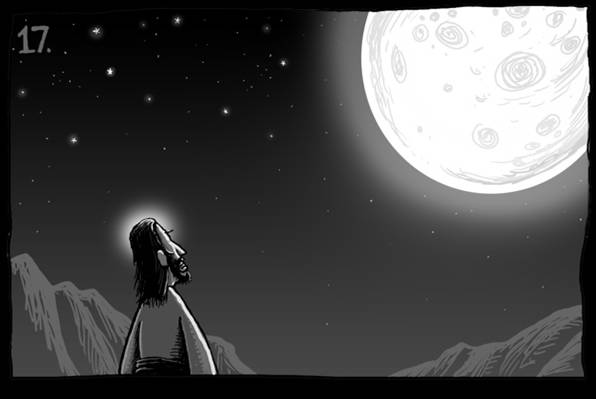
That night he stood alone before the moon. Listening again for the voice.

Straining again for the call.


His face shone with the reflected light. Sun to moon. Moon to face. And he started to hope again.


Now is your time my son.

In you are my hopes, my dreams.

In you is everything I am.

In you is all my love, all my mercy, all my grace.


Now is your time…and mine.


Changing the world by relationship…

I read this today via the Emergent Village ‘Minimergent’ bulletin…

Despite current ads and slogans, the world doesn’t change one person at a time. It changes as networks of relationships form among people who discover they share a common cause and vision of what’s possible. This is good news for those of us intent on changing the world and creating a positive future. Rather than worry about critical mass, our work is to foster critical connections. We don’t need to convince large numbers of people to change; instead, we need to connect with kindred spirits. Through these relationships, we will develop the new knowledge, practices, courage, and commitment that lead to broad-based change.

Read entire article at Faith Collaboratory by clicking the names below.

Margaret Wheatley & Deborah Frieze

The article make interesting reading as it was written a few years ago (2006) when the language of ’emergence’ was still fresh and exciting. We are part of a different time now. The article suggested an emerging process that goes something like this-

Berkana has developed a four stage model that catalyzes connections as the means to achieve global level change: Name, Connect, Nourish, Illuminate (see Appendix). We focus on discovering pioneering efforts and naming them as such. We then connect these efforts to other similar work globally. We nourish this network in many ways, but most essentially through creating opportunities for learning and sharing experiences and shifting into communities of practice. We also illuminate these pioneering efforts so that many more people will learn from them.

The article then suggested that the next stage would for communities of practice to develop an proliferate.

Is this what is happening?

Well- I think so…


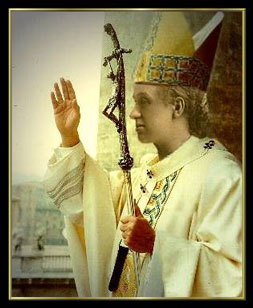
Pope Joan went there first…

While we are on the subject of women in leadership, I was reminded of the story of Pope Joan the other day. (Check out book of the week on radio 4)

She supposedly reigned for a few years some time thought to be between 853 – 855 AD. It is probably just a story, but what a story!

The first mention of the female pope appears in the chronicle of Jean Pierier de Mailly, but the most popular and influential version was that interpolated into Martin of Troppau‘s Chronicon Pontificum et Imperatorum somewhat later in the 13th century. Most versions say that she was a talented and learned woman who disguised herself as a man, often at the behest of a lover. Due to her abilities she rises through the church hierarchy, eventually being chosen as pope. However, while riding on horseback one day, she gives birth to a child, thus revealing her sex. In most versions she dies shortly after, either by being killed by an angry mob, or from natural causes, and her memory is shunned by her successors.

She probably never existed.

But the point is, that for Centuries, people thought that she did- and for many she has come to personify something of the way Church has vilified and marginalised women. How women are seen as carriers of an evil seed- eaters of the fruit in the Garden.

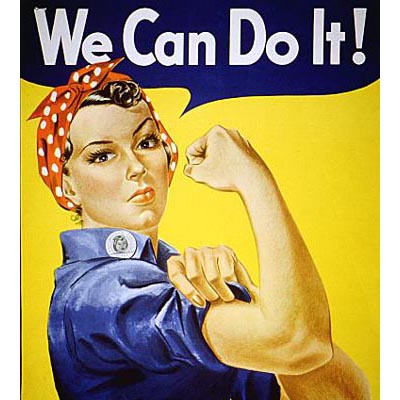
I wonder if it also says something about how for women to succeed in a male dominated leadership environment, they have to disguise themselves as masculine. The Margaret Thatcher complex perhaps…

How do we celebrate difference whilst at the same time promote the sharing of power?


Church in the margins- gender and leadership…

There has been some discussion over on Jonny’s blog about that old issue of gender in leadership. It seemed to rage over two different book reviews- here and here– both of which were on new forms of church, and both of which were overwhelmingly male in authorship and involvement.

Some of the comments have been very pointed and it is quite likely that some people have been left feeling sore by the whole thing. I know that blogging can easily result in these kind of ego rattling discussions, but to be honest, I have never liked them. It is like watching a slowly unfolding car accident- compelling, but at the same time unpleasant.

Not that the issues do not need to be aired.

Particularly when it concerns the marginalisation of female voices within the discussions about what church is becoming. The kind of marginalisation that stands in a long line of similar suppression of female voices throughout church history.

I have my own particular perspective on these issues, as we all do. Our small group has no leaders- in the formal sense that is. Different people take (or are given) control at different times however. I also meet with another Bible study/prayer group, in which I am usually the only man.

In both of these gatherings, leadership, as far as it exists, is best understood in terms of hospitality. And in this, we do have a leader- and she is the one who organises, invites, disseminates information, provides tea and a listening ear. This kind of leadership is so much more than being the host of a dinner party- it is faciliative, releasing and creative in the way that it makes people feel safe, included and part of something. It is both the object and the means by which we become church.

Perhaps you could say that this is what female leadership looks like. And if so, it seems to me to be the kind of leadership that is needed within our new forms of church more than any other.

Women might be better at this kind of leadership than men (or rather some women might be better than some men, with the percentage balance towards the women) but let us be honest- we can all get it so wrong.  And this is often revealed in how we use personal power as much as how we display public leadership.

I am no longer easily ‘led’ by anyone- male or female- but I hope I am an easy companion as we walk side by side. And when I see power being used to overcome, overwhelm, overpower- particularly when this is done callously and with scant regard to the damage being done- then our ways will diverge.

So for me, the new forms of church that are emerging have an opportunity to correct some of the public leadership gender imbalance- and this seems to me to be a great thing. But despite the fact that I am a straight, white male, I am going to risk saying this-

There are more important things.

Lent 14…

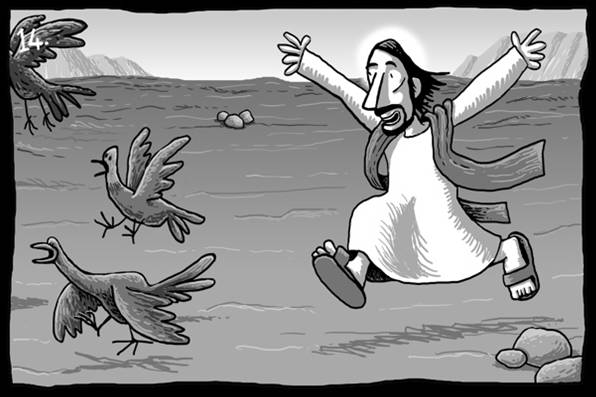
He danced down valleys and over stream beds. He danced the day long…

A dance for the hungry and the thirsty

A dance for the broken and hurting

A dance for the widows and the fatherless

A dance for the lonely and the betrayed

A dance for the poor in spirit and the captives of the night

A dance for the down cast and without hope

A dance for the dying and for those in grief

A dance for the sufferers that brings hope and relief

A dance of for grace and love and mercy

A freedom dance…

For all mankind

And as he danced he drove back the black birds of death and war and profiteering and slavery.

Hate and evil took to flight.

The day belonged to…

This dancer

And the Dance

Dictatorship of the air…

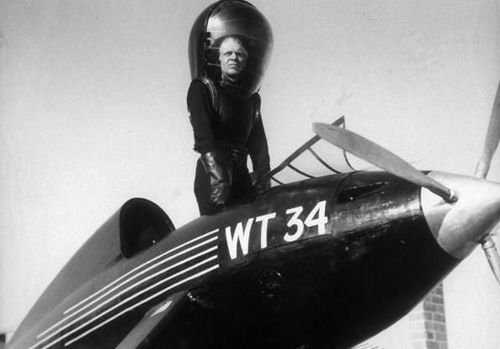
As a young lad I went through a period of reading H G Wells novels.

To be honest, I found them very dry and antiquated, but I was a voracious reader and had read my way through many of the other books on our library shelves.

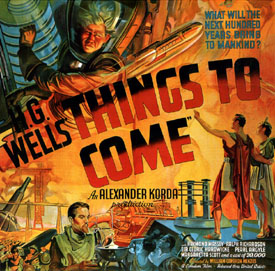
One of the books I remember trying to read was Well’s ‘The Shape of Things To Come‘- written in 1933 and strangely prophetic-

It sketched out Well’s prediction of a future world war, which he felt was likely to lead to stalemate, and chaos- following which he envisaged the emergence of a benign dictatorship, policed worldwide- using air power to enforce peace.

A dictatorship of the air.

I remember that even to my 12-13 year old perception, this Utopian vision seemed strange and outdated. It was committed to an idea of human progress through scientific advancement- which to anyone growing up in an age of nuclear stalemate seemed rather bizarre.

I was reminded of Wells’ ‘Dictatorship of the air’ again whilst listening to the news of western Jets patrolling the sky over Libya.

Another intervention into an oil rich third world dictatorship- another humanitarian disaster filling our screens.

Another attempt to overcome through technology and science.

Have we learnt nothing from recent wars- in the Balkans and in the Middle East? Or does the illusion of clean, disengaged warfare carried out at distance persist in the minds of our politicians?

Obama was reluctant- he is already fully engaged in bloody interventions in Iraq and Afghanistan. But it seems he has been persuaded by our shiny new PM David Cameron, and his French colleagues.

I hope I am wrong. I hope Gaddafi gives up and pitches his tent elsewhere.

But history is not on his side.

Wells got it badly wrong.