Lent 12…

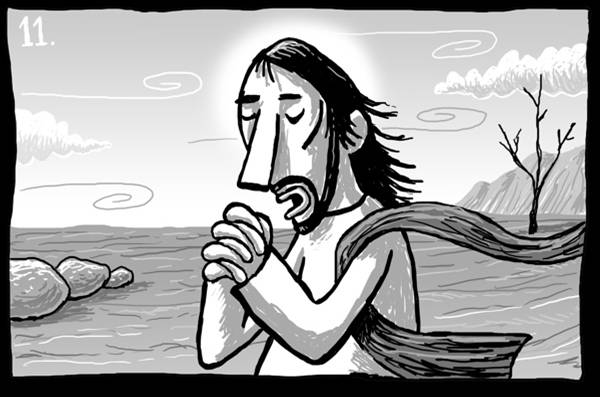
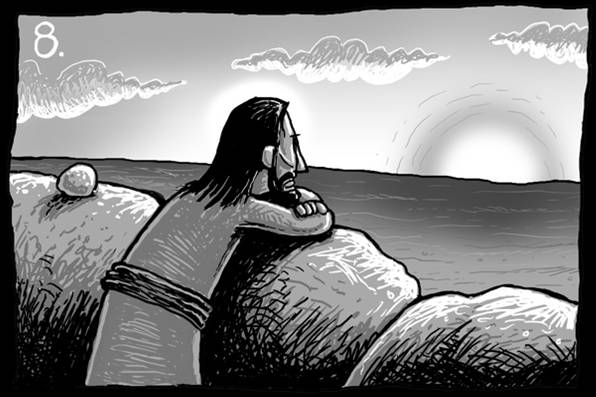
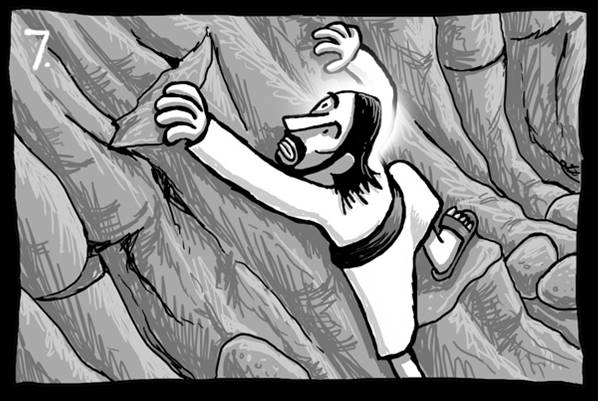
At his lowest point, a blessing fell at his feet.

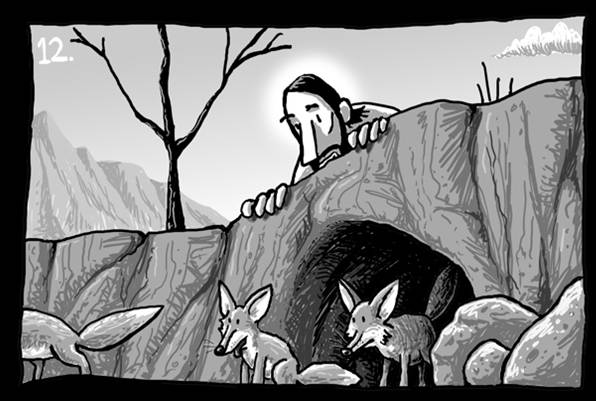
A sound brought him to some rocks, and he peered over into the shade and saw foxes at play. The cubs left their lair and tripped over each other, nipping ears and licking fur, oblivious to his presence, at one with all things.

And the pure joy of the moment found its way into the very centre of him. It lit up his soul.

Desert became paradise.

Father came to Son.

Carrie’s coffee house on the news!

Michaela just sent me  a link to this clip-

I am not sure how old this is, but not for the first time- well done Mike and Alison, and may your project continue to be a source of grace to the young people who use it.

The story of this coffee house is an inspirational one- particularly at a time when some of us are asking questions about our own young people in Dunoon- amidst all the usual peer pressures and dangers.

Alison is a Dunoon girl, who met an American sailor who was then based in the Holy Loch. They married and went to live in in the USA, where they brought up two girls. Tragically, their oldest, Carrie, was killed in a car crash, but this terrible event became the catalyst for the Mike and Alison to start a youth coffee house in Carrie’s name- to provide a safe place for young people to hang out.

They were motivated by their grief, but also by great love and faith. And what they have achieved is special.

Perhaps it is time to start a franchise.

But then again- I suspect that most of the success of this project rests on the character that Mike and Alison bring- and that is hard to find.

More dispatches from the roads of Argyll…

Another brush with eternity this morning…

I travel the road between Dunoon and Lochgilphead regularly- three times this week. It is a 120 mile round trip on rural roads- in particular the beautiful yet infamous A83– one of the most dangerous roads in the country.

Road conditions are particularly bad at the moment as they are full of pot holes opened up by the winter ice. This damage adds to the fact that Argyll’s roads are the worst maintained in the whole of Scotland (according to Audit Scotland- see here.) I have had to replace two buckled wheels, two coil springs and track rod ends on my car in the last year and a half.

But the simple fact is that most of these accidents are not related to the road conditions- this from a government report-

1.5 This existing information shows that a greater proportion of all types of road users, except pedestrians, are killed on roads in non-built-up areas and, with the exception of pedestrians and pedal cyclists, a greater proportion are killed or seriously injured on these roads. Car-users account for over 70% of all killed or seriously injured casualties on non-built-up roads and most car occupant fatalities occur on non-built-up roads.

1.6 Locally managed, non-built-up A-roads and B-roads have the highest accident rate per vehicle-kilometre in Scotland, while motorways have markedly lower accident rates per vehicle-kilometre. Most rural accidents on single-carriageways occur on A-roads in 60mph (miles per hour) speed limits away from junctions. Single vehicle accidents account for one-third of all rural single-carriageway accidents. These are most likely to occur on bends, at night on B- or C-roads 3 and involve younger drivers.

1.7 Higher severity rates on non-built-up roads are considered likely to be associated with higher speeds on those roads. Rates increase in darkness, though the type of road (non-built-up versus built-up) appears to be a more important factor than light conditions. Poor road conditions (i.e. wet or with ice, frost or snow) appear to affect severity rates less. In absolute numbers, around half of those killed or seriously injured are involved in accidents on dry roads. There is some evidence from previous research to suggest that attitude rather than skill is related to crash involvement. This is particularly the case on rural roads due to higher speeds.

Have I driven too fast on these roads? Yes. Have I had numerous near misses due to other people driving too fast? You bet.

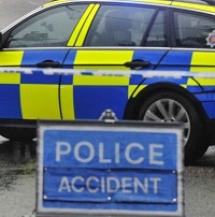
But lest we all kid ourselves that we can control the unexpected in such conditions, today I was witness to a rather typical accident.

There is a stretch of road a few miles beyond Inveraray that climbs over a hill, through some cleared forestry, just before Auchindrain. It is one  the usual overtaking spots- and regular drivers of the A83 value these places to get past slow lines of forest lorries or rubber necking tourists.

Today I approached just as another car was being beckoned past a white van. Just as it got past I positioned my car to do the same, but then caught sight of the other car spinning on the slick road surface, before it rolled end over end off the road and into a field.

The driver was not driving recklessly or too fast. It was not raining, and although there was a little mist around, the road was dry. Rather he had the misfortune to attempt a standard maneuver on a piece of road where the combination of adverse camber and slick road surface combined to over come the adhesion of his car to the road.

A chaos of car tyres and narrow misses.

No one else stopped, and I found myself wading through mud to try to help. Fortunately the drivers injuries were not severe- mainly cuts and from glass.

It could have been so much worse. The place were we stood waiting for ambulance and police was covered with the debris of previous accidents- including syringes and gloves left by paramedics. The old ash tree there had pieces of Mercedes van still embedded in it.

There is a thin veil sometimes between this world and whatever is still to come.

Seperated by a tyre tread.

Did King David’s empire exist? (And does it matter?)

I watched this programme yesterday-

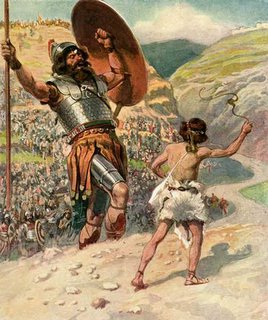
Dr Francesca Stavrakopoulou goes on the trail of the Biblical King David and his fabled empire. A national hero and icon for the Jewish people, and a divine king for Christians, David is best known as the boy-warrior who defeated the Philistine giant Goliath. As king, he united the tribes of Israel. But did he really rule over a vast Israelite kingdom? Did he even exist?

Stavrakopoulou visits key archaeological excavations where ground-breaking finds are being unearthed, and examines evidence for and against the Biblical account of King David. She explores the former land of the Philistines, home of the giant Goliath, and ruins in the north of Israel and in old Jerusalem itself purporting to be remains of David’s empire.

Interesting enough- although not without it’s irritations.

Lots of lingering shots of the lovely Dr Stavrakopoulou striding through various Biblical scenes and staring wistfully into the distant past. Wearing, rather oddly, the same clothes throughout.

The point of the programme was to ask some questions of the Biblical story of King David from an archaeological point of view, and to consider the vested interests that have effectively over-interpreted evidence in the past.

Not a lot of this was news really- Christians and Jews all want a piece of David. Christians have a clear for the stories of David to be seen in terms of a Biblical timeline, leading directly to Jesus. Modern day Israel sees David as representative of their hold and claim on the land- the glorious figurehead of their ancient history whose conquests and battles cleared the way for a golden age.

Except, despite the best efforts of 50 years of archaeology, there is very little evidence that he ever existed, and even more puzzling, very little evidence of complex urban society from the 10th Century. Although the debate rages on about this.

Stavrakopoulou obviously believes that King David is a mythological figure- akin to King Arthur, the product of longing emerging from a defeated and enslaved nation in the long generations of exile to come.

As I watched the programme, I found myself in a familiar place- asking myself what this might mean for my faith. What if she was right?

But perhaps surprisingly, I found myself rather disinterested in her argument and her conclusions. Firstly, the stories of David are so real and vital- so rich in human frailties and failure as well as success- that I have no problem in believing that he existed, even if the construction of the history around him- the mythology around him- has been shaped by successive generations of storytellers.

And I realised too how far I have come on this faith journey. I have no need of objective proof emerging from archaeology or charismatic phenomenology- in fact I am rather suspicious of both.

God is found in the small things.

Even in me.

Vodpod videos no longer available.

Filming war…

Emily regularly tells me stories about lessons at school deliberately to wind me up. It is an innocent enough sport, and I am easily defeated.

One of the things that she teases me with is the teaching of all sorts of subjects- History, Religious and Moral Education, English Literature- through the medium of Hollywood movies.

So History is taught by watching- Braveheart.

Shakespeare is taught be watching Leonardo Di Caprio pretending to be Romeo.

Moral issues are taught by watching war films- a whole series of them it seems.

I am not meaning to have a pop at teachers- I think they do a difficult job with passion and skill- but (as Marshall McLuhan said) the medium is the message- and film has this way of sowing images in our minds that are hard to shift.

And when these images are manipulations of the truth (as all film is of course, to a lesser or greater degree) then I think it is important to ask whose world view we are buying into- whose version of truth is being propagated.

It is difficult to escape the realisation that the lens is controlled by the powerful, and not the weak. The powerful even strap cameras to their bombs and missiles. It makes for great TV.


This was brought home most powerfully to me recently when watching the great John Pilger’s film ‘The War You Don’t See.’ This film deals with what happens when cameras go to war- in an age of ’embedded’ reporters, and carefully controlled press briefings.

If you have any interest in justice in an age of technological warfare waged by superpowers in out name, you must watch this film. It is available on you tube- here.

Here is the trailer

The film also makes some points about the role of war films in all of this that made me sit up. Like most blokes, I like a good war film- heroic buddy movies for the most part- escapism for those of us who have never been exposed to the harsh realities of war.

Most of us can see through the jingoism of the world war two films,  and also the nonsense of the Rambo/Schwarzenegger comic book violence, but Pilger made some interesting points about the modern crop of films- even those who appear to carry an anti war message. Pilger pointed out how they carry a myth of the soldier as innocent victim, and in doing so distort entirely the reality of modern war, which above all is characterised by it’s ability to dehumanise and so denude ‘the other’.

It is war reduced to video game and CGI.

Fiction becomes truth- fake heroism, the vindication of our way of life in the face of despotic extremism seen in the lives of our enemy. Despite the fact that the enemy then become victim to our own despotic extremism.

Just in case you do not believe me, it is worth watching the back end of this clip-

The question is still with me- does showing our kids war films make it more likely that wars like this will not be be fought in the future?

I doubt it.

How about getting hold of a copy of the Pilger film?

That might.