I have been working on a song today. I used to write songs a lot, but stopped (unsurprisingly) when I no longer sang as much.
It forced me to return to rhyme, which I am usually glad to put aside when I write poetry.
I was thinking about those words of Julian of Norwich– All shall be well, and all manner of things shall be well. The theology behind these simple words is highly complex. Despite living in a time of the the Black Death, which religious people saw as the just punishment of a wrathful God because of the sin of the people, she chose to believe in love and hope. Interestingly, in our times when the theological debate around Atonement is causing such conflict, Julian had some very non standard views about sin and the punishment of God. This from the Wikipedia entry;
Julian believed that sin was necessary in life because it brings one to self-knowledge, which leads to acceptance of the role of God in one’s life.Julian taught that humans sin because they are ignorant or naive, not because they are evil, which was the reason commonly given by the church for sin during the Middle Ages.Julian believed that in order to learn, we must fail. Also, in order to fail, we must sin. The pain caused by sin is an earthly reminder of the pain of the passion of Christ. Therefore, as people suffer as Christ did, they will become closer to Him by their experiences.
Similarly, Julian saw no wrath in God. She believed wrath existed only in humans but that God forgives us for this. She writes, “For I saw no wrath except on man’s side, and He forgives that in us, for wrath is nothing else but a perversity and an opposition to peace and to love”. Julian believed that it was inaccurate to speak of God’s granting forgiveness for sins because forgiving would mean that committing the sin was wrong. Julian preached that sin should be seen as a part of the learning process of life, not malice that needed forgiveness. Julian writes that God sees us as perfect and waits for the day when humans’ souls mature so that evil and sin will no longer hinder one’s life.
Here are the words so far, still listening for their tune;
In the morning when I rise
In the evening when I die
You are there
In the cloister or the gutter
In the music and the song
In the heart that breaks wide open
In the right and in the wrong
In the tear that no one noticed
In the flow of every stream
In the leaf slowly unfurling
In things seen and yet unseen
In the mist of mellow fruitfulness
Or a stinking torture state
In the stab of empty promises
And twisting with our fate
In the road as yet untraveled
In the barrel of a gun
In the plan that comes unravelled
Or the journey just begun
In the cracks of what we concrete
In the atom and the bomb
In the hope of each spring morning
In a moment too soon gone
In the Bible and the bar room
In famine and the feast
In the spaces we make for him
And where we expect him least
I am learning trust in you
For all manner of things
Shall be well
All manner of things
Shall be well
Many of us who love wild places constantly will describe the transformational effect of being immersed in wilderness. We may consider many subjective benefits- the lowering of our stress levels, a deeper appreciation of our place within the ecology of life, our sense of the ageless beauty of natural things.
Measuring these benefits objectively is more difficult. There are of course clear physiological advantages to exercising in the outdoors, but what (if any) psychological benefits can we point towards?
Peter Kahn and his colleagues at University of Washington have been working on this for a while- in one simple experiment they installed plasma TV “windows” in workers’ otherwise windowless offices for a period of 16 weeks, and then took various measures of psychological function. They found that those with the “views” of parkland and mountain ranges had a greater sense of well-being, were clearer thinking, and a greater sense of connection to the natural world.
Next they compared office workers with plasma TV’s in their offices with people with real windows overlooking trees and grassland, and exposed them to mild stress- the sort that raises the heart beat- and waited to see how long it would take for them to calm down. What they found was that those with the real window calmed down quicker. The TV seemed to have no more benefit than a blank wall. If you are into reading academic papers, it is here.
What might be going on here? University of Michigan psychologist Marc Berman suggested that nature might actually shift our brain from one processing mode to another. In cities, we are constantly stimulated- so we use a more focussed analytical attention style. In this way we are able to deal with rush-hour traffic and sirens and all those other urban noises. Berman suggested that this is also the kind of attention we need to study for exams, make financial decisions, do business deals and so on.
It is also the kind of attention that we use up. It burns out, or burns us out. Berman’s theory is that being in wild places shifts the mind to a more relaxed and passive mode, allowing the more analytical powers to restore themselves. Berman too did some experiments to test his theory;
He gave a group of volunteers a very difficult mental reasoning test that measures the kind of focused attention needed for school and work. They were then given additional task to further deplete their normal ability to concentrate, to mirror a typical high pressure day at work. Then all the volunteers took a three-mile walk- half the volunteers took a leisurely stroll through a secluded park, while the others walked down a busy city street, after which the psychologists again measured their focus and concentration.
You can see what is coming- as reported in the journal Psychological Science, those who had been on the nature walk had significantly better focus and attention than those who had been required to negotiate the city streets. Being in nature does indeed appear to replenish our reserves of concentration and analytical attention capacity.
It also suggests that being in nature allows us to switch to a different kind of attentiveness- less focussed, more holistic and open.
There is also some interesting research about how this kind of attentiveness might affect irritability, even aggression. This from here;
The hypothesis laid out by Frances Kuo and William Sullivan of the University of Illinois was a marvel of logic and sequence: If fatigued attention is related to irritability, and irritability leads to aggression, then perhaps people deprived of nature’s restorative qualities would be overly aggressive (Kuo & Sullivan, 2001).
Kuo and Sullivan tested their premise on 145 female residents of a public housing complex in urban Chicago. The complex provided natural control and study groups: Some residents lived in buildings that overlooked “pockets of green,” while others had a view of only bleak concrete. The researchers reported significantly lower levels of aggression and violence in residents with apartments near nature than in those who looked onto barren lands. When handling disputes with their partners, women in the nature group used fewer “psychologically aggressive conflict tactics” and fewer “mildly violent conflict tactics” than those whose randomly assigned housing unit was denied exposure to nature.
So, the next time you need to undertake some kind of task think of this- if you need space, then find some.
It is a film of a worship service in Exeter Cathedral, making use of the X-box game ‘flower’ throughout as an image of creation.
The curmudgeon in me wants to scoff at such techno-geek worship- in many ways the use of an X-box seems to me the ultimate in what some already might regard as excessively gimmick-driven alternative worship.
However, it was really lovely wasn’t it? And perhaps it is totally logical to start to use new media within our worship as it becomes increasingly part of who we are and how we interact.
Perhaps Call of Duty as an way of symbolising spiritual warfare might be a step too far though…
Michaela and I went to see this play last night. To be honest I had to be dragged out, half way through cutting the grass. I am increasingly a home bird these days- we have been so busy, so the idea of not using spare time to be gently busy at home always seems a waste.
However, I am glad I went- it has been a while since we have seen any live theatre. I always find that it takes time to adapt to the watching of stage acting- you have to get yourself into the characters and see the set for what it is- a cue to the imagination. This play took the idea of a road trip round lots of familiar places in Scotland, so lots of imagination was required. It raised a few chuckles too.
In the middle of all the laughter around the campfire on my recent wilderness trip, conversation took a much more serious turn. I found myself in the middle of a rather intense and difficult discussion with one of my friends and Aoradh chums. Some of this was about leadership in Aoradh- which I will return to when I have had a chance to process and discuss it again, but another issue flickered briefly in a way that surprised me- ‘Teaching’.
‘Teaching’ that is, in the traditional Christian/Evangelical sense of the word. Apologies to those not from a background like this, but those that are will know exactly what I mean. All our services revolved around one thing- the climactic 45 minute to an hour long sermon. Through this a skilled preacher would expound on a passage from ‘The Word’, inspiring us, shaping us, challenging us and bring us to repentant response.
This kind of spirituality grew out of Victorian spirituality- a combination of the elevation of the written words of the Bible as the primary (even the only) revelation of God, and the syncretism of faith with modern rationalistic culture. So it was natural to engage with spirituality in the same way that we would engage with the study of medicine or chemistry- in a lecture hall, with the celebrity scientist at the centre, sharing his accumulation of knowledge- even his life long labour- with those eager for understanding.
Along with this of course, scientific rigour was required, along with reliable, testable source material. So faith became something it was possible to organise, define and defend. And we did this above all things by knowledge of the Bible- carefully cross referenced verses, once produced, ended all argument.
Perceptive readers may sense a certain scepticism in the tone of this piece. It is easy to have a go at all this from a post modern cynical perspective. We can point to all sorts of problems that we inherited with this kind of spirituality-
The top down nature of it, casting us in the role of passive receivers, not active questioners
The potential it gives for the misuse of power and control
The one dimensional quality of a lot of preaching- the giving of one man’s (and it usually is a man’s) perspective on ‘truth’
The elevation of the words of the Bible to what I would describe as idolatry- a tendency to treat the words as some kind of unassailable blue print that arrived down on earth on the wings of an angel as the transcription of the very word of God (in case you are wincing at my heresy, there is a fuller discussion of this issue here.)
The changing communication style of the age- the shortening of attention spans, the endless competition of other media has now entered into the human condition.
There is also this question in me about my own experience of listening to preaching. I have had the privilege of hearing some really great preachers- people who hold the attention by their great oration and carefully constructed sentences. Preaching like this is an art form, all the more to be celebrated in this age of the 30 second sound bite. Some of my friends still are responsible for delivering sermons each weekend- and I celebrate their honest creativity- their genuine efforts in the long direction, to bring light into the lives of a congregation through words.
I also love to go and listen to speakers at festivals like Greenbelt- people who bring a totally new and sometimes controversial perspective.
But having said all this, when I consider the shape of my own journey, and try to remember how this was affected by teaching or preaching I have heard, I struggle to remember more than one or two actual sermons/teaching sessions (and even those, not necessarily for the right reasons.) Perhaps I was shaped by the experience more than I can remember the actual events, but considering the countless hours of preaching I have sat through, we might expect there to be much more connection between hearing a message, responding to the challenge, and life changes that flow from this.
I think that we have been caught up in the idea that refining our knowledge of a certain kind of moral interpretation of the Bible equates to something we called ‘spiritual maturity’. It was like a uniform we put on- a way of identifying with the church culture we belong to. But as I look back now, this is not the kind of spirituality that has deep value to me.
It is not that knowledge is unimportant, or that we do not need someone to give us some basic knowledge for the road, but despite all this, spirituality (in my experience) is only discovered in real places, encountering real people and asking questions of the experiences along the way.
I also think that the reductionism of faith down to basic facts is dangerous. It suggests that there is ONE understanding that we should all be conforming to- and increasingly I have found faith to be a glorious question mark, within which there are routes for many lines of enquiry.
Those of you that preach will right now want to tell me that there are other ways to skin the cat- and I would agree with you. Preaching can open up issues, not close them down. Preaching can soar like poetry in the ears of the listener. This kind of preaching I want to hear.
Perhaps preaching is reshaping too- think of all those wonderful TED talks that go viral on t’internet. Like this one;
So, what of our short discussion about teaching in small missional groups? How do we ‘teach’ one another in this kind of context?
The very idea initially took me by surprise. Why would I want to ‘teach’ my fellow community members anything? Does this not assume that I am some kind of God-expert who needs to sprinkle my knowledge on my disciples? Are we not learning together constantly just by living deliberately shared lives of faith? Ideas enter constantly into conversation through books we have read, things we have encountered through the internet etc.
Then I thought of our young people- who perhaps do need to learn some things in order to go through their own process of deconstruction/construction. Is it enough for them to learn in this kind of community chaotic way? Perhaps it is time to think again, if not about teaching, then certainly how we facilitate discussions around particular questions.
It is a work in progress- like most of my theological positions, but some principles seem important to me;
Open spaces. Learning requires safe spaces in which to adventure. We have to be free to get it wrong.
The honest question is worth a million cheap answers.
Community is teaching. Teaching is community.
We learn in different ways- listening, watching, reading, experiencing, discussing.
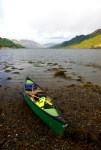
I took a trip into the wilderness of Argyll at the weekend. Along with some friends I canoed along Loch Striven, camping on the shoreline amongst the birch trees and the bluebells. The air was alive with spring- birds stuffing last years grass into cracks being watched carefully by all those noisy cuckoos. The sea loch still enough to carry the tell tale ripples made by porpoise or the eager seals or the arrow like dive of the gannets. A huge moon rising over the hills bright enough to cast shadows.
On days like this it is impossible not to be aware of the new season- winter is over and everything is coming alive (even though it was VERY cold at night!) However, our connection to these things is increasingly distanced by the way we live. Our air conditioned centrally heated living spaces remain the same temperature the year long, the food we eat is available no matter what the growing season and the lengthening days serve only to facilitate our leisure pursuits.
It was not always like this. Many of the festivals we celebrate have their roots in ancient ways of marking the changing of the seasons. We humans have a way of ritualising and celebrating boundaries and transitions- particularly the ones that matter- the ones that might be the difference between life and death. So, the coming of milk to the fist pregnant ewe came to be called Imbolc in these parts, and the first blossom on the apple trees brought about the riotous dancing of Beltane. Then there was the celebration of the very last of the harvest- Lughnasadh.
This connection to the natural world is one that many of us still crave, without always being clear why. It is something we only really experience when in the vulnerability of being in wild places. By watching the progression of the year from the sleep of winter to the wilt of late summer and the last blaze of Autumn it becomes possible to see once again this world for what it is, and our small place within it all.
Then the season becomes like a song. It finds its way inside us.
We are back after a wonderful few days out in the wild.
This year the Aoradh wilderness trip did not venture out to one of the islands- a few people dropped out and so the boat charter would have just been too expensive. We decided that we would stay more local, so I scouted out a location half way up one of our lovely lochs- Loch Striven. Five of us walked/canoed in from the road end and spent two days and nights in silence, in community and preparing lavish outdoor meals.
This time we managed to bake bread in a biscuit tin oven, bake potatoes and apples, cook mussels harvested from the shore in front of the tent, and spend hours sitting round the campfire talking and laughing.
Even though the weather was mostly lovely it was unusually cold, which was a shame as I took advantage of the trees to use my camping hammock/tarp set up- which turned out to be rather chilly.
This trip was very different to our other wilderness retreats but still really great- it made us appreciate again the wild places right on our doorstep here in Argyll. We also wondered whether it might be a chance to offer people short taster sessions of what wilderness and spirituality together can offer.
I also got to do some canoeing too, for the first time for a while. Andy and I clocked up around 18 miles of paddling. In the process of which we saw seals, porpoise and countless sea birds. Today we canoed to the head of the Loch and Michaela came to collect us. Lovely!








 this fragile tent