RSA animation’s take on the failure of Capitalism…

I may have posted this before, but given my recent posts thought it worth posting again. It crams so many ideas and concepts into such a short video. The bottom line however is that something ain’t working!

It was done in the early days of the ‘credit crunch’ in an attempt to grapple with what went wrong- what caused this current economic crisis.

Chocolate and the New Kingdom…

chocolat-470-75

I offer you this for St Valentine’s day…

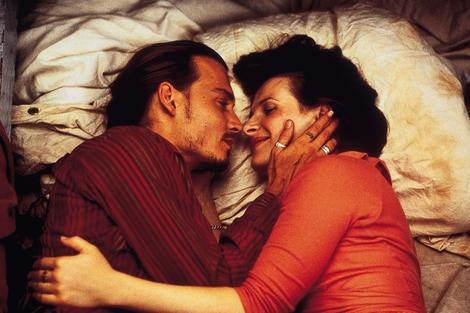
Michaela and I sat and watched the film Chocolat last night. We have both seen it before, but were moved again by its power.

If you have not seen it, it is set in a French village soon after the second world war into which a stranger and her little girl who come to open a chocolate shop. There is magic about the woman and about the chocolate. Her kindness and the glorious excess of her chocolate creations start to change people- to open them up, to make them hope again. And there are those who do not like this- particuluarly the ultra religious mayor, who is able to control the local parish priest. There is a puritanical backlash, against both the woman and against some gypsies who are in the area.

Except, the magic is still in the woman, and in the chocolate, and there is a change. I will say no more, not wanting to spoil the film for  you- but there is plenty still to enjoy in the gentle comedy and the lovely acting (Judy Dench, Johnny Depp, Juliette Binoche.)

There is also some rather profound theology. After the pivoting point of the film, this happens;

It reminded me so much of Babettes Feast– the image of a God of exuberance, who draws us into a dance of joy, of consumation, of love.

So, my friends, may your day be full of Chocolat…

Economic growth; lie number two…

How do we know that we are in recessiondouble dip or triple dip as it may be? What mysterious yardsticks are used in the Bank of England to make them reach for the strings on which we all dangle?

economic_growth_3

Above all, it is this one; Economic Growth.

Economic growth usually refers to the growth in value of GDP (gross domestic product).

The total output of the country – the value of all the food produced, all the pharmaceuticals manufactured, cars assembled and services rendered – forms GDP.

GDP also takes into account the effect of imports and foreign investment.

If GDP is bigger this year than last year, then the UK is experiencing ‘economic growth’.

But inflation will also have driven up prices since last year, and thus GDP. To assess whether the economy is actually growing, the rate of inflation has to be subtracted from the nominal rate of growth to get the real rate of growth.

Lets be clear about this- economic growth happens when the overall value of what have, what we make, what we own, gets bigger. Our system is set up to be always dissatisfied with what we have, with what we are. No growth is regarded as stagnation, shrinking is recession, and recession is to be avoided at all costs- particularly at the cost of those who have the least.

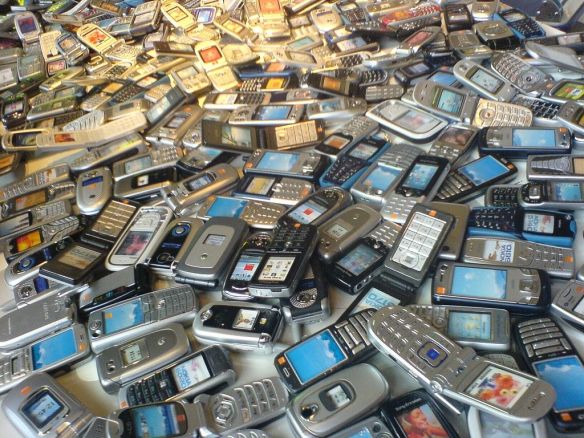
We can only have economic growth if we continue living the kind of lifestyles that we are living now- if we continue spending money on the next gadget, another car, the latest trend in exotic food, the newest cut of skirt and suit. We can only have economic growth if we exhibit enough collective desire for new bathrooms, conservatories, paved driveways.

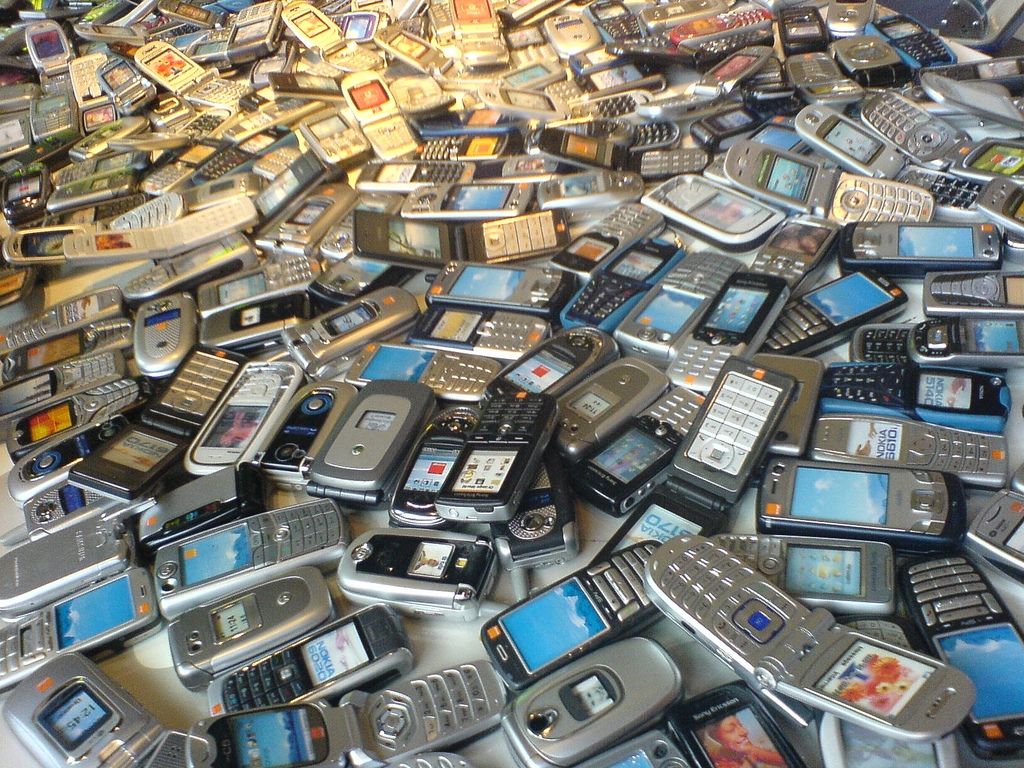
Increasingly we can only have economic growth if we can persuade other people to be just like us– to want the things that we want, the food that we eat, the mobile phones that we have glued to our ears. And so was born the globalisation of markets; the ubiquitousness of product. The penetration of our ways of being into every far corner of the earth.

Is this a problem?

Well, perhaps we need to distinguish between different periods of economic growth. In the UK we went from being an agrarian economy, whose countryside could only support a certain population number to being a place of canals, coal mines, factories and population explosion- all in the space of around 100 years. During this time our economy was growing exponentially- rather like that of China now. Victorian Britain was a place of huge inequality and the accumulation of vast wealth by the few on the backs of the labour of many. Like China now.

Of course to achieve this continued economic growth, Britain also needed an export market and control of sources of cheap natural resources-  for this we colonised and enslaved half the world.

More recently our economic growth has slowed- we achieve figures of one, two, three percent, and call it success. This ‘success’ is nothing to do with society changing, but everything to do with a desire to stay the same. Our growth is conditional on the pursuit of technological innovation by those who would sell us more product- rendering those we already have as obsolete.

Economists have a word for our willingness to spend- to slap down the cash rather than salting it away- they call it confidence. A healthy economy is full of confident consumers. Or, as Wikipedia put it;

Schumpeterian growth is an economic theory named after the 20th century Austrian economist Joseph Schumpeter. Unlike other economic growth theories, his approach explains growth by innovation as a process of creative destruction, which captures the dual nature of technological progress: in terms of creation, entrepreneurs introduce new products or processes in the hope that they will enjoy temporary monopoly-like profits as they capture markets. In doing so, they make old technologies or products obsolete: this is the destruction[disambiguation needed] referred to by Schumpeter, that could also be referred to as the annulment of previous technologies which makes them obsolete, and “which destroys the rents generated by previous innovations” (Aghion 855).
pile-o-cellphones1

Now, back to the LIE that are at the centre of all this. We are told that for our economy, even our society, to survive and prosper, we have to have sustained economic growth. The spectre of the Great Depression hangs over us- lives ruined, people starving in the streets. Economic growth is a holy cow that we have to keep feeding.

Everywhere we hear people asking questions of this cow however;

  • Is it sustainable? Can we really just keep producing more and more? Are we not burning up our resources at an alarming rate? Are we not slowly poisoning our planet with it all?
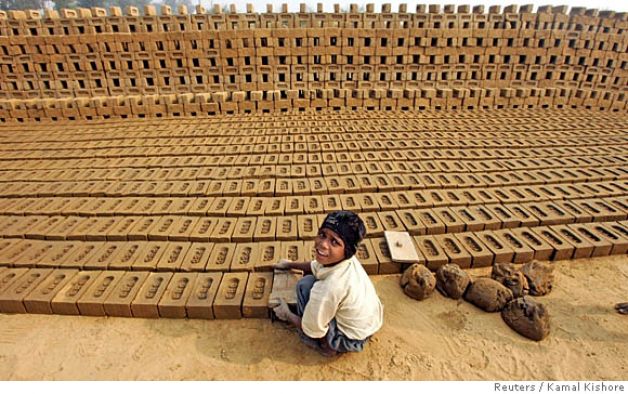
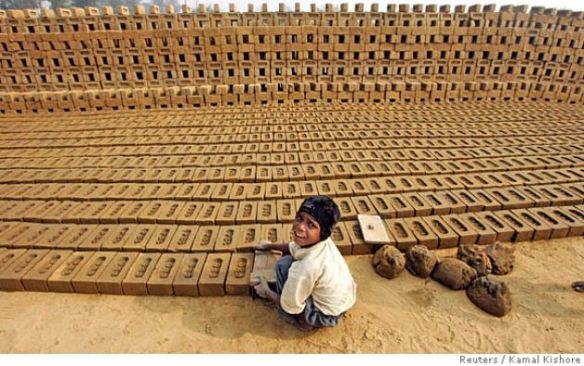
  • Is it fair? Can we really continue to live in a world where our lifestyles are dependent on the raw materials and cheap labour of others who are half way across the world?
  • Is it working? Given the instability in the system, can we really trust it to maintain our lifestyles? Is it not all just coming unraveled anyway?
  • Is it not just terribly wasteful? Do we really need all this stuff? Is there not a simpler way to live?
  • Is it making us happy, fulfilled, complete?

The relationships between economic growth and equality within society is one that has been the cause of much argument- think about the Marxist analysis, or of recent arguments that suggest that stable economic growth always leads to greater equality.

The argument has taken a new turn recently however- this from here;

Labour is drawing on research by the New Democrat Network (NDN) central to the Obama re-election campaign to shape its own election thinking.

The research was described by the Obama campaign as its North Star. It tracked three trends in the US economy between 1992 and 2009, showing how two – higher growth and higher productivity – had not been matched by a rise in living standards for the majority…

Douglas Alexander, the shadow foreign secretary and a close student of US politics, told the Guardian: “Back in 1992 the famous dictum of Bill Clinton’s adviser James Carville was: ‘It’s the economy, stupid.’ It contained the implicit assumption that economic growth ensured rising living standards.

“Today that no longer can be taken for granted, as this important research by NDN and the Resolution Foundation shows. I’ve worked closely with the NDN in recent years and that collaboration confirms to me this is one of the defining challenges for today’s progressives on both sides of the Atlantic.”

Similarly, work in Britain maps how growth before 2008 did not guarantee a rise in living standards, and how the bottom half of society suffered. UK wage stagnation is more recent than in the US – theirs started in the 1970s, the UK’s in the early 2000s.

And that is just within our own society. No mention of this sort of thing;
poverty

So, what is the alternative? Can our society, our economy, really kick our addiction to economic growth as the primary measure of our worth?

What might replace it?

Can commerce ever be based on a fair exchange of skills based on need (although surely there is always room too for celebration, for art, for pleasure.)

Can we learn to live in ways that are sustainable- that only cost the earth what it can afford to give to us?

If the answer to these questions are ‘yes’ (and I deeply hope that they are) then might these not result in negative economic growth?

Because in the Kingdom that Jesus talked about, things often get turned upside down and inside out- the last become first and the least of these become the keys to the Kingdom.

The Kingdom of God is not interested in statistics, in abstract measurement- it is rooted in the here and now- the shit and blood and spit of being ME, and my individual relationship with you. Everything else just gets in the way.

Trickle down economics; economic lie number one…

The first of a little mini series about Capitalism that has been nagging at me for a while…

trickle down economics

There was an article in out local paper last week- Argyll and Bute council, like most of our councils, has to make significant cuts to the budget. Despite our large geographical area, Argyll has a low density of population and services are already stretched tight. The article listed the sordid detail of the cuts- older peoples care, youth rehab, road schemes, outsourcing services to the private sector who will do the support of our most vulnerable more cheaply etc etc.

And what is all this about? Why is money suddenly so tight? Why do we all buy into the collective idea that ‘times are hard’ and so ‘we all have to tighten our belts?’

The fact is that not all of us do tighten our belts. Many people are doing very well out of the crisis. This from the Guardian;

The super-rich – the top 1% of earners – now pocket 10p in every pound of income paid in Britain, while the poorest half of the population take home only 18p of every pound between them, according to a report published this week by the Resolution Foundation thinktank, which reveals the widening gap between those at the very top and the rest of society.

Inequality has grown sharply over the past 15 years, according to Resolution’s analysis: the top 1% of earners have seen their slice of the pie increase from 7% in the mid-1990s to 10% today, while the bottom half have seen their share drop from 19% to 18%.

And then there are those right at the bottom- the Strivers who are forced to become Scyvers, or the Skyvers who have lost hope, or those who never had a fair crack of the whip in the first place. Have you noticed that when the economy takes a dip, they always take a hit? They become the problem– the scapegoats.

So we see all these regressive punative policy decisions being pursued by our current government- lower benefits to fewer people, changes to housing benefit to force people to leave their homes if they have an extra bedroom. All this in the context of reductions in care provision, and less funding for voluntary bodies and charities. Our current government is doing things that even Thatcher at her most strident would have baulked at.

But again- why? Where does all this come from?

What the neo-liberal economists will tell us is that the problem is caused by natural adjustments made by a self regulating economic system. That the job of us all is to get out of the way and let it all sort itself out like some kind of higher intelligent life form. The problem, they would say, is an over inflated public sector, whose interference in the natural order of things by public spending, taxation and welfare provision means that the economy fails to self regulate.

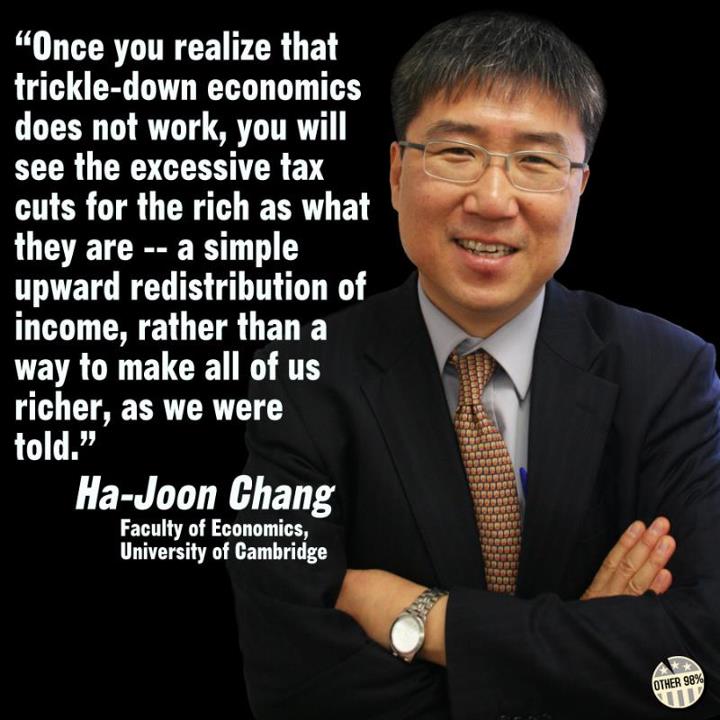
This kind of economic thinking has become so pervasive, so wrapped up in the political system, so much in service of powerful self interests, that we all wriggle on its hook. We are compliant because we have bought in to some of the lies that the system has sold to us- perhaps the biggest one is this one- Trickle down theory.

In a nu­tshell, trickle-down theory is based on the premise that within an economy, giving tax cutsto the top earners makes them more likely to earn more. Top earners invest that extra money in productive economic activities or spend more of their time at the high-paying trade they do best (whether that be creating inventions or performing heart surgeries). Either way, these activities will be productive, reinvigorate economic growth and, in the end, generate more tax revenue from these earners and the people they’ve helped. According to the theory, this boost in growth will ultimately help those in lower income brackets as well.

So, the argument is, if we have lots of rich people, and they are encouraged to become super rich, then our country, and our economy, will benefit- right down to the roots.

This analysis does not regard the wealth of the few as contingent upon the poverty of many- in this country and even more crucially in the poor countries around the world whose raw materials and cheap labour we are entirely dependent upon.

It also does not conform with the facts, as the rich get richer, and the poor get poorer.

As the worlds resources are over consumed by the few and our environment continues to be damaged, perhaps beyond repair.

As austerity plans are still touted as ‘good housekeeping’, as if the UK economy could be compared to a household budget.

So, what is the alternative? Fairer, more progressive tax systems? This might be a start- but I think the problem is the system- and we are all part of the system aren’t we? It is really hard to get out of it- the mortgages, the gadgets, the foreign holidays and the dependency on technology to deliver distraction, entertainment and connection.

Where is the Kingdom of God in all of this? What are we, the agents of this Kingdom , to put our energy towards? I am convinced that we need to be engaged critics of injustice wherever we see it- particularly towards the poor and the marginalised.

And the beginning of how we can do this is to take a look at the system through a different set of lenses…

Awake…

Spring is just over the hill

It is a gorgeous day here today- light is falling like hand grenades.

I wrote this recently, and it seems appropriate to post it today;

Awake

.

Awake my soul-

Arise and let the light in.

The morning star is done by sun,

Today is split

wide open

.

Breathe it deep, this mountain air

Each breath intoxicating

Plant firm these feet, awide these eyes

For here my heart is

beating

.

Awake my soul

.

Awake

Sams new book!

A friend of mine has a new book out!

parabolicparables

Samir Dawlatly has written a lovely collection of reflections on the parables of Jesus- poetry and prose. You can get hold of the book, or download it from Proost, here. Highly recommended- simple, profound twists to allow us to look again at the words of Jesus from a different direction.

Here is a wee sample;

Blood in Water (Luke 13:20-21)

Love
Is like
A drop of blood
In a glass of water
Though there’s only
A tiny drop
Of blood
It completely changes
The appearance
Of the whole glass
Of water

OK, so I am no Picasso…

I have just been looking at some photos of bits and pieces of art that I did recently as part of a retreat. A couple of them I am childishly pleased with and so I offer these to you much in the same way as bringing something home from school to show mum, who will no doubt pin them to her fridge for a while until it gets all curly and finishes in the bin.

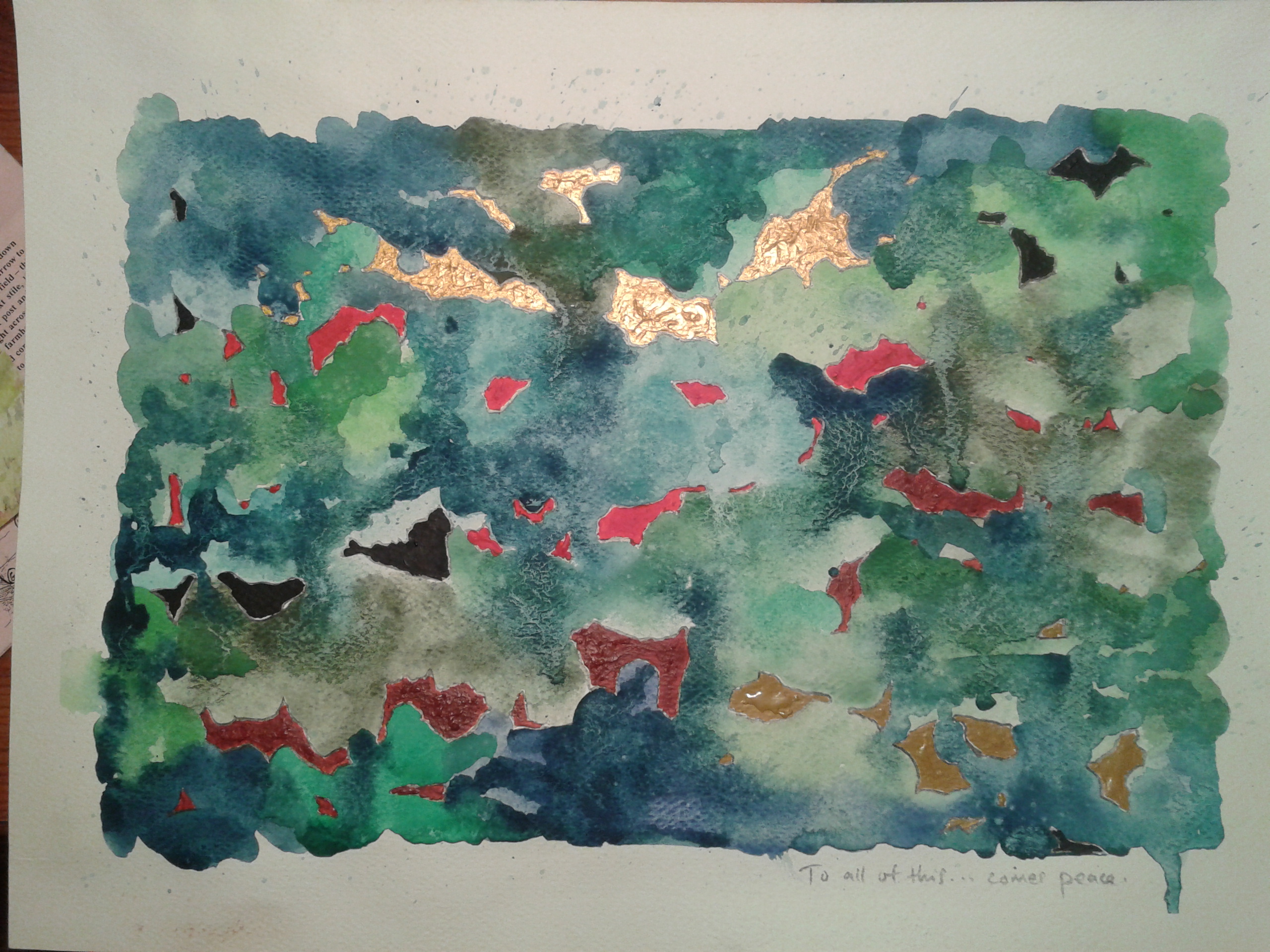
The first one was a water colour wash, made when I was thinking about peace. Peace falling like water. As I made the wash, I deliberately left areas dry, almost like islands of anxiety. After the wash dried, I started to fill in the islands with different colours. Blood red and the fear of death. Yellow for sickness. Gold for money. Black for depression. Bright red for anger intolerance and hate.

2013-01-24 18.53.54

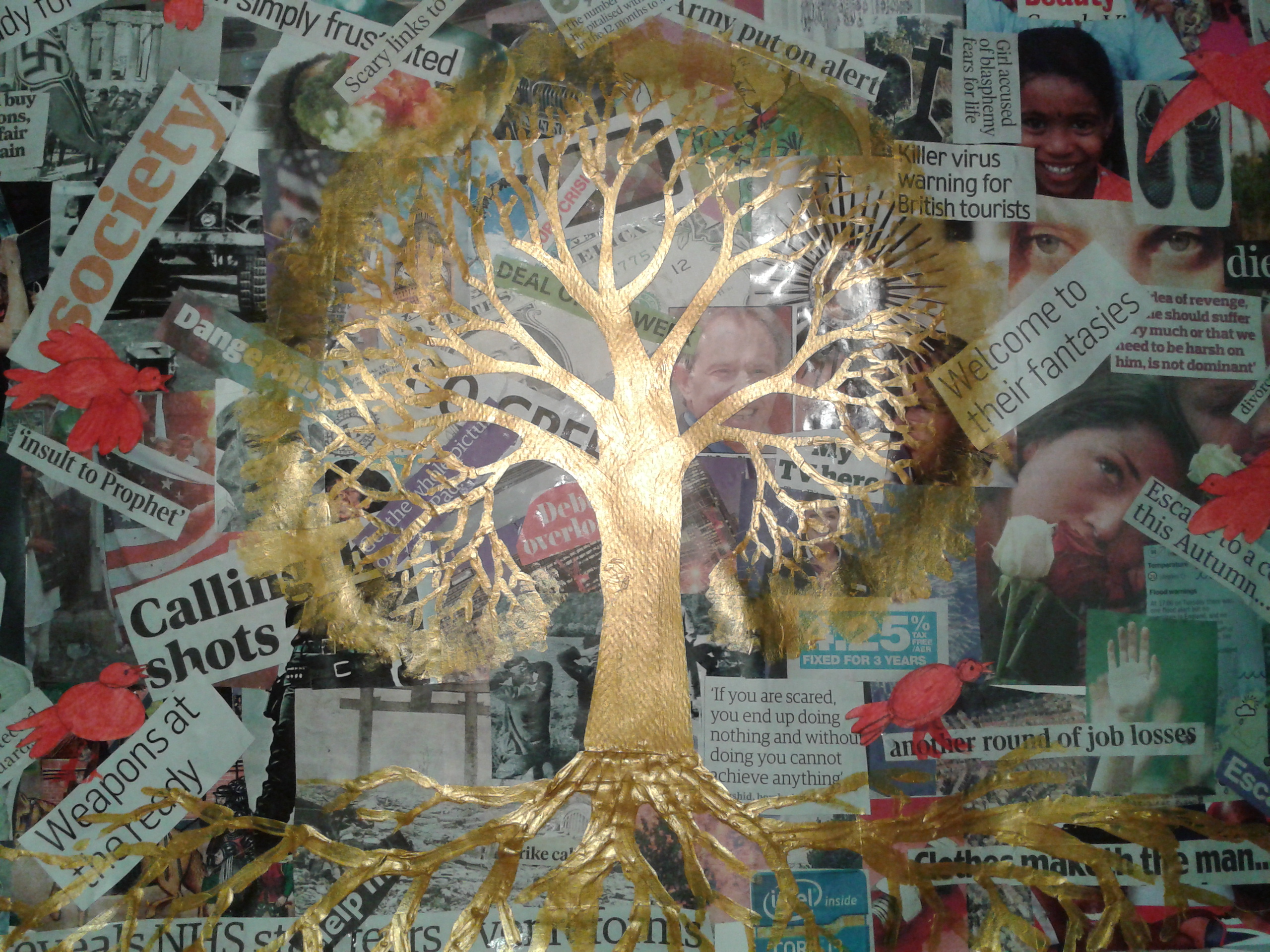
A day later, I spent a much longer time making a much bigger piece. In fact I spent around 7 hours cutting out clippings from newspapers, imagining the whole mess of us- the good the bad the glorious. Gathering all the strands of the things that we would hold as important and trying to link it all together.

Next I got hold of some lovely gold acrylic paint and started to paint a tree over all the clippings. I wanted it to be a noble tree, a beautiful tree- to symbolise the Kingdom of God. The tree was not of the newspaper clippings, but it was on them and through them. It did not obliterate the words or the pictures, but it transformed them, illuminated them. It was a totally different medium but it was rooted deep into the mess of it all.

2013-01-25 08.13.46


Oh yes- and I forgot about my red birds. They came from this passage in Matthew chapter 6 (part of the sermon on the mount.)

25 ‘Therefore I tell you, do not worry about your life, what you will eat or drink; or about your body, what you will wear. Is not life more than food, and the body more than clothes? 26 Look at the birds of the air; they do not sow or reap or store away in barns, and yet your heavenly Father feeds them. Are you not much more valuable than they? 27 Can any one of you by worrying add a single hour to your life[e]?

28 ‘And why do you worry about clothes? See how the flowers of the field grow. They do not labour or spin. 29 Yet I tell you that not even Solomon in all his splendour was dressed like one of these. 30 If that is how God clothes the grass of the field, which is here today and tomorrow is thrown into the fire, will he not much more clothe you – you of little faith? 31 So do not worry, saying, “What shall we eat?” or “What shall we drink?” or “What shall we wear?” 32 For the pagans run after all these things, and your heavenly Father knows that you need them. 33 But seek first his kingdom and his righteousness, and all these things will be given to you as well. 34 Therefore do not worry about tomorrow, for tomorrow will worry about itself. Each day has enough trouble of its own.


Chalke on homosexuality- video

My last post on this issue at the moment.

I feel I must say sorry to my friends who are troubled by my take on this issue- angered even. My last post was unfortunately rather flippant and did not do justice to the depth of the issue. All I would say is that I do not do this because I am drawn towards controversy for its own sake. I do it because I have come to believe that the church has got its attitude towards gay people badly wrong.

We isolate people at their point of greatest need. We place them on the outside with no possibility of acceptance and inclusion. In another e-mail recently I found myself saying this;

human sexuality is highly complex- some people can indeed change their sexual behaviour to a certain extent, but the harsh fact is that most can not. The implication for this majority then is that God created them with a different sexuality, but who they are will never be acceptable to His people on earth- short of a half life of loneliness and struggle. The end results are high suicide rates, mental illness, isolation and some people end up living in (not always healthy) ghettos where they feel safer. Despite a shift in societal attitudes gay people still live in fear of all sorts of prejudice.

The other end result is that they are driven away from the church and from God. We have two friends whose children grew up in the church but always knew themselves to be ‘different’. Both are now far far from the church. I also have friends who deal with their sexuality by keeping secrets- trying to display surface acceptability. What they long for are stable, monogamous, loving relationships- and to be accepted and loved by their peers.

All of these friends will describe their utter incomprehension at being told that they are loved, but that their sinful lifestyles can not be accepted. They would describe their sexuality as fixed from the earliest age- in the same way as others have blond hair. The arguments about original sin make no sense to them- and they would point to others who are born with a physical disability, who used to be excluded but are no more.

The reason why we in the church have adopted the position we have is based on our interpretation of scripture. This has been a crucial journey for me- in trying to understand what these scriptures mean, and to set them in the wider context of the life Jesus calls us to.

And a long time ago I decided that if I was going to make an error in my theology, I would err on the side of grace. I would err on the side of love. I would err on the side of acceptance.

What I think we need is for people who have an apostolic voice to speak on this issue with love as the primary imperative.  People who are prepared to risk the storm that will surely fall on their heads- risk their jobs, their reputation, even losing their friends.

Step forward Steve Chalke;

http://player.vimeo.com/video/57125373

Biblical marriage- but not as we know it…

In response to my previous post on gay marriage,  Sam Dawlatly (who has a book of poetry out on Proost soon by the way!) had this to say;

So here’s another point of view: the Bible doesn’t advocate monogamy… David had 8 wives and Solomon had more. Then at some point between then and a time perhaps before Jesus it was decided that marriage was between one man and one woman. Now the Law was given to Moses, so as far as I can make out there are no Laws that state explicitly that marriage is for one man and one woman. I am prepared to be corrected, as I am not a theologian. However monogamous marriage seems to be the norm in the New Testament.

What led to this change? It seems to me that “Christian monogamous marriage” as we accept it to be is not, in fact, biblical, but more cultural. I’m not advocating polygamy, but if the basis of marriage is more cultural then perhaps we shouldn’t use the Bible to define it and criticise those who seek to alter the definition according to modern culture?

He has a point you know. Deuteronomy is the scourge of all fundamentalists, who have to resort to immediate dispensationalist contortions every time. Check out chapter 22 for a case in point.

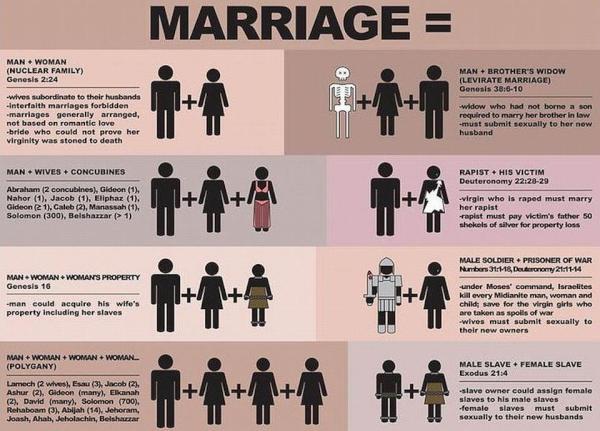
Or (with tongue in cheek) I offer you this;

marriagechallenge

The silliness of religion…

2007_01162007ireland0179

Christianity is a lifestyle – a way of being in the world that is simple, non-violent, shared, and loving. However, we made it into an established “religion” (and all that goes with that) and avoided the lifestyle change itself. One could be warlike, greedy, racist, selfish, and vain in most of Christian history, and still believe that Jesus is one’s “personal Lord and Savior” . . . The world has no time for such silliness anymore. The suffering on Earth is too great.


Richard Rohr

(Courtesy of yesterdays minimergent.)