Welfare state…

children-were-classed-as-being-in-poverty-if-their-family-s-income-fell-below-60-of-the-median-average-income-143067855


Welfare State


The sofa split some years ago

The gas fire hisses as if

through broken teeth.

Colin tries to stir up hope

On the Baby Belling whilst the TV screen sucks

the kids in like flecks of dust.


A manufactured crisis for some pop star wannabe

Stabs out from the fat old tube.

The crowd scream – no wonder.

And Colin stares into the tangled noodles wondering

What might become of the children

For not one of them can sing.


But their faces, lit by cathode light

Are beautiful.


New FB page for Proost Poetry Collection…

typewriterletters

We have set up a Facebook page to support the gathering of poetry for an up and coming book.

You can see it here.

(Or if the link does not work (FB is always a difficult thing to link to) then just search for ‘Proost Poetry Collection’ on FB.)

Hopefully this can become a portal for questions, encouragement and support around this project. Please go and ‘like’ it/share it with friends.

Here is the first post- which hopefully gives a bit more flavour of what the project is all about;

Welcome friends.

This is the first post on our new page. We invite you to use this as a means of sharing ideas, discussion and to encourage one another as we seek to compile a collection of poetry.

Why are we bothering to do this? Well, I suppose firstly because some of us think that poetry is important. We need our poets now more than ever- we need to be challenged, to be stirred, to see through the surface of things into new and deeper meanings. In this way, poetry is closely related to prophecy – of the Old Testament kind – less about the prediction of shadowy future events, more about shining truth (a fickle beast admittedly) into our current situation.

Some would tell us that our culture has lost its soul and become merely what we consume. We have become a nation of short lived consumer events, connected by constant streams of media content. Poetry is the opposite of this. It has little or no monetary value, it can not be quickly consumed, and it has this way of asking questions more than providing easy answers.

There are lots of collections of poems out there of course- why another one? Well this one will be different for the following reasons;

1. It is a collection that is written by people on deliberate spiritual journeys. You could say this about most poetry of course, but we are particularly interested in what being a follower of Jesus might mean in our culture.

2. Having said that- we are not really looking for ‘Christian’ poems. By this I mean poems written from a narrow religious perspective, using the language and theology of Church (with a big C.) Poems like this tend towards propaganda- they close down the questions.

3. It is a deliberately open, non-elitist collection. We are happy to include works from published poets, but Proost exists to encourage, agitate and to give voices to those who would not normally be heard- the awkward squad, those who have the gift of not fitting in.

4. That is not to say that quality is not important too- but the way we understand quality is more to do with how well the poems become vehicles for other people to travel. Pure technical genius is not enough (but would be great!) Clever tricks with technique are not enough (Although they are fun if you are of a certain mind set!) However, words that move us, that catch the wind of the Spirit, that challenge, that question, that move us emotionally, spiritually- these are words we want to hear.

5. The collection is intended to be used for personal reflection. We think that arranging different poetic voices into broad themes allows access for people who do not usually read poetry. The success of the Bloodaxe books (Being Alive, Staying Alive etc) tells us that this format has value.

6. The collection is also intended to be a source of material for group use- to be read where groups of people gather, be that in churches or any other gathering. Some poems become new liturgy- ways that people can speak words together.

Finally, this is not a project driven by a desire for commercial success. Any profits made will be used by Proost in work to support  other emerging artistic talents. In the words of the song ‘There ain’t no money in poetry, that what sets the poet free’. We are able to reward contributors by offering a free download from the Proost site- a collection of all sorts of wonderful books, music, films. This will be one per contributor, irrespective of how many poems are included. We know that this is a meagre reward for your talents- but hope that you will nevertheless feel the satisfaction of being included in this book.

Let the poetry begin!

Chris

Casting bread on the waters…

sea weed circles

Each year, over the May bank holiday, I go off with some friends to a wild place for a few days to make what we call a ‘wilderness retreat’. Our favourite locations are usually small uninhabited Hebridean islands- we are fortunate to be in reach of many.

Last year, after many years of our community (Aoradh) running these for ourselves and invited guests, a few of us made an attempt to offer them on a more ‘commercial’ basis to people looking to escape into the wild places for contemplation, meditation and companionship. We had some interest, but not enough to make a trip viable- mainly because of the charter cost of a boat to get us out to the islands.

In the end, we invited these folk to join our ‘comminity retreat’ which be going to Eileach an Naoimh, a tiny island that is part of the Garvellachs in the Ross of Mull. It is the site of a monastery founded by St Brendan- the nautical adventurer thought to have visited the Americas hundreds of years before Columbus.

One of the guys who is coming, I discovered, was from Nottinghamshire- my home county. I inquired further, and found out he lives very close to where I grew up, and where some of my family still live.

I then found out that he is the current minister of the church that I grew up in- St Thomas, Kirkby-in-Ashfield.

I have many mixed memories of this time- complicated by the fact that childhood was a rather difficult for reasons I will not go into here. Also, back in the 70s and 80s St Thomas’s was part of a Charismatic revival movement sweeping through the Anglican church in the UK, led by people like David Watson, Colin Urquart, David Pawson. I look back with complex mixed emotions- in many ways I long for the simplicity of the faith I had then but I also remember some rather difficult and damaging experiences.

I have lots of very good memories too however- a lot of it about music, and good people. It was the place my spiritual journey began, and for this I am very grateful.

The connection back to these times has been a surprise however. I am suddenly small again.

It feels like a cricling back- in a good way- to something that has been adrift on the waters for a while…

To emphasise the point- here I am, in a picture from the website archive. The blond haired boy in the middle with the great big smile;

unknown41


What makes a ‘good’ country?

flags

Michaela and I have spent quite a few hours sitting looking morosely into cups of tea, talking about the state of our country, and in particular, our government.

For those reading this outside the UK we currently have a concoction of two different parties governing our country, but the ‘crisis culture’ that has been bred by all the economic doom and gloom has allowed the Conservative party to bring about sweeping changes to our benefits system, or health system and our education system, whilst cutting taxation for people earning over £150,000 per annum by 5%. Much of what they have done has a direct impact on the poorest section of our population, and feels to some of us like an abomination.

For example, people who live in social housing, supported by housing benefit (which includes a high proportion of people who are disabled, sick, have mental health problems, or single parent families) will now be faced with losing money, or being forced to move home. If tenants are deemed to have one spare room, the amount of rent eligible for housing benefit will be cut by 14%. If they have two or more spare rooms, the cut will be 25%. Leaving aside the negative effect this will have on all sorts of aspect of peoples lives, the simple fact is that there are no one bedroom flats to move in to for many people!  Unfair, unjust changes like this are justified by this government by two things- a tabloid-like blame-the-poor attitude, and a constant reference to global ecnonomics.

All of which takes me back to the point of this piece- what sort of country would you want to live in?

I started making a list of the things I would NOT want to see in my country;

1. A large (and widening) gap between the ‘haves’ and the ‘have-nots’- enforced by law, tradition and the use of power.

In the UK, we have a remarkably stable upper echelon. People with money and power tend to be the children of other people with money and power. There appears to be evidence that this was reducing somewhat- at least in part because since WWII we had 40-50 years of political hegemony around the issue of equality- of opportunity, of health care of access to education. Power was taken by working people in the form of organised unions, and greater access to higher education gave people from poor backgrounds knowledge and skills they had never had before.

However, the UK egalitarian experiment was in many ways a very British one- it was not revolution, it was bureaucratic evolution. Progress was statistical, and statistics are always open to manipulation.

Along the way, we all became middle class consumers. The working class disappeared with the shipyards and the coal mines, leaving behind a broken underclass who were seen only as a threat, a burden, an expensive waste of resources.

And at the same time, the overarching idealistic imperative towards equality was allowed to slip away. We no longer talk about it. And many of the key elements of it are starting to killed one by one. Universal non-stigmatising benefits? All but gone. Free education, supported by a fair grant system to support people through universities? Gone. Universal health care from the cradle to the grave? Under threat from privatisation. Etc.

We may (and often do) argue about the nuts and bolts of all this- but the central over arching question- is our society becoming more equal, or more divided- has slipped off the agenda almost entirely.


2. A society where the rule of law is manipulated or ignored by the people in power, for their own ends, either at home or abroad.

Our comfort with this one in the UK seems to ebb and flow.  In many ways, we might see our justice system, and our sense of ‘fair play’ as essentially British. The fact that we are outraged when fairness is transcended is a sign of this.

However, many would argue that the assumption of British fair play has always been a canard. The Empire was not a selfless project to civilise the world with cricket and people wearing wigs- it was a means to exploit, to subjugate, to enslave even.

At home, the interplay between power and the law is a complex one, and something that requires constant scrutiny at the same time as people in power would keep secrets.

For which you need a free press, and open government.

So, a mixed bag this- we have some movements towards open government, at the same time as the press shoot themselves in the foot with all sorts of bad practices.

There have been some changes too to the way our system works- talk of jury-less trials, and the removal of legal aid from other aspects of law (for example, benefits appeals.) These things need to be resisted.


3. Individual citizens are not of equal value- most are expendable in the interests of those who are in power.

All animals are equal, but some are more equal than others.

All sorts of things can be used to excuse this kind of thinking- ideology, religion, economics, war against a common enemy (real or conjured up.)

At some points of our history, the UK has seen its citizens as cannon fodder, or an industrial resource. Currently it is not possible to do this openly thank God.

However, I have heard it said that the measure of a good society should be how we treat our prisoners, our poor people, our elderly, sick and infirm. This should be the first job of government- to govern on behalf of the weak, not the strong. The strong can look after themselves, the weak need to be empowered so that they can do the same.

If this is true, the UK has been doing poorly recently.


4. Freedom is waved like a flag, but defined against others, not inclusive of them.

I do not want to be part of a country still caught up in empire lust. However, even without military expansion, nuclear weapons and invasion of other countries, empire can still be a weight upon our nationhood.

We talk about freedom as some kind of inalienable human right- usually hand in hand with democracy and capitalism. Freedom is understood as ‘the right to live in the way that we are living’ with as little interference as possible in the form of taxation, regulation, or imposition by others.

However, this kind of freedom requires examination- particularly when it comes at huge cost to others- when it is based on unsustainable, inequitable trade relationships with poor countries, where it is destroying our environment.

Freedom-to also equally becomes freedom-from. We are free because we are not like you. Perhaps this is sometimes true- there are some despotic places out there. However, when this kind of freedom starts to exclude people in terms of colour, origin, religion, gender, sex- then it is no freedom at all.


5. Patriotism becomes nationalism becomes excluisivism, and it ticks like a historical time bomb.

I can think of nothing good that ever came out of nationalism- measured in terms of human dignity and grace. I say this as an outsider living in a country that is considering full independence from the wider UK. Perhaps this might be the project that proves me wrong but I see warning signs to the contrary- the easy negative stereotyping of the other, the co-opting of war stories that justify us against you, the distortion of history to cast ourselves as victims/heroes and the other as oppressors/villains.

In this kind of soil poisonous things grow.

The Bible struggles with all of this- it can be read as the story of a succession of empires as they rise and fall- eventually to be challenged by a totally different kind of Empire, called ‘the Kingdom of God’, in which the the rules are turned upside down- the first become the last, the poor are our conscience and love is our currency.

Patriotism belongs to empire- it has no place in the Kingdom of God.


I am British- somewhere inside. I find this difficult to define- as an English/Irishman living in Scotland. I am grateful for the gentle green climate of these beautiful islands, and for the slow pragmatic evolution of our welfare state.

But (in the words of many a school report) we could be doing better…

 

Calling all poets!

words1

I would really appreciate your help in getting the message out there about this project- if you are a blogger/facebooker/twitterer would you mind reposting?

For a while now, I have been chewing on an idea about putting together a collection of poetry.

From time to time people send me things they have written- asking for feedback. I always really struggle to give feedback- I want to be honest, open and encouraging, but poetry is really subjective. What I find however, is that there is almost always gold in the dust. Most people who write do so to get into the depth of things, and the process opens us up- in my view, it opens us up to God (however you understand this.)

Much of this writing is personal- like many of the things I write, its primary purpose is personal spiritual discipline. However, some poems have a life beyond this- and become vehicles that allow other people to travel. It is these poems that I am interested in.

We are used to being told that our poetic voices are worth nothing- either because poetry has become so elitist, or because we doubt our inner voice. Poetry also has little or no commercial value in the consumer culture that we live in. However, we believe that poetry is more important now than ever- we need our poets our prophets and our malcontents.

So, if you write poetry and you have material that you think may be helpful to the spiritual journey of other people, then you might like to consider this;

We are looking for contributions to an collection of poetry to be published by Proost.

We intend this is to be a collection of voices in and around the margins of our churches and will bring together poets whose writing is not normally heard to be a resource for worship, contemplation, prayer and even faithful prophetic criticism.

Poems should fit broadly into one of the following categories/chapter headings;

  • Faith/doubt
  • Becoming
  • Losing
  • The world is beautiful
  • The world is broken
  • Inside/outside
  • Wilderness
  • Laughing out loud
  • The far horizon
  • Learning to love

Notes on selection process;

We are looking for poems with something to say- poems that open us up rather than close us down. Poetry at its best can be challenging, disturbing, uplifting, transforming and much more. If you write poems like this we want to hear from you. We are not interested in reputation or CV- rather we want to encourage those of you with a poetic/prophetic voice to let others hear it.

We will select poems for the collection if they fit the broad (and generous) ethos of the book and if they are of a quality and spiritual depth that moves us. This means that some very good poems may not be selected. We hope that you will understand that we lack the resources to give feedback on the reasons for our editorial decisions.

We would impose no proscribed form on the poems, but broadly speaking poems should be no more than 35-40 lines.

You may send up to 8 poems– simply because we know how difficult it can be to choose. We hope that this too might be a way of gathering some more unusual voices- many of us have at least one pearl in amongst the pebbles.

Please send poems by e-mail to thisfragiletent@gmail.com

About Proost

Proost is a small publishing outlet aimed at gathering together resources from the creative edges of Church. Most of the material is made available for download- although hard copies of books can be purchased via a print-on-demand service.

As recompense for your hard work and creativity, poets published will be eligible for a free download of their choice from the Proost website- which is chock full of music, art, movies, worship resources and books.

We look forward to reading your poems!

The voice of the Church…

p9_uk_poverty

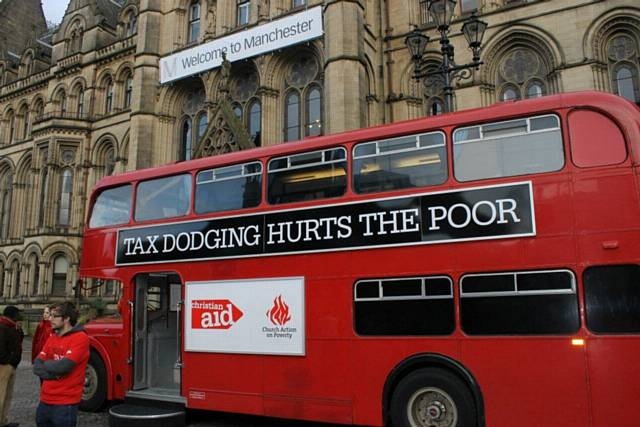
Over the last few days, a rare thing has been happening- leading voices in the Church have started to speak out, and the media has been taking an interest. More remarkably, the issues that they have spoken on are not the usual internal contortions around homosexuality and the role of women in Church hierarchy; instead the Church is engaging in a debate about things that really matter.

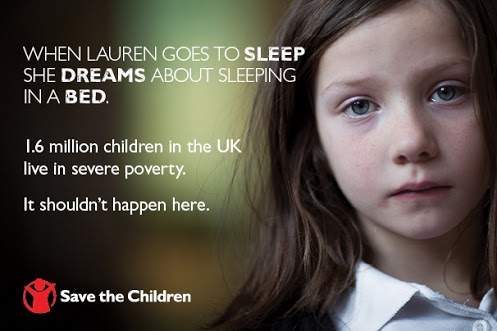
First the new Archbishop of Canterbury, Justin Welby, challenged the British Government over planned welfare reforms, saying that the poorest children in the country were most at risk.

Next the new Pope started to challenge the culture of elitism in the Catholic church, and refocus his mission on the poor- first washing the feet of female inmates at a detention centre (including a Moslem woman) then calling for “peace in the whole world, still divided by greed looking for easy gain, wounded by the selfishness which threatens human life and the family, selfishness that continues in human trafficking, the most extensive form of slavery in this 21st century. Peace to the whole world, torn apart by violence linked to drug trafficking and by the iniquitous exploitation of natural resources”.

uk-poverty-image

Now, step forward the Evangelicals and non-conformists…

On the eve of the most sweeping and devastating raft of welfare cuts and reforms since the beginning of the Welfare State in the UK, a coalition of churches, including Methodists, United Reformed, Baptist and Church of Scotland raised their voices;

Paul Morrison, public issues policy adviser at the Methodist Church, said the churches were concerned that the benefit cuts were “a symptom of an understanding of people in poverty in the United Kingdom that is just wrong”. Speaking to the BBC, Morrison said: “It is an understanding of people that they somehow deserve their poverty, that they are somehow ‘lesser’, that they are not valued. The churches believe that they are valued and we believe that they should be treated much more fairly than they are being.”

Morrison and other church figures were promoting a report published recently by the four churches accusing politicians and the media of promoting six myths about the poor: that they are lazy; are addicted to drink or drugs; are not really poor; cheat the system; have an easy life; and that they caused the deficit.

“The systematic misrepresentation of the poorest in society is a matter of injustice which all Christians have a responsibility to challenge,” the report says.

Morrison said: “We saw that people who we value, who we believe God values and God loves, we saw them being insulted day in and day out in the media, and that needed to stop. The consequence of the attitudes towards the poor is that welfare cuts like this become more acceptable, so it’s right that we criticise that too.”

Well said.

The church- on the side of the Angels- who knew?

The Government here seem rattled. Grant Shapps, Chairman of the Conservatives has been pushing back– suggesting that there is a moral case for rewarding those in work. Good old Victorian values those- make the workhouses so bad that it is better to shove our kids up chimneys.

Let us remember that at the same time as all these cuts, the government has reduced the top rate of income tax paid over a certain level of income by the very highest earners) from 50% down to 45%.

It all fits the rhetoric- reward the strivers, punish the skivers. Justify this by vilifying those who receive benefits. It matters not that the rhetoric does not fit reality, or what casualties line the roadside.

And those of us who are comfortable, well provided for- we are being told that we dangle over a precipice, and that all this is necessary.  It is not.

The Church should be at the loving heart of this matter- our conscience- a mirror to hold up before those in power. Whilst I feel a shame at what our government is doing, I find hope in the voices coming from Christians.